
The $250 Million AI Chat: How Krafton Asked ChatGPT to Escape Subnautica 2's Founders — and Lost
 Anastasiia Sokolova
Evidence in a case heard by the Delaware Court of Chancery included conversations with a chatbot about how the company could avoid paying up to $250 million. In spring 2025, Krafton CEO Changhan Kim was examining the terms of the deal with the former owners of the studio behind Subnautica. His own advisers warned him that there was little legal basis for eliminating the earnout. According to the court, Kim then turned to ChatGPT. The chatbot initially told him that the earnout would be “difficult to cancel,” but after further prompts it produced an entire course of action.
In March 2026, the court quoted those conversations in its ruling, found that Krafton had breached the agreement, reinstated the studio's ousted CEO, and extended the period during which revenue would count toward the earnout. Subnautica 2 then launched and sold 4 million copies within a week, sharply increasing the likelihood of the maximum payout. This is the story of how a CEO's conversation with ChatGPT became evidence against his own company in a dispute worth a quarter of a billion dollars.
Key points
- In 2021, Krafton acquired Unknown Worlds, the studio behind Subnautica, in a deal worth up to $750 million: roughly $500 million upfront and an earnout of up to $250 million if a specified revenue target was reached. Most of the earnout was intended for the studio's three senior leaders;
- Revenue generated through the end of 2025 counted toward the earnout, with Subnautica 2 expected to be its main driver. In July 2025, Krafton fired three Unknown Worlds executives and pushed the game's release into 2026 — beyond the original earnout period;
- Fortis Advisors sued on behalf of the former shareholders. During the proceedings, the court found that Kim had asked ChatGPT how to avoid the payout, after which Krafton created an internal task force called Project X and implemented much of the strategy suggested by the chatbot. Kim admitted at trial that he had used ChatGPT and deleted relevant chat logs;
- In March 2026, the Delaware court ruled that Krafton had breached the agreement, found the company's justifications pretextual, reinstated the studio's ousted CEO, and extended the base earnout period by 258 days;
- Subnautica 2 entered Early Access on May 14, 2026, selling 4 million copies within a week and 5 million within 22 days. In July, the parties reached a settlement under which Krafton agreed to pay bonuses to the entire team.

A deal worth up to $750 million
Unknown Worlds grew out of Natural Selection, a free Half-Life mod created by Charlie Cleveland. He founded the studio in 2001, and for years the team remained known mostly among PC gaming enthusiasts. That changed with the release of Subnautica in 2018 — a survival game set on an ocean planet, where players build bases and submarines while exploring depths inhabited by unknown creatures. After years in Early Access and its full release, the game had sold more than 5 million copies by early 2020, turning a small studio into a prominent developer.
By then, Unknown Worlds had developed its own management structure. Cleveland oversaw the creative side of the studio and served as game director. Max McGuire, who had joined the team during its early years, led the technical side. Ted Gill, brought in as president in 2018 and later appointed CEO, handled the business. These three would eventually become the central figures in the conflict with Krafton.
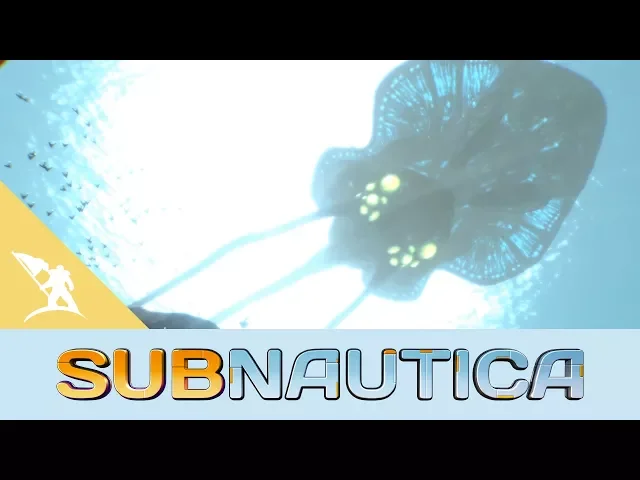
In October 2021, Krafton acquired Unknown Worlds. Fresh from one of the largest IPOs in South Korea's technology sector, the publisher had significant resources from the success of PUBG and was expanding its portfolio of studios. Unknown Worlds became Krafton's first acquisition after going public. The deal was valued at up to $750 million: roughly $500 million was paid upfront, while the former owners could receive up to another $250 million through an earnout if a specified revenue target was reached.
One provision of the agreement later became particularly important. Krafton guaranteed the three executives operational control over Unknown Worlds, including its project roadmap, release schedules, and budget. The company could terminate them only “for cause” as defined in the agreement. In other words, Krafton owned the studio but contractually agreed to leave its management in the hands of its existing leadership. The alleged breach of that provision would later become one of the plaintiffs' central arguments.
The bonus that could cost more than the studio itself
The $250 million was not a fixed bonus. It was an earnout — a payment whose size depended on the studio's revenue. The way it was calculated matters because the entire conflict that followed revolved around it.
Once revenue passed a threshold of roughly $69.8 million, Krafton was required to pay the sellers $3.12 for every additional dollar earned, up to a maximum payout of $250 million. The cap would be reached at roughly $150 million in qualifying revenue: after clearing the initial threshold, the studio needed to generate about another $80 million. Only revenue recognized through the end of 2025 counted under the base calculation period, although the agreement allowed that period to be extended into mid-2026.

Around 90% of the earnout was allocated to Cleveland, McGuire, and Gill. Krafton later used that fact to portray the dispute as an attempt by the three executives to secure a huge personal payout. Cleveland said that “the idea that Max, Ted and I wanted to keep it all for ourselves is totally untrue.” The bulk of the earnout was indeed allocated to the three former owners, however, so for Krafton this was not an ordinary employee bonus but a major acquisition-related obligation.
By 2025, internal forecasts indicated that the payout could approach the full $250 million. That amounted to around 35% of Krafton's annual operating profit and, by some estimates, was comparable to the value of Unknown Worlds itself. According to the evidence presented at trial, Krafton CEO Changhan Kim believed the company had entered into an extremely unfavorable agreement.
It’s not about the money—it just feels awful to be taken advantage of. For a registered director, being a “pushover” would even amount to breach of fiduciary duty.
The word “pushover” would later appear in the opening paragraph of the court's opinion. By this point, Subnautica 2 remained the crucial variable: its revenue was expected to determine the size of the earnout, but the game had not yet been released.

July 2025: executives fired, game delayed
On July 1, 2025, the three Unknown Worlds executives received termination notices. Krafton appointed Steve Papoutsis as the studio's new CEO — an industry veteran who had previously led Krafton subsidiary Striking Distance Studios. The leadership change was announced publicly the following day.
Krafton's explanation became more detailed and more severe over time. At first, the company simply wished the departing executives well in their future endeavors. Later, it alleged that the leadership had effectively stepped away from development: Cleveland and McGuire had shifted their attention to personal projects, including Cleveland's film, while Subnautica 2 remained far from ready. One development executive later claimed that the portion prepared for release represented only a small fraction of the project's original vision. According to Krafton, the former leadership was attempting to release an unfinished game in order to secure the earnout.
The fired executives presented a very different version of events. Cleveland maintained that Subnautica 2 was ready for Early Access and that concerns over the state of the project were being used as a pretext for changing the studio's leadership. “Subnautica has been my life's work and I would never willingly abandon it or the amazing team that has poured their hearts into it,” he wrote. Losing access to the company he had founded was, according to the developer, a severe personal blow.

Then came a decision that directly affected the earnout calculation. On July 10, Unknown Worlds, now under new leadership, announced that Subnautica 2's Early Access launch had been moved from 2025 to 2026. Krafton insisted that the decision “was not influenced by any contractual or financial considerations” and was based solely on the quality of the game. Papoutsis likewise told employees: “It's never been told to me that we're making this change specifically to impact any earnout or anything like that.”
The problem was the timing. Under the base measurement period, revenue from a game released in 2026 would not count toward the earnout at all. Even the extension available under the agreement would leave the studio with considerably less time to reach the required target. According to calculations cited by Bloomberg, the delay made the maximum payout extremely unlikely and put roughly $225 million allocated to the three executives at risk.
From the plaintiffs' perspective, the sequence of events was straightforward: Krafton fired the people who controlled the release date and then pushed the game beyond the main earnout period. Whether those decisions had been made specifically to reduce the payout would have to be established in court.
Fortis Advisors, acting on behalf of Unknown Worlds' former shareholders, filed suit. The evidence produced during the proceedings transformed what had begun as a dispute over executive terminations and an earnout into a story that reached far beyond the video game industry.
“Project X”: How ChatGPT's advice became Krafton's playbook
Fortis Advisors filed its lawsuit against Krafton in the Delaware Court of Chancery. The former shareholders alleged that the company had deliberately replaced Unknown Worlds' leadership and delayed Subnautica 2 to run out the earnout period. In doing so, they argued, Krafton breached its contractual obligation to leave operational control of the studio in the hands of its existing executives.

Krafton's internal communications became some of the most important evidence in the case. The court reconstructed the following sequence of events.
On June 2, 2025, Head of Corporate Development Maria Park warned Kim on Slack that a “dismissal with cause” would not eliminate the earnout obligation but would expose Krafton to “lawsuit and reputation risk.” Krafton's Legal Department was already involved in the discussions by that point. But as the opinion put it, “Kim turned to ChatGPT for help.”
At first, the chatbot responded that the earnout would be “difficult to cancel.” Kim continued refining his prompts, looking for another solution. ChatGPT eventually produced a “Response Strategy to a ‘No-Deal’ Scenario” that included a “pressure and leverage package” and an “implementation roadmap by scenario.” The internal task force handling the matter became known as Project X.
The first item in the plan quoted by the court concerned public messaging: “Repeat that protecting quality and fan trust is the highest priority, undermine the ‘Large Corporation VS. Indie’ framing.” It also recommended locking down Steam and console publishing rights, restricting access to the code and build pipeline, and preparing “systematic materials for legal defense.”
The court found that Krafton followed most of ChatGPT's recommendations. It pursued what the chatbot had called “preemptive framing” by taking its case directly to Unknown Worlds' fans. Krafton published a message beginning, “To our 12 million fellow Subnauts,” presenting its actions as an effort to protect the future of the series. The court noted that Kim wanted the message to “secure public support from fans and legal validation of our legitimacy” and had suggested using ChatGPT to draft it. Krafton also locked down Steam publishing rights, leaving Unknown Worlds unable to release Subnautica 2 independently.

At trial, Kim admitted that he had used ChatGPT and had deleted specific logs relevant to the dispute. The court noted explicitly that the particular conversation in which ChatGPT said the earnout would be “difficult to cancel” had been deleted. Krafton initially denied that the chatbot's advice had formed the basis of its actions, but Kim's testimony and internal documents established a connection between the ChatGPT conversations, Project X, and the company's subsequent decisions.
These were not journalistic assumptions or merely the plaintiffs' characterization of events. They were findings made by the court based on Slack messages, Krafton documents, and sworn testimony. In March 2026, the court had to decide whether Krafton had breached the agreement and how the former Unknown Worlds owners should be restored to the position they would have occupied without that breach.
March 2026: the court quotes Kim's ChatGPT conversations
On March 16, 2026, Vice Chancellor Lori Will issued her opinion. Its opening paragraph contained a line that quickly spread far beyond legal coverage: “Fearing he had agreed to a ‘pushover’ contract, Krafton’s CEO consulted an artificial intelligence chatbot to contrive a corporate ‘takeover’ strategy.”
On the central issue, the court sided with Unknown Worlds' former shareholders. Krafton breached the agreement by terminating the executives without valid contractual cause and improperly seizing the operational control that the deal had guaranteed them. The court described Krafton's later explanations for the terminations as “pretextual” — post hoc justifications developed after the original rationale failed to hold up.
The court ordered Ted Gill reinstated as CEO and restored his operational authority, including control over the timing of Subnautica 2's release. Krafton was also ordered to restore the studio's access to the Steam publishing platform.

The base earnout period was extended by 258 days — exactly the length of time Gill had been wrongfully removed from his position. The new base deadline moved from the end of 2025 to September 15, 2026, with the possibility of a further extension under the terms of the agreement. In effect, the studio was given back the time during which it had been deprived of independent operational control to pursue the revenue target.
The court did not grant every remedy sought by the former owners. Cleveland and McGuire were not returned to their previous day-to-day roles: the evidence showed that by the time of the dispute they had already taken on more limited operational responsibilities, something Krafton had long known about and accepted.
The court also addressed Krafton's counterclaims. The company argued that the executives had downloaded tens of thousands of work files before their termination, with one of them doing so only minutes before access was cut off. But the court did not treat their conduct as theft: the materials remained confidential and were promptly returned. As the opinion put it, “These are not the actions of thieves.”

Krafton's commercial concerns were not entirely baseless either: Unknown Worlds' previous game, Moonbreaker, had fallen short of sales expectations. But that did not give Krafton the right to disregard the terms of the acquisition agreement. The court found that the terminations and seizure of operational control lacked sufficient contractual grounds, while the record showed that ChatGPT's recommendations had in fact been used in preparing Krafton's subsequent actions.
Krafton responded cautiously: “While we respectfully disagree with today’s ruling, we are evaluating our options as we determine our path forward.” The question of monetary damages was left for a later phase of the case. Meanwhile, Unknown Worlds' reinstated leadership regained the ability to launch Subnautica 2 during the extended earnout period.
Subnautica 2: 5 million copies in 22 days
After being restored to his position, Gill returned to the original plan and released Subnautica 2 within the extended earnout period.
The game entered Early Access on May 14, 2026, priced at $29.99, on Steam, the Epic Games Store, and the Microsoft Store, as well as on Xbox Series X/S and through Game Pass. According to Unknown Worlds, it sold 1 million copies in its first hour, 2 million in 12 hours, and 4 million within a week. Krafton's later quarterly report recorded 5 million copies in 22 days.
Peak concurrent players on Steam reached 467,582 — roughly 9 times higher than the all-time peak of the original Subnautica. Including other platforms, Unknown Worlds reported a peak of more than 651,000 users. The game's Steam rating settled at “Very Positive.”
These figures directly affected the earnout calculation. Around $150 million in qualifying revenue would have unlocked the full $250 million payout. Five million copies sold at the full $29.99 price point corresponds to roughly $150 million in gross sales, reached in less than a month.

Gross sales, however, cannot automatically be treated as qualifying revenue under the agreement. The final amount is affected by regional pricing, store commissions, Game Pass terms, and other factors. For that reason, the widely cited estimate of $100 million in the first week remains an outside calculation rather than an officially confirmed figure. It is impossible to determine the precise size of the earnout from sales data alone.
Even so, the release happened before September 15, 2026, and its scale sharply increased the likelihood of a maximum payout — precisely the outcome Krafton had sought to avoid, according to the court's findings.
Strong sales do not prove that the Early Access version fully matched all of the studio's internal plans. Subnautica 2 was still in Early Access, contained a limited amount of content, and drew criticism over the balance of its combat system, which the developers began addressing in the first updates. It was still too early to judge the game definitively. Commercially, however, the decision to release it in 2026 was vindicated: demand allowed Unknown Worlds to move close to the target figure within a matter of weeks.

Are you playing Subnautica 2 in Early Access?
July 2026: Krafton agrees to pay the bonuses
Following Subnautica 2's successful launch and the court ruling in favor of the former owners, the parties settled the dispute before a separate proceeding on monetary damages could take place. On July 1, 2026, they announced a settlement and agreed to dismiss all remaining claims.
Under the settlement, bonuses were extended to the entire Subnautica 2 team, including employees who joined Unknown Worlds after the 2021 acquisition. The original agreement had primarily provided payouts to the three executives and employees who were already working at the studio when it was sold.
The money will be paid in 3 annual installments. According to Gill, the overall bonus pool will be significantly larger than what the original agreement had contemplated. The exact amount was not disclosed. In the end, however, the group of recipients became broader than under the original terms of the acquisition.
Ted Gill, whom the court had reinstated as CEO several months earlier, decided to leave after the settlement. “We mutually agreed to part ways,” he told Bloomberg. “New leadership is the best way for the studio to move forward.”

Krafton's own leadership, meanwhile, remained unchanged. Eight days after the court ruling, shareholders reappointed Changhan Kim for another 3-year term, through 2029. His candidacy received 99.6% of the vote. The company lost the central issue in the dispute and agreed to expand the bonus program, but Kim remained CEO.
Why the story resonated beyond the gaming industry
Earnout disputes usually remain the domain of corporate lawyers and shareholders. This case had a much clearer and more unusual hook: the CEO of a major company, after being warned by his own advisers about the legal risks, turned to ChatGPT for another solution. The chatbot's suggestions became part of an internal plan called Project X, and the conversation was later quoted by the court.
For gaming audiences, the case also touched on another familiar issue: a major publisher acquires an independent studio, promises to preserve its autonomy, then enters into a conflict with the former owners over deadlines, creative control, and money. What made the Unknown Worlds case different was that the executives' rights had been explicitly protected by contract, while Krafton's sequence of actions could be reconstructed from internal documents and testimony.

Subnautica 2's sales did not affect a ruling that had already been issued, but they made the financial stakes much easier to understand. The maximum earnout stopped looking like an abstract figure: after the successful launch, it became a realistic possibility that both sides had to take into account when negotiating the settlement.
***
Conclusion
Krafton's plan did not achieve its objective. The company failed to eliminate the earnout, the court restored Ted Gill's control over the studio and extended the measurement period, while the settlement expanded the payouts to the entire Subnautica 2 team. The exact amount remains undisclosed, but the group of recipients ultimately became broader than the original agreement had provided for.
The main takeaway is not about the capabilities of artificial intelligence, but about executive responsibility. ChatGPT could suggest a strategy, but people made the decision to use it. The chatbot conversation also proved to be no less discoverable than emails or Slack messages: it was obtained in litigation and compared with the company's subsequent actions.
In the Subnautica 2 saga, whose side are you on?
FAQ
What is the Subnautica 2 lawsuit actually about?
It is a contract dispute. When Krafton acquired Unknown Worlds in 2021, the deal included an earnout of up to $250 million tied to the studio reaching a revenue target by the end of 2025, with most of the money allocated to three studio executives. In July 2025, Krafton fired all three and delayed Subnautica 2 until 2026, beyond the original deadline. Fortis Advisors sued on behalf of the former shareholders, arguing that Krafton engineered the delay to avoid paying the earnout. In March 2026, the Delaware court agreed that Krafton had breached the agreement.
Did Krafton's CEO really use ChatGPT?
According to the court's findings, yes. After Krafton's own employees warned that firing the executives would not legally eliminate the earnout, CEO Changhan Kim turned to ChatGPT for a strategy, and Krafton formed an internal task force around the chatbot's recommendations called “Project X.” Among other things, it followed ChatGPT's suggestion to frame its public messaging around “quality and fan trust.” The court found that Krafton “followed most of ChatGPT’s recommendations.” These are findings based on evidence presented at trial; Krafton initially denied the allegation, but Kim later admitted in court that he had used ChatGPT.
How large was the earnout, and who was supposed to receive it?
Up to $250 million, on top of roughly $500 million paid upfront, making the acquisition worth as much as $750 million. Around 90% of the earnout was allocated to three executives: game director Charlie Cleveland, technical director Max McGuire, and CEO Ted Gill. The July 2026 settlement extended bonuses to the entire Subnautica 2 team.
Was Krafton's CEO fired over the controversy?
No — this is a common source of confusion. Krafton CEO Changhan Kim kept his position, and shareholders reappointed him through 2029 shortly after the court ruling. Ted Gill was the executive who left: the head of Unknown Worlds resigned as part of the settlement after the court had previously reinstated him.
Is Subnautica 2 good, and is it worth buying now?
The game entered Early Access on May 14, 2026, at $29.99 and received a warm reception, earning a “Very Positive” Steam rating and selling 4 million copies in its first week. It is still an unfinished game in active development, however, with a relatively limited amount of content at this stage. If you want a complete experience, it may be better to wait. Before buying, you can also read our Subnautica 2 preview.
When will Subnautica 2 fully release?
There is no exact date yet. The developers have said that Early Access is expected to last roughly two to three years, which points to a 1.0 release sometime around 2027–2028, with additional content arriving along the way.
Money, Scandals, Phenomena
- The CS2 Skin Economy: Billions of Dollars, Million-Dollar Knives, and a $2 Billion Crash in 30 Hours
- The Biggest Thefts and Hacks in Gaming History: The $620 Million Axie Infinity Hack, Stolen CS2 Skins, and the GTA 6 Leak
- Star Citizen Has Raised a Billion Dollars — and Still Hasn't Come Out
- GTA Controversies: Lawsuits, Bans, and Hot Coffee
- Why Graphics Cards Are So Expensive in 2026: How AI Ate the Memory Supply
- Why have videogames become so expensive, and will they get even more expensive?
- Why Millions of People Click on Bananas, Cookies, and Cows: How Idle Games Have Hacked Our Brains
- What Are the Backrooms? Levels, Entities, Games, and Movie Explained
- Rusty Lake Series Phenomenon. Twin Peaks in the Form of a Point‑and‑Click
- Rideshare "Stimulator": What Kind of Game Is It and Why Did It Spark an AI Controversy?
- AI Is Already Taking Jobs in Game Development — Just Not Where We Expected
- DLSS 5 — Graphics Revolution or Marketing Gimmick? Let's Cut Through the Hype
- Why the Ocarina of Time Remake Announcement Divided Fans — Uncanny Valley, Politics, and Nostalgia
- Why AI Researchers Are Leaving OpenAI, Anthropic, and Google — and What They’re Warning About
- How GTA 5 Made More Money Than Any Movie Ever
- AI in Games: Why Players Boycott Studios Over AI Art and Voices
- How Much Money Has Genshin Impact Made and Why Gacha Is Cooling Off
- Sued for Being Too Addictive: How the Makers of Fortnite, Roblox and Minecraft Ended Up in Court
- The $250 Million AI Chat: How Krafton Asked ChatGPT to Escape Subnautica 2's Founders — and Lost
- What Was Found in the 12TB Steam Leak: Early Builds of GTA 3, Mafia 2, and Valve Games
- How Graphics Card Prices Spiraled: Mining, Scalpers, and Prices No One Could Believe
- The Live-Service Graveyard: How the Industry Burns Billions on Games That Die in Weeks
- Minecraft in Elden Ring and TNT in RDR2: The Wild AI Mashups That Broke the Internet — What's Real and What You Can Download
- Is Deadlock Out? Valve's Invite-Only Game Sets a New Player Count Record
- PS5 Jailbreak: What Relapse Offers and What You Risk
- EU Kids Act Explained: How It Could Change the Internet and Gaming
-
 Subnautica 2 Gameplay Trailer Revealed: Underwater Survival Powered by Unreal Engine 5
-
 Is Subnautica 2 under threat? Krafton ceased to be the publisher of the game after the trial and scandal
-
 Subnautica 2 Pre-Orders Are Now Live — Early Access Launches This Week
-
 Subnautica 2 Scandal Resolved? Court Orders Krafton to Reinstate Fired Developers
-
 Subnautica 2 Allegedly Cracked and Leaked Just Two Days Before Early Access Launch