
How Much Money Has Genshin Impact Made and Why Gacha Is Cooling Off
 Anastasiia Sokolova
In Genshin Impact, you don't pay for a specific character. You pay for a chance to get one. The base probability of pulling a five-star character is just 0.6% per attempt. This mechanic has generated around $10 billion for the developers. Genshin Impact earned its first billion faster than any other mobile game, but its revenue is now falling noticeably. Why? Let's take a closer look.
Key Takeaways
- Genshin Impact earned its first billion dollars faster than any other mobile game, reaching the milestone in 178 days. It passed $5 billion in 40 months;
- HoYoverse does not disclose exact revenue figures. The game generated more than $6.4 billion on the App Store and Google Play alone over five years. Including Chinese Android stores brings the estimated total to roughly $9–10 billion, with PC and console revenue pushing it even higher;
- Players pay for a chance to get a character, rather than the character itself. The base probability of pulling a five-star character is 0.6%, and a small share of the audience accounts for most of the revenue;
- Genshin's annual revenue fell from $1.8 billion in its first year to roughly half a billion in its fifth. HoYoverse's total mobile revenue for 2025 dropped by almost half;
- It is still too early to declare gacha dead. The biggest games continue to generate hundreds of millions of dollars, new hits keep arriving, and some spending is shifting to PC and consoles, which mobile estimates do not cover.

How Gacha Works and Why It Generates Billions
The term "gacha" comes from Japanese capsule toy vending machines known as gachapon. The principle is simple: players spend in-game currency to receive a randomly selected character or weapon. In Genshin, these attempts are called Wishes, commonly referred to as "pulls." Buying the currency for a single pull costs roughly two dollars.
The base probability of getting a five-star character on any single pull is 0.6%. However, the game also has a pity system: the odds rise sharply starting with the 74th attempt, and the 90th guarantees a five-star character. That does not necessarily mean getting the character you want. Your first five-star pull is subject to the 50/50 rule, so you may receive a standard character instead of the one featured on the banner. If you lose, your next five-star character is guaranteed to be the featured one. In the worst-case scenario, getting a specific character takes 180 pulls, costing roughly $300–360.
This system underpins Genshin's economy. The game openly displays the odds, as Chinese law requires, but knowing the percentages does not make the mechanic any less compelling. It relies on variable rewards: the desired outcome arrives unpredictably, rather than with every attempt. Slot machines operate on a similar principle, with the anticipation of a win encouraging another try.

Researchers have long studied the connection between these mechanics and gambling. A series of peer-reviewed studies, including work by David Zendle, has identified a consistent correlation: the more people spend on loot boxes, the higher they score on measures of problem gambling. Players showing no signs of problem gambling spent around $11 a month on them, while participants in the at-risk group spent almost four times as much. Correlation alone does not establish causation, and a separate study in China did not replicate the finding. Nevertheless, researchers have repeatedly observed an association between heavy spending on randomized rewards and the risk of problem gambling.
There is another important factor: far from everyone pays, and spending is distributed extremely unevenly. Industry estimates suggest that the top 1% of spenders account for around 29% of mobile game revenue, while the top 10% contribute roughly two-thirds. These players are known as "whales." Millions of others play for free, sustaining a large, active community that also helps keep the biggest spenders invested in the game.
A Billion in 178 Days

Genshin Impact launched simultaneously on PC, PlayStation 4, iOS, and Android on September 28, 2020. The free-to-play open-world game began setting revenue records almost immediately.
Genshin earned its first billion dollars in 178 days, reaching the milestone in late March 2021. That is a Guinness World Record: no mobile game had ever reached that figure so quickly. Pokémon GO took around seven months, Clash of Clans roughly a year, and Candy Crush about a year and a half. Genshin needed less than six months.
The game reached its second billion within its first year. By January 30, 2024, it had passed $5 billion in just 40 months, setting another mobile gaming record. By its fifth anniversary in September 2025, Genshin's revenue on the App Store and Google Play had exceeded $6.4 billion.
Behind those figures is an enormous audience. In the summer of 2025, HoYoverse reported more than 300 million players. However, that figure represented all accounts registered over five years, rather than people who played regularly. Third-party analysts put its monthly active audience considerably lower, at 15–30 million players. Even so, that is still an impressive number.

How Much Has Genshin Impact Earned in Total?
There is no exact figure. HoYoverse is a privately held company that does not disclose its total revenue, while third-party analysts can track only certain revenue streams.
Sensor Tower and AppMagic track purchases on the App Store and Google Play. Their data puts Genshin's mobile revenue at more than $6.4 billion over five years. However, in China, the game's largest market, Android apps are distributed primarily through local stores. Spending through those stores is not included in these figures.
Niko Partners, a research firm specializing in the Chinese gaming market, estimated Genshin's mobile revenue, including Chinese Android stores, at roughly $9 billion as early as the fall of 2024. The firm projected that the game would pass $10 billion during 2025.
Even that estimate does not cover every source of income. Purchases through the game's own PC launcher, the PlayStation version, and HoYoverse's web store all fall outside mobile store estimates. No publicly available tracker captures those payments.
It is therefore more accurate to discuss a range of estimates. The $6.4 billion figure covers estimated revenue from the App Store and Google Play alone. Including Chinese Android stores brings Genshin's mobile revenue to around $10 billion, with PC and PlayStation pushing the total even higher. Only HoYoverse itself can provide the exact figure.
Past the Peak: Genshin's Revenue Is Falling

During its early years, Genshin Impact set one revenue record after another. Its mobile revenue is now declining noticeably.
The clearest way to compare its performance is to measure each year from the game's launch anniversary. Genshin's mobile version generated around $1.8 billion in its first year. By its fourth year, that figure had fallen to $876.7 million. In its fifth, from September 2024 to September 2025, it brought in $504.8 million. That is 42% less than the previous year and just 27% of its first-year total. Over five years, annual revenue fell to roughly a quarter of its initial level.
The decline extended across HoYoverse's mobile portfolio. According to AppMagic, the company generated $912.7 million on the App Store and Google Play in 2025, compared with $1.77 billion a year earlier. Honkai: Star Rail was its biggest earner at $405.5 million. Genshin accounted for $319.4 million, while Zenless Zone Zero contributed $162.1 million.
HoYoverse itself is partly responsible: its newer games draw players and spending away from earlier releases. Bloomberg noted that each major launch was followed by a roughly 50% drop in revenue for the company's previous game over the next two quarters. Honkai: Star Rail drew away some of Genshin's audience, while Zenless Zone Zero began competing with both. As a result, HoYoverse is splitting the same pool of players among its own games.
However, mobile estimates do not tell the whole story. Falling revenue on the App Store and Google Play does not necessarily mean HoYoverse's total revenue has halved. These estimates do not capture Chinese Android stores, PC, consoles, or the company's web store. Some of the decline may reflect spending shifting to other platforms. Still, when comparing the same storefronts over time, the trend is clear: players are spending less than they used to.

Love and Deepspace: Revenue Drops by Nearly Three-Quarters in a Month
Love and Deepspace shows how costly dependence on a small group of dedicated spenders can be. The romance-focused gacha game, which lets players date 3D male characters, launched in January 2024 and quickly became a leading title in a segment aimed primarily at women. By its second anniversary, its total revenue was approaching $1 billion, and in some months it earned more than HoYoverse's games.

In the summer of 2026, publisher Infold announced a sixth love interest named Valko. The response from Chinese players was harsh: they questioned why the studio was devoting resources to a new character when the existing five had gone months without story updates. Many also disliked his werewolf concept and a promotional video in which Valko smashed a window and entered the apartment of a woman who was home alone.
Eight days later, the publisher scrapped the character and promised not to introduce any more love interests. That prompted a backlash from another part of the audience: Western fans had been looking forward to Valko and felt the studio had given in to an aggressive minority. They demanded his return and announced a spending boycott.
Amid the dispute, monthly revenue plummeted from $38 million to $10.3 million, a drop of nearly three-quarters. It was the game's worst result ever, and it also fell out of the top 10 highest-grossing mobile games.
By August, revenue had recovered to $17.7 million but remained well below its previous level. The episode illustrates a weakness of the gacha model: when a small group of devoted players accounts for a substantial share of spending, losing their trust has an immediate impact on revenue. Emotional attachment to characters helps gacha games make money, but it also leaves them vulnerable.

Is Gacha Really Losing Ground?
Individual headlines can easily lead to either of two opposing conclusions: the genre is on the verge of collapse, or it is still thriving. The reality is more complicated. The biggest games still generate hundreds of millions of dollars, but the market is no longer growing at its former pace, and less successful titles are shutting down one after another.
Most gacha games fall into the mobile RPG category. In 2025, that category lost its revenue lead to strategy games for the first time since around 2017, generating $16.8 billion compared with $17.5 billion, according to Sensor Tower estimates. Mobile RPG revenue fell by 15–17% year over year.
The downturn is also visible in individual games. Genshin Impact's revenue is declining, while Zenless Zone Zero earned half as much in its second year as it did in its first. Wuthering Waves, once touted as a potential "Genshin killer," has surpassed Genshin's monthly revenue only once, and even then by a narrow margin. That had more to do with a weak month for Genshin than a sudden surge for Wuthering Waves.

Outside the top tier, conditions are even tougher. Too many new gacha games are launching, while players have only so much time and money to spend. Recent years have seen the closure of Tribe Nine from the creators of Danganronpa, the mobile game Atelier Resleriana, and several Square Enix titles. Even Final Fantasy 7: Ever Crisis, a gacha game built around one of gaming's biggest franchises, is set to shut down in the fall of 2026 after roughly three years. A recognizable name is no longer enough to keep a game afloat.
Meanwhile, the genre's leaders are still going strong. Honkai: Star Rail, Fate/Grand Order, and Goddess of Victory: Nikke continue to generate hundreds of millions of dollars and retain large audiences. New hits are emerging, too: Pokémon TCG Pocket earned around $685 million in 2025. According to some estimates, Love and Deepspace was that year's highest-grossing gacha game, the very title that would demonstrate just a few months later how quickly revenue can change.
Gacha is not dying, but the era of easy growth is over. The leading games are holding their ground, the ranks below them are thinning, and new releases increasingly draw players and spending away from competitors instead of expanding the market. Analysts at Naavik describe this as a zero-sum game: one company's success comes at another's expense.

Regulators Take Aim at Gacha
Meanwhile, gacha mechanics and paid randomized rewards are facing growing regulatory pressure. So far, the focus is on age restrictions, disclosure of odds, and corporate accountability, rather than an outright ban on the genre.
Belgium has the strictest rules in Europe. Back in 2018, the country's Gaming Commission classified paid loot boxes as gambling, effectively banning them. In early 2025, a Belgian court ruled that digital storefronts, as well as developers, could be held responsible for distributing games that violate the law. The Dutch regulator took a similar position, but a court overturned its decision in 2022.
Asian countries have focused on mandatory transparency. Since 2017, China has required companies to disclose the odds of receiving rewards, which is why Genshin displays exact percentages in the game itself. A similar law took effect in South Korea in March 2024, and regulators identified hundreds of violations in its first year, mostly involving foreign companies. Japan banned "kompu gacha" back in 2012, prohibiting a system in which players must collect a complete set of random items to receive the grand prize.

HoYoverse has also faced regulatory action. In January 2025, the US Federal Trade Commission imposed a $20 million penalty on Genshin Impact's operator for violating children's privacy law and misleading players about their chances of obtaining five-star characters. The company was also barred from selling loot boxes to players under 16 without parental consent. Separately, the PEGI rating system is tightening its rules for games with in-game purchases.
There is no blanket ban on gacha yet, but the direction is clear: developers are being required to explain these mechanics more transparently, introduce safeguards for minors, and take responsibility for how they sell randomized rewards to players.
Have you ever spent real money on pulls in gacha games?
HoYoverse Looks for New Sources of Growth
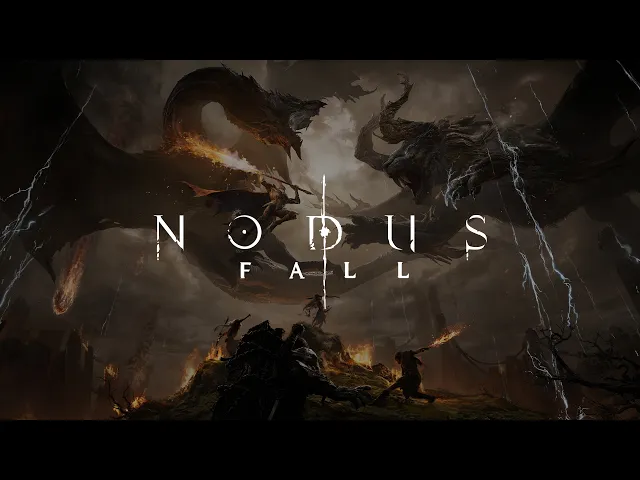
HoYoverse's own strategy says a lot about the outlook for the gacha market. The company built an empire on randomized character pulls, but it is now testing a different model. Nodusfall, a co-op game unveiled in the summer of 2026, will also be free-to-play, but without the familiar gacha system: players unlock characters through progression, while monetization revolves around cosmetics.
There is no basis for linking this decision directly to the US Federal Trade Commission's penalty; the developers describe it as a design choice. Still, the experiment is telling: Genshin Impact's creators are testing whether a major free-to-play game can generate revenue without selling randomized character pulls.
Meanwhile, parent company miHoYo is investing in fields far removed from traditional gacha RPGs, including artificial intelligence and even brain-computer interfaces. It describes its long-term goal as creating a "virtual world that is more real than reality." This is not a move away from games, but a search for new sources of growth beyond a single proven model.
The announcement of Nodusfall does not, by itself, prove that gacha has stopped working. It shows that HoYoverse is already preparing for a market in which its established formula no longer guarantees continued growth. The company is keeping the system that earned it billions, but is no longer betting everything on it.
Quick Answers: Frequently Asked Questions
How much has Genshin Impact earned in total?
HoYoverse does not disclose the exact amount. The game generated more than $6.4 billion on iPhone and Google Play alone over five years, according to AppMagic. Including Chinese Android stores, analysts at Niko Partners estimated mobile revenue at roughly $9 billion back in 2024. Adding PC, PlayStation, and the web store brings the total even higher, to somewhere around $10 billion or more. These are estimates, however, rather than figures from the company's financial statements.
Is Genshin really the fastest game in history to reach these revenue milestones?
Among mobile games, yes. It earned its first billion dollars in 178 days, an official Guinness World Record for a mobile game. It reached $5 billion in 40 months, also a record for the mobile market.
What is gacha, and how does it work?
Gacha is a randomized reward mechanic: you spend currency on a "pull" for a chance to receive a rare character or item. In Genshin, the base probability of pulling a five-star character is 0.6%, but a pity system provides guarantees. You are guaranteed a five-star character by your 90th pull, while getting a specific featured character can take up to 180 pulls in the worst-case scenario.
Who are the "whales" in gacha games?
The term refers to players who spend particularly large amounts of money on a game. This small group accounts for a disproportionate share of revenue: industry estimates suggest that the top 1% of spenders contribute around 29% of all mobile game revenue. Most players, meanwhile, play for free.
Are gacha games dying?
The market is cooling off rather than dying. Genshin's annual revenue fell from $1.8 billion to roughly $500 million over five years, HoYoverse's total mobile revenue nearly halved in 2025, and mid-tier games are shutting down one after another. But the leading titles remain active, new hits are emerging, and some of the decline reflects spending shifting to platforms that revenue trackers do not cover. The model is not disappearing; the market is becoming more concentrated.
Are loot boxes and gacha legal?
It depends on the country. Belgium effectively banned paid loot boxes in 2018, China and South Korea require companies to disclose the odds, and Japan has banned certain predatory mechanics. In the US, Genshin's operator received a $20 million penalty in 2025 over misleading descriptions of the odds and loot box sales to minors. No country has imposed a blanket ban on the entire model, but regulation is getting stricter.
How do you feel about gacha mechanics in games?
Money, Scandals, Phenomena
- The CS2 Skin Economy: Billions of Dollars, Million-Dollar Knives, and a $2 Billion Crash in 30 Hours
- The Biggest Thefts and Hacks in Gaming History: The $620 Million Axie Infinity Hack, Stolen CS2 Skins, and the GTA 6 Leak
- Star Citizen Has Raised a Billion Dollars — and Still Hasn't Come Out
- GTA Controversies: Lawsuits, Bans, and Hot Coffee
- Why Graphics Cards Are So Expensive in 2026: How AI Ate the Memory Supply
- Why have videogames become so expensive, and will they get even more expensive?
- Why Millions of People Click on Bananas, Cookies, and Cows: How Idle Games Have Hacked Our Brains
- What Are the Backrooms? Levels, Entities, Games, and Movie Explained
- Rusty Lake Series Phenomenon. Twin Peaks in the Form of a Point‑and‑Click
- Rideshare "Stimulator": What Kind of Game Is It and Why Did It Spark an AI Controversy?
- AI Is Already Taking Jobs in Game Development — Just Not Where We Expected
- DLSS 5 — Graphics Revolution or Marketing Gimmick? Let's Cut Through the Hype
- Why the Ocarina of Time Remake Announcement Divided Fans — Uncanny Valley, Politics, and Nostalgia
- Why AI Researchers Are Leaving OpenAI, Anthropic, and Google — and What They’re Warning About
- How GTA 5 Made More Money Than Any Movie Ever
- AI in Games: Why Players Boycott Studios Over AI Art and Voices
- How Much Money Has Genshin Impact Made and Why Gacha Is Cooling Off
- Sued for Being Too Addictive: How the Makers of Fortnite, Roblox and Minecraft Ended Up in Court
- The $250 Million AI Chat: How Krafton Asked ChatGPT to Escape Subnautica 2's Founders — and Lost
- What Was Found in the 12TB Steam Leak: Early Builds of GTA 3, Mafia 2, and Valve Games
- How Graphics Card Prices Spiraled: Mining, Scalpers, and Prices No One Could Believe
- The Live-Service Graveyard: How the Industry Burns Billions on Games That Die in Weeks
- Minecraft in Elden Ring and TNT in RDR2: The Wild AI Mashups That Broke the Internet — What's Real and What You Can Download
- Is Deadlock Out? Valve's Invite-Only Game Sets a New Player Count Record
- PS5 Jailbreak: What Relapse Offers and What You Risk
- EU Kids Act Explained: How It Could Change the Internet and Gaming
-
 Genshin Impact In the Dwelling of Life Walkthrough
-
 Genshin Impact Material Trading Guide: How It Works
-
 Genshin Impact Releases Animated Teasers About the Fatui Harbingers, Including Signora
-
 Arlecchino cosplay from Genshin Impact by Oichi — 5 photos
-
 Genshin Impact Firearms Guide: Where to Find and Upgrade Them