

Teach Your Little Sister to Drive: You Talk to Her, the Developer Gets the Bill
 Marat Usupov
In "Teach My Little Sister How To Drive," you sit in the passenger seat and verbally explain to your sister when to turn and where to brake. She controls the car, while you watch the road and give instructions through the microphone. Her responses are improvised on the fly by an AI, so a simple request can turn into an argument with the driver.
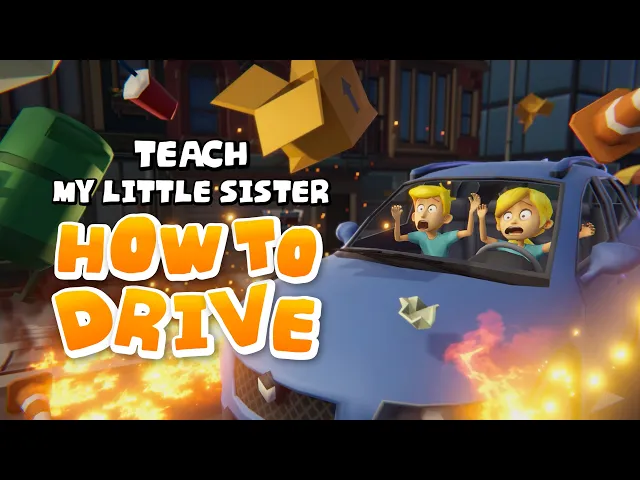
This is the setup for the driving simulator from Easy Fox, which released a free demo on Steam in February 2026. In September, streamers picked up the game: viewers watched players try to reason with their sister behind the wheel. According to the developers, as the player count grew, so did the cost of the cloud AI handling the conversations.
On October 7, the developers announced they were spending over $1,000 a day on AI for the demo. The four-person team also mentioned a bank loan they had taken out to keep the demo running. The result is a situation where players try a free game while the studio pays for their conversations with the character long before the full version is even sold.
Some players want conversational partners they can say anything to; others prefer dialogue pre-written by scriptwriters. But both sides need to know how long a one-time purchase can last if character responses require ongoing costs. I'll try to figure out what determines the price of such a conversation and whether a paid game can still respond to you years later.
How a small demo became too popular

The original game is called Teach My Little Sister How To Drive. The sister behind the wheel answers, argues, gets confused and sometimes does things her own way while the AI improvises her lines. The player stays in the passenger seat and tries to explain what needs to be done on the road: a simple route instruction turns into a conversation with a character who may disagree.
The free demo launched on Steam in February 2026, with the full version promised for January 2027. In September, streamers picked up the game. Based on the videos we found, Japanese streamers were first (from September 20), followed by English-language ones a few days later. The most popular video we found was posted by Japanese streamer Kiyo on September 27; it gathered around 4 million views. The peak came on October 1: 431 concurrent players, according to SteamDB.
For a big game that's a modest number, but for a four-person team even that online count proved so expensive that they had to take out a loan. On October 7, the Easy Fox developers wrote on Steam that they were spending "more than $1,000 USD a day" on AI services for the demo. The team described the audience growth in the same post.
Over the past month, the number of demo players has grown more than 20-fold.
The demo is free, but the studio pays for players' conversations. In an interview with Japanese outlet Game*Spark, the developers said the team had a rule against making the game on debt. They broke that rule when, the day after deciding to switch to a more expensive model, they started seeking a bank loan and got one.

The studio doesn't rule out closing the demo before the full version launches, citing the financial burden on a small team.
There are only four of us, and the financial burden may force us to close access to the demo earlier than planned.
As of October 13, no such decision has been made and the demo is running, but the studio is paying for its AI long before the full game is purchased.
What the studio pays for when the sister answers

A conventional game dialogue can be listened to as many times as you like, since lines written by scriptwriters already sit in the files and don't require payment for each playback. Imagine you ask your sister to turn left again. For a cloud character, the model on a major company's servers writes the answer every time, and the company charges for each request.
The studio itself described the "Teach My Little Sister How To Drive" setup, in which the player's voice during a conversation is sent to an external AI service. In the original scheme, Google's Gemini 2.5 Flash is named as the primary, with two OpenAI models as backups. If the first doesn't respond in time, the game passes the request to the next one, while the studio's server only verifies ownership of a copy and issues temporary access. The player's voice doesn't go through that server, since the external AI service handles the conversation.
The neural network doesn't remember the conversation by itself, so to answer it again needs the road situation and the player's previous lines. With each new response it reprocesses them so the sister doesn't forget the request to slow down, and the provider charges for that too.
The longer the conversation, the more expensive each new response becomes, and OpenAI directly describes this relationship in its documentation for voice models. The entire conversation is sent to the model each time, so lines closer to the end of a session cost more. Google also states for its voice models that previous lines are reprocessed and charged with each new line. How much history is processed in this specific game, the studio doesn't specify, since its page only mentions the most recent lines.
The sister's voice, according to the game's Steam page, is generated on the player's computer. If so, in the cloud the studio is paying primarily for the model to understand the player and come up with a response. But both the studio's page and the Steam card mention voice communication with cloud models, so only the developers know exactly how the work is split between the player's computer and the cloud. That's why the cost of someone else's ride can't be reconstructed from the price list, though estimating the order of magnitude under known conditions is entirely possible.

How much one conversation with the character might cost
The studio hasn't disclosed the price of one ride with the sister, but Google's and OpenAI's public prices allow an estimate of the order of magnitude. This is our calculation, not Easy Fox's costs, since the length of lines, the share of voice and text, and the model choice in the game are unknown to us.
Suppose you say something to the character 40 times, she responds 40 times, and at each turn the model reprocesses the hero description, the road situation and the entire previous conversation. With a detailed hero description and short one-to-two-sentence lines, over a session the model will re-read roughly 56 times more text than it writes itself. That re-reading is where most of the money goes.
Costs can be reduced thanks to the discount providers give if the start of a request repeats word for word. Google charges about 10% of the normal price for such a repeating part (for the Gemini 2.5 Flash model), while OpenAI's discount reaches up to 95% depending on the model. The repeating start of a request may be cached automatically, but the discount isn't guaranteed. Old lines don't have to be resent in full — they can be briefly summarized; for that, developers would need to change how the game works.

Under these conditions, on Google's cheapest text model a session would cost about a cent and a half, and on a mid-tier model about 11 cents. In the second case that's a starting discounted price Google offers until the end of 2026, which will double from January.
Providers charge more for voice than for text, so a session in which the model listens and responds by voice costs differently. By our estimates, without repeat discounts it costs about $1.40 with OpenAI and about 70 cents with Google. For Google we assumed the model's past responses are charged at the voice input price: there's no separate line for this in the price list. If with OpenAI the entire past part of the conversation falls under the discount, it comes out to about 20 cents; we didn't calculate that option for Google.
Looking at costs from another angle, with a round-the-clock online count of 431 as at the peak, $1,000 a day would mean about 10 cents per hour of play per person. In reality the online count is below peak almost all the time, meaning an hour of play costs more. This doesn't contradict Easy Fox's explanation, which in its post links the overall bill to the number of people playing.
It's not that each individual player is especially expensive. The overall costs grew because of the large number of people playing at the same time.
But even a willingness to pay this bill doesn't mean the service will agree to handle all the conversations the game needs.
Why simply paying Google more doesn't always help

When there are many players and the money is there, paying for additional requests seems the logical solution, yet the standard plan doesn't guarantee that possibility. Providers limit the number of requests from a single client and may reject the excess, after which the sister responds with a delay or throws an error.
This is exactly what Easy Fox complains about, saying that as the audience grew, Gemini began frequently returning "errors related to usage limits." The studio asked Google Cloud to raise the limits and was told it couldn't be done manually. The limit grows when the client uses the service more, and using it more was precisely what the studio couldn't do because of the limit. In an interview with Game*Spark, the developers called the situation a dead end. We found no public response from Google to the studio's complaints. To use more, first use more — even if using more is exactly what you're not allowed to do — a "convenient" arrangement for a suddenly popular demo.
Google describes similar logic in the documentation for its business platform Vertex AI, through which the game runs. On this platform, the more an organization has spent over the last 30 days, the more of its requests are served first, and if a guaranteed volume is needed, it must be paid for separately. Judging by this scheme, a studio that became famous in a few weeks may not have enough accumulated spending. What level the Easy Fox project was at is unknown.
According to the studio, outages happened earlier too: back in March it warned players about response delays due to problems on Gemini's servers. The backup service allows the conversation to continue, but the player notices the change right from the passenger seat.
How switching models changes the sister

On September 29, the studio announced that due to frequent Gemini outages, the OpenAI backup model had become the primary one. Three days later it clarified that it was temporarily running a model that was inferior in intelligence to the intended one but more stable under load. In the headline of one major English-language write-up on Tom's Hardware it was called "cheaper," and other outlets repeated that phrasing. The developers in the Game*Spark interview say the opposite: they enabled the alternative model even knowing it was more expensive and its dialogue was slightly worse. In the October 7 post, the studio named restoring stable Gemini operation as its main task.
Players noticed the difference, and in the October 7 post the studio listed complaints about overly long responses, unnatural speech and incorrect command execution. For example, the car turns right when asked to turn left, and for a game whose entire point is conversation, the new manner of speech substantially changes the impression.
On October 14, the studio announced it had switched to Gemini 3.5 Flash Lite with an auxiliary small language model only in the European region. In the patch this auxiliary model is called SLM, but it isn't specified whether it runs on the player's computer. The studio intended to extend this scheme worldwide the following week if stability tests passed. That's a conditional plan, not an announcement that other regions have already been moved to the new scheme. For mainland China, the team separately noted a different model and further refinement of the sister's character.

The cloud character's behavior also depends on the provider, which regularly retires old models, forcing developers to find replacements. In OpenAI's policy, the usual notice period is at least six months for generally available models and three months for their specialized variants. For preview versions it can be much shorter, for example two weeks. Safety or compliance with mandatory requirements may require faster shutdown. Google states that a model will be shut down no earlier than the specified date, and it redirects requests to some old models to new ones itself.
Would you be willing to pay for a game where the character responds using a neural network?
A one-time purchase versus an endless bill

For a normal game, the main costs come during development, after which each subsequent copy can be sold with almost no additional expense. A game with a cloud character works more like an online service: every time someone plays it, the developer incurs costs. The store price doesn't change, while costs grow the more and longer people talk.
Valve has accounted for this case in its Steam developer documentation and directly answers the question about an AI service with per-request costs. According to Valve's answer, the developer decides for themselves how to charge players for AI, but only through payment methods Steam supports: include the costs in the game price, charge through microtransactions, sell a subscription or a one-time add-on. Valve doesn't mandate a specific method.
Developers of games with neural networks have already tried various payment methods. The text role-playing game AI Dungeon at its 2021 peak cost almost $200,000 a month for OpenAI's neural network and Amazon's servers, as company CEO Nick Walton estimated in a conversation with CNBC. Walton described the burden on a small startup separately:
Those were very large expenses.
Later the company moved to cheaper models and offers advanced features by subscription. The comedy game Suck Up!, where a vampire persuades residents to let him into their homes, under 2023 terms was sold with a reserve of "tokens," that is, prepaid conversation time. According to publisher Proxima's estimate, this reserve was enough for roughly 40–50 hours of play, and the terms allowed buying more tokens. In mods like Mantella for Skyrim, the player connects their own access key to a cloud neural network, free or paid, or runs the model on their own computer.

Easy Fox chose the path familiar to players and promises to build AI costs into the full version's price. The developers specifically stipulate the payment method in the post about the future release.
After purchase, players will not be separately billed for individual AI token usage.
In the Game*Spark interview, the developers clarified that based on eight months of demo data they estimate how much AI costs on average per player. If someone talks to the sister far more than the average player, the studio is prepared to earn less profit, but it hasn't yet announced the full game's price.
This approach has a downside that players argue about in Steam discussions: what happens if in a few years the conversation bill exceeds what the studio earned from sales? One player asked whether it would be a subscription game or a game you buy and then gets shut off. Put yourself in the shoes of a buyer who paid for it once and wants to return years later. The ability to move the conversation to your own computer changes far more here than the method of settling up with the studio.
Why not move the neural network to the player's computer

Running the model on the player's computer removes the per-line bill and dependence on provider limits, country blocks and other people's updates. In that variant, replacing the model in an external service no longer affects the character's personality, but the cloud's work must be done by local hardware. Easy Fox's plans mention "introducing local AI models as an auxiliary option for players with sufficiently powerful graphics cards." A small local model that helps the cloud one respond faster to what's happening on the road is, according to the developers, already ready.
For a fully local dialogue, the developers explained in the Game*Spark interview, the model needs about 8 GB of video memory, and together with the voice model, from 12 GB. At the same time the game currently needs only 4 GB under minimum requirements, so moving the conversation to the computer noticeably raises graphics card requirements. The developers expect suitable small models by the end of 2027 or in 2028, but call this a personal forecast.
According to the Steam survey for September 2026, roughly half of participants have a graphics card with 12 GB of memory or more. 45.9% of participants have 8 GB of video memory or less, so a full transfer of dialogue to the computer doesn't suit every survey participant. If the local model were made mandatory, it would cut off roughly half of survey participants. The survey is voluntary and shows the Steam audience as a whole, not the players of a specific game.
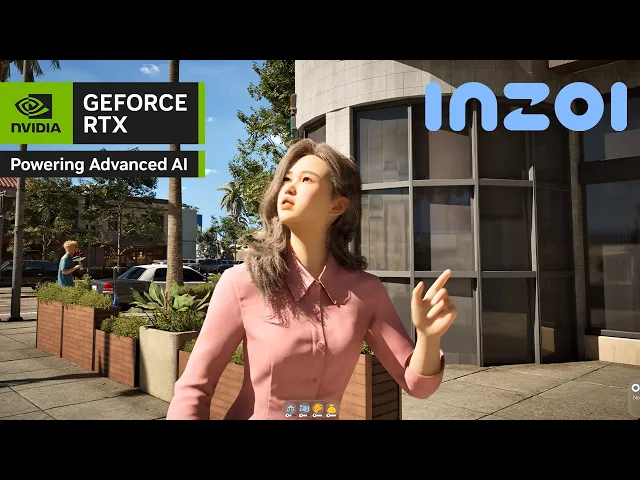
Large companies faced the same problem, also having to place the model in video memory alongside the game itself. In the summer 2026 beta, Krafton's PUBG Ally AI companion ran on the player's computer and required an RTX graphics card with at least 8 GB of memory. The model for it had to be further compressed to fit into video memory alongside PUBG itself. In a joint interview with NVIDIA, Krafton research head Hyunseung Kim and project manager Yujeong Son explained the limitation:
The video memory available to the AI companion is limited.
The cloud variant was also tested, but response speed interfered with squad communication:
The responses often seemed too slow for squad communication.
In the life simulator inZOI, "smart" residents also run on a local model. In 2025, Krafton called the feature experimental and listed high requirements: at least 8 GB of video memory, 12 GB recommended.

A local model isn't free for the player either: it takes up video memory and disk space and loads the graphics card. A small model is also simpler than a large cloud one, so it's tasked with only part of the work. Easy Fox is heading toward this compromise. In the studio's plans the cloud remains the foundation, while the local model becomes a supplement for owners of powerful graphics cards. Dependence on the cloud leaves the question of the service's lifespan open.
What happens to the character in a few years

A normal game without online features stores files on disk and doesn't depend on someone else's server, while a cloud character requires constant external maintenance. Its responses are generated by someone else's server, which the studio pays for, so a saved copy of the game by itself doesn't preserve the conversational partner. If the studio closes, stops paying or the provider shuts down the model and no replacement is found, the sister in the car may fall silent.
This isn't just a theoretical risk. The creators of Genshin Impact announced the shutdown of the online services for their AI companion BSide: Olivia Lin, a separate app, 29 days after launch. Some features, including music and dynamic wallpapers, the company promised to preserve in an offline version. We covered in more detail why a purchased game isn't quite yours in our material: Stop Killing Games, Explained: Why You Don't Really Own the Games You Buy.
We found no confirmed cases of AI dialogue being removed from a Steam game because of its cost, but the "Teach My Little Sister How To Drive" story shows such a character's dependence on the studio's money, the provider's limits and the chosen model not being shut down before interest in the game ends. As long as all this works, the sister keeps arguing about turning left, and the purchase has to be evaluated taking into account the conditions this conversation depends on.
The bottom line
A "live" cloud character requires payment for every response, and processing past lines increases the price of the next ones, while a one-time purchase doesn't cancel these costs. In "Teach My Little Sister How To Drive" the bill became noticeable when the free demo became famous, and a four-person team had to pay it. Approaches already differ: AI Dungeon offers a subscription, Suck Up! under 2023 terms was sold with a token reserve, and Easy Fox promises to build expected costs into a one-time price.
Entry into a conversation can be free, but the interlocutor's work is not. I would evaluate such a character by the conditions that allow it to remain in the game years later. While the sister is behind the wheel and her conversations are paid for in part with borrowed money, will one purchase be enough for her to keep answering later?
Would you buy a game where a character responds via a neural network if the game required a subscription? Tell us in the comments what we missed.
What do you think will happen to cloud-based AI characters in a few years?
Frequently asked questions
What is "Teach My Little Sister How To Drive"?
It's a simulator in which the player verbally teaches their younger sister to drive while sitting in the passenger seat. Her responses and behavior on the road are improvised by an AI. The original title is Teach My Little Sister How To Drive, developed by Easy Fox. A free demo has been available on Steam since February 2026, with the full version promised for January 2027.
How much do the developers spend on AI?
On October 7, 2026, the studio wrote that it spends more than $1,000 a day on AI services for the demo. This is the developers' own statement; they haven't published financial statements that would allow independent verification of the stated demo cost. According to them, it's not an individual player that's expensive but the fact that there are very many players. To keep the demo running, the four-person team took out a bank loan, but the studio hasn't disclosed its amount.
Will the demo be closed?
The developers don't rule out closing the demo before the full version launches due to the financial burden. As of October 13, 2026, no such decision has been made and the demo is available on Steam.
How much will the full version cost?
The price hasn't been announced, but the studio promises to include expected AI costs in it and not to issue separate bills for conversations with the sister.
Why does an AI character cost money every time?
The character's response is written by a neural network on someone else's servers, and their owners charge for each request. In the game's original scheme, the primary provider was Google, with OpenAI as backup; on October 14 the studio announced a switch to Gemini 3.5 Flash Lite with an auxiliary small language model for players in Europe. The neural network doesn't remember the conversation by itself, so at each turn it reprocesses the situation and past lines, and the increasing volume of text makes the response more expensive.
Can such a character be run without the internet?
"Teach My Little Sister How To Drive" currently requires an internet connection, but the studio plans to add a local model as an additional option for powerful graphics cards. By the developers' estimate, a fully local dialogue with voice needs from 12 GB of video memory.
Money, Scandals, Phenomena
- The CS2 Skin Economy: Billions of Dollars, Million-Dollar Knives, and a $2 Billion Crash in 30 Hours
- The Biggest Thefts and Hacks in Gaming History: The $620 Million Axie Infinity Hack, Stolen CS2 Skins, and the GTA 6 Leak
- Star Citizen Has Raised a Billion Dollars — and Still Hasn't Come Out
- GTA Controversies: Lawsuits, Bans, and Hot Coffee
- Why Graphics Cards Are So Expensive in 2026: How AI Ate the Memory Supply
- Why have videogames become so expensive, and will they get even more expensive?
- Why Millions of People Click on Bananas, Cookies, and Cows: How Idle Games Have Hacked Our Brains
- What Are the Backrooms? Levels, Entities, Games, and Movie Explained
- Rusty Lake Series Phenomenon. Twin Peaks in the Form of a Point‑and‑Click
- Rideshare "Stimulator": What Kind of Game Is It and Why Did It Spark an AI Controversy?
- AI Is Already Taking Jobs in Game Development — Just Not Where We Expected
- DLSS 5 — Graphics Revolution or Marketing Gimmick? Let's Cut Through the Hype
- Why the Ocarina of Time Remake Announcement Divided Fans — Uncanny Valley, Politics, and Nostalgia
- Why AI Researchers Are Leaving OpenAI, Anthropic, and Google — and What They’re Warning About
- How GTA 5 Made More Money Than Any Movie Ever
- AI in Games: Why Players Boycott Studios Over AI Art and Voices
- How Much Money Has Genshin Impact Made and Why Gacha Is Cooling Off
- Sued for Being Too Addictive: How the Makers of Fortnite, Roblox and Minecraft Ended Up in Court
- The $250 Million AI Chat: How Krafton Asked ChatGPT to Escape Subnautica 2's Founders — and Lost
- What Was Found in the 12TB Steam Leak: Early Builds of GTA 3, Mafia 2, and Valve Games
- How Graphics Card Prices Spiraled: Mining, Scalpers, and Prices No One Could Believe
- The Live-Service Graveyard: How the Industry Burns Billions on Games That Die in Weeks
- Minecraft in Elden Ring and TNT in RDR2: The Wild AI Mashups That Broke the Internet — What's Real and What You Can Download
- Is Deadlock Out? Valve's Invite-Only Game Sets a New Player Count Record
- PS5 Jailbreak: What Relapse Offers and What You Risk
- EU Kids Act Explained: How It Could Change the Internet and Gaming
- Bloodborne PC Port and AI: Can Fans Port Games Without Permission?
- WARDOGS vs. Call of Duty: Can a $40 Shooter Hurt Modern Warfare 4?
- When and How Will AI Destroy Humanity? 5 Scenarios, Rated by AI
- Is Xbox Dying in 2026, or Just Being Told to Pay Its Own Way?
- How Valve Makes Billions from Steam — and Why It’s Facing Lawsuits
- Witcher 3 Remastered Player Count: Are Old Games Beating New Ones?
- Why EA Is Closing BioWare and What Comes Next for Mass Effect
- EU Gaming Law Plans and You: Kid Mode, In-Game Currency, Loot Boxes
- Teach Your Little Sister to Drive: You Talk to Her, the Developer Gets the Bill
- The Finnish Studio That Beat Apple on Value per Employee — Inside Finland's Strange Game Dev
- Steam Next Fest: Is AI Making Good Games Harder to Find?
- Phantom Blade Zero: 2026’s Biggest Single-Player Steam Launch, Explained
- Has Console Gaming Become More Expensive? PS5, Xbox, and What’s Next
- Switch 2 Jailbreak: How a Hacker Used AI and a $25 App
- Elder Scrolls 6 Release Date: Is Xbox Helix Really the Reason?
- Ocarina of Time Remake: Why Nintendo Is Learning from Its Past
-
 Best Games with Female Protagonists in 2026
-
 Best Games to Play in 2026: Top Picks Across PC, PS5, Xbox & Switch
-
 AI in Games: Why Players Boycott Studios Over AI Art and Voices
-
 Why Graphics Cards Are So Expensive in 2026: How AI Ate the Memory Supply
-
 27 Best Games Like Call of Duty: Shooters Set in the Past, Present and Future