
“XCOM with Lightsabers”: First Star Wars Zero Company Previews Are In
 Hennadiy Chemеris
The first previews of Star Wars Zero Company, the new turn-based tactics game from Bit Reactor, have begun appearing online. The studio includes a number of former XCOM developers, and journalists were given anywhere from around 12 hours with the game to roughly the first third of the campaign. Early impressions are generally positive, though not without some notable reservations. Nearly every outlet draws comparisons to XCOM 2, while also pointing to the influence of Marvel's Midnight Suns and Zero Company's stronger emphasis on characters and relationships within the squad.
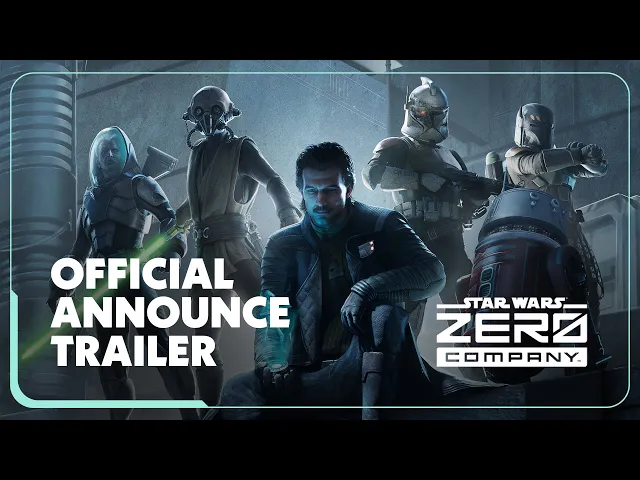
The game is set during the final days of the Clone Wars. Players command Zero Company, a mercenary outfit working with Republic Intelligence. Leading the team is Hawks, a former Republic officer whose appearance, gender, and species can be customized. At the beginning of the story, the company is heavily indebted to the Hutts, but soon finds itself drawn into a conflict with the Infinite Coil, a Separatist-linked paramilitary cult spreading a mysterious disease known as the Shadow Plague. Those who survive the infection are transformed into highly dangerous and unpredictable soldiers.

Here are some of the most notable details from the first previews:
- At its core, Zero Company features classic turn-based combat in the vein of modern XCOM games. Squads consist of four operatives, with each character receiving three Action Points per turn that can be spent on movement, attacks, and abilities. Cover, flanking, Overwatch, and those familiar moments when someone somehow misses an 80–90% shot are all present.
- One of the key additions is the Backup system. An operative can ask an ally to fire an additional shot at a target, provided they have line of sight. Combined with Overwatch, careful positioning, and abilities that grant extra Action Points, this can create lengthy chains of coordinated attacks. PC Gamer particularly praised the squad synergy: in one encounter, the writer triggered an extra shot from an ally, destroyed enemy cover with a grenade, granted another squadmate an additional Action Point, and prepared a different character to return fire during the enemy turn.
- There is no fog of war, meaning enemies are visible as soon as combat begins. This makes encounters more predictable and allows players to position their squad accordingly from the outset, but it also reduces some of the tension found in XCOM 2. PC Gamer specifically criticized the lack of patrols and surprise enemy groups, with Zero Company instead relying more heavily on reinforcements arriving from clearly marked locations.
- The squad includes several fully written story characters: former clone trooper Trick, Jedi Padawan Tel-Rea Vokoss, one-armed fighter Kabb, Umbaran sniper Luco Bronc, exiled aristocrat Jae Mordant, and Mandalorian gunslinger Cly Kullervo. Players can also recruit fully customizable operatives from a variety of classes.
- Characters offer a fair amount of build customization, including weapons, equipment, specializations, and abilities. A secondary specialization becomes available later, allowing players to create hybrid builds. Previewers, for example, built a pistol-wielding Medic with Sabotage skills or turned an otherwise ordinary pistol user into a crit-focused pseudo-sniper.
- Story characters come with unique abilities. Tel-Rea can use the Force to push enemies into environmental hazards, Kabb can quickly close the distance and knock foes into an ally's line of fire, while Trick can bring out heavy weapons such as a rocket launcher. Astromech droids, meanwhile, specialize in support, buffs, extra Action Points, and self-repair.
- Relationships between members of Zero Company are tied directly into the gameplay. Performing actions together, healing one another, and using abilities on teammates increases the Bond between characters, unlocking Cross Training perks and other bonuses. Opinions on the system were mixed: RPG Site liked the way friendships and teamwork reinforce the feeling of a real squad, while Wccftech felt Bonds leveled too quickly and ultimately lacked much impact.
- The entire squad also builds up a shared resource called Advantage by damaging enemies. It can be spent on powerful Ultimate abilities capable of dramatically shifting the course of a battle.
- Permadeath is part of the game. When an operative is downed, they suffer an injury, and a third injury results in death. If a story character dies, their personal questline ends permanently. Hawks can also be killed, though that results in mission failure and forces the player to restart. Permadeath can be disabled entirely regardless of the selected difficulty.
- PC Gamer considers the combination of authored characters and the possibility of permanently losing them one of Zero Company's most interesting ideas. In XCOM, players often created their own stories around largely anonymous soldiers, whereas here each character already has a personality, backstory, and relationships, making the prospect of losing them potentially much more impactful.
- Between missions, players can freely explore the Den, a converted cargo ship located on the Ring of Kafrene. There, they can talk to squad members, treat injured operatives, upgrade characters, recruit new fighters, purchase and modify weapons, customize appearances, and unlock personal hero missions.
- Talking to the squad was one of the most praised aspects of the game. RPG Site compared walking around the Den to making the rounds aboard the Normandy in the original Mass Effect games: characters discuss not only the main plot but also more mundane subjects, such as Kabb's love of space operas or Count Dooku's questionable spending habits. PC Gamer, meanwhile, saw strong Marvel's Midnight Suns influences in the explorable base, pre-mission conversations, team-up attacks, and relationship systems, all of which make Zero Company considerably more character-driven than XCOM.
- The Holotable serves as the centerpiece of the strategic layer. It displays combat missions and Operations, while the campaign itself spans 12 zones. Operations do not involve direct combat. Instead, players assign operatives to tasks, gather intel, credits, and equipment, develop relationships, and influence the wider state of the galaxy. Some Operations are only available for a limited time, meaning it will not be possible to see everything in a single playthrough.
- Strategic choices can also affect enemy forces. For example, the Infinite Coil may be developing multiple troop upgrades at once, while the player is only able to sabotage one of them, allowing the other to proceed. As a result, decisions made on the strategic map can partially determine the types and capabilities of enemies encountered later in the campaign.
- According to the developers, the main story itself is fairly linear. As such, previewers suggest that the primary incentive for replaying the game will come from trying different squad compositions, developing new Bonds between characters, and making alternative choices on the strategic map.
- Previewers also praised the game's presentation. The camera zooms in dramatically during powerful attacks, while some small areas can be explored from a third-person perspective before combat begins. PC Gamer noted that the cinematic presentation, characters, and light RPG elements help Zero Company feel richer than its otherwise fairly traditional tactical foundation might suggest.
That said, the conservative nature of the combat system has been the biggest source of criticism. After roughly 12 hours with the game, GamesRadar noted that most early characters rely too heavily on conventional gunplay, and even the arrival of a Jedi and an astromech droid does not change the experience as dramatically as the writer had hoped. The Backup system works well, but the author questioned whether that one idea would be enough to sustain a lengthy campaign.
PC Gamer reached a similar conclusion, describing Zero Company as a very safe XCOM descendant and noting that at times it feels like an extremely expensive Star Wars-themed XCOM 2 mod. Among the criticisms were small and repetitive combat arenas largely made up of open spaces dotted with crates, a limited variety of early-game enemies, and reduced tension due to the lack of fog of war. The writer was also highly critical of the mouse-and-keyboard controls in the preview build, which reportedly felt noticeably worse than playing with a controller.
Still, nearly all of the previewers agree that the game has a strong foundation. Its characters, squad progression, build variety, ability combinations, and sense of camaraderie within Zero Company have drawn the most praise. Even PC Gamer's more critical preview acknowledged that squad management and progression already offer plenty of room for experimentation early on, though for now the game seems more interested in carefully combining ideas from XCOM and Midnight Suns than in genuinely pushing the genre forward.
Star Wars Zero Company launches on August 27, 2026, for PC, PlayStation 5, and Xbox Series X/S.
We previously published an article rounding up everything we know about Star Wars Zero Company.
What are you hoping to see more of in Star Wars Zero Company — deep XCOM-style tactical gameplay or an engaging story with memorable characters?
-
 Star Wars: Galactic Racer Trailer Shows Landspeeder Controls and Tricks
-
 15 Minutes of Star Wars: Galactic Racer Gameplay Revealed, Featuring Jakku Races and Vehicle Customization
-
 The Voice Cast for Star Wars Zero Company Has Been Revealed
-
 Contact Protocol announced for PC and consoles, with a Spring 2027 release
-
 Star Wars: Visions Presents — The Ninth Jedi Debuts on Disney+ With Strong Early Reviews