
Zach Cregger's Resident Evil Review: No Leon, No Jill, Zero Lore
 Marat Usupov
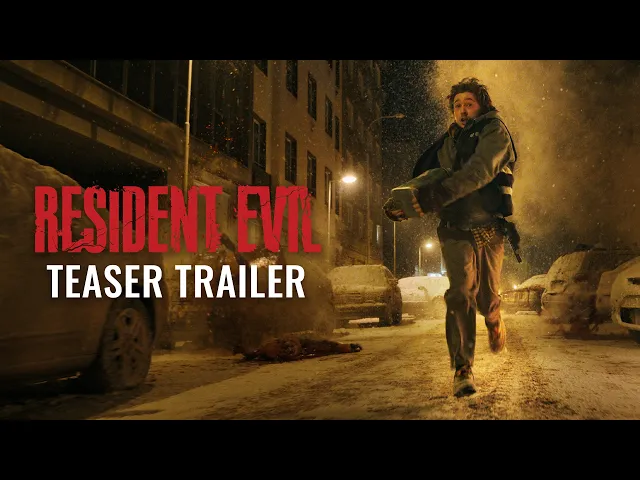
Nobody expected much from the new Resident Evil movie. Trailers were watched with half an eye, and comment sections were united in a collective shrug: "Yeah, just another disposable cash-grab." Sony handed the reboot to Zach Cregger, the director behind Barbarian and Weapons. His very first move? Toss out everything the franchise is known for. No Milla Jovovich, no Leon, no Jill, and no Chris Redfield. The protagonist is an ordinary medical courier tasked with delivering a package to Raccoon City. We've seen the film — here is our verdict on how it turned out.
- Genre: Horror, action, sci-fi;
- Country: United States, Germany;
- Studios: Constantin Film, Columbia Pictures, Davis Films, Vertigo Entertainment, PlayStation Productions, Subconscious, TriStar Pictures;
- Runtime: 93 minutes;
- MPA Rating: Rated R for "strong bloody violence, gore, and language throughout";
- Director: Zach Cregger;
- Screenplay: Zach Cregger, Shay Hatten;
- Budget: ~$75 million;
- Starring: Austin Abrams (Brian), Zach Cherry (Carl), Kali Reis (Maxine), Paul Walter Hauser (Paul);
- Format: Theatrical release.
Resident Evil Without Resident Evil
Paul W. S. Anderson's six films, released between 2002 and 2016, took immense liberties with Capcom's source material. They borrowed the title, the bio-monsters, and the Umbrella Corporation, then let Alice blast her way through hordes of the undead against a high-octane sci-fi action backdrop. As far as guilty-pleasure B-movie blockbusters go, that franchise was tough to top, but its connection to the games remained purely nominal. Still, Anderson at least gave screen time to the T-virus, laboratory conspiracies, and the global spread of infection.

Cregger goes even further. His operating logic is simple: mainstream moviegoers tune out exposition dumps anyway. Why bother when you can focus entirely on an ordinary guy thrown into a meat grinder five minutes in, spending the rest of the runtime desperately clawing his way out? Umbrella, the virus, and government cover-ups are mentioned maybe twice in passing dialogue. By the time you step out of the theater, you can barely recall what the courier was transporting or why that lab even needed the package in the first place.
Instead of spoon-feeding explanations, the film shows. A mutated hound. A woman struck by the protagonist's car on a snow-dusted road who gets back up minutes later and lunges at his throat. An RV where two offhand lines establish that a bite triggers brutal cellular mutations, slowly turning the victim into a tentacled, Cthulhu-esque abomination. That's all the storytelling this ride needs.
The monster lineup doesn't feel particularly "Capcom," either. Stretching, fibrous tissue strands evoke John Carpenter's The Thing. A bloated fiend spewing acidic vomit onto the hero is practically a carbon copy of the Boomer from Left 4 Dead. Another infected sits groaning and wheezing in a corner before its belly ruptures, spewing out a swarm of scuttling vermin — straight out of Dead Space's Pregnant necromorph. Capcom just capped off the franchise's thirty-year run with Requiem, yet inside an official Resident Evil movie, we never actually see classic Resident Evil zombies.

Raccoon City gets the same treatment. Here, it is an anonymous cityscape — vaguely Canadian, vaguely Eastern European. Not a single iconic landmark survives. Hardly shocking, given that principal photography took place in Prague.
The survival-horror gaming DNA shines through in other details: ammunition is always critically low, doors are locked tight, and the camera sticks firmly behind Brian's shoulder, making you feel trapped in the same claustrophobic room, just half a step behind him. The cinematographer deserves genuine credit here. Anderson's camera preferred wide coverage, framing sprawling, bullet-riddled shootouts. Cregger, by contrast, occasionally locks into a full first-person POV — yes, exactly like modern survival horror games — during a desperate scuffle with infected ranch owners and across a precarious, collapsed skybridge connecting two skyscrapers.
The protagonist himself, however, acts nothing like an experienced gamer. You'd never run panicked laps around a patrol car trying to shake a solitary zombie, or sprint into a blind barn to escape an infected dog. The one exception is a highway tunnel barricaded by a jackknifed RV, which could easily serve as an environmental puzzle level. Better yet, the sequence works flawlessly as pure cinema — easily one of the standout set pieces in the film.
Which Resident Evil adaptation is your favorite?
Where's the Money, Zach? Zach. Zaaach!
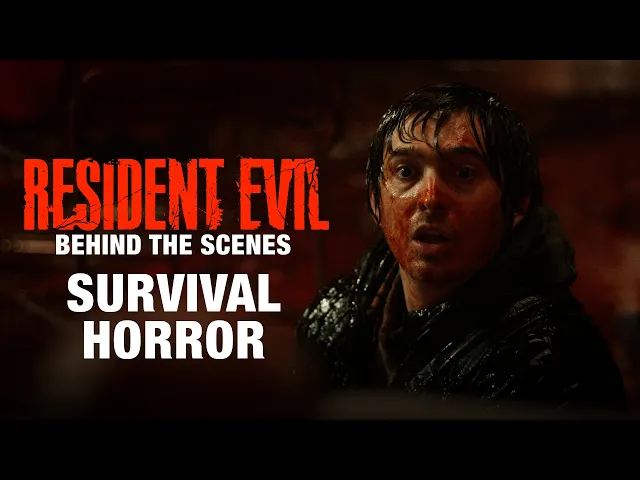
For most of its runtime, this is an intensely low-key, contained affair. A lone protagonist trudges through barren woods, decrepit hallways, and filthy sewers. Sets are bare-bones, and human extras are virtually nonexistent. At times, several stretches feel like they could have been shot on an iPhone. The heavy production budget only announces itself when high-end visual effects, intricate editing, and multi-angle set pieces roll out.

The pacing takes a while to find its footing. The opening 10 to 15 minutes unfold at an unhurried, almost mundane pace: you're still settling into your seat, and the film is in no rush to demand your full attention. A scuffle around an overturned police cruiser injects some adrenaline, but things settle back down — right until an infected dog lunges from the dark. It's a textbook jump scare, but it's precisely the jolt that kicks the survival instinct into gear. From there, the movie rhythmically alternates between quiet breathers and frantic bursts of gunfire, sprints, and genuine terror.
The escalation follows a masterclass in tension. First, Brian scrambles away from a single infected woman around a sheriff's cruiser. Then it's two, three, ten, a hundred. By the time he reaches Raccoon City, zombies are leaping off rooftops and splattering onto the tarmac — the signature trailer money shot where the courier bolts down the street as bodies crash all around him. The audience has plenty of room to empathize with Brian before the movie detonates the tension it spent ninety minutes accumulating.
Practical effects lend the carnage tangible, tactile weight. The sewer behemoth, nicknamed "Fat Man" by the crew, was constructed as a nearly one-ton animatronic puppet operated by six puppeteers, with the entire tunnel set physically constructed around it. To stage that raining-corpses sequence without relying on greenscreen CGI, cranes dropped weighted bags filled with stage blood and prosthetic viscera, synchronizing each drop to Abrams' desperate footfalls.

On the other hand, whenever a rolling meatball abomination made of tangled limbs chases the hero or crawls up a skyscraper facade, the CGI is immediately apparent. In a few spots, the seam between techniques is glaring: a sequence starts with a practical puppet, but the critters bursting from its interior are clearly digital composites. Still, the film disgusts far more often than it scares. In the screening room, the dominant reaction wasn't "that's terrifying" — it was "that's sickening." For body horror, that's high praise.
Gore is dished out with uncompromised relish: the R rating is pushed significantly harder than in most contemporary studio horror. When someone gets torn apart, the camera lingers on every slick coil of entrails. When a head gets blown off, the lens calmly examines the remaining stump and whatever is writhing inside it. An Umbrella security guard gets ripped clean in half midway through — an image that instantly brings to mind the old magician gag about choosing the top or bottom half. The climactic creature was clearly crafted with twisted affection: limbs stretching like Mr. Fantastic, five mismatched eyes, and a yawning maw peeling open across its belly.
The sense of immersion doesn't depend solely on blocking and camera work. The sound design is meticulously textured: every crunching step, ragged breath, and muffled sob cuts right through. The Foley crew seems to have miked every wet surface imaginable, followed by an aggressive layer of visceral sound effects. You barely register the score until the credits approach, when Cregger queues up The Kinks' buoyant track "Animal Farm" — a cheery song about abandoning a mad human world to live peacefully among barnyard animals. Given what Brian has mutated into by that point, the needle drop is wickedly cynical.
That leaves one glaring question: where did all the money go? The production budget clocked in at $75 million, which feels astronomical for a 93-minute, stripped-down horror movie. However, industry insiders report that roughly $20 million went straight to Cregger's personal package for writing, directing, and producing. Factor in backend fees for fellow producers and key talent, and the net budget seen on screen is far leaner than advertised. For comparison, Barbarian was made for a shoestring $4.5 million, while Weapons sat at $38 million.
What scares you most in zombie horror?
A One-Courier Show
Austin Abrams never leaves the screen, and the entire movie hinges on his shoulders. He captures terror, panic, irritation, and crushing exhaustion with raw authenticity: by the final act, you can palpably feel how spent Brian is as his knees buckle under the strain.

The rest of the cast gets the short end of the stick, through no fault of their performances: there simply isn't enough screen time to go around. The turnaround from living human to snarling infected often takes under five seconds, leaving the audience just enough time to clock a single reaction: shrieking hysteria, frozen shock, indignant disbelief, blind fury, ducking under a blanket, or a desperate attempt to pull oneself together.
Such hyper-focused staging comes with a tradeoff: there is no ensemble dynamic and zero character chemistry. Then again, this film never called for an ensemble. Side characters either deliver a quick comedic beat or flicker on screen only to be snuffed out. From a gig-economy courier's perspective, that's exactly what a work shift feels like: pick up a parcel from one person, trade two grunts with another, drop off the box, and move on. He doesn't have the luxury to get invested in anyone else's story.
Motivation at Every Turn
The screenplay's greatest strength is that Brian always has a tangible, immediate reason to push forward, rather than dumping the package in a ditch and fleeing the state.

At first, it's about the money: a rush order paying double time. Besides, going home is miserable — his pregnant girlfriend is driving him insane. Then Brian hits a pedestrian on an unlit road and decides to act like an adult: load her into his car, drive to the hospital, and turn himself in. The local sheriff intercepts him and offers a compromise: take the injured woman off his hands while Brian follows along to drop off the delivery. After the bloodbath at the ranch, there is no one left to save. The only rational move left is to deliver the cargo, get the sign-off, and wash his hands of the nightmare.
Once inside Raccoon City, Brian gets bitten — and quickly learns an antidote actually exists. Reaching the Umbrella lab is no longer about a paycheck; it's a desperate scramble to save his own life. Even in the climax, when barely anything human remains of his body, he still screams for the antidote, believing he can inject it before the mutation fully takes over.
Greed shifts into moral accountability, which instantly gives way to raw survival instinct — and every transition feels natural. In far too many horror movies, protagonists wander deeper into danger simply because the script needs them to. Here, Cregger and Hatten supply their courier with a clear, relatable motivation at every beat. In the survival horror genre, that is exceedingly rare.
Locks Tougher Than Bullets
According to Cregger, post-screening feedback prompted him to trim most of the overt jokes: preview audiences found the cut a bit too comedic. Yet humor remains the film's structural backbone. It just stems less from witty quips and more from organic situations where lethal danger and utter absurdity collide.

The funniest beats stem from watching an ordinary guy grapple with obstacles that video-game protagonists or action heroes clear in a heartbeat. Loading two shells into a shotgun takes Brian an eternity because his hands are trembling uncontrollably from an adrenaline rush. He constantly whiffs pistol shots. He fumbles with the safety catch, flicking every lever in sight, accidentally pulls the trigger, and terrifies himself with the loud bang. He fails to vault a waist-high fence. After two flights of stairs, he wheezes like he's having a coronary. By the midpoint, he finally finds his stride: running faster, aiming truer, flinching less. But the threat level ramps up even faster, making his mundane early panic look almost quaint an hour later.
The film's sharpest micro-comedy routine involves a set of car keys. An Umbrella security guard pulls over in the middle of Raccoon City to mow down zombies. The outcome is painfully predictable, but the keys remain on her person — or rather, on her severed lower half. Brian takes a cautious step toward the keys, and the creature reels the torso closer to its lair. Another step, and the director repeats the routine. It's a visual gag seen a thousand times, but the comedic timing is so razor-sharp that the whole theater laughs out loud.

Padlocks get their own running motif. Cregger repeatedly dismantles the Hollywood trope that a single shot pops open any lock. At the ranch, a heavy padlock withstands three direct shotgun blasts, followed by a pickup truck ramming the gate at full speed — the truck literally climbs the metal frame, yet the gate holds firm. In Raccoon City, while fleeing the rolling meatball abomination, Brian tries shooting off a padlock on a chain-link fence — another waste of ammo. He only makes it through by wrenching back the wire mesh. Naturally, the only lock that actually shatters with a single 9mm round is a rusted padlock on an abandoned parking lot gate nobody cares about.
Even Hell Needs Couriers
The emotional core of the film lies in its social satire, built right into the protagonist's profession. The courier is just an everyday gig worker whose livelihood depends entirely on pounding the pavement. Everyone looks down on him: the ER receptionist speaks through gritted teeth, the attending doctors treat him like a nuisance, and to the Umbrella researchers, he is complete background noise.

And yet this regular guy takes an order and genuinely tries to do his job. He isn't out to save the world or dismantle a corrupt megacorporation — he just wants to drop off the delivery. Along the way, he falls straight into hell: the city is in ruins, grotesque mutations lurk behind every corner, and everything wants to tear his flesh off. He has none of the martial arts training or tactical instincts of classic action heroes — just a desperate instinct to survive and clock out of his shift.
The finale caps the journey with brilliant satire. When Brian finally stumbles into the subterranean Umbrella lab, you expect classic Hollywood "mad scientists" — cold, calculating megalomaniacs willing to sacrifice mankind for the sake of science. Instead, the facility is staffed by Gen-Z techies in sneakers: they engineer bioweapons on government grants, but at the first sign of a breach, they cower under desks shrieking, "He's gonna kill us!" Cregger takes aim at two targets at once: the vintage evil-genius trope Hollywood recycled for half a century, and a generation capable of synthesizing apocalyptic pathogens while crumbling under the slightest brush with real-world panic.

***
Zach Cregger's Resident Evil is neither a bloated blockbuster in the mold of Paul W. S. Anderson's franchise nor a disastrous video game misfire like Borderlands. There are no leather-clad action heroines, no bombastic martial arts duels with trench-coated villains, and no endless seas of CGI undead stretching to the horizon. What makes Cregger's film work is its commitment to a protagonist who panics, makes clumsy blunders, yet claws his way forward anyway — making his ordeal feel genuinely harrowing. If you enjoy unflinching body horror and pitch-black humor, grab a ticket; if you're waiting for a faithful, lore-heavy Resident Evil adaptation, you're better off replaying Requiem.
-
 How the New Resident Evil Movie Divided Fans Before It Even Hit Theaters
-
 Resident Evil Star Austin Abrams Admits He Knew Literally Nothing About the Franchise Before Filming
-
 New Resident Evil Movie Shatters Franchise Records With $108 Million Global Opening
-
 Audiences React to the New Resident Evil Movie
-
 Resident Evil Game Actor Reacts to Zach Cregger's Movie Adaptation