
The End of Programmers? Google’s AI Single-Handedly Built a Working Windows 11 Clone
 Arkadiy Andrienko
An enthusiast going by the handle Chetaslua managed to do single-handedly what usually takes entire teams of front-end developers: with just one text command, he got Google’s AI to spin up a fully functional operating system directly inside a browser.
We aren’t just talking about a static image styled to look like Windows. In the published video, you can see the AI generating an interactive web-based clone of Windows 11 using pure code — HTML, CSS, and javascript. The experiment’s author claims it worked on the very first try, without lengthy fine-tuning or extra frameworks. This virtual PC from Gemini wasn’t just a simple demo; it turned out to be a genuinely functional tool. Inside the interface, you can run a calculator that actually does math, and a Paint editor that supports different brush types. The user can switch themes from light to dark, open the Start Menu with smooth animations, and even check the weather — and judging by the video, the data being pulled is current.
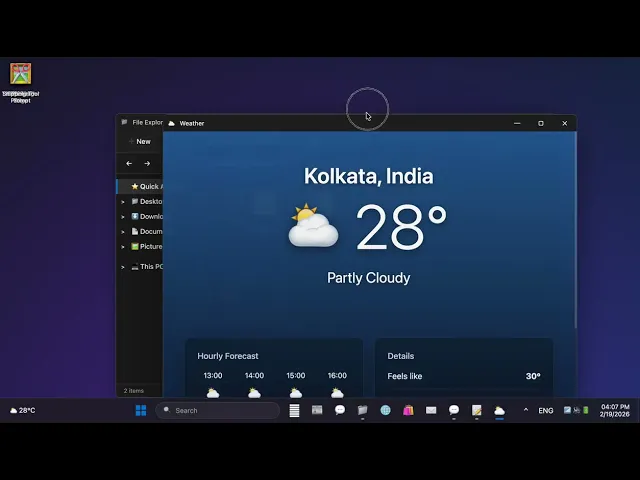
The model’s ability to assemble a working web application from scratch in a single step propels it to the top of the unofficial WebDev Arena rankings. While older AIs could draw a pretty mock-up but fell apart when it came to interactive logic, here we’re seeing a true symbiosis of design and functionality. What’s more, in previous experiments, the author mentioned that Python even pops up in this web OS’s terminal, opening up possibilities for running code directly from the "Run" command.
Essentially, this is the first real sign that next-generation AI is transitioning from being just a conversational partner to a full-fledged software assembler. If the 3.1 Pro can handle creating such a complex interface with a single prompt, what will happen when developers give it access to real-world tools?

The story of the Gemini 3.1 Pro Windows 11 clone is notable not so much for its technical wizardry, but for how it changes the game. For Google, this is both PR and a stress test. On one hand, viral experiments like this fuel demand for paid subscriptions. On the other, the smarter these models get, the harder it becomes to keep them within the bounds of safe use.
What do you think — if AI learns to build interfaces better and faster than humans, does the front-end development profession face a future as uncertain as that of modern artists?
-
 AI for Actual Science: Gemini 3 Deep Think Can Admit It's Wrong. Now We Just Need to Teach It Not to Mess Up a Hundred Times First
-
 Now Music is Just a Conversation: Gemini Composes Tracks Right in the Chat While You Sip Your Coffee
-
 Gemini Voice Navigation Now Available Globally in Google Maps
-
 Google Tests Chat Import and 4K Image Uploads in Gemini
-
 77% vs. 31%: The New Gemini 3.1 Pro Just Crushed Its Predecessor in Benchmarks, But Will It Deliver in the Real World?