
“Hello, Is This a Human?”: Google Launches AI Whose Speech Is Nearly Indistinguishable from Live Human Voice
 Arkadiy Andrienko
Google has begun rolling out a new speech synthesis model, Gemini 3.1 Flash Live, designed for real‑time, live conversation. Developers already have access to it via the API and AI Studio, while regular users may encounter the update in Gemini Live services and the search engine, where the rollout began on March 26.
The new model features lower latency and more expressive intonations. In classic voice assistants, there’s often a noticeable pause between the end of a user’s question and the start of the response, along with a “robotic” rhythm of speech. Google claims that the new version of Gemini significantly narrows this gap, making conversation more comfortable. The company hasn’t disclosed exact latency figures, but researchers in speech perception cite a comfortable threshold of around 300 milliseconds, and according to indirect data, the new engine is approaching that figure. Previously, an AI with voice customization features was rolled out by NVIDIA.
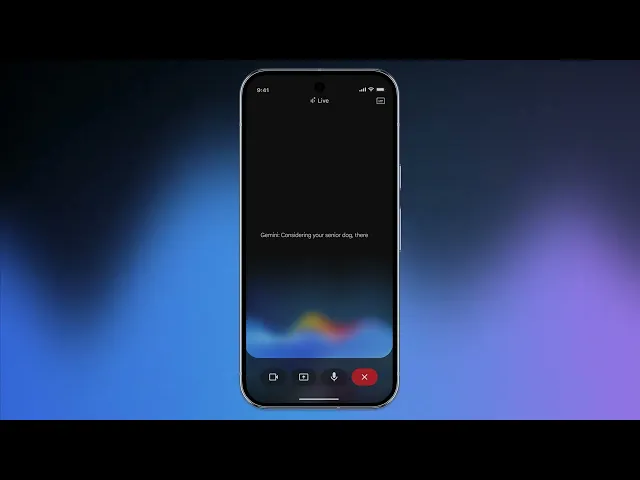
In addition to speed, the model demonstrates better resilience to “human” interruptions in conversation. According to internal tests and benchmarks, Gemini 3.1 Flash Live handles complex multi‑step instructions (ComplexFuncBench Audio) more effectively, and responds more appropriately when the interlocutor hesitates, pauses, or interrupts the response (the Audio MultiChallenge test). However, in the latter test, the model scored 36.1%, whereas highly specialized non‑dialogue systems can achieve 50%.
Because the synthesis quality has become so close to human speech that it could be misleading, Google has introduced a watermarking system, and all generated audio data will contain invisible SynthID watermarks. They are inaudible to the human ear but make it technically possible to determine the origin of the speech using algorithms, which should protect against potential abuses such as creating fake voice recordings. Incidentally, Google’s new music AI, Lyria 3 Pro,
Reviews highlight a high degree of realism in mimicking human speech, meaning that in the near future, users may find themselves in a situation where, during a call to customer support or while interacting with search, it will be difficult to tell by ear whether they are speaking with a live operator or a neural network.
What do you think: should developers and services warn users that there’s an artificial intelligence on the other end of the line, or is conversation quality more important than transparency? Share your thoughts in the comments.
-
 Apple Didn’t Try to Reinvent AI — It’s Just Going to Tuck Google Away in a Separate Icon and Call It Siri
-
 Google is turning its translator into a language tutor. AI will now point out your mistakes
-
 New Google algorithm cuts memory usage sixfold. Is expensive hardware doomed?
-
 No More 30 Seconds: Google’s New AI Writes Full-Length Songs — But Only If You Pay
-
 Google and Meta have to pay the woman $6 million because of her dependence on social networks