

Every Metal Gear Game in Order: Story Chronology and Release Order Explained
 Anastasiia Sokolova
Metal Gear is one of those series where even veterans can get confused by the question, “What order should I play the games in?” For nearly thirty years, Hideo Kojima told its story out of chronological order: the earliest entries covered events from later in the timeline, while subsequent games kept venturing further into the past. As a result, the release order differs significantly from the chronology of events within the universe.
There are two ways to approach the series. The first follows the release dates, from the eight-bit Metal Gear of 1987 to modern collections and the Metal Gear Solid Delta: Snake Eater remake. The second follows the in-universe chronology, from the jungle operation of 1964 to the conclusion of Solid Snake's story in 2014. The latest point on the timeline remains the spin-off Metal Gear Rising: Revengeance, which takes place in 2018. We will also take a separate look at the spin-offs, collections, and Delta, as well as the most convenient starting points for newcomers.
Series Chronology
- Every Metal Gear Game in Order: Story Chronology and Release Order Explained
- In What Order to Play Resident Evil Games Before Requiem
- What order to watch Marvel Cinematic Universe movies and TV shows in
- All Silent Hill Games in Order
- All Dark Souls Games in Order — and Where to Start with FromSoftware's Soulslikes
- All Yakuza (Like a Dragon) Games in Order: Where to Start and Full Chronology
- All Tomb Raider Games in Order: Every Game, Movie and the Series Timeline
- Where to Start With Warhammer 40,000 — Games, Lore & Books for Beginners
- All Call of Duty Games in Order: Release Order, Story Timeline and Where to Start
- Mass Effect Games in Order: The Complete Series Chronology
- All GTA Games in Order: The Complete List and Chronology of the Grand Theft Auto Series
Release Order of Every Metal Gear Game
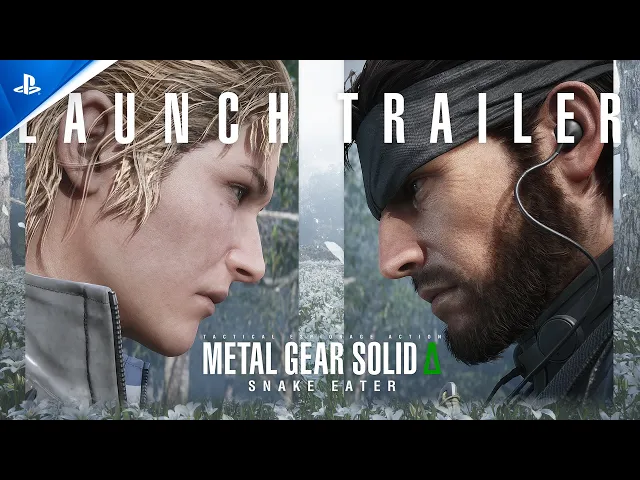
It all began back in 1987 with the original Metal Gear, not the famous Metal Gear Solid that many people mistakenly regard as the first game. Over nearly forty years, the series has appeared on a wide range of platforms, from the eight-bit MSX2 computer to modern consoles and PCs. Here is the complete list in the order the games originally hit store shelves:
- 1987 — Metal Gear (MSX2);
- 1990 — Metal Gear 2: Solid Snake (MSX2);
- 1998 — Metal Gear Solid (PS1);
- 2000 — Metal Gear: Ghost Babel (Game Boy Color), spin-off;
- 2001 — Metal Gear Solid 2: Sons of Liberty (PS2);
- 2004 — Metal Gear Solid: The Twin Snakes (GameCube), remake of MGS1;
- 2004 — Metal Gear Solid 3: Snake Eater (PS2);
- 2004–2005 — Metal Gear Ac!d and Ac!d 2 (PSP), spin-offs;
- 2006 — Metal Gear Solid: Portable Ops (PSP);
- 2007 — Metal Gear Solid: Portable Ops Plus (PSP), expansion;
- 2008 — Metal Gear Solid 4: Guns of the Patriots (PS3);
- 2010 — Metal Gear Solid: Peace Walker (PSP);
- 2011 — Metal Gear Solid HD Collection (collection);
- 2013 — Metal Gear Rising: Revengeance (PC, PS3, Xbox 360), spin-off;
- 2014 — Metal Gear Solid 5: Ground Zeroes (PC, PS3, PS4, Xbox 360, Xbox One);
- 2015 — Metal Gear Solid 5: The Phantom Pain (PC, PS3, PS4, Xbox 360, Xbox One);
- 2018 — Metal Gear Survive (PC, PS4, Xbox One), spin-off;
- 2023 — Metal Gear Solid: Master Collection Vol. 1 (collection);
- 2025 — Metal Gear Solid Delta: Snake Eater (remake of the third game);
- 2026 — Metal Gear Solid: Master Collection Vol. 2 (collection).
Metal Gear Timeline: The Story in Chronological Order
If you arrange the games not by release date but by the years in which their stories take place, the entire list is turned upside down. The first game chronologically is Snake Eater, set in 1964, even though it was only the sixth game released. The oldest entries in the series, Metal Gear and Metal Gear 2, end up close to the end of the timeline, with their events taking place in the 1990s. Meanwhile, the numbered Metal Gear Solid games that made the series famous worldwide bring the overall story to its conclusion.
In this case, it is easier to see the order once than to read an explanation of it. The table below shows both timelines at once: the games are listed on the left in chronological story order, while their release years appear on the right, making the extent of the confusion immediately clear.
| Game | Years in the Story | Release Year |
|---|---|---|
| Metal Gear Solid 3: Snake Eater | 1964 | 2004 |
| Metal Gear Solid: Portable Ops | 1970 | 2006 |
| Metal Gear Solid: Peace Walker | 1974 | 2010 |
| Metal Gear Solid 5: Ground Zeroes | 1975 | 2014 |
| Metal Gear Solid 5: The Phantom Pain | 1984 | 2015 |
| Metal Gear | 1995 | 1987 |
| Metal Gear 2: Solid Snake | 1999 | 1990 |
| Metal Gear Solid | 2005 | 1998 |
| Metal Gear Solid 2: Sons of Liberty | 2007 and 2009 | 2001 |
| Metal Gear Solid 4: Guns of the Patriots | 2014 | 2008 |
| Metal Gear Rising: Revengeance | 2018 | 2013 |
Outside this chain are the spin-offs: some take place in alternate realities, while others are not part of the main canon at all.
Cold War: The Rise of Big Boss (1964–1984)
The entire saga began not with high-tech walking tanks, but with a single soldier codenamed Naked Snake. His journey from a lone hero to the founder of his own army explains where the Metal Gears and the endless conflict involving Snake's clones ultimately came from. This is the earliest part of the story chronologically — and, conveniently for newcomers, an excellent entry point.
Metal Gear Solid 3: Snake Eater
- Platforms: PS2 (original), later PS3, Xbox 360, PS Vita as part of HD collections;
- Developer: Konami;
- Release Year: 2004;
- Story Year: 1964.
Chronologically, Metal Gear Solid 3: Snake Eater is where the entire story begins. The Cold War is at its height, and agent Naked Snake is sent into the Soviet jungle to extract a defecting scientist and then prevent a nuclear catastrophe. This is where we first see an ordinary operative transform into a living legend and earn the title of Big Boss — the man around whom the entire series will eventually revolve.
Snake Eater is still considered by many to be the best game in the series, thanks to its self-contained spy story in the spirit of James Bond films, wilderness survival, wound treatment, and, of course, the legendary sniper duel with The End. It also explores themes of betrayal, duty, and the price soldiers pay for their service.
Metal Gear Solid: Portable Ops
- Platforms: PSP;
- Developer: Kojima Productions;
- Release Year: 2006;
- Story Year: 1970.
Six years after the events of Snake Eater, Big Boss begins assembling the core of his own unit. The status of Portable Ops is disputed — it is generally treated as semi-canon, but chronologically it is usually placed between Snake Eater and Peace Walker. This is where the idea of an army without a nation begins to take shape, along with the group of people who will continue to follow Snake. The game was criticized for its awkward handheld controls, but it fills an important gap in the story, so completionist fans generally do not skip it.
Metal Gear Solid: Peace Walker
- Platforms: PSP, later PS3, Xbox 360 in the HD collection;
- Developer: Kojima Productions;
- Release Year: 2010;
- Story Year: 1974.

Costa Rica, 1974. Big Boss establishes Militaires Sans Frontières — an army that answers to no country — and encounters a weapon capable of launching a nuclear strike without human involvement for the first time. Peace Walker introduced the base-management and soldier-recruitment systems that would later be expanded into a full-fledged Mother Base in the fifth game. Despite its handheld origins, it is a major chapter in the story rather than a spin-off. It is available in the new Master Collection Vol. 2 compilation.
Metal Gear Solid 5: Ground Zeroes
- Platforms: PC, PS3, PS4, Xbox 360, Xbox One;
- Developer: Kojima Productions;
- Release Year: 2014;
- Story Year: 1975.
This is essentially a prologue to The Phantom Pain — a short but eventful operation to rescue prisoners from a secret military base. Ground Zeroes ends in a catastrophe that destroys everything Big Boss built in Peace Walker and leaves him in a coma for nine years. It can be completed in just a couple of hours, but this is where the final chapter of Big Boss's story begins.
Metal Gear Solid 5: The Phantom Pain
- Platforms: PC, PS3, PS4, Xbox 360, Xbox One;
- Developer: Kojima Productions;
- Release Year: 2015;
- Story Year: 1984.
The final game Kojima made for the series is also its most ambitious. The Phantom Pain offers a vast open world, enormous freedom in how missions can be approached, and a dark revenge story that completely reshapes the player's understanding of who Big Boss really is. This is where all the threads of the Cold War era come together and where the game explains why Solid Snake will eventually fight against his own “father” in the older titles set in the 1990s. Some fans consider the project unfinished compared to what was originally envisioned, but even in its existing form, it remains one of the best stealth sandboxes ever made — something we discussed in our feature 10 Years of The Phantom Pain.
The Birth of Outer Heaven: The First Metal Gear Games (1995–1999)
The earliest games in the series take place almost at the very end of the timeline. The story moves into the 1990s, and a different protagonist takes center stage — Solid Snake, a clone of Big Boss who is forced to fight against what his progenitor created.
Metal Gear
- Platforms: MSX2, later re-releases;
- Developer: Konami;
- Release Year: 1987;
- Story Year: 1995.
This is where it all began with Metal Gear. Rookie operative Solid Snake is sent into the fortress of Outer Heaven to destroy Metal Gear, a walking tank equipped with nuclear weapons. The game helped define the stealth genre: instead of shooting every enemy, players were encouraged to avoid them. By 1987 standards, it was revolutionary — and Kojima would spend decades refining the concept.
Metal Gear 2: Solid Snake
- Platforms: MSX2, later re-releases;
- Developer: Konami;
- Release Year: 1990;
- Story Year: 1999.
A direct sequel in which Snake travels to the fictional nation of Zanzibar Land. Metal Gear 2 pushed stealth gameplay significantly forward: it introduced a radar, the ability to hide in grass, distract enemies by making noise, and crawl. Many of these ideas would later carry over almost directly into Metal Gear Solid. Western players barely had a chance to experience the game until later re-releases.
Solid Snake vs. the Patriots (2005–2014)
The Metal Gear Solid trilogy is what made audiences around the world fall in love with the series. Here, Solid Snake goes from the hero of a single operation to a weary soldier unraveling a conspiracy orchestrated by the all-powerful organization known as the Patriots. Chronologically, these games bring the main storyline to its conclusion.
Metal Gear Solid
- Platforms: PS1, later PC;
- Developer: Konami;
- Release Year: 1998;
- Story Year: 2005.

This is the game that transformed the series from a cult favorite into a legend. Metal Gear Solid brought stealth into 3D, added cinematic cutscenes, memorable bosses, and the series' signature Codec conversations. Snake is called out of retirement to suppress an uprising at the Shadow Moses facility — an operation that marks the beginning of his decade-long personal war.
Metal Gear Solid 2: Sons of Liberty
- Platforms: PS2, later PC, Xbox;
- Developer: Konami;
- Release Year: 2001;
- Story Year: 2007 (tanker) and 2009 (Big Shell).
A bold experiment that divided fans at the time but is now often described as Kojima's greatest masterpiece. Metal Gear Solid 2 begins with Snake aboard a tanker, only to suddenly shift its focus to a rookie named Raiden. The story delves into information, censorship, social control, AI, and even the role of memes — and ended up being eerily prophetic for the internet age. Today, this is precisely what the second game is praised for.
Metal Gear Solid 4: Guns of the Patriots
- Platforms: PS3, later in a collection on PC, PS5, Xbox Series, Switch, Switch 2;
- Developer: Kojima Productions;
- Release Year: 2008;
- Story Year: 2014.
The conclusion of Solid Snake's story. An aging and dying hero embarks on one final mission in a world where wars are fought by private armies and everything is controlled by the Patriots. Guns of the Patriots ties together the threads of all the previous games and answers questions that had been piling up since the very first Metal Gear. For many years, the game remained exclusive to PlayStation 3. It finally escaped the platform in 2026 as part of the second Master Collection.
Metal Gear Rising: Revengeance
- Platforms: PC, PS3, Xbox 360;
- Developer: PlatinumGames;
- Release Year: 2013;
- Story Year: 2018.
Technically a spin-off, but chronologically the latest point in the entire universe. Metal Gear Rising is a fast-paced slasher starring an older Raiden, who slices enemies apart with a katana and cuts through almost anything around him in slow motion. The game was entrusted to PlatinumGames, resulting in an over-the-top action title that largely stands on its own while also serving as the final point on the series' timeline.
Spin-offs, Remake, and Collections
Beyond the main storyline, Metal Gear has accumulated an impressive number of offshoots, experiments, and re-releases. Some are full-fledged games set in alternate realities, while others simply provide a way to play the classics on modern hardware.
Metal Gear Ac!d and Ac!d 2
- Platforms: PSP;
- Developer: Konami;
- Release Year: 2004 and 2005.
A duology that turned stealth into turn-based card-based tactics. Metal Gear Ac!d and its sequel Ac!d 2 exist outside the main storyline — they are standalone experiments aimed at players who are more interested in unusual mechanics than the overarching narrative. Newcomers are better off not starting the series with them.
Metal Gear Solid: Portable Ops Plus
- Platforms: PSP;
- Developer: Kojima Productions;
- Release Year: 2007.

Portable Ops Plus is a standalone expansion to Portable Ops released a year later. There is barely any proper story here: the focus is on multiplayer and an endless mode featuring randomized maps and new soldiers to recruit. It is an extra for those who wanted more after Portable Ops and has no real impact on understanding the overall story.
Metal Gear: Ghost Babel
- Platforms: Game Boy Color;
- Developer: Konami;
- Release Year: 2000.
A handheld game released in Europe simply as Metal Gear Solid. Ghost Babel tells an alternate story unrelated to the main timeline, yet it is also considered one of the most highly regarded stealth games on the Game Boy Color. It remained something of a rarity for years until it was included in the second Master Collection.
Metal Gear Solid: The Twin Snakes
- Platforms: GameCube;
- Developer: Silicon Knights, Kojima Productions;
- Release Year: 2004.
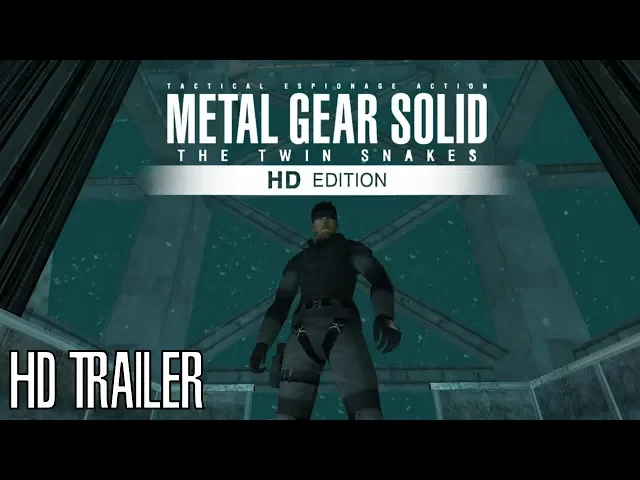
The Twin Snakes is a remake of the original Metal Gear Solid, developed by Silicon Knights together with Kojima Productions for the GameCube. The story is the same as in the 1998 original — set in 2005 within the timeline — but the graphics were rebuilt using the technology of the second game, while director Ryuhei Kitamura restaged the cutscenes with Snake performing acrobatic stunts straight out of an action movie. Since the story essentially duplicates MGS1, we kept the original in the main chronology above.
Metal Gear Survive
- Platforms: PC, PS4, Xbox One;
- Developer: Konami;
- Release Year: 2018.
The first game in the series made without Kojima. Metal Gear Survive sends anonymous soldiers into a parallel dimension where they fight zombie-like creatures, gather resources, and build a base. It has almost nothing to do with the main canon and was poorly received by fans.
Metal Gear Solid HD Collection
- Platforms: PS3, Xbox 360, PS Vita;
- Developer: Konami;
- Release Year: 2011.
Metal Gear Solid HD Collection was the first major attempt to bring the classics together in one package: it included MGS2, MGS3, and Peace Walker in enhanced quality. At the time, it was the best way to play several key entries at once, although newer collections have since replaced it.
Metal Gear Solid: Master Collection Vol. 1
- Platforms: PC, PS4, PS5, Xbox Series, Switch;
- Developer: Konami;
- Release Year: 2023.
One of the current ways to get into the franchise, Master Collection Vol. 1 includes the first Metal Gear Solid trilogy along with the two earliest games in the series — Metal Gear and Metal Gear 2 — plus bonuses such as graphic novels and digital extras. It is a convenient option for starting a chronological playthrough with Snake Eater or simply refreshing your memory.
Metal Gear Solid Delta: Snake Eater
- Platforms: PC, PS5, Xbox Series;
- Developer: Konami;
- Release Year: 2025;
- Story Year: 1964.
A full remake of the third game built on Unreal Engine 5. Metal Gear Solid Delta: Snake Eater retains the original story and direction while updating the graphics and controls to modern standards. For a newcomer, this is arguably the most accessible way to jump into the saga — you can read more in our Metal Gear Solid Delta review.
Metal Gear Solid: Master Collection Vol. 2
- Platforms: PC, PS5, Xbox Series, Switch, Switch 2;
- Developer: Konami;
- Release Year: 2026.
The second collection arrived in 2026 and filled an important gap: with Master Collection Vol. 2, the developers finally brought Metal Gear Solid 4 beyond PlayStation 3 while also adding Peace Walker and the rare Ghost Babel. This package makes it possible to play the later part of the chronology on all major current platforms. Read more in our Metal Gear Solid: Master Collection Vol. 2 review.
Where to Start with Metal Gear
There is no single correct answer — it depends on what you want from the series. There are three solid approaches:
- Chronological order. Start with Snake Eater — or, better yet, the Delta remake — and then follow the story chronology shown in the table above. This way, the Cold War storyline and the conflict surrounding Snake's clones unfold in a clear and logical sequence.
- Release order. Start with 1998's Metal Gear Solid — available in Master Collection Vol. 1 — and experience the series the way longtime fans originally did. This allows the plot twists to work exactly as Kojima intended.
- Start with a single game. If you just want to see what the series is about, choose Snake Eater / Delta as the most self-contained entry or The Phantom Pain for the strongest gameplay.
Incidentally, when newcomers asked Hideo Kojima where to begin, he himself recommended starting with the third game — the one that opens the chronology.
Frequently Asked Questions
Here are concise answers to the most common questions about the order in which to play the series.
What order should you play Metal Gear in?
There are two main options. In chronological story order: MGS3 → Portable Ops → Peace Walker → Ground Zeroes → The Phantom Pain → Metal Gear → Metal Gear 2 → MGS1 → MGS2 → MGS4 → Metal Gear Rising. In release order, you play the games as they originally came out, from 1987's Metal Gear to the collections and remakes of the 2020s (the full list with release years can be found in the “Release Order” section above). Chronological order makes the overall story easier to follow, while release order preserves the original presentation and the intended impact of the plot twists.
Which Metal Gear game should a newcomer start with?
Metal Gear Solid 3: Snake Eater or its Delta remake. It is the beginning of the timeline, tells a self-contained story that can be understood without playing the other games, and is also one of the best entries in the series.
Do you have to play the old MSX and Game Boy games?
No. Metal Gear and Metal Gear 2 are important to the story, but both can now be played as part of Master Collection Vol. 1. Spin-offs such as Ac!d, Ghost Babel, and Survive are not required to understand the main storyline — they are optional for those who want more.
Does Metal Gear Solid Delta replace the original MGS3?
In terms of story, yes: it is the same Snake Eater, rebuilt on a new engine with modernized controls. If you are playing the third game for the first time, the Delta remake is the most convenient option. The original remains worthwhile for those who want to experience the 2004 game as it was originally released.
Is Metal Gear Rising part of the main series?
Technically, it is a spin-off developed by PlatinumGames rather than Kojima. Chronologically, however, it takes place later than every other game and serves as the final point on the universe's timeline. The genre is also different: instead of stealth, it is a fast-paced action slasher starring Raiden.
Which Metal Gear game did you start with? Do you agree that Snake Eater is the best game in the series, or do you have a different favorite? Maybe MGS5? Let us know in the comments!
Which way of getting into Metal Gear do you find most convenient?
-
 Konami Releases Metal Gear Solid: Master Collection Vol. 2 Featuring MGS4, Peace Walker, and Ghost Babel
-
 Metal Gear Solid: Master Collection Vol. 2 Gets First Reviews and Scores — Here's What Critics Think
-
 91.8% of Metal Gear Solid 4 PC Players Grabbed a Statue Achievement Right Away
-
 Metal Gear Solid: Master Collection Vol. 2 Rewrites MGS4's Disc-Change Joke
-
 Metal Gear Rising: Revengeance and Devil May Cry games are available at discounted prices