
ArmA 2 is a real combat simulation game developed by Bohemia Interactive. It is a sequel to the first game, Armed Assault, as well as the now-forgotten Operation Flashpoint. ArmA: Armed Assault was not very successful; the developers released it mainly to stay afloat. ArmA 2 is a successful product, much more so than its predecessor.
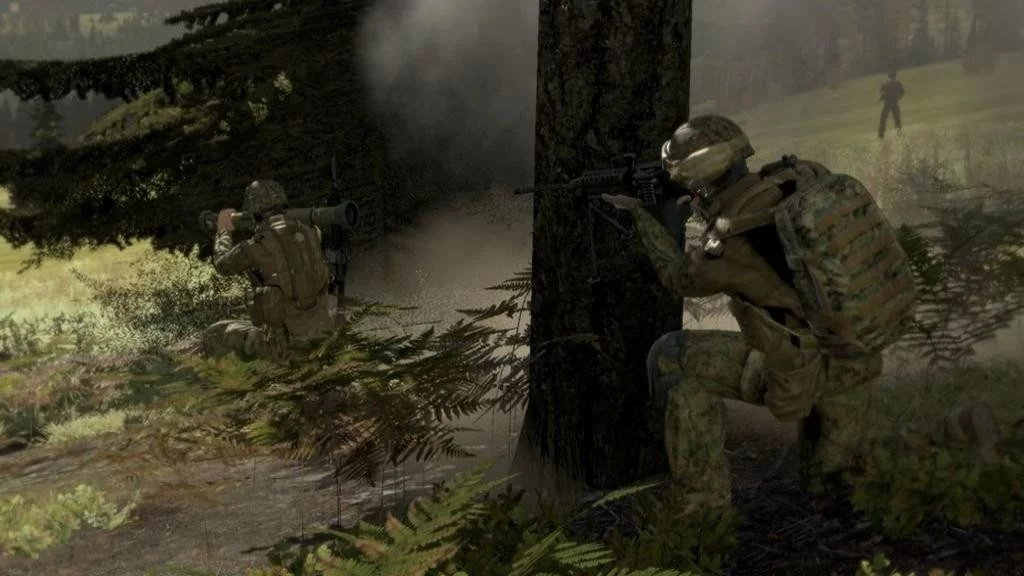
The game's developers are known for their commitment to creating the most realistic simulation of a military environment. The game features realistic weapons, vehicle models, terrain, weapon ballistics, recoil, reloading, identification, damage, character and vehicle movements, as well as their speed. Birds and insects are controlled by AI and react to the environment, while the terrain and static objects such as trees and buildings are destructible.
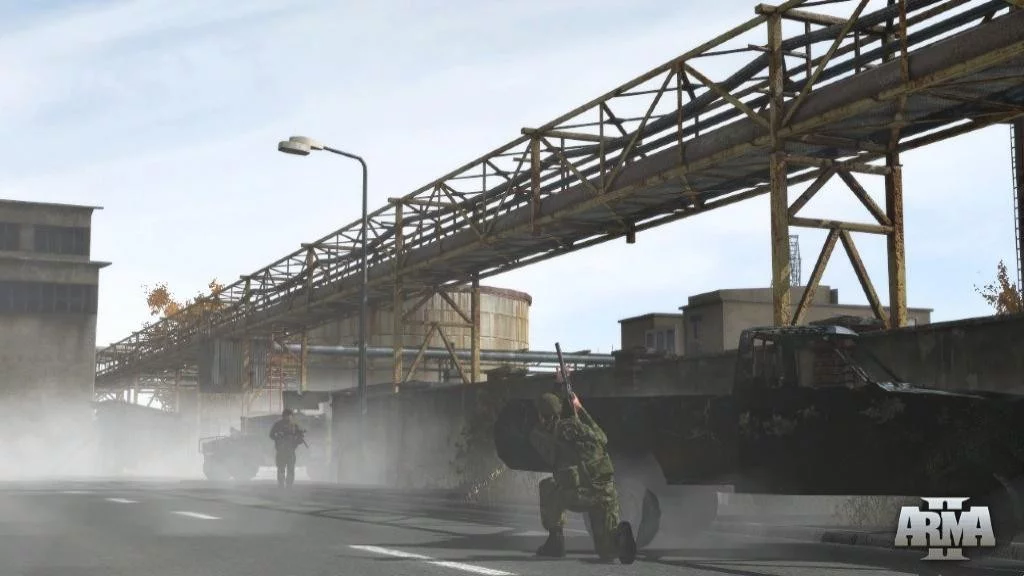
The control of aircraft incorporates basic physical principles of movement, which are unique for each model of helicopter or airplane. The campaign unfolds in real time, but this does not mean constant combat. Military tactics will also reflect the real world, where patience, flanking attacks, and solid cover are simply essential. For certain reasons, jumping is not available to the player and is replaced by climbing over obstacles.
The game is known for its non-linearity; this is not Call of Duty. Here, you could get shot in the leg and spend an hour crawling through the mud trying to hunt down a sniper, only to restart the mission and find no sniper at all. You are free to roam across 225 square kilometers of real terrain, searching for vehicles and enemies.
ArmA 2 features difficulty levels: "Cadet," "Soldier," "Veteran," and "Expert." These primarily affect the number of saves available: "Cadet" allows unlimited saves, "Soldier" gives 5 saves, "Veteran" provides 3, and "Expert" only 1. You can adjust difficulty settings individually: for example, by changing the "Cadet" setting, you can play on "Expert" but still have unlimited saves.
In the last two missions of the campaign, the shooter turns into a real strategy game. It includes classic RTS elements—by capturing enemy points, the player earns money to build a base and purchase units. Additionally, this mode allows you to control 11 more squads, commanding an entire company in the same way as you control individual soldiers in your squad.
Each squad consists of 12 people, and if it's, for example, an armored squad, then there are 12 tank crew members (3 people per tank), which means 4 tanks. It's worth noting that this mode is quite unrealistic for a tactical shooter. In 10 minutes, you can build an aircraft factory in an open field, which doesn't require workers or materials. It produces vehicles at a rate of 1 unit every 30 seconds. Even more absurd are the barracks, which act like soldier cloning factories.

Usually, games of this kind pay a lot of attention to the story, but that's not the case in ArmA 2. The military conflict takes place on a couple of islands, and it's not very interesting in itself. A huge emphasis is placed on gameplay, allowing you to feel like a real soldier. As mentioned earlier, the game is non-linear, meaning you have several ways to complete a mission, and it's up to you to choose which one.
The events take place in a fictional post-Soviet state called Chernarus. Civil war has been raging there for several years after a long period of political instability. This was fueled by clashes between a pro-Western coalition and the communist-nationalist movement "Red Star" (ChDKZ, "Chedaki"). After the ChDKZ was defeated by the democratic faction in the 2008 elections, tension in the country increased during the so-called "September Crisis."
In the fall of 2009, the rebels launched a major offensive against government forces. At first, the government asked Moscow for permission to join Russia, but Moscow refused. Then they turned to NATO for help in restoring peace and order in the country’s streets. The alliance alerted its rapid reaction forces and decided to send in the Marines to prevent further civilian casualties in the conflict between the "Chedaki" and the remaining Chernarussian defense forces. The Marine Expeditionary Force takes control of the situation. The player takes on the role of a member of a US Marine reconnaissance team called "Razor." The story isn’t very exciting, nor is it very long.
And finally, the controls and sound. Let's just say that the controls in the game aren’t very user-friendly or responsive. Every key on the keyboard is used, including key combinations. You can’t play the game with a gamepad.
ArmA 2 features realistic weapon sounds, and every vehicle has its own unique sound as well. However, the music is lacking—there isn’t much of it, and it’s not particularly good, but that’s a matter of taste.
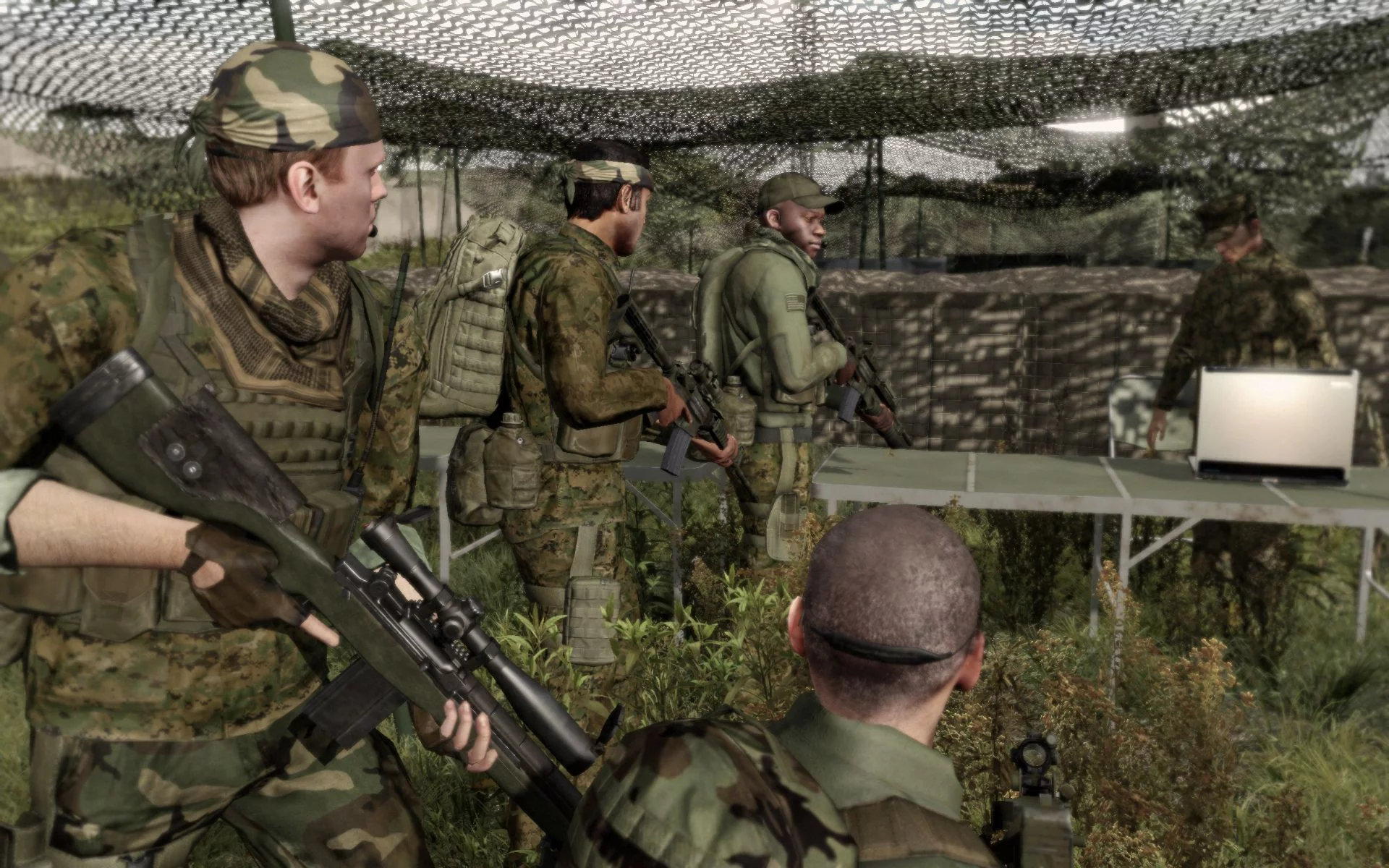
Multiplayer is probably one of the main components of the game; there are plenty of servers, so you can find any to your liking. It’s just like real life—radios, bases, objectives. Almost all servers in the game are dedicated, which means the only limitation on the number of players is set by the map. Just imagine a battle with a hundred people on one server. Cool, isn’t it?

-
 Bureau: XCOM Declassified Review
 -
 Call of Juarez: Gunslinger Review
 -
 The Last of Us Review
 -
 Metro: Last Light Review
 -
 GRID 2 Review
 -
 19 Best Detective Games on PC and Consoles: Murder Mysteries, Deduction Puzzles & Detective Sims
 -
 Best Cyberpunk 2077 Mods in 2026: Graphics, Gameplay, Romance and Optimization