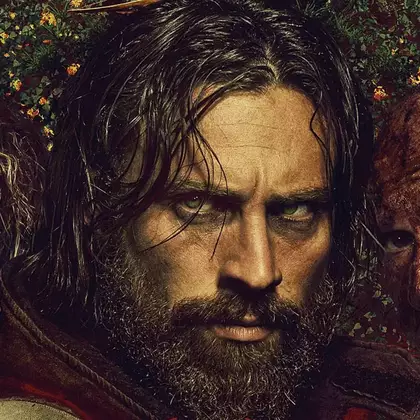
28 Years Later Review: How Danny Boyle and Alex Garland Reimagined the Legendary Film Franchise
 Marat Usupov
Zombie apocalypse fans, rejoice: 28 Years Later is finally here! Danny Boyle and Alex Garland didn't return without purpose — they've managed to craft a gripping survival story that fully immerses viewers in the transformed world of the twenty-eight universe. Or is it just another mindless zombie shooting gallery packed with cringe-worthy scenes? We watched the film and shared our impressions!

The Saga's Past and Future
Back in 2002, then relatively unknown Danny Boyle released the series' first film — 28 Days Later — which rapidly achieved cult status. The plot follows activists who release Rage virus-infected monkeys from a laboratory, leading to British society's lightning-fast collapse. The 2007 sequel 28 Weeks Later depicts attempts to restore order under NATO control, but a new outbreak derails all plans.
The first film was an intimate survival story, while the second focused on military action. Both featured a handheld aesthetic and were shot on cheap digital cameras, creating a sense of documentary realism. The image of fast-moving infected — complete opposites of classic, sluggish zombies — proved revolutionary. 28 Years Later returns to the original's intimate format, set in a world where the epidemic was contained within the British Isles.
This new film is only the first part of a planned trilogy. The second — The Bone Temple — has already been shot and will be released in 9-12 months. The third will only appear if the first two achieve decent box office returns. Yes, here we see another franchise following Marvel's playbook, but there's no need to worry prematurely. Instead, what we've seen offers hope for genuine universe expansion rather than standard reanimation with forced relevance and heavy-handed messaging pouring from every crack. There's none of that here.
Note an important nuance — don't expect epic scale from 28 Years Later. This is intimate cinema, with 2-3 characters on screen for most of the runtime, and zombies appearing in small groups of 3-8. The film has only one large-scale scene — in a pub where survivors celebrate the protagonist's success.
Survive or Die
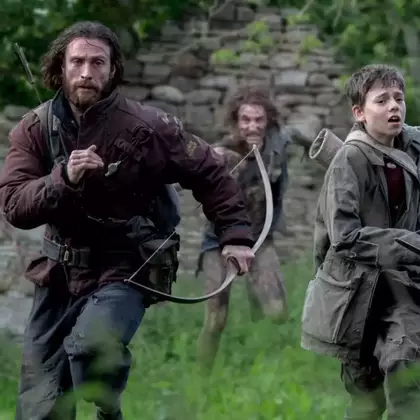
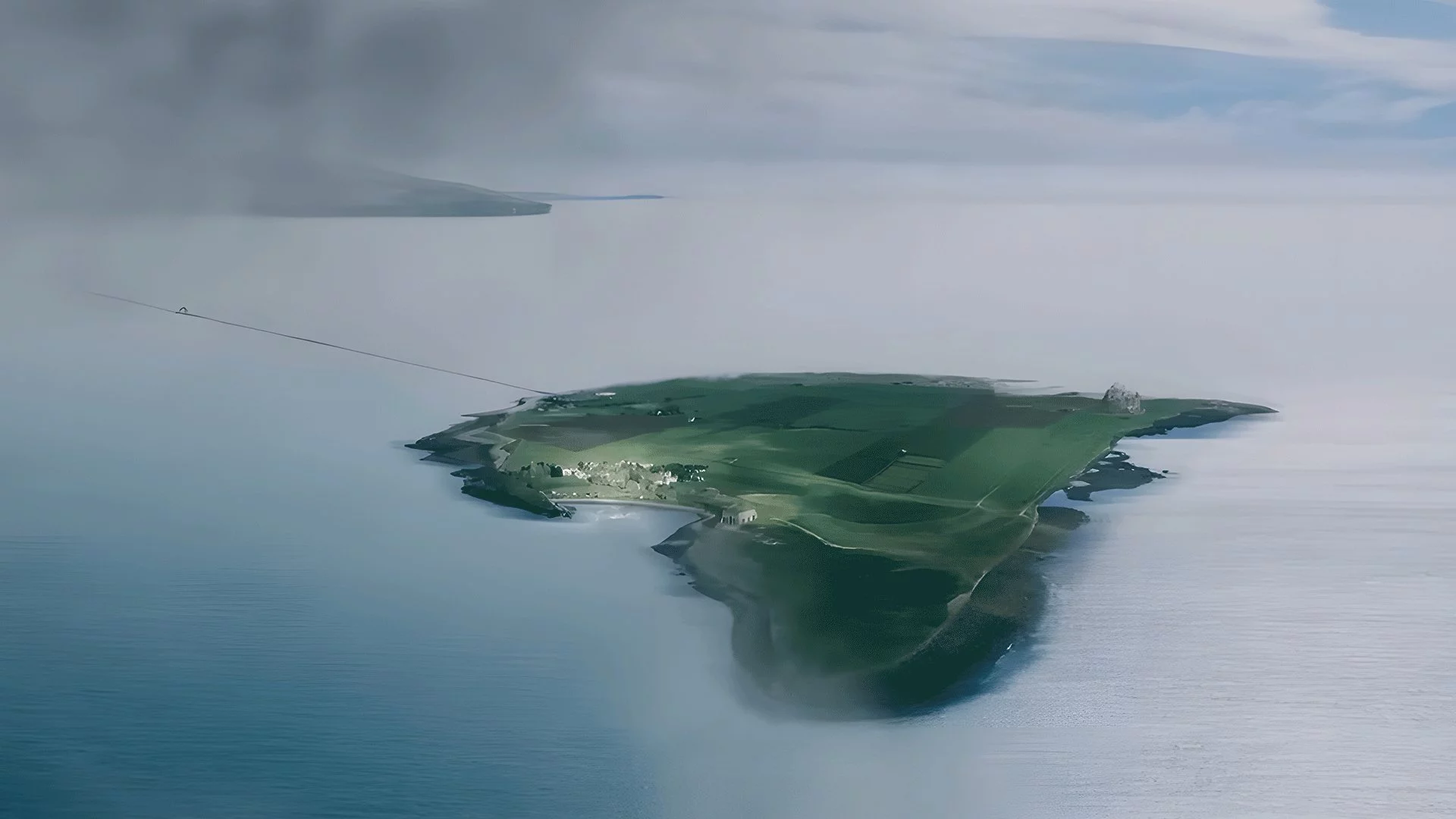
To the screenwriters' credit, they don't drag things out: viewers are immediately brought up to speed and the new story begins without preamble. At the center is a teenager named Spike, raised in an isolated island community. This place is unique: surrounded by water on all sides, accessible only during low tide. Though the authors slightly overdo it depicting the survivors' harsh existence, which somehow includes bicycles, gas stoves, and a school with survival lessons. But this flaw is forgivable.
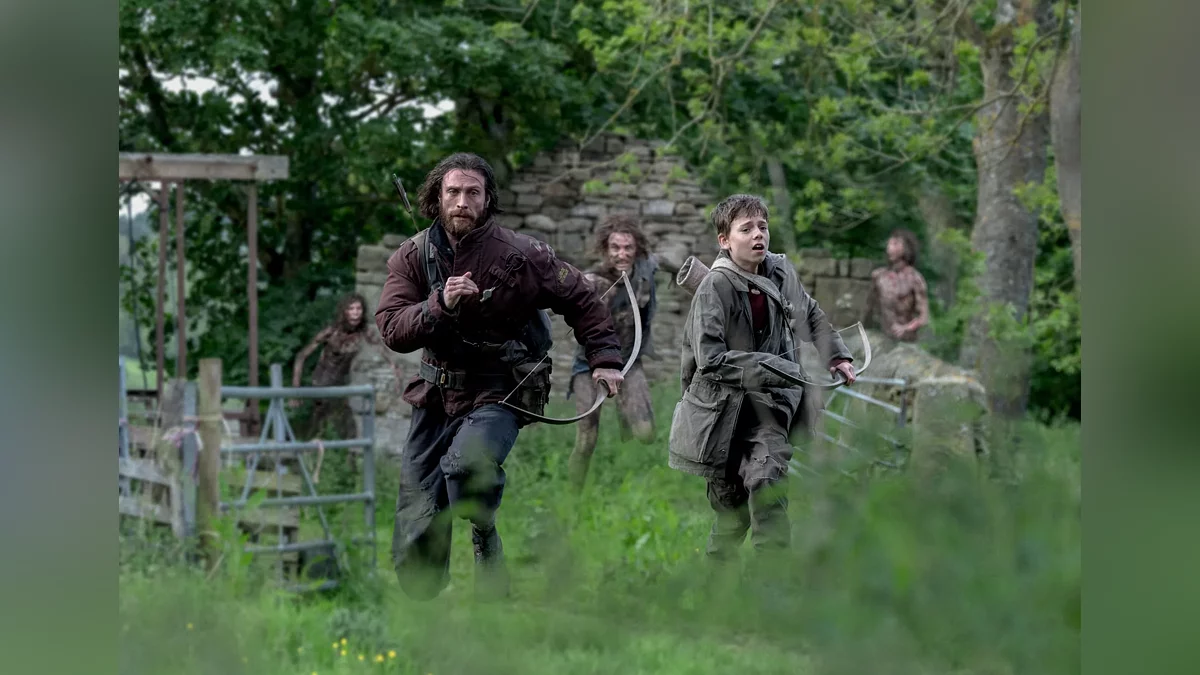
Today is important for Spike — his first expedition with his father into the infected outside world. He learns to overcome fear, handle threats, and sees the world beyond the island for the first time: cruel, dangerous, alien... but incredibly beautiful (more on this below). Upon returning, he gains recognition from the local community through a pub celebration. The initiation ritual is successfully completed. Everything follows tribal traditions, albeit post-apocalyptic ones.
However, not everything in the teenager's life is perfect. Spike faces an unpleasant truth: instead of caring for his sick wife, his father has taken a lover and abusively demands his son's obedience. This conflict becomes a turning point. The teenager takes his mother and heads to Dr. Kelsen — an almost mythical figure surrounded by frightening rumors. Spike believes the doctor can save her. This journey becomes a new level of initiation, personal and independent, but far more dangerous.
Against this backdrop develops the story of meeting an outsider — a NATO soldier named Eric who fate brings to the island. He's strong and trained but completely unadapted to local realities. He must relearn, adapt, and accept that there's no way out — once on the island, you stay forever. No rescue operation is coming.
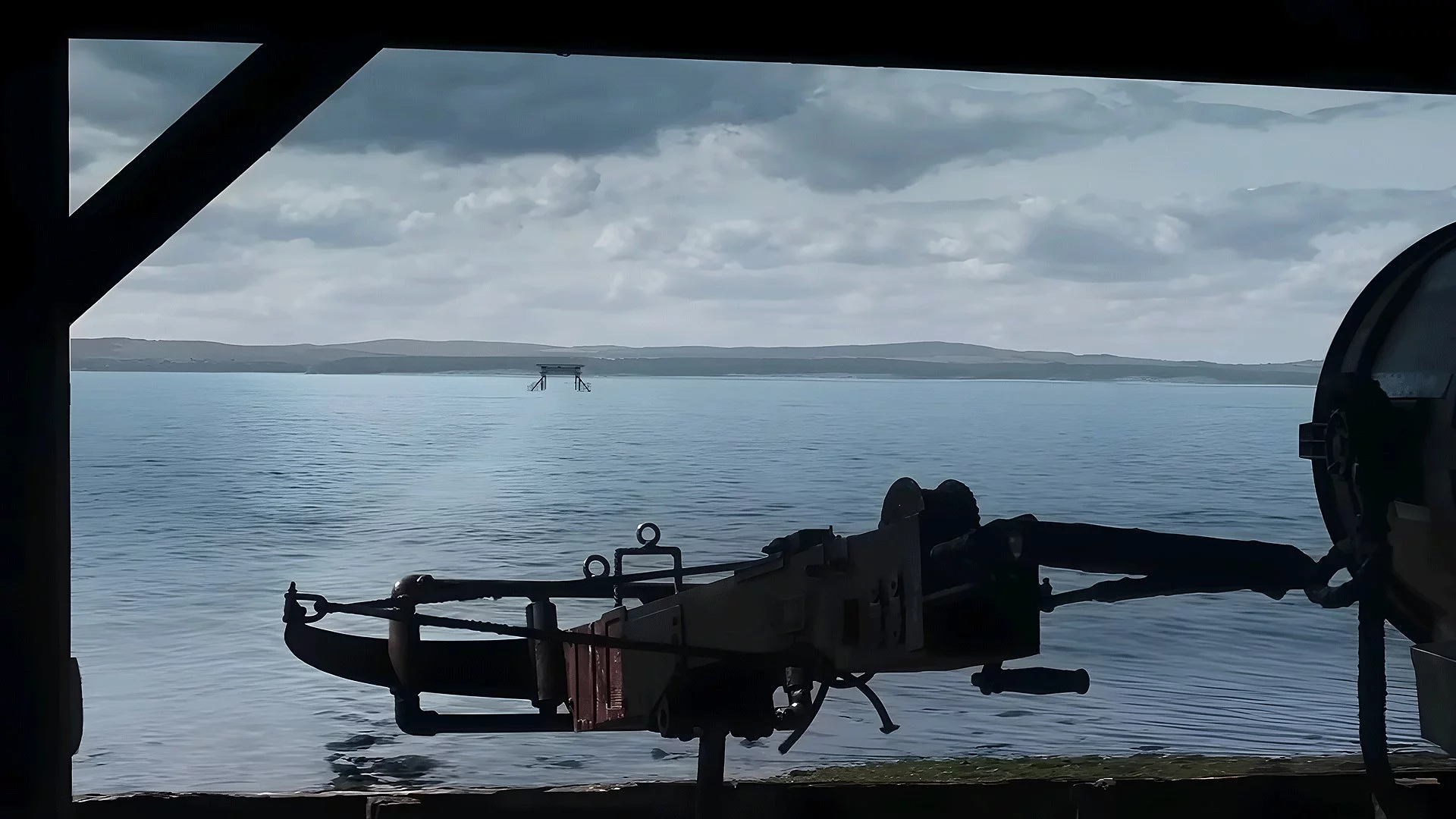
New world details are revealed: mutated infected who remain dangerous even in half-rotted form. One of the most unexpected moments is a zombie birth scene — a film moment that breaks from typical genre logic, presented seriously without grotesque elements. Another step by the authors toward a multiverse.
Dr. Kelsen's storyline stands apart. Living in isolation, he creates cult objects from human remains. He collects skulls and bones, decorates his territory with them, and hides from zombies in some pit. The doctor hasn't gone insane, but it can no longer be called sanity: familiar landmarks have been replaced by mystical rituals and philosophy about life and death.
Trilogy vs standalone film
Acting Performance
The film features a completely renewed cast. Teenager Spike is played by genuinely young actor Alfie Williams, for which the filmmakers deserve thanks. Turns out young people can act in movies, right Final Destination: Bloodlines? Jodie Comer plays Isla — Spike's mother, who has suffered from memory loss and pain in recent years. Aaron Taylor-Johnson is her husband Jamie, an experienced tracker and infected fighter.
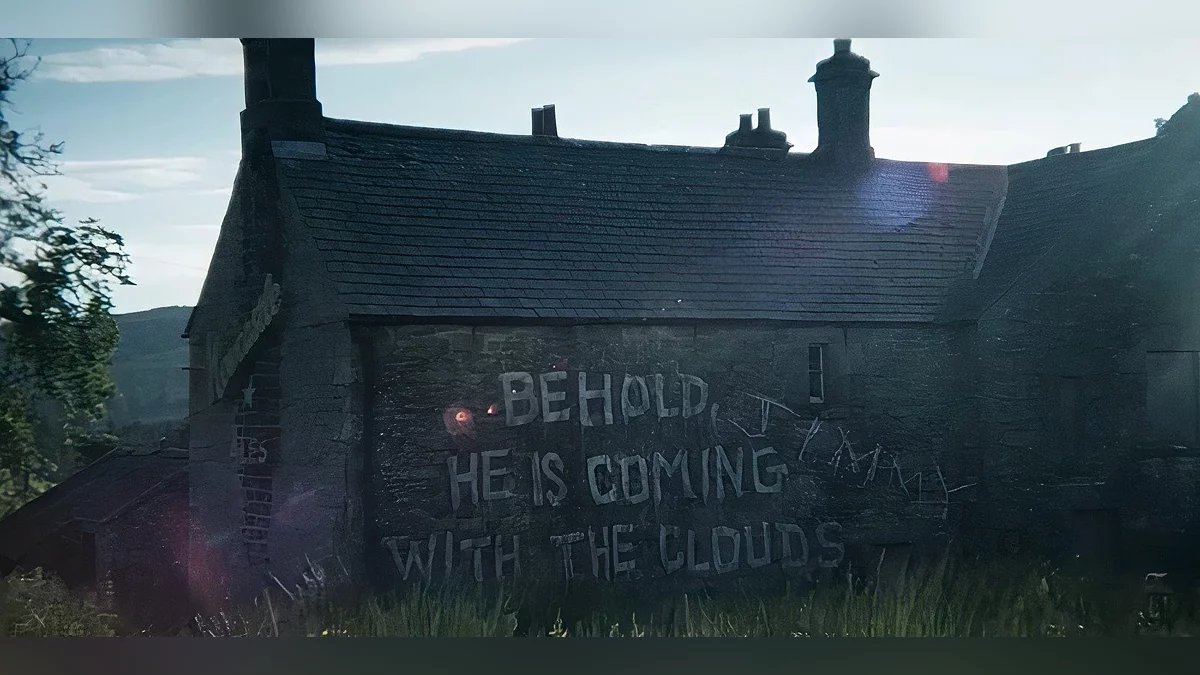
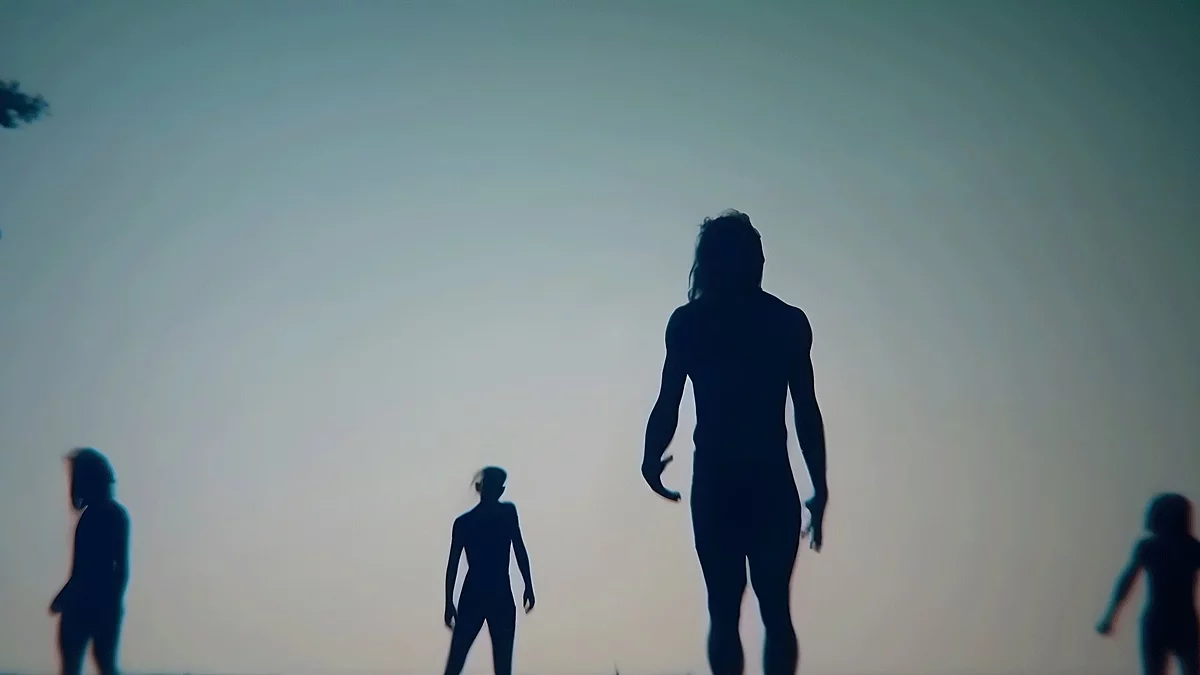
The bone-collecting doctor living in isolation is played by Ralph Fiennes. His character is one of the film's most atmospheric and ambiguous. Edvin Ryding brilliantly develops the image of a Swedish NATO soldier in just one episode. Chi Lewis-Parry handles the fear factor, playing an alpha-zombie — a physically powerful infected leader who inspires primal terror through sheer mass and strength alone.
The appearance of a full family unit — Jamie, Isla, and Spike — at the story's center proved a successful screenwriting decision. All three actors perform their roles subtly and convincingly. After viewing, the duos that remain in memory are: father-son and son-mother. Watching them, you understand the meaning of gender roles and each parent's role in the family. Dr. Kelsen is a separate figure. In the role of a cult leader who burns bodies and preaches about death, Fiennes creates an image that's simultaneously attractive and frightening. Not just a colorful character, but a full symbol of the new reality the heroes inhabit.
The actors' work and how they inhabited their roles can't be faulted. Viewers quickly become immersed in events, though the film only gains momentum in the first 15-20 minutes.
What the Plot Is About
Does the film have a hook? In our view — yes. The authors raise a serious question: how quickly does a person degrade if you destroy familiar lifestyle and division of labor, and society — if you cut it off from the rest of the world?
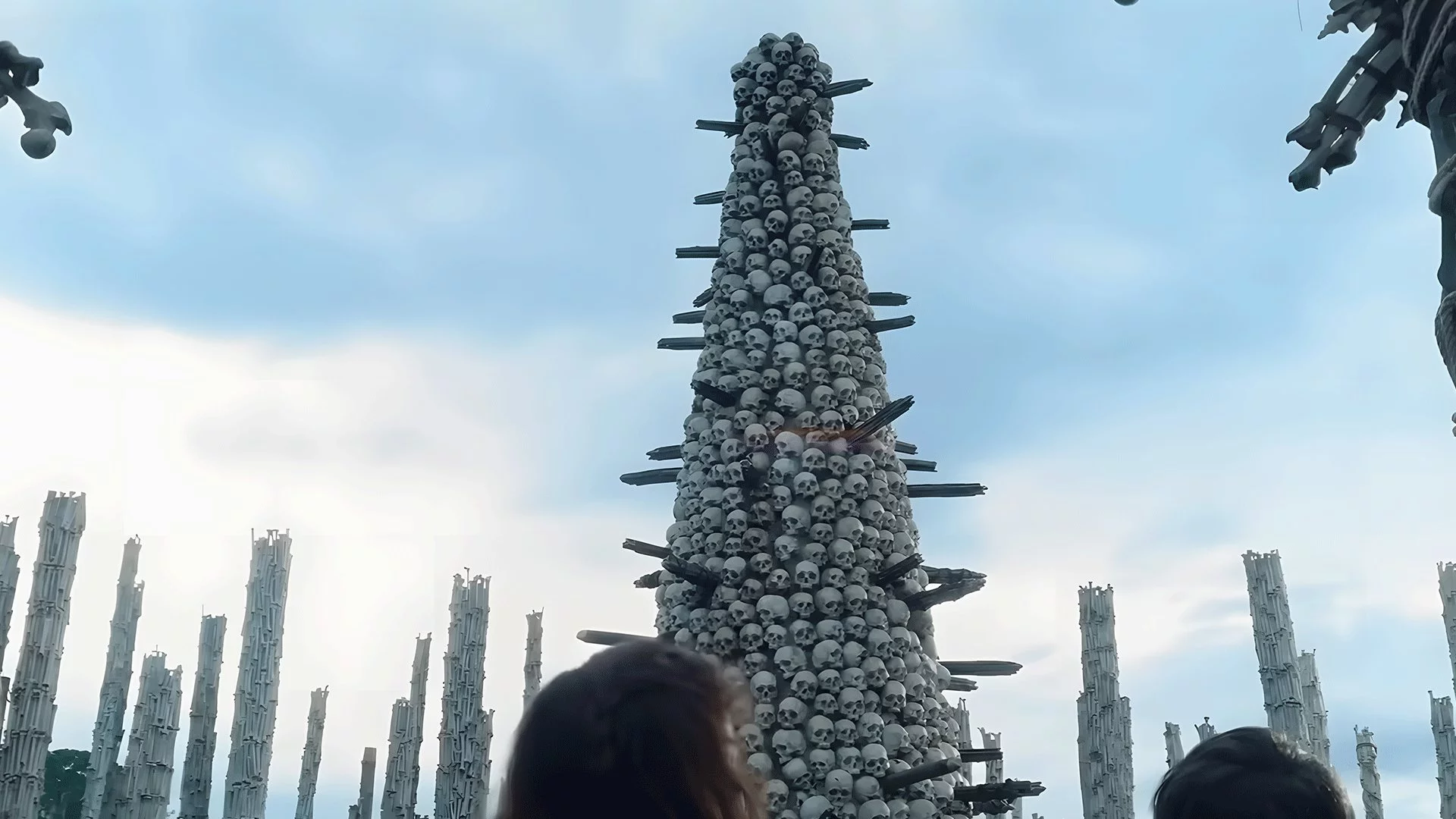
You can feel that the screenwriters, working on the film, studied modern anthropology lectures and ancient society structures. They employ themes of initiation, primitive rituals, collective self-governance. The doctor collecting skeletons is simply a vivid metaphor: a person with past experience trying to comprehend the new barbarism he finds himself in. Where there's no medicine, no law, and even death isn't an event but routine.
To better transfer this information to post-apocalyptic rails, the screenwriters made a clever lore adjustment: the British Isles are an isolated territory where the Rage virus remained trapped by natural barriers. Outbreaks in other regions were suppressed, so the rest of the world's development didn't slow down. They have internet, smartphones, pizza delivery, and social media with silicone can't-mention-gram girls (which the authors excellently mock mid-film).
But Britain has almost completely degraded. Limited communities live by strict rules where they can easily defend against deadly infected. Sometimes they venture into the outside world for resources. It's interesting how the two worlds are contrasted. The mainland soldier is dangerous while his rifle has bullets. Remove them, and he doesn't know how to distinguish infected from healthy, and can't survive. Locals, conversely, have adapted, live almost by tribal laws, but have lost understanding of the modern world and technological progress.
Cinematography and Sound
Danny Boyle continued experiments with unconventional shooting techniques. It was announced that for 28 Years Later he used up to 20 iPhones arranged in a semicircle around actors playing infected to create a bullet time for the poor effect. Each time an infected is shot, time slows down, showing blood and dismemberment. The implementation itself probably won't impress sophisticated viewers, but if such scenes (there are only about 15-20 in the entire film) cost, say, a bag of chips — that's already a victory.
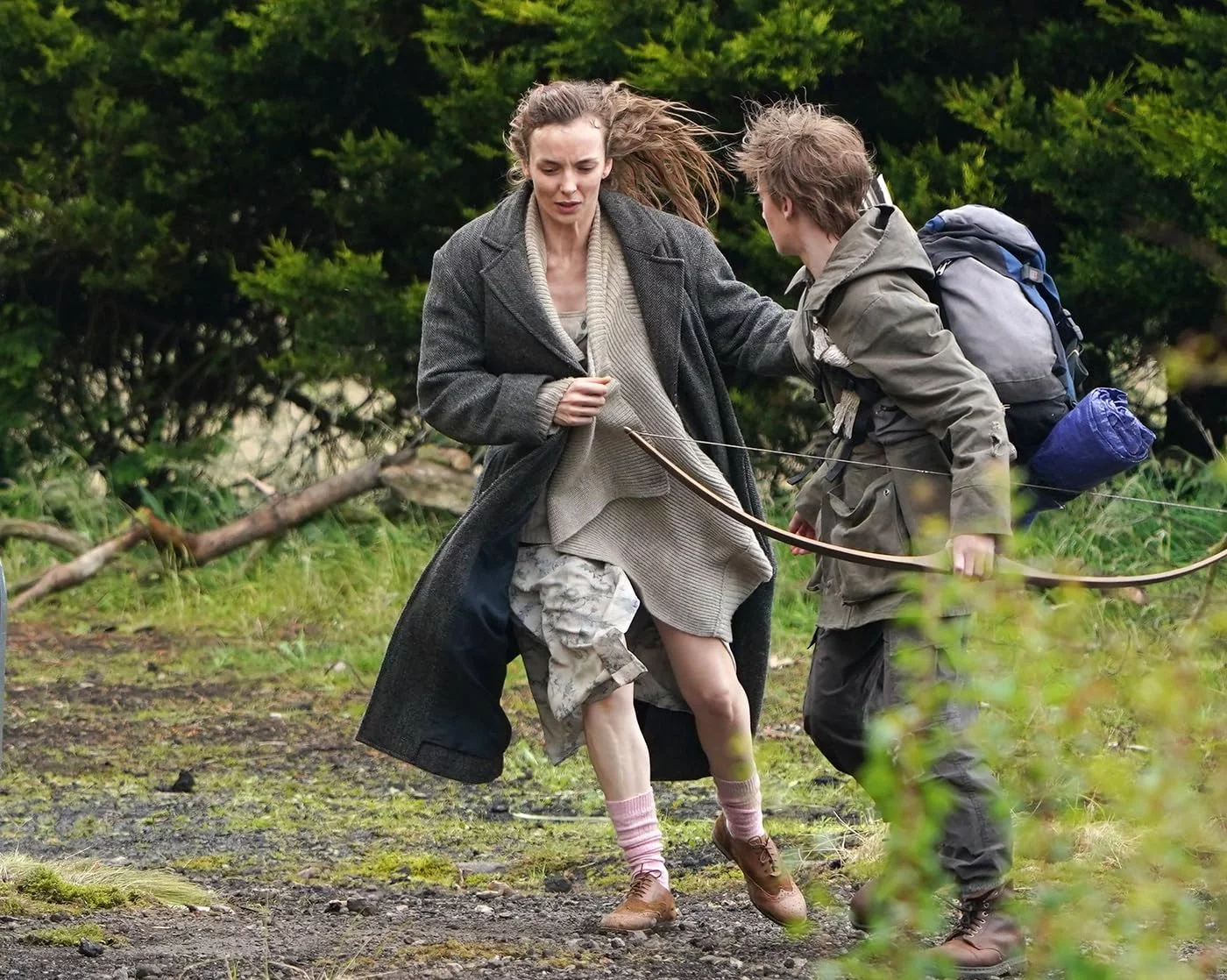
Other decisions include shooting night scenes with Panasonic EVA1 in infrared range. This isn't thermal imaging but an artistic technique: black and white imagery, glowing faces, ominously gleaming pupils, and background fading into black void. It looks eerie and works excellently for atmosphere.
They planned to emphasize the infected broken movements using unconventional shooting angles. Such episodes do exist, but makeup artists achieved much greater effect — the infected visual images are what catch you, not camera parameters and positioning.
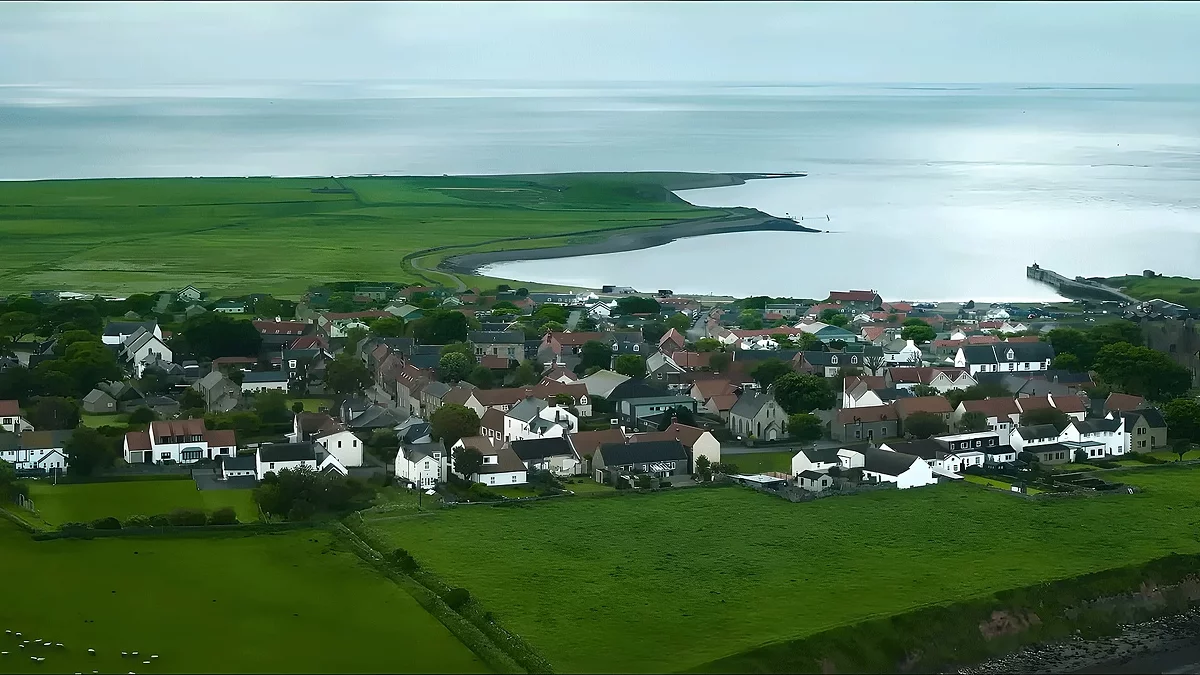
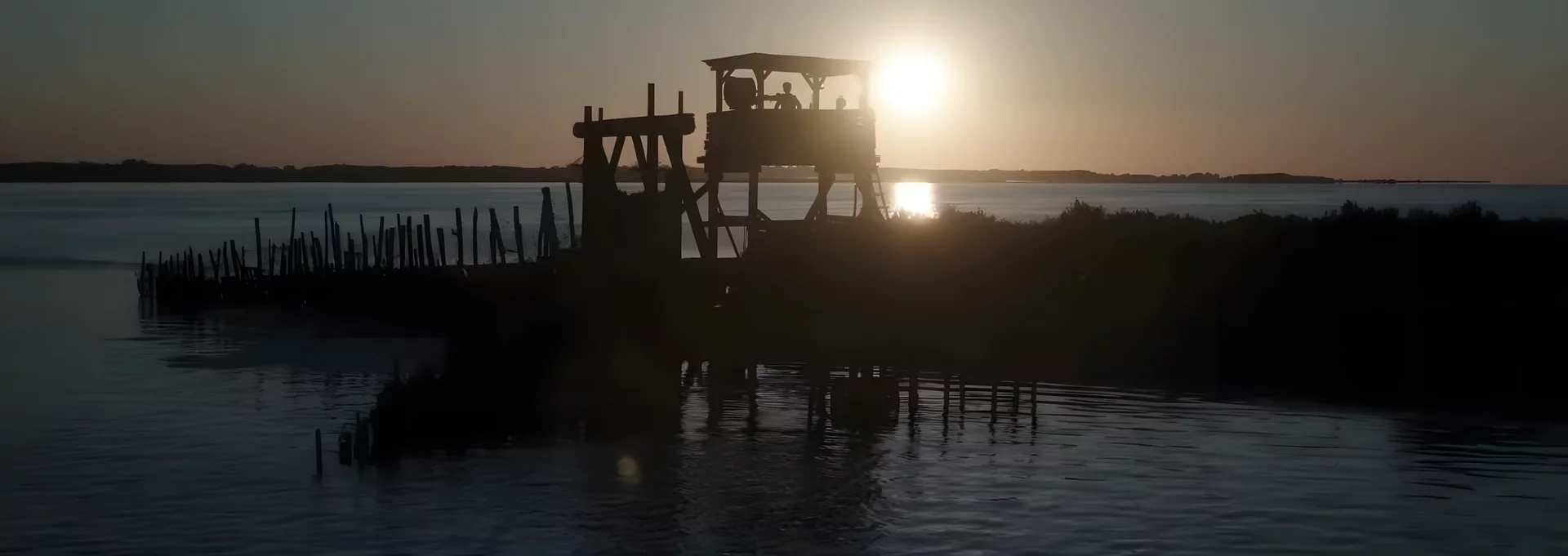
A strong point is Britain's spring nature — the island in the film looks like a postcard. Lindisfarne (Holy Island) off Northumberland's coast particularly stands out — a real tidal island accessible only during low tide via causeway. It became the survivors' home in the film. Shooting also took place in Durham, Newcastle, Kielder Forest, Sunderland, as well as Cheddar Gorge and Priddy (Somerset).
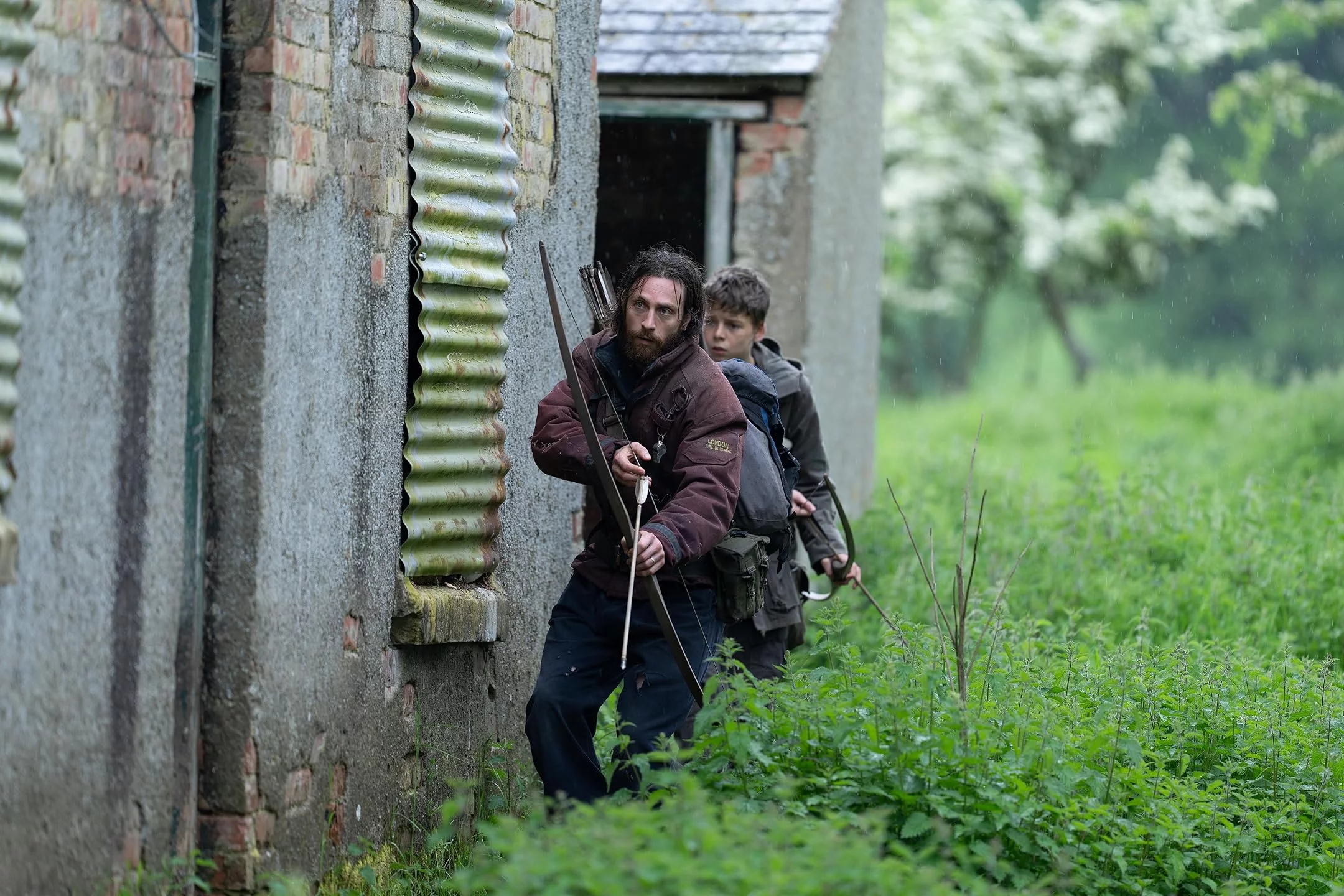
But phone shooting is tricky. When the camera accurately recognizes scene depth — everything looks decent. But if focus is off, the image becomes strange: sharp faces with blurred backgrounds. Such moments are especially noticeable on big screens.
Otherwise — almost no complaints. Boyle as director and Anthony Dod Mantle as cinematographer return the signature visual style and that same artistic harshness. This isn't popcorn blockbuster material but a direct continuation of the original.
Another film hero is sound design. Silence, rustling, muffled dialogue work excellently for tension. When infected burst in with wild screams — you're literally pressed into your seat. The characteristic bow string twang, trampling, hissing, screeching — all create a dense, anxious sound environment. There's almost no music, and this is the right decision: it enhances the pseudo-documentary effect. The world has emptied — and viewers hear it.

Where the Film Falters
Despite the overall positive impression, 28 Years Later isn't without controversial moments. One declared theme is fear of life without medicine. An important, serious message, but its implementation — the storyline with the mother suffering from an unclear illness — doesn't resonate. An entire Odyssey with multiple trials and dangers is built around the journey to the doctor, but script armor protects mother and son. When they reach the doctor, he wearily tells the camera: Incurable. Emotional effect — zero. Older viewers understood this from the very beginning.
Simultaneously, elements appear in the narrative that could be called soap opera material — for example, the father's affair with another woman while his wife is still alive, though ill. Perhaps in different circumstances this would work as a domestic drama. But in a society where anyone can die in seconds, partner replacement is routine existence. Yet here the offended son lectures his father about what a bad person he is.
If you expected direct action, dynamics, and meaty horror from the film — here's another disappointment. Despite genre classification, there are almost no combat scenes. Individual skirmishes with infected are present but delivered very locally. Tension, expectation, anxious glances, and heroes behaving sometimes like special forces, sometimes like characters from village of fools — there's plenty of this.
Everything that could be called action happens 3-4 minutes before credits. The film seems to remember it's zombie horror and delivers a lively final scene. This is understandable: sequel setup, interest building. Yet there's a feeling that we waited the entire film for it to begin. And then it began... and ended. Perhaps from a franchise development perspective this is the right move. But within a standalone film framework, there's imbalance.
What's worse when surviving zombie apocalypse?
***
28 Years Later may not revolutionize the zombie genre, but it's a solid film with a couple clichés. A true return of the beloved franchise that authors carefully seek to expand. The picture definitely needs watching and has every chance of becoming a significant event of the year in the zombie horror niche.
-
![«Masterfully Plays with the Audience's Emotions» — Reviews and Scores for 28 Years Later Arrive]() «Masterfully Plays with the Audience's Emotions» — Reviews and Scores for 28 Years Later Arrive
«Masterfully Plays with the Audience's Emotions» — Reviews and Scores for 28 Years Later Arrive -
![Metacritic Reveals Top 20 Films of the First Half of 2025 — 'Sinners' Lands at No. 9]() Metacritic Reveals Top 20 Films of the First Half of 2025 — 'Sinners' Lands at No. 9
Metacritic Reveals Top 20 Films of the First Half of 2025 — 'Sinners' Lands at No. 9 -
!['28 Years Later' Sparks Debate Over Bizarre Final Scene]() '28 Years Later' Sparks Debate Over Bizarre Final Scene
'28 Years Later' Sparks Debate Over Bizarre Final Scene -
![Trailer Released for Zombie Horror 28 Years Later]() Trailer Released for Zombie Horror 28 Years Later
Trailer Released for Zombie Horror 28 Years Later -
![Julian McMahon, Star of 'Fantastic Four' and 'Charmed', Dies at 56]() Julian McMahon, Star of 'Fantastic Four' and 'Charmed', Dies at 56
Julian McMahon, Star of 'Fantastic Four' and 'Charmed', Dies at 56 -
![TV shows and movies coming out this month: what to watch in July 2025]() TV shows and movies coming out this month: what to watch in July 2025
TV shows and movies coming out this month: what to watch in July 2025