Good day, dear friends. Today we will talk about a game from a truly "rare breed" series, namely a game from the Splinter Cell series. It belongs to the spy action genre, which is already a great rarity in our time. This genre experienced the peak of its popularity back when Fleming wrote the first book about Bond. In case anyone didn’t get it, that was a very long time ago. Nevertheless, the developers from Ubisoft Toronto were not afraid to challenge this notion.

Prologue
The game they announced attracted a lot of attention and surprise from the press even before its release, despite the criticism from fans of the Splinter Cell series over Splinter Cell: Conviction and the fact that stealth, as a game genre, had long been considered secondary. That’s why this studio’s brainchild was surrounded by a fair share of doubts, debates, and expectations. So how did this next reimagining of the entire era known as Splinter Cell turn out? The answer came in the form of the night vision goggles’ glowing green lights in Splinter Cell: Blacklist.
Story
I don’t want to start a review like this, but this is the most typical action movie plot of all those that exist: a terrorist group calling themselves the "Engineers" carries out an attack on a US military base in Guam. This group has unlimited power and resources all over the globe, and only Samuel Fisher and his team can stop a series of attacks codenamed "Blacklist." The main problem is the Blacklist ultimatum: the terrorists will continue to carry out new attacks until the US withdraws its military forces from foreign countries, and "something needs to be done about this urgently." That’s the kind of "cowboy stuff" we’re dealing with, ladies and gentlemen.
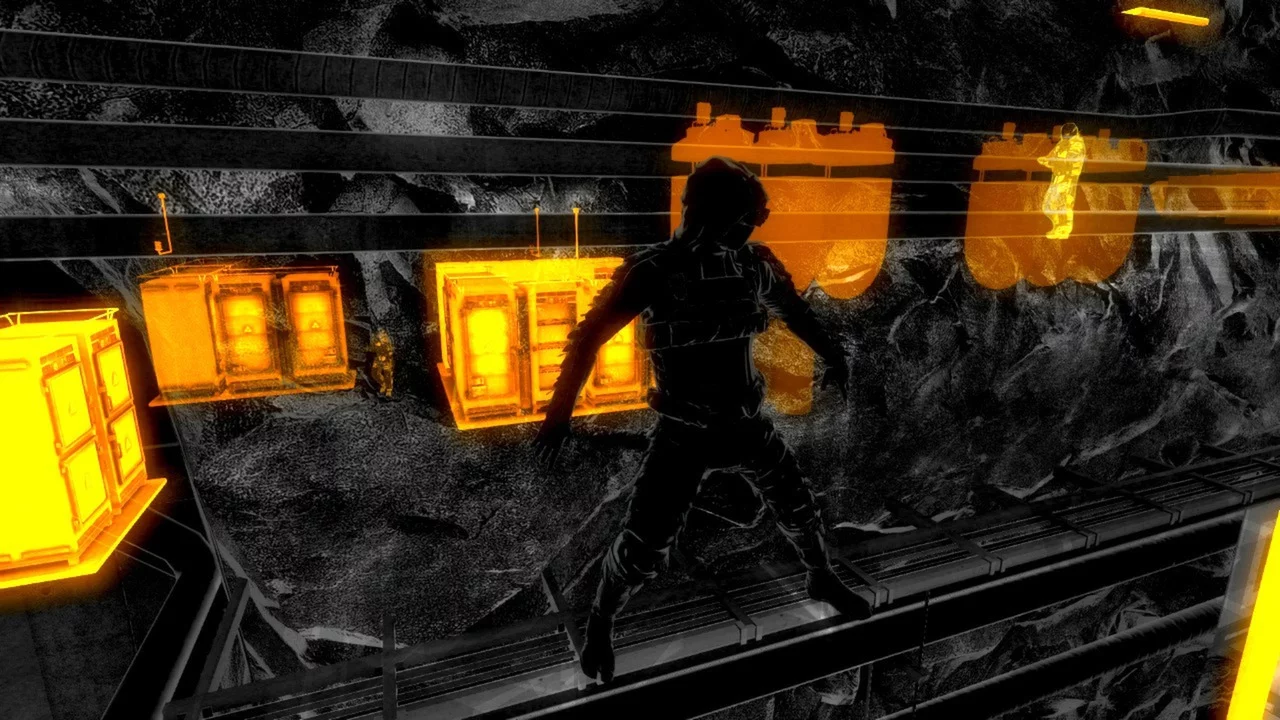
It’s worth praising the fact that, although Blacklist has the most clichéd plot in the world, it is executed excellently. There are no unsubstantiated events like in Crysis 2, or illogical endings in the style of Mass Effect. The presentation and delivery are top-notch. The dialogues are also given narrative significance, but the side missions are less fortunate: they are simple to complete and carry absolutely no story value.
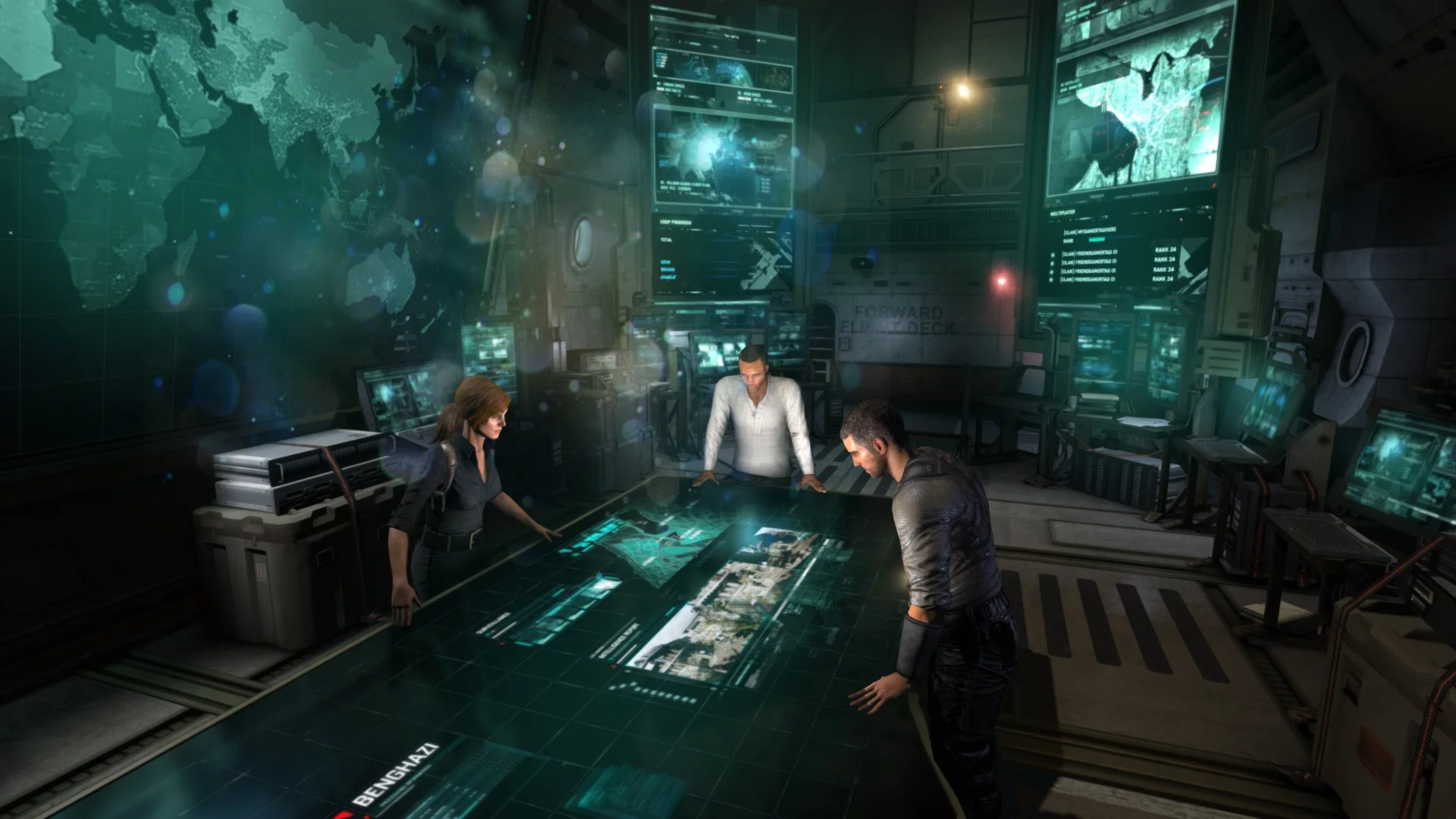
The main character’s team consists of Sam’s eternal companion Grim, an experienced CIA agent named Briggs, a computer guy named Charlie with an unpleasantly Jewish appearance (constantly evoking the thought that there’s a traitor on the team), and the “Fourth Echelon” base plane called “Paladin,” which will serve as a refuge between missions.
Gameplay and Mechanics
Right away, it’s worth mentioning that the maps in the game are quite large. When you find yourself on the first one, your first thought is: “What a space for maneuvering…” In this regard, the game is truly devilishly diverse. It’s nice to glance around and immediately spot half a dozen different ways to get through a single open area. And what if you take a closer look? If you want, you can go head-on; if you want, you can sneak through in stealth without killing a single enemy; or you can try climbing up to the balcony of the nearest house… but here’s the catch.
In every movement Sam makes, you start to recognize mechanics from Assassin’s Creed. This is incredibly disappointing, because no one except the developers can understand why a 50-year-old man climbs walls like a monkey. He vaults over obstacles like an assassin, crouches like an assassin, runs like an assassin. This fact is really upsetting.
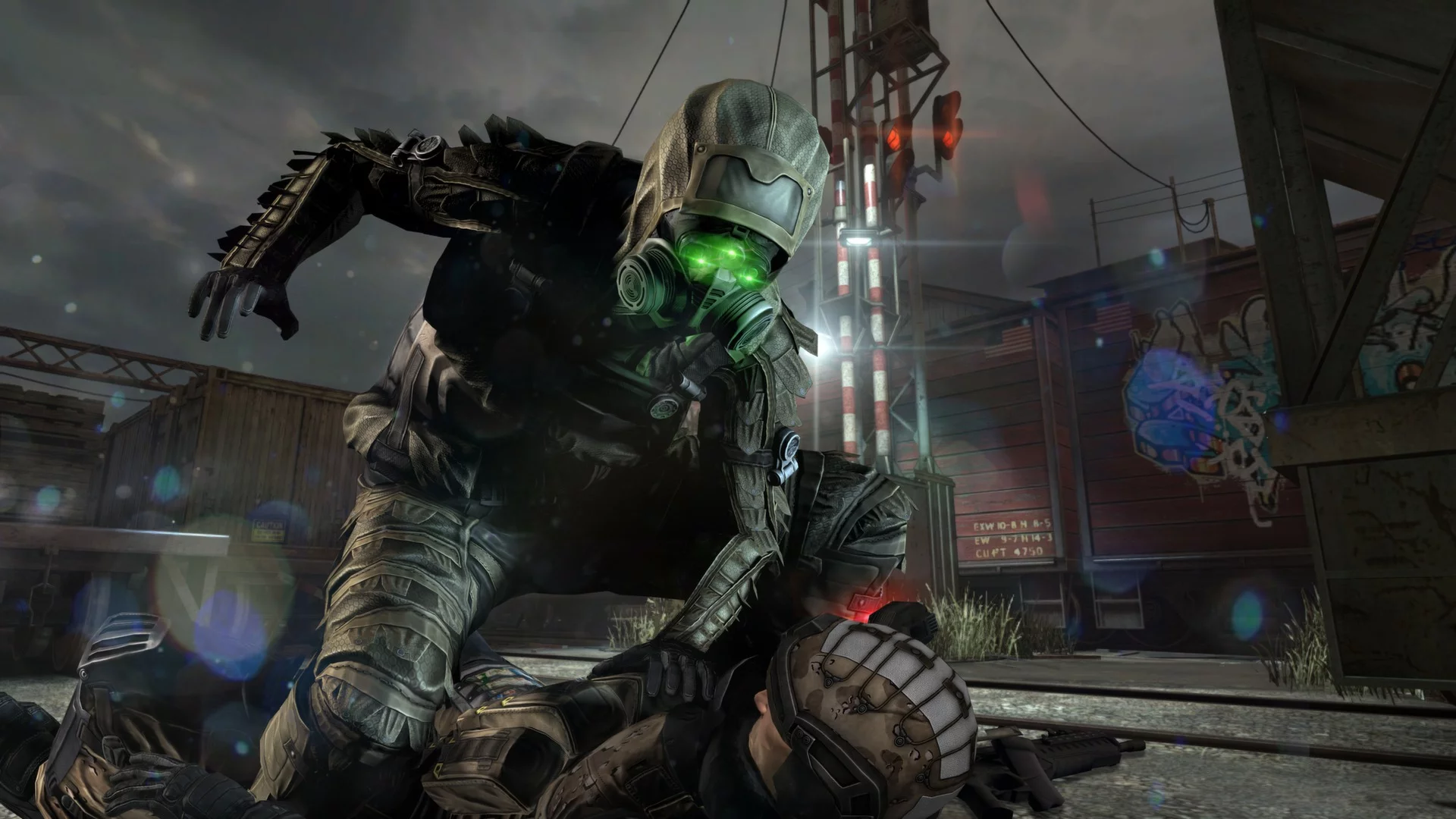
But let’s not dwell on this, because there’s still plenty to discuss. For example, the takedowns. In the game, they are divided into lethal and non-lethal. I think there’s no need to explain: in the first case, Sam kills the enemy, in the second, he knocks them out. Depending on which method you choose, you’ll receive a certain number of points and bonuses. The game will determine which neutralization method you use most often and what play style your actions during the mission correspond to, based on the points you earn.
There are three play styles in the game: “Ghost,” “Panther,” and “Assault.” As you might guess, “Ghost” is the most difficult play style, but it is also the most rewarding. To earn points in this style, you need to silently and stealthily knock out enemies. “Panther” is a medium-difficulty style. It allows for silent kills and stalking enemies, and it’s not necessary to remain undetected. “Assault” is basically Call of Duty in third person: lots of explosions and action. This style is noisier, which means more points.
There will be a few spots in the game, planned by the writers, where you can’t avoid action scenes. And I’m ready to kneel before the developers for these scenes. They look simply stunning and vivid. They are experienced in one breath. A spectacle worthy of an Oscar. This is exactly what you sometimes need after an hour of sneaking in the shadows. A fresh and invigorating sip of water in the desert…
The enemy marking system is especially pleasing: if you mark three enemies, then by pressing one magic button, Sam will automatically and accurately deliver a headshot to each of them. The excellent and convenient cover system also deserves praise. You can quickly and easily hide behind almost anything. It’s very easy to catch an enemy off guard from cover—then they have no chance of survival, even if all you have is a knife.
Choose whatever you want. That’s what I’m talking about. Complete freedom of action: you can kill the same enemy in six different ways, disable them in six more, and deceive or bypass them in just as many. And that’s just at the very beginning of the game. The only concerns are the constantly repeating scripted kill scenes, the fact that after a checkpoint, no one can come to you from an area you’ve already cleared (even if there are still a bunch of enemies left and you made a lot of noise), and the somewhat inconvenient controls—at least at first—where one button is responsible for multiple functions.
Locations
It feels like the locations in the game were created in contrast to the gameplay. They are outrageously monotonous. The settings are supposedly in completely different cities and environments, but they look so similar to each other that you get a sense of déjà vu. Yes, they look a bit different, but damn it, I’ve seen something like this somewhere before! The placement of obstacles, cover, and houses seems almost identical. Such an obsessive cyclical nature of game locations is probably not found in any other game, except maybe in an aquarium fish simulator—if such a thing exists. On the other hand, the locations can boast beautiful and well-thought-out design, no matter what angle you look at them from…
Graphics and Sound
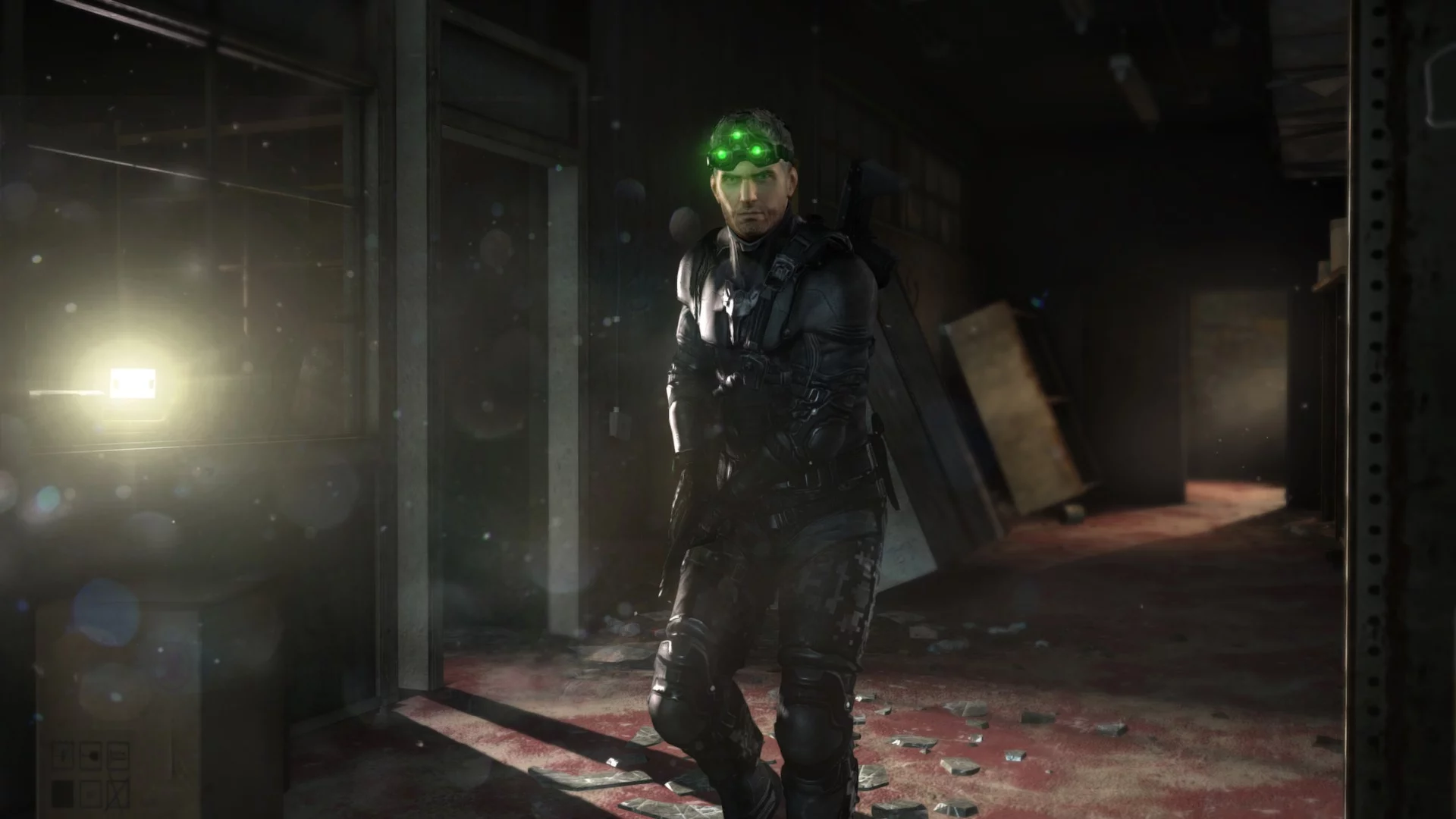
The game was developed on Unreal Engine version 2.5. And this engine was quite sufficient to create beautiful and vibrant locations, fairly high-quality textures, good shadows and effects, but still, it couldn’t deliver everything. The first thing that catches your eye is the poor facial animation. It’s really on the level of the Source engine circa 2007, or maybe even worse. But if you ignore the bad animation and look at the faces themselves, you’ll see that they look… maybe even worse than the animation, which seemed the least expected and almost impossible.
***
Splinter Cell: Blacklist was developed from the very beginning for a wide audience. Ubisoft tried their hardest to please both old fans and new players. And, in my opinion, they really succeeded. The possibilities the game offers seem to push players toward diverse playthroughs. Everyone can play it the way they like best. This is a huge contribution to the development of the series. The game became a worthy continuation and, it seems, an excellent foundation for future games. It leaves the feeling that the best times for this series are still ahead.
Never let evil control you, because in a minute it might want to rule the world. Appreciate and play only the best games, and don’t forget to visit VGTimes. Avant la réunion, amis!