Knock-knock is reminiscent of a typical young love story: a great, promising start, a brief period of pleasant little things, and then a loss of feelings and attachment at the end. And after that, it's hard to stay friends.
Тhe game greets us with a warning that it should be perceived not as an interactive entertainment, but as something akin to an art project. This is normal for many indie games, but in the case of Knock-Knock the creators are clearly being modest.
The astonishing synergy of visuals, gameplay, and sound in the first, pardon me, levels initially elevates Ice-Pick Lodge's project to the Olympus of such indie masterpieces as Braid and Minecraft.
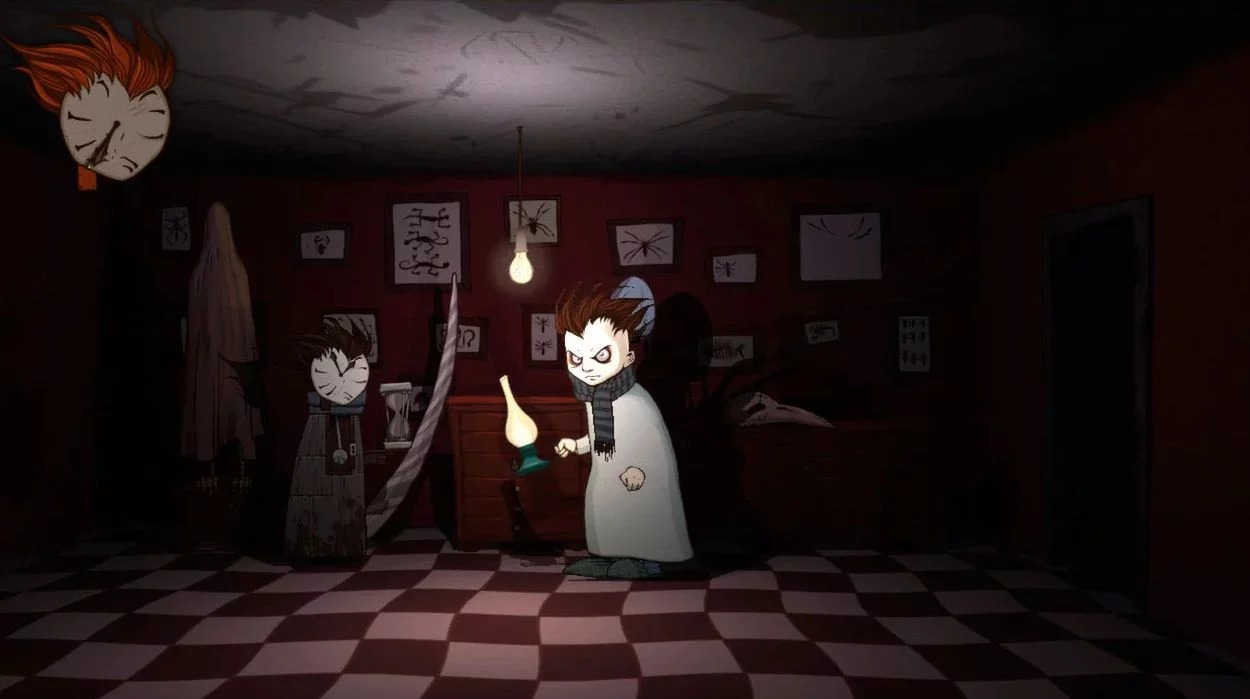
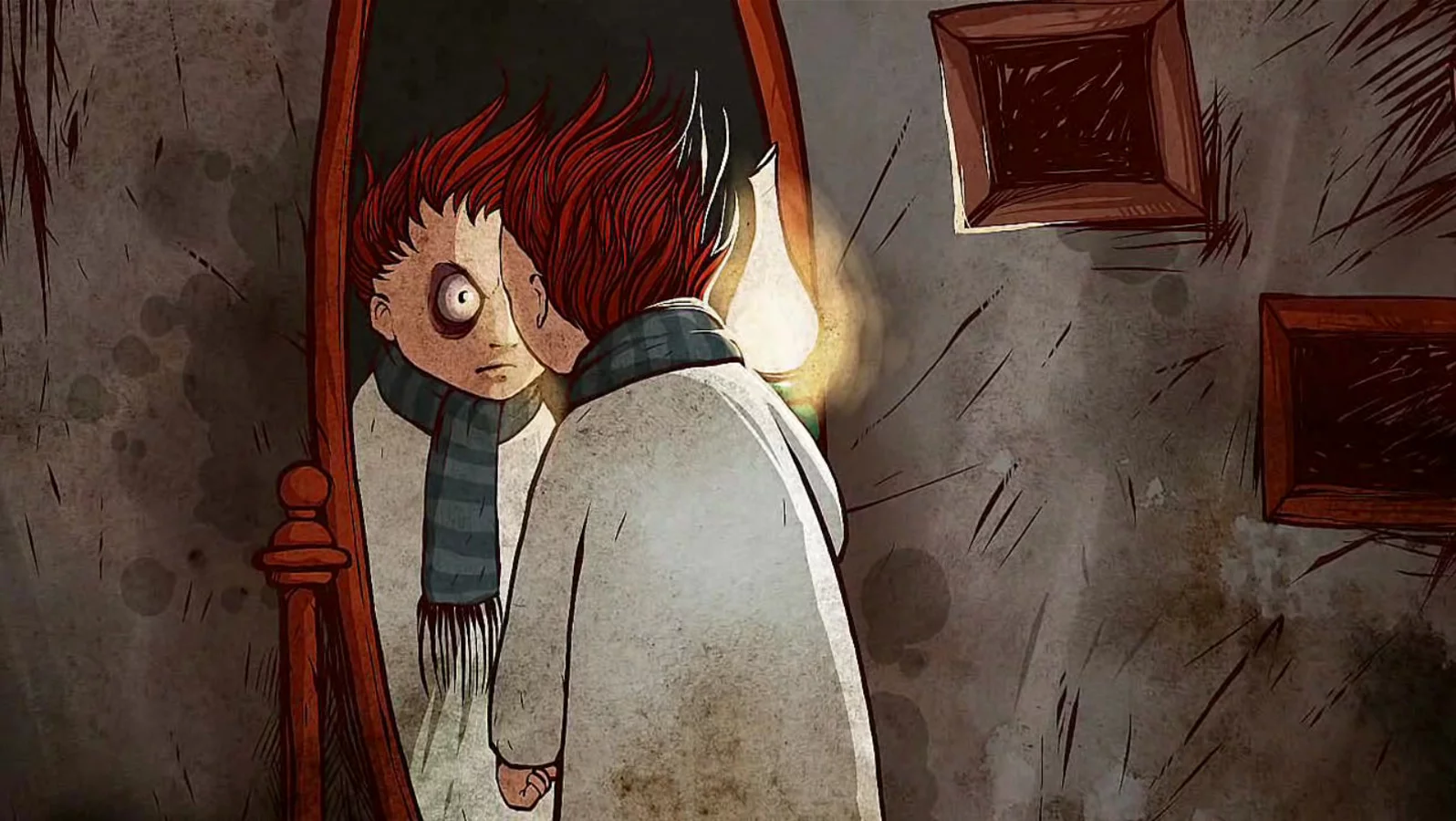
The gloomy surroundings of a mansion in the thicket, a dying forest, and the main character—a reclusive scientist with disheveled hair and a slightly mad look—all are drawn neatly, with love and reverence, like, for example, in "Pilot Brothers: In Search of the Striped Elephant." The game is given extra style and class by pleasant details: the protagonist carefully walks through dark rooms in pajamas, holding a candle trembling with fear. When he turns on the light, he rises on tiptoe and his feet slightly slip out of his slippers. The style here is reminiscent either of Soviet animation traditions or the works of Tim Burton.
Alone in the Dark
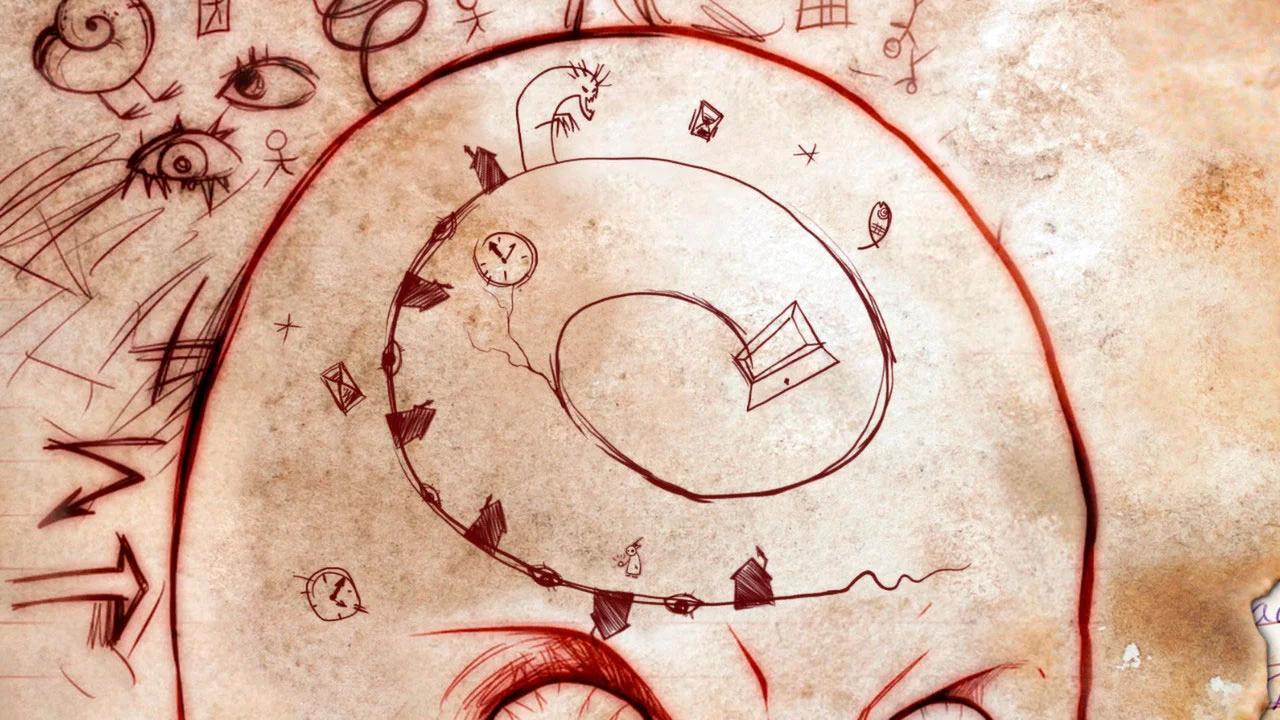
We'll have to play in two modes: when the scientist wakes up in his bed shortly before dawn, and in the preceding nightmare dreams. Both parts are united by the time interaction mechanic, where we bring dawn closer by finding the silhouette of the protagonist in the form of an antique clock somewhere in the house. In the waking state, this is the only way to speed up time in order to go out into the forest in search of the persistent visitor knocking on the front door. If the scientist goes outside during the night, it's game over.
Moving from room to room, we can turn on the lights. In reality, this triggers the character's monologue: in these moments, he seems to look straight at the player (which feels unsettling) and tells his story, the family's past. This is how the plot is presented. In dreams, turning on lamps is a second, less effective way to speed up time. Remember, the more rooms are lit, the faster the coveted dawn approaches.
In addition, in nightmares, the protagonist is hunted by an inexplicable, terrifying creature whose sudden appearances are horrifying: if it touches the protagonist, it "penalizes" him by delaying sunrise (which is shown on the clock indicator). If you get caught several times, you'll have to replay the level.
It would seem the idea is simple, but that's exactly the point: the protagonist can't run or fight back. And you can't hide in the same room twice in a row. In addition, if you stay in a lit room for too long, the bulb bursts and a monster appears, coming for your soul.
As a result, you have to rush around the entire house, exposing yourself to new dangers and testing your courage, fixing the failing lights without any means of protection. Our situation is made worse by the fact that the player is addressed by both an unknown demonic voice and a gentle, caring (sometimes sinister) female voice. Both threaten you, but the lady sometimes effectively confuses you with false hints.
So, for the first hour, we get to experience an excellent indie survival game—visually striking and a joy to play. For a while, at least...
Routine Sets In
After an hour, you realize there aren't that many types of monsters, and the creators don't spoil players used to old "bogeymen." The game rules don't change much either, so the nightmares that once scared you out of your wits are now tackled with the focus and determination of an athlete. Even the unclear win and loss conditions, which you'll have to figure out for yourself, don't sweeten the bitter pill of limited content. And that's considering the game can be completed in 4–5 hours if you're lucky.
There's also the most infuriating thing, enough to make you swear out loud: after spending about five hours, you won't finish the game because, without knowing it, you failed to meet certain conditions in earlier stages. In the end, you either discover the game with a sweet aura of mystery, only to find out at the end that you'll have to replay everything, or you use guides from the start.
This, along with the lack of content, is the main drawback of the game, lowering its score by two points. Besides that, the game is a bit rough around the edges: possible actions aren't highlighted in the interface, which can play a nasty trick on you after a long break. Also, some monsters appear right next to the protagonist, leaving no time to react (sometimes resulting in almost telefrag-like situations).
Still, I would recommend playing at least the most interesting first hour of "Knock-Knock": it's an amazing experience that inspires faith in the Russian indie scene. And who knows, maybe in the planned iOS and Android versions, the developers will diversify the content.