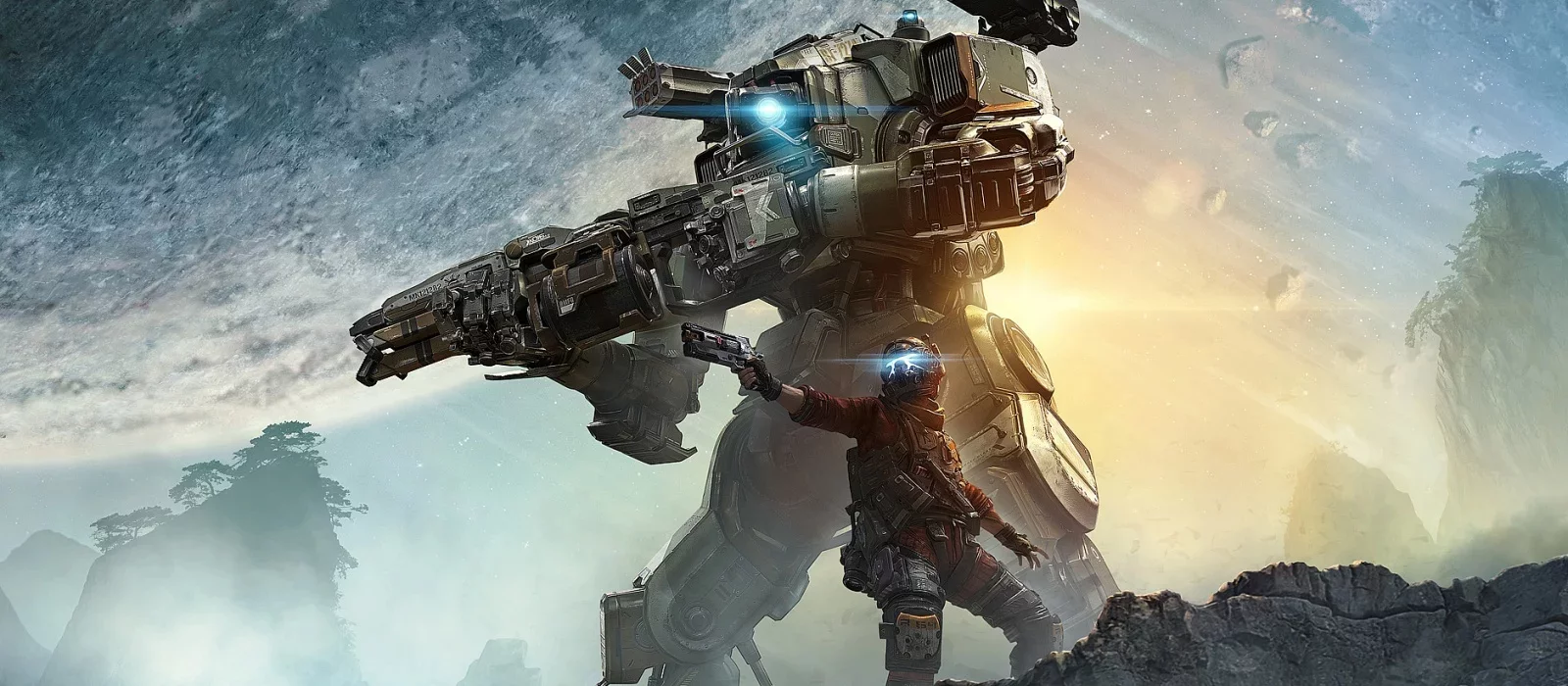
Electronic Arts has long been trying to find a worthy counterpart to the Battlefield series. While DICE is working on a new installment, EA is releasing a shooter from another franchise. The American publisher hopes to replace the underperforming Medal of Honour with the Titanfall series. Although this MMOFPS doesn't match Battlefield in scale, it offers gameplay that can appeal even to the most devoted fans of its competitor, Call of Duty.
And although Activision and its megablockbuster still have nothing to worry about, Electronic Arts is doing everything it can to take the lead in the shooter genre. The first serious blow was delivered by Battlefield 4, but the haste with which DICE released its hit noticeably affected the brand's reputation.
That's why Respawn Entertainment was given double responsibility. In addition to development itself, they had to thoroughly test the game and fix its bugs. The developers did an excellent job with the latter, but the gameplay still raises a number of questions.
Crystal Clear Simplicity
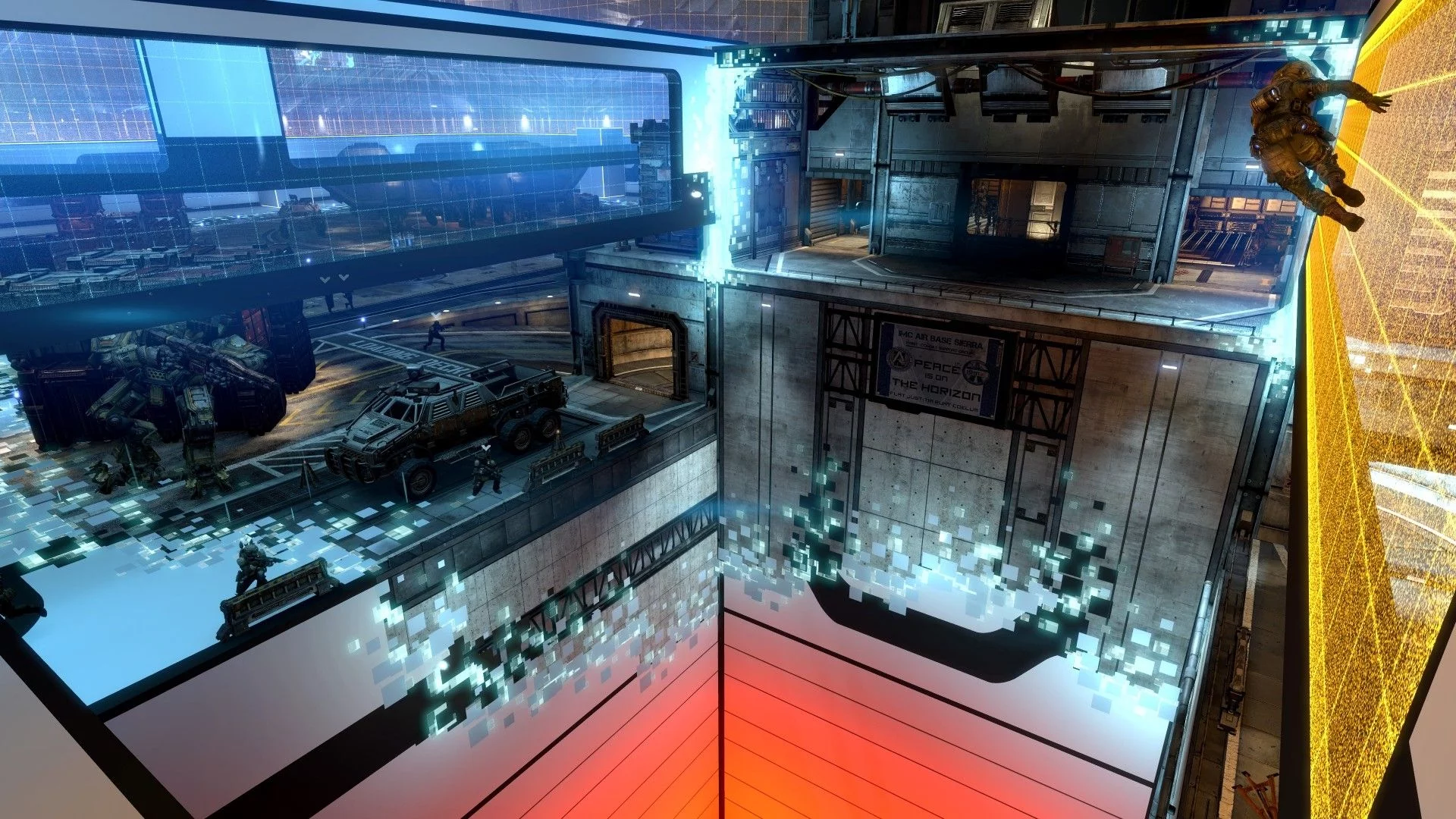
Compared to other shooters, Titanfall's multiplayer turned out to be simpler than one might imagine. Against Respawn Entertainment's creation, Battlefield 4 looks like a true military simulator. Even Ghosts' multiplayer can seem complicated after a few hours in Titanfall.
That's exactly how much time it takes to realize that this game is designed for those who want to quickly rack up a few kills, sit in a robot with a huge gun, feel the rush of fast-paced and deadly combat, and so on.
A multiplayer session lasts only about 10 minutes, including loading and exiting the game. During this time, players need to complete the assigned objective and then finish off enemy pilots trying to evacuate.
Each match features 12 players, 6 on each side. They are joined by AI-controlled opponents. Altogether, including the Titans, there are about 50 participants in a battle. All infantry units look the same, but it's very easy to tell who's who. At the moment, the AI is quite dumb—computer-controlled characters barely move, hardly shoot, and are very easy targets.
Humans, on the other hand, act much more cunningly. They try to take higher positions, constantly use cloaking, frequently change locations, and shoot much better than AI players. And just one look at how an enemy moves is enough to tell whether it's a bot or a pilot.
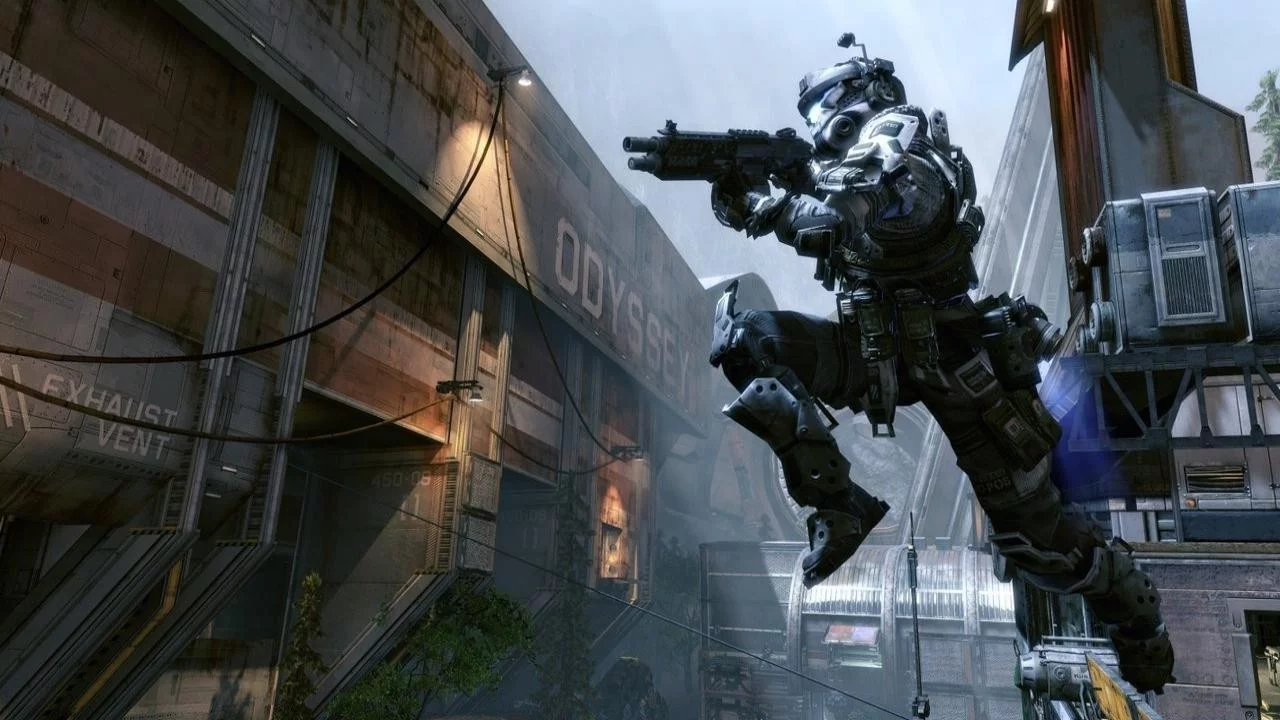
Another feature that sets Titanfall's multiplayer apart from other "Call of Duty" games is true three-dimensional movement. What Crytek couldn’t achieve in Crysis 3, the guys at Respawn managed by giving characters the ability to easily run along walls and jump long distances using jetpacks.
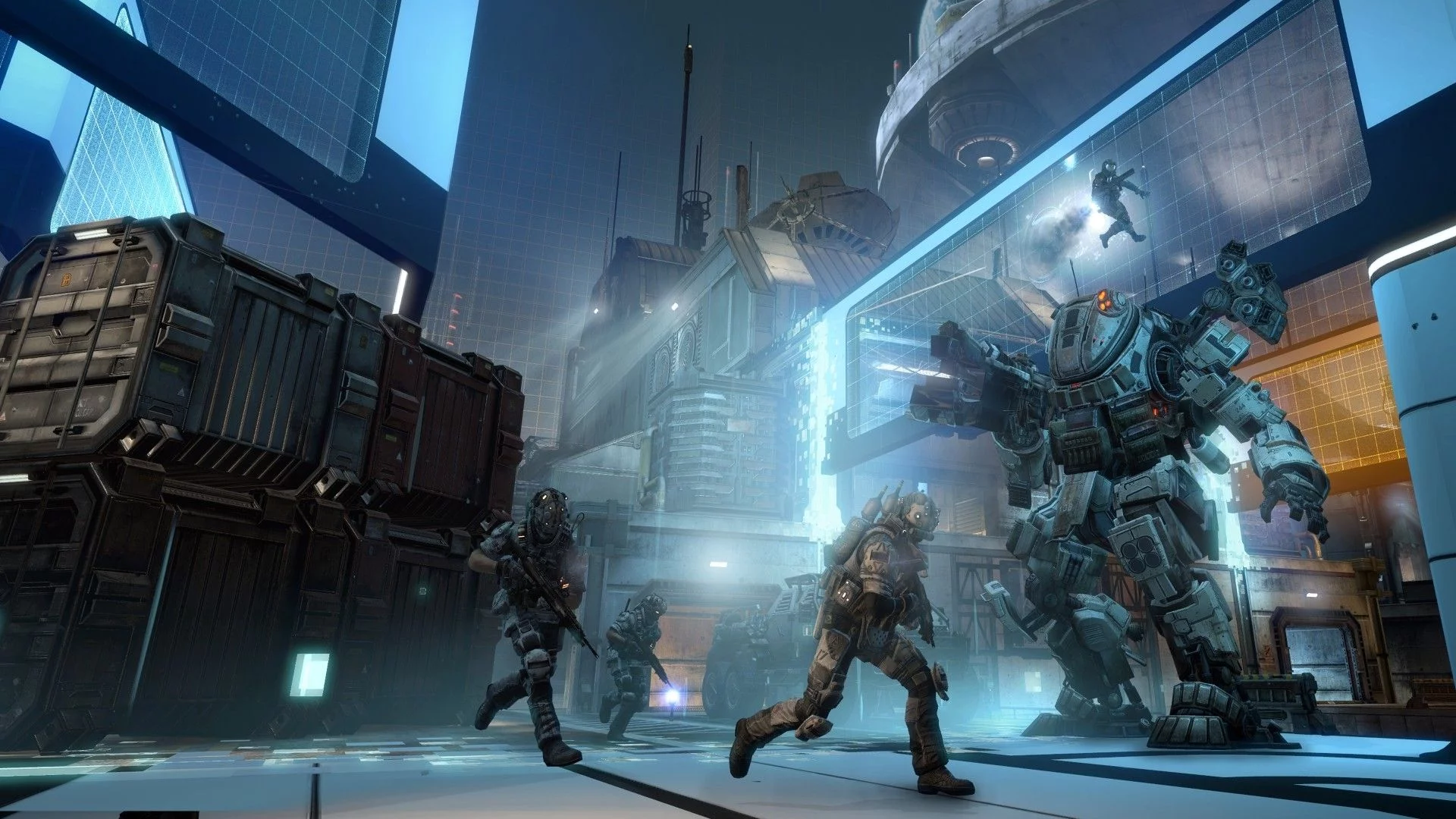
Can you imagine how much the battles have changed? Survivability has only increased, since you can gain an advantage by suddenly changing direction. In classic shooters, players get used to the idea that in a face-to-face encounter, enemies aren’t going anywhere from your crosshairs, so their possible actions are easy to predict. In Titanfall, it’s much harder to anticipate an enemy’s next move, but you can also make unexpected plays yourself. You can easily escape enemy fire and even evade a Titan’s rockets. This is possible because in Titanfall, every surface is available for movement.
As a result, action moments become very memorable, especially when two players with equal skills meet. Such a skirmish can last several minutes, with players constantly switching roles. If they don’t manage to kill each other right away, one will start hunting the other, and then the situation can quickly reverse.
On top of that, you can’t forget about invisibility, which lets you hide and let enemies pass by so you can get behind them. And that’s not to mention how other players and Titans can influence the situation.
Titans
Speaking of Titans. These huge, humanoid combat robots turned out to be quite clumsy, but extremely powerful. When a Titan falls from the sky, it smashes everything at its landing spot, which can be helpful at a critical moment when enemies are clustered together and holding a position. In the thick of battle, a Titan can crush enemies underfoot, punch them with its arms, shoot them with a huge gun, suppress them with rockets, and so on. In general, if you see an enemy Titan in front of you, it’s best to disappear immediately—otherwise, you’ll be torn to pieces.
f there are allied Titans on the battlefield, you can support them using rockets or grenade launchers. With this, you can easily destroy a "wounded" enemy Titan. You can also shoot at its cockpit from above. In that case, the pilot will eject and try to take you out. Don’t miss this moment—you’ll have a few seconds to find the pilot, and the Titan itself will switch to guard mode, meaning you’ll face a double threat.
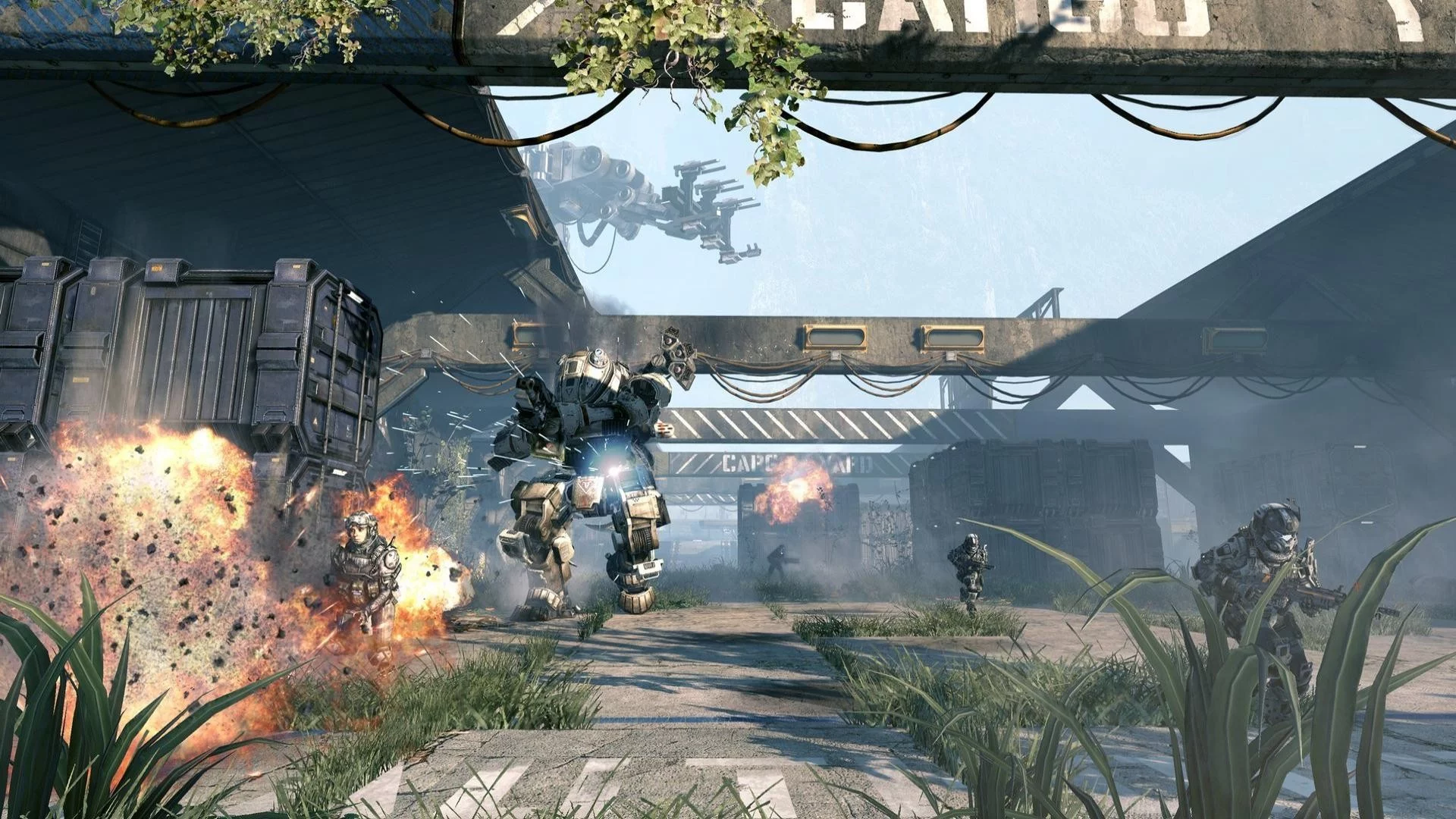
Battles between Titans are just as spectacular and dynamic as those between pilots. If players can’t win at long range, they close in for melee combat. In this situation, you have to be very careful. Titan punches deal massive damage, and if things go badly, a player can be ripped out of the cockpit and smashed against the nearest wall.
During the beta test, it seemed like Titanfall’s maps were too small for the declared number of participants, but in reality, it turned out to be the opposite. The maps are quite spacious, definitely larger than in Call of Duty, and perfectly combine the necessary space for both pilot battles and giant robot fights. In this respect, the developers did a great job and showed they can create a balanced map where every player, no matter their weapon, can find their place.
To sum up, Respawn Entertainment managed to create a fun, extremely dynamic shooter with plenty of action. The developers focused not on memorable and complex battles where cold calculation and the right position decide everything, but on the thrill of racking up quick kills. That’s where the game’s advantages end.
Police vs. Oligarchs
But right after the positives come not so much drawbacks as shortcomings. This is clearly seen in the so-called “single-player campaign,” which is essentially the same multiplayer modes, just with added audio briefings from command. Needless to say, most players aren’t interested in listening to all of this?
Against this background, the conflict between the “Militia” and the “IMC” looks just as much like a formality. Especially since the descriptions of these two factions take up literally a few paragraphs. The developers clearly should have thought more about how to truly engage players with the game’s world. Simply put, with such a bare-bones approach, Titanfall wouldn’t have lost anything if the warring sides were just called “Faction 1” and “Faction 2.”
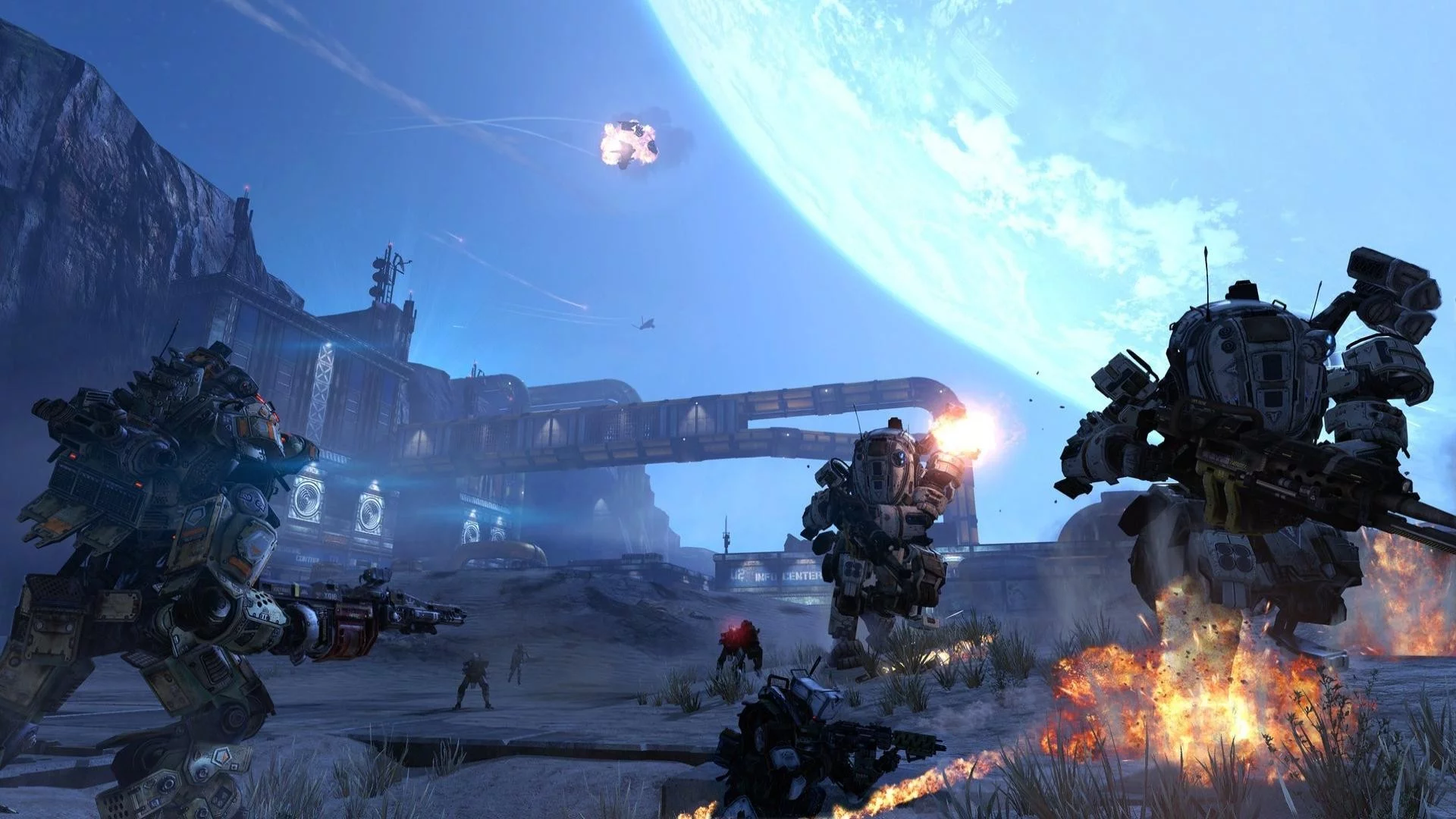
The developers also took a very basic approach to character weapons and leveling. Each player starts with a perfectly decent weapon, which later becomes only slightly better thanks to the simplest upgrades—an iron sight, a silencer, and a thicker barrel. As for leveling, it’s enough to say that some especially lucky players managed to reach level 40 out of 49 on the very first day.
You can’t change your Titan’s weapons or abilities at all, and you can only take up to three “cards” into battle—special items that, according to the developers, affect survivability in combat. In reality, though, their impact is barely noticeable.
It’s also impossible to ignore the number of game modes—there are only 6. Of these, only 2 can really be called interesting and make use of Titanfall’s setting. The rest are classic Team Deathmatch and similar modes. For a game with such potential, there should have been at least 10 game modes, with at least half of them making the most of the gameplay possibilities.
Source still delivers!
Titanfall was developed on the Source engine. Yes, the same engine Valve used to release Half-Life 2 ten years ago. It was hard to expect anything extraordinary from this engine, but the graphics are generally at a decent level. Sure, there are occasional low-polygon elements and outdated animations, but for Source, that’s not surprising. Even so, the developers should have paid more attention to the Titan models, which lack memorable details.
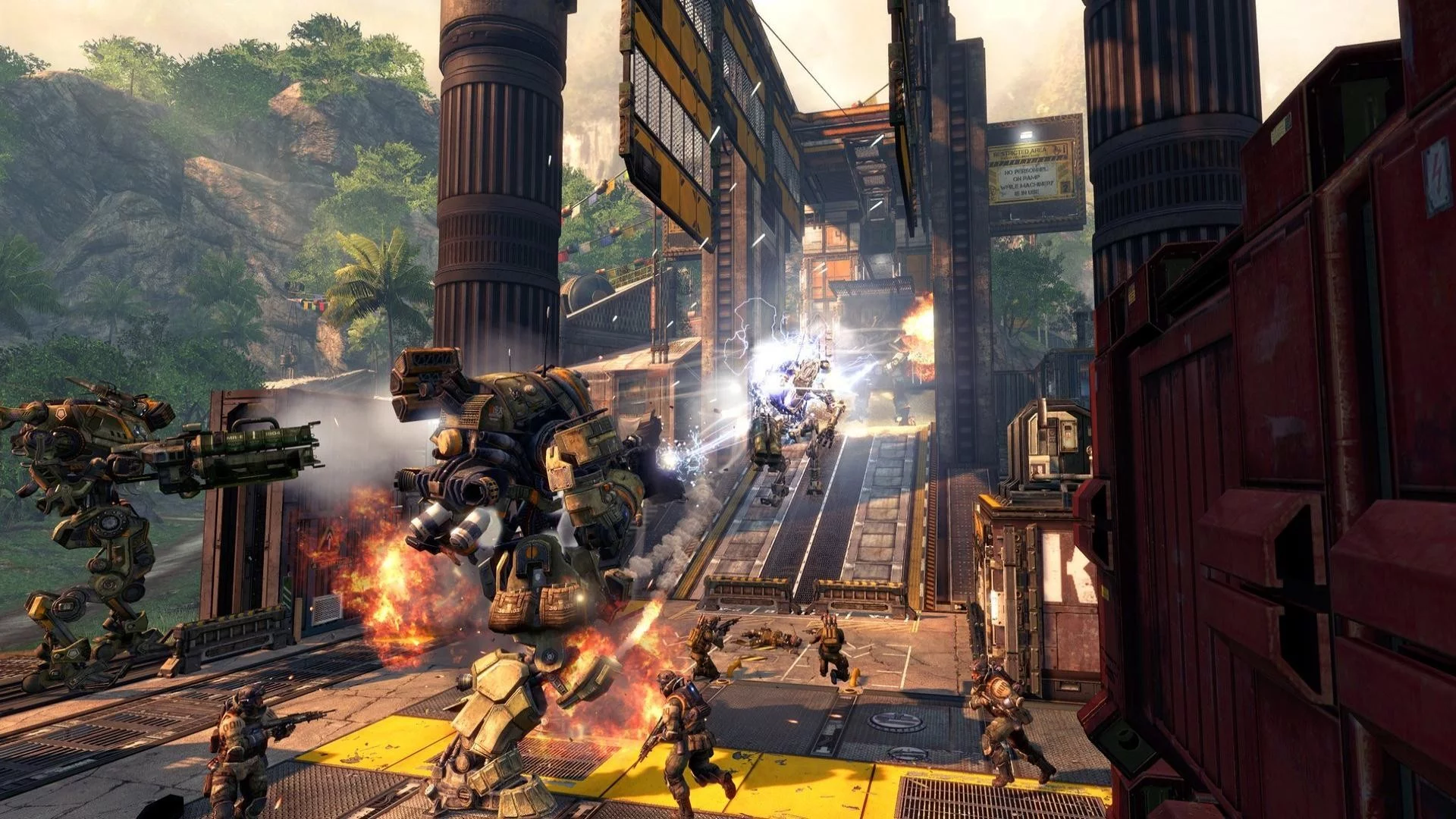
Destructibility is also a tricky issue. Many believe that its absence ruined an otherwise excellent game, but if it were present, it would unpredictably change the gameplay, leaving no room for infantry.
You can also complain about the sound design, which is frankly lacking. The sounds are rather cardboard-like—there’s no sense of clinking gear or the thunderous footsteps of a multi-ton machine. Even the Titans’ weapons sound dull and weak. It’s disappointing, as you won’t hear the roar of a heavy machine gun or the blast of a rocket launcher. Respawn Entertainment could have created powerful, high-quality, and impressive sound effects that would make players tremble with fear when an enemy Titan passes by—but they didn’t.
Looking forward
In summary, one thing is clear—Titanfall was created by the same people who once made Call of Duty. And they certainly know how to make easy-to-pick-up games. Titanfall is full of action and adrenaline, but the game feels unfinished. Few modes, laughable customization, and symbolic progression—all deemed unnecessary by the developers.
The reason is simple—Titanfall is intended for those who want to participate in fast and dynamic battles on equal terms and with equal weapons. The adrenaline rush players get can be called concentrated—they get it within minutes of starting a match. There’s no “Oh, finally I killed someone!” after half an hour of play, or cries of “You have a better weapon than me!”
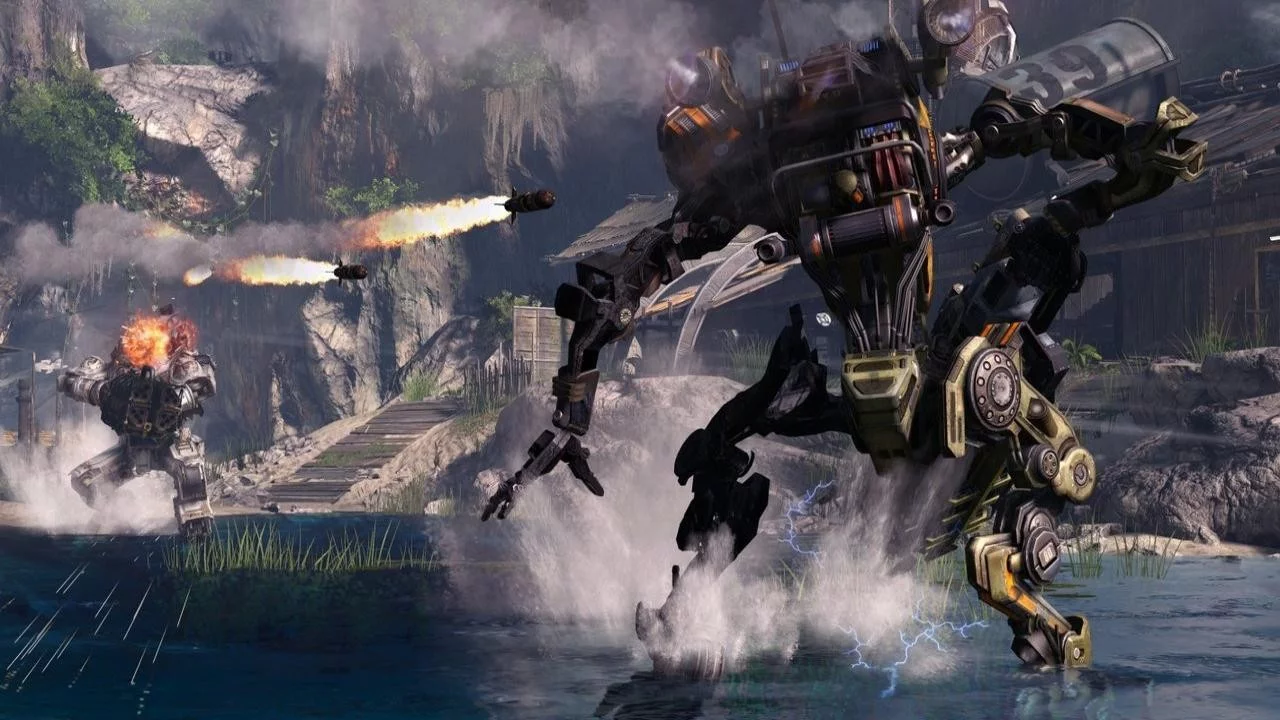
Hardcore players will definitely consider Titanfall too casual—a demo version of “realistic shooters.” However, Titanfall is aimed at a different audience, as the developers simply ignored all the modern FPS conventions and made a wild action game where you just run along walls, mow down enemies with auto-aim, and stomp competitors into the pavement in a single step.