When was the last time you played a game where you really had to wait? I'm talking about actual waiting, patience, the ability to immerse yourself in the game's world. This review is about exactly that kind of game.
Gameplay and Its Features
In Dishonored, you often have to wait for the right moment. You'll be peeking through keyholes to make sure there isn't an enemy right behind the door. You'll have to crouch behind walls or ruins and use a supernatural ability that lets you see through walls, waiting for the perfect moment to slip past an enemy. You'll be anxiously waiting for a chance to sneak past tallboys, praying they don't spot you. This is what stealth gameplay is all about, kindly provided to us by Arkane Studios.
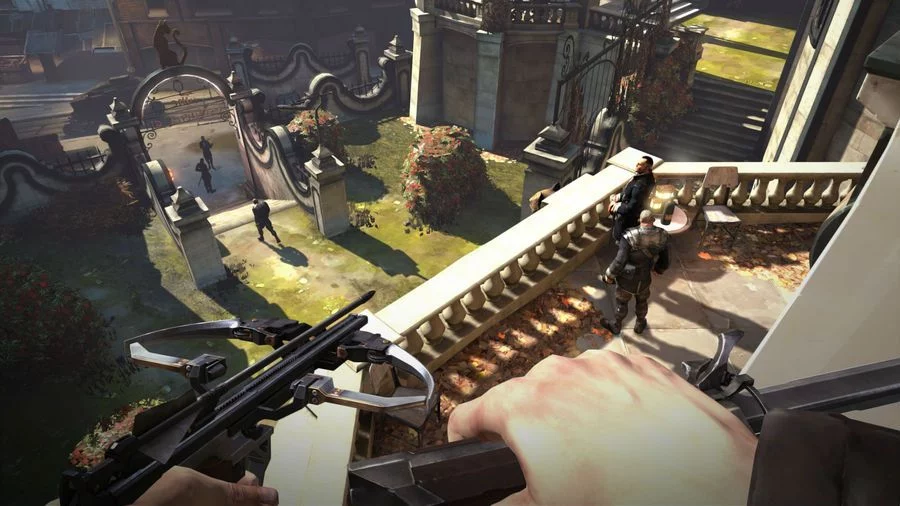
But what if you don't like hiding and waiting for an opportunity to sneak past an enemy? The developers of Dishonored have thought of everything. You can run around, stab soldiers with your blade, or even shoot them in the face with a pistol or a crossbow. It's all up to you. The world of Dishonored adapts to your playstyle; you're not forced to only kill or, conversely, not kill. In the game's world, you can't make a wrong choice, because any choice you make is the right one.
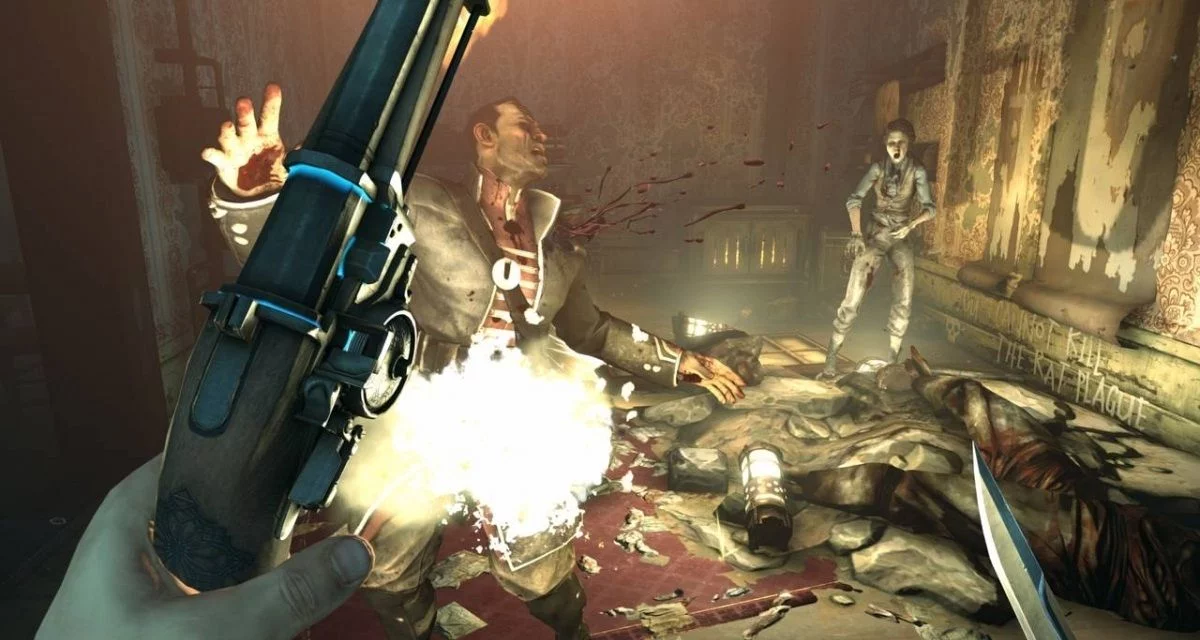
The game is focused on single-player gameplay. Dishonored has no naval battles, no pointless co-op, and no multiplayer. It's just you, a set of gadgets, and your abilities, which allow you to diversify the gameplay in the game's grim world.
There are six active abilities and four passive ones in the game. Each ability has two levels, which you upgrade by finding secret runes scattered across the map of your current mission. To find runes, you use an interesting device—a semi-mechanical heart (it starts to glow and beat quickly if you're on the right track). You can also use this heart to uncover people's secrets.
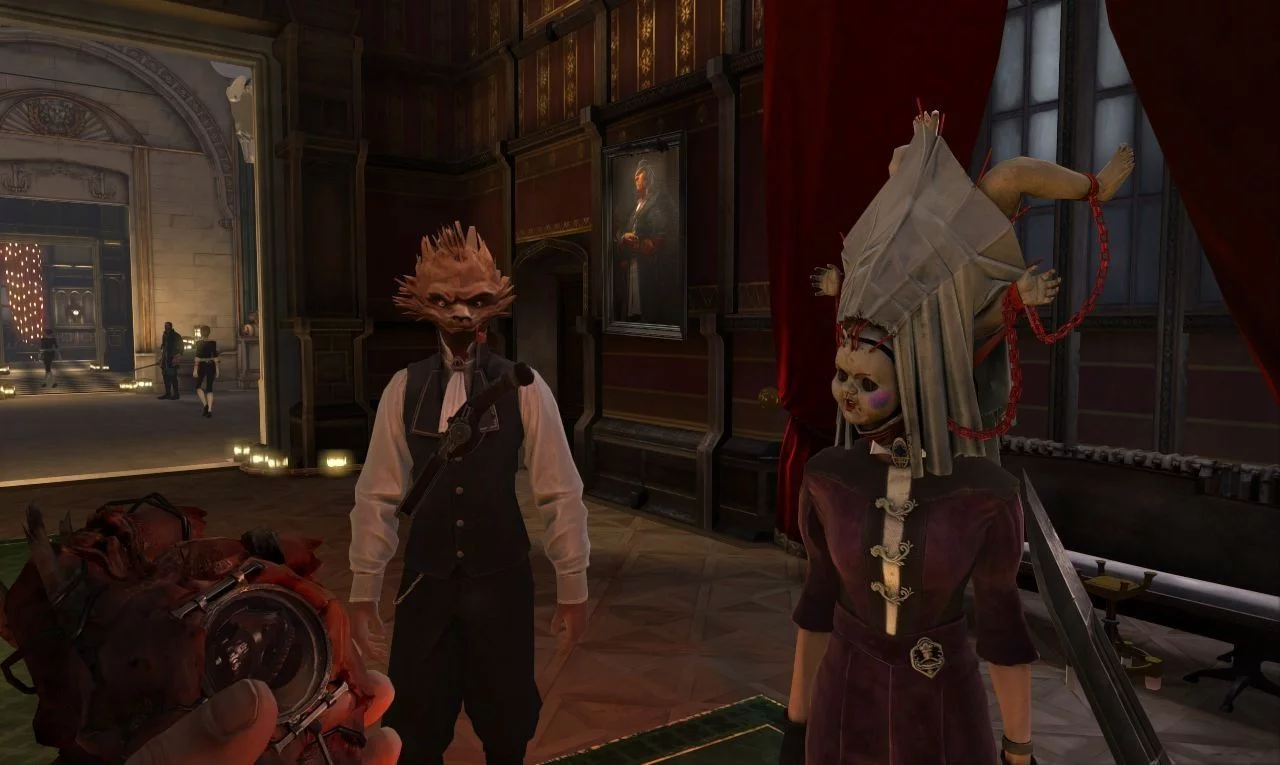
You can also upgrade your weapons, but to do this you'll need money or blueprints, which you can find as you progress through the game. Upgrades are crafted by a scientist who also happens to be your ally. However, he charges quite a bit for his services. Your weapon stays with you throughout the game; there’s no such thing as getting a new "toy" with every level—you're given everything at the start, so make use of it.
You can teleport short distances, making it easy to climb onto rooftops or balconies. There’s also a "possession" ability: if needed, you can possess a rat, a person, or even a fish, which is especially handy for sneaking through vents as a rat. There’s a time-stop ability—when you use it, everyone freezes except you. This leads to fun situations: for example, you can stop time when someone shoots at you, possess an enemy, and move them into the path of their own bullet. There are many creative ways to use your abilities. You can also summon a swarm of rats to devour your enemy—though they might attack you as well, but there’s a "charm" amulet that scares the rats away, keeping them at a distance.
Déjà Vu
The city of Dunwall in Dishonored reminds many players of City 17 from Half-Life 2. That’s no coincidence—level design was handled by Viktor Antonov, the creator of City 17. Overall, Dishonored is a kind of blend of elements from different games: the presence of both magic and weapons in a first-person game is reminiscent of The Elder Scrolls. The stealth gameplay, where you have many ways to deal with your target—or not kill them at all—recalls Hitman. The steampunk world, and the way you learn the city’s history through books and audio logs, is similar to BioShock 2.
But don’t think that Dishonored is just a patchwork of other games—it’s not like that at all. All the above-mentioned games influenced Dishonored and its world, but as a game, it’s something new, something never seen before.
Everything will be just the way you want it
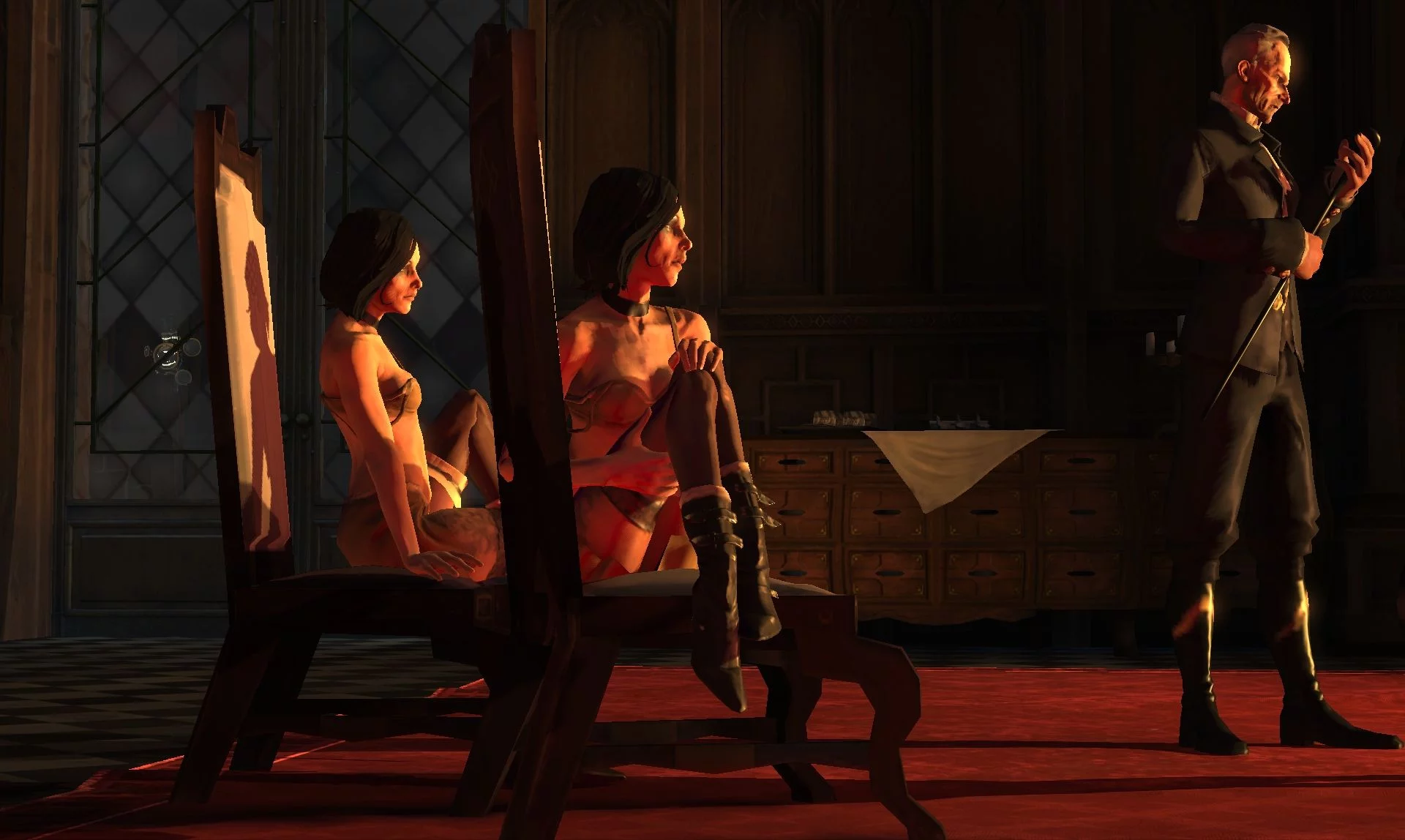
This is a game where you can put the main story quest on the back burner if you wish. On every level, you can create your own story; you can invent a mission just for yourself. For example, if there are seven guards standing together and you want to kill the one in the middle without being noticed by the others, you can try to do just that. In one of the missions, you’ll need to infiltrate a brothel to kill two brothers who are in different rooms—you can go in guns blazing and kill everyone, or you can sneak in and eliminate them without anyone ever noticing you were there.
The game can adapt to your playstyle: if you constantly kill enemies openly, you'll find pistol ammo in their pockets; if you avoid killing and instead put enemies to sleep or choke them out, you'll find sleep darts for your crossbow. The game tells you: go ahead, do whatever you want—I’ll support you no matter what. You can complete the entire game without killing anyone, which once again demonstrates just how many ways there are to play.
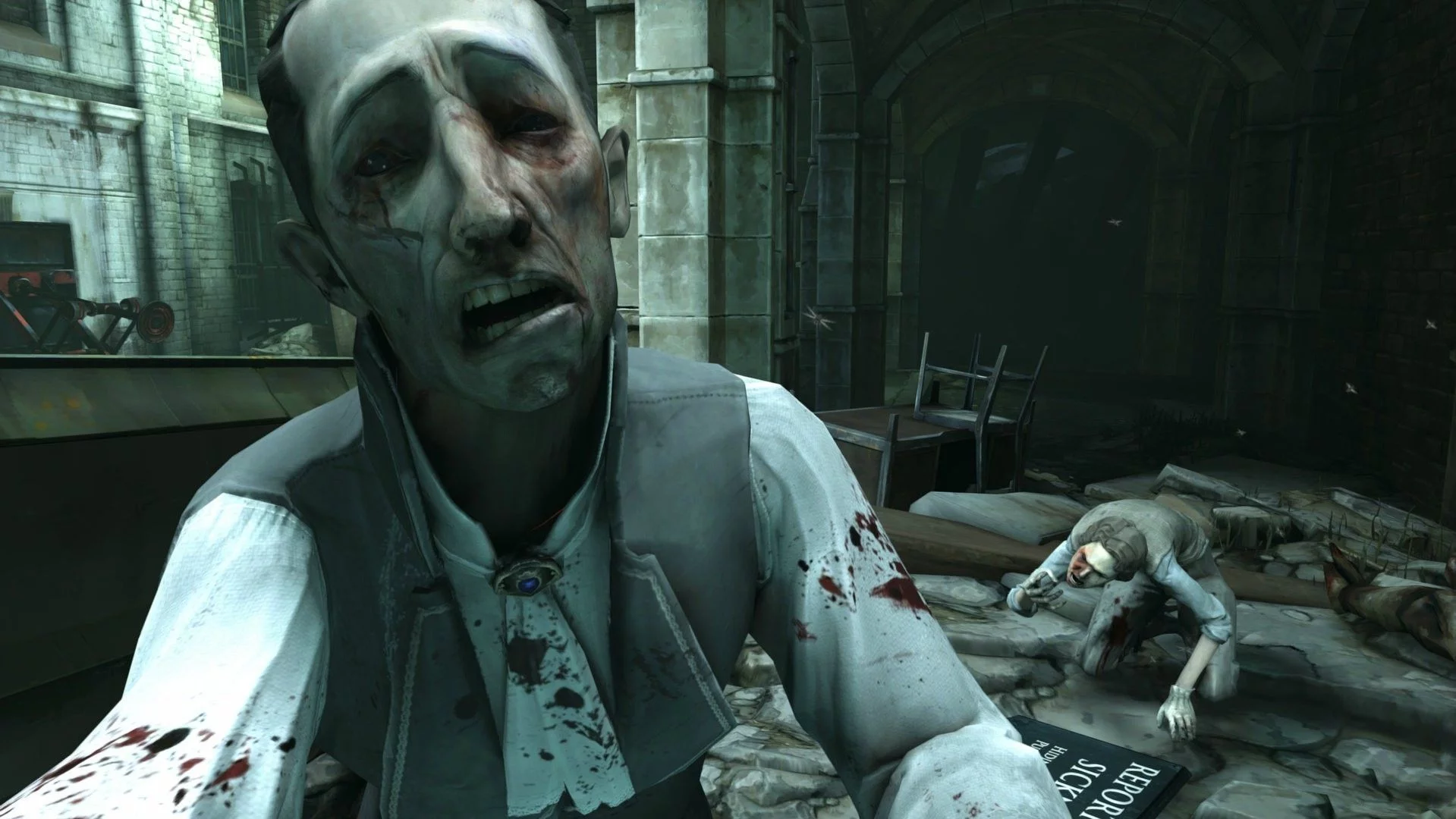
Dishonored also features an interesting game element called the chaos level in the city, which depends on your actions. If you often kill and leave bodies lying around, rats will eat them. The more corpses the rats consume, the more their numbers grow—they start attacking civilians, and their population increases even more. This doesn’t have a huge impact on your gameplay, but it can sometimes cause trouble in the form of "weepers." Weepers are people in the final stage of the rat plague, essentially walking dead. They attack you, but they're fairly easy to kill.
Not Without Its Drawbacks
Dishonored is a very serious and tough game; completing it stealthily without being seen is quite challenging. The combat system is so complex that open confrontation is often a poor choice—sometimes, just sneaking 50 meters unnoticed requires a herculean effort, and you'll find yourself saving your progress at every step. There are only nine missions in the game, each offering additional side objectives. All locations also contain runes and charms. If you decide to fully explore every area, a single mission can take you several hours to complete.
The game has 50 Steam achievements, but earning them isn’t easy. To get all the achievements, you’ll need to play through the game at least twice. For example, among the achievements are: finishing the game without killing anyone, but there’s also an achievement for killing a tallboy with only your blade. This means getting one achievement can block you from getting another in the same playthrough.
Dishonored does have some mechanical issues. You can climb onto many ledges using teleportation, but sometimes, even if the teleport’s range should allow it, the game won’t let you climb onto a roof. If you’re running from a tallboy and encounter this issue, death is almost inevitable.
Unfortunately, there’s no way to replay missions with the abilities you had after finishing the game. You can replay any level, but only with the abilities you had at that point in the story. Still, it’s worth replaying the game to try different approaches to your objectives and to see how varying levels of chaos affect the gameplay.