Allods Online
Follow


“Allods Online” is a free-to-play fantasy MMORPG from the Russian studio Allods Team, released in 2009. The action takes place in the world of Sarnaut — a planet... Read more
All languages (4)
Deutsch: interface
Français: interface
Türkçe: interface
“Allods Online” is a free-to-play fantasy MMORPG from the Russian studio Allods Team, released in 2009. The action takes place in the world of Sarnaut — a planet shattered by a catastrophe into hundreds of isolated islands called allods, drifting in a magical substrate known as the Astral. The game combines classic mechanics of the genre — quests, leveling up, dungeons, raids, PvP — with a unique system of astral travel on ships that players' crews build and equip themselves.
The project is actively developing in the 2020s: major updates are being released large updates, the visual part is being modernized, and the entry threshold for newcomers is gradually decreasing. Alongside the main servers, there is a subscription server “Thread of Fate” — a pay-to-play model without pay-to-win advantages, where all players are on equal terms.
Lore and World Structure

The lore of “Allods” is based on the conflict between two gods. Long ago, the God of Darkness Nihaz imprisoned the God of Light Sarna in the prison world of Sarnaut, appointing twelve Great Dragons-Guardians as jailers. The only way for Sarna to gain freedom is to destroy Sarnaut itself. Being imprisoned, he could not do this, but began to create intelligent races on the planet's surface, hoping that they would destroy the world. The plan repeatedly failed: the peoples built civilizations instead of destroying each other.
The turning point came after a meteorite fell, destroying part of the Guardians. Sarna's chains weakened, and he began to act limitedly within the world — launching a series of events that led to the Great Cataclysm. Once a flourishing planet, it shattered into allods — isolated islands of land, each of which holds one of the Great Mages from dissolving in the Astral, having paid for this with eternal imprisonment on their island.
Sarn, having completely lost his mind, spawned demons — beings from the depths of the Astral, whose sole purpose is to destroy the Great Mages. This turned the protection of the allods' guardians into one of the key tasks of all the states of Sarnaut. Later, the Architect invaded the world — a god-creator from another universe, seeking to bring all existence to a single Order, but the united forces of the two main factions destroyed him. By the time the game begins, the demonic threat has mostly been overcome — however, the world continues to be shaken by conflicts.
Mythology of the World and Factions

Before the Cataclysm, Sarnaut was a single planet with several continents, developed races, and states. Now it is fragmented into allods of various sizes: some are populated and politically mastered, while others are abandoned and forgotten. It is the latter that make up a separate layer of content: uninhabited remnants of the former world drift in the Astral and are available for exploration on astral ships.
Politically, the world is divided into two opposing blocs — the League and the Empire:
- League leans towards the image of a fairy-tale and pre-Petrine Russia: natural landscapes, traditional architecture, a strong role of religion and cultural traditions;
- Empire is built on an industrial model: strict centralization, military discipline, developed industry, and active use of astral energy as a resource.
In the world, there are also several small unions — Free Traders, Pagans, the Church of Light, and others. Each pursues its own goals; relationships with them affect the character's reputation and open access to unique gear and opportunities.
Game locations and world

The world of "Allods" consists of isolated zones, each with its own biome, population, quests, and territorial threshold. Progression is linear: the player moves from one allod to another as the character's level increases. The content scales in difficulty and remains one of the key distinguishing mechanics of the game.
The visual design of the zones follows factional affiliation — natural harmony and traditional architecture on the side of the League, utilitarian industrial style on the side of the Empire. Biome diversity increases as you progress. Early zones include the birch groves of Lightwood with the main city of the League, Novograd, and the harsh snowy Siveria with wild tribes and natural resources. Later, tropical atolls, desert territories, industrial imperial zones, ruined cities, flying islands, and locations frozen in time are unlocked.
Astral is a standalone game content, not just a space between zones. A crew of several players sets off on a ship to randomly generated sectors to fight astral demons, explore drifting shards, or gather resources.
Personal allod is the personal territory of each player. Initially an empty island, it is built up with buildings that provide bonuses to stats and produce resources as resources are invested. In update 17.0, the system was significantly revamped.
Hub locations

Each faction has its own capital — the main hub where players arrive after training and from which all further interactions with the game are built.
- Novograd is the capital of the allod Kvatokh and the entire League, rebuilt after the first demonic invasion. The city is located on the shore of the astral bay and is divided into four districts: the elven and gibberling quarters, the trading row, the central square with the tower of the Great Mage Aidenus, and the shipyard. Russian terems, domes, wooden buildings with stone inserts — the architecture is recognizable at first glance;
- Nezebgrad is the capital of Hadagan and the entire Empire, an industrial metropolis with an extensive sewer system, a transport hub, a scientific center, and residential areas. The foundation of the urban infrastructure is the mana pipeline, through which magical energy extracted from the Astral flows into homes. Soviet constructivism, metal, concrete, propaganda on every corner. In the center stands the Tower of Yasker, the residence of the ruler of the Empire.
All practical infrastructure is concentrated in the capitals: a trading area, bank, auction, faction NPCs, entrances to dungeons and raids, shipyard, warehouse, blacksmiths, gear traders. Here, the main quest chains and reputation tasks converge. The capital remains a permanent base throughout the game.
Plot, characters, and staging

The plot in "Allods" is structured differently than in single-player RPGs: instead of a linear campaign with cutscenes, it is scattered throughout the world via quest chains. The main narrative is focused on the series "Secrets of the World" — special chains that open up as you level up and sequentially reveal the cosmology of Sarnout: the nature of the gods, the origin of demons, the mystery of the Astral. A lot of lore is also contained in regular quests — with careful reading.
Quests actively use cultural allusions, organically woven into the world without direct parody. There are motifs of Slavic folklore, Soviet and post-Soviet aesthetics, images from mass culture: variations on the theme of Koschei, everyday scenes a la "banya," stylizations of military service with characteristic humor and intonation. The result is a recognizable and sometimes ironic atmosphere, especially close to players from the CIS.
The quality of the texts and dialogues is high: the tone is more adult compared to typical representatives of the genre, with an emphasis on atmosphere and intrigue. In some cases, the continuation of the quest line is not obvious — the player has to track the chain independently or navigate using the map.
There are no specific protagonists with detailed biographies — the player creates a character without being tied to a well-known figure in the world. The narrative is built around the global confrontation of factions and threats, forcing the League and the Empire to either fight or unite against a common enemy. Update 17.0 "Blood of Kings" continued the main storyline: a new location, Kvator, and a heroic adventure "Oasis of Yolicthli" were added.
The staging, by modern MMO standards, is modest, with no direction. The plot works for those who are ready to seek it out: read dialogues, follow chains, study notes and letters. With this approach, there is enough lore here for a dozen or so hours.
Races and factions: who plays for whom

There are six playable races in the game, divided between two sides. The choice of faction when creating a character determines allies, enemies, and starting content for hundreds of hours ahead. Although in the modern version of the game, the side of the conflict can be changed using special game items, this choice remains fundamental for immersion in the lore.
League:
- Kanians — people culturally close to pre-Petrine Russia: chain mail, sarafans, dome architecture. A universal race with a wide selection of classes;
- Elves — refined, with an aesthetic of decay and hedonism. After millennia of wars and catastrophes, they have come to a simple philosophy — to take everything life can give. Slender, with sharp features, in exquisite garments;
- Gibberlings — furry beings from the north, born sailors. Visually resemble large anthropomorphic hamsters.
Empire:
- Hadagans — imperial people: strict lines, military uniforms, and no sentimentality;
- Orcs — brutal but not wild. Integrated into the imperial system, preserving their own traditions — including comical ones: they play football by kicking goblins, wear scarves with symbols reminiscent of football clubs. Large, physically powerful, with tusks and greenish skin;
- Reborn — resurrected dead in the service of the Empire: skeletons and zombies in military gear of varying degrees of preservation. According to the lore, they are not monsters, but full-fledged citizens with their own way of life. "Zem" is the name of their ancient culture, not a race.
Neutral:
- Praydens — beastmen who go through a unique quest chain and join one of the factions as a result. Anthropomorphic cats/lions, they combine spirituality and combat traditions;
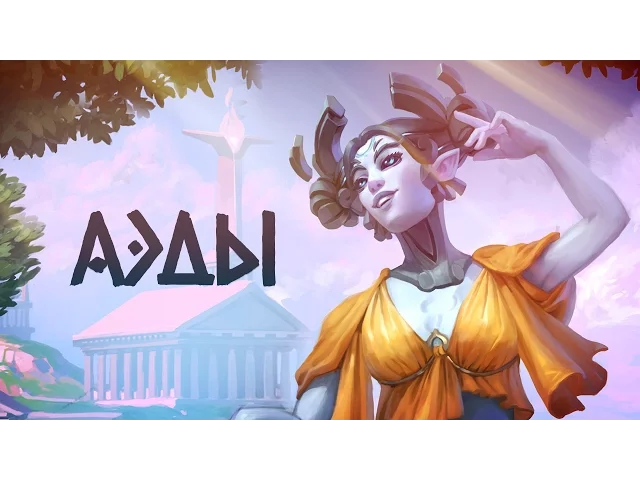
- Aeds — a special race: available not at character creation, but as a rebirth for high-level players (70+). Beings with an ancient/enlightened aesthetic — pale skin resembling marble, Greek motifs in appearance. Upon rebirth, they inherit the faction of the main character.
Each race has racial passive abilities, but they have minimal impact on balance. The choice of race is de facto determined by aesthetics and lore, rather than gameplay advantage.
Classes

In "Allods," there are 11 classes; the availability of a specific class depends on the chosen race. The Aspect system allows each class to switch between roles — damage, defense, healing, support — within a single character, although the effectiveness of each role depends on the current balance.
Main archetypes:
- Warrior — the classic "melee fighter" in heavy armor. A master of control and stuns, serves as a pure tank or melee fighter;
- Scout — combines traits of a ranger and assassin: ranged combat or stealth attack up close. High survivability in the tank role is ensured by defensive skills and group barriers;
- Templar — the local paladin with a system of magical barriers for absorbing damage. Difficult to master, but in demand as a tank and formidable in PvP due to high burst damage;
- Priest — the main healer, actively using magical shields. In the Assault Aspect, becomes one of the most dangerous magical DPS, especially popular in PvP;
- Wizard — a traditional spellcaster with high AoE damage. Low survivability is compensated by mobility and the ability to quickly eliminate groups of enemies;
- Necromancer — a hybrid of a warlock and healer. A master of poisons and summoning the undead; one of the most self-sufficient and stable classes for PvE.
Classes with unique mechanics:
- Bard — support and damage. Instead of mana, uses "Tempo," which accumulates and is spent through performing songs. One of the most beginner-friendly classes in most seasons;
- Engineer — gameplay revolves around balancing reactor temperature (cooling/overheating). Requires high "Concentration," but is critically important in a squad: provides powerful buffs and controls territory well;
- Shaman — summons an assistant: traditionally wolves or hyenas for orcs, and bears, lynxes, or squirrels for other races. At high levels, valued as one of the strongest healers with unique survival skills for the group;
- Demonologist — gameplay is built around switching between three forms: "Temptress" (damage), "Giant" (defense), "Beast" (speed). Complex, but extremely versatile class;
- Mystic — a master of mental attacks and phantoms. After a series of balance adjustments, has secured a place in the top DPS meters; one of the most sought-after damage dealers both in raids and in PvP.
Hero's Path

The gameplay loop is structured according to the classic for MMOs scheme: you gather quests → complete them on the required allod → return for rewards, level up → and continue. The leveling pace is slow by modern standards, but not torturous. With the 17.0 update, an accelerated development system was introduced: a special location allows you to reach level 115 out of 120 in just a few evenings and immediately enter the current content.
Activities unlock layer by layer: starting from level 10 — milestones, a bit later — dungeon islands, then Astral, reputation quests, and daily activities. There is no open PvP in the starting zones, but in higher allods and contested territories, encounters with opponents are quite real: faction rivalry is part of everyday gameplay, not just an endgame mechanic. By the level cap, there are enough activities to keep you entertained — provided you enjoy the approach itself.
Crafting is present, but it is not the main way to obtain top-tier gear. Professions are traditional for the genre: alchemy, blacksmithing, weapon crafting, tailoring, and leatherworking. Alchemy is implemented as a mini-game with its own mixing rules — atypical for MMORPGs.
Recipes are obtained through faction reputation and quests. Resources — herbs, ores, wood — are gathered in the open world; for high-level gear, additional materials from raids are needed. Many players find the system excessively complex: to get a good item, you often need to combine farming, crafting, and upgrading through the anvil. Loot from regular mobs and the open world is practically insignificant — junk at low levels, nothing useful at high levels.
The gearing system is a marathon lasting a season. Gear is divided by quality (from blue to lemon/lime); each new season introduces a new layer of equipment, while the previous one loses relevance. You cannot directly obtain a finished item: the activities drop a base item, which is then improved at the anvil in the capital. The main sources are Astral islands, raids, dungeons, compasses, and daily quests. Previously, a ship and independent travel were required for Astral islands — now entry is through group search.
The gearing system is multilayered: many windows, slots, and upgrade directions. At high levels, it’s easy to get lost, and the inventory quickly fills up with materials. Each item is improved in several directions:
- quality enhancement — scrolls, amalgam/realgar, basic resources;
- inserting runes, stones, and modules;
- engraving and enchanting;
- hero insignias — increase attack or defense efficiency;
- adaptive armor and additional systems: legacy of the gods, artifacts, and more.
On the auction, you can buy templates and first-tier gear — this helps speed up the start, but does not replace farming: top-tier gear of the second and third tiers requires personal participation in raids and compasses, and key upgrade resources (amalgam, realgar) are non-transferable.
Mounts and pets have skins and ranks; the meta mount is usually one — the fastest. The reincarnation system allows you to create additional characters in the main slots while retaining part of the progress (mounts, visual items, some bonuses).
A separate plus is the rich customization of appearance: costumes, armor skins, wings, auras, masks, visual effects. The character's appearance can be completely changed; many costumes look especially good on specific races — for example, on zems or elves.
Bestiary and combat system

The world of "Allods" is densely populated and imaginative: from harmless squirrels, foxes, and deer (among which rare unicorns occasionally appear) to unique races — bird-people aviaks, river water spirits, huge ogres. In abandoned locations and instances, vampire elves and mad leshys await. The main enemies of all living things are demons of all shapes and sizes: from small imps to gigantic monsters like Prutoglav. Opponents behave quite well: they flee when low on health, choose priority targets, and group up.
The combat system is based on classic targeting: select a target, execute a rotation of attacks and abilities, and monitor resources. A short global cooldown (1 sec.) and abilities outside the general queue create a high density of actions — an experienced player performs several actions per second, turning combat into a rhythmic "piano." The outcome directly depends on reaction speed and knowledge of the rotation. The difficulty varies significantly between classes: some forgive mistakes, while others require precise timing. Milestones — passive and active upgrades distributed across a grid — allow for different builds of the same class, fundamentally changing the gameplay experience.
In dungeons and raids, the difficulty increases manifold. Bosses are complex puzzles with phases, void zones, DPS checks, and positional tasks, where one mistake leads to the demise of the entire party. Dungeons are generally completed quickly, but interesting mechanics add variety — the webs of the Purple Widow, multi-stage battles. Raids require coordination: pulling adds, tanking specific abilities, reacting to timers.
Naval battles are a separate game within the game. The crew is divided by roles: someone steers the ship, someone aims the cannons at sectors, someone repairs breaches in the hold. Personal level is less important here than team cohesion and the ability to cool the reactor in time.
The combat system of "Allods" is still considered one of the strong points of the project: dynamic, visually expressive, with room for mastery — especially in PvP. Class balance and changes in characteristics remain a topic of debate in the community.
PvE modes

- Quest zones are the foundation of leveling. Each allod offers quest chains with increasing difficulty: clearings, escort missions, item collection, named bosses;
- Daily quests are a mandatory part of the endgame routine. Located in relevant locations, they provide resources for crafting and upgrading gear, reputation with factions. They take 30–60 minutes a day;
- Astral islands are the main group PvE content. The group flies on a ship to a random sector, traverses the island with several intermediate bosses and a final one. The pool includes several dozen maps with unique mechanics. In patch 17.0, the islands "Oasis Yolitztli" and "Adonis Lodge" were added. They provide T1 gear and resources;
- Heroic Adventures — challenging solo or group instances with increased equipment and mechanics requirements;
- Raids — content for 12 players, providing T2 gear and materials for crafting T3. Available once a week. Current raids: Tower of Order (added in 17.0) and a number of previous instances at different difficulty levels. The live queue through the party finder depends on server activity;
- Mausoleum of Sparks and Observatory — seasonal endgame activities. The Observatory provides T2 materials through waves of bosses. The Mausoleum of Sparks (Heroes Arena) — a seasonal challenge; plans are to update it with new opponents and mechanics.
PvP modes

- 3×3 and 6×6 Arenas — ranked team battles with pre-formed groups. The most skill-dependent activity among PvP modes: team tactics and coordination are important. Victories grant emblems, which are spent on gear, consumables, and cosmetics. Class combinations change with balance patches;
- Random Battles (Battlegrounds) — PvP on several maps (including: Polygon, Kargallas, Witch's Hollow, Wild Homestead, Tower of Order). Standard objectives: capture and hold points, score points. Winning grants the "Emblem of Confrontation" with a weekly limit that expands throughout the season. The "Chaos" modification is available — with random buffs and increased rewards;
- Death Arena — a large-scale battle format up to 24×24. Chaotic mass PvP; without good gear, survival is difficult — AoE abilities can kill poorly equipped players in seconds;
- Juno's Catacombs — a three-stage activity for 12 players: killing golems and collecting chests → racing on player-controlled golems → final PvP zone, where the player with the best skills wins;
- Champion Fights — held on a strict schedule (usually on Sundays). Before the decisive fight, a guild auction is held: the bid is accumulated prestige, lots are rival guilds;
- Dominion — central PvP content for guilds, remaining a key activity for many years. Divided into group (6×6) and raid (18 players, three groups). Regular battles take place in established time windows — daily from 11:00 to 23:00 Moscow time, six days a week. The main source of guild authority;
- Interserver Dominion — an annual tournament event where the strongest guilds from different servers compete for the title of absolute champion. Requires a separate tournament client; participants are given equal starting conditions for gear and consumables to reveal tactical superiority;
- Open PvP — available in higher zones and contested territories. It operates through a flag mechanic: in some zones, the flag is raised automatically, in others — voluntarily. Main areas — high-level locations where players compete for resources, bosses, and mob spots.
Guilds, clans, alliances

A guild in "Allods" is not just a label for communication, but a full-fledged system with its own progression, combat bonuses, and competitive layer.
You can create or join a guild from almost any level. Inside, there is a hierarchy of ranks with customizable rights: leader, officers, members, recruits. The size is limited, but sufficient for a full raid group. Guilds vary greatly in level: from casual communities to top-tier ones that only accept players with good skills and stable online presence — but they help with equipment and provide consistent raid farming.
A guild accumulates fame through the activities of its members — quests, dungeons, raids, character leveling. As fame increases, the level rises up to 100; each new level unlocks milestones that can be spent on combat passives and bonuses to members' stats. Progression is structured by seasons: at the end, fame resets to the accumulated "Prestige" — non-burnable experience. The champion guild receives a bonus for the next season, while others are ranked based on their position.
The main competitive activity — Dominion — is available in several formats (6×6, 12×12, cross-server). Formally, you can get there through the built-in group search, but high-level Dominion practically requires prior organization. Rewards in raid Dominion are distributed through an auction of bids based on accumulated PvP resources (Honor/Glory).
There are no formal alliances between guilds with separate mechanics — coordination is informal, through common chats and agreements. The game has a built-in group search (Ctrl+M), effective for basic activities, however, for relevant endgame content, players still gather groups manually — through global chat, shoutouts, or Discord. The community is predominantly Russian-speaking; in endgame, the audience shifts to 30-40+, many have been playing since the OBT of 2009-2010. "Allods" has traditionally been strong in its social aspect: for veterans, it is the people, not the content, that remain the main reason for returning to the game.
Economy and monetization

The game's economy relies on a complex multi-level system. The main currencies are gold (for in-game operations) and crystals (donation currency, divided into "blue" exchange and "purple" premium). In addition to these, dozens of PvE and PvP "currencies" circulate in the game: resources from astral islands and compasses are needed for crafting equipment, while marks from battles and Dominion are exchanged for relevant combat enhancements. The system remains confusing for newcomers due to the abundance of entities and specific conversion rates.
The auction is the main trading hub within the faction. F2P players can theoretically buy donation items for gold through the exchange, however, with high inflation on free servers, this requires colossal grinding. A personal allod with its "Horns of Abundance" remains one of the few sources of passive gold income.
The project was originally developed as a F2P game, but over time, monetization has noticeably tightened. A key element of power — runes (13 tiers), providing direct progression of damage and defense. The store also offers adaptive armor, modules, skill scrolls, and mounts. Developers periodically hold promotions and add ways to obtain some valuables through gameplay, but the gap between paying players and newcomers in PvP on free servers is almost insurmountable without huge financial investments or years of gameplay.
The "Thread of Fate" server and additional platforms opened after 2022 operate on a monthly subscription system (around 390 rubles). All combat advantages, including analogs of runes and artifacts, are obtained exclusively through gameplay. After a massive influx of players in 2022, subscription servers became the most populated and in demand. It is here that the most active part of the community is concentrated: the subscription removes the problem of "endless donations" and shifts the competition to the realm of personal skill and time invested.


System requirements and PC test
- Windows 2000
- CPU: Intel Pentium 4
- RAM: 512 Mb
- Free Space: 8 Gb
- VRAM: 128 Mb
- Video Card: nVidia GeForce FX 5200
- Windows 2000
- CPU: Intel Pentium 4
- RAM: 1 Gb
- Free Space: 8 Gb
- VRAM: 256 Mb
- Video Card: nVidia GeForce 7600
Reviews and ratings

Allods Online has become a "Trading Platform," "Online Huckster," and "Do Hunt." Every move costs money. I won't go into detail; I'll just start with Do.
When you reach character level 120, you'll need to collect the Dragon Form (DFA). The chance of getting them is very low (especially "Garnecott's Tranquility").
If you don't have DFA, you won't be allowed into raids.
Dragon Form: 1 set consists of 6 pieces, with 3 sets per character in just one tab.
Top sets: Lafia, Ditsu Vango, Garnecott's Tranquility.
Prices per item: 6 pieces in a set: Lafia - 6kk, Ditsu Vango - 10kk, Garnecott - 12kk. Total 168kk (million)
The average market price for 1 million gold is 108 rubles. Total for 3 sets = 18,144 rubles.
You can do it through gameplay. But you'd have to play for days on end on 7-10 characters. Bu… Read full
Аллоды Онлайн превратились — в "Торговую платформу", "Барыга Онлайн", "Охота за ДО". Каждое движение стоит денег. Много описывать не буду, обломаю сразу на До.
При достижении персонажа 120 ур. Вам предстоит собирать Драконий Облик (ДО). Очень низкий шанс получения их (особенно- "спокойствие Гарнекотта").
Нету ДО у Вас , не будут в рейды брать.
Драконий Облик: 1 сет состоит из 6 частей, на персонаже 3 сета всего в одной вкладке.
Топовые сеты: Лафия, Дицу Ванго, Спокойствие Гарнекотта.
Цены за 1 вещь их 6шт. в сете: Лафия — 6кк, Дицу Ванго — 10кк , Гарнекотт — 12кк. Итого 168кк (миллионов)
Средняя цена по рынку за золото за 1 миллион 108 руб. Итого за 3 сета получается = 18.144 руб.
Можно игровым путем. Но нужно играть сутками. на 7-10 персонажах. Но у Вас 1 персонаж. Не получит… Read full