
Valheim Materials Guide: Where to Find Every Crafting Resource
 Vladyslav Shamshurov
In Valheim, as in any survival game, you'll constantly need resources to craft tools, clothing, weapons, food, build your base, and upgrade crafting stations. Some materials can literally be picked up off the ground, while others require you to explore dangerous biomes and dungeons or fight powerful enemies. In this guide, we'll explain where to find Wood, Stone, Flint, Copper, Tin, Iron, Silver, Black Metal, Chitin, Flametal, and other important resources in the current version of Valheim 1.0.
Where to Find and Gather Wood
Regular Wood is one of the first and most commonly used resources in Valheim. It's required for building, making fires, crafting tools and weapons, furniture, and many other items.
At the very beginning of the game, you can get Wood by picking up branches lying on the ground. Small trees and bushes can also be broken without tools. Once you've crafted a Stone Axe, gathering Wood becomes much faster. Simply chop down Beech, Fir, and other suitable trees.
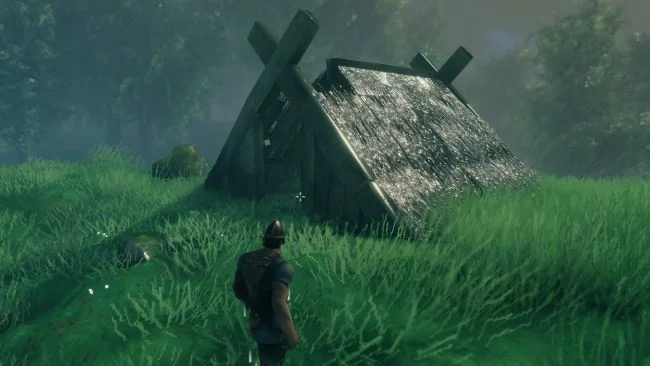
Abandoned buildings are another good source of Wood. If you find an old house, place a Workbench nearby, equip the Hammer, and dismantle its walls, roof, and other building pieces. This returns some of the materials used to build the structure and is much faster than destroying it with a weapon or axe.
Warning: Be careful when chopping trees. Falling logs deal heavy damage and can easily kill your character early in the game.
Where to Find Core Wood
Core Wood is needed for stronger structures and a number of tools, weapons, and other items.
The main source of Core Wood is Pine trees, which grow in large numbers throughout the Black Forest. They can be chopped down with a Stone Axe, so you can obtain Core Wood relatively early.
Large Pine trees provide considerably more material than small plants, so if you need a large supply, head to a densely wooded part of the Black Forest.
Where to Find Finewood
Finewood is used to craft Portals, furniture, ships, advanced weapons, and other important items.
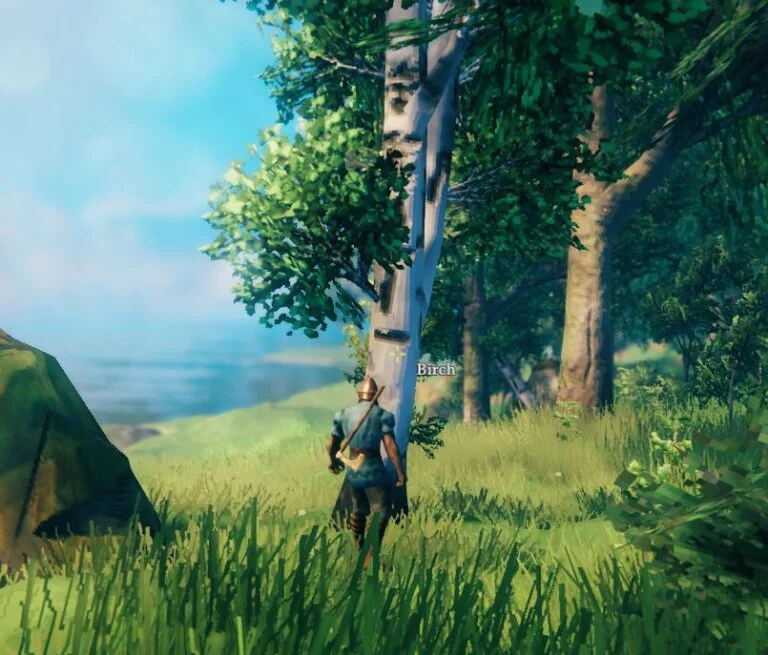
The main sources of Finewood are Birch and Oak trees. Birch is easy to recognize by its white bark with dark markings, while Oak trees are much wider than most other trees.
Large numbers of Birch trees grow in the Meadows and Plains, while Oak trees are found primarily in the Meadows. You'll need at least a Bronze Axe to chop them down normally.
You can obtain small amounts of Finewood earlier by knocking trees into one another or using a heavier falling trunk to break a Birch tree. For regular gathering, however, crafting the proper axe is much easier.
Where to Find Ancient Bark
Ancient Bark becomes available once you reach the Swamp. It's used to craft weapons, ships, and several more advanced items.
The material comes from Ancient Trees growing throughout the Swamp. You'll need at least a Bronze Axe to chop them down.
Ancient Bark can also be found in chests inside Sunken Crypts. If you're regularly exploring these dungeons for Iron, you usually won't need to farm much additional Ancient Bark separately.
Where to Find Yggdrasil Wood
Yggdrasil Wood is a Mistlands material required for high-level weapons, tools, crafting stations, and various structures.
You can obtain it from Yggdrasil Shoots growing throughout the biome. You'll need a Black Metal Axe or a better tool to cut them down.
Because of the dense mist, suitable trees can be difficult to spot from a distance, so before exploring the Mistlands properly, it's a good idea to get a Wisplight or another way to clear the mist.
Where to Find Ashwood
Ashwood is found in the Ashlands and is used for local building pieces, weapons, and other high-level items.
It comes from the trees growing throughout the region. You should only start gathering it once you're properly prepared to explore the Ashlands, as the enemies here are significantly more dangerous than those in earlier biomes.
Where to Find Wood in the Deep North
Valheim 1.0 introduced the Deep North, the final biome in the game. One of its main building resources is Timberwood.
You can obtain Timberwood from trees and other wooden growths found throughout the forests of the Deep North. The material is used in new recipes and building pieces introduced in version 1.0.
As you explore the region, you can also obtain seeds from local trees and grow them yourself, allowing you to establish a permanent source of wood near your base.
Where and How to Get Coal
Coal is primarily used as fuel for smelting stations, so you'll need a constant supply once you begin processing metals.
You can get a few pieces of Coal from Surtlings and various chests. Raw food will also turn into Coal if you leave it cooking over a fire for too long.
The most efficient method is the Charcoal Kiln. Its recipe unlocks after you obtain a Surtling Core. Building one requires 20 Stone and 5 Surtling Cores, as well as a nearby Workbench.
Load regular Wood into the kiln and it will gradually turn it into Coal. This becomes especially useful after building a Smelter, since processing large quantities of ore requires a lot of fuel.
Where and How to Find Food
Valheim doesn't have a traditional hunger meter that forces your character to eat constantly just to survive. Instead, food temporarily increases your maximum Health, Stamina, and later, once magic is unlocked, Eitr.
You can have the effects of three different foods active at the same time, so it's best to combine meals with the stats you need.

In the Meadows, the easiest foods to find are Raspberries, Mushrooms, and Honey, while Boars and Deer provide meat. Later, you'll unlock more nutritious meals made from meat, vegetables, crops, and resources from other biomes.
Blueberries mainly grow in the Black Forest. Cloudberries can be found in the Plains. The Mistlands introduce Jotun Puffs and Magecaps, while later biomes have their own plants and ingredients.
Most raw meat is best cooked or used in more advanced recipes, as prepared meals generally provide much better stats.
Where and How to Get Stone
Stone can be found in almost every biome and is used for your first tools, Campfires, crafting structures, and stone buildings.
Early in the game, you can simply pick up small stones from the ground. After defeating Eikthyr, you can craft an Antler Pickaxe, which allows you to break larger rocks and mine ore.
Later, upgraded Pickaxes make bulk Stone gathering much faster, especially when breaking large rock formations. Stone is also obtained as a byproduct when mining certain ore deposits.
Where to Find Flint
Flint is needed very early in the game for improved tools, weapons, and various other items.
Look for it near water in the Meadows. Flint usually appears directly along riverbanks, lakeshores, and the coast as a small, light-colored, smooth stone.

No tools are required. Simply walk up and pick it up. If you need a large amount of Flint, search long stretches of coastline.
Where to Find Chitin
Chitin is mainly used to craft the Abyssal Harpoon and Abyssal Razor. To get it, you'll need to venture into the Ocean.
While sailing, you may encounter a huge Leviathan whose back rises above the water and resembles a small island. Abyssal Barnacles grow on its surface.
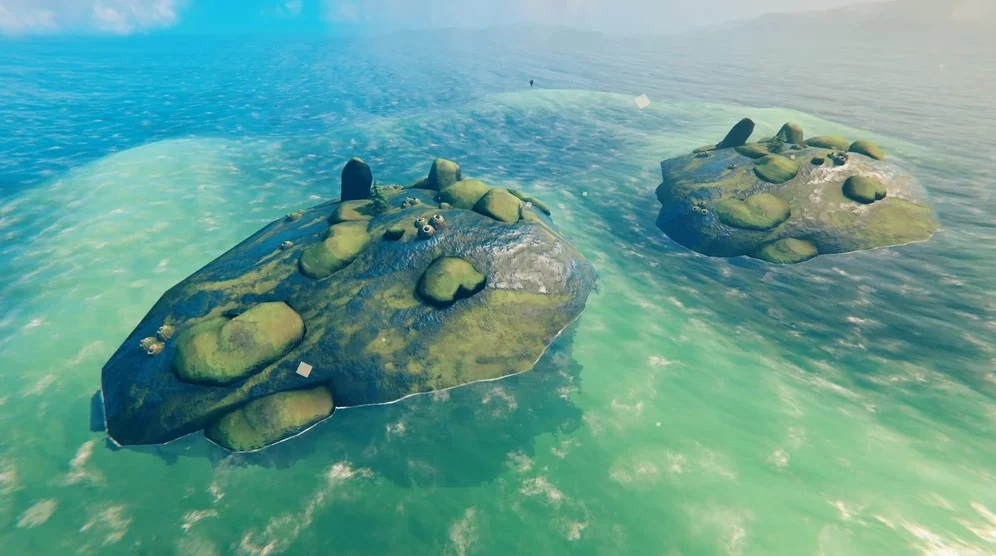
Mine them with a Pickaxe to obtain Chitin. After several hits, the Leviathan may begin sinking, so make sure you leave enough Stamina to get back to your ship.
The Leviathan itself won't attack you, but drowning in the middle of the Ocean after it submerges is a very real possibility.
Where to Find Copper
Copper Ore is found in the Black Forest. Copper deposits look like large rocky formations with metallic veins and usually protrude partially above the ground.
You can mine them with an Antler Pickaxe, which becomes available after defeating Eikthyr.
Don't stop after mining the visible part of the deposit. Copper deposits extend deep underground, so once you've cleared the surface, dig around the surrounding soil.
Copper Ore needs to be processed in a Smelter. Copper bars can then be used on their own or combined with Tin to create Bronze.
Where to Find Tin
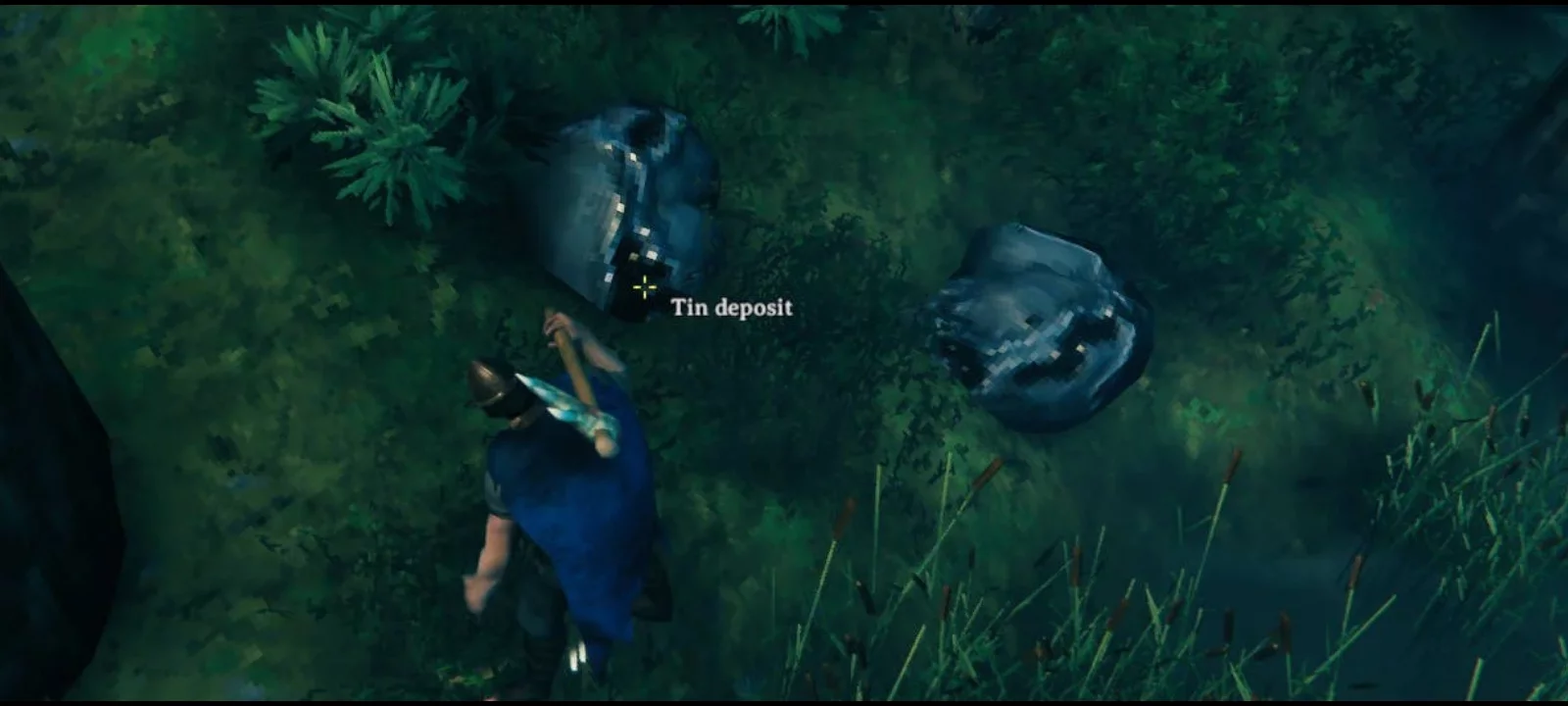
Tin Ore, like Copper, is found in the Black Forest, but you'll need to look in different areas.
Small silver-colored Tin deposits appear near water along coastlines, rivers, and other bodies of water in the Black Forest. An Antler Pickaxe is enough to mine them.
Once smelted, Tin can be combined with Copper at a Forge to create Bronze, which is required for the next tier of tools, weapons, and armor.
How to Get Bronze
Unlike Copper and Tin, there is no Bronze Ore to mine. Bronze is crafted at a Forge.
One Bronze bar requires two Copper and one Tin.
Bronze is used to craft your first serious metal tools and weapons. In particular, the Bronze Axe lets you cut down Birch and Oak trees, giving you a reliable source of Finewood.
Where to Find Iron
The main source of Iron at this stage of progression is the Sunken Crypts in the Swamp.
After defeating The Elder, you'll receive the Swamp Key, which can be used to unlock these dungeons. Inside, you'll find Muddy Scrap Piles. Break them with a Pickaxe to obtain Scrap Iron.
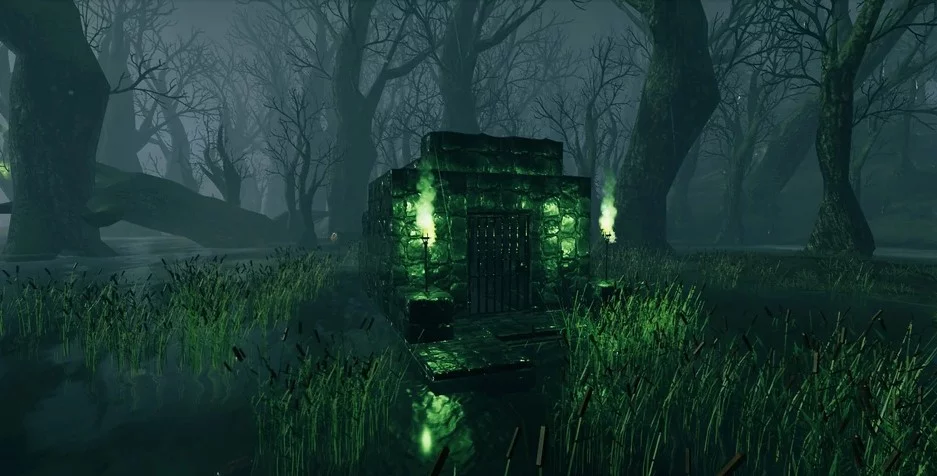
Scrap Iron must be processed in a Smelter to produce Iron.
Additional sources of Iron appear later in the game. For example, you can obtain it while exploring the Mistlands, but Sunken Crypts remain one of the most convenient ways to build a large stockpile.
Note: Scrap Iron and metal bars cannot pass through regular Portals, so plan how you're going to transport them back to your base.
Where to Find Silver
Silver Ore is found in the Mountains. Most deposits are buried underground, making them difficult to discover by accident.
After defeating Bonemass, you'll receive the Wishbone. Equip it and explore the Mountains. When a hidden deposit is nearby, glowing pulses will appear around your character and you'll hear a distinctive sound. The closer you get, the more frequent the signals become.
Dig up the area and use an Iron Pickaxe or better tool to mine the Silver Ore.
Once smelted, Silver is used to craft weapons, armor, and various items from the Mountain tier.
Where to Find Obsidian
Obsidian is also found in the Mountains. Deposits appear as dark, glossy rocks protruding from the ground.
You'll need an Iron Pickaxe or better tool to mine them.
Obsidian is used in several recipes, including certain arrows and crafting station upgrades.
Where to Find Crystal
Crystal can be obtained from Stone Golems in the Mountains. Deposits of the material can also be found in certain Mountain locations.
Crystal is used for decorative building pieces and some equipment.
If you explore the Mountains extensively, you usually won't need to hunt Stone Golems exclusively for Crystal, as you'll naturally build up a supply while fighting them.
Where to Find Black Metal
Black Metal becomes one of your main resources after reaching the Plains.
The primary source of Black Metal Scrap is Fulings. They can be found throughout the biome and in large numbers inside Fuling Villages. Small amounts can also be found in certain chests.
To process the scrap, you'll need a Blast Furnace, which becomes available after defeating Moder and building an Artisan Table.
The resulting Black Metal bars are used to craft high-level weapons, tools, and other items.
Where to Find Flax
Flax grows in Fuling Villages in the Plains. You'll usually find it in small cultivated fields inside the settlement.
Once collected, Flax can be grown yourself, but it only grows properly in the Plains.
You'll need a Spinning Wheel to process it. The station turns Flax into Linen Thread, which is used to craft armor, weapons, and other items.
Where to Find Barley
Barley can also be found in Fuling Villages in the Plains. Like Flax, it can be cultivated by the player in the appropriate biome.
Raw Barley has limited uses. Once you've built a Windmill, you can process it into Barley Flour, which is used for more advanced food recipes.
If you plan to spend a lot of time in the late game, it's worth setting up a protected farm in the Plains and growing both Flax and Barley yourself.
Where to Find Tar
Tar is found in Tar Pits in the Plains. These locations are easy to recognize by the large dark pool and the Growths living nearby.
Growths also drop Tar when killed.
The material is primarily used for Darkwood building pieces, decorative elements, and several other items.
Additional Tar remains inside the pit itself. To collect all of it, you can dig a channel and drain the liquid out of the depression.
Where to Find Black Marble
Black Marble is one of the main building and crafting materials in the Mistlands.
It can be mined from Giant Remains and local structures. You'll need a sufficiently powerful Pickaxe to gather it efficiently.
Black Marble is used for Mistlands building pieces, the Black Forge, Eitr Refinery, and other high-level structures.
Where to Find Soft Tissue
Soft Tissue is required to produce Refined Eitr.
The main source is the enormous skulls found among Giant Remains scattered throughout the Mistlands. The tissue inside can be mined with a Black Metal Pickaxe or a better tool.
Small amounts can also be found in Dvergr settlements and obtained from some local enemies.
Don't throw this material away. Once you unlock magic equipment, you'll need a considerable amount of Soft Tissue.
Where to Find Sap
Sap is extracted from Ancient Roots in the Mistlands. The roots are easy to recognize by their greenish glow, which can be seen even through the mist.
You'll need a Sap Extractor to collect it. One of the components required to build the device is a Dvergr Extractor, which can be obtained from special crates in Dvergr settlements.
Place the Sap Extractor directly onto an Ancient Root. Sap will then gradually accumulate inside.
The root's energy replenishes over time, so the same source can be used repeatedly.
How to Get Refined Eitr
Refined Eitr is one of the key materials for magic-focused progression.
To produce it, build an Eitr Refinery and load it with Sap and Soft Tissue. One unit of each resource is consumed during processing.
Refined Eitr is used to craft and upgrade magical weapons, armor, and various Mistlands items.
Warning: An active Eitr Refinery periodically releases dangerous bursts of energy that can damage nearby structures. Don't place it directly next to ordinary wooden walls.
Where to Find Carapace
Carapace drops from Seekers found throughout the Mistlands.
The material is used to craft high-level armor, shields, and other equipment.
Seekers appear both throughout the biome and inside Infested Mines, so once you begin exploring the Mistlands properly, you'll usually have no shortage of Carapace.
Where to Find Black Cores
Black Cores are found primarily inside Infested Mines in the Mistlands.
They're required to build the Black Forge, Galdr Table, and other important crafting structures from this stage of progression.
Each dungeon contains a limited number of cores, so upgrading your base often requires exploring several Infested Mines.
Where to Find Royal Jelly
Royal Jelly can be found inside Infested Mines in the Mistlands and is associated with the creatures living there.
The resource is primarily used for high-level food recipes.
If you plan to use magic extensively, collect Royal Jelly whenever you explore the mines, as it's required for several foods that increase maximum Eitr.
Where to Find Flametal
Flametal Ore is found in the Ashlands and serves as the main metal for this stage of progression.
Ore deposits can be found throughout the biome. You'll need at least a Black Metal Pickaxe to mine them. Additional Flametal Ore can be found in Charred Fortresses and certain other Ashlands locations.
Once collected, Flametal Ore must be processed in a Blast Furnace using Coal.
The resulting Flametal is used to craft powerful weapons, armor, tools, and Ashlands building pieces.
Unlike a regular Portal, a Stone Portal allows you to transport metals, making it much easier to move resources from late-game biomes.
Where to Find Grausten
Grausten is a common Ashlands building material.
You can obtain it by breaking local rock formations and structures. As you explore the biome, you'll naturally accumulate large quantities of it.
Grausten is used for new walls, floors, roofs, and other building pieces, making it especially useful if you want to establish a proper base in the Ashlands.
Where to Find Bloodstone, Iolite and Jade
Bloodstone, Iolite, and Jade are valuable Ashlands resources.
They're used to craft and upgrade different variants of high-level weapons.
Look for these materials while exploring the Ashlands and its more dangerous locations. If you plan to experiment with several weapon types, avoid spending the first gemstones you find unless you're sure which upgrade path you want.
Where to Find Ice in the Deep North
Ice is one of the basic resources of the Deep North introduced in Valheim 1.0.
It can be gathered from frozen areas of the region using an appropriate Pickaxe. Ice is used directly in some recipes and also serves as the raw material for producing Liquid Frost.
To process it, you'll need to build a Frigid Kiln. This structure becomes an important part of the crafting chain in the final biome.
Where to Find Frostcores
Frostcores are one of the most important resources in the Deep North. You'll need to search for them inside the Winding Tunnels, one of the new dungeon types introduced in version 1.0.
The cores are found throughout the tunnels and are used to build new crafting structures, including the Frigid Kiln and Frost Foundry.
Whenever you find an entrance to one of these dungeons, try to explore it completely and collect as many Frostcores as possible. You'll need a substantial supply to progress through the final equipment tier.
How to Get Bloodgold
Bloodgold is the primary metal of the Deep North and one of the most important materials in the final stage of Valheim 1.0 progression.
First, you need to find the petrified remains of Gammeltrolls. A regular Pickaxe won't work on them. Instead, you'll need special explosives called Ember Charges.
Use the charges to break apart the petrified body and collect the Petrified Tissue that drops.
The tissue must then be processed in a Blast Furnace. This produces Bloodgold, which is used to craft new high-level weapons, armor, and other Deep North items.
Where to Find Seal Pelts and Blubber
Seals live in the Deep North, primarily along the coastline. Hunting them provides Seal Pelt and Seal Blubber.
Both materials are used in version 1.0 recipes. Seal Pelts, in particular, are required to make the special explosives used to harvest Petrified Tissue.
Baby Seals can also be found along the coast.
Where to Find Moose Hide and Sinew
Moose were introduced with the Deep North and can be found roaming open areas of the final biome.
Killing one can provide Moose Meat, Moose Hide, and Moose Sinew.
These materials are used for new food recipes and equipment. Moose can also be tamed.
Where to Find Nornathread and Leather Straps
Nornathread and Leather Straps are rare Deep North materials.
They can be obtained from enemies associated with Mörkhalla, one of the key locations in the final biome. Nornathread primarily comes from Hexen, while Leather Straps drop from Krigen.
Both materials are required for high-level armor, so crafting complete sets will require repeated trips through dangerous Deep North locations.
Where to Find Weapon and Armor Moulds
In the Deep North, gathering materials alone isn't enough. Much of the final-tier equipment also requires special Moulds.
They can be found in the new dungeons and locations. In particular, you can find Moulds while exploring the Winding Tunnels and Mörkhalla.
Once you've obtained the appropriate Mould, you can begin the corresponding crafting process. You'll need Bloodgold and other Deep North materials to create the Cast, which must then be processed using the biome's new crafting structures.
A separate Mould: Intricate Key is used to create the Intricate Key, which is required for further progression through the Deep North.
Where to Find Thunderblood and Frostfire Essence
Thunderblood Essence and Frostfire Essence are used to upgrade Deep North weapons and give them additional elemental properties.
To obtain these Essences, you'll need to interact with special locations in the Deep North and defeat the enemies guarding or appearing around them.
These materials allow you to develop crafted weapons along different upgrade paths. Before spending a rare Essence, it's worth deciding in advance which weapon variant you want.
Where to Find Memorial Coal
Memorial Coal is another special resource found in the Deep North.
It's associated with Mörkhalla and can be found around its memorials, firepits, and enemies.
Because it isn't especially common, it's best not to throw Memorial Coal away or leave it behind in dungeons even if you haven't yet discovered a use for it.
Where to Find Malicious Blood
Malicious Blood is tied more closely to progression through the final biome than to ordinary crafting.
The material is associated with events around Mörkhalla and the Jotun invasion. To obtain it, you'll need to destroy large formations of Malicious Ice that appear during the corresponding stage of progression.
Malicious Blood is required to gain access to Valheim 1.0's final boss, so make sure to keep every piece you find.
How to Get Leather
During the early game, your main leather materials will be Leather Scraps and Deer Hide.
Leather Scraps primarily drop from Boars. These animals are found throughout the Meadows and will often attack the player themselves. You can also tame and breed Boars at your own base.

Deer Hide drops from Deer. They're much more skittish than Boars and run away when the player approaches, so early in the game it's easier to hunt them with a Bow.
Later, you'll gain access to more hide and leather materials, including Wolf Pelts in the Mountains, Lox Pelts in the Plains, Scale Hides in the Mistlands, Asksvin Hides in the Ashlands, and Moose Hides and Seal Pelts in the Deep North.
Most of these materials are used not only for armor but also in recipes for weapons, furniture, capes, and various upgrades.
Other guides
 How to Upgrade the Workbench in Valheim to Level 5
 All Bosses in Valheim: How to Find and Defeat
 Valheim Save File Location: Where to Find Your Saves
 Guide to the Ashlands Update for Valheim
 Where to Find Trophies and How to Hang Them on the Wall in Valheim
 Valheim 1.0 Deep North Gear Guide: Best Weapons and Armor


