Tomb Raider is a cult game series, the pioneer of the third-person shooter genre, which has had a significant impact on the development of this direction. Its unchanging main character, Lara Croft, remains one of the most recognizable symbols of video game culture to this day. The owner of a perky bust and a pair of pistols with infinite ammo has managed to become a sex symbol for more than one generation, as well as get into the Guinness Book of Records with the title of "the most famous video game heroine among people.
The original 1996 Tomb Raider from Core Design became a true phenomenon in the gaming industry. An action-adventure game in which, for once, the central character was not a muscle-bound macho, but a fragile-looking girl with sexy curves, easily moving stone blocks and able to put any burly guy with a rifle to shame, became a real sensation, especially among the male segment of gamers. Every other fan of interactive entertainment at the time had a poster of Lara—sometimes even two.
The subsequent expansions (Tomb Raider: Unfinished Business, Tomb Raider 2: The Golden Mask, Tomb Raider 3: The Lost Artifact) and sequels (Tomb Raider 2, Tomb Raider 3: Adventures of Lara Croft, Tomb Raider: The Last Revelation, Tomb Raider: Chronicles) only reinforced the success of the original. Fans of the series loved shooting bats, solving ancient puzzles, fighting dangerous predators, and roaming around their own mansion, uncovering its secrets and occasionally locking the "immortal" butler in the freezer.
Tomb Raider: The Angel of Darkness, released in 2003, did not achieve the former glory of its predecessors, and after a couple of not-so-successful film adaptations, the series was safely forgotten.

In 2006, the series experienced a rebirth. The franchise was handed over to Crystal Dynamics, who released the quite decent Tomb Raider: Legends. Lara, now with more polygons, was still energetically jumping, leaping, and skillfully taking down soldiers and supernatural creatures with her signature pistols and other gadgets. The HD remake of the original game—Tomb Raider: Anniversary—and the sequel Tomb Raider: Underworld achieved some success, but also made it clear to their creators that the series was once again at a dead end. Against the backdrop of the unprecedentedly cinematic adventures of Nathan Drake, Lara didn’t stand a chance. A reboot of the series was only a matter of time.
Tomb Raider, which is the focus of today’s review, was the studio’s attempt to rethink the franchise, breathe new life into it, and turn it upside down, if you will. The main reimagining concerned Lara herself: the image of the femme fatale and brave treasure hunter, whose firepower could stop even a T-Rex, was scrapped. Instead, we were offered a new, fresh concept of the main character: fragile, feminine, and as vulnerable as possible.
However, this doesn’t mean that we’ll never see the Lara Croft everyone knows and remembers again. The new Tomb Raider is an attempt to tell the story of how the famous tomb raider became a strong, determined, and willful individual—a story of how an inexperienced child turned into the very Lara who captured millions of hearts in 1996. And I must say, the developers succeeded one hundred percent.
Birth of a legend
"We are not exceptional, but what we do is. I finally set out in search of myself and adventure. But adventure found me first."
The slogan for Tomb Raider is well chosen and fully reflects the essence of the game. It all starts with the ship carrying Miss Croft—still a young and inexperienced archaeologist—and her team sailing to the Dragon’s Triangle in hopes of uncovering the secret of the mythical Empress Himiko, only to be shipwrecked. The developers immediately make it clear—this time there will be no handouts or endless luck that the heroine of previous games had in abundance.
After making it to shore, Lara sees the other crew members who managed to survive. For a moment, it seems like a reality show in the spirit of "Lost" is about to begin, but no—an unknown assailant knocks the girl out, and she loses consciousness.
When Lara comes to, she finds herself hanging upside down in a mysterious cave filled with burning candles and covered in ritual inscriptions. And this is where things get really interesting. Crystal Dynamics repeatedly stated that the focus of the new game would not be on action, but on drama, on the emotions and experiences of the main character.
Lara faces all sorts of hardships on her way to freedom: she falls, gets hurt, gets burned, is attacked, and even impales her side with a rusty rod before finally escaping the cursed place and ending up on a cliff, where she’s greeted by a majestic yet terrifying sight—dozens of shipwrecks and debris washed ashore by the relentless waves. Lara, breathing heavily, slowly recovers from the shock. In the corner of the screen, the title "Tomb Raider" gradually appears. And we realize that all this time we’ve been watching a demo of what the poor girl will have to face next.
Along with Lara, players themselves will also have to adjust, especially those used to running around with dual pistols blazing and mowing down enemies in all the previous games. Every injury Lara receives is accompanied by a convincing groan, and every fall is followed by a slight limp. The developers did everything possible to make the player feel Lara's pain and understand how difficult these trials are for her. The result is stunning: in front of you is not a terminator with a size-five bust, but a real person—sensitive and vulnerable.
Looking at the wounded and trembling Lara, who is trying to light a campfire with a single match, you want to hug her, comfort her, and never leave her alone. Crystal Dynamics managed to create such a feminine image that it brings to mind the words of Leslie Nielsen's character from the movie "The Naked Gun": "For this woman, you want to get down on your knees and thank God you're a man.

But Lara wouldn’t have the right to bear the Croft name if determination wasn’t in her blood—a fact the surviving crew members repeatedly remind her of, urging her to keep moving forward. And Lara does move forward. There she is, making her way through dense thickets, retrieving her first weapon from a corpse, and, with fear in her eyes, skinning her first kill. Throughout the game, we witness her overcoming one fear after another. Lara changes—her actions become tougher, her gaze more confident. And only her first kill, committed under threat of her own death, makes it clear that we’re still looking at the same Lara Croft, just younger and less experienced.
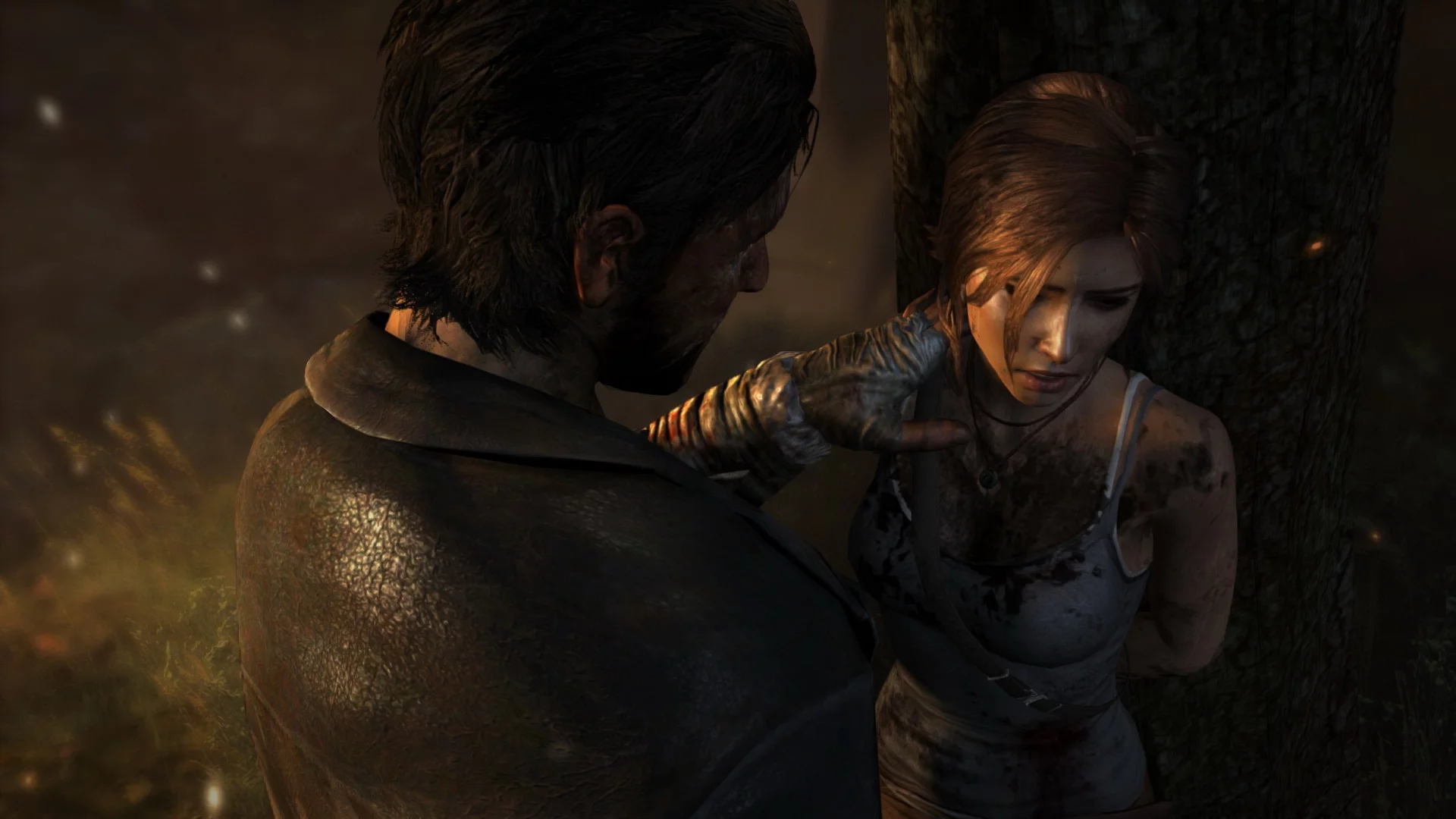
In the new Tomb Raider, everything revolves around atmosphere—it's practically a role-playing game with extensive opportunities for roleplay, and it's unforgivable to just rush through it in a couple of days. To fully appreciate it, you need to feel it, see it, and understand the idea behind the series reboot. If you're looking for a continuation of Tomb Raider: Underworld, you can safely pass this one by.
Survive at any cost
In early previews of Tomb Raider, the developers promised gamers a huge island with open spaces to explore. They partially delivered on that promise. In fact, the game truly begins when the player reaches their first camp, set up beneath a sheer cliff. The camp serves not only as a place to rest after all the adventures, but also as a sort of station where you can upgrade your weapons and allocate skills. Yes, the game now features a full-fledged skill tree with three branches: "Survivor," "Hunter," and "Brawler."

Perks in the "Survivor" category help Lara better sense her prey and allow her to collect ammo from enemies and animals, as well as find more parts in crates. "Hunter" abilities let her carry more ammo and earn more experience for defeated enemies. "Brawler" upgrades help Lara dodge enemy attacks more effectively and deal additional damage with the climbing axe.
Speaking of equipment, as mentioned above, it can be extensively modified. Parts for this are scattered all over the island in abundance. Additionally, the "Bone Collector" perk allows you to get upgrade parts even from the bodies of defeated enemies. For the bow, upgrades increase fire rate and damage. For firearms, they increase magazine size and reduce recoil. Some upgrades have multiple levels.
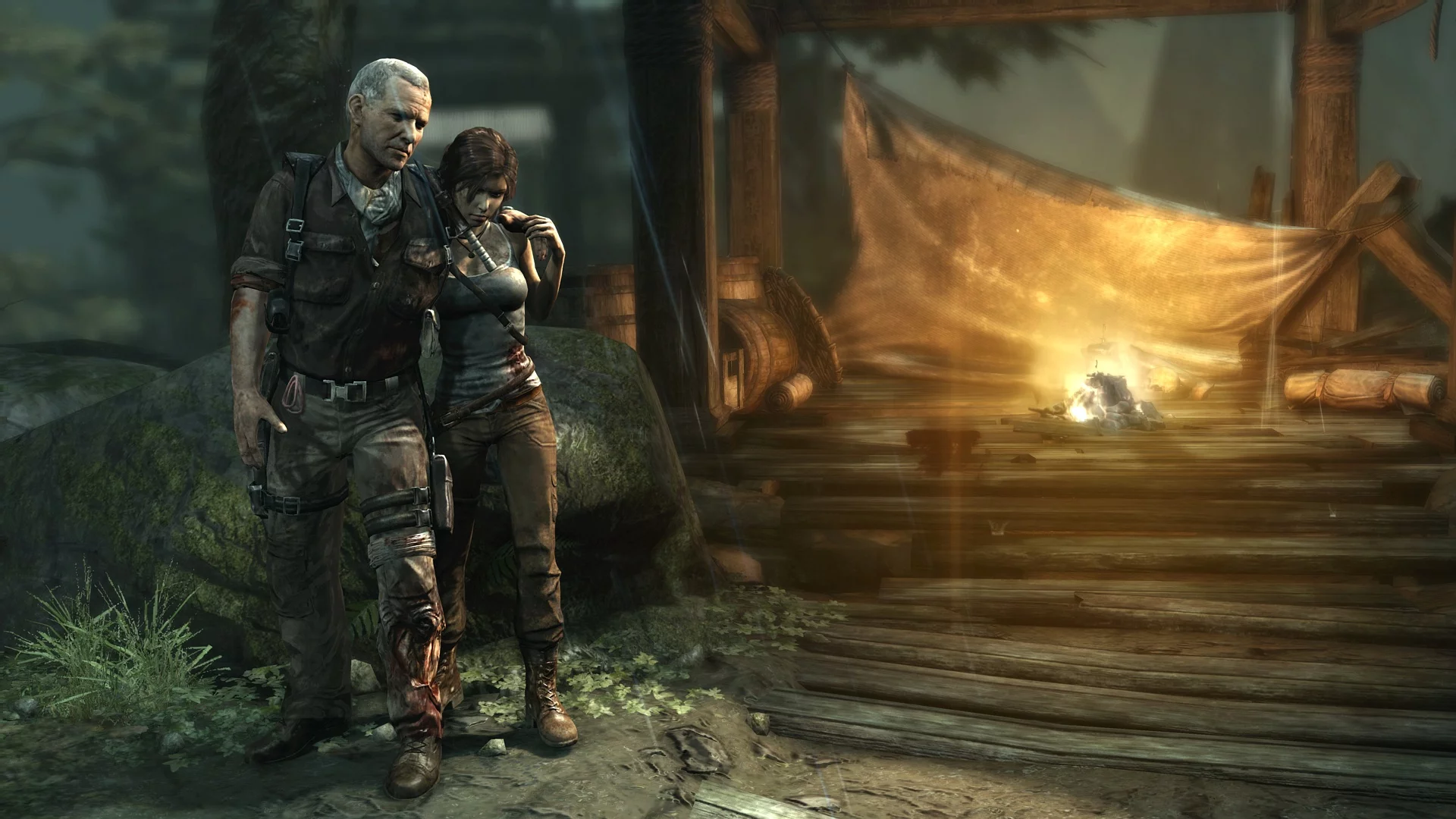
You'll get to use all this good stuff in that vast world. The developers really did a great job, creating a large island—Yamatai—with a dozen locations, each of which is carefully crafted and populated with all sorts of wildlife, game, and other creatures you'll need to hunt. Most animals have to be approached within shooting distance carefully, because if you startle small prey like a rabbit, hitting it with a bow becomes extremely difficult.
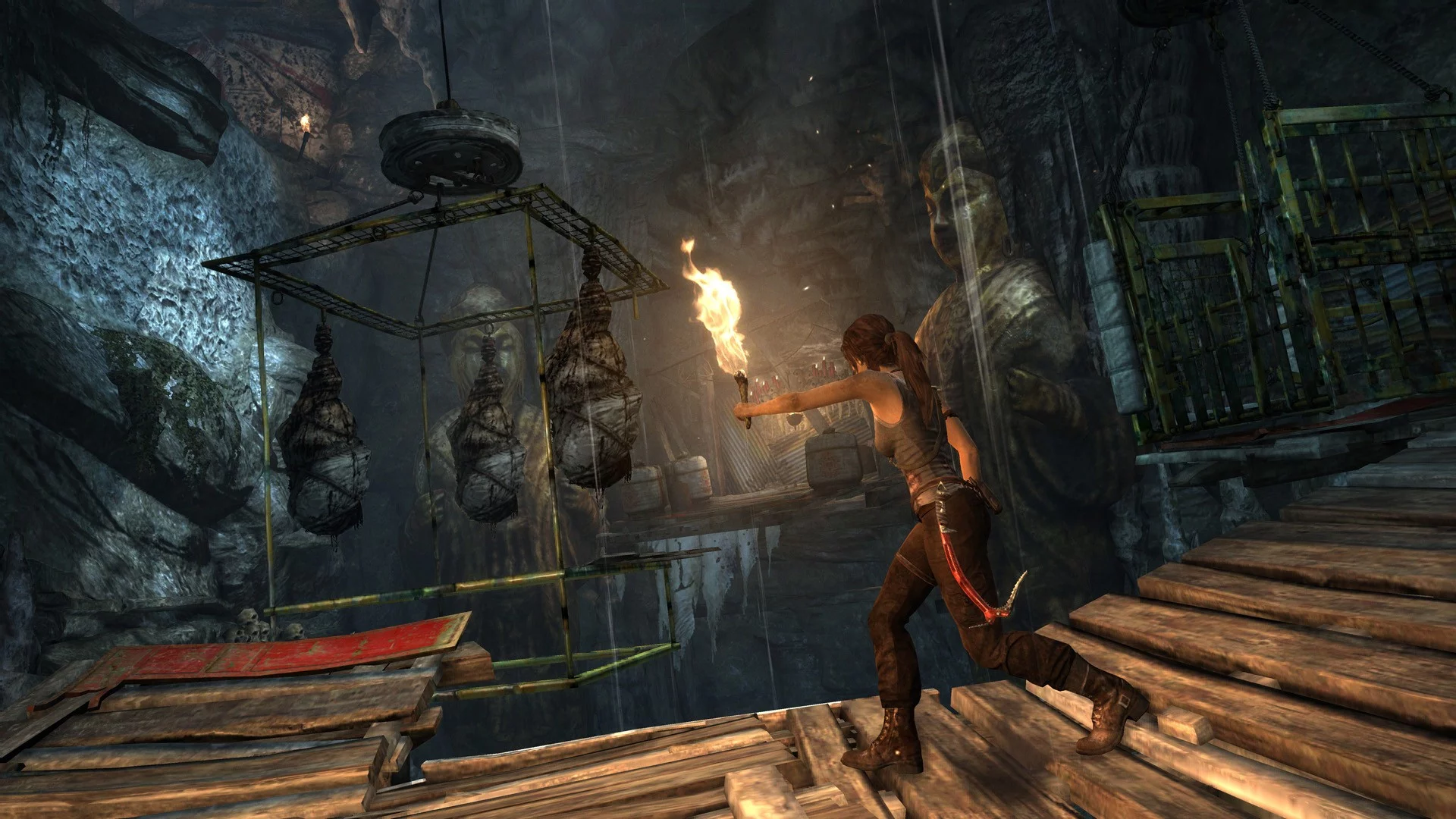
And what would Tomb Raider be without puzzles and artifacts? Lara will have to climb ledges, scale cliffs, and wade through underground rivers in large quantities to reach coveted caches and the first tombs of her life. To keep players engaged, the developers scattered not just documents and notes that shed light on the game’s plot across the map, but also mini-challenges unique to each area. For example, in the forest, you’ll need to destroy ten totems, while in the mountain village you’ll have to light fires on ten statues and steal eggs from five bird nests.
Each location boasts skillful yet intricate design, and it’s often hard to spot the items you need among the environment. For this, Crystal Dynamics gave Miss Croft the so-called “survival instinct”—a kind of analogue to Assassin’s Creed’s “Eagle Vision,” which highlights important objects and helps you find hidden treasures. This ability is admittedly rather “cheaty,” but also very useful, as without it, finding something like a bone amulet among the many branches in the forest would be nearly impossible.
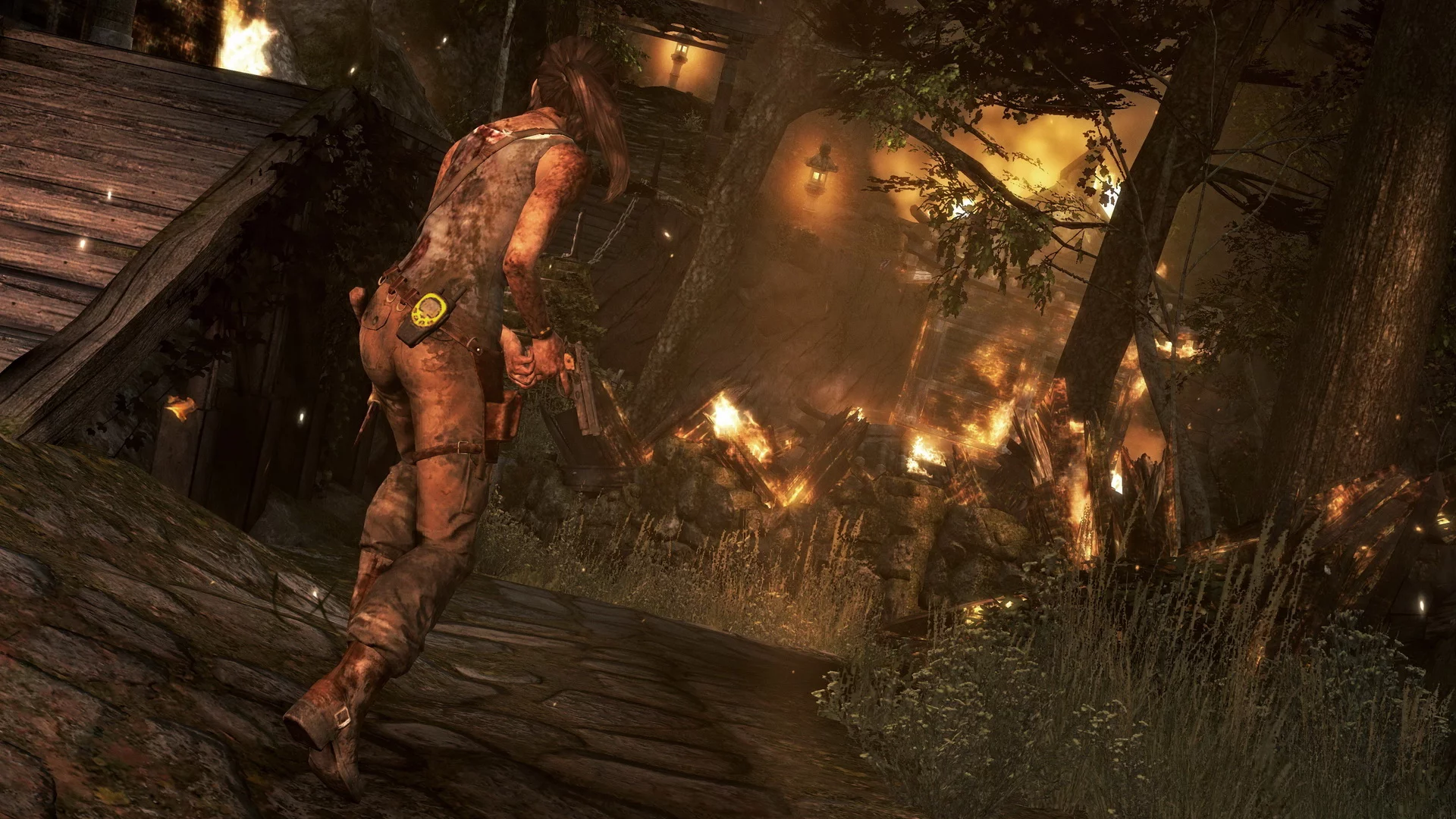
The gameplay mechanics in the game most closely resemble Batman: Arkham City. Players have an island at their disposal, divided into locations that can be traversed either on foot or via the aforementioned camps. This is where the developers were a bit sneaky: the areas are indeed open for exploration, and linearity is a thing of the past, but you still can’t call it a fully open world. And while you are free to move around within a specific location and return to previous areas at any time, the promised freedom just isn’t there. And let’s be honest—it would have been silly to expect something like “GTA in the jungle” from the new Tomb Raider.
The controls are done in the best traditions of the series. Crystal Dynamics preserved the classic dynamism (pardon the tautology) and added a shaky camera that follows the player both in cutscenes and during gameplay, enhancing the sense of presence. Lara responds very quickly to any button press, and if she falls into a chasm, it’s usually the player’s own fault.
By the way, remember Lara’s famous somersault-style climb with the elegant leg flip? You can safely forget about it. In the new game, Lara is focused solely on survival, not seducing partridges and wolves. The abundant fan service that was a key feature of previous games has been shelved for better times. The new Lara is a fighter—a fighter for her life, ready to trek through snowy mountains, glide with a parachute, plunge into waterfalls, and sneak past scorching pipes, all to survive. Bear Grylls would approve.
The Beauty and Power of Healthy Hair
Many franchise fans were concerned about the game's graphics, especially how they would look on PC. Fortunately, shortly before release, Crystal Dynamics announced that the PC version of Tomb Raider would boast improved graphics and all the latest technologies, such as tessellation and volumetric lighting. Yours truly was also worried about the visuals after seeing the blurry textures in the gameplay trailers. As it turned out, those fears were unfounded.
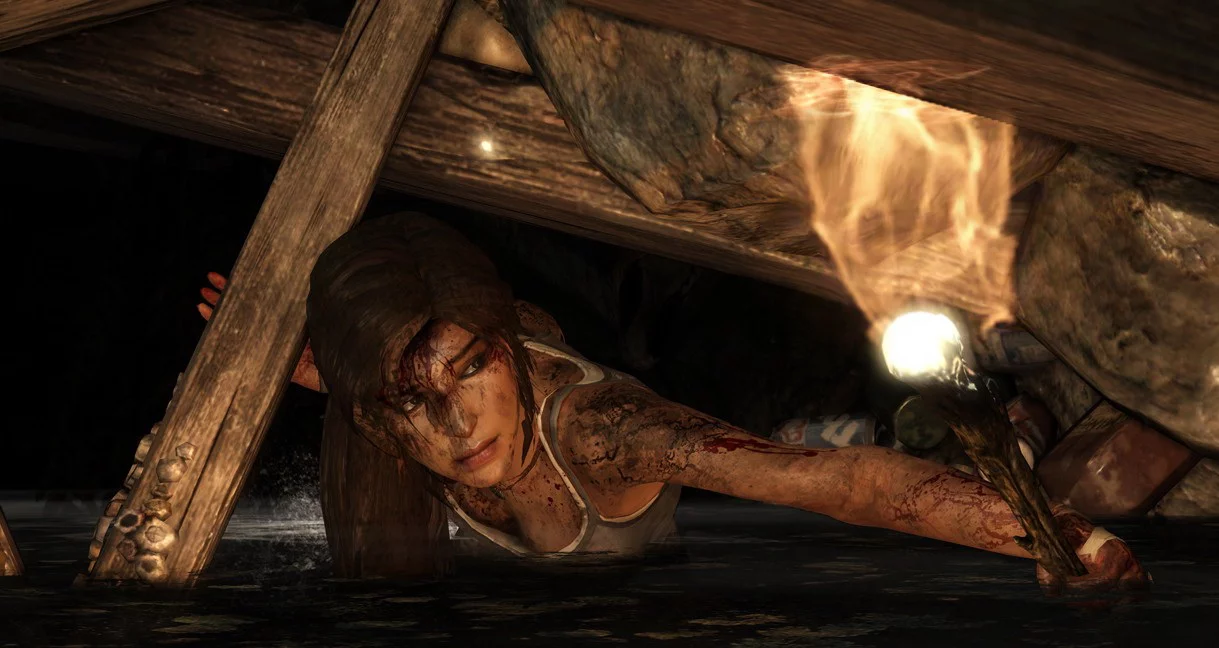
Tomb Raider really does offer plenty of graphics settings, and the highest settings provide a very solid image, free from the unpleasant traces of the current console generation. Of course, special mention should be made of the TressFX technology, recently introduced by AMD. In practice, it turned out to be the most demanding feature for system resources. To play comfortably and enjoy the heroine's hair flowing in all directions, you'll need a graphics card no lower than a Radeon HD 7850 or GeForce GTX 660. A powerful processor and 8 GB of RAM are also recommended.
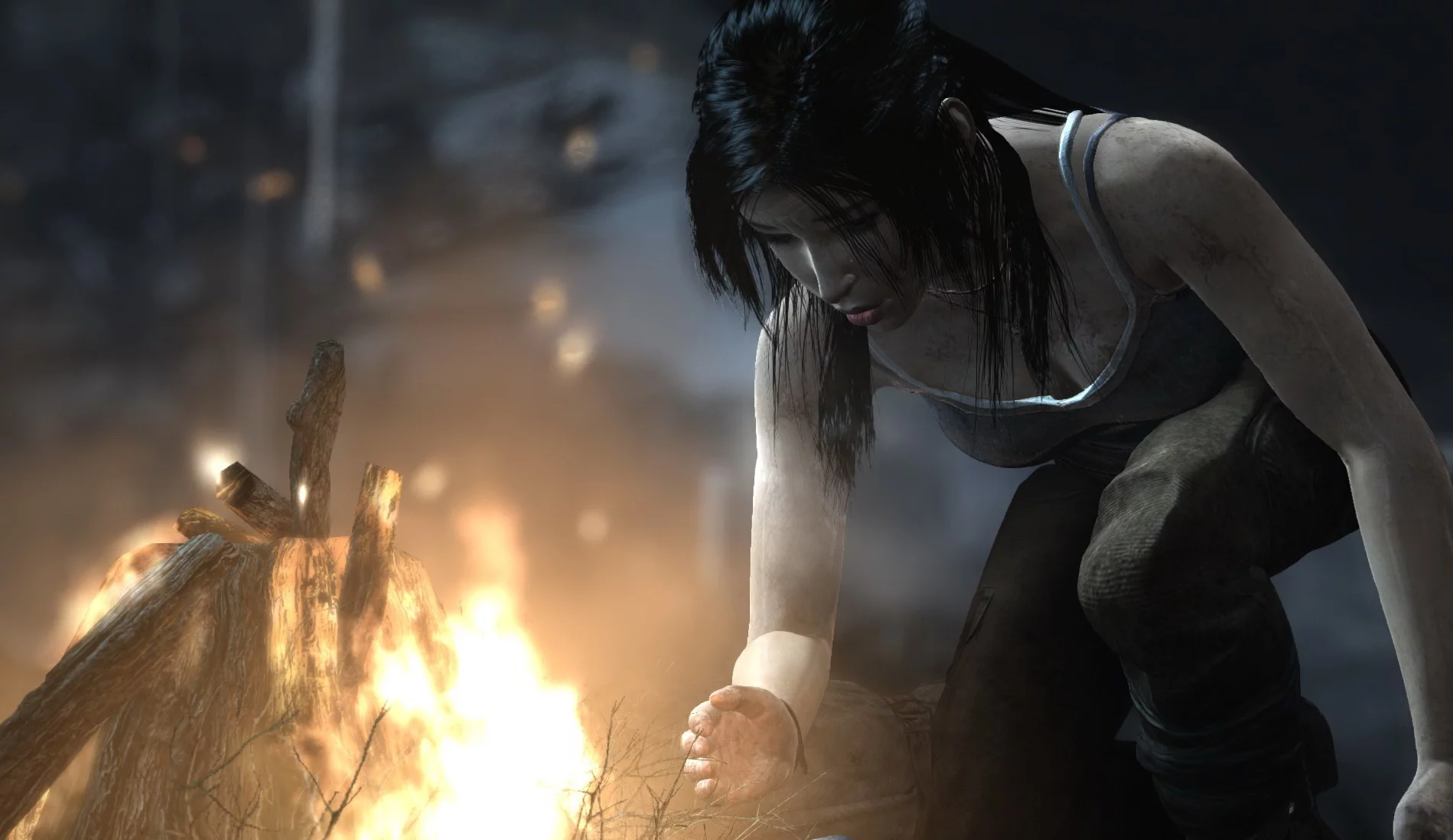
As for the design side of the project, it's impossible not to admire the work done: the game is full of moments of so-called solitude with nature, when Lara steps out onto a steep cliff with a breathtaking view of the coastal rocks and crashing waves, or wanders deep into the forest, surrounded by wild animals and tall trees with dense foliage. All of this, combined with the non-linear nature of the locations, makes the game truly interesting to explore.
Stepping on the Same Rake
The previous games in the series, at least the first generation, suffered from a certain repetitiveness. In the new generation of games, whenever the player started to get bored, Lara would receive some new gadget designed to diversify the gameplay. If there was no magical “wunderwaffe,” the player was entertained with spectacular cutscenes and QTE moments.
Unfortunately (or maybe fortunately for some), the new Tomb Raider inherited this shortcoming from its predecessors. But credit where it’s due—the developers did their best to entertain the player with new activities, coming up with tasks and leading you by the hand to the next hidden tomb. However, their efforts weren’t enough. The second half of the game assumes that the player will be drawn in by the story or, at the very least, the revamped gameplay itself. After a while, you’ll notice that all the new stuff is over, and the developers have started repeating themselves. Maybe the game is just too drawn out, or maybe Crystal Dynamics simply ran out of ideas for all of Yamatai.
There are also a lot of minor flaws. For example, Lara constantly suffers from the “Gordon Freeman syndrome,” carrying a bow, a quiver of arrows, a pistol, an assault rifle, and a shotgun with a climbing axe, but only the weapon currently selected by the player is visible. And if you want to nitpick, you can point out Miss Croft’s firm refusal to take warm clothes from fallen enemies.
Another drawback is the environment itself. Yes, we’ve been given truly huge locations filled with secrets, hidden paths, and shortcuts, but if you want, you can run through the whole game without ever finding a single secret or climbing to the top of a pagoda for an ancient mask. In other words, the developers created vast territories but forgot to give the player motivation to explore them, leaving that entirely up to your own curiosity. Sad.
To be fair, this shortcoming is compensated for in the game’s multiplayer mode, where you can and should use the landscape to set traps and gain an advantage over your opponents.
I Don’t Believe It!
The Russian localization of the game deserves a special mention. As a reimagining of the series, Tomb Raider features an almost entirely new heroine, who at first is hard to recognize as the adventurer we all know. And a new heroine needed a new voice. Tomb Raider was translated into German, French, Arabic, Polish, and even Japanese. Each actress auditioning for Lara received special attention. Karl Stewart, Tomb Raider’s development director, was personally involved in selecting at least two of them.
The Russian version doesn’t raise any major complaints. The text is translated competently and without errors. What stands out, though, are the lines of different characters, which are done in contrasting colors and can sometimes be jarring.
The voice acting is also quite decent. However, the “Russian” Lara sometimes lacks the emotion of the original actress, who at times makes moans that would make any hentai heroine jealous. Apparently, the localizers decided not to touch these moans and focused only on the girl’s lines. Often, our actress underacts: where a frightened and hesitant voice is needed, we hear an ordinary translation, like a movie theater dub. It immediately brings to mind the famous phrase of Stanislavsky.
Conclusion
Tomb Raider isn’t new. There’s nothing here that we haven’t already seen in the Uncharted series. Tomb Raider is inconsistent in its storytelling. In the end, Tomb Raider is a bit drawn out. However, at the same time, Tomb Raider is the quintessence of everything good that has appeared in the adventure genre over the past five years. It’s amazing how a game that once inspired the creation of Nathan Drake’s adventures is now trying to be like Nathan Drake’s adventures.
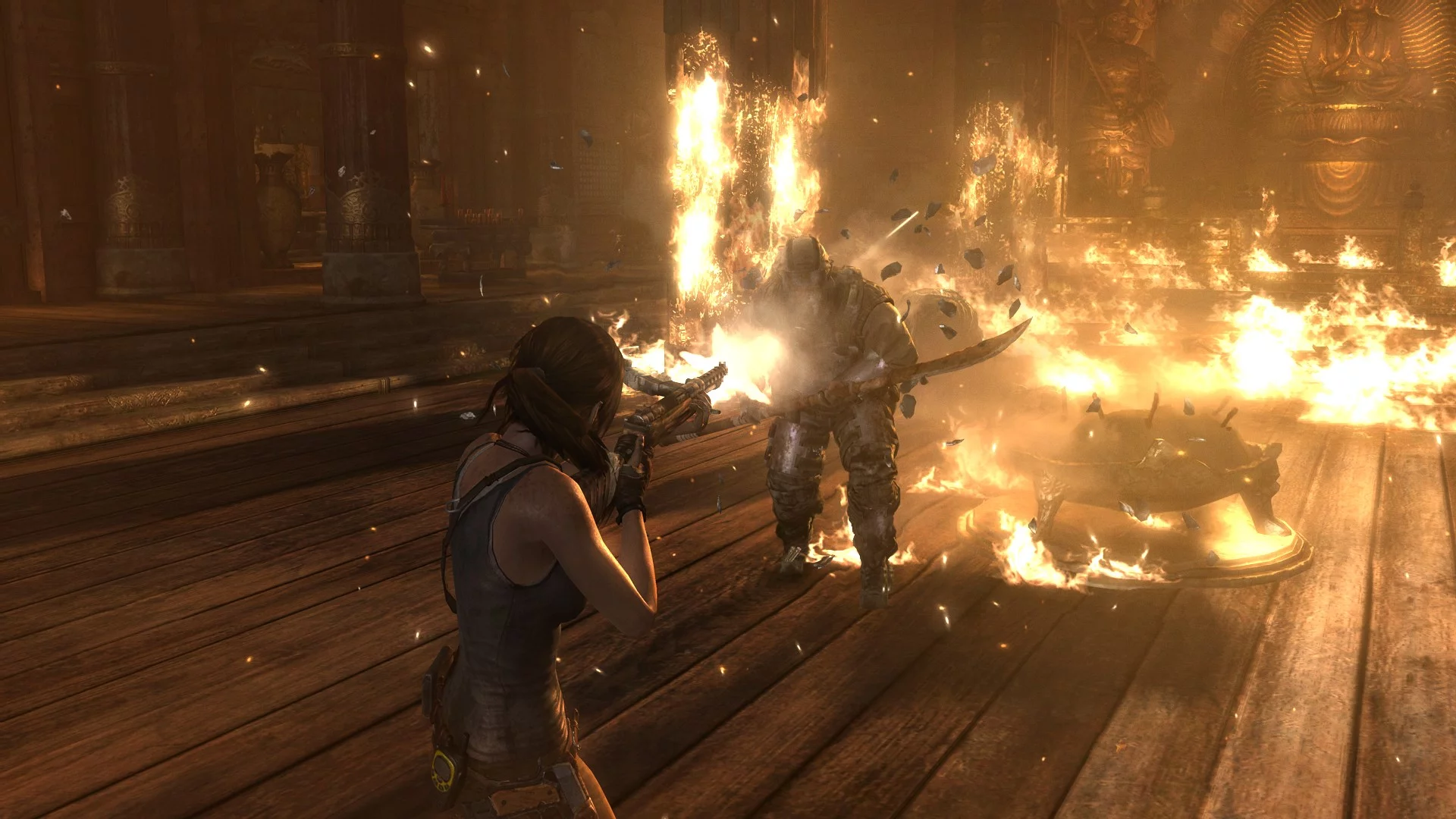
It's always much nicer to praise a game than to criticize it. And this is exactly one of those cases. The franchise reboot was a success, the series has been given new life, and PC gamers have received a worthy competitor to Uncharted.