Thronebreaker: The Witcher Tales
Add to My games




An exciting adventure with role-playing elements, based on the card strategy Gwent: The Witcher Card Game. The events of the game unfold in the universe of "The... Read more
All languages (13)
English: interface, subtitles, audio
Español: interface, subtitles, audio
Español (Latinoamérica): interface, subtitles, audio
Français: interface, subtitles, audio
Italiano: interface, subtitles, audio
日本語: interface, subtitles, audio
한국어: interface, subtitles, audio
Polski: interface, subtitles, audio
Português (Brasil): interface, subtitles, audio
Русский: interface, subtitles, audio
简体中文: interface, subtitles, audio
繁體中文: interface, subtitles, audio
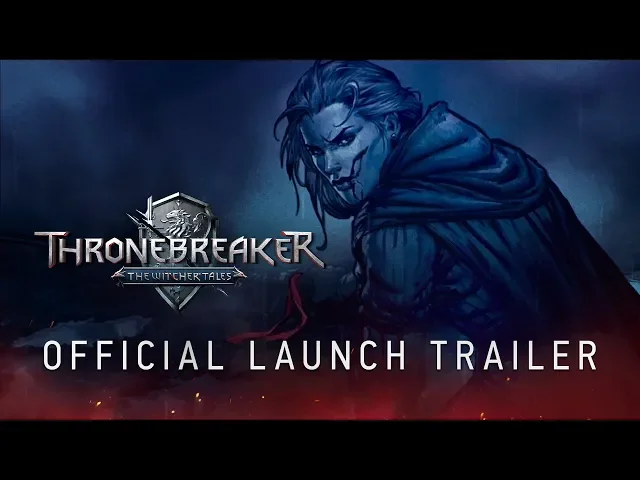
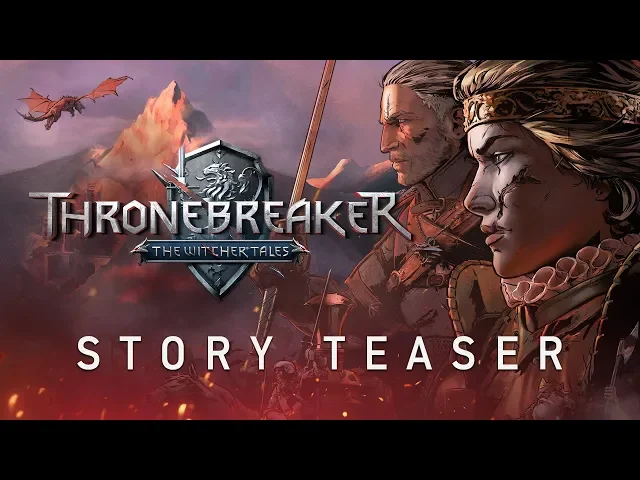
An exciting adventure with role-playing elements, based on the card strategy Gwent: The Witcher Card Game. The events of the game unfold in the universe of "The Witcher" and tell the story of the queen of the North, Meve, who must confront foreign invaders. In the face of the impending invasion of the Nilfgaard Empire, she must once again take to the path of war and embark on a difficult and dark journey.
Genre

Thronebreaker: The Witcher Tales is a single-player card game with elements of a graphic novel, role-playing, and isometric strategy. It is a narrative spin-off of the multiplayer competitive Gwent: The Witcher Card Game and a prequel The Witcher 3: Wild Hunt.
Background of the game world

The events of Thronebreaker take place in the kingdoms of Lyria and Rivia. The game world is represented by a global strategic map that transforms into extensive winding locations. Each narrative act offers its own map to explore. The game world is handcrafted, so its size is limited.
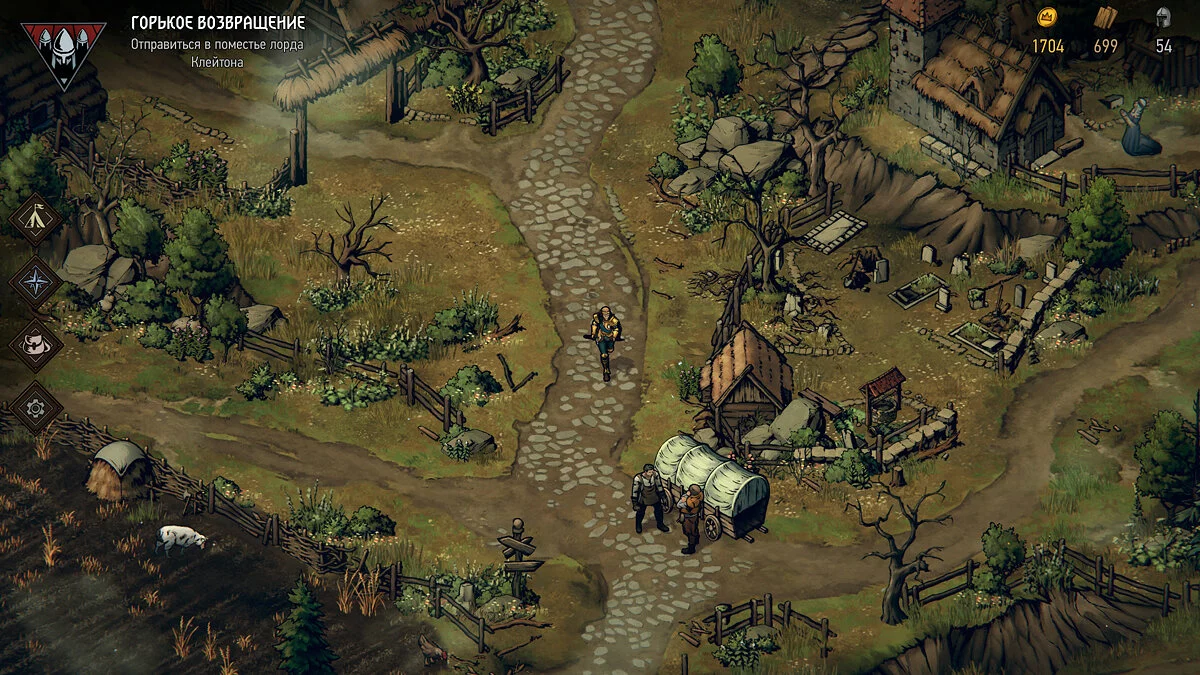
Locations feature diverse landscapes — forests and fields, lakes, rivers, and mountains, villages, military camps, and entire cities. While traveling, the player uses a "point and click" mechanic to explore the surroundings — finding new items, talking to NPCs, starting battles, and more.
A spacious board is used for card battles, where the player places cards from their deck in various ways. The board is affected by environmental conditions — day, night, rain, or snow. Next to the board stands the queen, who further enhances the cards on the "battlefield."
Plot and characters

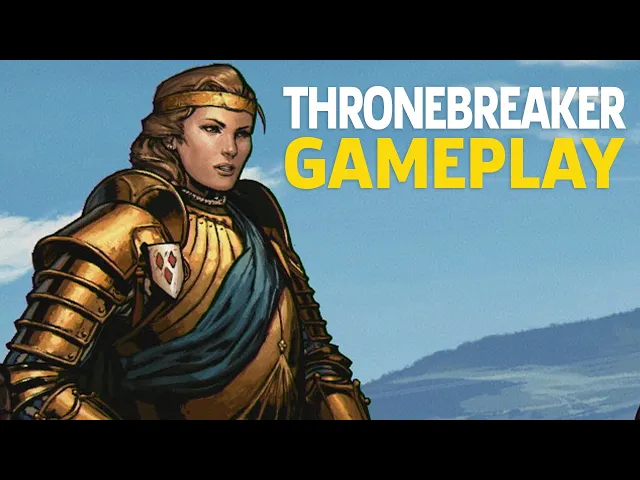
At the center of the narrative is Meve, the queen of Lyria and Rivia. The story tells how, after the kingdom is captured by the Nilfgaard Empire, Meve goes on the run. In the forests, she gathers a new army, which can include not only villagers and tough mercenaries but also residents of neighboring kingdoms, wandering knights, and fantastic creatures.
The beginning of the game immediately immerses players in the thick of the problems that Meve, through the player's actions, will navigate until the very end. Together with her, the player will experience betrayal and defeat, witness deprivation and suffering, then a glimmer of hope for the return of Lyria and Rivia, and ultimately lead her to victory. There are a total of 20 endings in the game, determined by the player's decisions.
Numerous well-thought-out narrative branches and side quests significantly increase variability and enhance immersion in the gameplay.
In Thronebreaker: The Witcher Tales, there are no unequivocally correct decisions; the player must maintain balance and be ready to answer for their choices or rectify the consequences. Sometimes, even acting with the best intentions can lead to extremely negative outcomes.
Single-player experience

The gameplay is quite simple — we run forward, explore the location, talk to NPCs, resolve conflict situations, accept those who wish to join our squad, and also collect gold, wood, and recruits to improve our camp or army.
Each side character in the squad has their own personality, bonuses, and list of possible actions. Some are calm and confident, while others are impulsive and willful. The gameplay opportunities seriously depend on how many specialists are gathered in the player's squad — some can simplify the passage, but there is always the main, long, and difficult path.
Since Thronebreaker: The Witcher Tales is also an RPG, a significant part of the gameplay takes place in dialogue windows — illustrated backgrounds and text on the screen. You have to read carefully and choose your words wisely — the consequences can appear even in the next chapter.
Cards

As for card battles, the mechanics of Thronebreaker are similar to a simplified Gwent. Each side lays out available cards on the board, and the winner is the one who scores more points after three rounds. There are many cards — crossbowmen, archers, swordsmen, knights, mages, healers, and so on; it's impossible to list them all, but Gwent players will easily understand them.
Globally, cards in Thronebreaker are divided into two types — combat cards that fight on the front line, and support cards. The latter weaken enemies or strengthen allies around them. Leveling up plays an important role — as you progress, you can use resources to improve recruits, the camp, or gain
No matter how strong a card is, Thronebreaker encourages you to act tactically wisely and remember that one in the field is not a warrior. Cards need to be placed in a way that they strengthen each other and compensate for weaknesses. You can also combine different cards to achieve the effect of a card that is not in the deck.
Important features

- Puzzles — a separate battle mode where you need to win or solve a puzzle with a given set of cards — are a nice feature of the game;
- The drawn visual style, interesting storytelling, and quality music enhance the pleasant feeling of the game and draw you into it;
- In Aedirn, Angren, Lyria, Mahakam , and Rivia , you can find treasure chests. How to do this is explained in our guides — we have provided links.
Store Offers and Discounts
![Thronebreaker The Witcher Tales (PC) [Global] [Standard]](https://files.vgtimes.com/si/shop_162453032.webp)
![Thronebreaker The Witcher Tales (Xbox) [Argentina] [Standard]](https://files.vgtimes.com/si/shop_178952180.webp)
![Thronebreaker The Witcher Tales (PC) [Turkey] [Standard]](https://files.vgtimes.com/si/shop_178935132.webp)
![Thronebreaker The Witcher Tales (PC) [North America] [Standard]](https://files.vgtimes.com/si/shop_178920282.webp)
![Thronebreaker The Witcher Tales (PC) [Europe] [Standard]](https://files.vgtimes.com/si/shop_178920502.webp)
![Thronebreaker The Witcher Tales (PC) [United Kingdom] [Standard]](https://files.vgtimes.com/si/shop_178933031.webp)
System requirements and PC test
- 64-разрядные Windows 7
- CPU: двухъядерный Intel Celeron
- RAM: 2 GB
- Video Card: AMD Radeon HD 4650
- DirectX: 9.0
- Keyboard, Mouse
- 64-разрядные Windows 7
- CPU: AMD FX-6xxx
- RAM: 4 GB
- Video Card: AMD Radeon R7 265
- DirectX: 9.0
- Keyboard, Mouse
![Trainer (+3) [0.9.23.125] [MrAntiFun]](https://files.vgtimes.com/download/posts/2018-11/thumbs/1541102381_1541102269_162.webp)
![Cheat Engine Table [UPD: 07.02.2022]](https://files.vgtimes.com/download/posts/2022-04/thumbs/1650534680_thronebreaker-smallsizejpg.webp)