Everything We Know About Control Resonant
 Fazil Dzhyndzholiia
Remedy Entertainment will release Control Resonant this year — a sequel to the original Control that differs significantly not only from the first game, but from everything the Finnish studio has done before. We have gathered the key details about the project in this article.
Goodbye, the Oldest House

Resonant is a direct continuation of the first game, but the developers say the story is structured so that newcomers who never played the original can still immerse themselves in it. Remedy is actively experimenting with the formula of the new release (more on that below), while promising that the sequel will preserve Control’s distinctive atmosphere, its signature tone, and its focus on layered narrative intricacies.
If the first game had players exploring the Oldest House — the ever-shifting, physics-defying headquarters of the Federal Bureau of Control — this time the action moves to much larger locations, as Resonant unfolds on the streets of Manhattan. The city will be divided into entire districts constantly reshaped by an unknown cosmic force. It disrupts natural laws, distorts gravity, and alters reality itself. At the same time, players will travel not only through the physical world, but also through a metaphysical space that reflects the protagonist’s inner state.
What do you value most in Remedy’s games?
Another of the Fadens

This time, the protagonist is not Jesse Faden, Director of the Federal Bureau of Control, but her brother Dylan. The Bureau releases him after many years of confinement and sends him to the epicenter of a supernatural crisis — to confront a new evil. Dylan fights not only for his own survival, but for the future of humanity, while also searching for Jesse.
Like his sister, Dylan possesses paranormal abilities. He has no access to the Service Weapon, but the main hero of Resonant battles enemies using an equally mysterious and powerful artifact known as the Aberrant. It can transform on the fly into different melee weapon forms: for example, a massive two-handed hammer, a scythe, or split into two blades — one in each hand.
More details about upcoming games
- Everything We Know About Marvel Tokon: Fighting Souls — The Most Anticipated Fighting Game of 2026
- Everything We Know About Marvel's Wolverine
- Everything We Know About Horizon Steel Frontiers
- Everything We Know About Cyberpunk 2: Official Information, Leaks, Fan Theories
- Everything We Know About Crimson Desert — the Korean Answer to The Witcher 3
- Everything We Know About Total War: Warhammer 40,000
- Everything We Know About Fable — One of the Most Promising RPGs of 2026
- Everything We Know About Forza Horizon 6
- Everything We Know About Silent Hill: Townfall
- Everything We Know About The New John Wick Game
- Everything We Know About Castlevania: Belmont's Curse
- Everything We Know About Saros — One of PlayStation’s Biggest Blockbusters of 2026
- Everything We Know About Control Resonant
- Everything We Know About Star Wars Zero Company — A Promising XCOM-Style Tactics Game
A Radical Shift in Formula
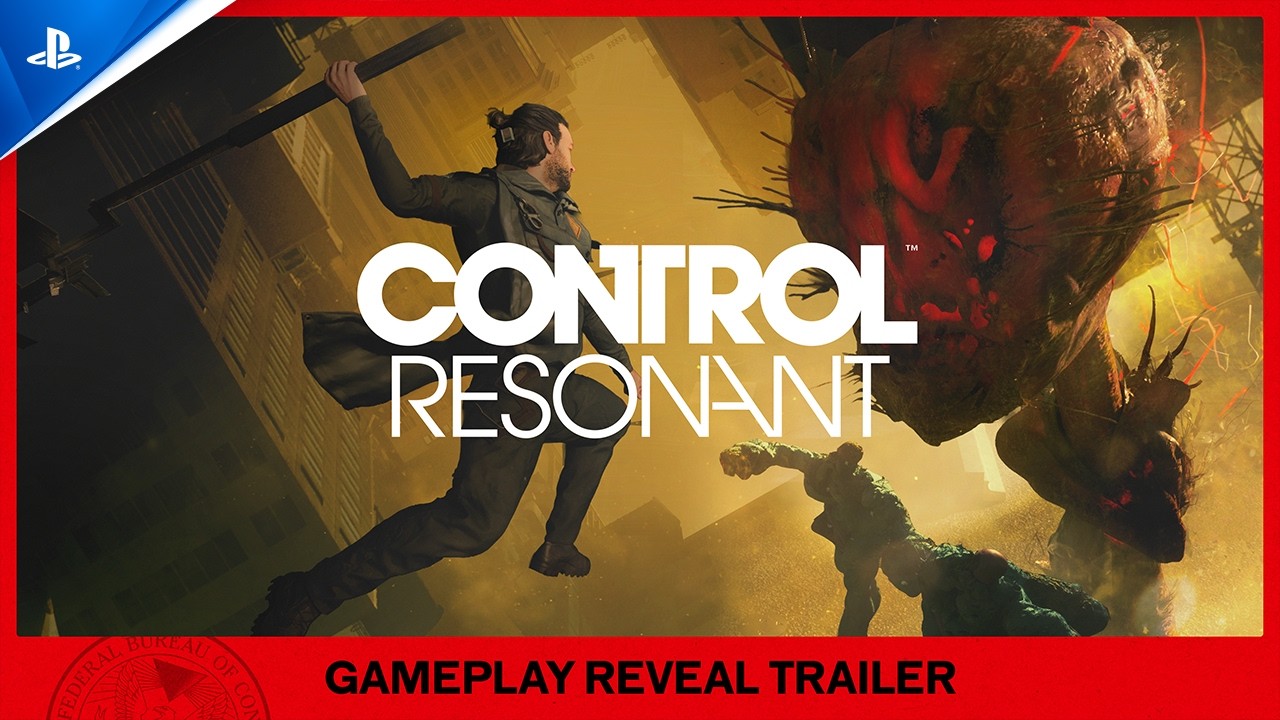
Remedy deserves credit for never resting on its laurels and experimenting with every new project. The original Control was a hybrid of a third-person action game and a metroidvania, while Alan Wake 2 fully embraced the survival horror genre, something the first entry in the series never did. With Resonant, the Finnish studio is once again trying something new: this time, it is building a full-fledged action RPG. Judging by the gameplay trailers, the next Control even somewhat resembles titles from the Devil May Cry series, albeit at a slightly slower pace.
In terms of structure, Resonant is not exactly an open-world game, but it is built around the idea of exploring large zones. Each region of paranormal Manhattan offers side activities as well as various secrets that can be uncovered by occasionally stepping away from the central storyline.

In a recent video, the developers showcased the West Incursion Zone — one of the game’s starting regions. Reality behaves erratically there, reminiscent of the dizzying dream sequences from the film Inception: architecture deforms, streets and buildings fold into themselves, and the player moves through them while defying every law of gravity.
To navigate this chaos, Dylan must rely on abilities such as levitation. Moreover, the hero can walk on walls: at such moments, the camera dynamically adapts, making movement along vertical surfaces feel like walking on solid ground.
As the game progresses, Dylan will regularly expand his combat toolkit: unlocking additional Aberrant forms and new abilities. The sequel also features a deep progression system, allowing players to specialize their character build more narrowly.

In combat, it is important to switch between weapon forms effectively, chaining complex combos while juggling enemies in the air like Dante from DMC, and to make use of abilities such as a telekinetic strike that can send an entire group of foes off a rooftop.
The toughest encounters will be against the so-called Resonants, the very beings the game is named after. These are former humans who once possessed immense power but were twisted by the same mysterious entity that is tearing reality apart. Confrontations with them are challenging, but defeating each boss grants Dylan access to new useful abilities.
A Turning Point for Remedy

Recently, things have not been going particularly well for the Finnish studio. The development costs of Alan Wake 2 were only recouped in 2025, while the co-op shooter FBC: Firebreak, released the same year, failed: at the time of writing, only 4 (!) users were playing the game on Steam.
The company also recently had to replace its CEO: it is now headed by Jean-Charles Gaudechon, who previously worked at EA.
Against this backdrop, it is critically important for Control Resonant to become a major commercial success.
***

In fact, the chances of Control Resonant becoming a hit are quite high. The game objectively looks compelling, players highly praised the previous installment, and, unlike Alan Wake 2, the new project will be readily available for purchase on Steam. When exactly? There is no precise release date yet: it is only known that Control Resonant will launch this year for PC, macOS, PlayStation 5, and Xbox Series X/S.
Are you waiting for Control Resonant? Did you play the original, or will you jump straight into the sequel? Share your thoughts in the comments.
How do you feel about the sequel shifting toward an action RPG?