Assassin's Creed Valhalla - Complete Edition


The complete edition of the role-playing action game Assassin's Creed Valhalla, which includes the original game and expansions Assassin's Creed Valhalla: Wrath... Read more
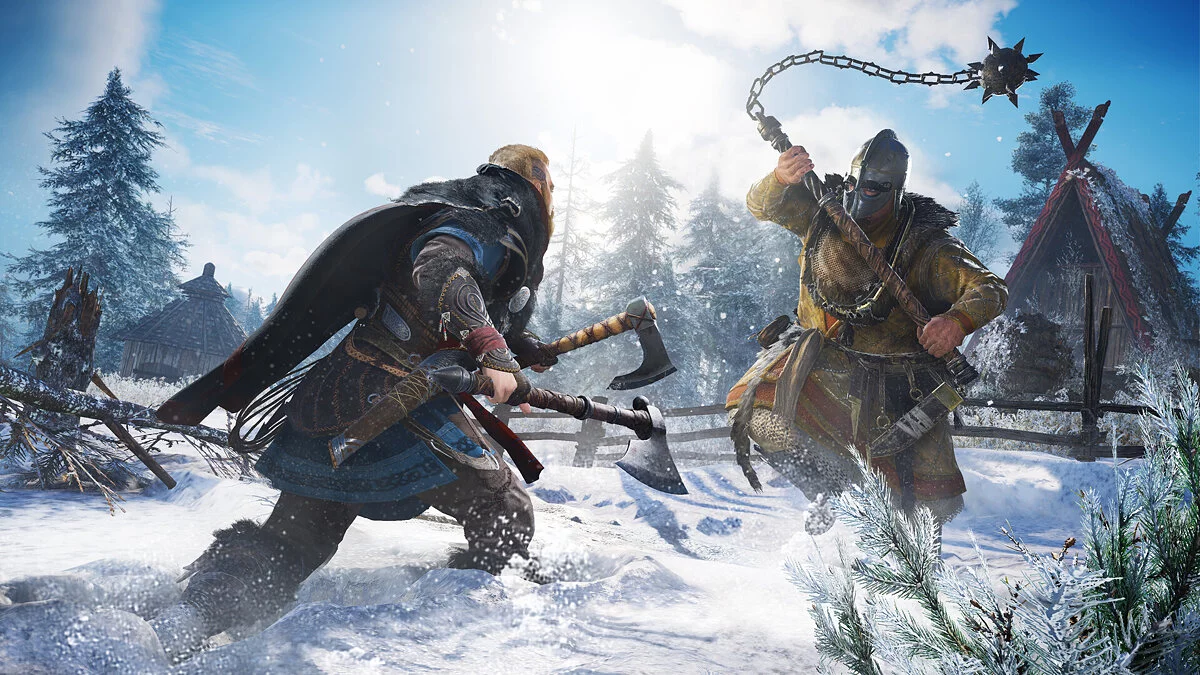
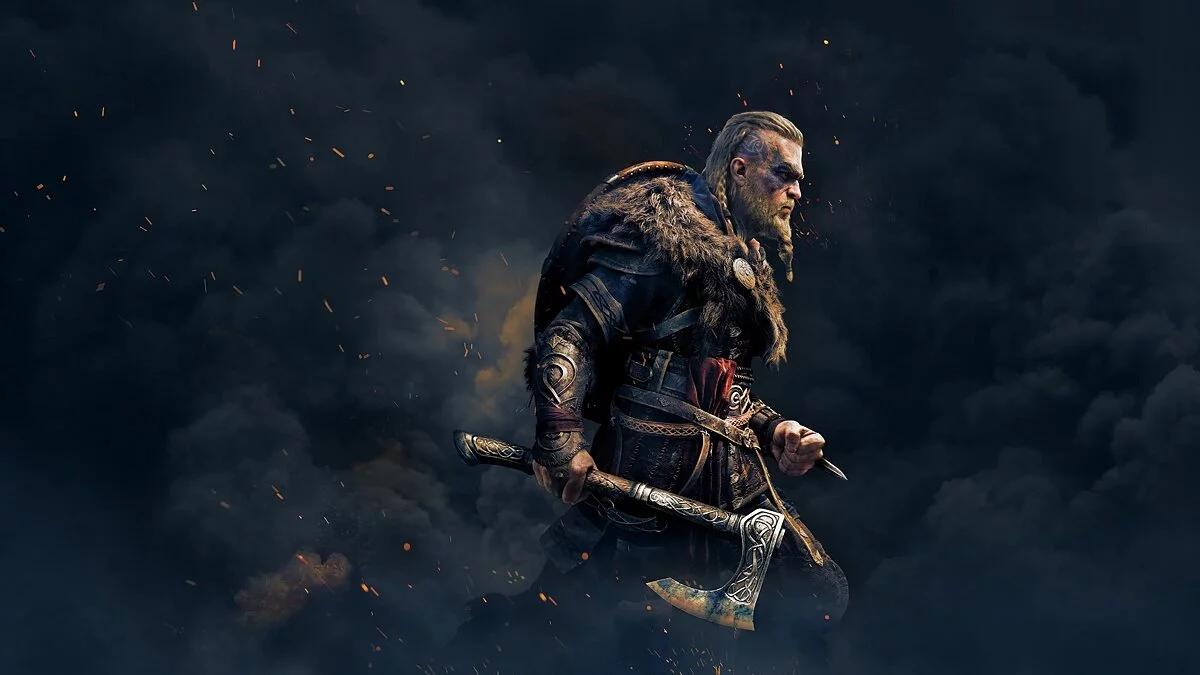
The complete edition of the role-playing action game Assassin's Creed Valhalla, which includes the original game and expansions Assassin's Creed Valhalla: Wrath of the Druids, Assassin's Creed Valhalla: The Siege of Paris , and Assassin's Creed Valhalla: Dawn of Ragnarok. The main action takes place in Eastern England. The main character is a Viking named Eivor (male or female doesn't matter).
The gameplay mechanics have been redesigned according to the era and popular historical representations of Vikings as fierce close-combat fighters. A gameplay innovation in Valhalla is the transfer of the blade from the wrist to the outside of the arm and the ability to hold a blade or shield in each hand. Graphically, the game uses an updated version of the same engine as Assassin's Creed Odyssey.
The game world

Valhalla features a vast, handcrafted open world that includes parts of modern Eastern England and Norway, with the addition of special locations such as Kiev, where the player will find themselves in the storyline.
England occupies a large part of the game world and replicates the landscape of its real prototype: dense forests and vast meadows, lowlands and hills, rivers and swamps, the coastline of the North Sea. The regional system has been abandoned, replaced by several large Kingdoms that are at odds with each other, while the Viking settlers add a factor of global threat.
Human influence is already noticeable: agriculture and animal husbandry are actively developed, small villages and larger settlements are found everywhere, and there are also a couple of major cities where trade and crafts take place. Fortresses have appeared—secure strongholds with a large number of soldiers and bosses.
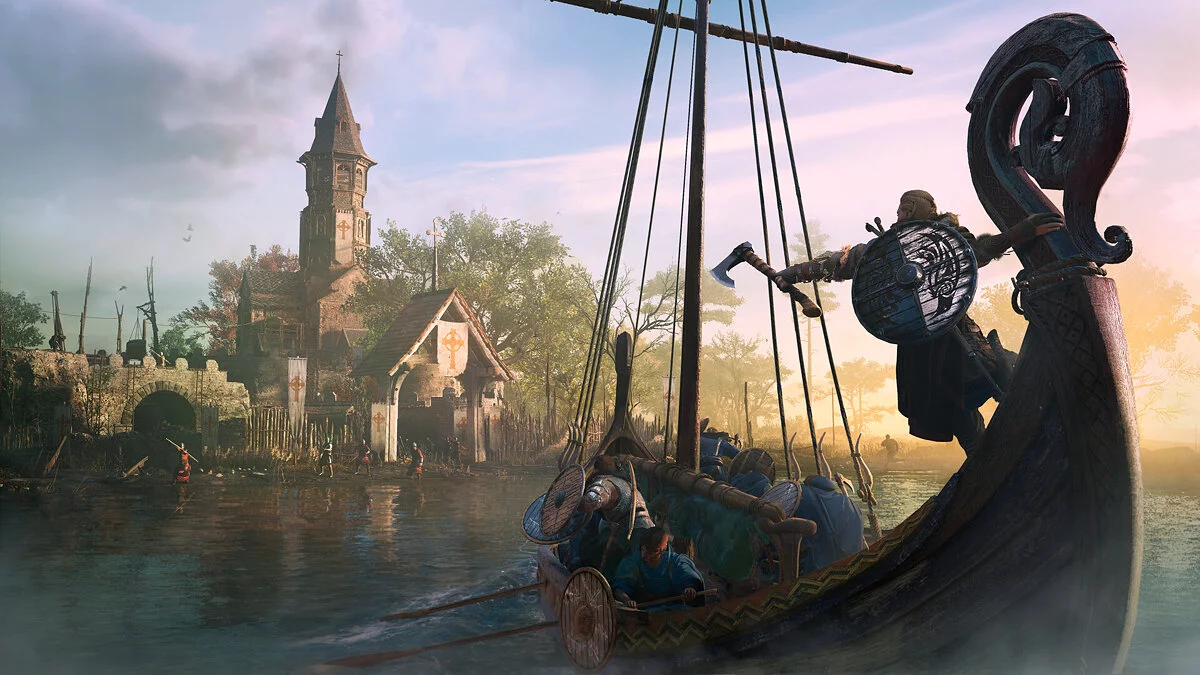
The sizes of the world in Valhalla are comparable to Odyssey, but there is more landmass since Ubisoft showcases the Viking migration to the lands of England, and the structure of the world is freer and does not tie the player to the character's level. There are few activities at sea; the drakkar is mainly used for moving the hero and companions, reconnaissance, and surprise attacks rather than battles with other ships.
There is also a place in the world of Valhalla for the northwestern part of Scandinavia, with its harsh climate, steep mountains, and cold waters under the majestic northern lights. This part of the world is primarily used for storyline events.
The protagonist and his development

The main character Eivor is a fictional character created using historical prototypes. He is a fierce Viking, raised on legends of great battles and warrior glory. At the time of the game's events, he is both a conquering warrior and the head of his small clan.
Eivor's membership in the assassins is more formal: he shares enemies with the brotherhood, he was given a cool blade, but he understands the true purpose of membership only to a certain extent and is focused on personal interests.
Character development in Valhalla follows the spirit of The Elder Scrolls 5: Skyrim: the more you use a skill, the better the character's skill level becomes. RPG elements in the game are more abundant, allowing the hero to develop in several directions and use equipment of varying quality levels. Each "item" is tied to a specific archetype — Raven, Bear, and Wolf, each containing its own fighting style and skill tree.
Unlike Odyssey, Valhalla features a new quality system: each item can be upgraded to level ten, which solves the loot balancing issue. Previously, weapons and armor dropped too frequently, leading to tedious management, but now there are fewer items, and they can be developed to suit personal preferences. To upgrade, numerous resources must be gathered.
Story

As always, the events of Valhalla unfold in the past (9th century) and the present. The updated Animus will allow Layla Hassan, whose story began in Assassin's Creed: Origins and continued in Odyssey, to delve deeper into the history of the conflict between the Assassins and Templars. The timeline of events in the present has become longer.
In the past, in the spirit of early feudalism, there is a fierce struggle for resources. From the cold and hungry Scandinavia, the migration of local tribes to warm and resource-rich England begins across the North Sea, where the struggle for power is already in full swing.
The settlers are met with suspicion and hatred by the warring Kingdoms, and the main character must ensure the survival of their clan at any cost. By the will of the writers, Saxons and Vikings will meet as both allies and enemies. An alliance must be forged with the former, while the latter will have to be fought against and forced into peace, so it should come as no surprise that, having allied with the English, Eivor goes to war against his own Danes, who despise him for his unwillingness to conquer lands.
At the same time, the main antagonist — Alfred the Great, King of Wessex, who seeks to rule England alone — has called for the extermination of the northern peoples. Players will be able to prevent this by going through a whirlwind of events during which they will visit all corners of the game world, unite with other clans and Kingdoms, and uncover more than one conspiracy that drives a wedge into the peaceful coexistence of peoples.
The story arcs of Valhalla are more substantial than before, and side quests have been virtually eliminated (it would be strange if the foreigner Eivor began taking quests from peaceful villagers). Instead, Ubisoft uses "world events" that occur with Eivor during world exploration, which connects the game to Red Dead Redemption 2, where some stories weren't even displayed on the map.
The Templars play a significant role in igniting conflict in eastern England, so it won't be possible to stay away from the conflict between them and the Assassins; over time, Eivor will find himself at its center.
Single-player gameplay

Progressing through Valhalla is closely tied to developing one's settlement by constructing various buildings (barracks, forges, tattoo parlors, etc.) and upgrading them over time. All this requires a lot of resources, which the player has little of at the beginning, so raids on settlements and fortresses will be necessary. Looting the first ones is quite simple — break down the fortifications, storm the settlement, and defeat the leader.
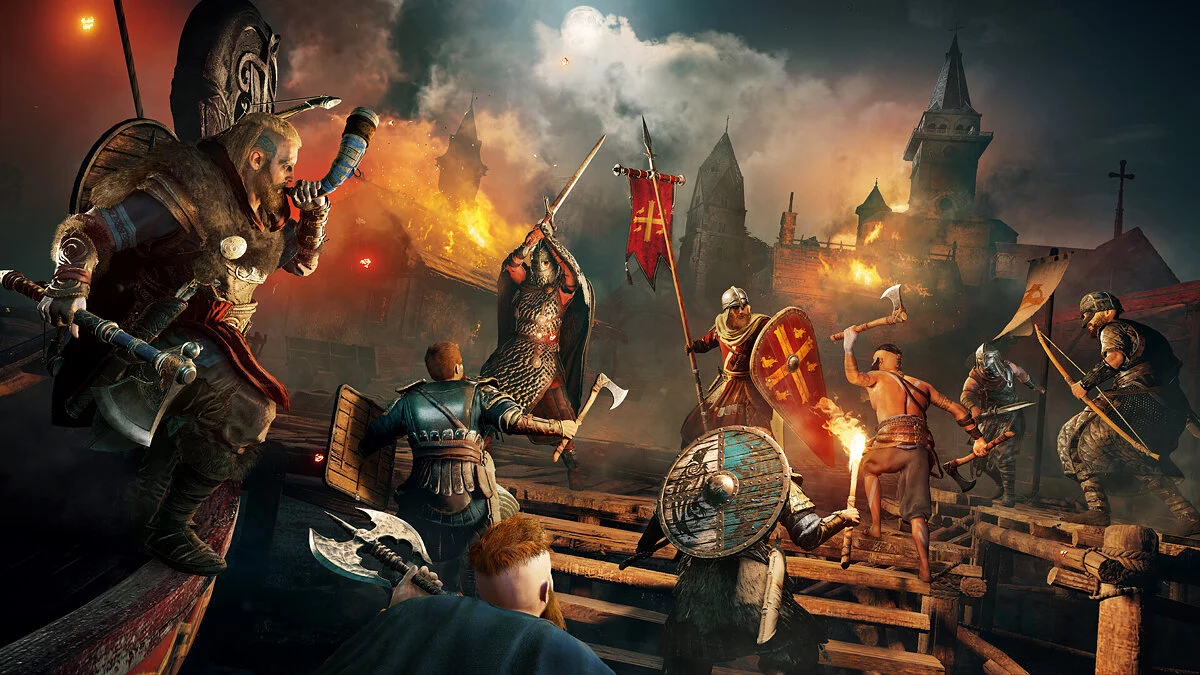
Fortresses won't be easy to conquer — they are protected by powerful walls, numerous soldiers, and several bosses, making their assault grand in scale, resembling sieges a la Medieval: Total War and divided into several stages. The player kills regular and elite enemies, protects allies, and helps them batter down gates, thus breaking through to the next levels of the fortress to ultimately defeat the boss. The player will receive more resources for such an assault, and the reward for Eivor will be better.
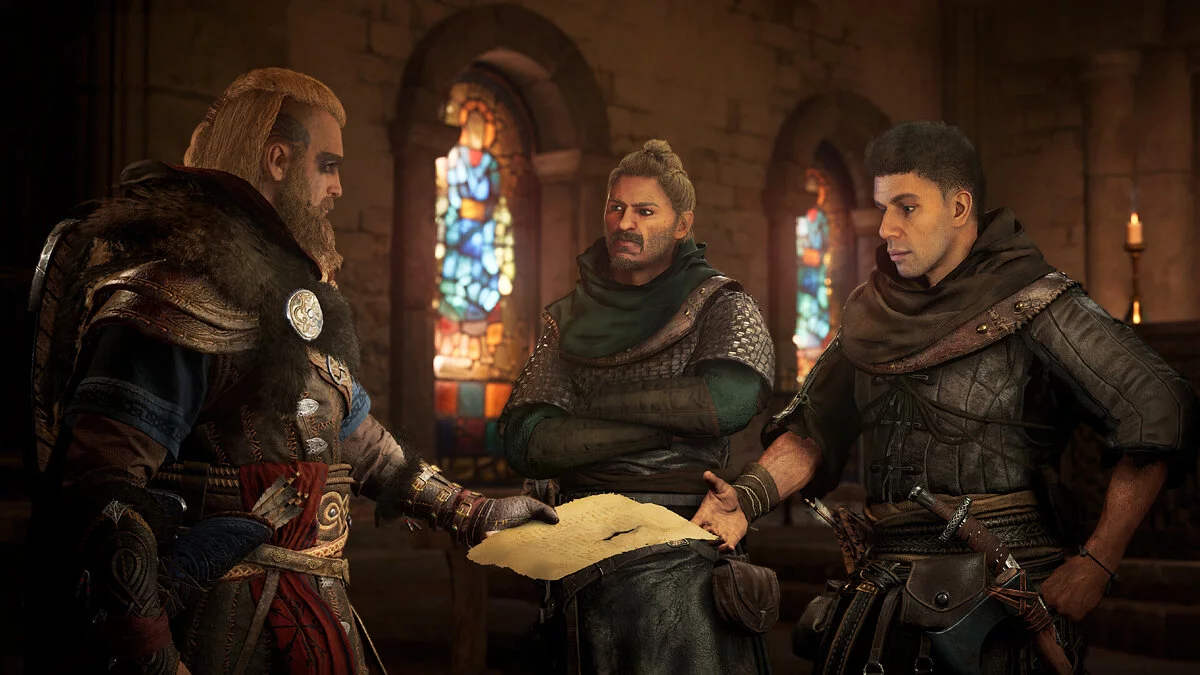
Another option is to forge alliances and organize trade with local English settlements. However, trust needs to be earned, which is reflected in the Influence system (reputation), dependent on completing quests and assisting NPCs. Some tasks can only be completed by significantly strengthening influence.
In the new Viking territory, players will face a multitude of enemies, which is why the combat system has been rethought. In battle, players will need to actively shield themselves and chop down hordes of enemies left and right with dual axes/swords. Many equipment elements, such as weapons, have received a durability mechanic.
There are several types of weapons, and they can be upgraded with special runes for fire, ice, or lightning damage, which is characteristic of Scandinavian mythology. In combat, players must use special abilities with various types of effects, of which they can take up to eight: four for ranged combat and four for melee.
The influence of Dark Souls has reached Assassin's Creed, with timing, parry windows, player health levels, enemy alertness, and reaction speed changing depending on the difficulty level.
Multiplayer
There is no information about the possible appearance of a cooperative mode or competitive online modes in the spirit of the old Assassin's Creed.
The only likely addition is an item shop in the spirit of Odyssey, which does not affect gameplay.
Key features:
- Parkour has been refined to suit the conditions of the game world, with new animations and the ability to climb trees introduced.
- Periodically, Eivor battles Norse gods in special sections, similar to the fight with the giant serpent in Origins.
- Stealth has been improved: players can hide in mud, snow, climb into snowdrifts, or even blend in with the environment if they wear certain clothing.
Store Offers and Discounts
![Assassin's Creed: Valhalla Complete Edition Argentina (Argentina) [Xbox One/Series]](https://files.vgtimes.com/si/shop_104643950.webp)
![Assassin's Creed: Valhalla Complete Edition Turkey (Turkey) [Xbox One/Series]](https://files.vgtimes.com/si/shop_107967785.webp)


System requirements and PC test
- Windows 10
- CPU: AMD Ryzen 3 1200; Intel Core i5-4460
- RAM: 8 GB
- Free Space: 160 GB
- Video Card: Radeon R9 380; GeForce GTX 960
- DirectX: 12
- Keyboard, Mouse
- Windows 10
- CPU: AMD Ryzen 5 1600; Intel Core i7-4790
- RAM: 8 GB
- Free Space: 160 GB
- Video Card: Radeon R9 380; GeForce GTX 960
- DirectX: 12
- Keyboard, Mouse


Reviews and ratings

The best skill system, great additions, deep immersion in the era of that time. Many references to historical characters, events, names. Valhalla - an imperishable masterpiece 
Лучшая система навыков, отличные дополнения, глубокое погружение в эпоху того времени. Множество отсылок к историческим персонажам, событиям, названиям. Вальгалла — шедевр нетленный