
Control Resonant Review — From the Oldest House to the Streets of Manhattan
7.4 Dmitry Kartashov
After a rather unusual first game, Remedy decided to continue the story of Control while noticeably expanding its scale. Instead of the enclosed space of the Oldest House, we now get a distorted Manhattan, and the lead role goes to a new protagonist who briefly appeared in the events of the original. The developers didn't stop at a change of scenery, though: Resonant substantially reworks the gameplay, turning Control from a story-driven action shooter into a far more pronounced action RPG focused on melee combat, character progression, and free exploration.
I spent quite a lot of time in an anomaly-consumed New York, and I'll try to figure out whether Remedy managed to preserve the spirit of the original after such major changes.
Platform: PC (Ryzen 5 7500F, NVIDIA RTX 4070 Ti Super (16 GB), 32 GB RAM);
Playtime: 26 hours.
Anomalous Manhattan
When it comes to visuals, Remedy once again bets not so much on technical polish as on art style and memorable imagery. Control Resonant looks impressive: the familiar streets of Manhattan turn into something utterly impossible — architecture warps, space behaves unpredictably, and ordinary city locations gradually become arenas for paranormal events.

As before, Remedy's in-house engine is quite demanding — if you want to take in the local sights with path tracing enabled, you'll need a graphics card with plenty of VRAM, as well as a powerful CPU with a large cache.
The first Control built much of its atmosphere around the isolated, ever-shifting Oldest House. The setting of Resonant, by contrast, feels like a "threat that has slipped out of control." Paranormal entities break out of the Bureau and spread across Manhattan: the city becomes a huge canvas where familiar reality constantly collides with the inexplicable.
That said, Remedy didn't go for a classic open world. Manhattan is divided into separate, carefully crafted zones, each with its own missions, secrets, and events. The developers stress that they didn't want to overwhelm the player with a huge map and an endless list of repetitive activities. Instead, they focused on exploring specific districts and the self-contained stories within them.

Besides the main campaign, the game offers side quests, combat arenas, puzzles, hidden finds, and other secondary activities. And the map's content doesn't turn into a checklist of mandatory tasks: most of it is discovered naturally while exploring.
The world's verticality works especially well — as you unlock new abilities, the character moves through the environment with growing confidence. The double jump, aerial movement, dashes, and other mobility abilities let you use the space far more freely than in the first game.
Continuing the Story
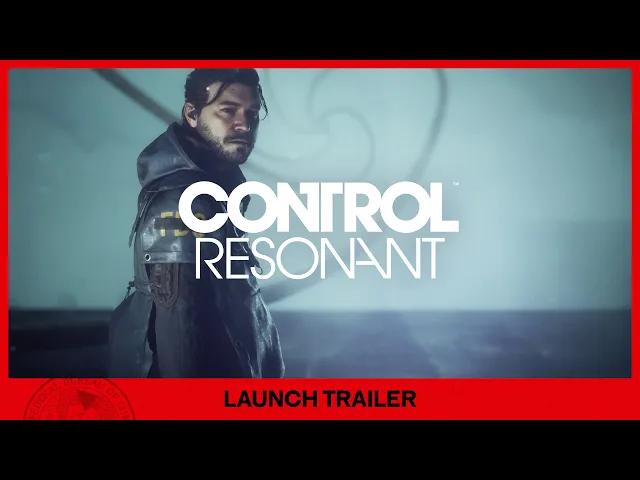
The plot of Resonant directly continues the events of the original Control. The protagonist is Dylan Faden — Jesse's brother, who, after a long isolation, finds himself at the center of a new paranormal catastrophe. Since the events of the first game, the situation around the Federal Bureau of Control has changed, and Jesse herself has disappeared. Dylan has to figure out what's going on, find his sister, and understand the nature of the new threat spreading across Manhattan.

The connection to the first game is much closer than you might expect from a sequel. Resonant constantly returns to the events of the original Control: the Faden family history, the Federal Bureau, and familiar elements of the universe. Before release, the developers noted that playing the first game isn't a prerequisite for Resonant. Still, I'd personally recommend finishing the original first: it's not so much about needing to know the plot as about the joy of recognition. Elements of the world feel completely different when you already know where they came from and what they're for. For those who don't have that much free time and only want to play the new game, Remedy has added a separate main menu option that briefly recaps all the key events of the original.
Dylan himself doesn't come across as a "reskin" of Jesse. He's a different character with his own history, motivation, and attitude toward what's happening. Zoe De Vera, a Bureau agent who acts as Dylan's guide in this new world, also plays a major role in the story, and their interactions become one of its key components. Otherwise, Remedy stays true to itself: everyday details constantly sit alongside utterly impossible events, serious storylines intertwine with the absurd, and explaining one paranormal mystery almost inevitably raises several new questions.

Perhaps the story's main drawback is its delivery: to dive deeper into the setting, you'll inevitably have to read a lot of notes, constantly "pausing" the dynamic exploration of the city and the adrenaline-fueled battles.
Freer and Far More Vertical
The gameplay of Resonant differs noticeably from the first game. Control gradually turned into a kind of metroidvania inside the Oldest House: new abilities opened up previously inaccessible areas. Resonant keeps this principle but moves it into a much freer structure.

Exploration is closely tied to Dylan's progression. As he gains new abilities, the hero unlocks additional ways to move around and reach previously blocked areas. So returning to a familiar place often means seeing it from a completely different angle.
The Gap deserves special mention — a separate space tied to Dylan's psyche. This is where the hero's build takes shape: the player allocates abilities, chooses weapon forms, and uses talents that strengthen the interplay between different combat mechanics.
The progression system is more complex than in the first Control. You can focus on melee, specific supernatural abilities, or combinations of several tools. You won't be able to unlock the entire arsenal in a single playthrough: this is how Remedy chose to encourage New Game+.

Many sections of the game are built around platforming — this is where the protagonist's special ability comes into play, letting him switch gravitational planes and swap the "floor" and "ceiling." These puzzles feel fresh and enjoyable, especially after a string of fights.
Some activities — especially combat ones — feel repetitive. At the same time, the side quests deserve praise: there are plenty of unusual missions among them that play differently from the main storyline. You'll have to do the side content anyway, since the difficulty of story missions steadily rises, and if you ignore secondary content, sooner or later you may run into level and progression requirements you don't meet.
Not Quite a Slasher, but Getting There
The biggest change in the game concerns the combat system. While the first Control was built around combining firearms with Jesse's supernatural abilities, Dylan gets a much stronger emphasis on melee. At the heart of the system is the Aberrant — a transforming weapon that changes shape depending on your chosen playstyle. Options include, for example, a heavy two-handed hammer and fast twin blades.

The system itself revolves around constantly maintaining momentum and pace. Melee hits restore a mana-like resource used for abilities. Abilities fill enemies' stun meters, after which finishers become available. Finishers, in turn, temporarily boost melee damage and generate healing orbs. The result is a closed gameplay loop.
The game pushes you to keep moving and combine different tools. In a fight, you have to quickly change distance, pick the right weapon form, stun enemies, and use abilities and finishers. The developers have also included more specialized styles. For example, some abilities let you use summoned creatures that attack enemies on their own and apply debuffs.

And here's the main catch with Resonant: everything described above only unfolds closer to the middle of the game. The first hours are essentially monotonous button-mashing combined with dodging. Two key factors are behind this impression.
The first: the monsters are true "damage sponges" that soak up a ton of hits. And while the character's combat toolkit is still small, all the player can do is press the attack button in a straightforward, repetitive way. Having received enough feedback, the developers tried to fix things with a day-one patch: the hotfix reduced the base health of most enemies and "buffed" the protagonist's attack power. The patch helped, but overall, most encounters still feel extremely monotonous and repetitive. Ironically, the gameplay settings include a separate option that enables one-shotting any enemy: it seems Remedy understood what feelings its combat system might evoke…

And the second factor: the mediocre balance between the Aberrant's forms and Dylan's abilities. Abilities that build up stun stand apart — they're noticeably stronger than most other options. And the hammer form's strike, which you can pick right from the start, can stunlock almost any enemy indefinitely (a situation where a character or enemy is kept permanently stunned and can't take any action — editor's note).
As a result, Resonant's key bet evokes very mixed feelings. The fights feel extremely mindless — routine and at times even tiresome. However, as you level up, collect new artifacts, and, most importantly, if you're willing to use all the gameplay mechanics, you can still enjoy the combat system. Even so, the game badly lacks interesting situations and ways to motivate the player to dig into its nuances. Most of the time, everything follows the same script: take out the powered-up "elite" enemies (otherwise smaller rank-and-file foes will keep spawning in the arena), then clean up the rest.
What do you think of Control Resonant?
***
Remedy faced a rather difficult task. Repeating the first Control almost one-to-one would have been too easy, while changing the formula was risky. But the developers took the risk — Resonant went down the second path. It's a much larger game with freer exploration, a deeper progression system, vertical traversal, and a completely different approach to combat.
But with the scale came new problems. The freer structure (as well as the endless notes) can sometimes hurt the pacing, fights start to repeat and wear you down, and the reworked combat system simply doesn't reach its full potential. And yet, after the final credits, a pleasant feeling remains. Yes, Resonant doesn't work as smoothly as one would like in every respect. But between the lines, in almost every element, you can see the good old Remedy, capable of turning something familiar and well-known into something unusual and memorable.
If the first Control was a journey into one insane building, Resonant is an attempt to let that insanity out. Despite some controversial decisions, the developers have made a sequel that tries to push their past ideas further. At the very least, I'd recommend giving the game a chance: there's a good chance you'll be drawn in by its original setting and a story with a twist.
-
 Control Resonant Gets Launch-Day Hotfix to Reduce Enemy Health
 -
 CONTROL Resonant Power Lines Walkthrough: All Station Puzzle Solutions
 -
 CONTROL Resonant to Add New Game++ and Photo Mode in Upcoming Updates
 -
 CONTROL Resonant Every Dog Has Her Day Guide: All 7 Dog and Dragon Toy Locations
 -
 Rockstar Congratulates Remedy on CONTROL Resonant Launch, Tying It to Max Payne Remakes