
The Odyssey — Ending, Plot, and Finale Explained
 Alexander Pushkov
Christopher Nolan's "The Odyssey" significantly reimagines the ancient Greek epic. Its story blends motifs from Homer's works, modern historical theories about the Bronze Age collapse, and Nolan's signature preoccupation with great figures having to answer for the consequences of their own decisions. Today we'll break down the plot and ending of Nolan's "The Odyssey," explain what the finale means, the motivations behind the characters' actions, Athena's portrayal, the prophecy of the Sea Peoples, and the film's key differences from Homer's poem.
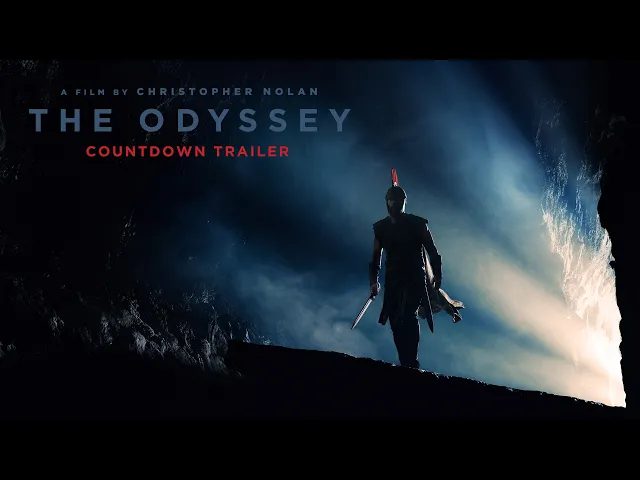
- Genre: adventure, fantasy, action, drama;
- Country: USA, UK;
- Studio: Syncopy, Universal Pictures;
- Distributor: Universal Pictures;
- Release date: July 17, 2026 (worldwide); no official Russian theatrical release planned;
- Runtime: 172 minutes;
- Age rating: 18+ (R);
- Director, writer, and producer: Christopher Nolan;
- Starring: Matt Damon, Tom Holland, Anne Hathaway, Robert Pattinson, Zendaya, Lupita Nyong'o, Charlize Theron, John Leguizamo.
What happens at the end of Nolan's "The Odyssey"
After a long ordeal, Odysseus (Matt Damon) finally returns to Ithaca. His trials have visibly changed and worn him down. To avoid revealing himself too soon, he disguises himself as a beggar and sneaks onto his home island in secret. On Ithaca, he runs into his old friend Eumaeus (John Leguizamo), who's been beaten by Antinous's (Robert Pattinson) supporters. Eumaeus tells Odysseus that Antinous's men are planning an attack on his son Telemachus (Tom Holland). They intend to ambush the young man near a temple in Pylos as he's heading home.
Reaching the temple, Odysseus sneaks inside disguised as a beggar and helps save Telemachus. To distract the attackers and cause panic, he sets the building on fire, and father and son escape amid the resulting chaos.

Thanks to the law of Zeus, Odysseus ends up inside the palace among Penelope's (Anne Hathaway) suitors. While the hero conceals his identity, he has to endure humiliation from Antinous and his followers. Only his old dog, Argos, manages to recognize him.
Before long, Penelope decides to speak with the mysterious beggar. Judging by her reaction, she suspects who's really standing before her during the conversation, but she doesn't expose Odysseus. Instead, the queen announces a challenge for her suitors: whoever manages to string Odysseus's bow and shoot an arrow through a long row of axes will win her hand.
Before the contest begins, all other weapons are locked away, and the exits from the hall are boarded up so no one can escape. The suitors try their luck with the bow one after another, but not a single one of them even manages to string it. Then Odysseus steps forward. He completes Penelope's challenge with ease, reveals his true identity, and joins forces with Telemachus to fight the men who've seized the palace.

After a long, brutal battle, Odysseus kills Antinous. But the victory brings the hero no relief. In conversation with Penelope, he admits his own responsibility for staying away from home for so long, and speaks of the guilt that has haunted him ever since the fall of Troy. It's at this point that Athena's (Zendaya) true form is revealed. The goddess appears to Odysseus in the shape of a young woman — one his soldiers killed inside a Trojan temple dedicated to her.
Odysseus also arrives at a chilling realization: perhaps he and his surviving companions are themselves the very Sea Peoples prophesied to destroy civilization. Understanding that he can't go back to his old life and rule Ithaca, the hero chooses voluntary exile. In doing so, he clears the throne for Telemachus, who is set to become the island's new king.
The finale features Odysseus's closing speech. The hero admits that in setting Troy's walls ablaze, he simultaneously set the walls of the entire world on fire. His victory in the war became the start of a far larger destruction, one whose consequences can no longer be stopped.
What do you think of the ending that Nolan changed—where Odysseus goes into exile instead of staying to rule Ithaca?
Why does Odysseus go into exile?

In Homer's poem, the story ends with Odysseus's return to power on Ithaca. In the lost "Telegony" (an ancient Greek epic that continued the hero's story after the events of Homer's "Odyssey"), whose contents survive only through later retellings, Odysseus later dies at the hands of his youngest son. Christopher Nolan offers a different resolution: after dealing with the suitors, the hero voluntarily leaves his homeland.
The main reason is that Odysseus wants to free Ithaca from the consequences of his own tarnished reputation. His name is tied to the destruction of Troy and to the many deaths and bloodshed inside the palace. Odysseus's departure lets the island begin a new chapter, and lets Telemachus take the throne without living in his father's shadow. The hero's decision is also shaped by his heavy guilt over the deaths of his soldiers. On top of that, killing the suitors constitutes a violation of the sacred law of hospitality.
In his conversation with Penelope, Odysseus also admits that he sees his own homecoming as the fulfillment of the prophecy about the Sea Peoples. The hero comes to the conclusion that the prophecy may well be about him and his companions: after the fall of Troy, they carry violence and chaos with them wherever they go.
That's why Odysseus decides to set out to sea once more and head west. This becomes, at once, a voluntary exile, an attempt to spare Ithaca from further disaster, and a way of honoring the memory of his fallen comrades.
Why does Athena appear as a young girl?

Athena is the ancient Greek goddess of wisdom, military strategy, and craft. In the film, though, she doesn't appear in her usual guise as a majestic warrior, but as a young woman wrapped in cloth. In this form, the goddess accompanies Odysseus and offers him guidance at the most critical moments of his journey.
The true meaning of this form is only revealed in the finale. It turns out that Athena has taken the shape of a girl killed by Odysseus's soldiers inside a temple dedicated to her during the sack of Troy. There, they also decapitated Athena's statue, committing sacrilege and drawing the gods' wrath down upon themselves.
That's why the form the goddess chooses becomes a constant reminder of the crimes committed by Odysseus and his men. Athena both helps the hero and forces him to keep confronting the consequences of the war. Her actions can be read not only as divine intervention, but also as an embodiment of the guilt that follows Odysseus throughout his entire journey home.
What does Odysseus's final speech mean?

In the closing scene, Odysseus says that civilization will one day rebuild, that darkness will give way to a new dawn, and that the mistakes of the past will eventually be forgotten again. As in many of Christopher Nolan's films, the ending wraps up the story's central theme without offering the viewer a single, definitive interpretation.
Odysseus reflects on how the fire that destroyed Troy's walls could spread to the entire known world. The film's final striking image is the Trojan Horse — a symbol of the hero's greatest act of cunning, and at the same time, a reminder of the catastrophe he helped set in motion.
The ending can be read as a meditation on the idea that great historical figures aren't purely heroic. In that sense, "The Odyssey" echoes "Oppenheimer" — one of Christopher Nolan's best films: both films tell the stories of extraordinary men who realize the cost of their own decisions far too late.

Still, "The Odyssey"'s ending lands as more optimistic. Sailing off beyond the horizon, Odysseus isn't simply running from his past — he's consciously giving up power, letting Ithaca, his son, and his people start over and shed his destructive legacy.
In this way, the final scene shows Odysseus finally accepting responsibility for what he's done. He can't change the past or bring back the dead, but he can give up the throne and stop the chaos he set in motion from spreading further. At the same time, Nolan deliberately leaves the ending open, letting the viewer decide for themselves whether the hero's departure by sea is redemption, exile, or the beginning of a new journey. By the way, even before its premiere, "The Odyssey" was already featured in the TOP-30 Most Anticipated Movies and TV Shows of 2026.
Which “The Odyssey” storyline interests you the most?
Who are the Sea Peoples?

The film references a prophecy about the Sea Peoples — mysterious invaders who will one day arrive by ship and bring destruction to Ithaca and other lands.
Here, Nolan blends mythology with modern historical scholarship. The Sea Peoples are mentioned in certain Egyptian texts as pirates and raiders who plundered the pharaohs' domains and the lands of other Eastern Mediterranean states.
Modern historical scholarship offers several theories explaining their origin and role in the crisis of the ancient civilizations. Under the classical view, they were members of barbarian tribes of unknown origin whose invasion played a decisive role in what's known as the Bronze Age Collapse — the term historians use for the events of the late 12th century BCE that led to the destruction or decline of many ancient states, including Egypt, the Hittite Empire, Babylon, and the Mycenaean civilization to which Odysseus and the Greeks who conquered Troy belonged. Under this framework, the Sea Peoples are essentially an equivalent to the Huns during the fall of the Western Roman Empire.

More modern approaches question both the scale of the Sea Peoples' influence and whether a single unified group by that name ever really existed. One theory holds that, from the Egyptians' perspective, the Sea Peoples might simply have been the Achaean Greeks themselves, periodically carrying out raids, even though they were, in fact, a fully civilized part of the Bronze Age world-system.
In the film, Odysseus arrives at the thought that the Sea Peoples are him and his companions. By destroying Troy, they didn't end the war — they set off a chain of events that could bring about the destruction of the entire world. That's how the meaning behind the hero's words about the burned walls gets revealed.
What does Odysseus's bow symbolize, and why does Penelope hold the contest?

The bow becomes the key piece of proof that Odysseus is hiding underneath the beggar's disguise. Penelope knows full well that none of the suitors can handle that weapon the way her husband can.
The hero's skill is demonstrated as early as the beginning of the film. Odysseus has a distinctive technique: he's able to bend the massive bow and string it in a way that's beyond anyone else. Because of that, Penelope's contest effectively becomes a secret way of verifying the returning king's identity.
The bow symbolizes not only the hero's physical strength, but also the return of the power that rightfully belongs to him. Once he takes the weapon in hand, Odysseus stops being a helpless beggar and becomes king and warrior once again. That same bow is then used to strike down the men who intended to kill him and seize Ithaca.
What monsters appear in "The Odyssey"?

Not every creature the hero encounters in Homer's poem made it into the film adaptation, but Nolan kept several of the most iconic episodes involving mythical monsters — ones that could easily earn a spot among the scariest characters and monsters out there.
One of the main antagonists is the Cyclops (Bill Irwin). Odysseus and his companions find themselves trapped in the one-eyed giant's cave and have to find a way out. The scene combines physical confrontation with cunning, which has traditionally been considered Odysseus's greatest weapon.
Later on, the travelers run into the Laestrygonians, a tribe of bloodthirsty giants. Their attack causes further losses and nearly wipes out the hero's entire fleet.
The Sirens also make an appearance, luring sailors in with their singing. To hear their voices without dying, Odysseus orders himself tied to the mast. His companions cover their ears and ignore his pleas to be set free.
Another threat comes in the form of Scylla, a sea monster that attacks the ship as it passes through a dangerous strait.
What is the law of Zeus, and why does the custom of hospitality matter?

The law of Zeus is the ancient Greek custom of sacred hospitality. Under it, a host is obligated to welcome a stranger, offering them food, shelter, and protection, while the guest, in turn, is expected to show respect for the household and its owner.
This attitude toward travelers wasn't just about codes of conduct. The ancient Greeks believed that the gods could travel the earth disguised as ordinary people. An inhospitable host risked insulting an Olympian hidden in human form and bringing divine punishment down on themselves. That said, the custom placed obligations on both sides. Penelope's suitors flagrantly broke the law of hospitality: they moved into Odysseus's palace, squandered his wealth, humiliated its owners, and plotted to kill Telemachus.
That's exactly why Odysseus's retribution remains morally ambiguous. He punishes people who abused hospitality and seized his home, but at the same time turns his own palace into a scene of mass slaughter. In the film's interpretation, this becomes yet another act that deepens the hero's guilt, while also casting familiar figures from ancient Greek mythology in a new light.
Why is Helen of Troy's face covered in scars?

One of the film's more notable departures from ancient sources involves Helen of Troy (Lupita Nyong'o). In the adaptation, part of her face is disfigured by scars.
The exact reason behind this isn't fully explained, but the film ties Helen's injury to revenge for her sister Clytemnestra's crime. After Agamemnon returned from Troy, Clytemnestra killed him, and the fallout from that act may have come crashing down on other members of the family.
The scars also carry symbolic weight. Helen went down in history as a woman of extraordinary beauty, one supposedly responsible for starting the Trojan War in the first place. She's the source of the famous phrase about a face that could launch a thousand ships.
Disfiguring half her face turns that image into a cruel joke. The beauty that made Helen a symbol of war is now partially destroyed, and the people around her cruelly note that now she's only capable of launching five hundred ships.
***
As expected, Nolan's film turned out to be more than just an epic historical drama — it's an authored statement in which everyone will find something different for themselves. For some, its central theme will be a rejection of war; for others, it's the story of a traumatized hero trying to make up for the mistakes of his past. Part of the audience will likely see it as commentary on modern society, along with apocalyptic undertones tied to the doom of Western civilization. Still, that very breadth and diversity of interpretation is exactly what marks true art.
-
 Nolan's New Triumph: The Odyssey Earns Near-Perfect Reviews from Critics
 -
 Elliot Page Cast as Sinon, Not Achilles, in Christopher Nolan's The Odyssey
 -
 Christopher Nolan's The Odyssey Premieres to Divided Praise: Critics Call It Both Clunky and Astonishing
 -
 Christopher Nolan’s The Odyssey Crossover Headed to Fortnite
 -
 Christopher Nolan's The Odyssey Gets Final Trailer Ahead of This Month's Premiere
 -
 27 Best Games Like Call of Duty: Shooters Set in the Past, Present and Future