
Aphelion Review: A Space Mystery from the Creators of Life is Strange
 Anastasiia Popova
Picture this: your ship crash-lands on a completely deserted planet, frozen solid down to its core. Your partner miraculously survives in an escape pod, but with severe injuries. He can barely drag himself across some barren biome, scans himself with a local futuristic med-bot, and the AI dead-seriously delivers a diagnosis: "You have critical liver damage. A transplant is recommended."
Seriously? A transplant? On a chunk of ice where the only living thing around is a giant blind worm that dreams of biting your face off? I guess I should've just run around the corner, found an intergalactic clinic, and booked Thomas in with a surgeon. That moment perfectly sums up the entire experience of playing Aphelion. It's an incredibly gorgeous, intriguing project from Dontnod Entertainment (the studio behind Life is Strange) that keeps shooting itself in the foot with absurd decisions, constantly breaking its own atmosphere.
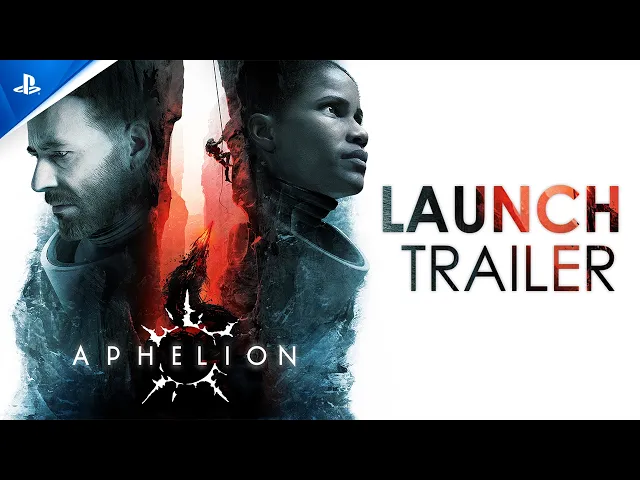
Platform: PC (Intel Core i7-8700K 3.7 GHz, NVIDIA GeForce RTX 5080, 64 GB RAM);
Time to complete: 8 hours.
System Requirements:
Minimum: Intel Core i7-8700K / AMD Ryzen 5 1600X, 8 GB RAM, NVIDIA GeForce GTX 1060 6 GB / AMD Radeon RX 5600 XT 6 GB / Intel Arc A380 6 GB, 55 GB available space (SSD);
Recommended: Intel Core i7-12700K / AMD Ryzen 7 5800X, 16 GB RAM, NVIDIA GeForce RTX 3060 Ti 8 GB / AMD Radeon RX 6800 XT 16 GB, 55 GB available space (SSD).
Melodrama Instead of Survival
The setup here is textbook, straight out of a grim sci-fi manual. Earth is suffocating under a climate crisis (no real specifics, just your standard end-of-the-world scenario), and humanity sends its first crewed expedition to a recently discovered planet called Persephone. The goal: study a habitable zone known as the Wellspring and figure out whether it could take in what's left of our species.

Sounds like the setup for a great thriller about isolation in space, right? But Aphelion decides we don't need cold sci-fi. In the very first scene, the two leads, Ariadne and Thomas, are sitting half-dressed, hashing out their feelings right after sleeping together. The girl delivers the classic line: no, this was a mistake, this shouldn't have happened. And there you are, sitting there confused: are we here to save a species, or watching a teen drama? Anyone interested in better stories about space expeditions, planetary exploration, and unknown worlds should check out our list of the best space games for PC: RPGs, horror games, puzzles, and strategy games.

Right after that, the ship crashes. The crew gets scattered across different parts of the planet, and the gameplay splits sharply into two branches: Ariadne in the snowy mountains, and Thomas in a strange desert biome. And if you think these two branches complement each other organically, you'd be dead wrong.
Ariadne: Invisible Walls and Parkour for Tired Fingers
Playing as the girl is pure visual ecstasy paired with a total game-design failure. You get dropped into the snow. There's no map. All you have is a compass with a blinking objective marker (the Q button) and a grappling hook.

At first, it seems like you're standing in a wide-open location. The game tries as hard as it can to make you feel like an explorer. You want to veer off the beaten path to the left and check what's behind that rock. You walk, and smack your nose right into an invisible wall. Step right — another invisible wall. Aphelion is a completely linear, tube-shaped corridor.

But linearity is nothing compared to the real boss of the game: the platforming system and that damn F key. Most of the time, Ariadne needs to climb somewhere, latch onto things with her grappling hook, swing, and leap across gaps. And this is where the developers introduce the most suffocating mechanic imaginable. In 99% of cases, the character doesn't automatically grab a ledge during a long jump. A split second before your hands touch the ice, a timer flashes on screen, and you need to frantically mash F.

The first two times, it's fun. By the third hour of the game, when you're on your five-hundredth jump, it starts to grate on you on a purely physical level. It doesn't build tension, it doesn't make the game harder. It's a dull QTE mechanic that turns basic movement into a chore. If I wanted to play a "press one button on a timer" simulator, I'd download osu!, not a survival game set in space.

A bit later, the game decides to "mix things up" and throws us onto thin ice. You can't run, or the ice cracks. You have to hold Ctrl and crawl at a turtle's pace. I died about five times purely because I got physically sick of crawling, let go of the button, and immediately fell through into the water. There's literally an achievement for dying under the ice 20 times — the developers clearly knew players would kill themselves out of sheer boredom on these segments.
Thomas: The Asthmatic Simulator
Playing as Thomas is a completely different animal. He was badly injured when the escape pod crashed. Because of that, he can't climb rock faces (thank God, no more F key), but he can use a hook to drop and pull metal bridges toward himself.

His main problem is a broken life-support system. His oxygen tank is damaged. Because of that, the entire experience of playing as him turns into panicked sprints from one oxygen refill station to the next. You barely have time to take in a location properly, because there's a constant ticking timer in your head: "Air's running out, where's the next booth?" This is textbook artificial difficulty. You're just put on a short leash and forced to micromanage an oxygen bar instead of being allowed to actually soak in the planet's atmosphere. That said, the core idea of surviving extreme conditions remains one of the most popular mechanics in the genre, and you'll find more games like this in our list of the best survival games on PC: 65+ picks.
Nemesis: The Killer Worm and Broken Rules
Persephone turns out not to be a dead rock after all. The planet has its own immune system, and it takes the shape of a giant, blind, ice-dwelling worm named Nemesis.
Getting introduced to the worm deserves its own paragraph. We're taught stealth mechanics. The monster is blind but has excellent hearing. So you need to sneak around and hide behind cover. I honestly tried to play by the rules. In one scene, the worm flew right past me, and I froze completely, not touching the keyboard at all. It flew past, drifted off into the distance, then abruptly did a 180, flew straight at me, said "Chomp!" — and ate me. The stealth rules in Aphelion only work about half the time. You never know whether it's noticed you or not.

Because of that, Nemesis stops being scary after your third death (and I unlocked the achievement for dying to it 10 times). Fear turns into irritation. It's a shame the game couldn't hold onto that sense of dread and uncertainty, which so often serves as the main weapon of psychological horror. You'll find more projects like that in our list of psychological horror games guaranteed to break your mind.
At one point, the game throws in a genuinely great adrenaline scene: you're climbing across ledges, the worm spots you, and ice spikes start shooting out of the walls on the fly. The action goes into overdrive, you're sprinting down a corridor, spikes hitting left and right — it was awesome! And then Thomas drops some item, it clatters loudly to the ground, the worm shows up, and we're back to playing a dull game of cat and mouse.
Which sci-fi setting interests you more?
Puzzles
So we don't fall asleep running in a straight line, the game throws in a handful of puzzles. At some point, Ariadne comes across zones of thermal anomalies. The gray blizzard gives way to incredibly beautiful, bright, sunlit locations. The visuals here are genuinely stunning.

That's where the frequency-tuning mechanic kicks in (the search function, on the E key). We find beams of energy and turn dials to find the right frequency. This beam either leads us to glyphs (local collectible doodads) or helps us progress through the story. For instance, the hook can latch onto onyx ore, but sometimes it's encased in ice. Aim the energy, the ice shatters, and you can jump across.

Then the task gets more complicated: the ice turns red, meaning the energy beam has been cut off somewhere. You have to trek back, find where the break is, fix it, and return. That sounds like a decent Metroidvania idea on paper, but thanks to clunky movement and constant texture-clipping, it turns into a genuine pain.

I regularly walked up to a ladder, climbed it, tried to climb back down, and the character just flat-out refused to respond. I'd have to run loops around the area to reset the animation. Same deal with story-critical items: you're standing right up against a button, and it just won't press. You end up doing a little dance around the object hoping the game finally registers that you're trying to interact with it. Overall, the controls here are pretty janky.
A Great Sci-Fi Mystery Wasted
As you explore the planet, the game unexpectedly unveils the story of the previous expedition, and this is where Aphelion genuinely gets interesting. A corporation tried to reshape a world that wasn't theirs to fit its own efficiency metrics, and people paid the price for the consequences of those decisions.

An abandoned base, signs of panic, a strange illness, contradictory logs, and missing crew members — all of it builds a fantastic atmosphere for a self-contained space thriller. This could have been a powerful detective storyline about corporate greed, fear, and a ruined expedition. Fans of stories built around investigation, gathering clues, and gradually unraveling mysteries should also check out the games in our list of the best detective games on PC and consoles.
The problem is that the game raises a mountain of intriguing questions but barely bothers to develop any of them. Instead of a proper payoff for this storyline, the focus quickly shifts to the much simpler personal drama between the two leads.
What is the most common flaw in Dontnod Entertainment's games?
The Finale: Waiting Instead of a Climax
The final act is built around a rescue mission and an attempt to stop a threat tied to the planet itself. On paper, the stakes are high, but the tension keeps getting undercut by repeat walks through already-familiar locations and dragged-out gameplay sections.
Instead of a powerful climax with a moral choice or the reveal of key mysteries, the player gets a long sequence of repetitive actions. It's especially disappointing, because the world and setup promised a far bolder, darker finale.

The final scenes clearly try to lean on emotion and symbolism, but some of the characters' actions come across as too illogical for the drama to land with full force. In the end, Aphelion leaves you with the impression of a game with great atmosphere and strong ideas that the script simply never managed to bring to a satisfying conclusion.
***
We didn't run any scientific analysis. We never figured out whether the planet is fit for colonization. We flushed a brilliant mystery about a poisoned base down the drain.
Aphelion is a game that desperately wanted to be a masterpiece, but got tangled up in its own ambitions. There's genuinely spine-chilling lore here. The idea of terraforming driven by corporate KPIs is the best thing the story has going for it. The visuals across the locations, the ice storms, the shift from blizzard to sunlit caves, all of it is genuinely beautiful. But bad controls, buggy item interactions, idiotic F-key timing on every single jump, and a completely botched second half of the script keep it from becoming something truly great. The developers poured all their effort into a forced romance subplot, forgetting about the thing that was actually worth exploring.
-
 Life Is Strange With Alien Vibes? First Impressions of Aphelion and Gameplay Trailer
 -
 Best Games for Women on PC and Consoles: A Selection for Every Taste
 -
 New Game from the Creators of Life Is Strange Launches on PC and Consoles — Aphelion
 -
 Zombie Shooters: The Best Games on PC, PS4, PS5, Xbox, and Switch
 -
 Life is Strange Devs Drop New Trailer for Sci-Fi Adventure Aphelion