
Cyberpunk: Edgerunners 2 Review — Old City, New Fates, and a Touch of Visual Madness
 Dmitry Kartashov
In 2022, Cyberpunk: Edgerunners became one of the most talked-about anime based on a video game. The series from Studio Trigger and CD Projekt RED revived interest in Cyberpunk 2077 and managed to turn a familiar setting into a standalone drama about people trying to break free from the system. David Martinez's story is over, but Night City lives on. And, as it turns out, it doesn't have to tell the same story twice.
The second season is a standalone ten-episode story with new characters and its own dramatic arc. CD Projekt RED and Studio Trigger are still behind the project, while the director's chair went to Kai Ikarashi, who previously worked on the first season and other Trigger anime. Bartosz Sztybor returns as showrunner and story writer, and the screenplay is by Masahiko Otsuka. The creators don't try to continue the tragedy of the previous characters; instead, they offer a look at the familiar world from a different angle. Below, I break down what sets the sequel apart, along with its strengths and weaknesses.
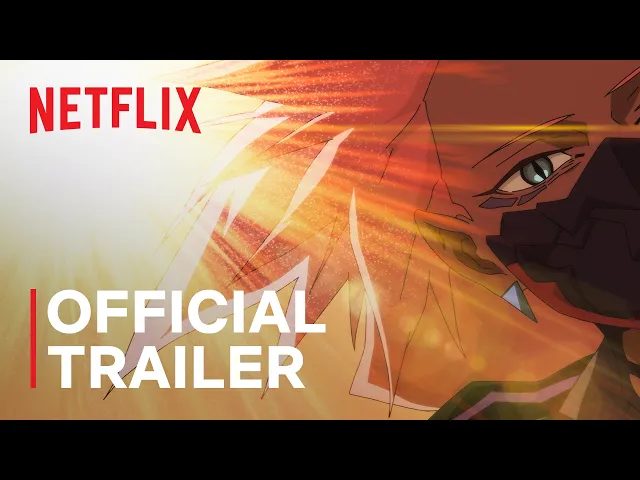
- Genre: anime, cyberpunk, action, drama;
- Where to watch: Netflix;
- Episodes: 10;
- Runtime: 25–30 minutes per episode;
- Release date: October 20, 2026 (all episodes at once);
- Age rating: TV-MA;
- Showrunner: Bartosz Sztybor;
- Director: Kai Ikarashi;
- Voice cast (English dub): Nazeeh Tarsha as D, Kimoy Lee as Talia, Valeria Rodriguez as Roman, Clancy Brown as Wick Kingsley, and others.
Revenge, Cyberpsychosis, and the Hunt for the Truth
The second season follows several characters whose fates gradually intertwine. One of the leads is D, a nomad and gifted netrunner driven by a thirst for revenge after his clan is wiped out. His path begins as a personal vendetta but quickly leads him to corporate secrets that powerful people would rather keep buried forever.

D is nothing like David or V. His story is built around a desire to find those responsible and make them pay. In a world where corporations decide who lives and who dies, a goal like that inevitably turns into a dangerous game. The deeper he goes, the harder it becomes to separate the thirst for justice from obsession.
Running alongside it is the story of Wick Kingsley, a former mercenary once known as King. After a bout of cyberpsychosis, he is forced to live without his usual cybernetic enhancements and search for meaning in a world where his past achievements no longer matter to anyone. For a veteran used to relying on his implants and his reputation, this becomes a painful reminder: in Night City, you're valued exactly as long as you're useful.

Another key figure is Talia, a young woman whose life is closely tied to cybernetics and the brutal culture of the Maelstrom gang. Her story touches on one of the franchise's central themes: the line between human and machine. When the body becomes a kit that can be modified endlessly, an uncomfortable question arises — what exactly are we trying to fix with yet another implant, and how much are we willing to pay for it?
Finally, there's Roman, a young film buff who prefers analog filmmaking to the braindances that are so popular in this world. He wants to capture real life, not construct beautiful illusions. But as he watches other people's lives unfold, Roman gradually discovers that real stories are far harsher and more dramatic than the films he admires.

No less important to the plot is Capri, a fusion of several personality constructs born from an experiment with Soulkiller technology. She is more of a narrative device, meant to reveal and complement the other characters. Yet it is her actions that drive the anime's overarching plot and shape the other characters' motivations.
The characters differ noticeably in temperament and in how they perceive the world around them. Their storylines don't immediately come together into a single picture, but that is precisely the season's intent: to show Night City not through one person's eyes, but through the fates of those trying, each in their own way, to survive the same meat grinder.
A Familiar City, Different Rules
The most interesting thing about the sequel is that it refuses to simply repeat the first season's formula. There's no need to walk a hero from a hard childhood to criminal success and a tragic ending all over again. Instead, the series explores the consequences of living in a world where violence has become routine and human relationships are constantly put to the test.

The central themes are revenge, redemption, obsession, and legacy — what a person leaves behind in a city that forgets you very quickly after you die. At the same time, the second season doesn't abandon the franchise's usual social critique. Corporate power still sets the rules, technology is both salvation and curse, and the promise of freedom often turns out to be a glossy ad for yet another form of exploitation.
What's especially interesting is how the series experiments with storytelling and presentation. Roman strives to capture other people's lives on camera and turn them into a beautiful story, but Night City resists editing: you can't guarantee a happy ending, cut out the awkward moments, or find the perfect music for a tragedy.
Four Stories, and Not All of Them Land Equally Well
The main risk of this structure is obvious: when attention is split between several characters, not every one of them gets enough time to truly come into their own. And the second season doesn't always handle this equally well.

D's and Wick's storylines rest on clear emotional foundations. The first is driven forward by a clearly defined goal, while the second is trying to find himself after losing his former identity. Their motives are easy to read, but beneath the apparent simplicity lie contradictions that suit cyberpunk perfectly. Can justice be restored if the system itself is designed to chew up any attempt at resistance with impunity? And what is left of a person when they can no longer be who they've always believed themselves to be?
Talia adds a tragic dimension to the story through physical limitations and dependence on technology. Her arc is a reminder that cybernetic enhancements in this world are no free ticket to perfection. They push back the limits of what a human can do, but they don't free anyone from fear, pain, or the need to make hard choices.

Roman, however, is the most debatable link in the ensemble. His role as an observer fits the overall theme well, but the character himself doesn't always leave as strong an impression as the others. At times it feels like he exists mainly to connect other people's storylines and serve as a mirror for the viewer rather than develop on his own. Because of this, some episodes can feel like several disjointed parallel stories that need time to finally find a shared rhythm.
Even so, the ambition behind the show deserves respect. The creators chose to take a risk with a multi-voiced narrative instead of simply replacing David with a new avatar and keeping the old dramatic template. It doesn't always work flawlessly, but it helps the second season find its own identity.
Visual Tools
The second season's visuals are one of the most compelling reasons to return to Night City. Studio Trigger keeps its signature expressiveness but doesn't limit itself to repeating the first season's tricks. The character designs remain bright and recognizable, the action scenes move with impressive energy, and the familiar streets of the megacity come alive in new ways thanks to the staging and use of color.

Trigger's approach is still easy to spot: the animation deliberately exaggerates what's happening to emphasize the characters' emotional states. As a result, the fights look spectacular and expressive. Violence becomes part of the series' visual language: sometimes almost grotesque, sometimes frightening, but rarely faceless.
The episodes often feature static scenes that freeze in frame for a few seconds — at first glance, an obvious way to save resources in animation. Yet the anime manages to turn them into a tool of its visual language, organically complementing the detail of other sequences. Another new find is fragments shot through a narrow-angle camera lens: thanks to them, Cyberpunk starts to feel a little Nolan-esque. All in all, whatever else you can say about Edgerunners 2, it certainly doesn't lack style.
The work with digital spaces and cybernetic imagery deserves special mention. Technology here is less a tool for solving problems than a source of visual chaos that constantly disrupts familiar ideas about the body, space, and human capabilities. The anime allows itself to be bizarre, harsh, and even surreal, without forgetting that behind every spectacular scene are real people with their own fears and desires.

Music and sound design remain an important part of the atmosphere: they set the pace, create emotional associations, and help you feel the city as a living organism. At the same time, the new season has to exist in the shadow of the original soundtrack, which for many viewers has become inseparable from David's story. Comparisons are practically inevitable, and not every new musical moment manages to hit as hard, but a couple of scenes still stick with you.
And the second season is literally packed with references and fan service — narrative, visual, and even audio. Some of them are so subtle and well hidden that you'll only notice them if you watch very closely.
Which of the new Edgerunners 2 leads hooked you the most?
***
Cyberpunk: Edgerunners 2 is a worthy return to Night City that manages to find its own voice. The second season is broader in structure, more varied in its themes, and at times much bolder visually. But the price of trying to tell several stories at once is less even attention to the characters and emotional engagement that isn't always consistent.
Perhaps the sequel's greatest strength is that it understands that the power of cyberpunk lies not in a particular character, implant, or tragic ending, but in a world that simultaneously promises people limitless possibilities and treats them as expendable. Here you can become a legend, change your own body, and challenge powerful corporations — but none of that guarantees your life will have meaning.
Still, if you're expecting the same emotional gut punch the first season once delivered, you may want to temper your expectations. The new story works differently: it isn't always as cohesive, but it broadens our picture of the world and the people who live in it. For fans of the universe, that's a strong reason to come back. And for those just beginning to discover Night City, it's a chance to see that even in a city where almost everything is for sale, humanity still matters.
-
 Cyberpunk 2077 Is Getting a Cyberpunk: Edgerunners 2 Update on October 22
-
 Hideo Kojima Returns as Hideyoshi Oshima in Cyberpunk: Edgerunners 2
-
 All Episodes of Cyberpunk: Edgerunners 2 Are Now on Netflix — A New Story, New Heroes, and More Action
-
 NightCoop Will Let Eight Players Play Through Cyberpunk 2077's Story Together
-
 Cyberpunk 2 Director Reveals How the Sequel Is Already Evolving
-
 130 Best Open-World Games in 2026: From Skyrim to Elden Ring