
Intel Ends Active iGPU Support for 11th-14th Gen Core CPUs
 Arkadiy Andrienko
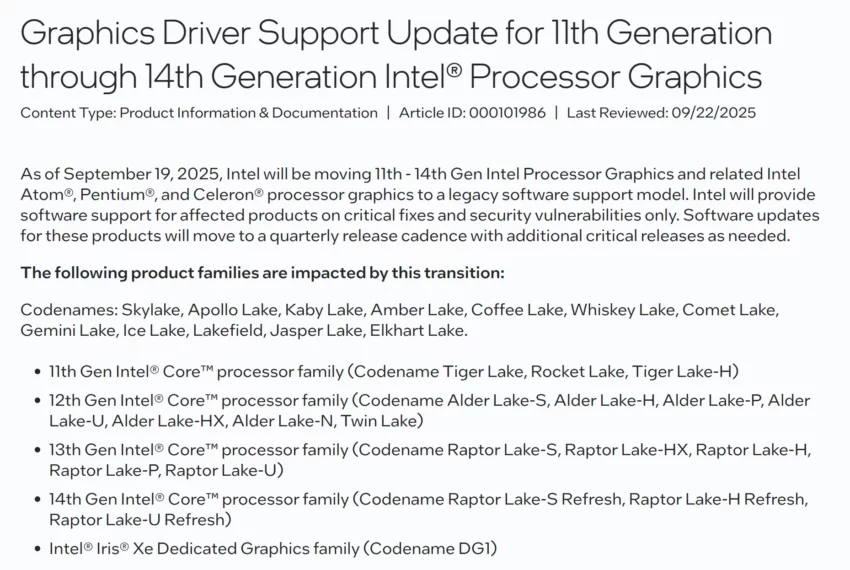
Intel has officially moved the integrated graphics for its 11th through 14th Generation Core processors to a legacy support status. The shift was confirmed with the release of the new driver version 32.0.101.7076, which serves as the dividing line for support of the millions of these chips installed in computers worldwide.
This means that for the Iris Xe Graphics in Tiger Lake, Alder Lake, and Raptor Lake processors, Intel will no longer provide performance optimizations for modern games. As Intel explained, quarterly updates will now contain only security patches and critical bug fixes. As a result, owners of laptops and desktops using these platforms should not expect any performance improvements in new game titles.
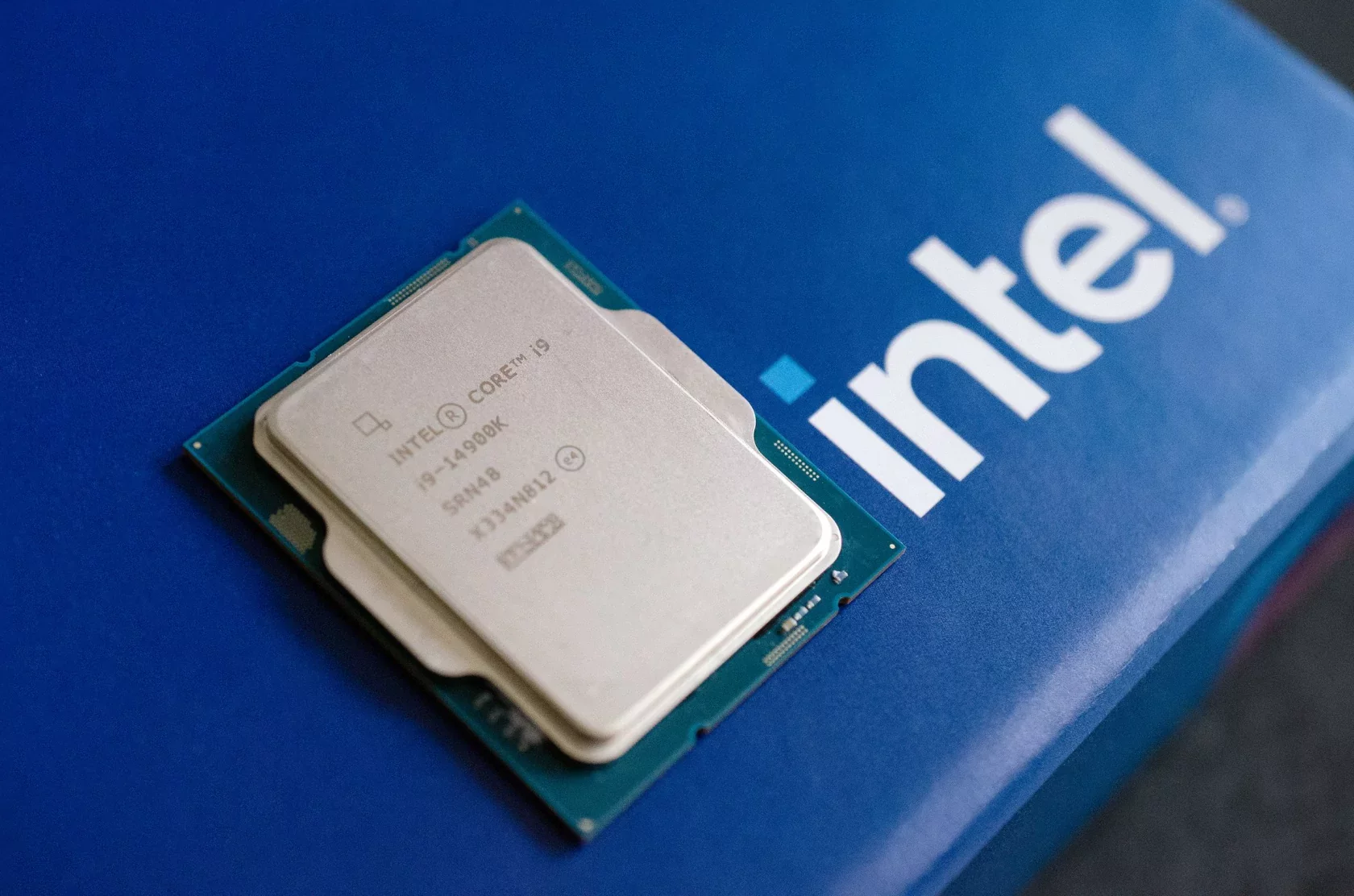
The change affects all Intel processors launched since 2020, specifically:
- 11th Gen Core series (Tiger Lake, Rocket Lake)
- 12th Gen Core series (Alder Lake)
- 13th Gen Core series (Raptor Lake)
- 14th Gen Core series (Raptor Lake Refresh)
The list also includes some Atom, Pentium, and Celeron models, as well as the discrete Iris Xe DG1 graphics card. This move is a logical step in the product's end-of-life cycle. By focusing its efforts on supporting the new Xe and Xe2 architectures for Arc graphics and Meteor Lake (and newer) processors, Intel can more quickly implement modern technologies, such as hardware-accelerated ray tracing, in current games.
In practice, this decision will primarily affect gamers who use systems without a dedicated graphics card. They will have to accept that performance in future game releases may be lower than expected. For general office tasks and application use, the transition to limited support will be barely noticeable, as system stability will continue to be maintained.
It's important to note that the end of active support does not mean the integrated graphics will stop working. They will continue to function at their current performance level, just without any prospect of future improvements. For users for whom gaming is a priority, Intel is effectively recommending an upgrade to systems with newer integrated or discrete graphics solutions.
-
 NVIDIA Invests $5 Billion in Intel for Joint Chip Development Venture
-
 Intel's Budget Core Ultra 3 205 Processor is Surprisingly Game-Ready
-
 Intel Develops 'Super Cores' to Tackle Single-Threaded Workloads
-
 Intel Quietly Adds Core i5-110 CPU to its LGA 1200 Lineup
-
 Intel Lays Out Plan to Reclaim Desktop CPU Crown