
Star Wars: Zero Company Review — XCOM Meets Star Wars, But Is It Something Bigger?
 Evgenia Zavyalova
A long time ago in a galaxy far, far away (or more precisely — in 2022, in the United States) game producer Vince Zampella called up his buddy Greg Foertsch to ask what his plans for the future were. Foertsch had once been the art director of XCOM: Enemy Unknown, XCOM 2 and Marvel's Midnight Suns, but by that point he had left Firaxis Games and founded his own studio, Bit Reactor. He told Zampella he was planning to keep making turn-based tactics games, to which Zampella replied with something like: "That's great! How about making a turn-based tactics game set in Star Wars?" Zampella wasn't joking: as the head of Respawn Entertainment, he oversaw the development of Star Wars games at Electronic Arts, which had decided to broaden the genre variety of its projects based on the franchise.
That's how the idea for Star Wars Zero Company was born — a turn-based tactics game that people started calling "XCOM in the Star Wars universe" while it was still in production. But should the game be considered just an XCOM clone, or does it deserve more?
Platform: PC (Ryzen 7 8700F, NVIDIA RTX 5060, 32 GB RAM);
Playthrough time: 20 hours.
System requirements
Minimum: Intel Core i5-8400 / Ryzen 5 2600X, 16 GB RAM, NVIDIA GeForce GTX 1080 / Radeon RX 5600 XT / Intel ARC B580, SSD 50 GB;
Recommended: Intel Core i7-10700K / Ryzen 7 3700X, 32 GB RAM, NVIDIA GeForce RTX 3080 / Radeon RX 7800 XT, SSD 50 GB.
XCOM, Mass Effect and Jedi
According to the developers, Zero Company is a spiritual successor to the popular tactical shooter Star Wars: Republic Commando. Instead of the heroic galaxy-saving the franchise is used to, Foertsch and his team decided to show war from the perspective of ordinary mercenaries who "get their hands dirty" on secret operations (the boots-on-the-ground concept). That's how the idea came about to split the game into two parts — turn-based battles in the spirit of XCOM and interacting with your squad members on the base, where the player, like Commander Shepard from Mass Effect, talks with the team and assembles a squad for each mission.

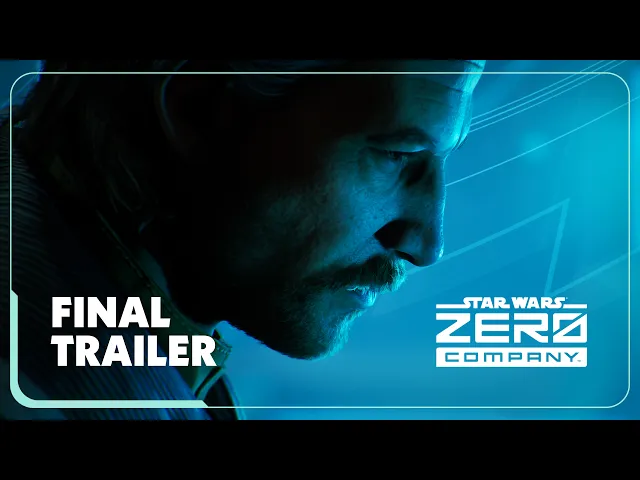
The action takes place at the twilight of the Clone Wars, in the period between the second and third episodes of the film saga. The Republic's intelligence service uncovers a dangerous cult — the Infinite Coil, led by a certain Fathom. To eliminate the threat, the authorities decide to bring back Hawks, a former Republic officer who now leads a mercenary outfit called Zero Company. As luck would have it, Hawks has gotten himself into debt, and he reluctantly agrees to the government's offer in exchange for a hefty sum. As Han Solo put it, "I'm not doing this for you, Princess. I'm doing it for the money."

The narrative was handled by Aaron Contreras, a writer on the Star Wars Jedi franchise. The story here isn't outstanding, but it's solid — the writer's imagination was clearly constrained by the boundaries of the genre. Then again, what game since Star Wars: Knights of the Old Republic has had an outstanding story?!

The gameplay loop of Star Wars Zero Company is familiar to anyone who has ever played a turn-based tactics game. A squad of four soldiers deploys onto a map and fights enemies in turn-based mode using cover. Each soldier's number of actions is limited by action points. Soldiers have unique talents that are assigned at random, and a specialization (Assault, Sniper, Gunner, etc.) that determines their role in the squad. By around the middle of the game you'll already have a thorough grasp of each soldier's capabilities, and to keep you from getting bored, the game lets you pick an additional specialization.
As is customary in this genre, winning a battle requires creating synergy between your soldiers' abilities: for example, applying "Ferocity" to a teammate so that their next shot deals critical damage.

From Foertsch and his team's past games — Marvel's Midnight Suns and XCOM — come the Advantage and Overwatch mechanics. Advantage points build up from dealing damage to enemies, and once they reach level 10 they let you perform a super-attack (for example, firing at an area with a rocket launcher) without spending action points. With Overwatch, a soldier covers an area with an aiming cone, and anyone who moves during the turn automatically takes a bullet.
The maps are mostly small and filled with destructible cover, while enemy placement is procedurally generated. The maps don't repeat, but toward the end of the game you still get tired of seeing the same crates in different positions, watchtowers, ladders and exploding barrels.

Between missions, the player manages the local equivalent of the Normandy — the operations base called the Den. Here we buy gear on the black market, hire recruits, heal the wounded and chat with the team. Over the course of the story, story characters unavailable for regular hiring will join the squad — for example, a Jedi and a Mandalorian. With rare exceptions, a soldier's death doesn't end the game — life goes on without them.
What do you think of the permadeath mechanic for fighters?
A step forward for Star Wars games
How many turn-based tactics games in the Star Wars universe on PC and consoles can you name? Exactly — there aren't any. The most successful games based on the film franchise are action-RPGs (Star Wars: Knights of the Old Republic), action-adventures (the Star Wars Jedi duology and Star Wars Jedi Knight: Jedi Academy) and tactical shooters (Star Wars: Battlefront 2 of the 2005 vintage). It seemed like there could be no room for experiments in a franchise that feels like it's stuck in stagnation. That's why the very appearance of Star Wars Zero Company can be considered a step forward in itself.

The game's strengths are mainly defined by its storytelling and setting. A Star Wars game, even a turn-based tactics one, shouldn't look cheap, so the developers invested heavily in the staging of cutscenes, character design and role-playing elements. The main missions are multi-stage, and their objectives almost never repeat: destroy all enemies on the map, protect a hacker for several turns and then evacuate, rescue targets within a specific number of turns, and so on.

The role-playing elements include character relationships, their level of closeness to one another, and loyalty missions, like in Mass Effect. The more often you take a soldier on missions and talk with them, the higher their closeness to you. This grants training points that boost soldiers' stats, and increases ability synergies in battle. It's a shame the characters aren't written to Mass Effect's level, and the plot is often linear, so the game loses to XCOM and Mass Effect in variability and replayability.
A step back for the turn-based tactics genre
Alas, the main flaws of Star Wars Zero Company lie in its core gameplay — that is, the turn-based battles. Having taken the risk of making a game in a genre unusual for Star Wars, the developers completely abandoned risk in the gameplay mechanics. The game brings nothing fundamentally new to the turn-based tactics genre; what's more, in some respects it even takes a step back.

So, closer to the middle, the game starts dragging out missions and artificially maintaining difficulty in the most primitive way — throwing waves of monotonous enemies at you. There's no button to speed up enemy turns in the game, even though many tactics games and RPGs have had this feature for ages. Imagine how long you'll have to wait for your turn when there are around 20 enemy units on the map.
The size of the maps and what fills them also fail to impress: you couldn't call them cramped and boring, but modern tactics games often give much more space and a greater variety of objects on the map.
Finally, technical problems have seriously hurt the game. The turn-based tactics genre is usually considered easy to optimize, but Zero Company drops frames even on powerful graphics cards and in small locations. During battles, animations regularly stutter, and the camera can clip through textures.

What genre of Star Wars game would you like to see next?
***
Star Wars Zero Company isn't a mindless clone but a distinctive development of the ideas laid down in XCOM. The developers didn't come up with anything fundamentally new: they took proven mechanics from past games, placed them in a new setting and added a dose of "cinematic flair." It all seems elementary, yet few dare to do it.
As a Star Wars game, it definitely deserves the attention of the franchise's fans. But purely as a turn-based tactics game, Zero Company may feel derivative to those who love the genre rather than Star Wars.
Nevertheless, Star Wars Zero Company is the best turn-based tactics game in the Star Wars universe to date. How long will it stay that way? Until competitors show up. As Qui-Gon Jinn said, "There's always a bigger fish."
-
 Final Star Wars Zero Company Trailer Officially Drops
 -
 Star Wars Zero Company previews arrive on August 11, three weeks before release
 -
 Star Wars Zero Company Wishlist Numbers Revealed
 -
 “XCOM with Lightsabers”: First Star Wars Zero Company Previews Are In
 -
 Star Wars Zero Company Fans Demand Long-Term Support From EA