
Metal Gear Solid: Master Collection Vol. 2 Review — PS3 Classics Finally Available to Everyone
 Ilya Yakimkin
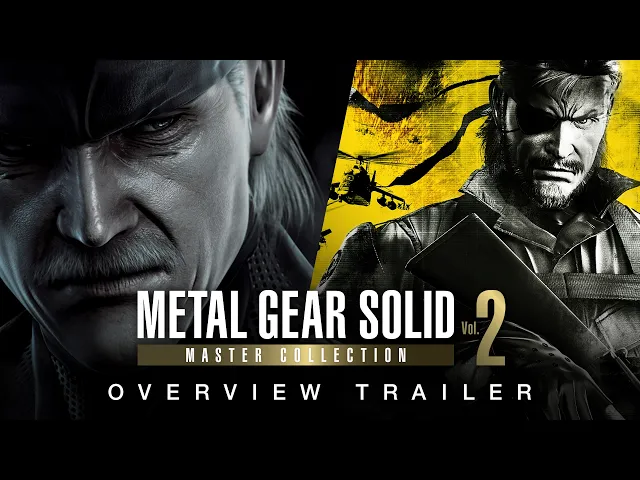
Metal Gear fans have a lot to celebrate. You no longer need to hunt down an old PS3 or fiddle with emulator settings to play the iconic Metal Gear Solid 4: Guns of the Patriots. Now the game is available to everyone, and in remarkably good shape too — which is honestly more than we expected from Konami after the rocky launch of Master Collection Vol. 1. In this review we're diving back into Hideo Kojima's classics, games that until now couldn't be replayed without a fair amount of technical wrangling. Time to find out how well Guns of the Patriots and Peace Walker have aged, and how they hold up on modern platforms.
Platform: PC (i7-9700K, NVIDIA RTX 4080, 32 GB RAM);
Playtime: 15 hours.
System Requirements
Minimum: Core i5-9600K, 16 GB RAM, NVIDIA GeForce GTX 1650, 34 GB SSD;
Recommended: Core i5-10500, 16 GB RAM, NVIDIA GeForce GTX 970, 34 GB SSD.
Metal Gear Solid 4 — the best way to experience a classic
Konami keeps surprising us. Not long ago it was fashionable to bash the company over the unfinished The Phantom Pain, the dreadful Silent Hill HD Collection, the abysmal Metal Gear Survive, and a string of other missteps. But then came a strong Silent Hill comeback with a solid remake of the second game and a couple of decent spin-offs, a worthy remake of Metal Gear Solid Delta: Snake Eater, and now a collection bringing together all of Hideo Kojima's classics for modern platforms. Sure, Vol. 1 wasn't in great shape at launch, but patches ironed out most of the issues. And most surprisingly of all, Konami actually seems to have learned from the mistakes of that first volume — Metal Gear Solid: Master Collection Vol. 2 shipped in nearly pristine condition. At the very least, there's none of that "running through a bare-bones emulator" feeling this time around.
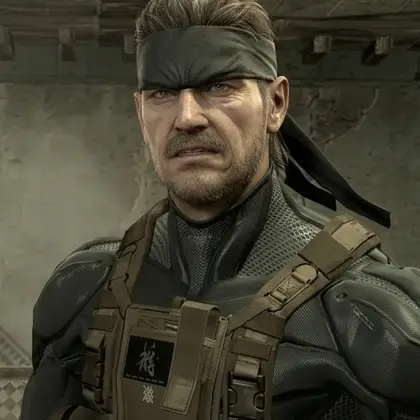
I first played Metal Gear Solid 4: Guns of the Patriots back on PS3. At the time it felt like a technological marvel, squeezing every last drop out of Sony's console. Stunning visuals, spectacular cutscenes that collectively ran longer than the actual gameplay, clever fourth-wall-breaking moments, and of course that signature brown filter that seemed to show up in practically every seventh-generation game. There's not much point picking the game apart piece by piece — after all these years it simply doesn't play as sharply as it once did, especially next to the later Phantom Pain or the Snake Eater remake. Still, it's absolutely worth playing, particularly if you're caught up on the story from the earlier entries.

What matters far more is how Guns of the Patriots performs on modern hardware. And here, as I mentioned, Konami has pulled off something impressive. On one hand, this is a completely classic version of the game — no high-resolution textures, no improved lighting, not even a toned-down version of that brown color filter. On the other hand, what we have here is the same iconic fourth entry from Kojima, nothing cut, cutscenes still unskippable, controls still a bit stiff — but now paired with a crisp interface, a high frame rate, and fast loading times.

And here's the most surprising part: after all these years, Metal Gear Solid 4 still looks genuinely good. Konami employed some of the best artists in the industry back then, which is why most of their classic games hold up well visually even today. Take the character faces and animations in Silent Hill 3 — they still look better than most modern productions, and that's a game that came out, of all years, in 2003. As for the Guns of the Patriots port, the developers stripped out the excessive blur in cutscenes and bumped up the resolution, to the point where it never really feels like you're looking at a game from 2008. If they'd also touched up the textures and raised their overall quality, this would've been close to unbeatable.
Replaying Metal Gear Solid 4 took some getting used to — I'd forgotten what it's like to play a game with more cutscene footage than actual gameplay. What's more, before jumping into the fourth game you really need to have played through all the previous entries, or at least watched a story recap, especially if you're not a die-hard fan and only have a passing familiarity with Kojima's work. And be ready to sit through every cutscene in full — as mentioned, you can't skip them. Some run so long it starts to feel like you're watching a TV series rather than playing a game.

The original control scheme was pretty awkward, but the remaster adapts it nicely for modern gamepads. With better controls and performance, Metal Gear Solid 4 really opens up on the game design side. The stealth scenarios and mini-sandboxes, where the player devises their own approach, are still impressively inventive. They shine especially bright on higher difficulties — that's where the camouflage system, tactics, and gear combinations finally reveal the depth Kojima built into them. The boss fights still impress with their staging and originality too! So if you've never played Guns of the Patriots and worry it hasn't aged well, rest assured: the old dog still has plenty of fight left in it.
To sum up so far: Metal Gear Solid 4: Guns of the Patriots is a quality port of one of the best games of the seventh console generation, and after all these years it still holds up strongly both visually and in terms of gameplay. Of course, it would have been nice to get more than just a straight port. A proper remaster with upgraded textures and modern conveniences — like a button to skip cutscenes — would have made this re-release even better.

Which new projects in the Metal Gear series are you most looking forward to?
Peace Walker — an ambitious hit born on the PSP
Metal Gear Solid: Peace Walker is the second major game in the Master Collection Vol. 2 set. It launched on PSP in 2010 and, unlike Guns of the Patriots, has already been re-released once before as part of the HD Collection for PS3 and Xbox 360. It was originally conceived as a full-fledged fifth mainline entry, but partway through development the team decided to make it a sequel to Snake Eater and Portable Ops instead. A true numbered entry, it turned out, was simply too much to squeeze onto a small and, for its time, fairly weak handheld.

When examining Peace Walker closely, it's important to keep in mind that this is a PSP game, meaning many of its elements were built around the console's specs and limitations. For instance, all the key cutscenes are presented as animated comic panels rather than fully directed scenes — and not because Kojima and his team decided to cut corners, but because they had to fit the entire story onto a tiny UMD disc while still leaving room for the game's assets.
The animated cutscenes in the original were low quality due to heavy compression used to save space. We were hoping Konami would dig up the original source material for the fans' sake and release these scenes in proper quality, but judging by what we actually got, it seems the developers found it easier to run all the art through AI upscaling than to dig through boxes of archived files. That said, the end result doesn't actually look too bad. In places you can tell the neural network had a hand in it, but if you're not staring too closely or deliberately hunting for flaws, it reads just fine.

Peace Walker's gameplay is quite distinct compared to the rest of the series. The missions here are short, designed around quick handheld play sessions. Instead of large open areas with carefully placed enemies, you get compact locations with clearly defined objectives and fast paths to completing them.
That said, Peace Walker is far from a short, throwaway game. Quite the opposite — I actually spent more time in it than in Guns of the Patriots, since it packs in just as many gameplay systems as a full numbered entry would. In fact, unlocking the true ending takes hundreds of hours of real playtime, most of which involves grinding and completing side missions. Back in 2010, this was one of the most ambitious games on PSP, one that didn't just push the hardware to its limits but genuinely felt like a technological marvel.

Peace Walker essentially served as a testing ground for mechanics that later made their way into Metal Gear Solid 5 in a more polished form. You've got base building, a personnel management and recruitment system, vehicle capture, even calling in artillery strikes on missions. And these aren't just filler features tacked on to pad out playtime — they're fully fledged systems the game actually depends on. I spent a fair amount of time just getting my head around all the available mechanics, since the overall gameplay differs quite a bit from the usual Metal Gear experience. On top of that, all the tutorializing is done through text descriptions, which feels a bit jarring after modern games that hold your hand and spell out every little detail.
The PSP version's controls were overloaded, largely because the console only had two triggers and a single analog stick. The re-release fixes that, and playing feels far more comfortable as a result. The game should shine especially well on Switch 2 and Steam Deck, where its short, bite-sized missions fit perfectly with the handheld format of quick play sessions. And honestly, its somewhat dated visuals are better suited to a small screen than a 4K TV anyway.

That's not to say Peace Walker looks outright bad. "Distinctive" is a better word for it. This is, after all, a PSP game — a console nowhere near as powerful as the PS2. Blocky models, low level detail, simple geometry, low-quality textures — all in the name of optimization. Still, the game has one major ace up its sleeve that outweighs its shortcomings: its art direction and style. If you're a true fan of the series, you'll get used to the visual quirks quickly enough, since Peace Walker's artistic foundation is built on the beloved Metal Gear Solid 3.
So, is Metal Gear Solid: Peace Walker worth playing? If you're a dedicated series fan, absolutely. It's a great game with a strong story, snappy gameplay, and an addictive base-building progression loop. On top of that, Master Collection Vol. 2 brings back the co-op mode and the six-player competitive Versus Ops. And if you own a handheld, Peace Walker is a perfect fit for short play sessions. Everyone else should still give it a try, visuals and design quirks aside — if nothing else, for the multiplayer.

Ghost Babel — a Metal Gear Solid from a parallel universe
Alongside the two major games, Master Collection Vol. 2 also includes a wealth of bonus material — artwork, reference info, and deep lore breakdowns. A genuine treat for die-hard fans of the series. But what I was really curious to check out was Metal Gear Solid: Ghost Babel, a non-canon spin-off released on Game Boy. It's essentially a sequel to Metal Gear 2: Solid Snake, made under circumstances where Kojima refused to bring Metal Gear Solid to the original PlayStation.

The main events of the game take place in Central Africa, which is already a major departure from the official story of the first Metal Gear Solid. Instead of facing off against former FOXHOUND operatives, you're up against a separatist military group in this spin-off. Despite starting life on Game Boy, the story turned out to be surprisingly rich. And most importantly, taken outside the main canon, the writing actually holds up pretty well.
Gameplay-wise, Ghost Babel plays more like the 2D top-down Metal Gear titles, but with mechanics borrowed from Metal Gear Solid. The playthrough is broken into separate missions, each ending with a performance rating. Character movement feels more responsive than in the older games in the series: you can move in multiple directions, the camera always follows the hero, and you can press yourself against walls. The weapon roster is nearly identical to the original Metal Gear Solid.

Visually, though, the game falls short even of the series' earliest entries: a flat color palette, minimal detail, no flair to the pixel art, and modest sprite work. There's not much to be done about that — every game on the color Game Boy looked this way. Naturally, only the most dedicated will stick with Ghost Babel all the way through: gameplay-wise it's not bad at all, but the visuals and sound design will start giving you a headache pretty quickly.
So, how did you first discover Metal Gear Solid 4?
***
Metal Gear Solid: Master Collection Vol. 2 is the ideal way to experience Metal Gear Solid 4: Guns of the Patriots and Peace Walker, while also picking up a ton of bonus content along the way — everything from the soundtrack to digital art books. Surprisingly, this second collection turned out far better than the first for Konami. At the very least, you won't need to wait around for patches to comfortably replay the fourth game. Sure, it would have been nice to get fully remastered versions of both games, but even as they are, I'm just glad Kojima's games have been rescued from fading away on discontinued platforms and are now available to everyone.
-
 Collectors Rejoice: Konami Unveils Metal Gear Solid: Master Collection Vol. 2 Steelbook Featuring Snake and Big Boss
 -
 Metal Gear Solid: Master Collection Vol. 2 Gets First Reviews and Scores — Here's What Critics Think
 -
 Metal Gear Solid: Master Collection Vol. 2 Gets New Trailer
 -
 Metal Gear Solid: Master Collection Vol. 2 Rewrites MGS4's Disc-Change Joke
 -
 Metal Gear Solid 4 is Finally Coming to PC: Metal Gear Solid: Master Collection Vol. 2 Revealed