Dragon's Dogma 2
Add to My games


Action RPG with a free camera, dynamic combat, and mechanics typical of hack-and-slash games, Dragon's Dogma 2 continues and expands on the ideas introduced in... Read more
All languages (14)
日本語: interface, subtitles, audio
العربية: interface, subtitles
Deutsch: interface, subtitles
Español: interface, subtitles
Español (Latinoamérica): interface, subtitles
Français: interface, subtitles
Italiano: interface, subtitles
한국어: interface, subtitles
Polski: interface, subtitles
Português (Brasil): interface, subtitles
Русский: interface, subtitles
简体中文: interface, subtitles
繁體中文: interface, subtitles
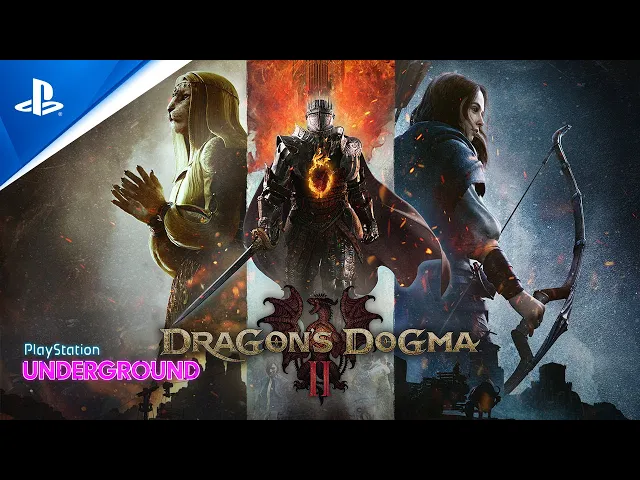
Action RPG with a free camera, dynamic combat, and mechanics typical of hack-and-slash games, Dragon's Dogma 2 continues and expands on the ideas introduced in the original 2012 game, with reimagined gameplay and a new story set in its fantasy multiverse. Despite borrowing from popular RPGs released between the two games, it retains its own identity thanks to its companion system and unusual lore. And fans exploring new locations and trying out new features will also find familiar elements from past games.
An Endless Struggle

The concept and lore of Dragon's Dogma are built around an ancient cycle that repeats in every age. A powerful dragon rises again, spreading terror, destruction, and death. It also chooses a warrior worthy of challenging it, taking their heart and turning them into an Arisen—a hero who has lost their humanity but gained a Destiny. The dragon leaves the Arisen with a hint of their future meeting, when they have grown strong enough to reclaim their heart.
Alongside Pawns—mysterious allies from another world—the hero must face many trials, explore the world, and grow strong enough to fight the dragon at the end. This cycle is known as the Dragon's Dogma, so the story is clear from the very beginning. The ending is clear, too: lose and vanish into nothingness, win and repeat the cycle, or break it at the cost of destroying everything. The story takes on an epic scale after the first act, when the player learns about an impostor who has taken the throne in the hero's place.
The protagonist, chosen by fate to become the Chosen One, a dragon slayer, and king of the local lands, does a bit of everything: helping commoners, fighting monsters, dealing with political intrigue, and taking part in dramatic battles with the dragon. In addition to giving out quests, the characters have distinct personalities and some depth. They tell decent stories in dialogue, while in in-game cutscenes you can see the relationships between townsfolk and the aristocracy.
Every story in the Dragon's Dogma universe is canon within its own world, and parallel realities have their own unique features, such as their settings, heroes, characters, and available races—details you can learn from Pawns. But the action always takes place in a classic fantasy-mythological setting filled with unusual creatures: griffins, hydras, cyclopes, goblins, ogres, skeletons, lizards, and other undead. Magic runs through reality, and mages, along with powerful artifacts, play a major role in events. Technology, however, is quite primitive, as is typical of the early Middle Ages.
Geography and Kingdoms

The open world of Dragon's Dogma (2024) is four times larger than that of the first game. It is seamless and made up of many locations connected through various design techniques. Narrow passages and “snake-like” trails, changes in elevation, overlapping layers, natural barriers like rivers, and many other environmental features make the world feel much larger than it really is. Over time, things change: a blockage may be cleared, a bridge rebuilt, or a hidden mountain pass opened as part of a quest, adding new routes and passages. At launch, the world impressed with its scenery and RE Engine’s excellent lighting, but its locations lacked visual variety and detail, as they were spread across three main biomes: forests, mountains, and deserts.
The story takes place in two kingdoms with distinct cultural and geographical differences: Vermund and Battahl. Vermund is a fertile region surrounded by majestic mountains and green hills, where cities and farms thrive. Its people live with the knowledge that the dragon will inevitably return, and fear its destructive power. That is why they honor the Arisen as their king and protector from disasters.
Battahl, by contrast, is a harsh and hostile land of endless deserts and deep canyons. Survival takes tremendous effort, but the deserts contain oases that serve as important centers of trade and culture. Here, the Arisen is not a hero, but an outcast who brought disaster. The priestesses who rule Battahl worship a sacred flame that, according to their beliefs, protects them from the dragon’s fury. And deep in the forests, ancient elven tribes hide away, having avoided contact with the outside world for centuries.
A Realistic Adventure

Dragon’s Dogma 2 (2024) breaks the usual conventions of open-world action RPGs. Players must truly immerse themselves in the experience: travel slowly through the open world, explore it, and take part in random events and quests instead of rushing between key locations and quests, missing the developers’ work along the way. To make the experience more immersive, fast travel is limited. There are teleporters that let you jump straight to any part of the world, saving time, but they are expensive and limited in number for the entire game. Traveling by caravan is more affordable and skips the gameplay, but it advances time.
The world around you carries on with its own life, so the idea of “I’ll help whenever I feel like it” doesn’t work here. Quests can only be accepted, completed, and turned in within a certain time. It’s impossible to see everything the game has to offer in a single playthrough—there are too many events that are easy to miss. Sometimes, an NPC who could start a questline or help you progress through it gets drunk at the tavern, dies on the road, or suddenly runs off somewhere. Though usually, they follow a daily routine and basic behavior patterns.
One of Dragon’s Dogma 2’s standout features is the lack of quest markers on the map and readily available hints. This encourages players to listen closely to the conversations around them, pay attention to their surroundings, think about their actions, and decide what to do next. There is no single right path, which adds replay value: each new playthrough reveals something new, changes familiar quests, or unlocks new ones.
Quests are structured as separate episodes that unfold as the player’s adventure progresses, rather than as a linear chain of events. The most intricate quests begin as ordinary errands (fetch this, kill that, and so on), but gradually grow into more complex and intriguing stories. Their outcome—success or failure—affects other aspects of the world, the fates of characters, or the overall story. There is a large number and variety of quests, from random events and simple tasks to large-scale, branching stories.
Role-playing system
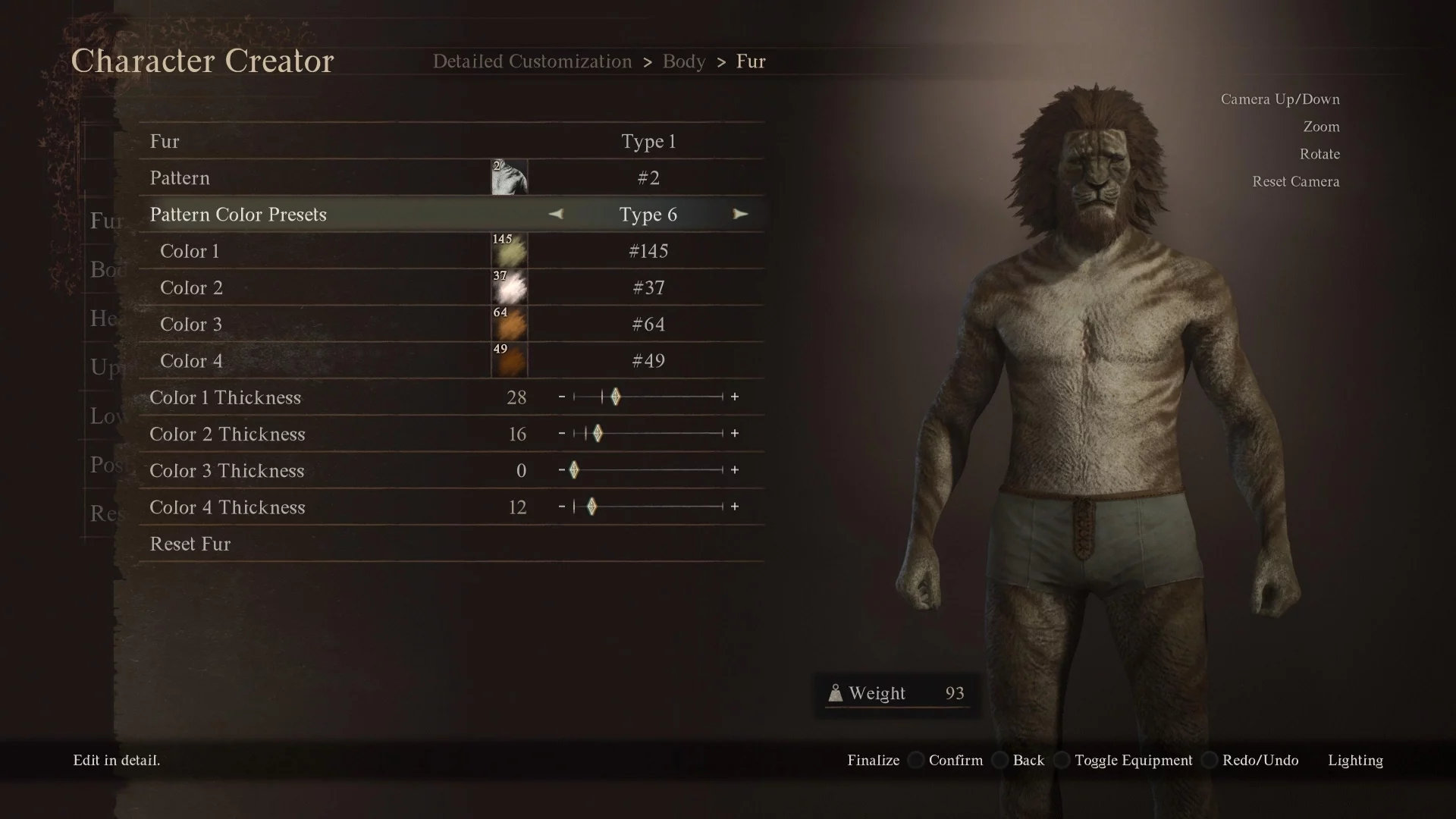
The role-playing elements of Dragon's Dogma (2024) are expressed through its combat system. Each battle involves parties rather than individual characters, and victory depends on teamwork, character progression, and choosing a balanced party for the enemies at hand. The ideal party for handling different challenges effectively is always changing, depending on your play style and the task at hand.
The player’s party consists of the main character and three pawns. The main pawn is a personal companion created and customized by the player, who chooses its class, equipment, and development as the game progresses. The party also includes two other pawns borrowed from other players, representing asynchronous multiplayer. These borrowed pawns do not develop, but they bring valuable knowledge with them—they can offer hints about locations, chests, or enemy weaknesses based on their owners’ experience. Regularly replacing them helps you adapt to new situations and keep your team highly effective.
When creating the protagonist, you can choose from four vocations: Fighter, Mage, Archer, and Thief. Each represents a classic archetype, with a unique combat style, health and stamina stats, and different abilities to climb large monsters. Characters cannot use weapons or armor from other classes, but you can change classes at any time, making it easier to experiment with different play styles and try various combinations. There are 10 vocations (classes) in total. After leveling up one class, you can switch to another, keeping the first class’s passive skills while becoming stronger.
Combat system

Although enemy monsters are not very diverse, they are well-prepared and behave in a realistic and dangerous way. They actively react to the player and their party, requiring good coordination and knowledge of their weak points. During battles, it is important to interact with the environment—you can knock an enemy off a cliff or throw a rock at them, climb onto a boss, carry an NPC to the right place, or set up a magical barrier.
With a free-moving camera that adapts to any situation, no fixed enemy-targeting system, and dynamic combat, Dragon's Dogma 2 goes beyond traditional action RPGs. Its gameplay combines elements commonly found in hack-and-slash games: stamina management, proper attack timing, area attacks, shield bashes, sweeping attacks, archery, and much more.
Physics plays a special role, making interactions with the environment and enemies more realistic. A single swing of a sword can send enemies flying, fire can set them ablaze, and ice can freeze them in place. Characters’ size and weight affect their combat abilities: larger heroes can grab enemies more easily and reach their weak points faster, and can lift and throw objects, smaller enemies, and even other characters.
The Mage is a vital class that deals damage, heals allies, and applies buffs. However, magical spells take time to prepare, leaving the Mage vulnerable without support from a Fighter or Thief to hold off and distract enemies. The game also lets you apply magical effects to weapons: you can enchant a sword with fire to set enemies ablaze, add ice to an archer’s arrows to freeze enemies, or imbue a Thief’s daggers with lightning for fast, powerful attacks.
The inventory has no capacity limit, but the weight of your carried items keeps it balanced. Carrying too much slows your character and drains stamina faster, so it’s best to offload excess items onto your pawns. There’s a basic crafting system—you can brew a healing potion or make arrows, but you can’t craft weapons or armor. Time affects not only quests and NPCs, but also items in your inventory: food can spoil, quest items can rot, and weapons can rust.
Store Offers and Discounts
![Dragons Dogma 2 (PC) [Europe] [Standard]](https://files.vgtimes.com/si/shop_109327614.webp)
![Dragons Dogma 2 (PC) [Rest of the world] [Standard]](https://files.vgtimes.com/si/shop_117384066.webp)
![Dragons Dogma 2 (PC) [EMEA] [Standard]](https://files.vgtimes.com/si/shop_192199009.webp)
![Dragons Dogma 2 (PC) [United States / Canada] [Standard]](https://files.vgtimes.com/si/shop_195818751.webp)
![Dragons Dogma 2 (PC) [North America] [Standard]](https://files.vgtimes.com/si/shop_175456827.webp)
![Dragons Dogma 2 (PC) [United States] [Standard]](https://files.vgtimes.com/si/shop_176982360.webp)
System requirements and PC test
- Windows 10
- CPU: Intel Core i5-10600
- RAM: 16 GB
- Free Space: 70 GB
- VRAM: 8 GB
- Video Card: GeForce GTX 1070; Radeon RX 5500 XT
- DirectX: 12
- Broadband Internet connection
- Keyboard, mouse
- Windows 10
- CPU: Intel Core i7-10700
- RAM: 16 GB
- Free Space: 70 GB
- VRAM: 8 GB
- Video Card: GeForce RTX 2080; Radeon RX 6700
- DirectX: 12
- Broadband Internet connection
- Keyboard, mouse
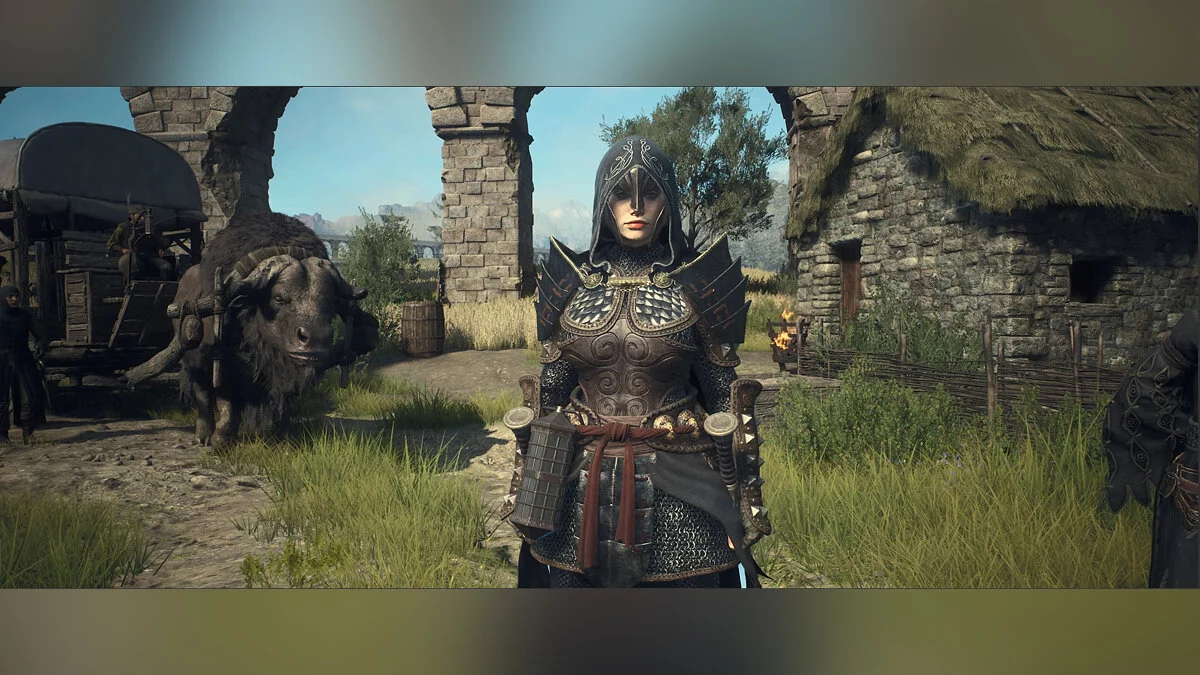
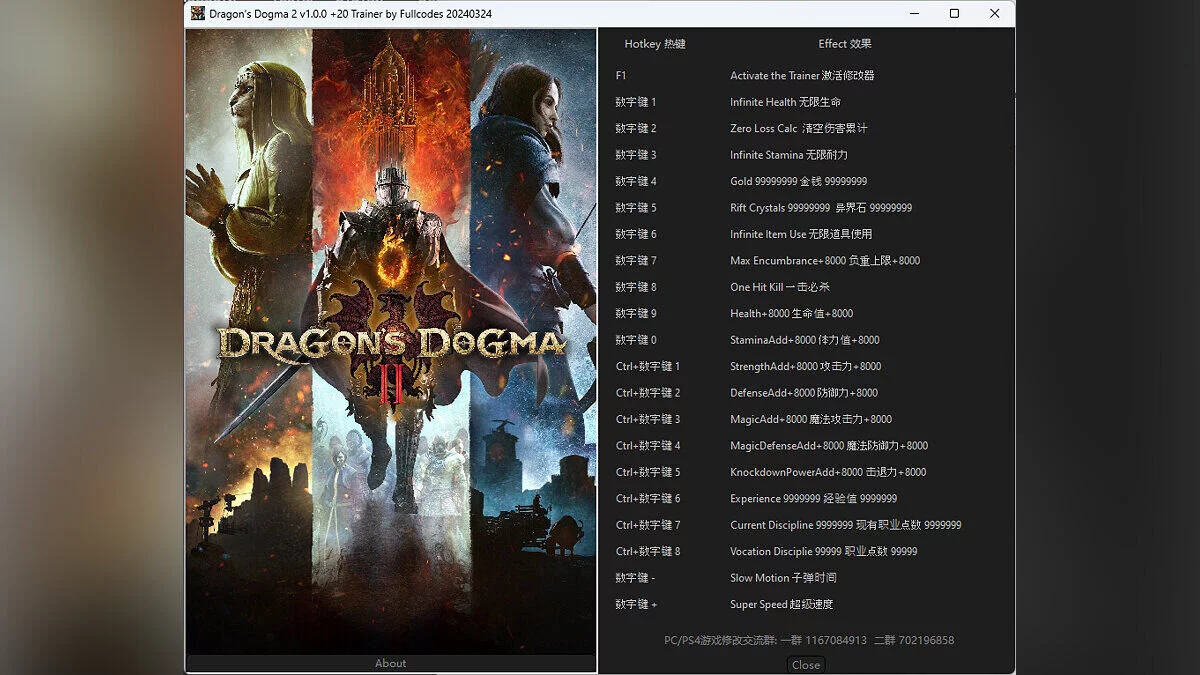
![Trainer (+7) [1.0.0.1: Debug]](https://files.vgtimes.com/download/posts/2024-11/thumbs/trejjner-7-1-0-0-1-debug_1732093950_990552.webp)
![Trainer (+36) [1.0 - UPD: 17.09.2024]](https://files.vgtimes.com/download/posts/2024-09/thumbs/trejjner-36-1-0-upd-17-09-2024_1726647075_256117.webp)
Reviews and ratings

I received delight from Dragon's Dogma 2, the same delight as from the first games 25 years ago, now the game takes pride of place next to Elden Ring. Passed 4 times, 2 ng and 2 ng+, there was not a single flaw, the box looks great, and the donation, as I understand it, Capcom decided to help newcomers with consumables at a bargain price, but as you know, good deeds do not go unpunished, poor people with a toad in Other people's wallets don't give you peace of mind.
От Dragon's Dogma 2 получил восторг , тот самый восторг как от первых игр 25 лет назад , теперь игра на почётном месте рядом с Elden Ring . Прошёл 4 раза , 2 нг и 2 нг+ , не было ни одного изъяна , на коробке идёт отлично , а донат как понимаю , Capcom решили помочь новичкам расходниками по бросовой цене , но как известно , добрые дела безнаказанными не бывают , голодранцам с жабой в кармане чужие кошельки покоя не дают .

I played 70 hours and didn't get tired of it. The game is serious, interesting, thought out to the smallest detail. Replayable. The only thing is that the constant fuss with luggage is a little annoying.
Наиграл 70 часов, не надоело. Игра серьезная, интересная, продуманная до мелочей. Реиграбельна. Единственное, постоянная возня с поклажей немного раздражает.

I played developer drain for a couple of hours and liked it. I bought an account with the game, 90 hours - I really liked it. I already bought the game for my account and another 120+ hours.
You can replay it over and over again, with different characters, and constantly discover something new. A very underrated game. Personally, I received unrealistic delight, 2 ng and 3 ng+
Поиграл пару часов в девелоперский слив — понравилось. Купил аккаунт с игрой, 90 часов — понравилось очень. Купил игру уже себе на аккаунт и еще 120+ часов.
Ее можно перепроходить раз за разом, за разных персонажей и постоянно открывать для себя что то новое. Очень недооцененная игра. лично я получил нереальный восторг, 2 нг и 3 нг+

It's a great game, I love it just as much as the first one.
I'll start with the downsides: don't play the game for the narrative. The plot is trivial, with archetypes instead of well-defined characters (loyal soldier, cunning rogue, femme fatale, evil tyrant, etc.).
However, the lack of story is compensated for by the deep gameplay and systematic mechanics: if the game allows you to perform an action even once, you can be sure you'll be able to repeat it in a different, sometimes unexpected, setting, and the game will definitely respond.
Великолепная игра, люблю её, равно как и первую часть.
Начну с минусов — не идите в игру ради нарратива. Сюжет банален, вместо прописанных персонажей — архетипы (верный солдат, хитрый плут, роковая женщина, злобный тиран и т.д.).
Однако отсутствие истории компенсируется глубоким геймплеем и системностью игровых механик — если игра позволяет хоть раз совершить некое действие, то будьте уверены, что вы сможете его повторить и в другой, порой не самой ожидаемой обстановке, и игра на это обязательно отреагирует.

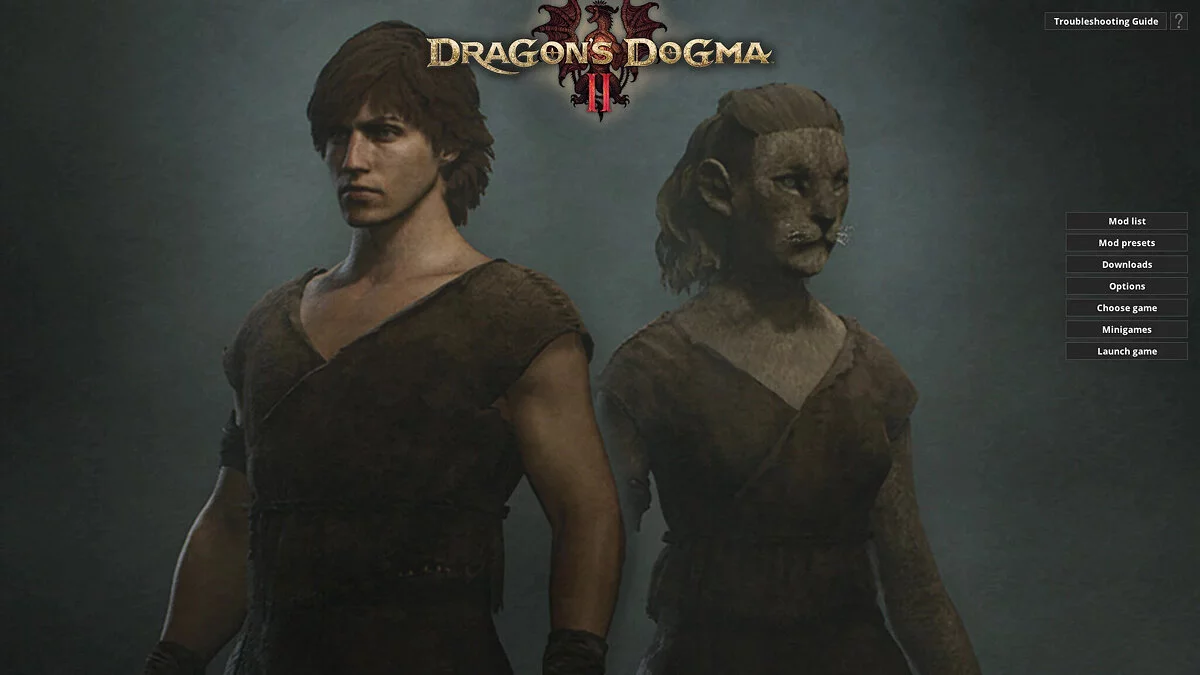
I liked the variety of companions. However, the fights with large monsters dragged on. The main character and pawn creation are good.
Понравилось разнообразие спутников.А вот бои с большими монстрами затянуты.Создание гг и пешки хоррошее.
News
-
 Dragon's Dogma 2: Dark Arisen Gets Its First Review Scores — 84 on Metacritic
 -
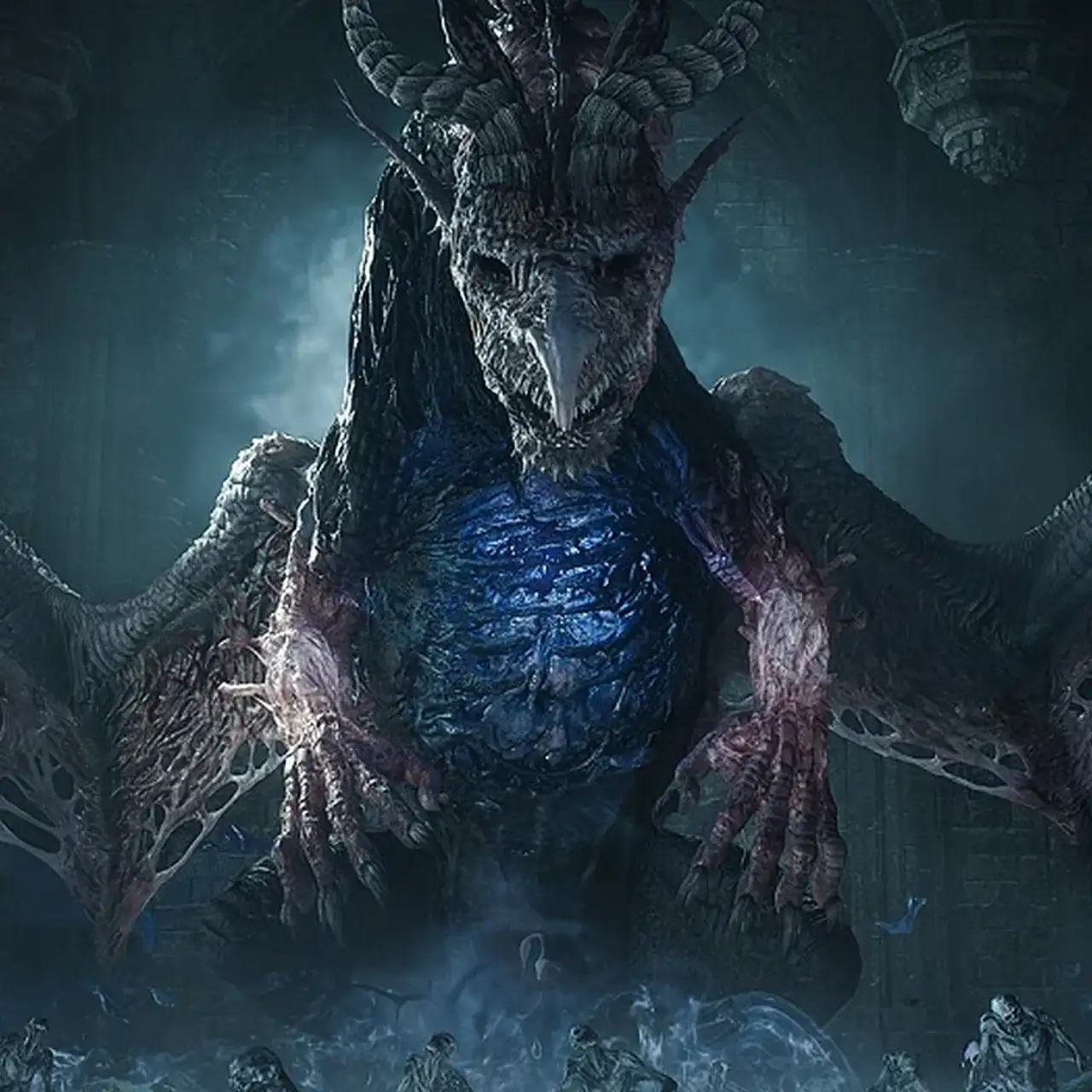 When Dragon's Dogma 2: Dark Arisen comes out: Capcom names the exact time for all platforms
 -
 Marvel's Spider-Man 2, Resident Evil Requiem and Other Games Are Available at Reduced Prices
 -
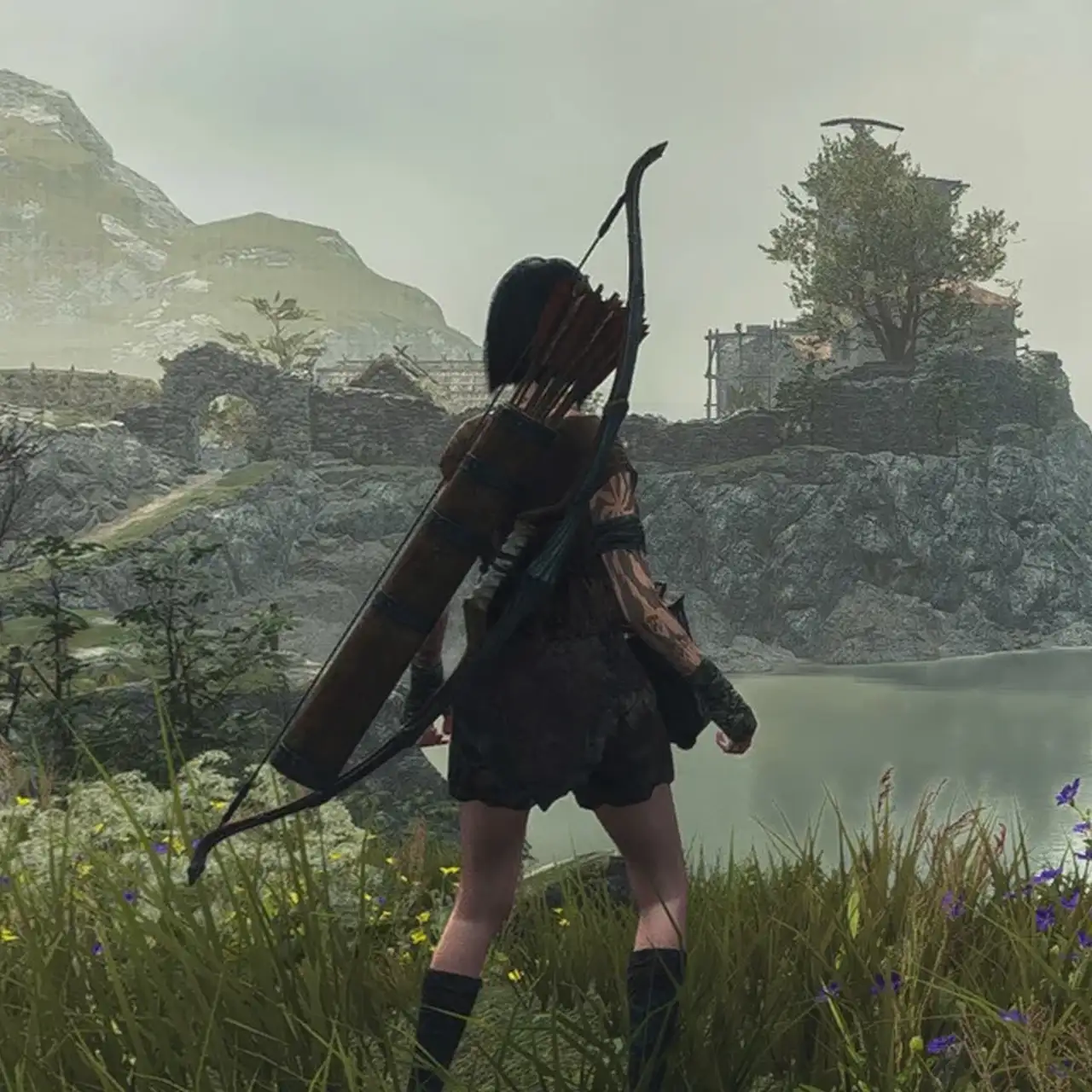 Dragon's Dogma 2 Update 4.0 Adds Hard Mode and New Pawn Specialization on October 9
 -
 Dragon's Dogma 2: Dark Arisen Trailer Showcases Brutal Frozen Region and New Monsters
 -
 Dragon's Dogma 2 Gets Major Patch 3.2 — Capcom Improves Performance and Removes Denuvo
 -
 Capcom shows off Dragon's Dogma 2: Dark Arisen in a new Relic Expedition gameplay overview
 -
 Dragon's Dogma 2 QoL Update Delayed to Early September
 -
 Dragon's Dogma 2 Update 3.2 Adds 60 FPS Mode on PS5 and Xbox Series X
 -
+ 25 news