Trainwatch Preview: When Papers, Please Meets Silent Hill
 Dmitry Kartashov
After the success of Papers, Please, game launchers have been flooded with "job simulators" — games centered on performing routine tasks that grow more complex over time, requiring patience and attentiveness. Some try to hook players with intricate mechanics, others focus on narrative. And some try to combine both.
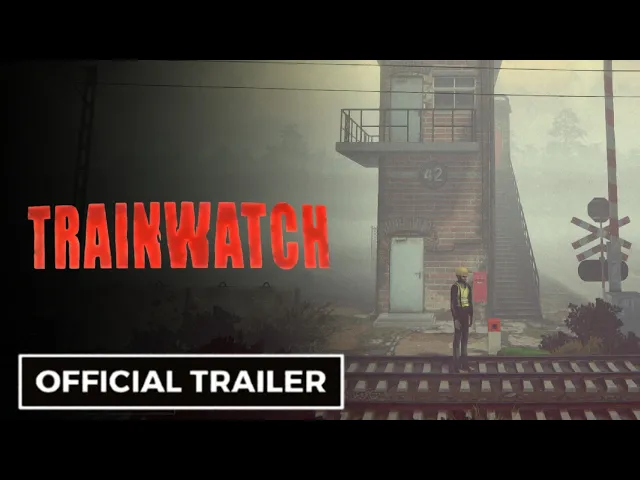
Trainwatch — a new project from Harvester Games, known for the atmospheric adventure The Cat Lady — presents itself exactly this way: working a checkpoint, time management, and a story-driven approach. I checked out the closed demo and I'll tell you what actually came of it.
Minimum: Quad-core Intel or AMD CPU, NVIDIA GT 705 (1 GB) or AMD Radeon HD 8450G, 8 GB RAM, 4 GB of disk space;
Recommended: Intel Core i7-4770 or AMD Ryzen 5 1600, NVIDIA GeForce GTX 960 (2 or 4 GB) or AMD Radeon HD 7870 (2 GB), 8 GB RAM, 4 GB of disk space.
Work and daily life

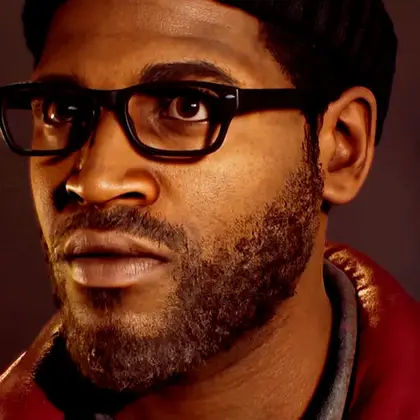
Trainwatch's main character is a middle-aged man named Troy. He arrives at a railroad crossing, his future workplace, and meets his mentor-colleague, Bob. Bob shares the ins and outs of the job ahead and makes it clear that people don't exactly line up to work here. But, as it turns out later, Troy has his own reasons for taking the job.
Working at a place like this is exactly as monotonous as it sounds at first. All you need to do is answer incoming calls signaling an approaching train, lower the crossing gate, make sure the train has passed, and raise it again. While watching trains go by, you can signal to the engineers from the tower with various gestures — this affects the main character's core stats.

Trains run on a pre-planned schedule, but it can occasionally get adjusted — reshuffled or canceled entries. This happened only once during the demo.
Partners work twelve-hour shifts. And all the downtime between trains is left entirely up to the player — free to decide what to do with it.
Needs, skills, and free time

And there's plenty to do here. First, the game actively simulates various human needs: hunger, fatigue, natural urges. Ignoring your daily routine risks negative effects on the character. Trainwatch is quite immersive in this respect — for example, you have to wash your hands after using the bathroom. If you ignore your needs for too long, your sanity meter gradually starts dropping, and high sanity is required to perform certain special actions. The game makes it very clear: you must never let sanity hit zero. Conversely, completing any task, even the simplest one, rewards the player with a bit of experience, and sometimes even restores some sanity.
The crossing comes with an observation tower — both a workplace and a place to rest: an actual home for the workers. It has separate bedrooms, a kitchen, a shower, a desk with a computer, and a few comfy couches.
What are your thoughts on simulating everyday needs in games?

However, the player isn't confined to the tower alone: you're free to leave the work zone and explore the surroundings. Though in the demo, most of the surrounding areas turned out to be inaccessible. Still, the developers planted some hooks: several locked spots requiring a tool — a crowbar, for instance. All collected items go into your inventory, from which they're used in point-and-click fashion.
Second, it's reasonable to assume that visitors will occasionally show up at the crossing — in the demo, only one character appeared, driving the main plot forward. Conversations offer multiple dialogue options, and the skill tree (more on that shortly) even has two dedicated skills: one governs "peaceful" lines that endear the main character to others; the other governs aggressive, sharp-tongued responses. Apparently, this will affect the story.

On the first day, a book gets tossed off one of the passing trains — you can read it while resting, with progress tracked page by page. Unfortunately, I couldn't find out what you get for finishing it: the demo ended too soon.
In the kitchen, you can heat up food in the microwave (restocked at the start of each week, according to a nearby note) and brew coffee to stave off sleep. A stamina meter governs how long the character stays awake, gradually depleting throughout the day.
Night shifts are made worse by the fact that being outside the tower drains the character's sanity. So you end up holed up indoors more often, saving trips around the area for daytime.

There's a mailbox by the entrance, but no letters arrived during the demo. There's also email on the computer, handling various notifications. And you can even play a video game on the PC: a simple maze-escape arcade game. One of the emails you receive hints that it holds a few secrets.
Progression in Trainwatch is unusual: most skills grant the character new properties. Besides the dialogue options already mentioned, there's, for example, the ability to enjoy the rain — wet clothes stop bothering the hero, and stamina drains twice as slowly during walks in bad weather. The "Mechanic" skill lets you repair and upgrade gear, while "Observer" helps you spot even the tiniest items hidden from a casual glance.
Did the leveling system in Trainwatch strike you as unusual?
Personal drama and mystical hints

Already on the first in-game day, it becomes clear: Troy has his own skeletons in the closet. Right after arriving at the crossing, he calls Agatha — his girlfriend or wife (the game never gives a clear answer). Their conversation turns out heavy and unresolved: Agatha agrees to give the main character one last chance, if he promises to call her every day, at the end of each shift, and tell her how his day went. This gives the player an additional task.
Some in-game events hint that Troy had drinking problems in the past — the reason behind the falling-out with his partner. The final release version of Trainwatch may well feature variability based on the player's actions.
After the first shift, when Bob arrives to relieve the main character, an accident happens: the unlucky replacement slips on the stairs and gets injured. As a result, Troy is forced to cover the night shift too, left with almost no rest.

Even more interesting events unfold on the second day, when an odd-looking old man — not quite a priest, not quite a cultist — shows up at the tower's doorstep. He's fixated on the idea that the control room beyond the crossing hides something important. And he instructs the hero to "listen to the trains" if he wants to open the keypad-locked door leading there.
Notably, Trainwatch's visuals strongly evoke PS1-era games — especially the famous Resident Evil and Silent Hill series. The latter is echoed further by the cinematic camera angles in some scenes and the thick fog blanketing the surroundings.
The demo's ending introduces an element of mysticism into the story: it's easy to assume Trainwatch's narrative will carry a layer of psychological horror.
***
One thing can be said with confidence — Trainwatch looks intriguing. It has interesting gameplay mechanics aimed at drawing you into the process, and a solid story hook that leaves plenty of questions open. Behind the facade of routine work, time and resource management, there may be a deep story about people and their problems.
I've happily added the game to my wishlist and will be keeping an eye on its development. Full impressions — as always — after release. Feel free to share your own thoughts in the comments!