
What to expect from Fable? Breaking down the massive gameplay trailer
 Evgenia Zavyalova
Back in 2018, Microsoft announced the revival of the Fable franchise, the beloved series of fantasy RPGs that first rose to prominence in the 2000s. Responsibility for the reboot was handed to Playground Games, arguably the most successful British game studio currently in operation. The goal was not merely to continue the series, but to fully reboot it—a trend that has become increasingly common across the gaming industry over the past decade.
However, full-scale development did not begin until 2023, and afterward, much to the concern of fans, Fable seemed to disappear from the spotlight for quite some time. The game was initially scheduled for release in 2025, then pushed back to fall 2026, and most recently delayed again to 2027.
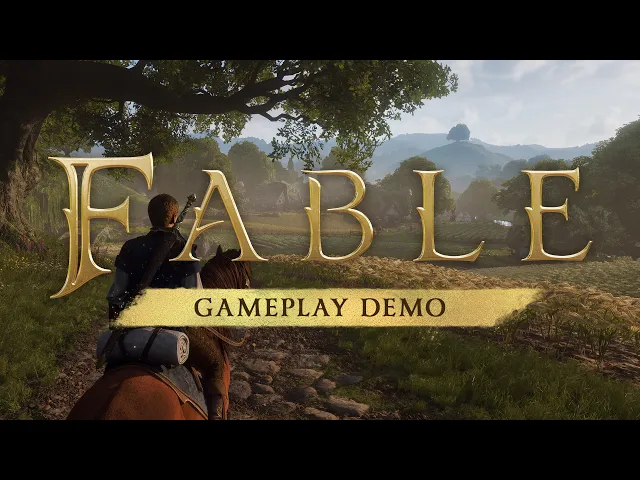
To reassure the community, the developers finally unveiled the long-awaited first gameplay trailer in June 2026. Let's take a closer look at what it reveals and try to understand what we can expect from this latest reboot of a legendary franchise.
What Is Fable?
The original Fable was the brainchild of Peter Molyneux and Lionhead Studios. These days, people often joke about Molyneux, claiming he promised far more than he ever delivered. Back in the early 2000s, he set out to create the “game of dreams” — a world with deep life simulation where players could theoretically experience a character’s entire life, from birth to death. While many of those ambitious promises never fully materialized, Fable still became a major success: a witty fantasy adventure that let players choose whether to be a noble hero or a complete scoundrel.
It was also the first game to popularize a morality system that visibly altered the protagonist. Perform good deeds, and a halo would appear above your head while butterflies fluttered around you. Commit evil acts, and horns would sprout from your skull as swarms of flies followed you everywhere. Your character could gain weight from overeating and grow older with each level-up. If you'd like to revisit the spirit of classic gaming, be sure to check out our list of the best old-school games.
Fable II expanded the formula by introducing an economy system, allowing players to buy houses and rent them out for passive income. By the time Fable III arrived in 2010, however, the series struggled to find fresh ideas and gradually lost momentum. In 2016, the franchise was effectively shelved when Microsoft shut down Lionhead Studios, bringing its long and often turbulent creative journey to an end.
The legacy of the original Fable can be distilled into several defining features: a) a high degree of life simulation; b) a protagonist whose appearance changes based on their actions; c) a world that reacts to player behavior through a morality system; d) distinctively British, tongue-in-cheek humor in the tradition of Terry Pratchett.
What the Trailer Revealed
From the very first minutes of the gameplay showcase, it is clear that the developers at Playground Games are determined to preserve the identity of Fable and remain faithful to the spirit of the original games.

We return once again to the fairy-tale land of Albion, whose colorful landscapes evoke memories of Hogwarts Legacy. The protagonist — traditionally referred to simply as the Hero — arrives in the farming settlement of Silverbrook, the central hub of one of the six open-world regions promised for the game.
Silverbrook is clearly inspired by rural British villages, but Playground Games has enhanced the setting with storybook charm: giant pumpkins line the fences, scarecrows stand watch over fields, garden gnomes decorate the pathways, and the houses feature delightfully whimsical architecture. If you enjoy open-world adventures, be sure to take a look at our list of the best open-world games.

The first thing worth noting is that this time the protagonist is male. If you remember, one of the game's earliest trailers sparked a controversy over so-called “woke” design choices. Some players criticized the heroine as being deliberately unattractive and overly masculine-looking, prompting the developers to promise a full-fledged character creator rather than a fixed protagonist.

How important is character creation and customization to you in RPGs?
The developers dedicated much of the trailer to social interactions. They claim the game will feature more than 1,000 NPCs, each with their own daily routines, preferences, and randomly generated moral values that influence how they judge the Hero’s actions. NPCs also remember what you do. For example, killing a guard will place a bounty on your head, much like in Red Dead Redemption 2, causing townsfolk to avoid you. You can give gifts, insult people, or flatter them. One notable feature from the original Fable has been removed, however: the visual karma system. The Hero’s appearance will no longer change based on their moral choices — much to Peter Molyneux’s disappointment.

Based on this first gameplay reveal, the reputation system appears logical and easy to understand, but also significantly simplified. Changing your reputation seems almost too easy. The game explicitly tells you what needs to be done to achieve certain outcomes — for example, convincing a specific NPC to go on a date with you. Want to improve your reputation? Buy an expensive outfit or pay the town crier. Yes, the original Fable had similar mechanics, but in today's gaming landscape, that hardly feels revolutionary.
It also remains unclear how much reputation will affect the overall progression of the game. How much quest variety and player choice will there actually be? At the moment, social interactions, romance options, and business ownership look more like side activities for players seeking a break from the main story rather than systems that fundamentally shape the experience.

Just like in Fable II, players will be able to purchase houses either to live in or rent out for passive income. Business management also returns, allowing players to set prices for goods. In the trailer, the Hero purchases a pub and hires both a bartender and a cleaner. If money becomes tight, players can always earn some extra gold through blacksmithing or by completing contracts.

The series' trademark British humor, built on absurdity and exaggeration, is also very much intact. The trailer features conversations with a butcher, a young boy, and a talking pig named Colin. It sounds ridiculous, but apparently the fate of someone's life depends on the player's decision. By the way, if you're a fan of RPG mechanics, be sure to check out our list of the best role-playing games.

Finally, the trailer concludes with a showcase of the combat system — after all, Fable is still an action RPG. Combat looks fairly standard by modern genre conventions, perhaps even somewhat conventional. Players can engage in swordplay, ranged combat, and magic, including abilities that launch enemies into the air or teleport the Hero directly to them. Parrying and finishing moves are also present. The only major element left unshown was the RPG progression system itself, but that will likely appear in future trailers.

What are you expecting from the new Fable?
***
The first major gameplay trailer for Fable leaves a somewhat mixed impression. On the one hand, it's encouraging to see the developers making a genuine effort to preserve the spirit and core mechanics of the original games. On the other hand, the trailer never really delivers a true "wow" moment.
What we saw was a colorful fantasy world, a few amusing situations, a talking pig, and competent but fairly conventional combat. The problem is that we've already seen all of these things elsewhere. Without fresh ideas or a standout feature that captures players' attention, Fable risks getting lost among its competitors and ending up alongside many other charming, well-made, but ultimately forgettable games.
Hopefully these concerns prove unfounded. For now, all we can do is remain patient. Fable is currently scheduled to launch on February 23, 2027, for PC, Xbox, and even PlayStation 5. Until then, there are plenty of upcoming releases to keep an eye on — including the most anticipated games of 2026.
Best RPG games
- Best RPGs of All Time: Top 77 on PC and Consoles
- 15 Best Games Like Kingdom Come: Deliverance
- 38 Best Games Like Skyrim in 2026: Open-World RPGs to Play After Skyrim
- Best RPGs for Low-End PCs and Laptops in 2026 — TOP 25 Role-Playing Games
- Top 30 Best Story-Driven Space Games for PC
- TOP-20 Best Games Like Dark Souls: Souls-likes on PC and Consoles
- 41 Best Roguelike and Roguelite Games in 2026: From Hades to Slay the Spire 2
- 30 Games Like The Witcher 3: What to Play After Wild Hunt
-
 Exodus: The “New Mass Effect”. Breaking Down the Extensive Gameplay Trailer
 -
 Fable's Protagonist Has a New Look — Here's How She Compares to the 2023 Version
 -
 God of War: Laufey — A Breakdown of the Announcement: Kratos' Wife, the Afterlife of the Gods, and a Talking Gelatinous Cube
 -
 Resident Evil Veronica Breakdown: Why the Remake Could Become the Best Game in the Series
 -
 Fable Has Gone Over Budget, Raising Concerns About Its Costs