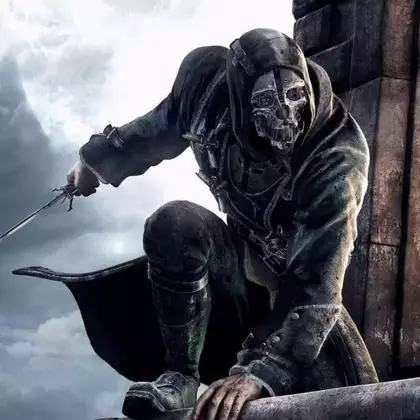
Once upon a time, we got the chance to step into the shoes of a real hashashin in Assassin's Creed. The game was unusual, but rather monotonous and boring. Then came the sequel and two expansions, which were already more varied, complex, and interesting. Old gameplay elements were refined, new ones were added, locations changed, and with them, the story developed. Finally, we have a game that is supposed to be the final point in Desmond Miles' story and become the most outstanding game of the trilogy, absorbing all the best from the previous parts of the series and getting rid of the unnecessary. In a sense, Assassin's Creed 3 fulfilled its mission.

The Last of the Mohicans, or A Narrative of the 1753–1783
There has probably never been such a number of introductory missions and tutorial tasks anywhere else. At first, we get to play as Haytham Kenway, which will surprise any player, since everyone already knew that our hero was supposed to be a Native American. After a few chapters, Connor’s memories finally begin, but even here we start out as a child and once again learn various gameplay elements.
Of course, any Native American story must start in the most clichéd and overused way: “white” people attack his village, he loses loved ones, and thirsts for revenge. Then “ancient spirits” get involved—which are actually Juno—and our hero begins his training in the ways of the Assassins. But here’s another trope: the future mentor at first flatly refuses to speak, and our boy is too stubborn to give up.
Connor grows, and along with him, his skill, strength, and influence. Only his beliefs remain just as they were in childhood. He always sees everything as either good or bad, is ready to fight to the end for his principles and for his tribe, even when it leaves its homeland. It’s hard for a Native to live in a civilized world, he constantly complains for any reason or none at all, hates unnecessary killing (though in side missions he himself cuts down everyone left and right), and dreams of freedom not only for himself and his people, but for all people. Probably the most rough-hewn of all the heroes.
The plot has many standard twists, the characters are also taken from the set of the best clichés, and some weren’t even developed at all. But it’s still fun to play. Just when you think you’ve figured out the whole story and can predict what will happen next, it suddenly turns out to be something completely different. And it’s not just that. The developers chose an excellent period from US history: Connor will hear the most famous speeches, interact with key figures of that war, and participate in the most famous and intense battles. Even the tea crates will be thrown into the water by the Assassin himself. Of course, this story will appeal more to US residents—it’s native to them—but players from the CIS should enjoy it too.
By the way, the story missions are very well constructed, and their variety won’t bore the player until the very end. Except for a couple of clumsy chases, which, as always, will have to be replayed a dozen times. And those who can’t stand stealth missions will surely suffer, but it won’t spoil the overall impression for anyone. At one point, you’ll be sent on a covert mission; at another, you’ll be given troops to command. There’s no time to be bored.
Whether you pay attention to side quests or not won’t affect the difficulty of the main storyline. Nevertheless, you have the opportunity to recruit a team of helpers, buy new weapons, and change your outfit. In addition, sometimes you’ll need to replenish supplies (buy or craft them) and new weapons for Connor’s ship. You can earn money for all this by completing various tasks, helping townsfolk, collecting items, and more—engaging in the sandbox aspect of the game.

The Deerslayer, or How to Earn and Spend Money
There are only six subordinates in this installment. The first will join us after one of the story missions, and to recruit the others you’ll need to prove yourself in a certain way in a specific area. In one, you have to burn plague-infected belongings; in two others, you save people—from executions and from fearsome tax collectors.
One of the most interesting elements of the game is developing your own homestead. Achilles' house, Connor’s mentor, stands in the remote wilderness of the frontier, with a harbor nearby and spacious lands where various people will gladly settle. One person falls into a river, another is attacked by bandits, a third complains about poachers—after helping each of them, Connor invites them to live here. Every resident is useful in some way: some help with building materials and crafting, others produce goods that can be sent for sale by caravan or ship.
Outside the cities, there’s not only your own settlement but other “entertainments” as well. There’s a kind of parkour in the forests too, only instead of houses, there are trees. The native skillfully climbs branches and limbs, jumps from tree to tree, and all you have to do is press a button once. But unlike the city, in nature there are only a few “air paths,” so freedom is quite limited, and it’s often easier to just take a horse than to try to find a shortcut through the branches—unless you’ve decided to go hunting.
Hunting is implemented in an interesting way. First, you need to find and investigate tracks, after which a marked animal appears on the mini-map. Different forest creatures are hunted in different ways: traps, bait, melee weapons, bow, QTE. The last method is used for large animals and is the easiest way to earn money. Find a place where, for example, bears live, approach them, and one of them will attack. After two QTE scenes, you’ll have a dead carcass in front of you. Moreover, the QTE combinations never change, so in 5-10 minutes, you can kill a dozen bears. Skinning animals gives you “ingredients” for crafting, and you can later make something out of them at the homestead—or just sell them at the nearest shop. Sometimes, while skinning an animal, Connor’s hands fall through its texture. It looks pretty strange for a AAA game from late 2012. There’s plenty of such oddities. In one battle, you can shoot four soldiers from around a corner. They’ll calmly die one after another, but as soon as the player enters their area, they’ll immediately stand up—though they’ll still remain dead.

The Pathfinder, or On the Shores of Massachusetts
Of course, there are various collections along with achievements. The latter come in the form of tasks from the Adventurers’ Club and the Trappers’ Society. They’re boring and bring little benefit. You can also fill out the “local encyclopedia” by talking to different people, but the enjoyment from this is questionable. You can also collect almanac pages, bird feathers, chests, and trinkets. The trinkets can be given to an old sea dog in exchange for fragments of an ancient pirate map.
Speaking of pirates, the story has our Native American hero learning how to command a sailing ship. It’s pretty simple in terms of controls, but the tactics aren’t so straightforward. At first glance, it may seem like just a shooting gallery on water, but with that attitude, you’ll quickly end up at the bottom. However, after a few naval missions, it honestly becomes boring—there’s little benefit, and the variety is minimal.
On the outskirts of cities, there are forts you can destroy. To do this, you need to kill the captain and blow up the powder magazine. But this has been done before. As has unlocking the map using tall buildings. And parkour remains the same. Only the cities here are “shorter,” and there’s a soldier on every other building, so it’s easier to travel on foot. The enemies are smart, so it’s hard to escape from them. And in combat, they behave differently: some shoot, others block and hit hard, and a third group tries to “hug” you from behind. As in previous games, it’s often easier to fight a dozen enemies and defeat them than to spend ten minutes trying to escape. Although there’s also a fast travel system in the city, but for that, you need to unlock the right manholes in the city’s sewers.
Desmond Miles has gained enough knowledge to become an assassin himself, so you’ll get to play as him too. He’ll have to collect power sources. Mostly, you just need to reach the target and that’s it, but there will be fights. Desmond will infiltrate an Abstergo building alone and take down a bunch of guards. Luckily, the modern-day Templar megacorporation doesn’t like to arm its guards with firearms. The missions themselves are short and dull, the textures are taken from a mediocre shooter from five years ago, and there’s way too much blur. All in all, it would be better to keep playing as Connor, admiring the beautiful landscapes and detailed cities of 18th-century America.

The End of War, Light, and the Trilogy
We weren’t deceived—Desmond’s story has come to an end. But the ending gives us little more than nothing. Instead, there are many new questions and a very direct hint at a sequel. The conveyor belt is in full swing. Perhaps this is the best game in the series. But all of this has been done before; it’s just become more varied and, in places, more polished, despite the bugs. After the credits, you can return to side quests in “free play” mode or head to multiplayer, which, however, has changed very little. And the double storyline is strange: it seems they wanted to show that there’s not much difference between the Brotherhood and the Order, but that didn’t really work out. The Templars come across as empty talkers, and the Assassins… Well, they’re not really there at all. Of the active characters, we only have two main heroes—Desmond and his ancestor Connor. And even they both follow their own personal principles and views of the world, rather than the Creed. It’s long been time to sum things up, but it’s extremely difficult to do so. The game is good, it’s worth playing, but its flaws are constantly reminding you of themselves.