
Thief: The Dark Project Remastered — The Return of a Stealth Classic
 Roman Shagiyan
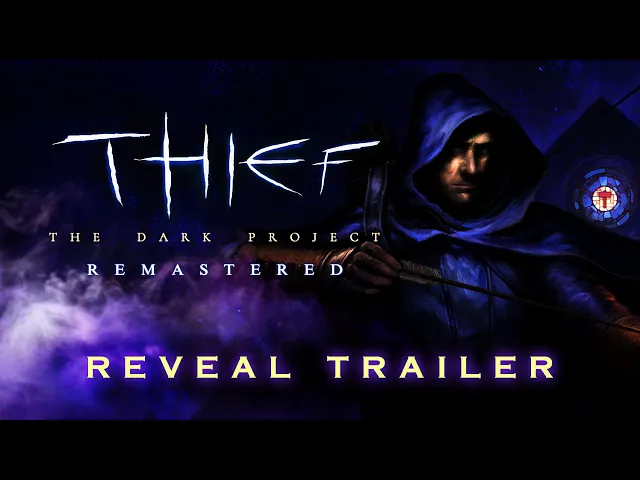
At PC Gaming Show 2026 during the summer announcement season, Nightdive Studios, Eidos-Montréal, and Atari revealed what old-school fans had almost given up hope of seeing: Thief: The Dark Project Remastered — a full-fledged remaster of one of the most influential games in stealth genre history. This coming winter, Garrett will return to the shadows — though no exact release date has been announced yet. Let's explore why this event is more important than it might seem at first glance, and what to expect from this updated classic.
How It Was: 1998 and the Revolution in Shadows
To fully understand the importance of this announcement, we need to go back twenty-eight years. 1998 was the era of first-person shooter dominance. Quake 2 had just set the genre standard, Half-Life had already revolutionized storytelling in first-person shooters, and it seemed the obvious path forward was clear: move faster, shoot more accurately, win more spectacularly. Against this backdrop, Looking Glass Studios — the legendary Cambridge studio that gave the world System Shock — released something fundamentally different. By the way, we have an article about the first games in their genres: from FPS to Battle Royale.
Thief: The Dark Project positioned itself as a first-person sneaker — not a shooter, but a first-person stealth game. The term sounded almost defiant. Here, you didn't need to defeat enemies — you had to avoid them. The key tools weren't firearms or reaction speed, but shadow, silence, and observation. The game literally taught players to look at light sources, listen to footstep sounds, read patrol routes like a musical score — and find a special, almost meditative pleasure in it. If you're interested in the stealth genre, we recommend our TOP with best stealth games of all time.
Garrett is an anti-hero without pretense. A former street urchin picked up by the Order of Keepers, trained in surveillance and infiltration, who then chose a career as a solo thief. Cynical, ironic, indifferent to others' wars — until one job drags him into a factional struggle that could change the city forever. The narrative was built through notes, overheard guard conversations, and cinematic cutscenes — long before "environmental storytelling" became a fashionable term.

The key mechanical innovations of Thief are now perceived as the foundation of immersive stealth. Guards reacted to footstep sounds depending on surface type: carpet, wooden floor, tile — each material gave a different acoustic signature. The lighting system determined how visible the player was. Water arrows extinguished torches, rope arrows provided vertical mobility, fire arrows were only for emergencies. This was an entire language that needed to be learned.
On "Expert" difficulty, Thief went even further: it required killing no one. Not just staying quiet, but leaving no bodies behind. This changed the entire logic of gameplay: players had to find ways to pass through levels as quietly and invisibly as possible, rather than clearing them out.
Thief's influence proved far more lasting than it might have seemed in 1998. In 2000 at the Interactive Achievement Awards ceremony, the game received an award for outstanding achievement in character development and narrative — a rarity for the genre. Decades later, developers of Dishonored, Deus Ex: Human Revolution, Splinter Cell, and even Hitman openly cited Thief as a direct source of inspiration.
The Series' Difficult Fate
The series' history after the first game is a story of difficult compromises and missed opportunities. Thief 2: The Metal Age (2000) developed the mechanics, added a more technologized setting, and is often called the best installment by fans. But Looking Glass Studios closed that same year — immediately after release, essentially never seeing their project's success.
Thief: Deadly Shadows (2004) was released under the wing of Ion Storm and Eidos Interactive. The new studio did many things right — adding a full open city hub and living environment simulation with factional conflicts — but also simplified several key mechanics for a broader audience. The game turned out uneven, though the "Robbing the Cradle" mission rightfully entered history as one of the most frightening levels in video games ever.
The 2014 Thief reboot by Eidos-Montréal — with all due respect to the studio — became a painful example of how AAA pressure deforms someone else's legacy. Garrett lost his character, the city lost its atmosphere, and the game itself received linear corridors instead of labyrinthine mansions. Critics didn't like it, sales disappointed, and if we don't count the 2025 VR offshoot Legacy of Shadow, the series remained without a full return since 2014.

All this time, the original Dark Project lived on in a narrow but devoted community. The DromEd editor allowed fans to create custom missions and campaigns even in the 2020s, and GOG versions with patches helped run the game on modern systems. But for the wider audience, the original remained an old PC classic with a noticeable barrier to entry — until the remaster announcement.
Which installment of the Thief series is your favorite?
Nightdive Studios: Classic in Capable Hands
The choice of remaster developer is no accident. Vancouver-based Nightdive Studios specializes in reviving exactly these kinds of games: System Shock 2 Remastered, System Shock Remake, Doom 64, Quake, Heretic, Hexen, Turok. Almost every studio project has been warmly received — primarily because Nightdive demonstrates a quality rare in the industry: respect for the original. If you're interested in how well they succeed, we have a System Shock 2: 25th Anniversary Remastered review, which Nightdive released last year.
The studio's proprietary KEX Engine allows porting DOS/Windows 9x architecture games to modern platforms with minimal behavioral code changes — meaning physics, AI, and gameplay systems remain as close to the original as possible. This is fundamentally important for Thief, where NPC behavior is the foundation of the entire gameplay experience.

Stephen Kick, Nightdive's CEO, stated the studio's task directly: "Thief didn't just introduce stealth mechanics — it defined them." He then added: "We've preserved the tension and intelligence of the original while enhancing it for modern players." Behind the standard PR rhetoric, you can see Nightdive's familiar principle: update classics without rewriting them entirely.
The participation of Eidos-Montréal — the studio behind the 2014 reboot — is also significant. But in this new project, they're acting not as developers but as partners and curators. General Manager Patrice Baig directly acknowledges: "Few games have had such long-term impact as Thief." This sounds like a certain reflection — and perhaps redemption.
What Exactly Will Change: Remaster Details
Thief: The Dark Project Remastered is not just a port to modern platforms. According to official materials and the Steam page, Nightdive has done serious work in several directions.
Technical improvements: resolution up to 4K, frame rates up to 120 FPS, and support for modern gamepads with vibration. The visual component has been updated: textures, character models, animations, and cutscenes have passed through Nightdive artists' hands. Minor level corrections eliminate known bugs and collision issues from the original.

Interface and convenience: a weapon and item wheel has been added — in the original, you had to cycle through them sequentially, which was stressful in tense situations. A mission selection screen has been added, allowing you to replay completed missions. Three difficulty levels with different objective sets ensure replayability.
Content: the remaster includes all content from the original (12 large-scale missions) and the 1999 Thief Gold expansion — three additional missions and five new enemy types that deepen the story.
What's the most important thing not to mess up in the Nightdive remaster?
User-generated content support (on PC): Nightdive added built-in support for custom campaigns — direct access to thousands of missions created over the years. For Thief, this is especially important: the fan scene has long been part of the game's life, not just a pleasant addition. The "Vault" with behind-the-scenes materials is an additional bonus for those interested in development history.

What's fundamentally important is what's not in the list: mentions of AI reworking, changes to gameplay systems, or "modernization" of mechanics to contemporary standards. Apparently, Nightdive is sticking to their approach — update the form but preserve the rules, rhythm, and logic of the original game.

Best Stealth, Tactical and Adventure Games
***
So far, the project looks not like simple nostalgia exploitation, but like careful restoration where developers understand exactly what needs to be preserved. The original game was so ahead of its time that its main idea — stealth as philosophy, not just mechanics — still hasn't been fully realized by any of its successors.
For those who played Thief in the late '90s, the remaster will be a reason to check how well the game holds up today. For new audiences — an opportunity to experience a stealth classic without unnecessary struggle with the aged original.
What do you think — does Thief really need a remaster, or does the original still hold up well? Write in the comments. If, for whatever reason, you're not a fan of Thief, then you'll definitely enjoy this list of the best games for low-spec PCs and laptops.
-
 Thief: The Dark Project Remastered Announced for PC and Consoles, Launching Winter 2026
 -
 Thief VR: Legacy of Shadow Gameplay Trailer Released
 -
 Original Thief Designer Says Tech Arms Race Should Have Stopped With Alan Wake
 -
 Deus Ex Creator Unveils Gameplay for Thief-Inspired Stealth Action Thick as Thieves
 -
 Thief Returns — VR Spin-Off Legacy of Shadow Gets Release Date and New Trailers