The First Games in Their Genres: From FPS to Battle Royale — 40 Pioneers
 Anastasiia Sokolova
The first games in their genres — 40 projects that did something for the very first time what now appears in every other game. The first shooter, the first fighting game, the first Battle Royale, the first minimap, the first QTE, the first dialogue tree. The history of the gaming industry is the history of who invented what first.
Did you know that the first first-person shooter wasn't Wolfenstein? That the color-coded loot rarity system was invented not in Diablo but in a text-based ASCII roguelike? That the Battle Royale genre was born from a zombie simulator mod, not from a marketer's head?
Most of the mechanics we take for granted were invented by someone for the first time — often by accident, sometimes out of laziness, almost always in a game you've never heard of.
This piece covers more than 30 such innovations. The first fighting game, the first stealth game, the first open world, the first character progression system, the first dialogue tree, the first online multiplayer, the first co-op, the first Battle Royale — and the games behind them. Some will surprise you, some will make you laugh, but every single one deserves to be known.
Genres
Let's start with the basics — the genres themselves. FPS, RPG, fighting games, Battle Royale, metroidvanias. Every one of these labels is recognized today even by people who have only played a handful of times in their lives. But every genre had its founder — a specific game that invented the formula. Thirteen genres and thirteen founding titles below.
First-Person Shooter (FPS)
Think the first first-person shooter was Wolfenstein 3D? Wrong — Wolfenstein merely popularized the genre. It was actually born nearly 20 years earlier, in Maze War (1973). The game was made in the summer of 1973 by students at the Ames Research Center — a NASA facility, believe it or not. The gameplay reads like a rough draft of a modern FPS: a maze, a first-person view, shooting at opponents (though the enemy was a floating eyeball — seriously, look at the screenshots). Deathmatch also appeared there for the first time — a full 25 years before John Carmack made it iconic in Quake. That same year, 1973, saw the release of Spasim — the first networked 3D space combat simulator.
So instead of "thank you, Wolfenstein," the more accurate toast is: "thank you, nameless NASA students who accidentally invented an entire genre between lectures."
Third-Person Shooter
This one is genuinely hard to pin down, but the closest early example is 3-D WorldRunner. The character could not turn a full 360 degrees and only ran forward — yet the game genuinely felt three-dimensional, and it was this title that showed developers there was real potential in the third-person shooter format. Seeing your character in full and still having as much fun as with an FPS? Remarkable. 3-D WorldRunner can also boast a particularly memorable soundtrack.

RPG and Roguelike
The earliest computer RPGs are games that today could easily be mistaken for ancestors of the modern roguelike: procedural generation, high punishment for failure, and minimal graphics where the player's imagination filled in almost everything else. The pivotal game here was Rogue, which predated Ultima 1 and effectively gave the roguelike genre its name. It introduced many of the conventions we still associate with the genre: randomly generated dungeons, turn-based exploration, permanent death, and a reliance on luck, caution, and systems knowledge. Later, NetHack took these ideas to near-encyclopedic depths, but the foundation was laid by Rogue. The genre has come a long way from ASCII characters on a black screen, and its influence is visible even in modern RPGs — just take a look at the Best RPGs of All Time: Top 77 on PC and Consoles.

Racing Game
The first racing game can justifiably be considered Atari's second game ever, released back in 1973 — Space Race. Two players had to race from the bottom of the screen to the top, dodging asteroids. The first to get there won. A perfectly good race. Visually it was a cluster of white dots on a black background, but we're not here for the graphics. So let's give credit where it's due: still the first race, and Atari's second game. See what racing has become today in our TOP with best racing games.

Strategy
One could argue that Chess was the first strategy game — but since it's not a console or computer game, we'll cede the spotlight to the genuine first strategy game: Computer Bismarck. And it's not about the Middle Ages: you command a British fleet and maneuver its ships. The sea was pink back then and the ships were letters, but that didn't stop anyone from having fun in 1980. Really! From letters on a color screen to Civilization and Total War — the genre's journey is covered in our best RTS games of all time: Top 29 from Dune 2 to Tempest Rising.

Graphic Adventure
Mystery House turned out to be the first game in two genres at once. The obvious one, ignoring the title, is the adventure or quest. The player enters a strange house searching for a hidden treasure, but instead of riches finds dead bodies. The task becomes figuring out who the next victim will be and what is happening in the mansion. Mystery House earns its place here as one of the first adventure games with graphics, though text-based adventures appeared even earlier.

Mystery House's modern descendants — from Syberia to Disco Elysium — are collected in the 120 best adventure games on PC, PS5, Xbox, and Nintendo Switch.
Fighting Game
Mortal Kombat and Killer Instinct became symbols of the fighting game genre in an era when the genre already understood its own rules. But the origins are typically traced back to Heavyweight Champ — a boxing arcade game from 1976. For its time the game looked unusually advanced: it already featured one-on-one bouts, punch controls, and even a choice of fighters. Special moves, combos, and tournament brackets were still a long way off, but Heavyweight Champ laid the groundwork for the genre that would later produce series like Street Fighter, Mortal Kombat, and Tekken.

From two pixelated boxers to Street Fighter 6 and Tekken 8 — the genre has come a long way. The key representatives are gathered in our selection of the best fighting games.
Simulation
If you picture an early simulator, a city-building game comes naturally to mind — and that's pretty close to the truth. One of the first notable games in the genre was Fortune Builder, released in 1984. By modern standards its premise feels familiar: build houses, roads, and factories, develop territory, collect money, and expand again. But for its time it was an unusual idea — not simply completing a level or defeating enemies, but managing an entire city and gradually turning a blank map into a working system.

Fortune Builder's modern heirs — Cities: Skylines, Manor Lords, Frostpunk, and others — are gathered in our top of city-building simulators.
Stealth Game
Splinter Cell and Metal Gear Solid became the defining symbols of stealth much later, when the genre had learned to work with shadows, noise, gadgets, and complex patrol routes. And if you want the best representatives of the modern era, we have a dedicated best stealth games of all time: Top 35 on PC and Console.
One of the first games built entirely around stealthy play was 005 from SEGA. The player controlled a spy infiltrating an enemy base to steal secret documents and escape by helicopter. Rather than open gunfights, the goal was to hide from guards: enter buildings, hug walls, and avoid flashlight beams. By modern standards the mechanics look simple, but the core idea of stealth was already there — not defeating all enemies, but remaining unseen.

MOBA
The genre was born from user-made maps. The first was Aeon of Strife — a StarCraft map: four heroes, three lanes, creeps. Then came Defense of the Ancients (DotA) — a map for Warcraft 3 (2003) created by a modder known as Eul and later developed by IceFrog. DotA was so popular that Valve hired IceFrog and released Dota 2 (2013) — the first standalone MOBA as its own product. League of Legends (2009) came out in parallel.
Battle Royale
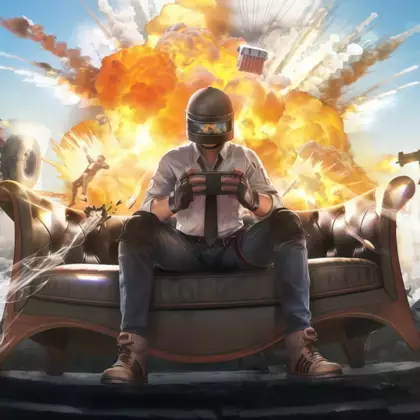
The concept came from the 2000 film Battle Royale and the novel by Koushun Takami. In gaming, the genre began with the mod DayZ: Battle Royale (2013) — Brendan Greene, known as PlayerUnknown, added a "last survivor" mode to a zombie simulator. Then came H1Z1: King of the Kill (2015) as a standalone game. And finally PUBG (2017) exploded onto the scene and established Battle Royale as a genre in its own right. For which games in the genre are worth playing today, check out our TOP-10 best battle royale games.
Survival Horror
Alone in the Dark (1992) is usually cited as the primary founding title of survival horror. The French studio Infogrames assembled almost the entire future formula of the genre: fixed cameras, exploring a gloomy mansion, puzzles, limited resources, and a constant sense of vulnerability. The Resident Evil, Silent Hill, Amnesia, and many other horror series grew out of this foundation. That said, Alone in the Dark has an important predecessor — the Japanese Sweet Home (Famicom, 1989), an RPG with horror elements that also has a claim to being one of the genre's first games and directly inspired Shinji Mikami to create Resident Evil.

The best representatives of the genre — from classics like Silent Hill 2 to 2026 newcomers — are in the TOP: Best Horror Games of All Time.
Metroidvania
The word itself is a portmanteau: Metroid (NES, 1986) invented the open world with locked zones you return to after gaining new abilities. Castlevania: Symphony of the Night (1997) added RPG progression and non-linear level design. Together they gave us the template now called the metroidvania. Symphony of the Night and Super Metroid (1994) are generally considered the first in the modern sense — they crystallized the genre as a distinct direction.

Symphony of the Night's modern successors — Hollow Knight, Blasphemous, the Ori series, and others — are gathered in our best metroidvania games.
Combat Systems
A combat system determines exactly how confrontations work in a game: turn-based, real-time, with an active pause, with a turn timer, or through distinct tactical rules. These formats did not emerge all at once — each developed gradually, in specific games built for specific purposes: sometimes due to technical limitations, sometimes for convenience, sometimes as an attempt to make combat more tense and deep. Below are six fundamental approaches to combat, without which it is hard to imagine modern RPGs, strategy games, and action games.
ATB (Active Time Battle) Combat System
The early Final Fantasy games cemented the classic turn-based model, where characters and enemies acted in strict sequence. In Final Fantasy 4, the developers complicated this system by introducing Active Time Battle. Now the order of turns depended not on a rigid queue but on a gauge that filled at different speeds for different characters. The pacing was influenced by stats, haste and slow effects, so combat became more dynamic: the player had to not just choose commands but factor in timing, the speed of each fighter, and the right moment for the next action.

Time Dilation in Shooters
Bullet time is most commonly associated with Max Payne, but Remedy was not the first studio to bring this idea into a game. Before them, a similar mechanic appeared in Requiem: Avenging Angel — a dark 1999 shooter about an angel sent to Earth to stop humanity from going too far with technological development. The ability was called "Time Distortion" and allowed players to slow everything around them, turning gunfights into near-cinematic sequences. Max Payne later carried bullet time to the masses, but one of the early steps toward that mechanic was taken in Requiem.

Active Pause in Real Time
The active pause is most often remembered from Dragon Age: Origins or RPG classics like Baldur's Gate, where you can freeze the fight, issue orders to your party, select spells, and then resume combat. But the idea itself appeared earlier. One of the early examples is Knights of Xentar from 1991: during battles, players could pause the action to drink a potion, cast a spell, or switch fighting styles. Today this sounds like basic convenience, but in the early 90s this mechanic was an important step toward more manageable and tactical real-time combat.

Real-Time with Tactical Pause
Some games combine real-time exploration with separate tactical combat. This approach would later appear in Fallout and Silent Storm, but one of the earliest major examples was UFO: Enemy Unknown in 1994. Between missions the player managed their base, researched technologies, monitored alien activity, and allocated resources, while the battles themselves played out in turn-based mode. Real time on the global map could be paused and fast-forwarded, but in combat everything was decided by action points, positioning, and cautious advancement across the map. This exact structure later formed the basis of XCOM: Enemy Unknown and cemented a format where strategic planning directly shapes tactical battles.

Turn-Based Combat with a Timer
In many games a turn is limited not only by rules but also by time: you must make a decision before the right to act passes to the opponent. One of the early examples of this approach was Utopia, released in 1982. Two players simultaneously developed their own islands: constructing buildings, managing resources, and trying to outpace each other economically. By default a turn lasted one minute, though the timer could be adjusted. This simple constraint noticeably changed the pace of play: players could no longer deliberate indefinitely over every step and were forced to make quick decisions under time pressure.

Bosses
Bosses did not appear in games immediately either, though today it is hard to imagine an action game, RPG, or arcade without a large enemy at the end of a level. One of the first such examples is considered to be dnd for PLATO, released in 1975. The game was based on tabletop Dungeons & Dragons and sent the player through a multi-level dungeon, with the main goal being a sphere on the final floor. Simply taking it and leaving was not possible: the artifact was guarded by a Golden Dragon that had to be defeated to complete the run. This is where the now-familiar structure of a final challenge began to take shape in games — a powerful enemy standing between the player and victory.

Interface and Navigation
A minimap in the corner of the screen, a green arrow over a character, fog obscuring unexplored territory — all of this feels as natural as the volume button on a remote. Yet someone invented and implemented each of these things first, with no reference points to draw from. Here are five interface and level-design discoveries that shape how we navigate any modern game.
Open World
The open world is often associated with The Elder Scrolls: Arena, but games allowing free travel across a large map predated TES by many years. One of the early examples was Ultima 1 in 1981. The player viewed the world from above, moved the hero with arrow keys, and used the keyboard for specific actions — such as attacking. For the early 80s, the game was unusually ambitious: it already featured open-world travel, character creation, race selection, and stat distribution. By modern standards all of this looks simple, but it was precisely such projects that gradually built the foundation for large RPGs where the player chooses their own route, pace, and role.

Minimap
The minimap has long been a standard part of the interface: it helps with orientation, tracking threats, and understanding what lies beyond the edge of the screen. One of the first official examples of this mechanic is Defender, released in 1981 on arcade cabinets and Atari. It was not a shooter in the conventional sense or a strategy — it was a space side-scroller in which the player defended a planet from aliens. Across the top of the screen ran a radar: a simple strip with dots showing the positions of enemies, civilians, and the ship itself across the long level. By modern standards the interface looked bare-bones, but this layout gave players an important advantage — the ability to see not just the nearest threat but the overall battlefield.

Fog of War
The "fog of war" made its first appearance in a strategy game — which is entirely logical for this mechanic. One of the early examples is Empire, also known as Classic Empire: a turn-based strategy based on a board game. The player develops a city, builds an army, explores the map, and gradually advances toward the main goal — defeating the opponent. Without limited visibility, such a structure would work far less well: the fog of war concealed enemy movements, forced scouting, and added tension even to seemingly simple matches. This mechanic would later become almost mandatory in strategy games where information, risk, and territorial control are key.

Navigation Arrow to Objective
The navigation arrow today seems like an almost invisible part of the interface: it simply shows where to go next and saves the player time in finding the route. One of the most well-known early examples is Crazy Taxi. In this arcade racer, a large green arrow appeared above the car, pointing toward the next destination and helping the player quickly deliver a passenger to the right location. For a game built entirely around a race against the clock, it was the perfect solution: the player never had to look away at a map, did not need to memorize the city on the first attempt, and could focus entirely on speed, maneuvering, and finding a shortcut.

Cover System in Shooters
The cover system became truly mainstream after Gears of War: one look at our best first-person shooters: Top FPS games on PC, PS4, PS5, Xbox, and Switch is enough to see how deeply that mechanic shaped the genre. But one of the early examples was Winback: Covert Operations — a third-person shooter for the Nintendo 64 released in 1999. The main character, agent Jean-Luc Cougar, infiltrated an enemy base and regularly got into firefights where cover was not a decorative detail but an essential part of getting through levels. The player had to hide behind walls and objects, lean out to shoot, and advance carefully — doing almost everything that would later become standard for third-person shooters.

Progression and Character Development
XP, levels, dialogue trees, moral choices, color-coded loot — everything that makes a game a ROLE-PLAYING game in the broad sense. Most of these mechanics were born long before RPGs became a distinct genre: in the university PLATO terminals and the basements of Sierra Online. Here are seven pillars of character progression.
Character Creation
In most genres, the player is typically handed a ready-made hero or offered a choice from several pre-defined characters. RPGs fairly quickly took a different path: here, creating your own hero became an important part of the experience. One of the early examples of such a system was Genesis: Beyond the Revelation, released in 1985. Before starting the game, the player could not only name the character but also choose a class and then distribute stats. Today this reads as a basic feature of role-playing games, but for the mid-80s this level of customization was noticeably deeper than the usual character-selection screen — especially unusual given that the game was about robots, not classic fantasy.

Level System and XP
It might seem like character progression has always existed — but it hasn't. The first game with a full experience and level system is considered to be pedit5 (1975) for the PLATO university network. It was a primitive dungeon roguelike inspired by tabletop D&D — but it was there that the mechanic of "kill a monster → earn XP → level up" first appeared. A year later, dnd for the same PLATO network appeared and developed the idea further. Without them, there would be no Diablo, no Dark Souls, no anything with an experience bar.

Dialogue Tree
Text adventures like Colossal Cave Adventure (1977) already let players type commands and interact with the world through words, but that was not yet a dialogue tree in the familiar sense. One of the early steps toward such a system was Ultima 4: Quest of the Avatar (1985). In it, NPCs could be spoken to using keywords, and responses changed depending on who you were talking to and the context. The player did not simply press a "talk" button — instead they gradually uncovered names, topics, and important clues that built up into a full conversation.
Later, dialogue trees developed into the more recognizable mechanic of Western RPGs — with menus of replies, answer options, and consequences for your choices. An important milestone was Realms of Arkania: Blade of Destiny (1992), where conversations were already much closer to the format we today associate with classic role-playing games.

Morality and Karma System
Ultima 4: Quest of the Avatar is important here as well — it was the first game built entirely around moral choice. Before it, the genre more often put players in front of more straightforward tasks: survive, find an artifact, defeat a monster, clear a dungeon. Richard Garriott proposed a different goal — not saving the world by force, but becoming a worthy person.
Ultima 4 was built around eight virtues, and the player's actions gradually shaped their path toward the title of Avatar. The task was to think not only about the effectiveness of a decision, but also about how honest, compassionate, or noble it was. For the mid-80s this was unusual: the game evaluated not just efficiency but the behavior of the hero. Similar ideas would later be developed into morality, reputation, and karma systems in RPGs — but Ultima 4 was one of the most important early benchmarks.

Color-Coded Loot Rarity
Color-coded item rarity feels so natural that it is easy to mistake for an inherent part of the interface. But this system also has specific roots. Diablo creator David Brevik said in interviews that he took the idea of color-coding rarity from the text-based roguelike Angband. There, items were highlighted in colored ASCII text: blue denoted magical items, grey indicated common ones.
Diablo in 1996 translated this idea into a more visual interface and brought it to the masses. Players instantly knew what was in front of them: a common item, a magical find, or something rare. And the modern rarity scale with grey, green, blue, purple, and orange colors was fully cemented after World of Warcraft in 2004.

Health Regeneration
Automatic health recovery is most commonly associated with modern shooters, where waiting a few seconds behind cover is enough to return to the fight. But the idea itself is far older. One of the early examples was Hydlide — an RPG from 1984 in which the hero gradually recovered health simply by standing still.
For a high-difficulty game, this was not just convenience but a way to give the player a breather without constant dependence on potions and health packs. Later, automatic regeneration would become a controversial but very popular mechanic: some would criticize it for making games too easy, others would appreciate the smoother pacing and fewer dead ends it created.

Shield Regeneration
A separate shield bar has long been a standard way to give the player a buffer before damage starts eating into their main health. Sometimes the shield needs to be refilled manually; sometimes it regenerates on its own — and one of the early examples of this mechanic was Star Luster. In this space shooter, a regenerating shield fit neatly into the game's pace: it allowed players to survive a few mistakes without eliminating the threat entirely, especially in difficult situations.
This idea later spread across many different genres — from shooters to RPGs with firearms. In Borderlands, for example, shields became a full part of character builds: they differed in stats, effects, and recharge speed. So a simple protective bar evolved into a separate layer of tactics, where what mattered was not just your health total but how quickly your character could absorb punishment again.

Game Design and Replayability
Some games end with the credits; others keep you coming back — for a different route, a new ending, a harder difficulty, or simply the chance to experience a familiar story differently. Multiple endings, New Game+, QTE, career mode, cheat codes, and other techniques have long been part of a game design language that works not only for the first playthrough but also for replayability. Here are six mechanics that transform games from a one-time experience into projects you return to, discuss, and keep in your library.
Multiple Endings
Multiple endings existed before Chrono Trigger, but it was Square's RPG that turned the idea into one of the chief reasons to return to a game after the credits. Released in 1995, Chrono Trigger was built around time travel, so different endings felt not like an artificial add-on but a logical extension of the concept itself. Players could adjust the party composition, develop characters through combat, use an Active Time Battle system reminiscent of Final Fantasy, and influence what kind of finale their adventure would have. For a mid-90s JRPG this was an important step: a playthrough was no longer a single straight road from start to credits, and the story gained additional depth for subsequent runs.

New Game+
Chrono Trigger not only made multiple endings a core part of its replayability, but was also among the first games to offer the ability to replay it with retained levels, equipment, and part of your progress. In 1995 this became the basis of New Game+: the player already knew the story and the combat system, but could race to new decision points faster, test different choices, and unlock additional endings. For Chrono Trigger, the mechanic felt especially natural because the game was built around time travel and the consequences of choice. Later, New Game+ would become a standard way to extend the life of RPGs and action games — but Chrono Trigger turned the second playthrough into an intentional part of the design.

Quicksave
Saving progress is one of those cases where it's hard to name a single "first" game: the mechanic developed gradually and differently on different platforms. On consoles, an important milestone was The Legend of Zelda in 1986: a cartridge with a battery and SRAM allowed players to save progress without passwords and start a new run without beginning from scratch. On PC, a similar idea had been developing earlier in text adventures, where players could record the state of a session and return to it later.
Quicksave is its own story. Saving instantly with a hotkey became part of PC gaming culture in the 90s, especially in shooters and RPGs. Half-Life did not invent the mechanic, but in 1998 it helped establish it as a de facto standard: press F5 before a dangerous moment, take the risk, fail — load and try again. For some this is convenience; for others a way to break tension — but without quicksave it is hard to imagine an entire era of PC gaming.

QTE (Quick Time Events)
The arcade game Dragon's Lair in 1983 was one of the first and purest examples of QTE. It was an animated game by Don Bluth, where almost everything was built on reflexes: at the right moment the player had to press the correct button or choose a direction, or the hero died instantly. There was almost no free movement in the conventional sense — the player did not explore a level or fight directly but navigated a sequence of pre-scripted scenes through precise button presses.
In essence, Dragon's Lair turned an interactive cartoon into a game of memorization and reaction. That is why it is easy to connect with modern QTEs: some players valued the spectacle and cinematic quality, others criticized the limited control and harsh failure states. The debate around this mechanic began long before Heavy Rain, God of War, and other games in which QTEs became part of the presentation.

In-Game Cheat Codes
For many players, cheat codes conjure GTA: San Andreas, sheets of codes next to the keyboard, and programs like CheMax where you could quickly look up the right combination. But in-game codes appeared much earlier. One of the early examples was Manic Miner in 1983: a platformer about a miner exploring caves, dodging enemies, and collecting valuable items.
Entering the code "6031769" activated a special mode that effectively made the game easier. Originally such things often appeared as developer tools: a quick way to test levels, check tricky sections, and skip redoing the whole game after every fix. But once the code became known to players, cheats turned into their own piece of gaming culture: a way to experiment, break the rules, and experience a game in an entirely different way.

Career Mode
Career mode is most commonly associated with sports simulators, where the player rises from early matches to glory, titles, and ever stronger opponents. But early examples of this structure appeared outside racing games and football series too. One of them was the Japanese Captain Tsubasa Volume 2: Super Striker — a game based on the popular manga and anime about Captain Tsubasa.
Formally it was called a story mode, but in essence it already provided the familiar career framework: a team and its heroes on a journey through a series of important matches, rising tension, increasingly strong opponents, and the feeling of gradual progress toward a major achievement. Later, sports games would transform this structure into a dedicated mode focused not only on wins on the pitch but on the entire journey from newcomer to star.

Multiplayer and Sound
Games stopped being a solo pursuit almost immediately — the first networked projects appeared in the ARPANET era, the forerunner of the internet. Even then they offered two-player co-op or modes like Capture the Flag.
Capture the Flag (CTF)
Capture the Flag is most commonly associated with multiplayer shooters: reach the enemy's flag, carry it back to your own base, and stop your opponents from doing the same. The mode is well known from Unreal Tournament, Team Fortress 2, and other team games where speed, map knowledge, and squad coordination are everything.
One of the early examples of this idea was Bannercatch in 1984. The entire game was built around dragging flags between points: two players competed against a team of two AI monsters, and levels gradually introduced new conditions and obstacles. By 1980s standards, this was an unusual basis for a competitive game — not simply defeating the enemy, but completing a clear team objective on a map.

Local Co-op
Co-op did not arrive immediately in its familiar form either. If you count the basic idea of "multiple players versus the computer," one of the early examples is the Maze War mentioned above, from 1974 on ARPANET: multiple participants could be in the same maze and interact within a shared space. But co-op in a commercial format came later.
In arcades, an important milestone was Rip-Off in 1980 from Cinematronics. Two players jointly defended a base against enemies, and this already created the familiar logic of cooperative play: success depended not just on personal reactions but on the ability to cover your partner, control space, and act in a shared interest. Not simply "two people on one screen," but a situation where cooperation becomes the main path to victory.
Online Multiplayer
Maze War again — the first networked game ever, running over ARPANET. Turning to commercial online services, an important milestone was Neverwinter Nights in 1991 on AOL. It was an early graphical MMORPG with a paid subscription supporting up to 50 simultaneous players. It was this game that demonstrated that playing together over a network could be more than an enthusiast experiment — it could be a fully-fledged service that people would pay for on a regular basis.

Voice Acting
Voice in games also arrived gradually. One of the first notable examples of synthesized speech in arcade cabinets was Berzerk in 1980: robots addressed the player with short phrases like "Intruder alert!" On home systems, an important early example was Space Spartans for the Intellivision in 1981, where voice prompts functioned as part of the interface and helped track the state of the player's ship.
Full actor voice acting came later, when developers had the technical capabilities for a more cinematic presentation. One important milestone was Wing Commander in 1990: the game made extensive use of scripted scenes, characters, and dramatic delivery, pushing the space simulator closer to an interactive film. After projects like this, voice stopped being a mere technical trick and gradually became the standard for major story-driven games.
Frequently Asked Questions
What is the very first video game in history?
It depends on the definition. If "first computer game" means the earliest example — that would be Tennis for Two (1958) by physicist William Higinbotham, displayed on an oscilloscope. If "first commercial arcade" — Pong (1972) by Atari. If "first console game" — Magnavox Odyssey (1972). Most historians agree that the video game era began in the early 1970s with the arrival of arcade cabinets and home consoles.
Who invented the FPS genre?
Maze War (1973) — made by students at the NASA Ames Research Center. Spasim (1974) — a networked space simulator — came out in parallel. These two games laid the genre's foundations, but the FPS first found commercial success in 1992 with Wolfenstein 3D from id Software, and the genre reached mass popularity with Doom a year later.
What was the first RPG in video game history?
For computer RPGs, the first examples are pedit5 and dnd for the PLATO university network (mid-1970s). Among commercial titles — Akalabeth: World of Doom (1980) by Richard Garriott, followed by Ultima 1 a year later. On consoles, the founding title for Japanese RPGs is Dragon Quest (1986), and for Western action-RPGs — The Legend of Zelda, from the same year.
When did the first online multiplayer appear?
The first networked game is considered to be Maze War (1973), which ran over ARPANET, the predecessor to the internet. The first commercial online MMORPG was Neverwinter Nights (1991) on the AOL platform: up to 50 simultaneous players, a paid subscription, a graphical dungeon. Online gaming became a mainstream phenomenon with the arrival of Ultima Online (1997) and EverQuest (1999).
Which genre is the youngest?
Among mainstream genres — Battle Royale. The concept took shape in 2013 with a DayZ mod, and only became a genre in its own right in 2017 after PUBG launched. Among less well-known genres — soulslike (following Demon's Souls in 2009) and autobattlers (the Dota 2 mod Auto Chess, 2019).
Which "first game" surprised you most? Do you know a founding title we missed? Share in the comments — the most interesting finds will be added to the selection.
What game mechanic do you consider to be the most unexpected invention in the history of gaming?
If you were offered the chance to play one of these groundbreaking games right now, which one would you choose?
Games for Low-End PCs
- Best Low-End PC and Laptop Games in 2026 — TOP-107 for Weak & Potato PCs
- 60 Best Co-op Games for Low-End PCs
- Best Open-World Games for Low-End PCs and Laptops in 2026
- TOP-25 Best Shooters for Low-End PCs and Laptops
- Best RTS Games for Low-End PCs and Laptops in 2026 — TOP 25 Real-Time Strategy Games
- Best RPGs for Low-End PCs and Laptops in 2026 — TOP 25 Role-Playing Games
- Best Games for Steam Deck, Asus ROG Ally, Lenovo Legion Go in 2026
- Best Racing Games for Low-End PCs and Laptops in 2026
- 28 Best MMOs to Play in 2026: Top Online Games
***
40 games, 40 ideas that turned the industry upside down. Remarkably, almost all of them came out in the 70s–90s, an era when "graphics" meant five dots on a screen and the RAM available was less than what fits in an emoji today. Big modern releases are essentially continuing to develop what was invented back then: adding detail, refining mechanics, layering ideas on top of each other.
Some genres are still waiting for their next defining moment. The soulslike only became a distinct direction after Demon's Souls; immersive sims are still more of a set of ideas than a rigid genre; and Battle Royale grew entirely out of mods and community experiments. The history of games keeps proving the same thing: the next great mechanic may not appear in an expensive blockbuster, but in some weird demo that someone is testing on Steam Next Fest right now. The race for new ideas continues — and it's a good thing no finish line is yet in sight.