
Stygian: Outer Gods Review. The Ancient Gods Are Closer Than They Seem
7.6 Dmitry Kartashov
One of Howard Phillips Lovecraft's most popular ideas is this: man is not merely too weak to withstand the ancient gods — he is not even capable of comprehending what exactly he has encountered. Video games based on the writer's works, of course, have to make compromises. The player needs to be given a weapon, the ability to explore the world, and at least the illusion of control over what is happening.
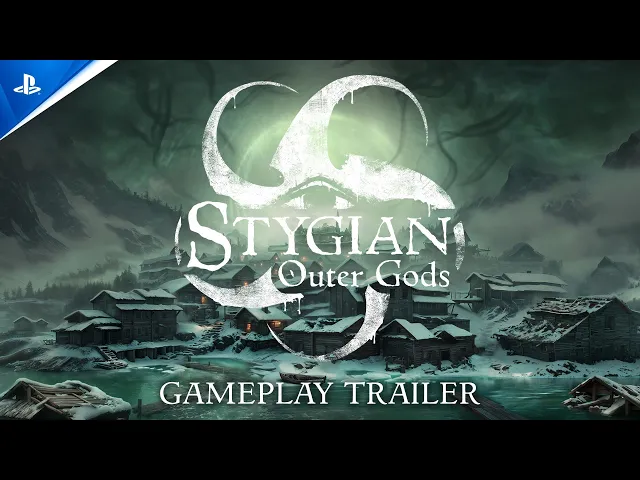
Stygian: Outer Gods from the studio Misterial Games attempts to find a balance between Lovecraftian horror, RPG, and survival mechanics. There is a cursed town, mysterious cultists, otherworldly creatures, limited supplies, and sanity that cannot withstand an encounter with the incomprehensible. And also — melee weapons, firearms, and the ability to decide for yourself whether the next creepy basement is worth the spent bullets and nerve cells.
After a year and a half in early access, the game is finally getting a full release. The developers promise a completed story, new locations, enemies, weapons, and bosses. But is Outer Gods capable of offering something more than another journey through scenery from Lovecraft's works? And most importantly — did the authors manage to turn an interesting concept into a genuinely engaging game?
Platform: PC (Ryzen 5 7500F, NVIDIA RTX 4070 Ti Super (16 GB), 32 GB RAM)
Time in game: including "early access" versions — 19 hours
Welcome to Kingsport
At the center of the story is Jack Harrison, a former anthropologist and soldier, whom a mysterious girl named Victoria invites to travel to Kingsport. Once a prosperous port city, it has long since fallen into decline, and its fog-shrouded streets hold too many unpleasant secrets. For Jack, this expedition also has personal significance: he hopes to find out what happened to his missing father, who had previously taken an interest in this place.

However, the journey, by the laws of the genre, almost immediately goes off plan. A shipwreck traps the heroes, and the first attempts to explore the city streets turn into a series of encounters with creatures that clearly do not belong in ordinary reality. Gradually, the personal investigation grows into something far larger: the city is threatened by the approach of the Black Day — a catastrophic event connected to the awakening of ancient forces.
Outer Gods exists in the universe of Stygian: Reign of the Old Ones and tells of events preceding the Black Day. At the same time, familiarity with the first game is not required. The prequel offers its own story, which can be experienced as a standalone adventure.
The setup does not rush to reveal all its cards and is therefore intriguing. Kingsport seems dead, but the emptiness of its streets does not mean there is no one here. Strange things happen behind closed doors, locals behave extremely suspiciously, and the letters and diaries you find gradually assemble into a grim picture of what is happening.

At the same time, the game does not try to constantly scare the player with cheap jump scares. Its main tools are an unsettling atmosphere, understatement, and the feeling that beyond the limits of human understanding there exists something enormous and completely indifferent to our fate. Of course, one should not count on exclusively subtle psychological horror. There are plenty of monsters, battles, and quite tangible threats here. But in its best moments, Outer Gods succeeds excellently in conveying the main mood of Lovecraft's works: the most terrifying thing is the unknown.
World Exploration and Location Structure
Kingsport and its surroundings consist of interconnected locations, including old streets, an aristocratic mansion, mines, cemeteries, forests, a lighthouse, and areas of the otherworldly realm.

This is not an open world in the usual sense, but rather a kind of metroidvania. The game offers you to explore individual territories, search for keys and clues, open new passages, and return to already familiar places when the right tools or information become available. You have to carefully examine your surroundings, read notes, and remember details. Notably, the game's plot is revealed not only through dialogue but also through environmental objects that tell of the city's former inhabitants.
Puzzles complement exploration and help break up the combat. Not all of them boil down to finding the right key: some require correlating information, studying the environment, and paying attention to oddities that are easy to miss on a casual glance. For those who enjoy methodically studying game worlds, Outer Gods can offer quite a lot of interesting content. You want to check suspicious corners and read the documents you find. Sometimes curiosity is rewarded with useful equipment, sometimes with a fresh batch of trouble.
Every Bullet Counts
Stygian: Outer Gods does not try to turn the player into a monster-killing machine. In the early stages, the hero is quite vulnerable, enemies can quickly punish mistakes, and resources must be conserved.

Jack has both melee weapons and firearms at his disposal. A knife and sickle help save bullets, a heavy hammer allows for powerful strikes, and a revolver, shotgun, and rifle make it possible to deal with threats at a distance. But even having weapons does not guarantee victory: some encounters require caution, and sometimes it is wiser not to engage in battle at all.
Melee combat is built around stamina management, blocking, dodging, and choosing the moment for a counterattack. You cannot just swing your weapon mindlessly: attacks consume stamina, and a failed lunge leaves the hero open to a retaliatory strike. When there are multiple enemies, the situation becomes even more dangerous.

Firearms are easier to learn, but their effectiveness is limited by the amount of ammunition. Found bullets must be saved for truly dangerous encounters, and materials and crafting recipes allow you to create some necessary items yourself. As a result, even an ordinary enemy can make you think: is it worth spending valuable resources on him, or is it better to try to sneak past?
Stealth serves as an alternative to direct confrontation, although one should not expect a full-fledged stealth action game. It helps avoid some threats and choose a more advantageous moment to act, but it does not turn every encounter into a complex tactical puzzle. Combat in the release version is still not without flaws. Fights feel tense but clumsy — attacks are too heavy, the hero's movement is severely limited, and strike animations do not always look convincing.
Consequences of Encounters with the Otherworldly
Physical health is far from the only thing you have to monitor in Kingsport. The world of Outer Gods is also dangerous for the psyche: encounters with otherworldly creatures and other frightening events can cause mental disorders that affect gameplay.

This is an important part of the Lovecraftian atmosphere. The hero cannot endlessly look at something that violates the laws of ordinary reality and remain unchanged. An encounter with the unknown has consequences, and the character's state becomes another factor that must be taken into account when exploring the world. What has been experienced leaves a mark on the hero and over time leads to the development of mental disorders. They directly affect further progression, changing the perception of the game and the character's behavior.
To survive, you must search for useful items, gather materials, and create medicines and other means that help cope with the consequences of your adventures. A limited inventory forces you to plan your further route and assess how many dangers the hero is capable of surviving.

Leveling up in the game is implemented through Sin Cards and Seer Cards. They allow you to select passive abilities, bonuses, and modifiers to suit your personal survival style. The cards must be found during world exploration. Some of them open new interactions and access to hidden zones; others serve as modifiers and enhancers that increase the character's overall potential. The second layer of build-crafting is various characteristics: eloquence, occultism, lockpicking, and so on.
Visual Style, Atmosphere, and Technical State
Outer Gods makes its strongest impression through its environment and location design. Abandoned buildings, fog-shrouded streets, gloomy forests, and underground spaces form a unified (and, importantly, convincing) visual image. Locations where familiar architecture gradually gives way to something alien and inexplicable work especially well.

The developers use Unreal Engine 5 and focus on detailed environments and lighting. But it is not the graphics in a vacuum that create the atmosphere: what matters far more is how the game works with visibility, space, and sound. When fog hides distant objects and a tight corridor does not allow you to understand in advance what is around the corner, the visual style genuinely helps build tension.
At the same time, the game's technical state still leaves much to be desired. Yes, compared to earlier versions, Outer Gods has become much more stable, but stutters and severe frame drops — especially in open areas — still occur.
What Changed by the Full Release
Early access began on April 14, 2025, and during development the game received several major updates.

Even before release, the developers added new areas of the mansion, a basement, and a crypt, expanded the set of quests and story characters, and also introduced new enemies. Updates also affected combat balance and the save system.
The main changes in version 1.0 are related to the logical conclusion of the adventure. A major story episode, additional puzzles, artifacts, weapons, crafting recipes, enemies, and a boss appeared. In total, accounting for all updates, the game's volume feels like it has nearly doubled compared to the launch version.
Overall, the release continues the formula the developers set out and barely tries to go beyond its framework. All changes in the release version are purely horizontal, intended to expand existing content.
Will you play Stygian: Outer Gods?
***
Stygian: Outer Gods attracts primarily through its atmosphere and setting. It is pleasant (and creepy at the same time) to explore abandoned buildings, search for clues, solve the mysteries of Kingsport, and gradually learn how the main character's personal story is connected to the impending catastrophe. Survival mechanics complement exploration, forcing you to conserve ammunition, monitor the character's condition, and think about when it is better to engage in battle and when to retreat. RPG elements and artifacts give some freedom in development, and the plot is gripping and intriguing. Unfortunately, it is not without rough edges. The combat system sometimes feels clumsy, the stealth mechanic is not fully realized, and technical problems remain. In addition, fans of deep RPGs should not expect a complex development system, and fans of pure horror should not expect a constant feeling of helplessness: Outer Gods does try to combine several genres at once. In places, the game repeats its own ideas several times. Stygian: Outer Gods is a distinctive project for those who are attracted not so much by shooting monsters as by unraveling mystical secrets, as well as the freedom of exploration. It is not an indisputable masterpiece or a revolution of the genre, but the game has its own atmosphere and engaging mechanics.
-
 18 Best Games Like Kingdom Come: Deliverance
-
 TOP-20 Best Games Like Dark Souls: Souls-likes on PC and Consoles
-
 Tokyo Game Show 2026 Highlights — Announcements, Trailers, and the Best Games
-
 38 Best Games Like Skyrim in 2026: Open-World RPGs to Play After Skyrim
-
 27 Best Games Like Call of Duty: Shooters Set in the Past, Present and Future