
The End of Game Ownership? Why PlayStation Is Abandoning Discs
 Fazil Dzhyndzholiia
In early July, Sony "delighted" gamers with the news that it would stop releasing games on physical media in 2028. Moreover, disc production will cease altogether, meaning the process cannot even be outsourced to another company. The announcement triggered one of the biggest PR nightmares in the history of the PlayStation brand: thousands of angry posts and comments flooded social media, and the backlash has shown no sign of dying down even after almost three weeks. It is easy to understand Sony's community: yes, many suspected that digital distribution would eventually replace physical media altogether, but few could have imagined it happening so soon. Especially since, at this point, an all-digital future looks profoundly bleak. Let us examine exactly what is so troubling about this situation, what PlayStation should have done instead, and whether there is still any chance of the decision being reversed.
What Happened
On July 1, Sony announced that starting in January 2028, it would stop producing discs for future PlayStation games. The decision applies to every new physical release, including both the company's own titles and games from third-party publishers. Projects released before the deadline will continue to be sold on disc. Game boxes will not immediately disappear from store shelves, but they will contain nothing more than a download code. In other words, exactly like GTA 6, whose physical editions will not include a disc.

In the official post, a Sony representative attributed the move away from physical media to changing consumer habits. According to the company, around 85% of PS4 and PS5 games are now purchased digitally. In light of these new buying preferences, one of the market leaders considers the transition a natural step and intends to focus its resources on developing PlayStation's digital ecosystem.
The community's reaction was turbulent, to put it mildly. The announcement itself received more than 100,000 angry replies and 170 million views. PlayStation then disappeared from social media for almost a week, even though its official account had previously posted nearly every day. The company's first new post, promoting the FlexStrike fighting game controller, attracted another 65,000-plus replies, which, predictably, once again focused on the decision to abandon discs. PlayStation has now resumed posting as usual, but almost every new update becomes yet another venue for protest. Take, for example, the new Marvel’s Wolverine trailer, released last week: in under two days, it drew more than 10,000 comments in support of physical releases. Meanwhile, more than 300,000 people have already signed a petition demanding that physical editions be preserved.
The controversy quickly spread beyond gaming communities. Sony's decision was covered by Reuters, Business Insider, and the Financial Times, while prominent industry figures, including Hideo Kojima and Laura Fryer, one of the founding members of the original Xbox team, spoke out against an all-digital future. Kojima described the prospect of losing genuine ownership of a purchased product as frightening, while Fryer warned that digital content can disappear along with its license or following a change in platform policy. Various publishers, major retailers of pre-owned games, and the UK's Entertainment Retailers Association also joined the criticism. Despite the continuing public outcry, Sony had made no further comments on the matter at the time of writing.

The final insult was a simultaneous announcement that the PS3 and PS Vita digital stores would gradually be shut down. The process will begin in selected regions as early as August 2026, with all services scheduled to be discontinued in July of the following year. Previously purchased games and other content will remain available for redownload for the time being.
The Advantages of Discs
No one disputes that more and more gamers are moving to digital purchases, but physical media still matters greatly to many of us because of its undeniable advantages. The most important is the simple fact that a player who buys a disc genuinely owns their copy. They can keep it forever, lend it to a friend, or sell it freely.
Some gamers do not realize that when they purchase a title from PlayStation's digital store, they receive not a transferable copy but a personal license to use the game. Access could theoretically be restricted or lost, and the purchase cannot be resold to another person. The situation on PC is broadly similar: Steam, for example, generally sells licenses rather than copies. GOG stands apart because its games are distributed without DRM and buyers can preserve standalone installation files, although legally these purchases are still licenses. With the PlayStation Store, however, genuine ownership of a purchased copy is out of the question.

The PS4 once pulled ahead of the Xbox One partly because Sony remained committed to traditional physical media, while Microsoft planned to impose a range of restrictions on discs that would have made it harder to share copies with friends. Microsoft eventually abandoned the idea, but now, ironically, Sony is heading down the same path.
Another common but inaccurate claim online is that modern PS5 discs are little more than blank media containing activation keys, with the actual game still needing to be downloaded. Such editions do exist, and some titles require a day-one patch, but the overwhelming majority of physical releases include the complete game. This means they can be installed from the disc without an internet connection, for example, when there are account problems or no connectivity due to a blackout. The DoesItPlay community of enthusiasts has tested hundreds of releases: according to its statistics, 66% of physical PlayStation 5 editions require no additional file downloads, while the figure for PS4 discs is even higher at 73%.

Discs also remain an important way to play new releases in countries where PlayStation Network is not officially available — and there are more than 100 such countries.
Finally, buying games on physical media is often cheaper than purchasing them digitally. Retail stores compete with one another, resulting in all kinds of attractive discounts. And, once again, there is always the option of picking up a pre-owned copy for very little money.
What do you usually do with physical copies after finishing a game?
The Horrors of an All-Digital Future
Digital games are more convenient to buy and use than discs, which is precisely why the format has become dominant: a couple of clicks, a quick download, and you are ready to play. However, until consumer rights are fully protected in this industry, abandoning physical media altogether without offering a direct alternative creates problems on several fronts.

As already mentioned, a digital license can be revoked under certain circumstances. Shortly before announcing the end of disc production, Sony revealed that it would remove more than 500 previously purchased films and TV shows from PlayStation users' libraries. There are no ironclad guarantees that the same thing will not happen to games in the future. After all, even the Stop Killing Games initiative, which collected more than 1 million signatures, has yet to secure mandatory rules protecting consumers from permanently losing access to games they have purchased.
A digital purchase cannot be handled like a disc: once tied to an account, it cannot be given away or resold. And by putting all their eggs in one basket — in this case, keeping their entire collection exclusively in digital form — users risk losing access to everything, for example, if their account receives a permanent ban.
Also to note, if the PlayStation Store effectively becomes the only place to buy games, consumers should expect fewer worthwhile promotions and sales.

It is also worth remembering that the current standard price of $70 for AAA releases was established partly to account for the costs of manufacturing and distributing physical media. Unfortunately, abandoning discs hardly means digital copies will suddenly become cheaper once publishers no longer have to cover those additional expenses. In other words, Sony's decision takes away an important option without giving consumers anything in return.
Why PlayStation Is Doing This
The official reason for the decision was outlined above: the balance between digital and physical purchases has shifted so dramatically that Sony no longer sees any point in producing discs. Nevertheless, many analysts and gamers believe that the proportion of the audience that prefers physical media is actually higher and that PlayStation's leadership simply wants greater control over sales.
It should be noted that the cited "85% of sales are digital" figure includes live-service titles, online games, and indie projects, some of which are not released on disc at all. The balance looks different if we consider only single-player, story-driven adventures. According to internal Sony documents leaked after the Insomniac Games hack, physical copies were outselling digital versions for most PlayStation exclusives as of early 2022.
For example, discs accounted for 83% of sales of Uncharted 4: A Thief's End, 77% of Sackboy: A Big Adventure, 76% of Ratchet & Clank: Rift Apart, 71% of Ghost of Tsushima: Director's Cut, and 70% of the Demon's Souls remake. Physical copies accounted for 66% of sales for both Marvel's Spider-Man and Marvel's Spider-Man: Miles Morales, while Returnal and The Last of Us: Part 2 each reached 61%. The audience was divided almost evenly in the case of Ghost of Tsushima, with 51% buying the game on disc and 49% choosing digital copies.
In other words, discs are still selling well. One only has to remember the excitement surrounding Resident Evil Requiem this year: physical copies temporarily sold out at some North American retailers because gamers bought every copy available.
Some industry experts believe that Sony is abandoning discs not because they are completely unprofitable, but to accelerate the migration of the PlayStation audience into a closed digital ecosystem and increase revenue. The company will no longer have to spend money distributing physical copies or share its profits with retail chains, while the pre-owned market will cease to be a concern. Most likely, Rockstar's leadership followed similar reasoning when it decided not to release GTA 6 on disc.
What This Means for PlayStation 6
Despite the substantial increase in component prices, PS6 will apparently still launch late next year, according to leaks from relatively reliable insiders such as KeplerL2. Given that the next-generation console is expected to arrive shortly before disc production ends, it is reasonable to make the bold assumption that it will be entirely digital. Since the future device will most likely be backward compatible with PS5 and PS4, the main question is whether Sony will allow players to purchase and connect a separate disc drive to preserve access to at least their physical libraries from previous generations. That is difficult to predict.
What Sony Should Have Done
This PR disaster could easily have been avoided — Sony simply did not need to eliminate a way of buying games that remains important to many console players. At the very least, the complete abandonment of discs could have been postponed for as long as new games continue to be released on PS5. And Sony certainly should not have made such an announcement immediately after revealing that purchased films would be removed from users’ libraries and alongside the news that the PS3 and PS Vita digital stores were closing. Sony's representatives effectively demonstrated the greatest weakness of an all-digital future themselves: an entire library becomes dependent on the decisions of the platform holder. The company could shut down the PS5 PlayStation Store 20 years from now, at which point the only games still available for purchase would be physical editions released before 2028.
Sony could also have preserved discs by turning them into a premium format for its most dedicated customers, who prefer buying exclusives on physical media. The company could have raised the prices of such editions to cover the additional expenses while still giving consumers a choice. One only has to look at the music industry, where new albums continue to be released on vinyl even though streaming services have dominated the market for years.
Could Sony Reverse Its Decision?
It is difficult to say. Some analysts consider this scenario unlikely, especially given reports that employees at Sony's main disc manufacturing plant are already being retrained for work at a new production facility. However, the company's announcement provoked a level of backlash that PlayStation has arguably never faced before. It is therefore possible that Sony will still attempt to find some form of compromise.
What About Xbox and Nintendo?
This would, of course, be the perfect moment for Microsoft to ride in on a white horse, reaffirm its commitment to physical media, and win over disc collectors — essentially taking a measure of revenge for E3 2013. But no one should count on that happening. Rumors suggest that the next Xbox console will also lack a disc drive, while the company's physical releases have become increasingly disappointing over the years: almost all of them require files to be downloaded from the internet and therefore cannot be installed entirely offline. Worth noting, the Xbox division itself has been in such turmoil following a leadership change and yet another wave of developer layoffs that placing any faith in it currently seems questionable. There is, however, one interesting detail: according to rumors, Xbox is considering how to let users convert disc-based games into digital copies, allowing gamers to retain access to their physical libraries when moving to a console without a disc drive.
Nintendo, on the other hand, has emerged from this situation looking better than anyone else. Last year, the company was criticized for its so-called Game-Key Cards — empty Nintendo Switch 2 cartridges that contain no game files and are used to download the software from the internet. Nevertheless, even this format is preferable to a purely digital one because the cartridges can still be lent to friends and resold.
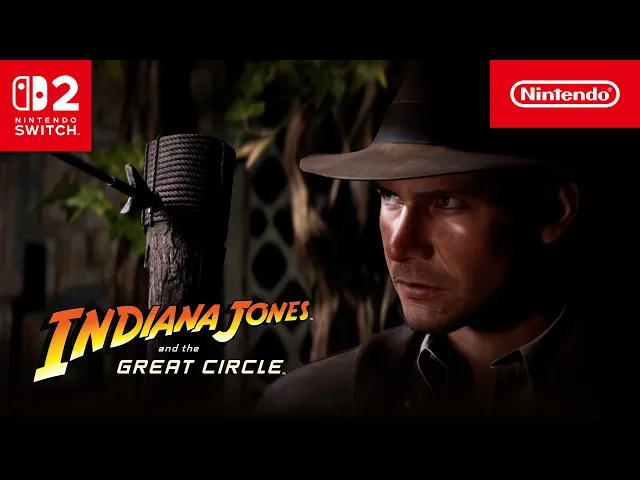
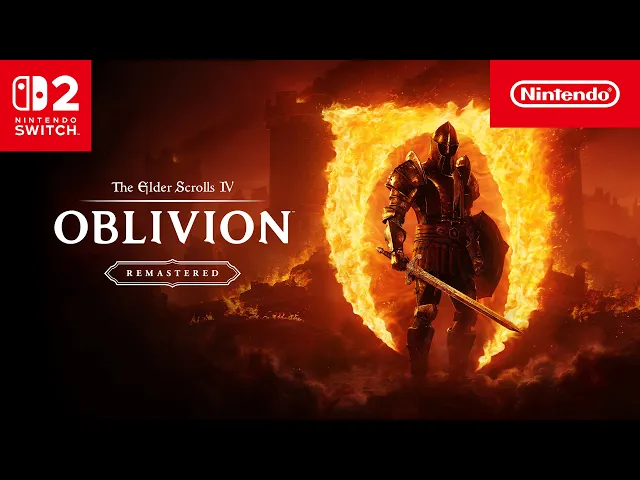
Also the share of proper physical editions for Nintendo's new console has increased substantially over the past year. More and more games are being released on 64 GB Switch 2 cartridges containing the complete version. Indiana Jones and the Great Circle went on sale this spring, while The Elder Scrolls 4: Oblivion Remastered will arrive on the system soon. In both cases, the entire game is stored on the cartridge — despite the fact that both are published by Microsoft, which did not bother putting either title on disc.
Overall, the physical media situation on Nintendo Switch 2 is only getting better. It is therefore unsurprising that social media is seeing a growing number of posts from users who have sold their PS5 consoles and moved to NS2. If you are considering the same purchase, do not miss our Switch 2 review and our selection of Nintendo's biggest releases of the year.
What format do you buy most of your console games in?
***
Abandoning discs may increase PlayStation's profits, but the question remains whether the potential gains are worth inflicting such serious reputational damage on the brand. Although Sony's gaming division is generally performing well on paper, many gamers have been somewhat disappointed with the company during this generation. After all these years, it still feels as though the system has failed to produce any truly unmissable exclusives. And aside from those games, what can the PS5 offer that is unavailable on PC? For a considerable number of players, discs were precisely that advantage.
If the industry is moving toward an all-digital future anyway, why not invest in a powerful PC and use Steam, where prices are better and the refund system is more convenient? Of course, a PC is more expensive upfront, but it can prove more economical in the long run. All that remains is to hope that Sony understands the seriousness of the situation and ultimately finds some kind of solution.
Perhaps the only positive thing to come out of this whole situation is that a huge number of people have finally started thinking about their rights and what exactly they own after buying a game. This is an important conversation: the more players understand the difference between a physical copy and a digital license, the harder it will be for the industry to ignore consumer interests.
Would you stay with PlayStation even if disc-based games disappeared? Would you consider moving to Switch 2 or a gaming PC? Tell us in the comments.
-
 Halo: Campaign Evolved Physical PS5 Disc Won't Boot without a Download
 -
 “No Disc, No Buy”: Metal Gear’s Snake Voice Actor Backs PlayStation Boycott
 -
 PS6 Disc-Free Future Could Block Store Access in 121 Countries
 -
 Jason Schreier Says Sony Should Have Offered Benefits Before Ending PlayStation Discs
 -
 "We Want Physical Games": New Marvel's Wolverine Trailer Sparks Debate Over the Future of Disc Releases