
All Tomb Raider Games in Order: Every Game, Movie and the Series Timeline
 Anastasiia Sokolova
Even people who have never touched a controller know Lara Croft: dual pistols, a braid, an ancient temple collapsing behind her. In almost 30 years the series has told three different versions of her story, spawned movies with two different actresses, a Netflix animated series and a whole queue of upcoming games. It is easy to lose track of what to play and watch, and in what order. Below is the full breakdown: every Tomb Raider game by year, the three big eras of the series, the spin-offs, the remasters, the movies and a clear answer to the "where do I start" question.
Series Chronology
- Every Metal Gear Game in Order: Story Chronology and Release Order Explained
- In What Order to Play Resident Evil Games Before Requiem
- What order to watch Marvel Cinematic Universe movies and TV shows in
- All Silent Hill Games in Order
- All Dark Souls Games in Order — and Where to Start with FromSoftware's Soulslikes
- All Yakuza (Like a Dragon) Games in Order: Where to Start and Full Chronology
- All Tomb Raider Games in Order: Every Game, Movie and the Series Timeline
- Where to Start With Warhammer 40,000 — Games, Lore & Books for Beginners
All Tomb Raider Games in Order: Release and Story Timeline
Tomb Raider comes with a twist most series don't have. Usually release order and story chronology either match or drift apart by a prequel or two. Here Lara's story has been retold from scratch twice, so the series has three distinct eras — each with its own version of the heroine and her own past:
- Classic era (Core Design, 1996–2003) — one continuous story: from the first expedition to the Egyptian drama and the aborted "Angel of Darkness" trilogy;
- Legend era (Crystal Dynamics, 2006–2008) — the story rewritten from scratch: a different Lara, a different past, a tidy trilogy about the search for her mother;
- Survivor trilogy (2013–2018) — a full reboot built around an origin story: how an ordinary graduate becomes a tomb raider.
Within the classic era and the Survivor trilogy the story runs in release order. The Legend era has one exception: Anniversary is a remake of the very first game, so in story terms it comes before Legend even though it launched a year later. And the newest games have started tying the eras together: the studio now frames the Survivor trilogy as Lara's origin, while the upcoming Catalyst continues the Legend line — set years after Underworld. Here is the full release order of the main games:
- 1996 — Tomb Raider;
- 1997 — Tomb Raider 2;
- 1998 — Tomb Raider 3;
- 1999 — Tomb Raider: The Last Revelation;
- 2000 — Tomb Raider Chronicles;
- 2003 — Tomb Raider: The Angel of Darkness;
- 2006 — Tomb Raider: Legend;
- 2007 — Tomb Raider: Anniversary;
- 2008 — Tomb Raider: Underworld;
- 2013 — Tomb Raider (reboot);
- 2015 — Rise of the Tomb Raider;
- 2018 — Shadow of the Tomb Raider;
- 2024 — Tomb Raider 1–3 Remastered;
- 2025 — Tomb Raider 4–6 Remastered;
- 2027 — Tomb Raider: Legacy of Atlantis;
- 2028 — Tomb Raider: Catalyst.
The Classic Era: Lara by Core Design (1996–2003)
It all began at the British studio Core Design. This is where the angular yet endlessly charismatic Lara was born, along with the tank controls, grid-based platforming and demanding puzzles the series was loved for. Six games from this era are tied into one story, and it ends abruptly — on a failed experiment, after which the franchise changed hands.
Tomb Raider (1996)
- Developer: Core Design;
- Genre: action-adventure, puzzle;
- Platforms: PlayStation, Sega Saturn, MS-DOS/PC;
- Release date: 1996.
This is where the legend started. In Tomb Raider Lara hunts for the ancient Scion artifact, exploring tombs across Peru, Greece and Egypt. No companions and no hand-holding — just acrobatics, leaps over chasms and logic puzzles in vast, empty halls. For 1996 it was a breakthrough: a 3D adventure with a strong heroine in the lead, something the industry had not seen before.
Tomb Raider 2 (1997)
- Developer: Core Design;
- Genre: action-adventure, puzzle;
- Platforms: PlayStation, PC;
- Release date: 1997.
The sequel arrived just a year later and was bigger in every way. Tomb Raider 2 sends Lara after the Dagger of Xian — from snowy Tibet to sunken ships and the canals of Venice. There were noticeably more gunfights and human enemies now, and the heroine gained her iconic mansion, where you can train before heading out into the field.
Tomb Raider 3 (1998)
- Developer: Core Design;
- Genre: action-adventure, puzzle;
- Platforms: PlayStation, PC;
- Release date: 1998.
The third game is famous for how brutal it is: levels got longer, traps nastier and route choice more open. Tomb Raider 3 drives Lara around the globe, from the jungles of India to Antarctica, chasing meteorite artifacts. Many fans still consider it the hardest game of the classic era.
Tomb Raider: The Last Revelation (1999)
- Developer: Core Design;
- Genre: action-adventure, puzzle;
- Platforms: PlayStation, Dreamcast, PC;
- Release date: 1999.
The fourth game takes place entirely in Egypt and tells a far more cohesive story: after a prologue featuring a teenage Lara, the adult heroine accidentally awakens the god Set and spends the rest of the game trying to undo it. Tomb Raider: The Last Revelation ends on a bold note for the series — the heroine is buried in a collapsing tomb, and Core Design seemed to say goodbye to her for good.
Tomb Raider Chronicles (2000)
- Developer: Core Design;
- Genre: action-adventure, puzzle;
- Platforms: PlayStation, Dreamcast, PC;
- Release date: 2000.
After Lara's "death," her friends recall her past adventures — that is how Tomb Raider Chronicles is built. It is a collection of four separate stories: Rome, a submarine, the skyscraper of a high-tech corporation and the heroine's youth. The game is more intimate than the rest, but it showed new sides of Lara, including her very early years.
Tomb Raider: The Angel of Darkness (2003)
- Developer: Core Design;
- Genre: action-adventure, puzzle;
- Platforms: PlayStation 2, PC;
- Release date: 2003.
An ambitious attempt to relaunch the series on a new console generation. Tomb Raider: The Angel of Darkness added stealth elements, dialogue and a dark detective plot with Lara accused of murder. A whole trilogy was planned, but the game shipped unfinished and the plans were scrapped. It was right after this failure that the American studio Crystal Dynamics took over — and Lara's second life began.
The Legend Era: A Reboot by Crystal Dynamics (2006–2008)
Once it took over the series, Crystal Dynamics didn't continue the classics but gently rebooted them. The controls became smoother, Lara more human, and the three games of this era formed a tidy trilogy about the search for her mother and the legendary island of Avalon. In story terms it is a separate universe, unconnected to the Core Design games.
Tomb Raider: Legend (2006)
- Developer: Crystal Dynamics;
- Genre: action-adventure;
- Platforms: PlayStation 2, Xbox, Xbox 360, PC, PSP, GameCube;
- Release date: 2006.
A clean start for the heroine. Tomb Raider: Legend introduces a revamped Lara who follows the trail of a mysterious artifact while untangling the disappearance of her own mother. The game was far more cinematic than its predecessors: staged set pieces, chases and the familiar tech-support sidekick on the radio. After it, the series firmly won back its popularity.
Tomb Raider: Anniversary (2007)
- Developer: Crystal Dynamics;
- Genre: action-adventure, puzzle;
- Platforms: PlayStation 2, PSP, Xbox 360, Wii, PC;
- Release date: 2007.
A full remake of the very first game, released for the series' tenth anniversary. Tomb Raider: Anniversary retells the hunt for the Scion, but now on the Legend engine — with smooth acrobatics and reworked puzzles. It is a great way to experience the story of the 1996 original without wrestling with the archaic controls of the time.
Tomb Raider: Underworld (2008)
- Developer: Crystal Dynamics;
- Genre: action-adventure;
- Platforms: PlayStation 2, PlayStation 3, Xbox 360, Wii, PC, Nintendo DS;
- Release date: 2008.
The finale of the Crystal Dynamics trilogy. Tomb Raider: Underworld concludes Lara’s search for her mother, weaving Arthurian legends of Avalon together with Norse mythology as she travels to Thailand, Mexico, and icy caves. Locations grew larger and more beautiful, and the heroine gained more freedom of movement. With that the Legend era ended, and the series took another break before its next big reboot.
The Survivor Trilogy: How a Tomb Raider Is Born (2013–2018)
In 2013 Crystal Dynamics took a radical step — it rebooted the series from scratch and showed a very young, still inexperienced Lara. The three games of this trilogy tell her origin: from a terrified student who kills for the first time to a confident adventurer. This is the most modern era and the most newcomer-friendly.
Tomb Raider (2013)
- Developer: Crystal Dynamics;
- Genre: action-adventure, survival;
- Platforms: PlayStation 3, PlayStation 4, Xbox 360, Xbox One, PC;
- Release date: 2013.
The reboot that started the modern Lara. Tomb Raider strands the heroine on the lost island of Yamatai off the coast of Japan, where she has to survive, hunt and take up arms for the first time in earnest. The story of how a character breaks and hardens turned out to be stronger than many expected. We covered it in more detail in our Tomb Raider (2013) review.
Rise of the Tomb Raider (2015)
- Developer: Crystal Dynamics;
- Genre: action-adventure, survival;
- Platforms: PlayStation 4, Xbox One, Xbox 360, PC;
- Release date: 2015.
The second chapter sends Lara to snowy Siberia in search of the legendary city of Kitezh and the secret of immortality. Rise of the Tomb Raider noticeably expanded exploration: more optional tombs, crafting and open spaces. Lara is more confident here, but still chasing her father's legacy.
Shadow of the Tomb Raider (2018)
- Developer: Eidos-Montréal;
- Genre: action-adventure, survival;
- Platforms: PlayStation 4, Xbox One, PC;
- Release date: 2018.
The finale of Lara's origin. Shadow of the Tomb Raider moves the action to the jungles of Latin America, where Lara carelessly triggers a Maya apocalypse and has to stop it. This entry puts the most emphasis on tombs and underwater exploration, and Lara finally becomes the tomb raider we know.
Spin-offs and Mobile Games Starring Lara Croft
Beyond the main line, the series has side projects — with a different camera, mechanics and genre. They are not required to follow the story, but some of them are genuinely great.
Tomb Raider (2000, Game Boy Color)
- Developer: Core Design;
- Genre: action-adventure, puzzle;
- Platforms: Game Boy Color;
- Release date: 2000.

A standalone handheld adventure rather than a port. Tomb Raider on Game Boy Color moves the signature jumps and puzzles to a side view and proves Lara works even in two dimensions.
Tomb Raider: Curse of the Sword (2001, Game Boy Color)
- Developer: Core Design;
- Genre: action-adventure, puzzle;
- Platforms: Game Boy Color;
- Release date: 2001.
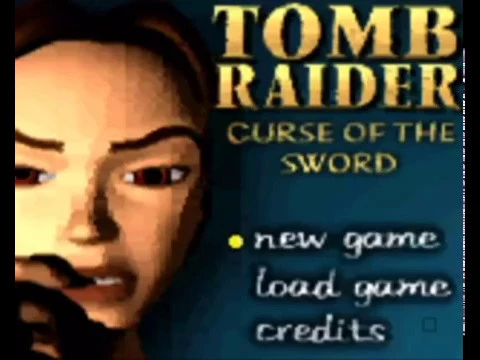
A direct sequel to the handheld debut. Tomb Raider: Curse of the Sword sends Lara to New York after a cursed artifact and adds new traps and enemies to the formula.
Lara Croft Tomb Raider: The Prophecy (2002, Game Boy Advance)
- Developer: Ubisoft;
- Genre: action-adventure, puzzle;
- Platforms: Game Boy Advance;
- Release date: 2002.
![[Game Boy Advance] Lara Croft Tomb Raider - The Prophecy](https://i.ytimg.com/vi_webp/LUnmeOPdX9A/hqdefault.webp)
The last handheld adventure of the classic era. Lara Croft Tomb Raider: The Prophecy brings the series to Game Boy Advance with an isometric view and a focus on artifact puzzles.
Lara Croft and the Guardian of Light (2010)
- Developer: Crystal Dynamics;
- Genre: arcade action, co-op;
- Platforms: PlayStation 3, Xbox 360, PC, mobile;
- Release date: 2010.

The first major experiment with a top-down isometric view. Lara Croft and the Guardian of Light leans on co-op: teaming up with the ancient warrior Totec, players solve physics puzzles and fend off swarms of enemies. Fast, light and nothing like the main series — a pleasant break between the big adventures.
Lara Croft: Reflections (2013)
- Developer: Crystal Dynamics;
- Genre: collectible card game;
- Platforms: mobile (iOS);
- Release date: 2013.

The series' strangest experiment. Lara Croft: Reflections is a small card game that launched quietly and almost unnoticed; today it is mostly of interest to collectors and franchise historians.
Lara Croft and the Temple of Osiris (2014)
- Developer: Crystal Dynamics;
- Genre: arcade action, co-op;
- Platforms: PlayStation 4, Xbox One, PC;
- Release date: 2014.
A direct evolution of the Guardian of Light ideas. Lara Croft and the Temple of Osiris moves the action to Egypt and lets four people play at once. The puzzles got trickier and the co-op chaos more fun. In spirit it is still an arcade for a group rather than a solo story adventure.
Lara Croft: Relic Run (2015)
- Developer: Simutronics, Square Enix;
- Genre: endless runner;
- Platforms: mobile (iOS, Android);
- Release date: 2015.
![[NA] Lara Croft: Relic Run Launch Trailer](https://i.ytimg.com/vi_webp/jDq_PPpgLaI/sddefault.webp)
A mobile endless runner. Lara Croft: Relic Run sends the heroine sprinting through ruins and jungles with obstacles, shooting and vehicle chases — an optional but brisk arcade fix for phones.
Lara Croft GO (2015)
- Developer: Square Enix Montréal;
- Genre: turn-based puzzle;
- Platforms: mobile, PC;
- Release date: 2015.
An elegant mobile puzzler that turns Lara's adventures into an unhurried turn-based puzzle. Lara Croft GO takes the familiar traps, ledges and ancient ruins and presents them in a stylish, minimalist wrapper. A great example of moving a big series onto phones without losing its character.
Tomb Raider Reloaded (2023)
- Developer: Emerald City Games;
- Genre: action roguelite;
- Platforms: mobile (iOS, Android);
- Release date: 2023.
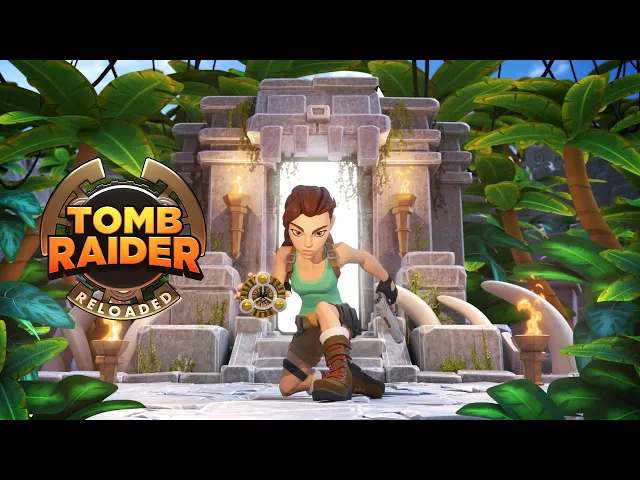
A later mobile spin-off with a top-down view and a roguelite structure. Tomb Raider Reloaded sends Lara to clear procedural levels, fighting off waves of enemies and gradually upgrading her gear. It is a small project built for short runs, but it nods to the classics with familiar traps and references.
The Remasters: How to Play the Classics Today
For years, getting the old games running on modern hardware was a quest of its own. In the mid-2020s that was solved with two collections that gathered the whole classic six with comfortable controls and a graphics toggle between "classic" and "modern."
Tomb Raider 1–3 Remastered (2024)
- Developer: Aspyr, Crystal Dynamics;
- Genre: action-adventure, puzzle;
- Platforms: PlayStation 4, PlayStation 5, Xbox One, Xbox Series X|S, Nintendo Switch, PC;
- Release date: 2024.
A collection of the first three numbered games in refreshed form. Tomb Raider 1–3 Remastered lets you switch between the original and modernized graphics at the press of a button, and play with either the classic "tank" or the new control scheme. The ideal entry point for anyone who wants to meet the roots of the series without fiddling with old-game settings.
Tomb Raider 4–6 Remastered (2025)
- Developer: Aspyr, Crystal Dynamics;
- Genre: action-adventure, puzzle;
- Platforms: PlayStation 4, PlayStation 5, Xbox One, Xbox Series X|S, Nintendo Switch, PC;
- Release date: 2025.
The follow-up to the remaster project, gathering the second half of the classics: The Last Revelation, Chronicles and The Angel of Darkness. Tomb Raider 4–6 Remastered works the same way — a graphics toggle and a choice of control scheme. The Angel of Darkness is especially interesting here: the game so divisive in 2003 can finally be judged in a friendlier form.
The Future of the Series: Two New Games on Unreal Engine 5
The new games are published by Amazon Games in partnership with Crystal Dynamics, which handles development. The result is two Unreal Engine 5 projects announced as a major new chapter for Tomb Raider. Legacy of Atlantis is slated for 2027, Catalyst for 2028.
Tomb Raider: Legacy of Atlantis (2027)
- Developer: Crystal Dynamics, Flying Wild Hog;
- Publisher: Amazon Games;
- Genre: action-adventure;
- Platforms: PlayStation 5, Xbox Series X|S, PC;
- Status: in development, targeting a 2027 release.
Another look at how it all began. Tomb Raider: Legacy of Atlantis is envisioned as a reimagining of Lara's very first adventure on modern technology — with an expanded story, deeper exploration and puzzles. In essence, it is a new attempt to tell the story of the 1996 original in a way that lands for a new generation of players.
Tomb Raider: Catalyst (2027)
- Developer: Crystal Dynamics;
- Publisher: Amazon Games;
- Genre: action-adventure;
- Platforms: PlayStation 5, Xbox Series X|S, PC;
- Status: in development, targeting a 2028 release.
A direct continuation of the Legend line: Tomb Raider: Catalyst is set years after Underworld, bringing back that Lara for the first time in almost two decades. Its original story takes the heroine to northern India, where an ancient cataclysm has awakened forgotten forces. It is described as the most expansive entry in the series in terms of world and adventure. It is the game Amazon Games and Crystal Dynamics are betting on most for the series' new era.
Tomb Raider Movies and Shows
Lara left the games behind long ago. The series has two movie eras with different actresses, a Netflix animated series and a big live-action show in production. The screen adaptations share no common continuity — each tells its own version of the heroine.
Lara Croft: Tomb Raider (2001)

Lara's first outing on the big screen, played by Angelina Jolie. The film draws on the classic-era image: dual pistols, the mansion, a hunt for an ancient artifact and travels through exotic ruins. For its time it became one of the most successful video game adaptations and cemented Jolie as the definitive Lara.
Lara Croft Tomb Raider: The Cradle of Life (2003)

A direct sequel with the same Angelina Jolie. This time the heroine seeks the mythical Pandora's Box, with the action running from the Mediterranean to Africa. The sequel leaned more into action than the first film, and it closed the book on Jolie's Lara.
Tomb Raider (2018)

A reboot of the film series inspired by the Survivor trilogy. The young Lara was played by Alicia Vikander, and the plot largely follows the 2013 game: the island of Yamatai, a first serious trial and the forging of her character. A grittier, more grounded take, closer to the modern games than to Jolie's version.
Tomb Raider: The Legend of Lara Croft (2024–2025)

A Netflix animated series that continues the Survivor trilogy's story after the events of Shadow of the Tomb Raider. Hayley Atwell voices Lara. The show ran for two seasons: the first premiered in 2024 and the second, final season landed in December 2025. For fans of the game trilogy it is a direct continuation of a story they love.
Tomb Raider (Prime Video, in production)

A big live-action series for Prime Video, headed by Phoebe Waller-Bridge. Sophie Turner takes the role of Lara Croft, and filming began in early 2026. The series is based on the games and uses the canonical Lara Croft; whether it has its own separate continuity has not been revealed yet. By the time it airs it will be the most recent Tomb Raider adaptation.
Where to Start With Tomb Raider
Because of the three reboots, the series can feel intimidating. In reality it has several entry points, and all of them are easy:
- If you want modern gameplay and a coherent story — start with the 2013 reboot and continue through the Survivor trilogy. It stands on its own and requires no knowledge of the past;
- If you love puzzles and the classics — grab Tomb Raider 1–3 Remastered: the original games, but with comfortable controls and modern visuals at the push of a button;
- If you want the story of the very first game without the archaic feel — the Anniversary remake fits, and in 2027 that same story will be retold by Legacy of Atlantis;
- If you would rather watch than play — start with the 2018 film or the Netflix anime if you prefer the modern Lara, or the 2001 movie for the classic image.
The universal tip: if in doubt, start with Tomb Raider (2013). It is the most accessible entry point, and from there it is easier to decide whether you want to dig into the classics or wait for the new games.
Frequently Asked Questions
Quick answers to what people most often ask about the series and the best way into it.
In what order should you play the Tomb Raider games?
The easiest approach is to go era by era. Within each of the three eras (classic 1996–2003, Legend 2006–2008 and the Survivor trilogy 2013–2018) the story follows the release order — with one exception: Anniversary in the Legend era is a remake of the original, so story-wise it comes before Legend. Across the eras themselves you get different versions of Lara, so you can begin with any of the three.
How many Tomb Raider games are there?
There are twelve main numbered and story games: six in the classic era, three in the Legend era and three in the Survivor trilogy. On top of that come spin-offs like Lara Croft GO and Relic Run, the handheld adventures of the 2000s, two remaster collections and two new games slated for 2027 and 2028.
Which Tomb Raider game should a newcomer start with?
The 2013 reboot, Tomb Raider. It has modern controls, a clear standalone origin story for Lara and requires no knowledge of the earlier games. Fans of puzzles and retro should pick up Tomb Raider 1–3 Remastered.
How do the three Tomb Raider eras differ?
The Core Design classics are about tank controls, grid-based platforming, tough puzzles and Lara's original story. The Crystal Dynamics Legend era brought smoother controls and a new, more cinematic version of the heroine. The Survivor trilogy is a from-scratch reboot about a young Lara, with a focus on survival and action.
Are new Tomb Raider games coming?
Yes. Crystal Dynamics and Amazon Games are working on two Unreal Engine 5 projects — Legacy of Atlantis (a reimagining of the original, 2027) and Catalyst (a continuation of the Legend line, 2028). Alongside them, a Prime Video live-action series with Sophie Turner as Lara is on the way.
So which Tomb Raider era is your favorite — the tough classics, the Legend trilogy or the modern Survivor games? Tell us in the comments which one you started with.
Which Tomb Raider era did you start with?
-
 Tomb Raider: Legacy of Atlantis Devs Offer a Behind-the-Scenes Look at Egypt
 -
 New Tomb Raider: Legacy of Atlantis Video Showcases a Reimagined Greece
 -
 UK regulator finds safety breaches on the Tomb Raider series set
 -
 Tomb Raider: Legacy of Atlantis Demo Meets Mixed Reactions at Gamescom 2026
 -
 New Tomb Raider lets players tune combat, puzzles, and traversal separately