
The Live-Service Graveyard: How the Industry Burns Billions on Games That Die in Weeks
 Anastasiia Sokolova
Concord took years to develop and, according to press reports, cost hundreds of millions of dollars. The shooter’s servers shut down just 14 days after launch, and its peak concurrent player count on Steam was only 697. Sony announced refunds for buyers, then closed Firewalk, the studio behind the game, which employed around 170 people. Concord is the most striking example, but far from the only one: expensive live-service games are increasingly shutting down just weeks or months after launch. We look at the cost of these failures, why publishers keep investing in the model, and what sometimes forces them to reconsider their plans.
Key points
- Live-service games, or GaaS (games as a service), are designed for ongoing support through updates and seasons, with revenue coming from in-game purchases. According to Ampere, those purchases accounted for 77% of all spending on games in 2024, including mobile games. In Take-Two’s fiscal 2025 results, recurrent consumer spending accounted for 80% of net bookings, a measure of sales of products and services. At EA, the “live services and other” category generated 73% of revenue. These are different metrics, but both explain publishers’ interest in the model;
- A long lifespan is never guaranteed, however: Concord’s servers shut down 14 days after launch, and Highguard’s after 45. Other games close after several months;
- In a roundup published in May 2026, GameRant counted 52 shutdowns, including individual platform versions and online features as well as entire games. Of the 19 live-service releases from 2025 that TheGamer compared using SteamDB data, 11 had concurrent player counts more than 90% below their all-time peaks by January 2026. That measures concurrent players on Steam, not the loss of 90% of all players;
- Individual failures can cost hundreds of millions of dollars: around $200 million in losses associated with Suicide Squad, Concord’s expensive development, and roughly $765 million in impairment charges related to Bungie in Sony’s financial reports. Adding these figures together into a single “bill for failures” would be misleading: development spending, losses, and accounting write-downs are different things;
- There are success stories, too, including Helldivers 2, Fortnite, and Genshin Impact. But new games must compete for the time of players who already spend it in familiar live-service titles. Sony canceled 7 of its 12 planned projects and shut down Concord after its release. Following the cancellation of The Last of Us Online, Naughty Dog decided to focus on single-player narrative games.

Two weeks, 697 players, and a shuttered studio
Concord became a symbol of failed attempts to gain a foothold in the live-service market. The team-based hero shooter was developed by Firewalk, which Sony acquired in 2023. According to its developers, the journey from the earliest ideas to release took around 8 years, although full production only began in 2022.
Sony never disclosed an official budget. A $400 million figure circulated in the press, and VGTimes also reported on that estimate, but it remained unconfirmed. Citing sources, Kotaku reported that the initial development deal was worth slightly more than $200 million. That sum did not include the acquisition of the studio or the rights to the game, and the project’s total budget remains unknown. It is therefore impossible to say with confidence that Concord cost more than Marvel's Spider-Man 2 or God of War Ragnarok.
The game launched on August 23, 2024, at a price of $40. Its main competitors — Overwatch 2, Valorant, and Apex Legends — were already free to play. On launch day, Concord peaked at 697 concurrent players on Steam. Even its open beta had attracted more players. GameDiscoverCo estimated combined PC and PS5 sales at around 25,000 copies, but Sony never published official figures.
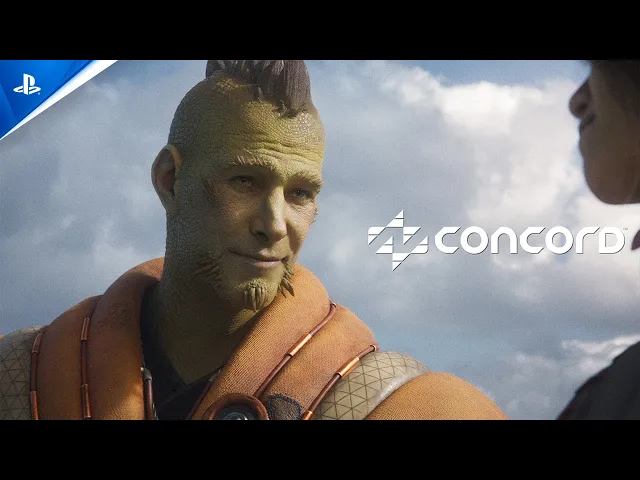
On September 3, Sony pulled Concord from sale and announced refunds for buyers. The servers shut down on September 6, exactly 14 days after launch. In late October, the company also closed Firewalk, which employed around 170 people.
Press coverage pointed to the upfront price, unremarkable characters, and competition in a market where major free-to-play shooters were already firmly established. Sony also acknowledged that the game had failed to stand out in a fiercely competitive genre. Price was only part of the problem: Concord gave players no compelling reason to leave their familiar games behind and move to a new one.
In August 2025, PlayStation Studios head Hermen Hulst outlined a principle when discussing the risks of live-service projects: if a game is going to fail, it should do so “early and cheaply.” Concord’s failure came late and at considerable expense. And it was far from alone.
Why publishers invest in live-service games
Even expensive failures do not deter publishers: they are betting that their next live-service game will succeed and generate revenue for years.
Most of the money comes from in-game purchases: skins, battle passes, virtual currency, and random rewards. According to Ampere, these accounted for 77% of all spending on games in 2024, a share that had remained roughly steady since 2019. That figure includes the mobile market, where the model has long been commonplace. Players can buy a game once or download it for free, then keep paying for additional content.
For major publishers, this is already the foundation of their business. In the fiscal 2025 results of Take-Two, which owns Rockstar, 2K, and mobile publisher Zynga, “recurrent consumer spending” accounted for 80% of net bookings. Net bookings is the company’s measure of sales of products and services; recurrent consumer spending includes virtual currency, additional content, in-game purchases, and advertising. At EA, the “live services and other” category generated 73% of revenue in the same fiscal year. That category also extends beyond microtransactions, covering additional content, subscriptions, advertising, and certain licensing revenues.
Individual hits show how much money is potentially at stake. Fortnite generated around USD 9.1 billion in revenue for Epic across 2018 and 2019 — figures made public during its court battle with Apple. AppMagic estimated that player spending on Genshin Impact through the App Store and Google Play had reached USD 6.3 billion by its fourth anniversary, excluding PC, consoles, and other stores. According to King, the Candy Crush franchise had generated more than USD 20 billion since its debut by September 2023. GTA Online has remained a major source of revenue for Rockstar for over 10 years. A successful live-service game can keep earning money well beyond the usual release cycle.
Those results drew publishers in. Replicating that success, however, proved harder than funding development.
Sony promised 12 live-service games
In May 2022, Sony presented investors with a plan that would repeatedly come back to haunt it: by the end of fiscal 2025, meaning March 2026, the company expected to have 12 live-service franchises. That same year, Sony acquired Bungie, whose experience supporting Destiny was supposed to help other PlayStation teams. Naughty Dog, Guerrilla, Firewalk, and other studios were working on live-service projects.
Other publishers were making similar bets, many of them before Sony’s announcement. Rocksteady, known for its single-player Batman: Arkham games, began working on the cooperative looter shooter Suicide Squad. Square Enix released live-service games based on established brands while also trying to launch new ones. Ubisoft, Sega, Amazon, and EA were likewise searching for games that could retain an audience and generate revenue for years.
The logic was appealing: one major hit could offset several failures. But new games needed more than development funding. They also needed players’ spare time, which Fortnite, GTA Online, Apex Legends, and other established live-service games were already competing for.
The graveyard: cancellations, shutdowns, and the end of support
The list of failures has grown considerably in recent years. These projects have met different fates, though: some were shut down entirely, others stopped receiving updates, and others were canceled before release.
Marvel's Avengers (Square Enix, 2020). A game based on one of the world’s most recognizable brands failed to meet its publisher’s expectations. Square Enix acknowledged that costs associated with the game pushed its HD Games division into an operating loss; without those costs, the division would have been profitable. Support for Avengers ended in September 2023, around 3 years after launch, and the game was removed from sale. Existing owners could still play it. In 2022, Square Enix also sold Crystal Dynamics and Eidos-Montréal, both of which had worked on the project.

Anthem (EA/BioWare, 2019). The online action game, built around flying in powered exosuits, never became the enduring live-service title its publisher had hoped for. A major overhaul was canceled in 2021, and the servers shut down on January 12, 2026. Anthem has no offline mode, so it became unplayable after the shutdown.
Babylon's Fall (Square Enix, 2022). Its servers shut down on February 28, 2023, just days before the first anniversary of its release. Its peak concurrent player count on Steam never even reached 1,200.
Crucible (Amazon, 2020). After launching in May, the team-based shooter was moved back into closed beta. Development ended in October, and the servers shut down on November 9. The game lasted just under 6 months.
Hyenas (Sega). The shooter was canceled in September 2023, shortly after a closed test. Press reports citing developers described it as Sega’s most expensive game project. The company never disclosed an official budget.
The Day Before (2023). The game was marketed as an ambitious zombie MMO, but just 4 days after its early access launch, Fntastic announced that it was closing the studio. The servers shut down on January 22, 2024, roughly a month and a half after launch.
Suicide Squad: Kill the Justice League (Warner Bros., 2024). The publisher attributed around $200 million in losses to the game’s failure. Its final seasonal update arrived on January 14, 2025, less than a year after release. The game was not shut down, however: its online features remained available, and an offline mode was added before new content updates ended.
XDefiant (Ubisoft, 2024). According to Insider Gaming, the shooter attracted 1 million players in its first two and a half hours. That strong start proved insufficient: the servers shut down on June 3, 2025, just over a year after launch. The decision to end development was accompanied by the closure of Ubisoft’s San Francisco and Osaka studios.
MultiVersus (Warner Bros., 2024). Following an open beta period, the game returned in May 2024 as a full release. Its online features were shut down on May 30, 2025, roughly a year later. Offline play remained available to players who had updated the game and logged in during its final season.
Spectre Divide (2024). The tactical shooter launched on PC in September 2024, and its servers shut down on April 17, 2025, roughly seven and a half months later. Developer Mountaintop also announced that it was closing.
There is no confirmed total for the losses associated with these projects. Many publishers do not disclose budgets, and the published figures measure different things: development spending, losses, and write-downs. It is therefore impossible to claim that this list has already cost the industry more than $1 billion. Even individual examples, however, show the scale of the risk: one failed bet on a live-service game can cost hundreds of millions of dollars.

Have you ever bought a live-service game at launch — and how did it go?
Player counts plunge after launch
The problems extend beyond games that have shut down entirely. Some live-service titles remain available but lose most of their concurrent players soon after launch.
In January 2026, TheGamer selected 19 notable live-service releases from 2025 and compared their all-time concurrent player peaks on Steam with their January figures. For 11 of the 19 games, concurrent player counts were more than 90% below their peaks. These included Supervive, FragPunk, and Mecha Break. FragPunk, for example, had fallen from roughly 114,000 concurrent players to 2,250. These are Steam figures: they exclude other platforms and do not show how many people have stopped playing permanently.
A decline after launch does not, by itself, mean a game has failed. Many people try a game at release, and some subsequently move on. In the same sample, Battlefield 6’s concurrent player count was roughly 83% below its all-time peak but still exceeded 129,000. The percentage looks alarming, even though the audience remains large. The situation becomes much harder when tens of thousands of concurrent players dwindle to a few hundred: finding matches becomes more difficult, as does generating enough revenue to sustain further support.

One of the most telling examples of 2026 was Highguard, a free-to-play online shooter from Wildlight Entertainment, a studio founded by Apex Legends and Titanfall veterans. The game launched on January 26 and peaked at roughly 97,000 concurrent players on Steam. By its second day, its daily peak was around 19,000, a decline of approximately 80%.
On February 11, the studio announced layoffs. According to Bloomberg, Tencent, which had financed the project, withdrew its support; neither party officially confirmed that report. The servers shut down on March 12, 45 days after launch. VGTimes reported at the time that Highguard had followed in Concord’s footsteps. Wildlight itself explained that it had been unable to build a sustainable audience large enough to support the game over the long term.
Why new live-service games struggle to find an audience
Failures are often blamed on a poor trailer, character designs, or bad reviews. All of these can affect a launch, but new live-service games also face a shared obstacle: much of players’ time is already committed to familiar titles.
According to Newzoo’s 2025 report, games at least 6 years old accounted for 57% of playtime on PC, PlayStation, and Xbox across 37 markets studied in 2024. In an earlier report, the company had put that share at 61% for 2023, but later revised it to 55%. The overall conclusion remained the same: players spent more than half their gaming time in older titles.
Circana analyst Mat Piscatella described a similar picture. In January 2025, the 10 leading live-service games accounted for more than 40% of all playtime on PS5 and Xbox Series X/S in the United States. More than 70% of active users on those consoles played at least one of them during the month.

For a live-service game, attracting someone for a few evenings is not enough: it must persuade them to keep coming back for months. A new title is competing with games where players already have friends, accumulated progress, and items they have paid for. They need a compelling enough reason to switch.
This helps explain the difficulties new live-service games face, but it does not reduce every failure to a single cause. Game quality, technical performance, price, and support after launch also matter. A large budget and an experienced team do not, by themselves, guarantee that players will stay.
Successful newcomers show that breaking into this market is still possible. Helldivers 2, released by Sony in 2024, became the publisher’s fastest-selling game, with around 12 million copies sold across PC and PS5 in its first 12 weeks.
ARC Raiders, which launched in fall 2025 and appeared in the same January sample from TheGamer, had sold more than 16 million copies by May 2026. According to Nexon, more than half of its active players had spent over 100 hours in the game. New live-service titles can still find large audiences. The success of individual hits, however, does not mean the market has room for every project aiming for the same result.
How publishers revised their plans
By 2025–2026, expensive failures had pushed publishers to approach new live-service games more cautiously.
Sony revised its plan for 12 projects. A tally from August 2025 showed that 7 had been canceled before release, while another, Concord, had shut down after launch. The cancellations included the multiplayer The Last of Us game and projects from Bend and Bluepoint. London Studio, which was also developing an online game, was closed entirely.
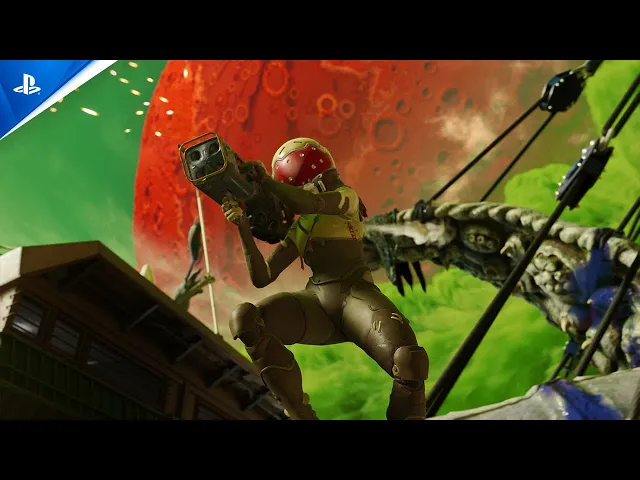
Naughty Dog decided to focus on narrative single-player games. The studio explained that supporting The Last of Us Online would have required so many resources that its other projects would have been put at risk. Its next game, Intergalactic: The Heretic Prophet, directed by Neil Druckmann, continues that single-player focus.
As mentioned above, Hermen Hulst put the lesson simply: unsuccessful ideas need to be identified “early and cheaply.” To that end, Sony has strengthened its oversight of live-service development, testing games more frequently, bringing in teams from other studios to assess them, and evaluating their prospects before committing major investment. Concord showed how expensive a mistake can become when it is only discovered after release.
Sony is nevertheless continuing to invest in live-service games. In its financial reporting, the company describes a strategy combining two priorities: regularly releasing single-player games and expanding its live-service portfolio. The failures have prompted it to reconsider the size of its bets and its approach to development, but the model itself remains part of its strategy.
The wave of layoffs cannot be explained by live-service failures alone, either. According to one public tracker, more than 30,000 jobs were cut across the industry between 2023 and 2025. Factors cited include workforce expansion during the pandemic, the subsequent slowdown in market growth, and rising development costs. Individual game failures made matters worse: Firewalk closed after Concord, and Rocksteady suffered layoffs after Suicide Squad. But those cases account for only part of the industry’s employment crisis.
What is happening to live-service games in 2026
By fall 2026, the list of shutdowns continues to grow. Some publishers, meanwhile, are trying to keep existing games going by revising their support plans.
Bungie’s Marathon, another major bet by Sony, launched in March 2026 at $40. By mid-July, its daily peak on Steam had fallen to roughly 5,800 concurrent players. By comparison, Destiny 2’s peak exceeded 66,000 during the same period, even though new content releases had ended in June. This comparison concerns concurrent players on Steam, not the total audience of either game.
Bungie continues to work on Marathon but has already revised its schedule. The major Symbiosis update was delayed to December 8 and is set to include a permanent PvE mode, experimental team battles, and improved onboarding for new players. The studio has also moved away from a fixed seasonal schedule so it can release changes when they are ready.
Sony has had to revise its expectations for Bungie as well. For the fiscal year ending in March 2026, the company recorded a write-down of around $765 million on the studio’s intangible and other assets. This represents a reduction in their carrying value following revised forecasts of future earnings, not the costs or losses associated with Marathon alone.
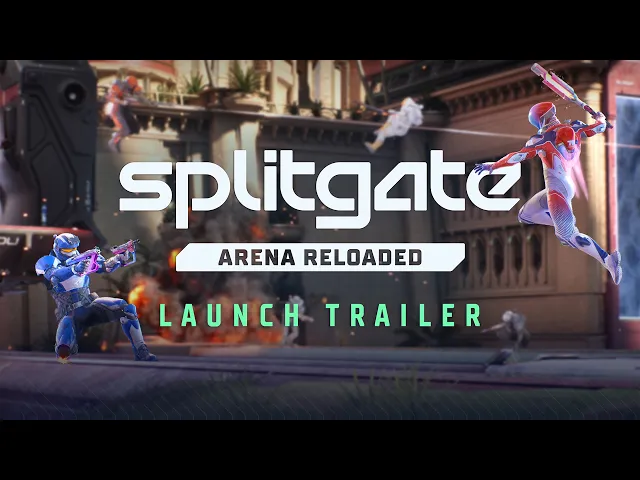
Highguard shut down in the spring. Active development of Splitgate 2, relaunched as Splitgate: Arena Reloaded, ended in August, followed by the shutdown of dedicated servers and automatic matchmaking in September. The game remained playable, however, with connections now established directly between players.
According to GameRant’s May roundup, 2026 had already seen 52 shutdowns. That tally included individual platform versions and online features as well as games that had shut down entirely, such as Anthem and Highguard. Describing it as a list of 52 games that can no longer be played would be inaccurate.
Why long-term support cannot be guaranteed
Warframe creative director Rebecca Ford advises developers to focus first on making a good game. But, she says, the team does not always get to decide how long it survives: the owner’s financial priorities can outweigh the developers’ desire to keep working on it. Even years of success do not give a team complete control over a project’s future.
A promise to develop a game for years therefore depends on more than its creators’ intentions. Long-term support requires funding, a team, and a publisher willing to keep investing. A seasonal roadmap shows what the developers intend to release, but it does not, by itself, guarantee that everything planned will reach players.
Will another big new live service take off — or is the era over?
FAQ
What is a live-service game (GaaS)?
It is a game designed as an ongoing platform rather than a one-off product, with regular updates, seasons, battle passes, and in-game purchases. Successful examples still running today include Fortnite, GTA Online, Genshin Impact, and Helldivers 2. Their revenue comes primarily from spending within the game rather than sales of the game itself.
Why did Concord fail?
Sony launched a $40 team-based shooter in a genre dominated by free-to-play games such as Overwatch 2, Valorant, and Apex. It arrived late to an overcrowded market with unremarkable characters, and players saw no reason to switch to it. Its Steam peak was just 697 concurrent players, and after 14 days Sony pulled the game from sale and refunded everyone.
How much money has the industry lost on failed live-service games?
There is no single official figure, and no one compiles a total. But the failures with publicly reported figures comfortably exceed a billion dollars: around $200 million in losses on Suicide Squad, hundreds of millions spent on Concord, and roughly $765 million that Sony wrote down on Bungie’s intangible and other assets. That excludes projects whose financial figures were never disclosed.
Does this mean nobody wants live-service games anymore?
People still want them, and they generate enormous revenue: in-game purchases account for 77% of all spending on games, according to Ampere. The games that die are newcomers unable to draw players’ time away from established hits. Those that succeed, such as Helldivers 2 and ARC Raiders, attract millions of players. The problem is not the model itself, but how difficult it has become to break into the market.
Why do studios keep betting on them when so many fail?
Because a successful live-service game offers more than a month of sales: it can be a cash machine for a decade. Fortnite generated billions of dollars a year for Epic, and GTA Online has remained a major revenue source for Rockstar for more than ten years. Recurrent consumer spending accounts for around 80% of Take-Two’s net bookings, while EA’s “live services and other” category accounts for around 73% of revenue. That kind of payoff is hard to walk away from, even knowing how many projects have failed.
Has Sony really abandoned live-service games?
No, it has not abandoned them entirely, but it has sharply scaled back development. Of the 12 live-service games planned by 2026, Sony canceled eight, closed Firewalk after Concord, and shifted Naughty Dog back to narrative single-player games. Its strategy now is to strike a balance: fewer risky bets on new live-service titles and more proven single-player projects.
Which live-service games have shut down in recent years?
Some of the most notable examples include Concord (14 days), Highguard (45 days), The Day Before, Hyenas (canceled before release), Crucible, Babylon's Fall, Marvel's Avengers, Suicide Squad, XDefiant, MultiVersus, and Spectre Divide. Anthem’s servers were permanently shut down in January 2026. Around 52 online games went offline in the first half of 2026 alone.
Money, Scandals, Phenomena
- The CS2 Skin Economy: Billions of Dollars, Million-Dollar Knives, and a $2 Billion Crash in 30 Hours
- The Biggest Thefts and Hacks in Gaming History: The $620 Million Axie Infinity Hack, Stolen CS2 Skins, and the GTA 6 Leak
- Star Citizen Has Raised a Billion Dollars — and Still Hasn't Come Out
- GTA Controversies: Lawsuits, Bans, and Hot Coffee
- Why Graphics Cards Are So Expensive in 2026: How AI Ate the Memory Supply
- Why have videogames become so expensive, and will they get even more expensive?
- Why Millions of People Click on Bananas, Cookies, and Cows: How Idle Games Have Hacked Our Brains
- What Are the Backrooms? Levels, Entities, Games, and Movie Explained
- Rusty Lake Series Phenomenon. Twin Peaks in the Form of a Point‑and‑Click
- Rideshare "Stimulator": What Kind of Game Is It and Why Did It Spark an AI Controversy?
- AI Is Already Taking Jobs in Game Development — Just Not Where We Expected
- DLSS 5 — Graphics Revolution or Marketing Gimmick? Let's Cut Through the Hype
- Why the Ocarina of Time Remake Announcement Divided Fans — Uncanny Valley, Politics, and Nostalgia
- Why AI Researchers Are Leaving OpenAI, Anthropic, and Google — and What They’re Warning About
- How GTA 5 Made More Money Than Any Movie Ever
- AI in Games: Why Players Boycott Studios Over AI Art and Voices
- How Much Money Has Genshin Impact Made and Why Gacha Is Cooling Off
- Sued for Being Too Addictive: How the Makers of Fortnite, Roblox and Minecraft Ended Up in Court
- The $250 Million AI Chat: How Krafton Asked ChatGPT to Escape Subnautica 2's Founders — and Lost
- What Was Found in the 12TB Steam Leak: Early Builds of GTA 3, Mafia 2, and Valve Games
- How Graphics Card Prices Spiraled: Mining, Scalpers, and Prices No One Could Believe
- The Live-Service Graveyard: How the Industry Burns Billions on Games That Die in Weeks
- Minecraft in Elden Ring and TNT in RDR2: The Wild AI Mashups That Broke the Internet — What's Real and What You Can Download
- Is Deadlock Out? Valve's Invite-Only Game Sets a New Player Count Record
- PS5 Jailbreak: What Relapse Offers and What You Risk
- EU Kids Act Explained: How It Could Change the Internet and Gaming
- Bloodborne PC Port and AI: Can Fans Port Games Without Permission?
- WARDOGS vs. Call of Duty: Can a $40 Shooter Hurt Modern Warfare 4?
- When and How Will AI Destroy Humanity? 5 Scenarios, Rated by AI
- Is Xbox Dying in 2026, or Just Being Told to Pay Its Own Way?
- How Valve Makes Billions from Steam — and Why It’s Facing Lawsuits
- Witcher 3 Remastered Player Count: Are Old Games Beating New Ones?
- Why EA Is Closing BioWare and What Comes Next for Mass Effect
- EU Gaming Law Plans and You: Kid Mode, In-Game Currency, Loot Boxes
- Teach Your Little Sister to Drive: You Talk to Her, the Developer Gets the Bill
-
 Sony patents PlayStation controllers as payment devices
 -
 Sony's New Sly Cooper Trademark Covers Merchandise, Not a New Game
 -
 Sony Announces DualSense Wireless Controller — LISA Limited Edition
 -
 Sony Files Patent for AI Matchmaking That Could Use Your Search History
 -
 Sony has patented AI that can repair PlayStation and other tech on its own
 -
 27 Best Games Like Call of Duty: Shooters Set in the Past, Present and Future