AI in Games: Why Players Boycott Studios Over AI Art and Voices
 Anastasiia Sokolova
On August 13, 2026, Saber Interactive CEO Matt Karch responded to former Rideshare "Stimulator" lead writer Stella Sacco, who claimed that her work on the game had been handed over to ChatGPT. “Stella who?” Karch said. “I had to ask Claude because I have never spoken to her or seen her.” He added that, in retrospect, he would have been happy to replace her with AI: “At least we would be dealing with someone programmed to be honest.” Saber, meanwhile, denied that it had handed writing duties over to AI. Two days later, Karch personally apologized to Sacco for the way he had spoken about her, but did not change his position on the use of AI.
Nine months earlier, Eurogamer gave extraction shooter ARC Raiders 2 stars out of 5. The reviewer praised many aspects of the game, but its use of synthetic voices became the main reason he could not recommend it. For comparison, the same publication gave Concord 3 stars out of 5, even though Sony pulled the game from sale and shut down its servers just 2 weeks after launch. ARC Raiders, meanwhile, continued to grow its audience: a week after the review was published, its Steam concurrent player count peaked at 481,966.

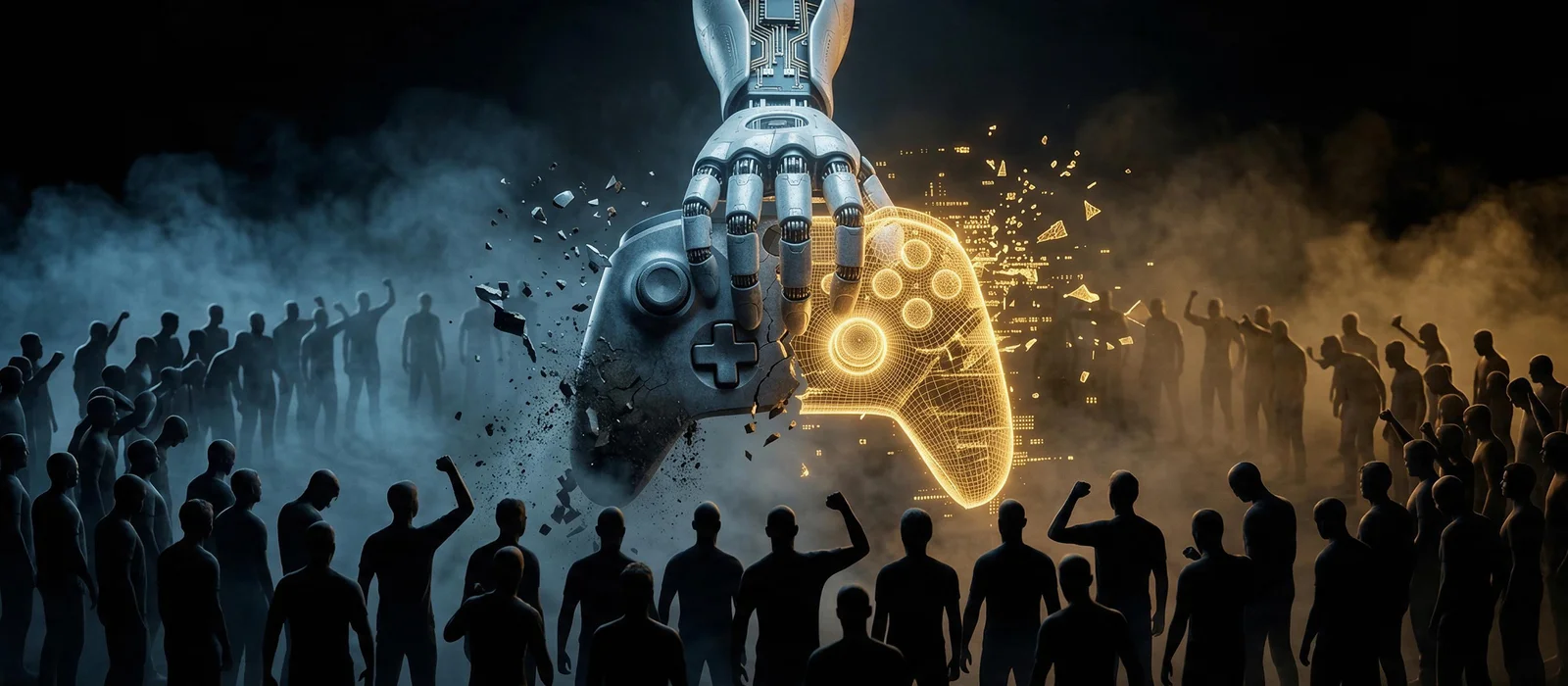
These stories show just how differently the industry and its audience view generative AI. Studios are increasingly integrating AI into production, while for some players and critics, how content is made is becoming as important a factor in judging a game as the quality of the game itself. The debate has already moved well beyond industry conferences: it is shaping digital storefront policies, union contracts, game awards, and organized boycotts. We take a closer look at where developers are using AI, what Steam requires them to disclose, why some games are facing protests, and how studios are responding to the criticism.
Key Points
- By July 2025, the developers of 7,818 games on Steam had disclosed the use of generative AI. Nearly 20% of new releases in 2025 carried an AI disclosure, rising to 30.8% by July 2026;
- In January 2026, Valve removed the requirement to disclose internal AI tools. Developers still have to disclose AI-generated content that appears in the game or is generated during gameplay;
- ARC Raiders reached a peak of 481,966 concurrent players on Steam despite controversy over its use of synthetic voices. Eurogamer gave the game 2 stars out of 5 because of them;
- After a strike lasting nearly 11 months, SAG-AFTRA secured new rules governing the use of digital replicas of performers' voices and likenesses, including mandatory consent;
- In 2026, Identity V players organized a boycott over alleged AI-generated artwork, while a former Rideshare "Stimulator" writer claimed she had been replaced by ChatGPT. Saber denies the allegation, but added an AI disclosure to the game's Steam page after the controversy;
- Steam remains the only major gaming storefront with detailed AI disclosure rules. At the same time, the EU, China, and California have introduced their own restrictions on AI-generated content;
- According to estimates from Totally Human Media, 10,258 games with AI disclosures generated around $660 million on Steam, but 9,556 of them failed to make even $10,000. These figures do not show what effect the use of AI itself had on sales.

How AI Became Part of Game Development
One of the first major controversies erupted in the fall of 2023, before The Finals had even launched. During the shooter's open beta, Embark Studios audio designer Andreas Almström said on a podcast that, with a few exceptions, the voices of contestants and both commentators were generated using text-to-speech technology. Following criticism, the studio clarified that the system was based on recordings from professional actors as well as temporary voices provided by Embark employees, and that the developers had no intention of abandoning human voice acting entirely. Two years later, the same studio would find itself at the center of a similar debate surrounding ARC Raiders.
A turning point came in January 2024, when Valve introduced permanent rules for games using generative AI on Steam. Developers were required to fill out a disclosure form explaining which content had been generated in advance and which was generated live while the game was running. Before that, the platform's policy had been less clearly defined, and games containing AI-generated assets could be rejected over uncertainty surrounding the rights to training data.
After the rules were introduced, the number of disclosures began rising rapidly. According to independent analysis of Steam, developers disclosed the use of generative AI in 10.9% of new games released in 2024, 19.9% in 2025, and 30.8% by July 2026. The total number of games carrying such a disclosure grew from roughly 1,000 in spring 2024 to 7,818 in July 2025 and more than 17,000 a year later. At the June 2026 Steam Next Fest, 1,694 of 8,682 demos carried an AI disclosure — nearly one in five.
These figures, however, are based on information submitted by developers themselves rather than on Valve reviewing every asset in every game. The statistics are therefore inevitably incomplete. Call of Duty: Black Ops 6 is a telling example. As early as late 2024, players suspected the use of generative AI because of illustrations containing characteristic errors, including an image of a zombie Santa with an extra finger. In January 2025, Activision added a disclosure to the Call of Duty Steam page stating that generative AI had been used to create some in-game assets, but did not specify which ones. As a result, the connection between those particular images and AI remained a matter of player speculation.
Among commercially successful games, visual assets are the most common use case for generative AI. Of 45 games with estimated revenue above $1 million, 49% disclosed the use of AI for in-game artwork, 27% for voice acting and dialogue, 13% for concepts and other pre-production materials, 11% for marketing, and 9% for translation and localization. The categories overlap, so a single game could appear in several groups.

Major companies are already openly restructuring their workflows around AI. Krafton, the publisher of PUBG and owner of Unknown Worlds Entertainment, declared itself an “AI First company” in October 2025 and committed more than KRW 100 billion — around $70 million — to its own computing infrastructure. A few weeks later, the company launched a voluntary resignation program with severance packages, although Krafton itself insisted that the program was intended to support employees who chose to leave rather than reduce headcount.
In January 2026, Electronic Arts entered into an agreement with Stability AI to jointly develop generative tools for artists and designers. Among the first areas announced were the creation of PBR materials and the previsualization of 3D environments. Epic Games, meanwhile, plans to make language and generative models some of the core tools in Unreal Engine 6.
At the same time, attitudes toward the technology among industry workers are becoming increasingly negative. In the annual Game Developers Conference survey of more than 2,300 industry professionals, 52% of respondents said that generative AI is having a negative impact on the games industry. In 2025, that figure was 30%, compared with 18% in 2024. The organizers caution that the survey methodology changed over time, so year-to-year comparisons should be treated carefully, but the broader shift is clear. Artists were the most critical group, at 64%, followed by game design and narrative professionals at 63% and programmers at 59%.
Attitudes toward the technology and its actual use do not necessarily align. Generative AI tools are used at work by 36% of respondents. They are most commonly used for research and brainstorming, everyday tasks such as emails and planning, coding assistance, and prototyping.
At the same time, a market for specialized tools is taking shape. NVIDIA ACE, Inworld, and Convai offer technology for conversational characters, ElevenLabs provides voice synthesis, and Unity is integrating generative features directly into its editor. For now, however, the reality is closer to a third of the industry using AI assistants for research, coding, and routine tasks than to studios replacing entire departments with AI.
What Changed in Steam's Rules on January 16, 2026

Steam had already divided AI-generated content into two categories in January 2024: content created in advance and content generated live while the game is running. However, the wording covered virtually any use of generative tools, from finished artwork to code written with the help of an AI assistant. As a result, developers were not always sure exactly what they were required to disclose.
On January 16, 2026, Valve clarified the rules: developers only need to disclose AI-generated content that players can see or hear, while internal development tools are exempt. For content generated live during gameplay, developers must also describe the safeguards they have put in place. Real-time generation of Adult Only sexual content is prohibited, while pre-generated material goes through Steam's standard review process.
Epic Games CEO Tim Sweeney publicly criticized Valve's approach. He first argued that game stores should drop AI disclosure requirements because, in his view, AI will soon be used in the creation of virtually every game. Sweeney later described the label as a public stigma and said it attracts AI opponents who try to harm the game.
Following Sweeney's first statement, artist Ayi Sánchez, who worked on Counter-Strike, compared AI disclosure to an ingredient list on food packaging: consumers should know what a product contains so they can decide for themselves whether they want to buy it.
What Rules Apply on Other Platforms

Among major gaming storefronts, Steam is the only one with detailed mandatory disclosure rules for generative AI. The Epic Games Store leaves disclosure up to developers, while itch.io requires it only for assets being sold, not for games themselves.
The PlayStation, Xbox, Nintendo, and Apple storefronts also have no dedicated AI label. Google Play only requires apps that generate content in response to user prompts to provide a way to report that content.
So the absence of an AI label outside Steam does not mean that no AI tools were used in a game. It simply means buyers do not have comparable information about how the game was made.
The Law Is Catching Up: EU, China, California
While storefronts introduce their own policies, regulators are also getting involved. At that point, the issue is no longer just about a studio's reputation, but about legal obligations and potential fines.

European Union. Article 50 of the EU AI Act, which deals with transparency requirements for AI systems, has applied since August 2, 2026. Put simply, if a player is interacting with a character controlled by AI, they must be informed of that fact. AI-generated material must also carry technical marking that allows its synthetic origin to be identified automatically. However, developers are not required to place a visible label on every AI-generated texture or line of dialogue in a conventional story-driven game.
Violations can result in fines of up to €15 million or 3% of a company's worldwide annual turnover, whichever is higher.
China. Since September 1, 2025, AI-generated content on the Chinese market has been subject to dual labeling: a hidden record in the metadata and, where the material could mislead users, a visible warning. The rules also apply to games featuring generative characters or other content created dynamically during play.
California. Since January 1, 2025, an actor's voice or likeness cannot be used to create a digital replica on the basis of vague contractual language: the specific use must be described in advance, and the performer must be represented by a lawyer or union. Digital replicas of deceased performers generally require consent from their heirs, although exceptions exist for news, documentaries, satire, and parody.
The overall direction is clear: something that only a few years ago was largely a matter of taste and reputation is gradually becoming a subject of legislation. A storefront requirement can be avoided by releasing a game elsewhere. The laws of a country or an entire market are much harder to sidestep.
Live Generation: How Players Made Darth Vader Swear

A separate category involves games where AI is not used during development but operates live during the player's session. One of the clearest examples comes from Fortnite.
In May 2025, Darth Vader appeared in the game as a character players could recruit to their squad and speak to by voice. His responses were generated by Gemini 2.0 Flash, while ElevenLabs Flash v2.5 recreated James Earl Jones' voice from archival recordings. Jones had approved the continued use of his voice before his death, and the technology was subsequently used with his family's consent.
Players immediately began testing the limits of the system. Within hours, they had found ways around its safeguards and made Vader swear and produce other inappropriate responses. Clips quickly spread across social media, after which Epic Games said it issued a fix within roughly half an hour.
This is why live generation requires stricter oversight than pre-generated images, text, or recordings. A conventional line can be reviewed before release by a writer, editor, and localization specialist. A generative character's response appears for the first time on an individual player's screen, yet the company still bears the legal and reputational responsibility for it.
The technology itself is unlikely to disappear. Conversational NPCs are one of the few uses of generative AI that do more than simply reduce the cost of an existing production step — they create a genuinely new kind of interaction. The question now is whether studios can make these systems controllable enough and clearly explain to players exactly who, or what, they are talking to.
ARC Raiders: 2 Stars for Voice Acting With 480,000 Players Online
ARC Raiders launched on October 30, 2025, and became one of the season's biggest gaming hits. The game was developed and self-published by Sweden's Embark Studios, which is owned by Nexon. The company was founded by former DICE and EA developers, including Patrick Söderlund.
Its Steam concurrent player count peaked at 481,966. In November, more than 700,000 people were playing simultaneously across all platforms, and by January 2026 the figure had reached 960,000.

Against the backdrop of that success, voice acting became a controversy of its own. The use of text-to-speech was no secret: Embark had disclosed in advance that it combined performances by human actors with generated lines. The technology was used mainly for item and location names, ping-system callouts, and other secondary lines. Actors were paid separately for studio work and for licensing the use of their voices.
Formally, the studio followed the rules, but some lines sounded noticeably mechanical. That quickly led to an obvious criticism: a game about a world where machines have displaced humans was itself using machines in place of humans during production.
Eurogamer delivered the harshest verdict. Reviewer Rick Lane gave ARC Raiders 2 stars out of 5, treating the use of synthetic voice acting as both an ethical and artistic problem. Immediately after the review was published, the game's average Metacritic score fell from 89 to 84.
The audience reaction exposed the central divide in the debate over AI. Some supported the publication: a review evaluates not only mechanics but also artistic decisions, so aspects of how a game was made can legitimately affect the final score. Others accused Eurogamer of bias: a game with roughly 90% positive reviews and half a million concurrent players received a lower score than the failed Concord, which the publication gave 3 stars out of 5. Tim Sweeney came to Embark's defense, arguing that political opinions belong in opinion pieces rather than reviews.
In March 2026, Embark nevertheless re-recorded some of the lines with professional actors. Söderlund explained the decision in terms of quality: “A real professional actor is better than AI; that's just how it is.” The studio did not abandon text-to-speech entirely — some secondary system lines remained, and the technology continued to be used during development and testing.
There is no clear evidence in the available data that the controversy hurt sales, although it is impossible to prove that it had no effect at all. ARC Raiders sold around 4 million copies in its first 2 weeks, and by May 2026 sales had surpassed 16 million. The controversy affected the game's average review score and prompted the studio to partially redo its voice work, but it did not prevent ARC Raiders from becoming a blockbuster.

Both sides of the debate saw the outcome as confirmation of their own position. Supporters of the technology concluded that most buyers do not care how a game is made as long as the end result is good. Opponents argued that public pressure can still push studios to reconsider their decisions even when those choices do not stand in the way of commercial success.
What Protest Looks Like: From Rideshare to Rescinded Awards
ARC Raiders is the most high-profile example, but far from the only one. Throughout the fall of 2025 and into 2026, similar controversies followed one after another. The backlash took many forms, from criticism on social media and review bombing to canceled sponsorships, organized boycotts, and rescinded awards.
Rideshare "Stimulator" (UNIGINE and Saber Interactive). This is a taxi driver simulator in which conversations with passengers play an important role. In August 2026, former Saber lead writer Stella Sacco claimed that she had been removed from the game and that the remaining writing was handed over to ChatGPT. The studio denied replacing writers with AI, but confirmed its use in an optional free-drive mode. The Steam page was later updated with an AI disclosure covering generated voices, some localization, missions, dialogue, and music.
Saber CEO Matt Karch further fueled the controversy by saying that, in retrospect, he would have been happy to replace Sacco with AI. He later apologized for the way he had spoken about the writer, but did not retract his comments about AI. We covered the full timeline of the dispute in our article "Rideshare 'Stimulator': What Kind of Game Is It and Why Did It Spark an AI Controversy"?
Identity V (NetEase). In April 2026, players spotted signs of generative AI in a trailer for the Call of the Abyss IX tournament and later found similar material in promotional videos, event artwork, and social media posts. The community launched the Stop AI in IDV petition and held a boycott day on April 23, encouraging participants not to log in or spend money and, if they wished, to uninstall the game.
Rumors of layoffs at NetEase became another source of outrage. A since-deleted post on a Chinese social network claimed that the company planned to cut between 50% and 60% of its contracted programmers, artists, illustrators, and testers and hand some of their tasks over to AI. Those figures have not been independently confirmed, so they should not be treated as established fact.
NetEase never made an unequivocal public commitment to stop using generative AI in Identity V, prompting some players to continue the boycott beyond the designated day.

Neverness to Everness (Hotta Studio, Perfect World). The urban action RPG launched globally on April 29, 2026, and faced accusations within its first few days. Among the disputed assets was an in-game billboard featuring imagery that resembled a shot from Makoto Shinkai's Weathering with You. Players also raised suspicions about certain animations, background images, and promotional materials.
The situation was made worse by earlier comments from executive producer Yang Lei. Before release, he said the studio used AI for experimental and atmospheric imagery, but that “our core assets and character portraits will never touch AI.” Streamer Ironmouse pulled out of a planned sponsored stream, saying her team had been assured in advance that the release version would contain no generative AI material.
Hotta Studio acknowledged that AI-assisted tools had been used on a small number of background and environmental assets. The developers removed one of the disputed animations and promised to review and rework assets flagged by players. The main source of the controversy was not simply the use of the technology itself, but the discrepancy between the finished game, the producer's public promise, and the information given to a promotional partner.
Crimson Desert (Pearl Abyss). In March 2026, signs of generative AI surfaced in a major release. Players found several suspicious images and decorative assets in Crimson Desert, even though its Steam page did not include an AI disclosure.
Pearl Abyss did not deny the findings. The company explained that it had used generative tools during early development to explore visual directions, while the resulting 2D assets were intended only as temporary placeholders. They were supposed to be replaced before release, but several images were accidentally left in the final version. The studio issued a public apology, added an AI disclosure to Steam, began auditing its assets, and promised to remove any generated material it found.
Call of Duty. The debate over AI use began after the release of Call of Duty: Black Ops 6, when players spotted images with telltale generation errors — including a zombie Santa with six fingers. In January 2025, Activision added a disclosure on Steam stating that generative tools had been used, but did not specify which assets were created with them. Suspicions intensified after the release of Call of Duty: Black Ops 7, where players found numerous calling cards featuring extra fingers, distorted details, and imagery resembling the style of Studio Ghibli.

In November 2025, Black Ops 7's Metacritic user score fell to 1.6–1.7 — the lowest in the history of the series. The review bombing cannot be attributed entirely to AI: players also criticized the story campaign, mandatory online connectivity, technical issues, and the design of certain modes. Still, generated images were regularly mentioned in negative reviews.
The main argument from critics was the scale of the production: Black Ops 7 costs $70 and is developed by several major studios, so generative calling cards were seen not as a necessary cost-saving measure for a small team, but as an unwillingness to pay artists for secondary assets.
Clair Obscur: Expedition 33 (Sandfall Interactive). This case shows how strict award organizers can be about any use of generative AI. In December 2025, the Indie Game Awards rescinded two awards from the game — Game of the Year and Best Debut Game.
Several temporary textures created with generative AI had accidentally made it into the release build. They were replaced 5 days after launch, and Sandfall's management later said that the studio had experimented with the technology, was dissatisfied with the results, and stopped using it. However, the Indie Game Awards rules prohibited the use of generative AI, and when submitting the game, the organizers had been told that such tools were not used. As a result, even placeholders removed shortly after launch were enough to disqualify the game.
Former Rare developer and Conker's Bad Fur Day creator Chris Seavor put the criticism rather bluntly: “Don't be lazy f***os and pay for your stuff, is the message here.....” Expedition 33 did not lose every award it had received that year, however — only the two prizes from this particular event, which had an explicit ban on generative AI.
The Alters (11 bit studios). Here, the developers were exposed by a placeholder that slipped through without being checked. In one texture, players found a line from a language model along the lines of “Sure, here's the corrected version...” Later, signs of machine processing were also discovered in translations of dialogue from licensed in-game movies, including the Brazilian Portuguese localization.
11 bit studios explained that the generated text in the texture was a temporary asset that had been missed during final checks. The video translations were produced with AI because of time constraints, as the material had been added late in development. The affected text amounted to roughly 10,000 words — around 0.3% of the 3.4 million words counted across all language versions of the game.

The studio promised to replace the placeholder and release translations reviewed by specialists. The developers themselves acknowledged the central mistake: the use of the technology should have been disclosed in advance. The controversy was not caused by AI alone, but also by the lack of disclosure when the game was sold.
There is no single pattern shared by all of these cases. Some players oppose generative AI on principle, regardless of how extensively it is used. But conflicts tend to become most intense in 3 situations: when the use of the technology is concealed, when it contradicts public promises, and when low-quality generated material appears in an expensive production that can afford to pay human professionals.
The consequences vary as well. In one case, the backlash ends with criticism in the comments; in another, it leads to review bombing or a canceled sponsorship deal.
Actors and Artists: The Strike, the Contract, and the Complaint Against Epic
For people whose work can be directly replaced by AI, the debate moved beyond social media long ago and into contracts, collective bargaining, and formal labor complaints.
American performers' union SAG-AFTRA called a video game industry strike on July 26, 2024. The main sticking point was the use of AI: the union demanded informed consent, transparency, and compensation when digital replicas of performers' voices and likenesses were created or used.
The two sides reached a tentative agreement on June 9, 2025, and the strike was suspended on June 11, allowing performers to return to work. The dispute formally ended on July 9, when SAG-AFTRA members ratified the new agreement.
The new contract requires consent and disclosure when digital replicas of performers are used. Permission must apply to a specific use rather than giving a company unrestricted rights to generate any new lines or movements it wants. Performers also gained the ability to suspend consent for the generation of new material during a strike, preventing companies from replacing striking actors with their own digital replicas.
The agreement also includes financial changes: base rates increased by 15.17% following ratification, with additional 3% increases scheduled for November 2025, November 2026, and November 2027.
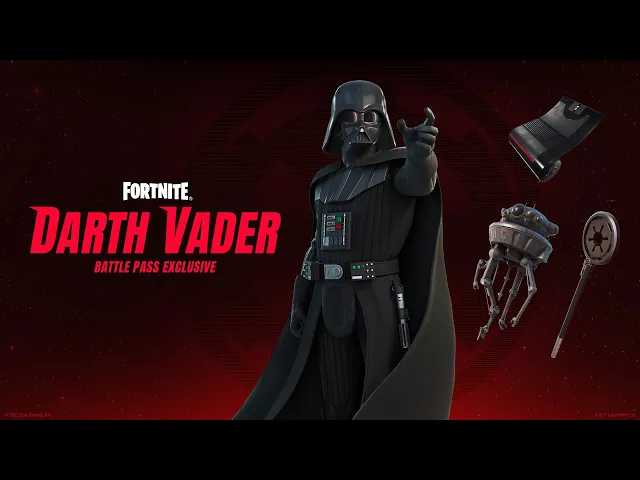
The story of the interactive Darth Vader mentioned above also had a labor-related follow-up. SAG-AFTRA filed a complaint against Llama Productions, an Epic subsidiary covered by the union agreement for Fortnite. Although James Earl Jones' estate approved the use of his voice, the union argued that the company had assigned work previously performed by other actors to AI without prior notice or bargaining. In other words, the dispute was not about the rights to Jones' voice, but about replacing human performers with a digital replica.
Artists have not staged a comparable strike, but their protests began earlier. In December 2022, ArtStation users flooded the platform with images bearing the words No AI Art, protesting both the placement of generated artwork alongside professional portfolios and the use of published work to train models without artists' consent.
Artists are also in a different position from actors. SAG-AFTRA has a collective bargaining agreement, compensation rules, and the ability to demand negotiations with employers. Freelance artists are more likely to act individually and have far less control over whether their work ends up in training datasets or how the resulting models are subsequently used.
What Studios Say
The position of developers and publishers cannot be reduced to “it's cheaper,” although cost savings remain an important part of the equation.
System lines and updates. In the case of ARC Raiders, Embark argued that text-to-speech makes it easier to add the many names, callouts, and commands that change as the game evolves. Actors still took part in recording sessions and were paid separately for the use of digital replicas of their voices, so the studio presented AI as a supplement to human voice acting rather than a complete replacement.
Localization. Fully voicing every language version requires actors, directors, audio engineers, editors, and additional testing. Every additional language increases both costs and production time, which is why many games are limited to subtitles.
In this case, studios frame the choice not as “actor or synthetic voice,” but as “synthetic voice acting or no voice acting in that language at all.” The argument is more convincing for smaller markets and independent games, but it does not eliminate concerns about quality, consent from voice owners, or transparent disclosure of the technology.

Prototyping. Following the controversy surrounding ARC Raiders, Patrick Söderlund described the workflow Embark eventually adopted. Developers can quickly listen to several versions of a line using text-to-speech, choose the wording that works best, and then bring in an actor for the final recording. In this process, AI serves as a temporary audio placeholder, while the finished performance remains human.
Speed and routine work. Tim Sweeney argues that AI should be viewed as a productivity tool: the technology should help the same teams create better games rather than serve as justification for reducing headcount.
Krafton similarly presents its push into AI as a way to free employees from routine work. The company declared itself “AI First,” committed around $70 million to computing infrastructure, and at the same time launched a voluntary resignation program. Against that backdrop, the argument about freeing up more time for creative work becomes somewhat less convincing.
The two sides of the debate also disagree on what would have happened without AI. Studios argue that additional voice acting, localization, and hundreds of secondary lines simply would not exist otherwise. Critics believe that with a different allocation of the budget, the work would have gone to actors, translators, and writers. It is almost impossible to determine which side is right.
The weakest point in the studios' argument is particularly clear in the case of Call of Duty. When generated images appear not in an indie game made by a tiny team, but in a $70 title from a corporation with billions in revenue, the explanation that “we otherwise couldn't afford it” stops being persuasive. The same tool is perceived very differently depending on a game's budget, the quality of the result, and how transparently the developers disclosed its use.
Does AI Help Games Sell?

According to estimates from Totally Human Media, Steam now has more than 10,000 games with AI disclosures. Together, they have generated hundreds of millions of dollars, but almost all of that money went to a handful of hits: more than 90% of the games failed to make even $10,000. The figures are approximate because the analysts estimated sales based on review counts, but the overall gap is clear even without exact accounting.
Research by developer Sulka Haro paints a similar picture. Games with AI disclosures account for most of the growth in new Steam releases, but they are almost twice as unlikely to attract a significant audience as other games. Generative tools have lowered the barrier to entry, allowing small, inexpensive projects from inexperienced teams to flood the store more quickly.
The same AI disclosure can mean anything from a single generated texture to a game created almost entirely with AI. The flood of quick releases has even spawned the term gameslop, derived from AI slop. One telling example is the visual novel Blood in the Ice, for which all of the artwork was generated by AI. It launched at €99.99, while the author of the only review available at the time said they reached the first ending in roughly 7 minutes.
Sheer volume does not automatically translate into popularity. Hundreds of demos with AI disclosures appeared at the June 2026 Steam Next Fest, but only one made it into the official top 10 most-played demos.
The opposite example is ARC Raiders, which sold millions of copies. Its success shows that an AI disclosure is not a death sentence for a strong game.
Overall, generative AI can help a game make it to release, but it cannot make an audience care about it.
Where the Line Is Drawn
Even among highly engaged Steam users, outright opponents of AI remain a minority. In a GameDiscoverCo survey, around 31% of respondents had a negative view of the technology, but only 8% were prepared to completely avoid any game carrying an AI disclosure. That means a controversy can hurt review scores and reputation, but it does not necessarily stop a game with strong demand from selling.
Across the cases discussed in this article, backlash tended to intensify when 4 factors were present: the studio concealed its use of AI, the result was worse than human work, the technology displaced a paid professional assignment, or the company broke its own public promise. Usually, the controversy came from a combination of several of these factors rather than from the use of AI itself.

As AI becomes more widespread, the mere presence of an AI disclosure will say less and less on its own. The more important questions will be what exactly was generated, whether performers gave their consent, and whose work the technology replaced. That is where the line is likely to be drawn between an acceptable tool and a reason for a boycott.
FAQ
Do Developers Have to Disclose the Use of AI on Steam?
Yes, if generated content appears in the game and can be seen or heard by the player. Internal tools such as AI coding assistants do not need to be disclosed. For content generated live during gameplay, developers must describe the safeguards they have put in place; real-time generation of adult content is prohibited.
How Many Games on Steam Use Generative AI?
In 2025, around 19.9% of new Steam releases carried an AI disclosure, rising to 30.8% by mid-2026. By November 2025, 10,258 games had such a disclosure. These figures only reflect AI-generated content that developers themselves reported as appearing in the game.
Why Was There Controversy Over AI Voice Acting in ARC Raiders?
Eurogamer gave the game 2 stars out of 5, citing text-to-speech as one of the main reasons. Embark had disclosed its use of AI in advance and obtained the actors' consent, but some lines sounded unnatural. The studio later re-recorded some of them with human actors while keeping synthetic voices for certain system callouts.
What Happened With the Saber Interactive Writer?
Former lead writer Stella Sacco claimed that the remaining writing for Rideshare "Stimulator" had been handed over to ChatGPT. Saber denies this and says the entire campaign was written by humans, with AI used only in an optional mode. Studio head Matt Karch said that, in retrospect, he would have been happy to replace Sacco with AI, and later apologized for the way he had spoken about her.
Do AI Rules Apply Outside Steam?
Other major gaming storefronts still do not have comparable mandatory disclosure requirements. However, the EU has transparency rules for providers of interactive and generative AI systems, China requires visible and hidden labeling of AI-generated content, while California law and the SAG-AFTRA agreement protect performers from the use of digital replicas without consent. EU law does not require every AI-generated game asset to carry a visible label.
Is It True That Games With AI Sell Worse?
Games with AI disclosures reach 100 reviews at a rate equal to roughly 55% of that seen among games without such a label, while 9,556 of 10,258 AI-disclosed games made less than $10,000, according to analyst estimates. However, this does not prove that AI itself caused weaker sales: many of these games are made by small teams with limited resources. There are also major exceptions — ARC Raiders sold more than 4 million copies in less than 2 weeks.
How do you feel about AI in games?
Money, Scandals, Phenomena
- The CS2 Skin Economy: Billions of Dollars, Million-Dollar Knives, and a $2 Billion Crash in 30 Hours
- The Biggest Thefts and Hacks in Gaming History: The $620 Million Axie Infinity Hack, Stolen CS2 Skins, and the GTA 6 Leak
- Star Citizen Has Raised a Billion Dollars — and Still Hasn't Come Out
- GTA Controversies: Lawsuits, Bans, and Hot Coffee
- Why Graphics Cards Are So Expensive in 2026: How AI Ate the Memory Supply
- Why have videogames become so expensive, and will they get even more expensive?
- Why Millions of People Click on Bananas, Cookies, and Cows: How Idle Games Have Hacked Our Brains
- What Are the Backrooms? Levels, Entities, Games, and Movie Explained
- Rusty Lake Series Phenomenon. Twin Peaks in the Form of a Point‑and‑Click
- Rideshare "Stimulator": What Kind of Game Is It and Why Did It Spark an AI Controversy?
- AI Is Already Taking Jobs in Game Development — Just Not Where We Expected
- DLSS 5 — Graphics Revolution or Marketing Gimmick? Let's Cut Through the Hype
- Why the Ocarina of Time Remake Announcement Divided Fans — Uncanny Valley, Politics, and Nostalgia
- Why AI Researchers Are Leaving OpenAI, Anthropic, and Google — and What They’re Warning About
- How GTA 5 Made More Money Than Any Movie Ever
- AI in Games: Why Players Boycott Studios Over AI Art and Voices
- How Much Money Has Genshin Impact Made and Why Gacha Is Cooling Off
- Sued for Being Too Addictive: How the Makers of Fortnite, Roblox and Minecraft Ended Up in Court
- The $250 Million AI Chat: How Krafton Asked ChatGPT to Escape Subnautica 2's Founders — and Lost
- What Was Found in the 12TB Steam Leak: Early Builds of GTA 3, Mafia 2, and Valve Games
- How Graphics Card Prices Spiraled: Mining, Scalpers, and Prices No One Could Believe
- The Live-Service Graveyard: How the Industry Burns Billions on Games That Die in Weeks
- Minecraft in Elden Ring and TNT in RDR2: The Wild AI Mashups That Broke the Internet — What's Real and What You Can Download
- Is Deadlock Out? Valve's Invite-Only Game Sets a New Player Count Record
- PS5 Jailbreak: What Relapse Offers and What You Risk
-
 Anthropic has taught Claude to subtly watermark its responses
 -
 ElevenLabs Launches Eleven v4 and v4 Turbo With Support for 90+ Languages
 -
 20 Best Games Like Atomic Heart to Play in 2026: From BioShock to Soviet Sci-Fi Shooters
 -
 AI Is Already Taking Jobs in Game Development — Just Not Where We Expected
 -
 Best Games to Play in 2026: Top Picks Across PC, PS5, Xbox & Switch