
Why have videogames become so expensive, and will they get even more expensive?
 Alexander Pushkov
Since its announcement, the price of this "game of the generation" has worried us just as much as the size of Vice City's map, the names of the protagonists, or the release date. Because the question "How much should we pay for games?" affects everyone — from a schoolkid saving up by skipping lunch to a corporate CEO sitting in an office atop a skyscraper.
In this article, I will explore how video game prices have changed, explain why they are simultaneously getting more expensive and cheaper, break down how game prices are determined, and where budgets of hundreds of millions of dollars come from. Finally, I will try to predict what lies ahead and how an $80 GTA will impact the gaming industry.
How Much Did Games Cost Before, and How Much Do They Cost Now?

Look at the chart above. The number on the box did climb — but measured in today's money, games have only gotten cheaper over four decades. And that still isn't the whole picture: prices swung wildly from platform to platform, repeatedly approached the coveted $70 mark, and... were never cheap. In 1982, the simulator B-17 Bomber for Intellivision cost $40 (the same price as ARC Raiders and Helldivers 2 today). The standard price for 8-bit Nintendo hits like Super Mario Bros. and The Legend of Zelda was $50. On 16-bit SNES and Sega Mega Drive, certain titles, driven by hype (Final Fantasy 3, Street Fighter 2), could reach $70.
At the same time, the price gap between platforms was enormous. Major games for the Nintendo 64 in the late 1990s cost an astronomical $60–80, while new releases for the PlayStation typically went for $40–50. This difference was partly due to the high production cost of cartridges compared to discs.
However, direct price comparisons are misleading because the dollar in 1982, or even in 2013, had significantly greater purchasing power than it does today. If you account for inflation, the $50 for the original The Legend of Zelda in 1986 would be roughly $150 today. So, for the end consumer, games are actually cheaper now than they used to be.
The GTA series itself shows this most clearly.

A similar picture emerges when comparing salaries. GTA: Vice City at $50 was about 1.9% of the median monthly salary in the US in 2002, or roughly 3 hours and 15 minutes of work. GTA 6 at $80 is 1.5%, or about two and a half hours of work in 2026. That math only works where wages rose roughly in step with American prices, though. In Russia, for instance, GTA 6 has no official release at all, so there is nothing to measure against — we'll come back to what the game costs outside the US later on.
So Why Is the Price of GTA 6 Such a Big Deal?
If Super Mario 64 cost $60 in 1996, why all the fuss about GTA 6 at $80 in 2026? Why does this price scare some, while Yves Guillemot pops the champagne?
By the early 2000s, a unified price standard for major releases had emerged in the gaming industry — $49.99. The principle itself still holds today. The price of AAA projects serves as the upper benchmark, with the cost of other titles depending on their scale, budget, length, and commercial ambitions. If blockbusters sell for $69.99, mid-tier projects cost $39.99–59.99, smaller games go for $10–30, and so on. Consequently, price serves not only an economic function but also a symbolic one: even before release, it tells the buyer which category the publisher places the game in and what level of quality and scope to expect.
In the late 2000s, with the arrival of the Xbox 360 and PlayStation 3, the AAA bar rose to $59.99 and held steady for over 15 years. The first warning of a new price hike was NBA 2K21 for PS5 and Xbox Series at $69.99 from publisher Take-Two Interactive (which, coincidentally, owns Rockstar and is behind the $80 GTA 6). However, the $70 standard only firmly established itself by 2023.

And now we stand on the brink of another price jump. GTA 6 is far from the first here. Nintendo already crossed this threshold in 2025 with Mario Kart World at $79.99 (Related: 43 Best Nintendo Switch 2 Games).
We will evaluate each game individually — carefully assessing how much effort went into development, how broad and deep the gameplay is, how relevant the game is, and how much it compels players to return to it again and again. All these factors matter... So, I think you can expect prices to vary. We haven't set a single pricing benchmark.
However, it is GTA 6 that has the power to turn $80 into the new norm due to its significance and status. If consumers calmly accept the new price, and all signs point to that being the case, other publishers will get the perfect justification for raising prices. Initially, $80 will likely apply mainly to the biggest releases — new installments of Call of Duty, Assassin's Creed, The Elder Scrolls, major PlayStation exclusives, and so on. From there, the new bar lifts the ceiling for other categories as well. That's how the market works: a price increase for the flagship product shifts the entire pricing ladder. Against the backdrop of $80 for an AAA project, $30 for an indie game for a couple of evenings won't seem like such a steep overpay.
There is an important caveat to that scenario, though, and it is best explained by those who reached for $80 before Rockstar.
Storming $80: Who Tried Before Rockstar, and How It Went

In the eighteen months before GTA 6, three publishers approached the $80 mark, each in their own way. After all three episodes, $80 still isn't the standard.
Mario Kart World is covered above. What matters more is what came next: Nintendo never walked the price back or apologized for it, but it didn't make $80 its blanket benchmark either. Donkey Kong Bananza and other major Switch 2 releases stayed at $69.99, and Bowser said outright that the company has no single benchmark. In March 2026 the $79.99 tag went to the Switch 2 edition of Super Mario Bros. Wonder — so Nintendo does return to that number, but selectively, and nowhere near for every game.
Microsoft went next. On May 1, 2025, Xbox announced price increases across the board: consoles went up by $80–100 (the Series X to $599), and some first-party games were supposed to launch at $79.99 during the holiday season. The stated reasons were the same ones everyone else uses — "market conditions and the rising cost of development." The Outer Worlds 2 became the first game to carry the new price.
It didn't last. On July 23, Microsoft moved the game back to $69.99 and had the difference compensated for everyone who had already pre-ordered at the higher price. The mechanism varied by retailer: some refunded the difference, some asked buyers to cancel and re-order, some issued store credit.
We're focused on bringing players incredible worlds to explore, and will keep our full priced holiday releases, including The Outer Worlds 2, at $69.99 — in line with current market conditions.
The wording is notable: within two months, "market conditions" served as the argument both for the increase and for the retreat. The company never explained what actually changed, but Obsidian's RPG is a solid project rather than the kind of event that makes a mass audience rethink its budget. The conversation about price ended up replacing the conversation about the game.
The third increase never happened at all. Rumors of an $80 Battlefield 6 circulated all through the summer of 2025, until CEO Andrew Wilson shut the topic down on the July 29 earnings call with "we're not looking to make any changes on pricing at this stage." The shooter shipped at $69.99. EA gave no reasons, though the decision came a week after Microsoft's retreat.
What follows from this? Announcing an $80 price is not enough — so far it sticks most easily where a publisher has a must-buy hit that sells regardless of the tag. For Nintendo that is Mario Kart World; for Rockstar it will be GTA 6. Worth noting: neither The Outer Worlds 2 nor Battlefield 6 had shipped when those pricing calls were made, so the market wasn't judging the games themselves — only the number next to the name on the box.
From here, analysts largely expect that the market will not get more expensive across the board, or all at once, after GTA 6. What's more likely is stratification: a handful of mega-franchises like GTA, Call of Duty, Mario, or The Elder Scrolls move to $80 and above, while everyone else stays at $70 and competes through subscriptions, bundles, and discounts instead. Any publisher that tries to sell a good but non-essential game for $80 risks meeting the same fate as The Outer Worlds 2.
$80 Is Only the Entry Point — There's a Hundred-Dollar Edition Next to It

The entire debate of the past few months revolves around the figure of $79.99, even though a second number sits right beside it: $99.99 for the Ultimate Edition. The standard version includes the full story campaign; the surcharge buys extra content — premium vehicles, weapons and clothing, five in-game businesses, a separate garage, a raid, and a car collector's assignment. That list is what most of the current marketing is built around (full breakdown: GTA 6 Pre-Order Guide: $80 Price, Editions and All Bonuses).
The difference in scale matters. Going from $70 to $80 is a 14% increase for the generation. Going from $70 to $100 is 43%. In a July snapshot of the PlayStation Store charts, the Ultimate Edition sat above the standard one in all nine regions — though Sony doesn't disclose how those charts are compiled, so a position there is a snapshot on a given date, not a sales figure.
The tactic itself is familiar, and it long predates games. A publisher doesn't have to push its entire audience onto a new price and absorb the backlash. It's enough to raise the base tag by a tolerable 14% and place beside it an edition with a visibly longer list of contents. From there, some buyers trade themselves up — and unlike The Outer Worlds 2, that surcharge reads as their own choice.
And that still isn't the final sum. Next come GTA Online for the sixth installment (apparently a separate product), the GTA+ subscription, and the in-game store.
Every Region Does Its Own Math

The $79.99 price is an American one, and it says relatively little about the rest of the world. Rockstar set regional prices with an enormous spread: converted at the exchange rates of the day pre-orders opened, the standard edition runs about $58 in South Korea, $61 in Japan, and $64 in India. Europe, meanwhile, pays €79.99 (roughly $91), the UK £69.99 (about $92), and Australia nearly $90. Between Korea and Britain, that's a gap of almost 1.6x for the same file. One important correction: the US price excludes sales tax, while European prices already include VAT, which accounts for part of the gap.
Rockstar never published its formula, so here are the factors that typically shape regional pricing: the price levels already established for games in a given country, taxes, exchange rates, the purchasing power of the audience, and the competitive situation in that particular market. The same set of factors governed Steam's separate pricing for Eastern Europe and Latin America for years.
That spread is what makes the "adjusted for inflation, games got cheaper" argument so uneven. It holds up in the US and Japan, where the price is measured against a couple of hours of median wages. In markets where salaries grew on a different curve than the American consumer price index, an $80 game sits in an entirely different budget bracket, and no inflation calculator changes that. Russia is an edge case of its own: there is no official release, and physical copies go for around 9,999 rubles.
Why Is Game Development Getting More Expensive?
Development costs have indeed increased hundreds or even thousands of times over. Budgets have grown so large that some significantly exceed $300 million. The growth is most noticeable in the AAA segment, especially over the last 10–15 years. Comparing to projects from the 80s and early 90s is pointless — the budget for DOOM was basically just pizza boxes and Coke bottles. But, for instance, the first true blockbuster Final Fantasy 7 in 1997 cost Square about $45 million to develop, and close to $145 million once marketing is counted. Take-Two never disclosed a budget for GTA 6, but unofficial estimates start at $1 billion.
Where do these colossal figures come from? 30 to 60% of a major game's budget goes to salaries. Super Mario was made by eight people over eight months, using such a revolutionary prototyping technology as drawing on paper.

Modern blockbusters are so large-scale, and technologies so labor-intensive and complex, that they require the work of hundreds or even thousands of specialists over three to seven years. The Witcher 3 — 240 people and 3.5 years. The Last of Us Part 2 — roughly 200 in the core team at peak and nearly six years of development, with over two thousand names in the credits across more than a dozen studios. For GTA 6 there are no official figures at all, but the scale is comparable or larger, over a cycle of nearly a decade.
And that's not counting thousands of freelance specialists — from regular freelancers to actors and musicians. For instance, the voice acting for Red Dead Redemption 2 involved about 1200 professional actors. Behind every animation, character, splatter of yellow paint on an obstacle, line of script (over 2.1 million words of dialogue alone in Baldur's Gate 3), or horse testicles shrinking in the cold, there are specific people and entire teams. In 2022, Activision Blizzard employed over 1,100 QA testers alone.
Most major studios are based in high-salary countries (the US, Japan, Western Europe), and earnings in the gaming industry are well above average. According to a GDC study, in 2025, the average salary in the US game industry was $142,000 per year, compared to the national average of $64,000. Simple math: with a staff of 200 and a six-year development cycle, a studio would spend $170 million on salaries alone.
The second major expense for any AAA game is marketing and promotion: 25 to 40% of the budget goes here. Due to high competition in the blockbuster segment, making a good game isn't enough to succeed — it needs to be turned into an event. Publishers spend tens and hundreds of millions of dollars on trailers, outdoor advertising, presentations, influencer marketing, and more.
A telling example is Cyberpunk 2077 with a budget of $316 million — 45%, about $142 million, was spent on marketing and communications. The campaign covered 55 countries, materials were prepared in 34 languages, and in November and December 2020 alone, they generated over 3 billion impressions.
Finally, tens of millions of dollars more go to ancillary expenses: office rent and maintenance, equipment purchases, engine royalties, software licenses, server infrastructure, and other technical needs. Modern games require huge investments not only in developer salaries but also in specialized infrastructure. To make Leon Kennedy's biceps admirably realistic and zombie groans terrifying, Capcom built an entire production complex with 3D scanners and motion capture studios. For Oscar-worthy cutscenes, Sony opened its own mocap studio in California for Naughty Dog and Santa Monica.
How Do Publishers Offset Rising Budgets?

The logical question is: how do Rockstar and other publishers manage to recoup such expensive projects when game prices have barely risen in that time, and have even gotten cheaper when adjusted for inflation?
The reason lies in the radical transformation of the video game market over the past 20 years.
First, the audience size has grown exponentially. Whereas the market was once tens of millions of consumers, in 2025, according to Newzoo data, the console audience reached 645 million people, PC — 936 million, and mobile — around 3 billion players. As a result, huge budgets are recouped not through high margins, but through sales volume — even a small profit per copy turns into hundreds of millions of dollars.
Second, the standard price has long ceased to reflect the actual amount a publisher receives from a single user. To the base cost have been added DLC, season passes, in-game purchases, cosmetics, Deluxe editions, and so on. Publishers are consciously betting on a service model and "whales" (a term from the gambling industry). This refers to a small portion of the audience willing to regularly spend large sums in games. While most players may pay little or nothing, the spending of this most active group compensates for the low monetization of the rest.
How that works at Rockstar we covered above, using GTA 6's editions as the example. Worth adding that the mechanism is nothing new for the studio: at its peak, analysts estimate, GTA Online was bringing in around $1 billion a year, and the sixth installment is built to repeat that result.
Third, digital distribution has reduced costs. The economics of physical copies are as follows: 25–30% is the retailer's share, about 15% is platform holder licensing fees, 5% is production and logistics, plus there may be additional costs from returns of unsold copies. So, the publisher gets at best 50% of the disc or cartridge's market price.

A digital copy has almost no marginal cost: no manufacturing, no logistics, no unsold stock. The main variable is the storefront commission (15 to 30%), which the publisher pays on each game actually sold — on top of servers and content delivery, payment fees, refunds, support, and taxes.
Back in 2020, game industry analyst Serkan Toto laid out the split like this — the shares may have shifted since, but the orders of magnitude still hold:
At a $70 price point, third-party publishers receive about $35 from physical copies and about $49 from digital copies (40% more). If the publishers are the platform holders themselves (Sony, Microsoft, or Nintendo), the gap is even larger: about $45.5 from physical copies and the full $70 from digital copies (53.8% more).
Now you understand why GTA 6 boxes contain download codes, and why Sony abandoned discs despite huge reputational damage (Related: The End of Game Ownership? Why PlayStation Is Abandoning Discs)?

Fourth, thanks to digital distribution, the sales tail has lengthened significantly. Previously, most revenue came in the first few weeks after release. After that, rentals and the second-hand market absorbed much of the remaining demand — and the publisher typically saw nothing from either. The most a publisher could hope for was a special Game of the Year Edition, usually at a lower price.
In the digital age, projects can generate profit for years. In the last fiscal year, Devil May Cry 5 set an annual sales record of 2.7 million copies, seven years after its release. All thanks to the success of the Netflix animated series.

We dropped the price of Counter-Strike by 75%, and our gross revenue increased 40-fold. Not by 40%, but 40-fold.
The main sales driver is discounts and sales. They not only increase the appeal of a purchase but have become a crucial element of gamer culture and consumer behavior. According to a Censuswide survey, one in four American gamers prefers to wait for a sale before buying a game, while only 17% are willing to pay full price for a new release.
A price drop doesn't necessarily mean a drop in profit. As explained by Capcom head Kenzo Tsujimoto, development costs for projects are recouped within the first year and are fully amortized over time, so even sales at deep discounts are extremely profitable for the company.
Is Budget Growth the Main Reason for Game Price Hikes?

Yes and no. To understand, we need to delve a bit into the pricing principles of video games.
The first surprise is that the budget size does not determine the price of a specific game. Rather, the price at which the publisher plans to sell the game determines its future budget. Former Director of Publishing Strategy at Epic Games, Sergiy Galyonkin, explains this paradox:
Based on sales expectations, which are derived from price and the number of copies sold, people calculate game budgets, not the other way around.
In other words, the publisher first estimates at what price the game can be sold and how many buyers it can attract, then calculates the projected revenue, and only then determines the allowable budget. A game costs $70 not because $200 million was spent making it. Rather, the publisher spends $200 million because it expects to sell enough copies at $70 to achieve the desired profit.
But why, to sell a game for $70, does the publisher have to invest hundreds of millions in it?
Because the price of a specific game is determined by its status and positioning. Simplifying greatly, the price of video games is a consequence of an unspoken market consensus between publishers and buyers. The former seek to maximize profits; consumers, on the other hand, want to pay a "fair" price for games, which depends on objective factors like their salary and the cost of competing entertainment, as well as purely subjective notions of how much "this game" should cost.

The reality of the market is that for most of the current generation, $70 was the price considered "fair" for blockbusters — and that is precisely the ceiling now shifting. This makes the AAA segment the most attractive for publishers, as blockbusters allow them to combine the highest price with the widest possible reach.
On one hand, blockbusters are often part of popular franchises and are created by well-known studios, which, combined with large marketing budgets, allows them to attract a mass audience and press attention even before release.
On the other hand, to match the status of a blockbuster, enormous investments are needed. Realistic graphics, cinematic presentation, famous actors, professional voice acting, and an abundance of game mechanics require the work of hundreds of specialists over several years. Furthermore, the project must cater to different groups of players: offering diverse characters (e.g., women often prefer playing as female protagonists), flexible difficulty and accessibility settings, side activities, and mechanics designed for audiences with varying preferences.
The high budget is both a condition for producing a blockbuster and part of its consumer image. To justify the maximum price tag, the publisher must show the audience the scale of investment and convince them that this is indeed a premium-level product.
That's why AAA advertising constantly lists markers of scale — the number of dialogue lines, NPCs, planets, and so on. And why videos comparing graphics realism and detail fidelity are so popular among gamers.
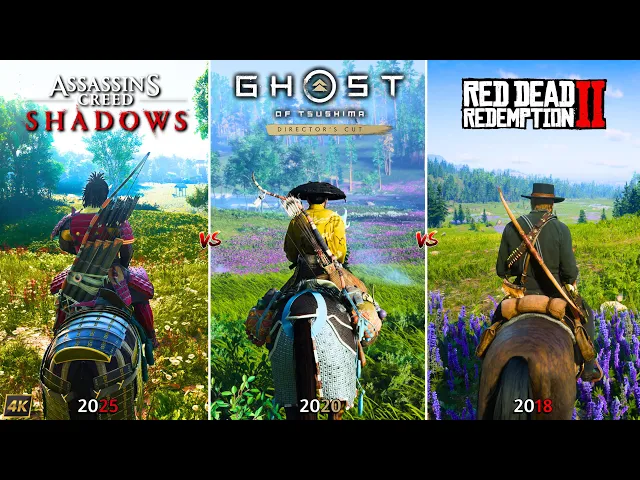
For the same reason, a significant portion of the audience criticizes the high price of Nintendo exclusives, because they don't look or feel like games for which it's "fair" to demand full price.
It is precisely the gaming industry's focus on blockbusters that has become the main reason for the explosive growth of budgets and subsequent price increases. Inflation, technological development, and production complexity also played a role, but the key factor was the publishers' drive for outsized profits.
Since the early 2000s, as the audience rapidly expanded, the gaming industry entered an era of outsized profits. More and more projects began to appear whose profitability was measured in hundreds of millions or even billions of dollars. In 2004, Halo 2 generated $125 million in its first day of sales, and Halo 3 earned over $300 million in its first week. In 2009, Call of Duty: Modern Warfare 2 raked in about $550 million in five days.
At the same time, the revenue gap between blockbusters and mid-budget projects grew. This is largely due to the consumer behavior of the mass audience — most people buy only a few new titles a year. According to Circana, 63% of American gamers buy no more than two new games a year. A blockbuster has a much higher chance of being among them — thanks to a larger marketing budget, studio reputation, and press attention.

The potential revenue ceiling of blockbusters far exceeded that of mid-budget projects — even though a vast budget could eat into the margin itself. The resounding success of individual AAA games repeatedly confirmed the validity of this strategy. GTA 5 brought in over $1 billion in just three days, and Red Dead Redemption 2 — over $725 million in its opening weekend. Back in 2014, in its annual report, Electronic Arts noted that sales were increasingly concentrating around the most popular games, explaining its decision to release fewer projects and channel main resources into the most promising franchises.
As a result, many major publishers almost entirely switched to a blockbuster model. Former Valve engineer Jeri Ellsworth mentioned that Gabe's company adheres to the "zero billion dollars" principle — management won't even consider projects that could bring in "mere millions" in profit. In 2026, Microsoft carried out massive layoffs, got rid of some studios, and cut less priority areas to focus resources on just a few series — Fallout, The Elder Scrolls, Doom, Quake, and Wolfenstein. Former head of PlayStation Studios, Shuhei Yoshida, said that at Sony it's practically impossible to get approval for mid-scale projects. According to him, the familiar AA segment has practically disappeared, which was one of the reasons for disbanding Japan Studio.

The concentration of resources from the largest studios into the super-profitable AAA segment spawned a budget arms race. To maintain the status of the year's main release and not get lost among competitors, each new game had to look larger, more technologically advanced, and more spectacular than the previous one, and its marketing campaign had to be even louder. Combined with inflation, increasing graphics demands, and the emergence of ever more powerful hardware, this led to a natural rise in development costs.
This is well illustrated by Rockstar's projects. The development of GTA 3 cost about $5 million, the budget for San Andreas is estimated at $10–15 million, GTA 4 — about $100 million, and the total costs for creating and promoting GTA 5 — about $265 million. The exact budgets for Red Dead Redemption 2 and GTA 6 are not disclosed, but we're talking hundreds of millions of dollars, and in the case of GTA 6, billions.
However, along with budgets, the cost of failure also grew. If a publisher's financial well-being depends on a few super-expensive projects, the failure of even one can lead to huge losses, mass layoffs, and studio closures. Paradoxically, one way to make up those losses is to build even bigger and more expensive games: only revenue on that same scale can cover a shortfall of hundreds of millions. Therefore, Sony, for example, after the failure of Concord, stated that it would continue to invest in large-scale games-as-a-service.

Simultaneously, the fear of failure forced publishers to reduce risks — choosing not new IPs or experimental projects, but well-known franchises, proven genres, mechanics, and solutions aimed at the broadest possible audience. This is why we see so many remakes or open-world games (Related: Halo: Campaign Evolved is coming to the PS5. What can we expect from this Unreal Engine 5 remaster).
In the end, the modern gaming industry finds itself trapped in a kind of closed cycle of budget growth. The model pushes publishers toward blockbusters — only those deliver revenue on the required scale. However, high competition in the AAA segment forces them to invest more and more in their production each time. Rising costs and failures of individual projects mean that each subsequent blockbuster must bring in even more profit, and therefore, even more must be invested in its production and marketing. And just when it seems this race should stop, another megahit like GTA 5 comes out, and its success triggers a new round of the race.
In such conditions, price increases are almost inevitable. If publishers fail to push through a price increase for base editions, even more effort will be directed at additional monetization: expensive editions, early access, story DLC, cosmetic items, battle passes, and microtransactions. The question is no longer whether games will get more expensive, but rather how exactly publishers will force audiences to pay more.
What Happens Next? How Will GTA 6's Release Affect Prices?
In 2019, no one could have predicted that the COVID-19 pandemic would lock billions of people at home, giving the gaming industry a sharp boost in audience and sales. Likewise, few foresaw that the AI infrastructure boom would send memory prices soaring: according to Bloomberg, it pushed Sony to consider moving its next console to 2028–2029, while Microsoft continues work on its own platform. So any predictions should be taken with a healthy dose of skepticism: we don't know what black and white swans the coming years will bring to the gaming industry.
However, focusing on how the release of GTA 6 will affect prices and the industry as a whole, three scenarios seem most likely.
Scenario One — Conservative

GTA 6 becomes a megahit, and most buyers calmly accept the $80 price tag. Rockstar's project attracts tens of millions of new players, some of whom integrate into the active gaming audience. Drawn by the promise of outsized returns, investors flock in, ready to fund the next blockbusters.
Major publishers raise the price bar to $80 and increase budgets, trying to match the standard set by Rockstar. According to analyst Joost van Dreunen, this will increase the gap between the biggest blockbusters and other games. Alongside the growth in production and marketing costs, the financial burden on buyers also increases — publishers seek ever more sophisticated monetization methods and try their hardest to push through the next price increase.
Even then, $80 is unlikely to become a single universal standard: as The Outer Worlds 2 showed, only must-buy releases can carry the new price. It's far more likely that the market splits into two tiers for good — mega-franchises at $80–100, and everything else at $70, competing for players with subscriptions, bundles, and early discounts.
The rising real cost of blockbusters and of the hardware itself — and right now everything is getting pricier, from memory to the consoles built around it — will lead to a significant stratification of the gaming audience. AAA games will gradually become entertainment for the wealthiest gamers, willing to regularly spend hundreds of dollars on hardware, games, subscriptions, and additional content. Other players will increasingly turn to indie projects, older releases, sales, subscriptions, and free-to-play games.
Scenario Two — Pessimistic

GTA 6 flops. Not that it won't recoup its costs or make a profit for Take-Two, but only a couple of hundred million. It won't become a megahit or a game of the generation. Consequently, the industry won't get the much-needed new investments and audience expansion.
This will lead to layoffs and studio closures. Even some giants will likely be affected (yes, I'm looking at Ubisoft). The console market will also be under threat, especially Sony and Microsoft, which were heavily banking on outsized returns from Rockstar's game.
The audience for traditional single-player games will continue to shrink and age, as new generations of players will increasingly choose free-to-play and mobile projects (Related: 26 Best Addictive Mobile Games for Android and iPhone — Games to Kill Time). Prices might remain at the $70 level for a long time, but there will be noticeably fewer full-fledged blockbusters.
Scenario Three — Promising

This is the most optimistic scenario, and probably the least likely one. GTA 6 is successful, attracts new audiences and additional investments to the industry, but the market doesn't try to turn every game into a new GTA.
Instead, major publishers pay attention to Kingdom Come: Deliverance 2, Warhammer 40,000: Space Marine 2, Clair Obscur: Expedition 33, and Capcom games — projects that prove commercial success and cultural relevance can be achieved without budgets of hundreds of millions of dollars, through a clear understanding of the audience, a unique concept, cost control, and long-term sales.
Another benchmark could be Nintendo. The company often justifies its high price tag not with photorealistic graphics and enormous production costs, but with exclusivity, brand recognition, quality of execution, and audience loyalty.
In this scenario, the market becomes more diverse, and pricing more flexible. More and more publishers will try not to make a game for everyone, but rather to satisfy the demands of specific audiences. The mid-budget segment will strengthen, and for major publishers, like 20–30 years ago, a diverse portfolio will become the norm, where alongside blockbusters there are several smaller-scale projects.
How do you think the $80 price tag for GTA 6 will affect the gaming industry?
***
What do you think — what ultimately awaits us with the release of GTA 6? Let us know where you land in the comments.

