
25 Best Noir Games on PC and Consoles: From Classic Detectives to Neo-Noir
 Anastasiia Sokolova
Noir games are dark detective stories, neo-noir thrillers, and tales where crime, hopelessness, and tough moral choices matter more than action. As a genre, noir (from the French film noir, "black film") is still a rarity in video games — so we've gathered the best noir games of every stripe: from classic 1940s-style investigations and neon-soaked neo-noir to noir shooters and bleak supernatural mysteries. You'll find cult classics, recent releases, and indie titles few have heard of here, tied together by dark atmosphere, drama, and inevitable tragedy. Pick your poison.
Classic Noir Detectives
At the heart of the genre is the classic noir detective: a cynical investigator, a tangled case, and a city where everyone has something to hide. These games inherit the look of 1940s and '50s "black film" — rain-slicked streets, hard shadows, interrogations, and clue-hunting, with the line between good and evil all but erased. Atmosphere usually matters more than gunfights here: you're carried along by dialogue, environmental detail, and moral dilemmas rather than action.
L.A. Noire
The best place to start is L.A. Noire — a game often called the gold standard of "black film" in interactive form. As detective Cole Phelps, you investigate cases in 1940s Los Angeles: examining crime scenes, hunting for clues, interrogating witnesses, and catching them in lies by reading their faces (its facial-capture tech was groundbreaking at the time). Phelps untangles a web of police corruption, mafia ties, and drug trafficking that builds into a gripping crime story. The art team nailed a noir atmosphere for the city that still holds up.
A Case of Distrust
A compact indie for fans of pre-war noir. In A Case of Distrust private eye Phoebe Cane works a case in 1920s San Francisco: you talk to witnesses, gather testimony and evidence, then prove your conclusions — a simple "I know who did it" won't cut it, you have to back your theory with facts. The game doesn't let you guess your way through; every conclusion has to rest on actual evidence, and that feeling of winning the case on logic alone is the whole appeal. The minimalist shadow-puppet art and jazzy soundtrack nail the mood of the era, all in a tight couple of hours with no padding.
Blacksad: Under the Skin
Comic-book games can be noir too, and Blacksad: Under the Skin proves it. It's an adventure set in a world of anthropomorphic animals, where the detective is a black cat named John Blacksad. Investigating the murder of a boxing-club owner, he uncovers a much bigger conspiracy: you explore locations, gather clues, run interrogations, and tackle QTEs, while animal instincts help you notice what's hidden. Noir runs through every frame here — grim districts, corruption, intrigue, dirty secrets under the streetlights.
Chicken Police — Paint it RED!
Chicken Police takes every noir-detective trope and populates it with anthropomorphic animals. Cynical, washed-up rooster detective Sonny Featherland teams up with his former partner to crack a murky case in the black-and-white city of Clawville. Gameplay-wise it's a visual novel with investigation: you examine locations, run interrogations, pick dialogue, and piece clues together. Its strengths are sharp writing, voice acting, and thick atmosphere; reviewers kept pointing out that where Blacksad fumbled, Chicken Police lands clean.
The Wolf Among Us
The visual novel The Wolf Among Us follows Bigby Wolf, sheriff of the hidden community of Fabletown, where fairy-tale and folklore characters live in secret. A string of grisly murders forces him to investigate: you pick dialogue, make choices under a timer, and play through QTE scenes — every choice carries weight. The investigations themselves aren't complex, but the unusual setting, harsh visual style, and a story full of sharp twists — where everyone has a secret — more than make up for it.
Night Call
Night Call is a noir detective story on the dark streets of nighttime Paris. You play a cab driver who becomes an accidental witness to a crime: every night you ferry passengers, and the back-seat conversations are where you fish for leads, names, motives. By day you lay the clues out on a board and narrow down suspects while the clock keeps ticking. The harder you push, the more careful the killer gets — the game balances noir investigation against straight resource management (money, time, suspects). The black-and-white styling of the streets, the rain, and the cab interior gives it exactly the French-noir mood it's going for.
Neo-Noir and Cyberpunk
Noir didn't stay in the 1940s — it stepped into the future. Neo-noir and cyberpunk noir transplant familiar themes into a world of high technology: neon megacities, all-powerful corporations, the social underbelly, and investigations where "high tech" meets "low life." Crime, paranoia, and moral ambiguity all remain, joined by dystopia, implants, and questions about what it means to be human.
Nobody Wants to Die
The stylish sci-fi noir Nobody Wants to Die drops you into a future New York where death has become a bureaucratic formality: for the right price, your consciousness is transferred into a new body. After an attempt on his life, detective James Karra takes on an off-the-books case and starts unraveling the secrets of the city's elite. The gameplay is crime reconstruction: you scrub time forward and back at the murder scene, hunt for clues, and build a chain of events. Its trump card is a stunning art-deco look on Unreal Engine 5 and a dense noir atmosphere; critics praised it precisely for that "black film" vibe.
Observer: System Redux
Set in a grim Krakow in 2084, ravaged by plague and war, Observer: System Redux is a cyberpunk noir with a dose of psychological horror from Bloober Team. You play a neural detective who can jack into other people's minds: investigating your son's disappearance, you hack the consciousness of suspects and victims and literally wander through their warped memories and fears. The atmosphere is oppressive and grimy-neon, in the spirit of Blade Runner; the remaster holds 80 on OpenCritic with a Strong rating.
Deus Ex
Look past the futuristic trappings and Deus Ex fits noir perfectly. Its sweeping plot revolves around a conspiracy of the powerful, tangled in nepotism and impunity; there are no clearly defined heroes or villains, and you constantly face tough moral choices. The gameplay blends shooter, stealth, RPG, and hacking — problems can be solved in many ways. Visually it follows the noir playbook: cityscapes and dark alleys, broken only here and there by a neon sign.
BioShock
BioShock greets you with the grim underwater city of Rapture — a society of decadence where power and impunity drove everyone to madness. You explore art-deco ruins, fight with guns and plasmids (genetic powers unlocked through mutation), and piece the story of a fallen utopia together from scattered audio diaries. The noir notes come from moral dilemmas and ambiguous characters — especially Rapture's ideologue, Andrew Ryan. The period atmosphere and jazz-orchestral soundtrack underline what the story already says outright: this city devoured itself.
DEX
DEX slots neatly into neo-noir thanks to its rich cyberpunk world and story. It's a side-scrolling RPG: you play Dex, a young woman thrown headfirst into a fight against the Complex, a secret organization running the city of Harbor Prime from the shadows. Gameplay mixes street-and-slum exploration, melee combat and gunplay, skill upgrades, and hacking with dives into cyberspace — each branch opening up different ways to tackle missions. Dialogue and choices steer you toward one of several endings, while neon alleys and corrupt institutions paint a classic noir future where the little guy is fighting the system.
Lacuna — A Sci-Fi Noir Adventure
Lacuna doesn't hide what it is — noir is right there in the title. You're detective Neil Conrad in a sci-fi world at the crossroads of cyberpunk and "black film": in a future city where politics and crime are hopelessly tangled, you're investigating the murder of a high-ranking official. The gameplay is a classic point-and-click investigation with consequences: you examine crime scenes, ask questions, gather clues, and build theories, then make decisions you can't undo. The game won't tell you if you got it right — it just shows you what happens next. Every playthrough lands on its own ending, and your mistakes and good calls both stay with you to the credits.
This Is the Police
An aging police chief is living out his final months before retirement in a thoroughly rotten city — that's the setup of This Is the Police, a neo-noir about running a precinct. You assign patrols to calls, make tough decisions on the edge of the law, and turn a blind eye to corruption to stash away cash. Crime bosses and powerful politicians keep cornering you into moral choices you don't want to make. The bleak text-and-management format and hopeless tone bring out its noir traits. If police work is your thing, we have a separate top of the best police and cop games.
Noir Shooters (Action)
Noir can be fast-paced, too. Here the dark aesthetic of "black film" meets action: slow-motion gunfights, revenge, cynical heroes with dark pasts, and cities drowning in shadow. The story and style stay noir — a broken protagonist, fatalism, moral filth — but adrenaline and spectacular combat join the mix.
Max Payne
The Max Payne duology from Remedy is a textbook dark noir shooter. Former cop Max Payne, shattered by the death of his family, sets out for revenge, running up against crooked cops and the New York mafia. Gameplay is built on dynamic gunfights with Bullet Time (slow motion) and acrobatic dodges, while between battles the story is told through comic-panel cutscenes and the hero's heavy inner monologue. The unexpected twists and the image of a man on the edge were unusual for shooters — and made the series a legend.
El Paso, Elsewhere
El Paso, Elsewhere is an open love letter to the Max Payne classics. The hero, James, descends through the endless floors of a supernatural motel to stop his ex — a vampire queen — and rescue hostages along the way. The gameplay is a third-person shooter with slow-motion dives and gunplay against werewolves, fallen angels, and other monsters. The deliberately "low-poly" look harks back to the early 2000s, while a strong story about toxic relationships and addiction holds you as tightly as the firefights do.
Katana Zero
Katana Zero throws you into the role of a samurai assassin who kills in one hit and dies in one hit. The amnesiac hero can slow time and "predict" the future: you clear levels with lightning-fast strikes, deflect bullets, and set up traps, then peel back his past between missions through branching dialogue. The slick pixel art, synthwave soundtrack, and bleak cynicism made it one of the best indies out there: 84 on OpenCritic and 97% positive reviews on Steam.
The Saboteur
The Saboteur weaves a noir style into a World War II setting and third-person action. It's set in Nazi-occupied Paris, where Irish mechanic-turned-racer Sean Devlin joins the Resistance, driven by revenge for a murdered friend. Its signature trick is both visual and thematic: occupied districts are painted in stark black-and-white, like a frame from an old noir film, and only as you liberate them do the colors — and the jazzy look of the 1940s — bleed back in. Gameplay is an open world of sabotage against Nazi installations, stealth, rooftop parkour across Montmartre, car theft, and gunfights. The story leans on a heavy inner monologue and noir fatalism throughout — Devlin isn't fighting this war out of idealism, he's fighting it out of personal grief.
Mystical and Supernatural Noir
Sometimes noir gets a dose of the supernatural — and the shadows on the wall turn out to be more than a metaphor. In these games, classic noir motifs (investigation, hopelessness, dark secrets) intertwine with the mystical, paranormal abilities, and elements of horror. The detective here often sees what's hidden from others, and the line between the real and the otherworldly blurs. Many of these sit on the edge of horror — if you want something genuinely scary, check out our roundup of the best horror games.
Heavy Rain
The interactive thriller Heavy Rain from Quantic Dream draws four troubled heroes together around the Origami Killer case — a serial murderer who leaves paper figures on the bodies. The gameplay is "interactive cinema": scene examination, branching dialogue, and tense QTEs where a single press changes the course of events. Decisions at every stage seriously affect the characters' fates and the ending — a hero can die and not come back. The thick, oppressive atmosphere doesn't let up until the credits roll.
The Vanishing of Ethan Carter
The Vanishing of Ethan Carter hooks you from the first minutes: as elderly detective Paul Prospero, you arrive in the village of Red Creek to investigate the disappearance of a boy, Ethan Carter — and immediately sense the place isn't what it seems. There are no markers, no hand-holding: you wander forest trails and abandoned houses, find traces of what happened, and decide for yourself in what order events unfolded. The hero has a paranormal gift — he reconstructs a crime scene from found clues, essentially replaying it in front of you. A dark atmosphere, quiet-horror elements, and unpredictable twists lead to a finale few will guess, all of it on visuals that were genuinely photorealistic for the genre at the time and still worth slowing down for.
Murdered: Soul Suspect
Murdered: Soul Suspect adds a pinch of the paranormal to the lineup. Detective Ronan O'Connor is gunned down in the opening minutes but refuses to leave: as a ghost, he keeps investigating his own murder in historic Salem, a town where the fear of the supernatural never really went away. The gameplay is built on spirit powers — you pass through walls and doors, read fragments of the living's thoughts, possess them to nudge their actions, and gather clues while dodging hostile demonic entities that can erase you for good. The noir comes through most in Salem's grim back streets and in O'Connor himself — stubborn, cynical, and unwilling to let go of the case even after death.
The Sinking City
The Sinking City is a Lovecraftian noir detective. Private eye and war veteran Charles Reed arrives in the flooded 1920s town of Oakmont, where residents are plagued by visions and creeping madness — and takes on case after case, one after another. Investigation is the main draw: the game refuses to hold your hand — you hunt for clues yourself, cross-reference testimony, dig through city archives, and draw conclusions with no prompts. The atmosphere is oppressive and dank, with that signature Lovecraftian dread wrapped in a noir shell. The combat is weaker than the detective work, but for the bleak mystery and the world it's a fair trade; there's also an Unreal Engine 5 remaster. If the Lovecraftian angle grabs you, we have a separate top of the best Lovecraftian games.
Indie and Narrative Noir
The most unusual noir often comes from indie and auteur studios. The focus here is on text, dialogue, and atmosphere: the investigation can be a metaphor, humor sits beside hopelessness, and the art style matters as much as the plot. This is noir for those who value writing, moral shades, and an unconventional approach over gunfights and special effects.
Disco Elysium
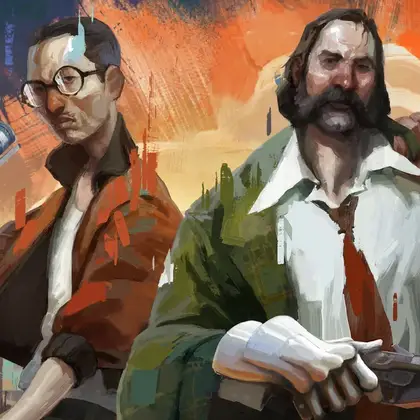
The text-based RPG Disco Elysium plays out in a world steeped in poverty and hardship — and that's exactly what makes it genuine noir. Detective Harry Du Bois arrives in the town of Martinaise to investigate a murder, but spirals into a bender and loses his memory, so he has to run the case while trying to put himself back together. Instead of combat, there's dialogue and skill checks: dozens of facets of the hero's personality argue inside his head, prompting and provoking him. The realism is such that the game can drag the player to the bottom of the bottle too; it holds around 91 on Metacritic.
Pentiment
Pentiment is a mystical detective drawn like a medieval manuscript: every character and detail looks penned and brushed by hand. Artist Andreas Maler investigates murders in a Bavarian town and abbey whose residents seem crushed by hopelessness. The gameplay is conversation, choice, and investigation with no "correct" answers: you gather theories but never quite know for sure, and your decisions echo through the town's fate for years to come. The game holds 88 on Metacritic.
Grim Fandango Remastered
Grim Fandango Remastered takes the classic noir tropes and breaks the mold with its signature humor. Manny Calavera — a travel agent for the afterlife — gets tangled up in a murder case and a massive scam. It's an adventure quest: you explore Land of the Dead locations, talk to colorful characters, and solve puzzles. The dark atmosphere and intrigue sit alongside Mexican folklore and a stream of the hero's cool one-liners, so the adventure ends up more fun than grim.
Danganronpa
Danganronpa is a Japanese take on the genre, a blend of detective story, thriller, and visual novel. A group of high schoolers is caught in a trap: the only way out is to kill a classmate and not get caught at the "class trial," where the others work to crack the crime. The series introduces this formula in Danganronpa: Trigger Happy Havoc — you chat with characters, play minigames, and shred lies with evidence in courtroom duels. The visual style is far from classic noir, but its grim premise and atmosphere of despair tie it to the genre tighter than any look ever could.
Frequently Asked Questions
What are noir games?
Noir games lean on the dark aesthetic of "black film": cynical heroes, a hopeless atmosphere, crime, and tough moral choices. They often add detective investigation, high-contrast visuals, and a heavy tone. Noir games come in classic, 1940s-flavored forms and as neo-noir set in a neon future.
Which noir game should I start with?
The easiest entry points are L.A. Noire (the gold-standard noir detective), Disco Elysium (a deep text-based RPG), or Max Payne (a noir shooter with Bullet Time). For something recent, try Nobody Wants to Die.
What's the difference between neo-noir and classic noir?
Classic noir inherits the style of 1940s–'50s detective fiction: rain-soaked streets, private eyes, black-and-white visuals. Neo-noir moves the same themes into the future or a cyberpunk setting — neon megacities, corporations, and technology. Examples of neo-noir include Observer, Nobody Wants to Die, Deus Ex, and Katana Zero.
What are the best noir games on PC?
Almost every game in this roundup is available on PC via Steam. Among the best noir games on PC are Disco Elysium, L.A. Noire, Pentiment, Max Payne, Observer, and Katana Zero. Most run even on weak hardware, except the most demanding ones like Nobody Wants to Die on Unreal Engine 5.
Which noir games have detective investigations?
The strongest noir detectives are L.A. Noire, Disco Elysium, Blacksad: Under the Skin, and Nobody Wants to Die: in each you hunt for clues, run interrogations, and crack the crime. They all land just as well with fans of the classic detective story.
So what's your favorite noir game? Did we miss something — drop it in the comments and let's talk it over!
Which noir game would you pick for a perfect dark evening?
What Else to Play
If the genre clicked, keep digging — noir is closely tied to detective fiction. If you want more investigations, check out our top of the best detective games: there are plenty of kindred spirits there, from classic sleuths to experimental puzzles. And below are a few more noir picks that didn't make the main list but are worth your time.
Backbone
Backbone is a noir detective in which private eye Howard Lotor — a raccoon — works cases in a dystopian, rain-drenched Vancouver populated by anthropomorphic animals. Stealth, interrogations, and clue-hunting nail the atmosphere for the first few hours, though the story takes an unexpected turn toward the end that didn't land for everyone.
The Red Strings Club
The Red Strings Club is a cyberpunk noir built around an unlikely duo: bartender Donovan can read people and mixes cocktails that draw out the exact trait he needs from a customer, using it to pry loose details of a corporate conspiracy. Working the outside is hacker Akara, breaking into corporate systems to dig up what Donovan can't get from conversation alone. Together they're trying to sabotage a megacorp's project to mass-"fix" human emotion. The gameplay is unexpected: you literally run the cocktail dispenser, eavesdrop on conversations, and occasionally play an android engineer building the implants at the center of it all. Choices pile up toward one of several endings, and the noir mood of the night bar, the neon glow, and the sharp script don't let you look away.
Shadows of Doubt
Shadows of Doubt is a procedural detective sim set in a noir-cyberpunk city that actually lives: hundreds of residents each have a job, a schedule, connections, and secrets, and the killer is a real person inside that simulation rather than a scripted villain dropped in for the case. You pick locks, dig through other people's mail, lift keycards, dig through databases, and narrow down suspects — no markers, no hints, just logic and paying attention. No two cases play the same, and there's no "correct" answer until you find the one that holds up. It's rough and buggy in places — the early-access label shows — but as an open investigation sandbox, it's still in a category of its own.
Best Games With Investigations
-
 120 Best Adventure Games on PC, PS5, Xbox, and Nintendo Switch
 -
 Best Story-Heavy Indie Games: Unforgettable Narratives You Can't Put Down
 -
 Best Cyberpunk Games in 2026: Top Picks for PC and Console
 -
 PC Overtakes Consoles in 2026: Journalist Argues PlayStation and Xbox Have Lost Their Edge
 -
 19 Best Detective Games on PC and Consoles: Murder Mysteries, Deduction Puzzles & Detective Sims
 -
 27 Best Games Like Call of Duty: Shooters Set in the Past, Present and Future