
TOP 40: Best Strategy Games of All Time for PC
 Anastasiia Sokolova
The best strategy games of the past decade—from classic RTS titles like Age of Empires 4 and Tempest Rising to the global empires of Crusader Kings 3 and city-building hits like Cities: Skylines and Manor Lords. The strategy genre is alive and thriving—over the past ten years, so many worthy titles have been released that they'll provide hundreds upon hundreds of hours of gameplay. This list is updated regularly. This version features 41 games, organized by subgenre, including highly anticipated releases from 2024–2026: Manor Lords, Frostpunk 2, Tempest Rising, Cataclismo, Menace, and Warhammer 40,000: Mechanicus 2.
Real-Time Strategy (RTS)
A classic strategy subgenre where every second counts: gather resources, build a base, produce units, and micromanage them as you maneuver them across the map. From StarCraft 2 to the recent Tempest Rising, which in 2025 brought back the feel of the classic Command & Conquer. And on September 17, 2026, the genre is set for another major event—the release of Dawn of War IV, the return of the legendary RTS series set in the Warhammer 40,000 universe, featuring four factions at launch. If you want to dive deeper into the genre, we have a separate the best RTS games of all time.
StarCraft 2: Legacy of the Void
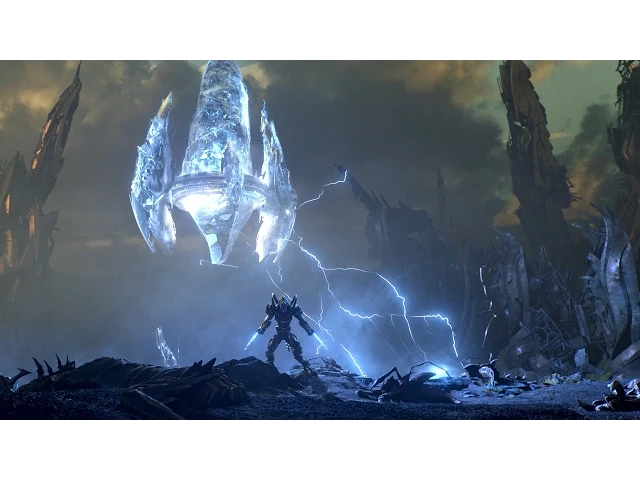
The popularity of space has grown in recent years. As a result, you'll see many strategies on this theme in our top list. And StarCraft 2 is the first of them.
Studio Blizzard remained true to its own game design formula: mining several resources, managing numerous cheap workers, constructing and developing a base. Three very different races with unique units, upgrades, tech trees, and defensive and offensive tactics.
The story of Legacy of the Void builds on Wings of Liberty and Heart of the Swarm and concludes the epic tale of the war for survival between the Terrans, Zerg, and Protoss (the cinematics alone are worth it!). However, prior knowledge of previous events isn't necessary. The very first cutscene briefly brings you up to speed. The events revolve around the conflict between the Zerg and the Protoss, one side's desire to wipe the galaxy clean, and the other's mission to save it by allying with their sworn enemy.
Unlike previous games in the duology, the strategic component in the third installment was significantly refined. Throughout the campaign, you'll have to complete not only story missions but also optional ones with excellent bonuses for progression and squad status. You need to adapt to the conditions of each mission by changing unit compositions or their abilities.
Legacy of the Void became the concluding part of the StarCraft sequel's story. However, at this point, all released games are united under the common name StarCraft 2 and sold as a single bundle, offering three campaigns, a single-player skirmish mode against the computer, several cooperative modes, and free competitive multiplayer.
The game will appeal to both genre veterans and newcomers who've never heard of wargames or real-time strategies. Blizzard successfully combined a low entry barrier with the ability to scale difficulty to a level that only the best players in the world can handle.
Ashes of the Singularity: Escalation
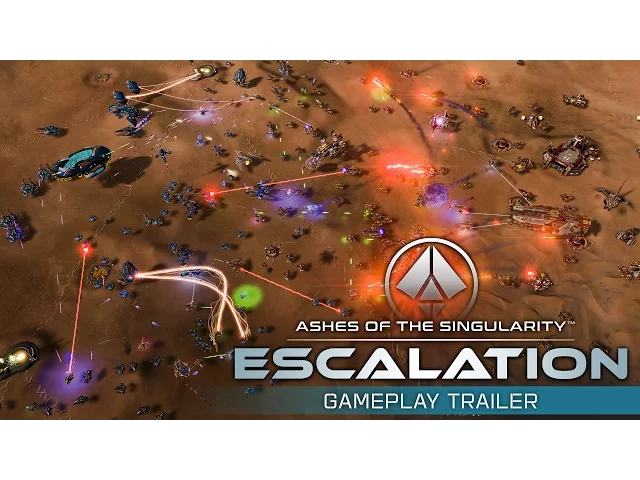
If you don't like memorizing hotkeys for frantic micro-management of units and squads, as required in StarCraft, but you adore the aesthetic of a high-tech future where futuristic units tear each other apart with plasma guns, lasers, and lightning, then check out the wargame Ashes of the Singularity: Escalation.
In every way, the game resembles a classic RTS with a low entry threshold, where the player gathers resources, builds a base, and produces units. Further is better. However, the Stardock creation stands out for its scale: huge maps, hundreds of units involved in battle, and up to 16 players per match. Gameplay is focused on constant production and grinding through units, so base development or global progression doesn't get much attention here.
Victory in Ashes of the Singularity depends less on knowledge of tactics or a powerful economy, and more on the ability to gnaw through enemy territory, capture their resources, and suppress their forces. The landscape of the map plays its role—it's easier to organize active defense in chokepoints than to break through.
And although battles often resemble a "wall-to-wall" melee, the depth of gameplay emerges when you fill your army with a variety of units (their set is large, though concentrated on tanks and aviation) in the right proportion, set a specific tactical stance for your squads, and position your forces correctly during battle.
There is also a story campaign in Ashes of the Singularity, where the player must protect humanity from the invasion of an aggressive artificial intelligence, and new information is delivered through dialogues, CGI cutscenes, and in-engine cinematics. Even though the game is more geared towards single-player vs AI and multiplayer, the presentation is decent, though you shouldn't expect Blizzard-level production.
Iron Harvest
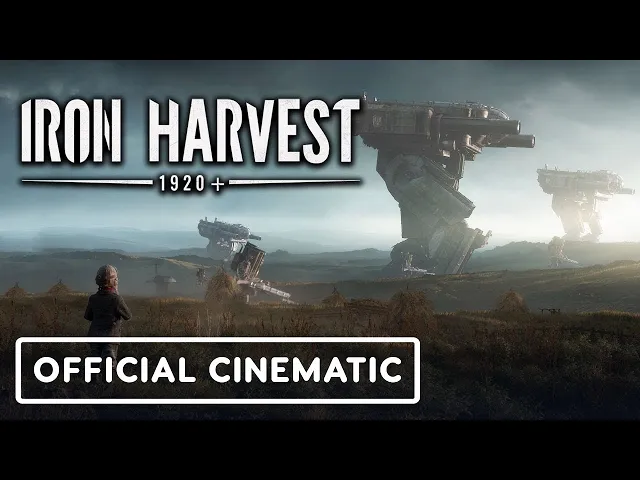
The smoke of diesel engines, chattering gunfire, shells ricocheting off metal, explosions, soldiers scurrying through the mud, and the echoing thud of piston limbs on metallic mechs—the best description of the battles in Iron Harvest. We have a stylish strategy set in an alternate era with modern gameplay and a rather intriguing single-player campaign. It's a very ambitious and high-quality game, though it lacked the budget to boast revolutionary graphics.
Iron Harvest takes place in an alternate world of the 1920s, created by Polish artist Jakub Różalski, where a revolution in mechanical engineering gave rise to diesel-powered robots. At the same time, the game doesn't try to be a typical dieselpunk, nor does it rely on the clichéd events often seen in the genre: World War I didn't happen, but due to the widespread use of robots, a far larger war broke out, engulfing the entire European continent.
The gameplay is inspired by Company of Heroes, yet it's less tactical and places emphasis on strategic maneuvers. It's based on a balance of attack and defense: first, you need to secure control over resource points on a broad front, then maintain their upgrade, repair, and defense. Most of your time is spent on defense and choosing effective squads to counter enemy forces.
The game has relatively decent graphics, but compared to other strategy games, they are quite primitive. The robots lack realistic textures, and the locations lack diversity.
Age of Empires 4
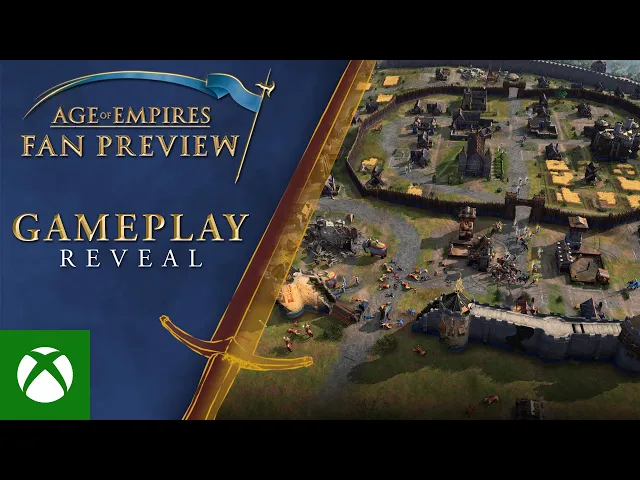
Age of Empires 4 is a classic real-time strategy: base building, sword clashes, and constant terrorizing of peaceful villages. If your idea of RTS is games like Warcraft and Dune 2, then the fourth installment of the legendary series is made for you. There's nothing superfluous, and the familiar genre gameplay elements are perfected. The tactic here is straightforward: try to reach your opponent in the first few minutes of the match and cripple their economy with a lightning-fast raid.
All eight factions provide a unique gameplay experience: technologies, units, and landmarks work great for individuality and variety. Chinese warriors get much of their gold income from Imperial Officials who collect taxes from all your buildings. The Abbasid Dynasty builds the House of Wisdom, giving them a chance to become leaders in technology and gain a bonus to fortifications.
Age of Empires 4 feels like an old-school game. And that's not a bad thing for the RTS genre. The single-player campaign has 40 missions covering the Norman invasion, the Hundred Years' War, the Mongol Empire, and the unification of Russian lands. Each scenario feels like a mini-documentary with live-action actors, dynamic battles, pleasant music, and respect for real history.
Dune: Spice Wars
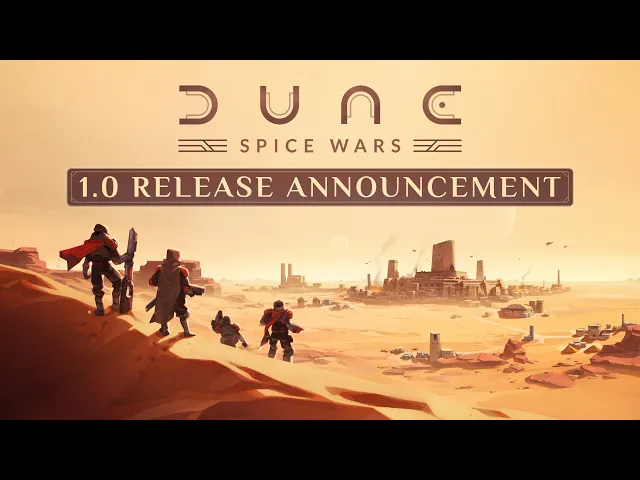
Dune: Spice Wars is a triumphant revival of the series that helped birth the RTS genre. The developers did an incredible job adapting the political intrigues into a gameplay space, while also delivering a dynamic combat system whose complexity grows with the player's experience. You don't need to click 10,000 times a minute, as the key to victory in Spice Wars is positioning, synergy, and understanding unit abilities.
Spice Wars is largely a real-time strategy with traditional 4X elements. The project lets you lead one of six competing factions, easily recognizable to fans of the universe. Single-player scenarios and multiplayer battles are available. But the main highlight is the 30-hour "Conquest" mode, which unfolds over several missions. Players must gradually strengthen their power over the planet.
In the end, we got a smart, multi-layered, and complex strategy that realizes the essence of the book in the game space. It looks and sounds great. The factions are interesting and engaging. There's huge potential for replayability.
Starship Troopers: Terran Command
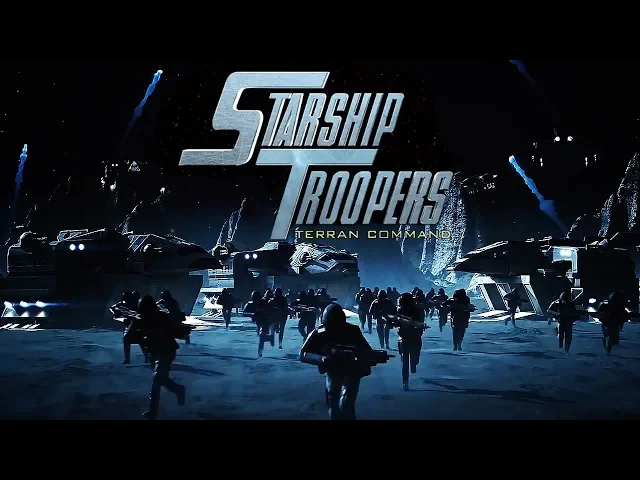
In 2020, we were given a fantastic strategy based on the 1997 film Starship Troopers. Studio The Artistocrats managed to recreate an "isometric version of Helldivers 2," where it's fun to fight bugs and find compromises between the main objective and the survivability of the troopers. The battles are dynamic and varied. The only drawback lies in the simplicity of the first half of the story campaign. The second half, however, offers a challenge that requires several restarts.
The story campaign is filled with unique missions with interesting objectives and moral dilemmas. How will you act—abandon a refugee camp to fulfill the orders of your superiors, or betray democracy in the name of morality and humanity?
Starship Troopers: Terran Command is a beautiful strategy with asymmetric and positioning-oriented warfare. Unfortunately, there is no multiplayer mode or scenario editor. This is undoubtedly its main drawback.
Terminator: Dark Fate — Defiance
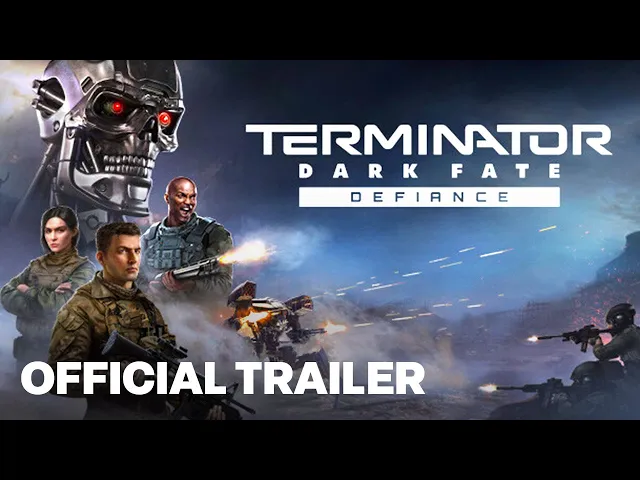
Terminator: Dark Fate — Defiance is a real-time strategy that has been loved by a huge number of gamers, but at the same time received a lot of negative reviews from the press, solely due to its low-budget story campaign.
Terminator: Dark Fate — Defiance features very realistic and detailed battles. Units die at the snap of a finger: the developers presented a fairly realistic war where victories are achieved not by valiant lone warriors, but by massive armies. Gameplay is based on logistics—you need to supply squads with ammunition and keep vehicles fueled.
The enemies, as befits Terminators, charge headlong and don't care much about survival. They are resilient, strong, tough, and so numerous that you certainly won't be able to overwhelm them with numbers. Dark Fate — Defiance is a difficult game: you'll spend most of your time planning, as a mindless frontal assault will lead to the total annihilation of your squad.
Ancestors Legacy
Modern strategies try to impress potential players with their scale, epic battles, multi-component and complex gameplay. This is especially noticeable in RTS games, which have massively acquired a global component and micro-management at the level of StarCraft. This is also the reason why RTS games from the 2000s, such as Command & Conquer or Battle for Middle-Earth, are still very popular.
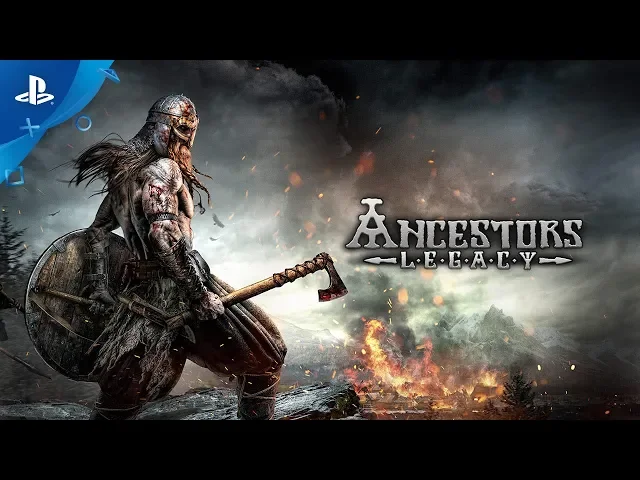
The creators of Ancestors Legacy managed to notice this, and in 2018 they pleased veteran gamers with a simple and understandable medieval RTS, so reminiscent of the games of the past—with base building, resource gathering, capturing points on the map, technology research, and unit equipment upgrades. The game's features include an "action camera" that transports the player right onto the battlefield with a view from behind the soldiers, and a high degree of gore with dismemberment.
The game features distinctly different factions (Anglo-Saxons, Germans, Vikings, and Slavs) with their own sets of buildings, technologies, strengths and weaknesses, and units. As per the standard, there aren't many—only five different types—but each has its own place in battle. This determines a particular playstyle, allowing everyone to find a faction with suitable gameplay. At the same time, the game has many small nuances: attack positioning, morale, the presence of wounded or healthy soldiers in a squad, and so on.
Ancestors Legacy offers eight story campaigns, two per faction, but with different leaders and goals—or about 40 missions of increasing difficulty. There's also a "Skirmish" mode where the player fights against AI, and a fairly well-developed multiplayer for 2 teams with 2 to 6 players each. If multiplayer interests you, check out our [url=/top-and-the-best/119113-best-co-op-games-pc-ps4-ps5-xbox.html]big collection of cooperative games for playing with friends[/game].
Tempest Rising
A direct spiritual successor to Command & Conquer. Tempest Rising from Slipgate Ironworks was released on April 24, 2025, and immediately received a warm reception from fans of classic RTS, who had nothing to expect from EA after Westwood's closure.
The action takes place in an alternate reality of 1997: the Caribbean Crisis ended in nuclear war, after which a mysterious plant, Tempest, spread across Earth. The player chooses one of three factions—the Global Defense Corps (like GDI), the Tempest Dynasty (NOD), and the third faction, Veti. Gameplay-wise—it's genre classic: resource gathering, base building, about two dozen unit types, and general special abilities.
Tempest Rising is exactly what those waiting for the return of C&C needed. 90% positive reviews on Steam.
Total War and large-scale battles
The Total War series deserves a separate category—it's a hybrid of turn-based grand strategy and real-time tactical battles with thousands of units on the field. It's joined by Ultimate General—a realistic RTS set in the era of the Napoleonic Wars and the American Civil War. There are no resources or bases here—just armies and tactics.
Total War: Warhammer 2
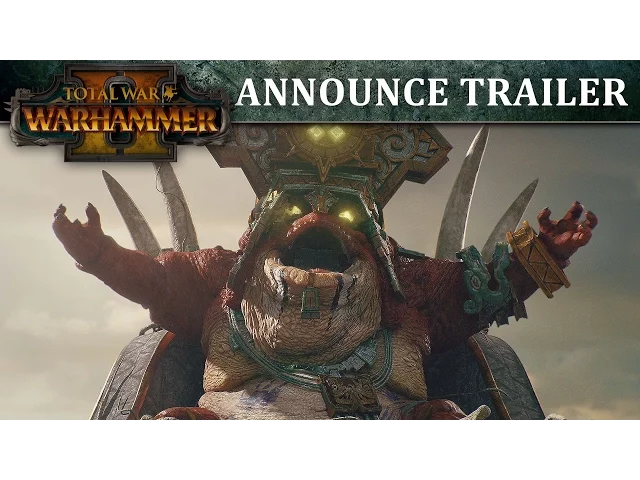
One of the brightest events in the world of strategy games is the merger of the epic wargames Total War and the fantasy component of the equally epic Warhammer franchise. The resulting crossover absorbed the best of both. From Total War, it gets the division into turn-based strategy on a global map with city and province development, diplomacy and trade, fleet and army management, as well as tactical real-time battles between units. From Warhammer—the fantasy setting of a dark medieval age with castles and knights, dragons and griffins in units, vampires, orcs, dwarves, elves, and other fantasy races.
Unlike historical Total War games, Warhammer is entirely focused on role-playing as a particular faction, as they are totally different in terms of gameplay, strengths and weaknesses, city development and research, unit rosters and their applications, and additional actions. What works well with humans will be almost impossible to pull off with Dark Elves, and vice versa.
But that's not all. Many other mechanics have been changed to fit the new direction. For example, magic and technology, as well as heroes commanding troops, play a significant role in the course of battle. On the strategic map, heroes with their abilities influence the development of the entire faction. A significant innovation was the climate system, though it's more apt to compare it to a biome. The point is that each faction has only three suitable biomes, and in other conditions, they will feel uncomfortable, which inevitably limits the faction's expansion.
The crossover has another important difference: the first, second, and inevitable third parts are components of one big game, elements of a single large-scale wargame. At the same time, any game in the trilogy is a full-fledged title on its own. But to fully immerse yourself in the epic battles and try all the races presented, fight on all continents, and complete all possible campaigns, it's better to buy everything at once.
Total War: Warhammer 3
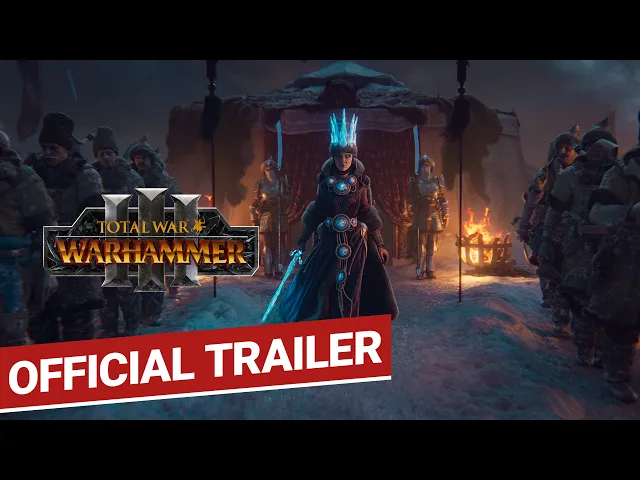
Total War: Warhammer 3 is a worthy conclusion to the trilogy. An almost perfect game with polished strategic and tactical modes. Plus, it features the most unusual and complex story campaign Creative Assembly has ever created. Its main part still takes place on a traditional sandbox map. And battles—in real-time via the tactical mode. The highlight of Warhammer 3 is the Daemons of Chaos faction. Each of the Chaos Gods has their own specific armies, but overall, they represent a united front, allowing you to recruit units from the entire pantheon and use the unique abilities of each army.
The story campaign of Warhammer 3 is reminiscent of Warcraft 3. There are clear similarities not only in the plot and characters but also in gameplay moments. In the tutorial, you command a prince who has slots for weapons and equipment, as if you're playing an RPG, not a strategy. Of course, the core process involves moving your army across the map in turn-based mode. But the essence of Warhammer 3 is revealed in diplomacy and large-scale battles.
Even during development, the game designers indicated that the game would be more narrative and story-driven. Thanks to this focus, we got a great single-player mode, which represents an intense, complex, multi-layered campaign based on an engaging plot and memorable characters.
Total War: Three Kingdoms
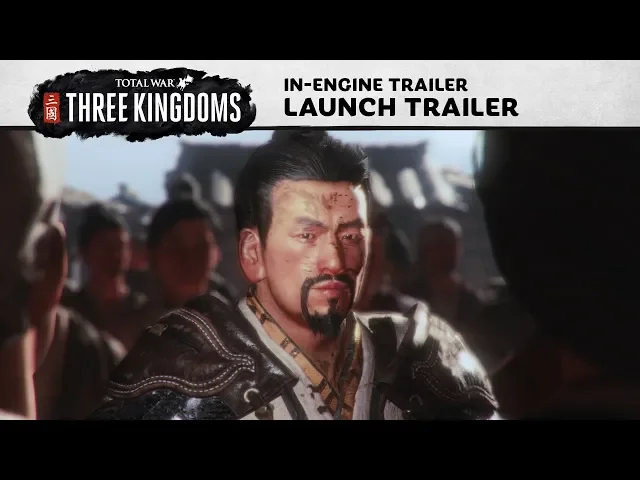
Creative Assembly is a very prolific studio. It releases a good strategy almost every year. In 2019, it released one of the best games in the Total War series—Three Kingdoms. Unique gameplay features with refined systems of diplomacy, army formations, relationships between characters, and strategic maneuvers on the map. Add to this a stunning design and highly detailed graphics that were perfectly optimized for the hardware of 2019. Many series fans still call Three Kingdoms the best entry—after ROME 2.
Three Kingdoms also features a tech tree with various bonuses in economics, governance, military, industry, diplomacy, and agriculture. Importantly, despite all the changes, Creative Assembly managed to preserve the spirit of "the good old Total War" with massive battles, formulating battle plans, and defining tactics for each specific engagement. Although the unit roster isn't huge (which is understandable for a civil war setting), the game is pleasantly diversified by characters that the player levels up and equips. They also duel each other, inspiring the soldiers.
The game's events unfold in Ancient China at the dawn of the new millennium, when dozens of feudal lords hungry for imperial power appeared on the ruins of the declining Han dynasty. The game's story allows you to play through a fairly authentic history of three of them, but you can choose any faction—say, rebels or revenge-seeking imperial loyalists.
Ultimate General: Civil War
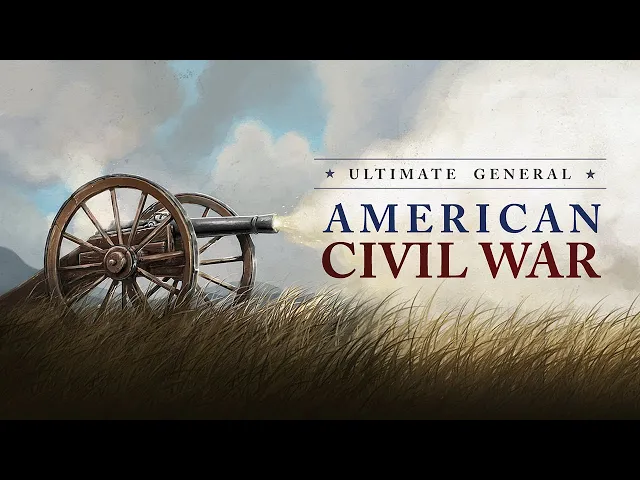
For everyone who was once disappointed with Empire: Total War but still yearns to participate in realistic and dynamic battles with dense fire contact between line infantry units, we recommend trying Ultimate General: Civil War.
The events of this strategy unfold during the American Civil War, offering you command of the Union or Confederate army to fight in more than 50 historically accurate battles, from small skirmishes to large-scale battles spanning several days. The developers depicted this fratricidal war quite well through in-engine cinematics with text commentary, but most importantly, through an advanced combat system.
From a gameplay perspective, the action in Civil War takes place in an interesting era when rifled weapons began to replace smoothbore ones, and designers found ways to increase the power of cartridges and their magazine capacity, dramatically increasing the effectiveness of military units. Under these changes, the old tactical scheme of "stand opposite each other and slug it out" began to fall apart. Commanders had to come up with something new.
All this is reflected in the game. The type of weapon heavily influences the outcome of an engagement, and battles towards the end of the campaign will differ significantly not only in armament but also in tactics. The game allows you to command up to 20 units of four types (infantry, skirmishers, cavalry, and artillery) numbering 500-600 men.
Ultimate General: Civil War offers direct control of units on the map, allowing for various maneuvers and issuing specific orders, such as trading fire or engaging in melee. The landscape directly affects the battle—a unit in the open will be an easy target, while one hidden in a forest or grass can exchange fire for a long time against superior enemy forces.
Supply plays a crucial role: without a supply train of ammunition and shells, units will quickly leave the battle. There's a morale system and fog of war—unexpectedly appearing behind enemy lines can easily put them to flight. If a battle is successful for a unit, its commander gains experience that can be spent on purchasing new skills.
There's also a strategic component. The player chooses the army general and the units that will go into battle, assigns weapons and other equipment to units. There's a global development system—investing points gives the player bonuses across all gameplay aspects, which will prove useful in critical moments when tactical prowess on the battlefield alone is insufficient.
4X and grand strategies
Games for dozens and hundreds of hours, where a small power grows into an empire—through science, economy, diplomacy, and war. This category also includes recent major releases Sid Meier's Civilization 7 (February 11, 2025) and Europa Universalis 5 (November 4, 2025): the first was received ambiguously, while the second achieved record concurrent players and enthusiastic reviews.
Stellaris
Paradox's first foray into creating a space-based global 4X real-time strategy was incredibly successful. Unlike competitors such as Galactic Civilizations or Endless Space, the studio didn't bother with realism but instead offered all the fanservice accumulated over more than a century of literary, television, scientific, and popular science fiction.
Want to play as intelligent fungi, mollusks, xenomorphs, or machines? Easy. Travel between systems at superluminal speeds using wormholes or gates? No problem. Build cyclopean structures like a Dyson Sphere or a Black Hole Matter Extractor? Please! Explore strange artifacts in space and on planets? Go ahead. Form alliances with the most diverse beings in the Universe? Elementary. Journey to another dimension? You'll have to work hard, but it's also possible.
Each game in [game=48325]Stellaris is unique and unrepeatable thanks to an advanced level generator. In the main menu, the player can choose from existing options or create their own unique race, define their government type, choose a leader, generate a galaxy using realistic templates, and determine victory conditions.
The game begins on a starting planet, where the player needs to establish resource extraction (divided into regular and strategic resources) and develop the planet. Subsequently, the player must invest in science, culture, politics, economy, and military by developing appropriate extractive enterprises and balancing between territorial expansion, capturing neighboring systems, and colonizing habitable planets.
Population plays a crucial role. The more population on planets, the higher the output of research points and other resources. However, you must watch their contentment. There are six victory conditions for every taste, from influence to conquest. There's a developed diplomacy system with federations and alliances, government types with their own bonuses, unexpected crises, and a Galactic Market.
In the years since its release, Stellaris has received numerous expansions and updates that have fundamentally changed it. Entire systems have been reworked or replaced in the name of a higher-quality galactic empire building experience. Therefore, we recommend buying the game with all DLCs.
Endless Space 2
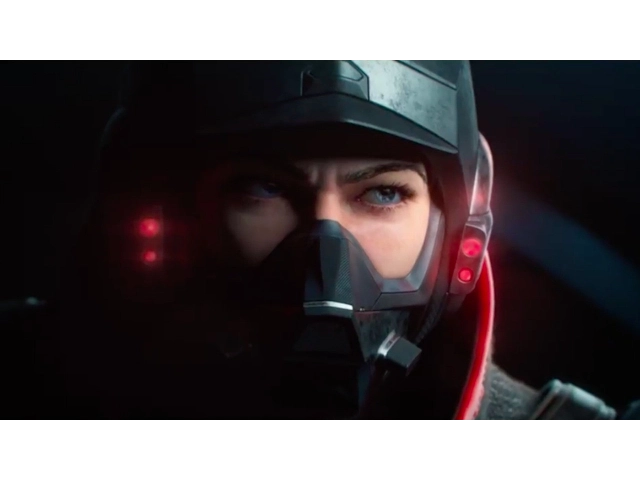
An alternative in the genre of global space 4X strategies is Endless Space 2. The Amplitude studio project offers a much more personalized gaming experience than Stellaris, designed for multiple playthroughs, and is turn-based.
The game is heavily story-oriented, constantly offering important and less important quests. Moreover, these will be genuinely interesting and highly branching long quests. Additionally, Endless Space 2 periodically throws in different events like anomaly research or incidents. This is also facilitated by the presence of heroes—characters that drive the faction's development forward.
Completing the faction's main quest automatically leads to victory, although there are also several victory conditions common to all. There are about a dozen factions in Endless Space 2, and all are very thoroughly developed, have strengths and weaknesses, differ significantly in terms of gameplay experience and tactics at the beginning, middle, and end of the game, and offer a unique set of story events.
The game world is significantly smaller. No hundreds of stars and thousands of planets. Only about a hundred systems in the entire galaxy, with 2-4 planets per system.
![ENDLESS Space 2 | Trailer [GOG]](https://i.ytimg.com/vi_webp/5Ye2cLUQj_4/sddefault.webp)
However, each system is unique and created with an emphasis on careful planning and long-term development throughout the game. This is achieved through a number of mechanics, such as unlocking new extraction and construction technologies, terraforming planets, resettling populations, and so on. Unlike Stellaris, there are only five main resources here: food, industry, money, science, and influence.
Internal politics and state structure play an important role. The player's actions affect the parties that form the government and contain a set of laws, unique to each party and affecting all aspects of the game. The combat system is simple but allows you to customize warships. The best designs are typically created manually. You can assign roles during battle through tactical formations.
Endless Space 2, of course, also received a lot of additional content, so the best option would be to buy the complete edition right away.
Crusader Kings 3
Crusader Kings 3 is an excellent strategy game, a great RPG, and a clear masterclass on how to take the best elements of existing game design systems and make them even deeper and better. You can spend thousands of hours in this game and still find something new every time. It's not just a strategy; it's a real novel about war, love, loss, friendship, and conquest. A true milestone in the genre and the main gaming highlight of 2020. Despite all the difficulties in learning and mastering it, Crusader Kings 3 was loved by millions of players and even impressed skeptical critics.
Crusader Kings has always been a series about how individual personalities and their relationships shape history. The third installment presents fresher and more intriguing ways to show dramatic history: the game is replete with court dramas, dynastic feuds, and, of course, marriage alliances, which are closely woven into the fabric of the global economic strategy. There's also room for castle building, technology research, and warfare. Every conflict arises for a reason, and you have the right to resolve it without bloodshed. The game gives boundless freedom for creativity and provides the tools to create your own "Game of Thrones."
This is arguably the most beautiful Paradox game. Besides the detailed map and interface design, there are fully three-dimensional characters that plausibly grow up and age before our eyes. In addition, the third installment introduced a new DNA system that allows children to plausibly combine the traits of their parents. The feature works no worse than in The Sims 4.
Age of Wonders 4
The core gameplay of Age of Wonders 4 doesn't differ much from previous installments—you need to build your own empire, using a limitless number of flexible settings and choices. The game can be described as a kind of mix of Civilization, turn-based world exploration in the spirit of Heroes of Might and Magic, and a tactical combat system in the XCOM format.
The game world is randomly generated, taking into account narrative events, unique characteristics, city inhabitants, and a myriad of other features for each unique playthrough. At the same time, the landscape, weather conditions, and natural features of the location directly affect the playstyle. Besides the usual humans, orcs, elves, and dwarves, you can create races of humanoid moles, rats, tigers, or even frogs. Each has several special appearance types and specific positive and negative traits. The upgrade tree is quite extensive, requiring a significant amount of time to fully unlock.
The main goal of a game session comes down to destroying all enemies, unlocking universal knowledge, or building an empire by lighting three "Beacons of Unity" that must be defended for a certain number of turns. Roughly the same as in Civilization or Humankind.
Tactical and turn-based strategies
Strategies focused on "one battle per turn": small squads, clever use of cover, fire direction, and every decision is golden. From pixel masterpieces like Into the Breach to major tactics like XCOM 2 and the fresh Menace from 2026. If you're interested in such projects, we have a separate top tactical games.
XCOM 2
XCOM 2 is a turn-based tactic about the war of a secret special forces unit against alien invaders, and a direct sequel to the successful reboot XCOM: Enemy Unknown. When developing the second installment, Firaxis followed a well-trodden path. The sequel turned out prettier, bigger, more epic, but the gameplay remained virtually unchanged and almost entirely borrowed mechanics from Enemy Within.
A squad of 4-8 soldiers arrives at the level to complete an objective and eliminate all enemies standing in the way. The objectives vary, and the player is often pressured by some sort of timer. Since the game is turn-based, the player has enough time to carefully consider each combat situation and resolve it in the minimum number of turns. This is helped by numerous different soldier classes, abilities and skills, weapons and equipment.
The strategic component is represented by the base, where research is conducted, increasingly powerful and cool technologies are unlocked, helper robots are constructed, and soldiers are recruited and leveled up. As in the previous game, soldiers can be upgraded into cyborgs or psionics. Innovations in XCOM 2 include an improved level generator that made missions unique and non-repetitive, as well as a significantly increased difficulty. The player is constantly kept on edge.
Thanks to high-quality graphics, colorful effects, and revamped soldier animations, the game resembles a small-scale action movie. Many actions are accompanied by camera sweeps that try to catch the most spectacular moments. However, gameplay-wise, XCOM 2 only got better after the release of additional content from the developers like War of the Chosen and numerous mods. Therefore, we advise buying the most complete edition—most mods are made for it.
Into the Breach
A small and rather short turn-based tactic from the creators of Faster Than Light with an isometric camera and very simple 2D graphics, it received over 95% positive reviews on Steam and is considered one of the most interesting projects of 2018. Even much more interesting than BattleTech. That's why it ended up in our top list.
The events of Into the Breach take place in the distant future, when humanity encountered giant monsters called Vek, breeding underground. It quickly became clear that defeating the vile bugs was not so easy. Already losing the war, humanity sent its best combat mechs into the past to learn from all their mistakes and win.
The action of Into the Breach takes place in a world consisting of four islands, which are, in turn, divided into several parts. These parts are the maps where the player, commanding giant combat robots, will fight the kaiju. Unlike other tactical games, Into the Breach features miniature maps and only 3-5 turns to complete a task. However, damage is always applied.
To win, the player needs to find the perfect strategy, correctly positioning their robots and calculating the damage dealt. And the time-rewind feature allows you to undo an unsuccessful decision. Notably, success in the campaign depends not on the number of bugs killed, but on how skillfully the player protected the cities and civilian buildings scattered across the map from bug attacks. A non-trivial task given friendly fire.
The strong point of Into the Breach is its high replayability thanks to a huge set of mechs and weapons for them. Each has its own strengths and weaknesses that must be understood to achieve victory. A high chance of losing everything. The influence of the map's landscape and mech positioning on gameplay. The game itself is not about damage and overpowering, but about the ability to defend, hold back the enemy, and block their reinforcements. Therefore, the gameplay provides many ways to control the battlefield.
Gears Tactics
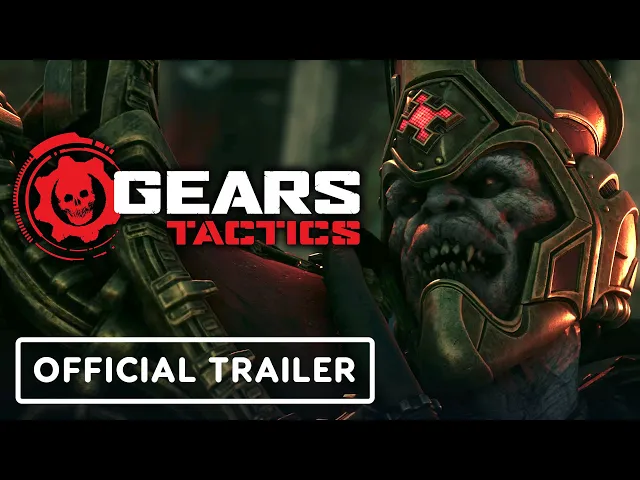
Gears Tactics is a spin-off of the Gears of War series, mixing the XCOM formula with brutal tactical cover-based combat. Most missions are puzzles with very cool graphics that still impress with their detail.
Only four squads can be present in battles at a time, but even that is enough for a spectacular fight. Besides classic cover shooting, Gears Tactics added flanking maneuvers, chainsaw melee attacks, grenade throws, and unique abilities that can be cleverly combined for additional buffs and action points. However, one of the game's best features is effectively turning fallen enemies into bonuses. Killing a downed enemy grants an action point to every squad member, which is undoubtedly a great incentive for more aggressive combat.
Gears Tactics looks impressive. Its graphics are no worse than Gears 5. Character models are fantastically detailed, and the ruined urban environment of planet Sera is meticulously designed. The animation is also top-notch. At the same time, the project is perfectly optimized for budget hardware. But if you're still having problems, check out our top most optimized PC games to find alternatives.
Wildermyth
Wildermyth is an unusual tactical strategy with RPG elements that tries to combine the best aspects of storytelling and procedural generation. And it succeeds thanks to its excellent writing, thoughtful tactics, and some successful design decisions that infuse the story with epicness. At first glance, the game might seem like a small indie project you can skip, but in reality, it's much deeper than major AAA titles.
Wildermyth realizes the dream of many tabletop RPG fans—an AI dungeon master that reacts to the player's decisions and generates stories as if written by a screenwriter for a major RPG. Describing Wildermyth in general terms, it resembles a regular role-playing game. First, you choose a small campaign with a randomly generated story, then lore, conflict zones, combat encounters, and dialogues are woven into the structure. The story becomes solid and logical. In the end, you get a role-playing game with tactical battles that can be replayed an unlimited number of times.
Turn-based tactical battles initially seem superficial. Playing through the tutorial campaign on normal difficulty requires little more than approaching a monster, hitting it, and taking a defensive position. But the more you play, the more nuances are revealed. For example, after each battle, not only do your characters receive upgrades for experience gained, but so do the enemies. The further you progress through the story, the more often you encounter familiar enemies with improved armor, weapons, and abilities. At the same time, they learn to counterattack and form parties in ways that block your heroes' skills.
Panzer Corps 2
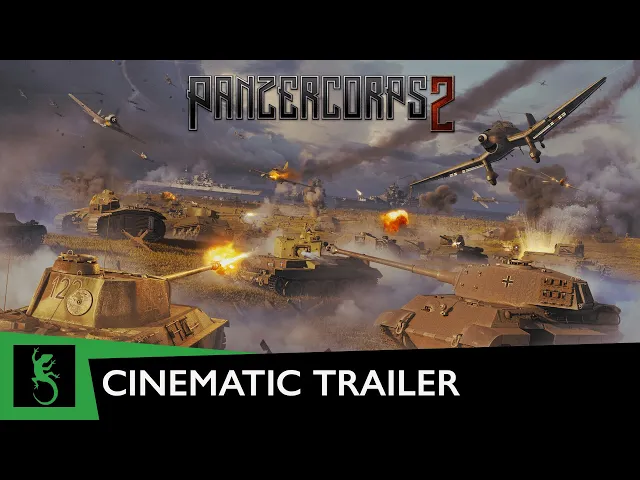
Hexagonal wargames have never looked as good as in Panzer Corps 2. It's arguably the last high-quality strategy where you lead a tank division through the entirety of World War II in a single-player campaign. Despite a rather typical name, the strategy turned out very well in all aspects, including graphics and musical accompaniment.
Panzer Corps 2 is a classic wargame based on hexes and counterattacks. You have units, and they have specific stats. Each battle proceeds in turn order. Your army's overall statistics are pitted against the enemy's. Whoever has better numbers and more stable resistance wins. That's the general idea, but in reality, it's much more complex. You can't do without knowledge of military craft and understanding the specific purposes of military equipment.
Maneuvering troops during missions is engaging and dynamic. You can capture fixed objectives and achieve victory through hybrid warfare. It's much easier to surround enemies and cut them off from supplies than to lead your units to certain death. Panzer Corps 2 constantly throws up unique situations and provides a fresh gaming experience.
On normal difficulty, the game has an undo button mid-turn, allowing you to timely replay a bad move. The developers understood that replaying dozens of hours due to two or three mistakes would lead to player churn. Overall, Panzer Corps 2 tries to be friendly to its audience, and each update takes player feedback into account.
Jagged Alliance 3
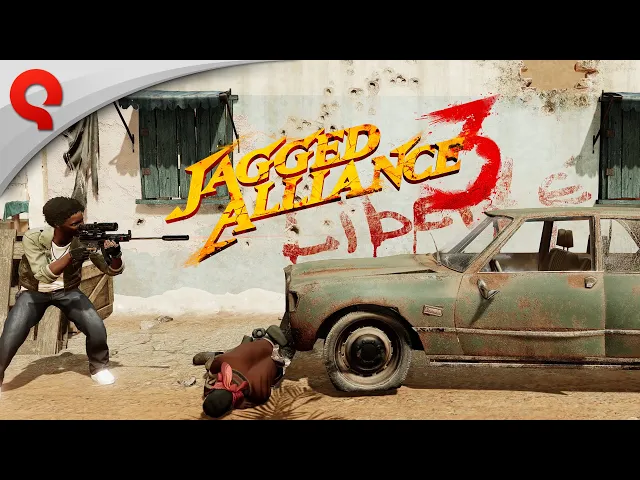
Jagged Alliance 3 is a well-thought-out and eventful tactical strategy that surprised not only the press but also dedicated fans with its quality. The project offers a huge variety of characters, handcrafted tactical locations, and a story campaign that doesn't get boring by the end.
The tactical battles in Jagged Alliance 3 are on par with the ideal XCOM: Enemy Unknown in terms of engagement and spectacle. Your squad of six mercenaries can specialize in anything from heavy weapons to sniper rifles and demolition work. At the same time, no one forces you to take a specific role you don't like. The developers provide nearly limitless freedom in shaping your own playstyle.
The game also boasts an impressive world map. It has over 100 available tiles, each with its own 3D battle map. You'll find everything there: from densely populated urban areas to open savannahs teeming with hostile wildlife. And you are free to visit even those parts of the map where there are no enemies or story campaign objectives, to gather resources and explore caches. One of the best games of 2023.
Songs of Conquest
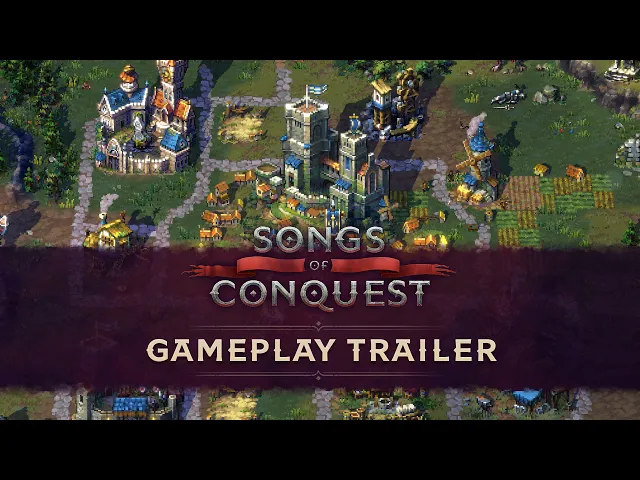
Many players call Songs of Conquest "the true heir to the legendary HoMM 3." It's a strategy game with resource gathering intertwined with engaging tactical role-playing. Each gameplay part is turn-based. First, you explore the large and beautiful maps of a fantasy world, visiting dozens of castles, ruins, and other interesting places to gather as many resources as possible for construction, research, and hiring additional troops. Then you fight enemies that block your path to important locations on the map.
Sound and animation deserve special attention. Yes, the graphics are in pixel art style, but they are very solid and high-quality. The maps are quite detailed and diverse. The units have inertia and are well-drawn. The music perfectly fits the atmosphere set by the developers.
The battles are challenging. Sometimes you have to think strategically rather than rely on auto-battle. Overall, the game is almost entirely built on the HoMM 3 formula, so it will appeal to fans of that type of project. As of 2024, it still hasn't left early access, but it continues to receive major updates and content expansions.
Marvel's Midnight Suns

Marvel's Midnight Suns is an innovative turn-based tactical strategy from the creators of XCOM. We play as a squad of superheroes who, surprisingly, fit perfectly into such an unusual genre for comics. This is one of the best games of 2022, unjustly ignored by most gamers.
Midnight Suns' combat system radically differs from all known tactical strategies. Each team member has their own customizable deck of eight cards representing the superheroes' iconic abilities. Once activated in a battle scene, they are discarded, creating certain limitations. This significantly changes the flow of tactical combat, forcing the player to think twice before activating a skill.
Superheroes don't hide behind cover and don't miss. This means all damage from enemies goes straight into the bodies of your squad members. The only goal in battles is the swift elimination of enemies and survival. At the same time, the gameplay doesn't become monotonous, as the developers really worked on mission variety. Even if you're not a superhero fan, the game deserves attention.
Menace
A fresh 2026 tactics game from Big Fan Games (published by Hooded Horse). Menace entered early access on February 5, 2026, and immediately appeared in the Steam sales charts in the tactical strategy category.
It's a turn-based tactic in the spirit of XCOM, but with much deeper combat mechanics for each battle. The player commands a strike force of marines on the cruiser "Impulse," clearing the isolated star system "The Outskirts" of alien threats. Unlike XCOM, there is no global map with organizational confrontations—the game is focused on tactical battles with a wealth of details: cover, shot direction, flanking, ammunition type, armor condition.
Menace receives "Overwhelmingly Positive" reviews on Steam for its mechanical depth and atmosphere—and although the graphics are simpler than major releases, the tactical layer is widely recognized as the best in the genre since the original XCOM 2. For those who miss serious tactics, it's the strongest 2026 release in the genre.
Warhammer 40,000: Mechanicus 2
The sequel to the cult turn-based tactics game set in the Warhammer 40,000 universe. Warhammer 40,000: Mechanicus 2 was released on May 21, 2026, right during the anniversary Warhammer Skulls festival, and became available immediately on PC, PlayStation 5, and Xbox Series X/S.
The sequel features two full-fledged story campaigns: for the Tech-Priests of the Adeptus Mechanicus and, for the first time in the series, for the awakened Necrons. In the story, Vargard Neferxah raises the legions of his dynasty to destroy the Mechanicus, who unknowingly settled on his world, while Magos Dominus Faustenius tries to stop him. The script was written by a Black Library veteran.
Gameplay-wise, it's the same grim turn-based tactics with an emphasis on squad customization, implant upgrades, and strategic campaign decisions that affect the outcome of the war. If you liked the first part or if you enjoy deep tactics with a grimdark atmosphere, Mechanicus 2 is a must-play.
City builders and management
Strategies without combat in the traditional sense—here, the main enemies are economics, nature, epidemics, and the psychology of your own citizens. From Cities: Skylines with its infinitely expandable metropolises to Manor Lords with its organically growing medieval village without a grid. A detailed selection is available in our Top City-Building Simulators.
Cities: Skylines
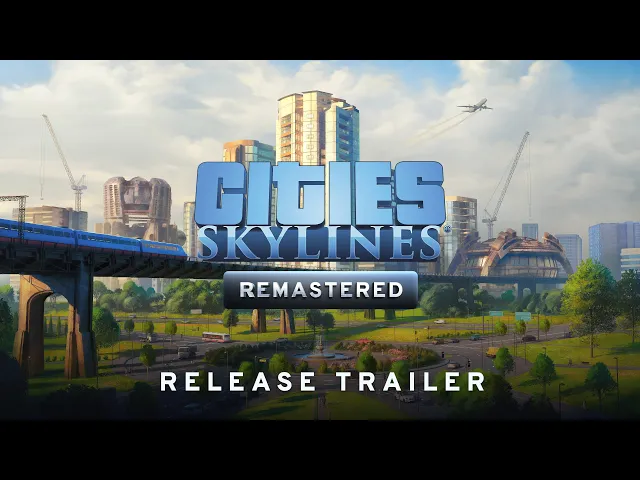
In March 2015, Paradox released the city-building simulator Cities: Skylines. It's unlikely anyone expected the game to become the best in the city-building niche. But the results clearly show it is, and we're not exaggerating. Largely thanks to additional content from developers and modders.
The base version of the game successfully combined ideas from its less successful competitors: the player starts on a small patch, gradually buys more land, and plans different zones. Buildings are divided into residential, commercial, and industrial. To develop, you need to satisfy numerous citizen demands: food, water, electricity, safety, transportation, sewage, ecology, parks, entertainment, and so on.
Subsequently, each aspect received significant improvements: city policies, advanced science, industry, transport networks, and the ability to build eco-friendly cities were introduced. The technical aspect wasn't forgotten either—dynamic weather, changing seasons creating winter difficulties for municipal services, and devastating natural disasters testing the player's city were added.
Moreover, the player can decorate the city with cosmetic items from packs, completely change the landscape, and set natural features, such as water spawn points on the map. All this allows you to build the city of your dreams with the boldest layout—from Babylon with hanging gardens to a radial Pokémon city.
Anno 1800
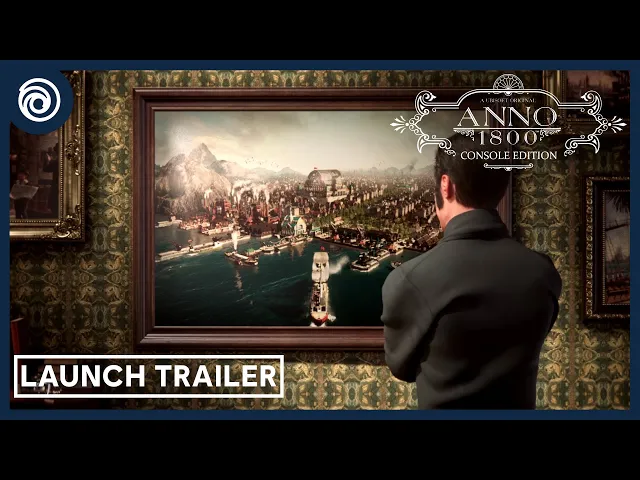
A gem of 2019, one of the best strategies. Anno 1800 is a phenomenon that might initially scare you off with its complexity and overload. But in most cases, it hooks you more than any multiplayer session or open-world survival game. The developers at Ubisoft Blue Byte provided users with a unique sandbox where the story campaign is closely intertwined with immense creative freedom.
Extraction, production, and distribution of goods, transport logistics, supply and demand balance, financial management, population happiness, tourism, and competition with other players—that's the core of Anno 1800. But not only that: the player is also entertained by expeditions sent to distant worlds for rare specimens of animals, plants, or items, as well as the story campaign and side quests.
Anno 1800 introduced a population employment system based on class composition. A blueprint mode simplified planning. The coastline provided new opportunities for construction and storage. The game became deeper and more thoughtful. New mechanics are well woven into the era chosen by the game designers.
The Anno 1800 engine allowed developers to place the Old World, the capital, the New World, and the Arctic on a single map. The game looks stunning when fully zoomed out and is maximally detailed when zoomed in. Flora and fauna are high-quality and diverse enough not to give the impression that the authors simply painted islands with a broad brush. Textures and building designs are also good, especially the housing for your workers. And the local waterways still surprise with their technological sophistication even in 2024.
Tropico 6
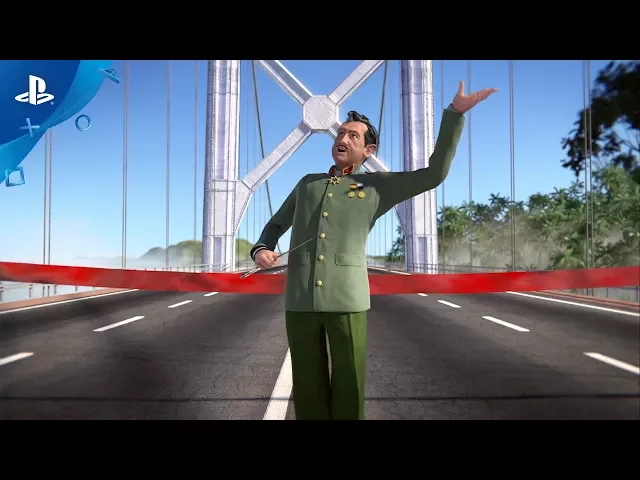
Tropico 6 is a meticulously thought-out city-building simulator with a unique identity and the ability to realize your most desired "dictatorial" ambitions. Every element of game design and well-crafted political intrigue distinguishes the project from its predecessors. The developers managed to find a golden mean, realizing a deep strategy with notes of humor and irony.
Tropico 6 gives players complete freedom in creating their dream city. No one will stop you from building a communist paradise where all regular workers live in mansions, and laborers earn more than scientists and civil servants. Or throw a party with a brutal military dictatorship where human life becomes the main source of profit. The main thing in this diversity of possibilities is to keep an eye on resources and the local economy.
Besides the customizable "Sandbox" mode, which includes over a dozen ready-made maps with the option to randomize them, Tropico 6 has a full-fledged story campaign with fifteen missions. It will help beginners master the basics of city-building and teach them to solve interesting problems with unique situations. For example, in some tasks, the game will impose restrictions on construction or forbid agricultural activities.
Frostpunk
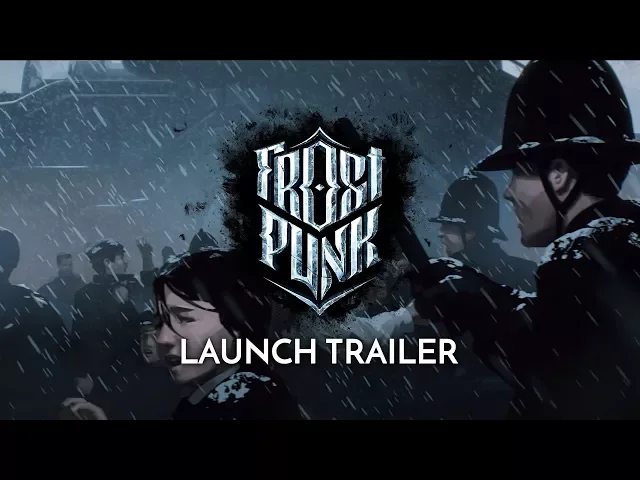
What if in a city-building strategy, the main focus is not on city development but on survival? That's roughly what 11 bit Studios was thinking during the development of Frostpunk. The game's events take place in an alternate reality of the late 19th century, when the planet was hit by global cooling and all of continental Europe froze. People flocked to the Arctic for salvation, where a cheap source of heat—coal—was right under their feet.
Life in the world of Frostpunk revolves around monstrous steam boilers that supply heat to nearby buildings. As per classic formula, the player starts in an open field and must establish the extraction of coal, wood, steel, and food. Industry and labor resources are balanced by the employment system. The game also features research, which allows you to increase industrial productivity, unlock new buildings, or improvements.
The constant cold is a distinctive feature of the game. It causes injuries and illnesses among the people. Fighting it requires a constant increase in heating power and insulation, consuming a significant portion of resources and research. Balancing between survival, development, and resource accumulation defines the core of Frostpunk's gameplay.
Harsh conditions will require the adoption of new laws, the implementation of which will not please everyone. It's crucial to maintain loyalty and hope among the people, otherwise, they will literally throw a bad mayor out into the cold. Interestingly, the player is not confined to a small game map—they can send expeditions into the surrounding icy expanses for resources, artifacts, and in search of other survivors.
Frostpunk offers several story scenarios where you need to complete a given task, as well as an endless mode for survivalists (lower temperatures, severe storms are very frequent) and builders (more comfortable conditions). The game also has many difficulty settings that will challenge even an experienced survivor. We recommend buying the game with the The Last Autumn expansion.
Frostpunk 2
The sequel to 11 bit Studios' cult survival game. Frostpunk 2 was released on September 20, 2024, and became one of the year's major strategy releases. The events take place 30 years after the original: the glacier has receded, and humanity balances between recovery and new crises.
Unlike the first part, where the player built around a single steam generator, in the second, we manage an entire district—several metropolises, thousands of citizens, and political factions with different views on the future. The scale is larger: houses, streets, and factories are built not individually but as entire districts. The main new mechanic is the Council: factions vote on laws, and the player must navigate between the interests of workers, the bourgeoisie, idealists, and proponents of a strong hand.
Frostpunk 2 received rave critical reviews, but some fans of the original complain about the loss of "personal stories"—where the first game was about a small town and specific fates, the second leans towards political parties and abstract decisions.
Offworld Trading Company

"Money makes the world go round"—this phrase perfectly describes the essence of Offworld Trading Company. In this economic strategy, the player manages a mining company that extracts available resources from yet another alien colony and sells them on the world market for profit.
The player starts on a randomly generated map and must immediately "stake out" plots with basic resources for extraction and subsequent processing into useful goods. You can't build over the entire map. The colony administration regulates both base expansion and the number of construction plots and extraction technologies. Military actions are also not provided (although sabotage is possible). This is designed for short but intense sessions where the one who trades best wins.
The point is that all extracted goods in Offworld Trading Company are sold on an open and very competitive market. There are several mining companies on the planet, so the price constantly fluctuates based on supply and demand. The more they sell (buy), the lower (higher) the price. On the other hand, the more extraction on the planet, the lower the price. And if someone manages to get a monopoly on a particular resource, they will start dictating the price to everyone else.
Nothing prevents you from ignoring a shortage of a resource and compensating for it by buying. There's always someone on the market to supply electricity, water, food, and more. But you need to watch the balance. By neglecting your own generating capacity and relying on the honesty of partners, you can immediately become dependent on them. Moreover, partners will dump excess electricity at exorbitant prices, killing your competitive production advantage. And vice versa: the game harshly punishes overproduction. Even the most expensive goods can cost less than garbage.
At the same time, Offworld Trading Company doesn't require you to be constantly in the black. You can be in the red because the game constantly evaluates the total value of the company (production capacity, goods in stock, interest on debts, shares in competing companies), which is reflected in the value of the player's company stock. The winner will be the one who best "rides" the fluctuating prices, earns more money, and buys out all their competitors' shares.
Manor Lords
The main city-building sensation of 2024. Manor Lords entered early access on April 26, 2024, and within the first day, the game sold a million copies. It's a rare case where an independent project outshines major AAA studio releases in the Steam charts.
The action takes place in a fictional 14th-century Europe. The player is a feudal lord responsible for the village's development: taxes, resources, defense against marauders, and neighbor ambitions. The main difference from classic city-builders is the abandonment of the construction grid. The village grows organically: paths appear where people walk, fields where the land is fertile, and markets where trade routes converge. This creates a unique visual—each settlement looks like a living historical reconstruction, not a simulator of placing cubes.
Manor Lords is still in early access, but it already has "Very Positive" reviews on Steam. The game is constantly being updated with new content—new crafts, tactical options, and an expanded combat system are being added.
Cataclismo
An unusual hybrid of RTS and tower defense from Digital Sun. Cataclismo entered early access in July 2024, with its full release in March 2025. Gameplay is built around constructing multi-level fortresses from cubes—each wall, tower, and arch is placed manually, like in LEGO, and the defense's ability to withstand night waves of monsters depends on this.
The setting is a grim post-apocalyptic world where the remnants of humanity try to survive the onslaught of Darkness. By day, we gather resources and build; by night, we fight off the horde. The game's unique feature is that destruction is also physical—stone blocks actually fly out of walls under enemy blows, balconies collapse, and you have to rebuild fortifications mid-battle.
Cataclismo is for lovers of detail-oriented strategies, where pleasure comes not from micromanagement but from thoughtful construction. 90% positive reviews.
Stealth tactics and unusual strategies
Games that don't fit into the classic genre framework, but that's what makes them interesting. Stealth tactics like Desperados 3 and Shadow Gambit, where you need to sneak past guards and set up perfect ambushes. The post-apocalyptic survival tower defense They Are Billions. The space RTS-arcade HighFleet, Nintendo's authorial Pikmin 4. If you want something atypical—dig in here.
Desperados 3
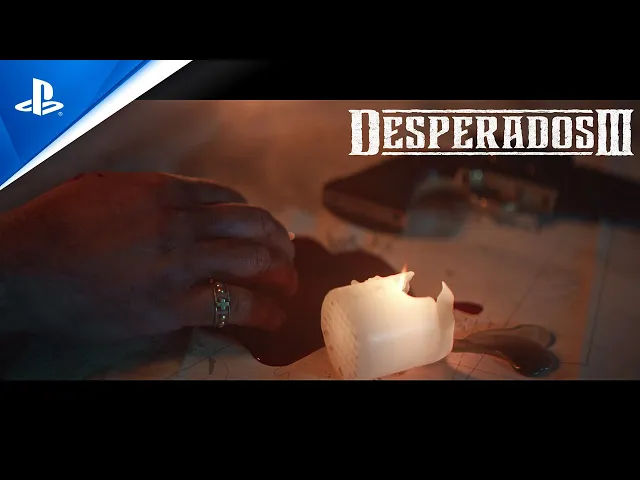
Desperados 3 is a prequel to the original game, so newcomers wanting to get into the series don't need any prior knowledge of the plot and characters. The project is a no-compromise tactical stealth game that will test your patience and reward you for risk and experimentation. In 2020, it impressed us with its characters, detailed locations, and meticulously thought-out tactical details. A true paradise for strategy game lovers and fans of gritty spaghetti westerns.
Each member of your gang has their own special skills and tools for dealing with enemies. But you'll spend most of your gaming time in the bushes, trying to prepare the perfect plan that will inevitably fail due to another unaccounted-for aspect. Replaying situations in Desperados 3 is not just useful but important. The game generates tons of unforeseen situations, offering a wealth of engaging content.
All actions in Desperados 3 take place in real-time (this isn't an XCOM-style game), but like the previous stealth game from developer Mimimi Games—Shadow Tactics: Blades of the Shogun—it allows you to pause the action to plan the sequence of actions for each squad member and perform another complex maneuver. Planning and executing a synchronized elimination of an enemy squad without raising an alarm is always satisfying.
Desperados 3 features an amazing story campaign—16 missions lasting about three hours each. Excellent dialogues, well-thought-out situations, sharp humor, and clichéd western elements leave a pleasant impression after completion. A gem of the genre and the most important project to check out. We're very sorry that Mimimi Games closed in 2023, as their games weren't in high demand.
Shadow Gambit: The Cursed Crew
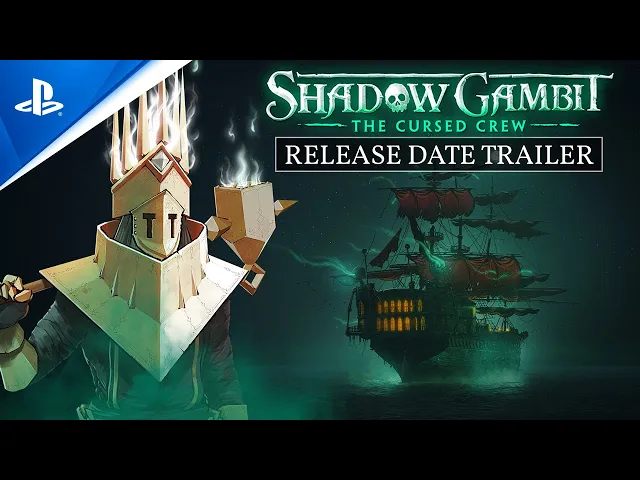
Shadow Gambit: The Cursed Crew is the best stealth tactics game to date, with no analogues foreseeable in the near future. Controlling a team of three pirates in real-time, your task is to complete several stealth missions on islands with enemies and civilians. Each location is perfectly polished and suitable for various tactics and unusual gameplay solutions. The developers from Mimimi studio also implemented numerous logic puzzles that can be solved in dozens of ways.
Compared to Desperados 3 mentioned in this top list, Shadow Gambit is much simpler and more accessible for unprepared players. The developers provided many difficulty settings, opening up the genre to absolutely everyone.
At a basic level, the project follows in the footsteps of Commandos: you control a carefully selected team in a real-time strategy format, avoid unwanted encounters, deceive and eliminate guards, hide bodies in bushes, and so on.
Shadow Gambit: The Cursed Crew also boasts good voice acting for characters, charming humor, and colorful graphics impressive in their stylization. Thanks to countless ways to complete levels and the variety of tactical situations, the game can be replayed endlessly. Be sure to try it, because games in this genre are rare—and the Mimimi studio has ceased to exist.
They Are Billions

They Are Billions is an unusual mix of classic real-time strategy and Tower Defense. Survival is the main goal of the game. You not only manage a colony that needs to be nurtured and developed but also must fight off constant hordes of zombies that will relentlessly try to break into the very center of your mini-state. A true "Dark Souls of strategy games," where even on the easiest difficulty, you can lose at the slightest mistake.
The gameplay resembles Frostpunk, but instead of cold, flesh-eating monsters became the main danger. There's a tech tree through which you unlock structures, turrets, weapons, and units. Besides standard strategic tasks like "make sure the city has at least 1000 inhabitants," They Are Billions features individual missions that sometimes resemble the classic Alien Shooter. The engine easily displays thousands of monsters on one screen without overloading the system. The higher the difficulty level—the more zombies will come for you.
They Are Billions is very hardcore. You can spend several hours straight building a settlement and strengthening defenses, but when the horde appears, there will surely be a vulnerable spot through which zombies will break into the city center and infect the civilian population. The game has no classic saves. Having lost, you can't roll back the gameplay to a checkpoint: you can only replay the task, getting significantly fewer victory points.
Age of Wonders: Planetfall
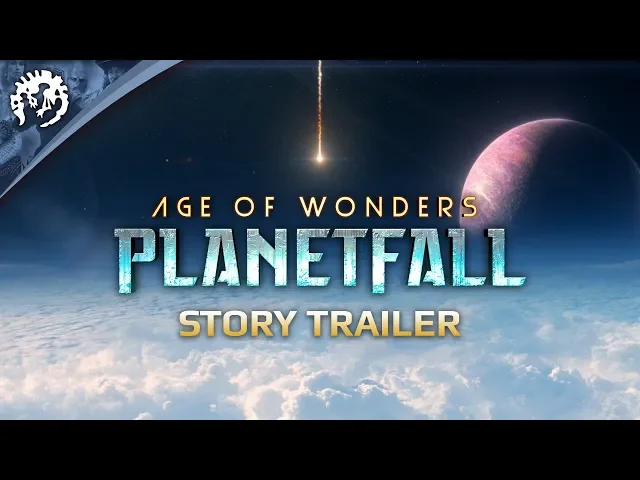
Age of Wonders: Planetfall is an "improved and perfected Civilization: Beyond Earth." A 4X strategy with two turn-based modes: turn-based strategy on a hexagonal grid and a global RTS. Each session provides a unique gaming experience thanks to a flexible map generator and randomized events.
Core mechanics: land capture, city development, resource extraction, military and civilian research—are fairly standard things, not much different from other 4X strategies. However, Age of Wonders: Planetfall features a large number of diverse quests and events in the spirit of classic "Heroes" games. There are three story campaigns to choose from, a competitive PvP mode, and global multiplayer for up to 12 players.
Another important innovation in Planetfall is heroes, who act as separate powerful units with characteristics affecting the army they lead, slots for modifications, and abilities. This is especially useful during battles, which take place in a tactical mode.
Age of Wonders: Planetfall boasts a consistent sci-fi aesthetic. Only here can you see a battle between robots and agricultural machinery infected with sentient fungi. The developers came up with a whole bestiary of creatures that are hard to imagine in any other space strategy. Where else will you encounter a "vampire penguin?"
HighFleet
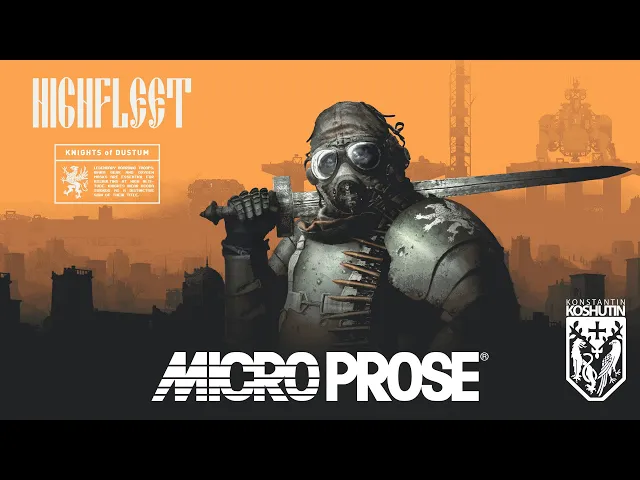
HighFleet is a strategy game about the distant future, where dirigibles wage civil war during the fall of an empire. It's an extremely unusual project: you can negotiate with military leaders, build airships, participate in tense missile battles, and intercept messages via a radio interface.
HighFleet is very similar in its game design systems to Sid Meier's Pirates, but it lacks proper tutorials. It's hard to play without reading the guide that players kindly posted on Steam. There are also many engaging mini-games that affect the gameplay one way or another.
Combat scenes operate on shooter principles: WASD for movement, mouse for aiming and shooting, with afterburner chambers, regular and signal rockets, and so on. There can be multiple enemies on screen at once, but you only have one ship, which is replaced by another after destruction. The battles are filled with cool weather effects, martial music, and Slavic aesthetics.
Pikmin 4
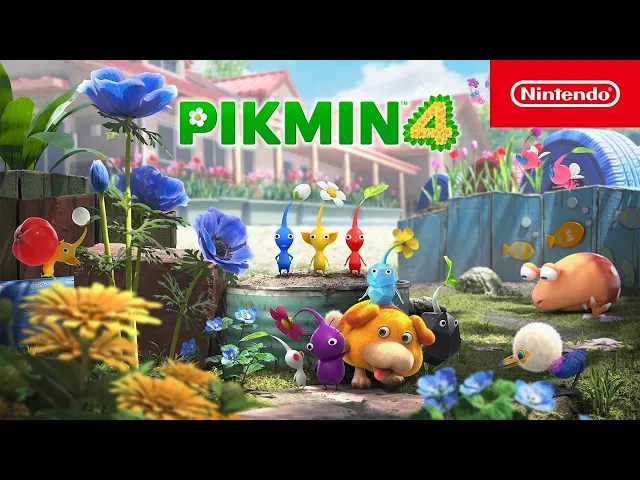
Pikmin 4 is a special mix of strategy and puzzle, where the player controls tiny creatures, Pikmin, to collect artifacts and explore dungeons. The essence of the gameplay lies in the clever combination and use of Pikmin. The player gives orders to the creatures, and they carry items, attack enemies, overcome obstacles, and interact with puzzles.
Pikmin 4 turned out much simpler than the third installment, and the story campaign is not bound by a time limit. You don't need to worry that supplies—and then the game itself—will run out at some point. This allows you to calmly get used to the game mechanics and thoroughly explore the locations. Another important innovation is the dog Oatchi. The furry companion can carry the Pikmin army on his back, ram objects, and knock down items lying on the edge of a ledge.
Pikmin 4 is a magnificent continuation of an outstanding series. The developers refreshed the gameplay and added significant changes to the familiar formula, preventing the series from stagnating. Unfortunately, only Nintendo Switch or Nintendo Switch 2 owners will be able to experience this great strategy.
Frequently Asked Questions
What's considered the best strategy game of 2024–2026?
Among the major releases of recent years, Manor Lords (2024) stands out—a medieval city-builder without a grid that sold a million copies in one day. Also notable are Frostpunk 2 (2024), the sequel to 11 bit Studios' cult survival game; Tempest Rising (2025), the direct spiritual successor to Command & Conquer; and Menace (2026), a deep XCOM-style tactics game. Objectively, the best one depends on your subgenre preferences.
Is the strategy genre dying?
No, quite the opposite. Every year, the thesis of the genre's death is repeated, but the numbers say otherwise: just in 2024–2025, we saw Manor Lords, Frostpunk 2, Civilization 7, Europa Universalis 5, Tempest Rising, Age of Mythology Retold, Homeworld 3, and Cataclismo. This is more major releases than in any year of the 2000s. The genre has shifted from mass-market AAA RTS titles towards a niche of deeper, more complex projects, but it hasn't died.
Which strategy should a beginner start with?
It depends on which subgenre appeals to you most. For tactics newcomers — XCOM 2 or Into the Breach. For fans of classic RTS — Age of Empires 4. For a grand empire — Civilization 6 (Civilization 7 is currently debatable). For city-building — Cities: Skylines or Manor Lords. If you want something atmospheric and story-driven — Frostpunk.
Which strategies work on a low-end PC?
From the selection above, hardware-friendly titles include: Into the Breach, Wildermyth, Songs of Conquest, Tropico 6, HighFleet, and Pikmin 4. An expanded list is available in our material TOP-15 best real-time strategies for low-end PCs and laptops.
What's the difference between RTS, 4X, and grand strategies?
RTS (Real-Time Strategy) — real-time strategies with an emphasis on tactical battles, resource gathering, and unit micro-control (StarCraft, Age of Empires). 4X (eXplore, eXpand, eXploit, eXterminate) — turn-based strategies about civilization development (Civilization, Stellaris). Grand strategies — usually with active pause, focusing on diplomacy, economy, and long-term state development (Crusader Kings, Europa Universalis). The boundaries are blurred, and many modern games combine elements of all three subgenres.
Which strategy from this selection is your favorite? Think we missed something important? Share in the comments—we'll add the best finds to the next update of the top list.
Which of the strategies listed have you played?
What else to play?
The forty games above are far from all the good strategy games of the last decade. If you've already finished everything from the main list, here are three more projects that didn't make the top list but are definitely worth your attention.
Sins of a Solar Empire 2 (2024) — a space hybrid of RTS and 4X from Ironclad Games. Many critics called it the best RTS of 2024: you manage a stellar empire in real-time without pauses or turns, and epic battles involve thousands of ships, with each projectile and weapon system calculated separately. The ideal choice for those who want the scale of 4X without the turn-based mode.
Call to Arms — Gates of Hell: Ostfront — the most hardcore wargame about World War II today. The successor to Men of War with thousands of realistic units from almost all armies of the conflict, detailed ballistics, and control over every soldier down to individual bullets. Not for casual gamers, but if you want the most authentic military strategy possible, few rivals come close.
Zephon (2025) — a post-apocalyptic turn-based 4X from the creators of Warhammer 40,000: Gladius. A grim world inspired by Lovecraft and a rogue AI, focusing on combat systems and narrative. A fresh and underrated project for fans of dark 4X games with a story, not just map painting.
Best Strategy Games (RTS, Tactical, Grand Strategy)
- TOP 40: Best Strategy Games of All Time for PC
- Best RTS Games of All Time: Top 29 from Dune 2 to Tempest Rising
- Best RTS Games for Low-End PCs and Laptops in 2026 — TOP 25 Real-Time Strategy Games
- Best 4X and Grand Strategy Games
- Best Tactical Games for PC and Consoles: Top 24 Turn-Based Tactics Games and TRPGs
- Best Mobile Strategy Games for Android and iOS
- Pax Historia: First Impressions. An AI-powered grand strategy where victory depends on your prompting skills
- TOP-20: Games Similar to Kingdom Rush — The Best Tower Defense Games for PC
Games That Make You Think
- Best Tactical Games for PC and Consoles: Top 24 Turn-Based Tactics Games and TRPGs
- TOP 40: Best Strategy Games of All Time for PC
- 19 Best Detective Games on PC and Consoles: Murder Mysteries, Deduction Puzzles & Detective Sims
- Best City-Building Simulators — 35 Picks
- Best Visual Novels in 2026: Top 35 Picks for PC, Console and Mobile
- 25 Best Noir Games on PC and Consoles: From Classic Detectives to Neo-Noir
-
 Stronghold 4 Announced: Medieval Strategy Returns With Demo on June 23
 -
 PC Gamers Will Miss Out on Single-Player PlayStation AAA Titles — Sony Is Seriously Changing Its Strategy
 -
 22 Most Beautiful Games with Ray Tracing
 -
 Paramount Launches Its Own Game Studio as Gaming Becomes a Core Part of the Company's Strategy
 -
 Best Mobile Strategy Games for Android and iOS