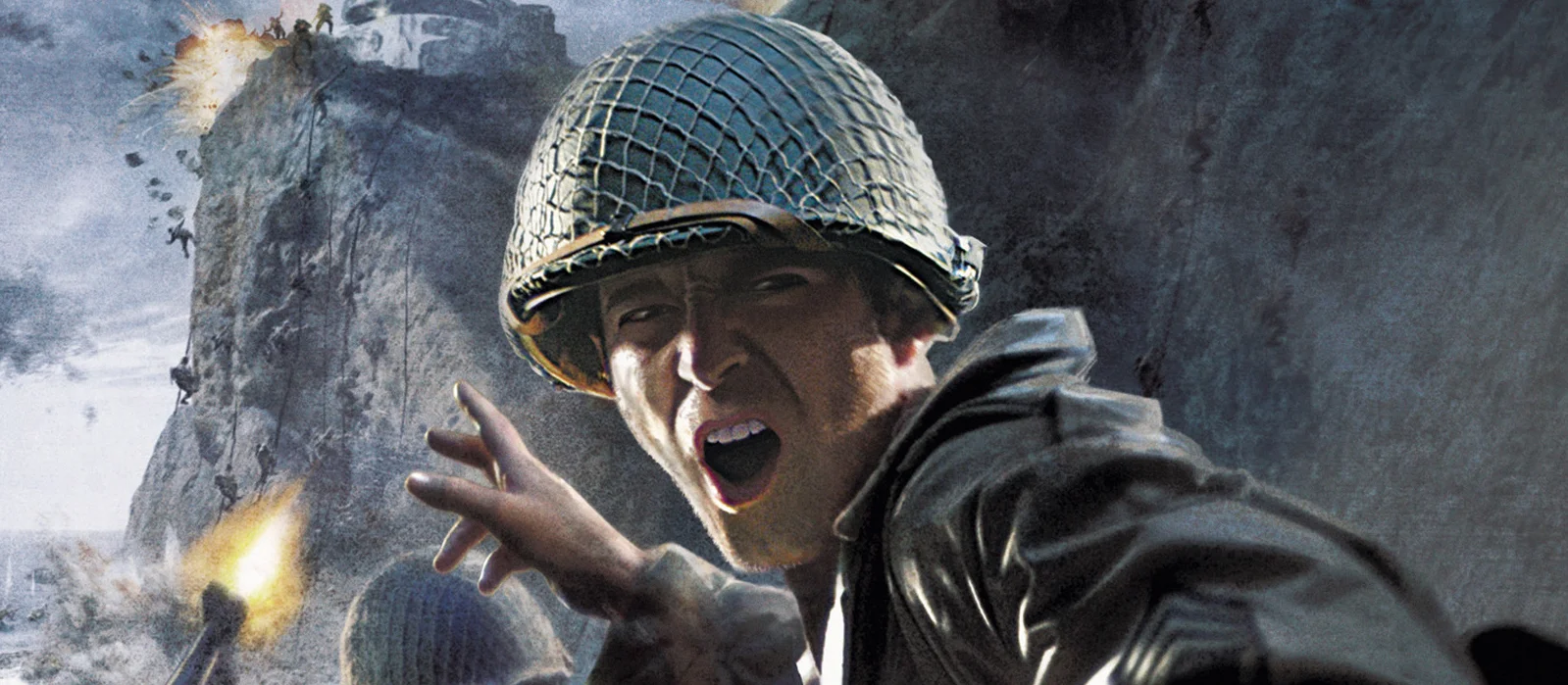
44 Best WW2 Games in 2026: Shooters, Strategy and Simulators on PC
 Anastasiia Sokolova
The best WW2 games cover 25 years of shooters, strategy and simulators — here are 44 picks for PC, from Call of Duty: World at War and Hell Let Loose to Company of Heroes and Hearts of Iron 4. The range is huge: some drop you into the Normandy landings, others into the defense of Stalingrad on the Soviet side, and a few let you see the war through the eyes of a resistance fighter or a submarine skipper. The list is sorted by section — Eastern Front, single-player campaigns, multiplayer, strategy, vehicle simulators and unconventional indie. This is about proper video games, not browser clickers or Roblox modes, and everything here is available to buy or play for free. If you don't want to scroll the whole thing, start with the quick top 10 and then jump to the genre you like most.
Top 10 WW2 Games at a Glance
Short on time? These ten are the best places to start. Each is covered in more detail in its section below.
Company of Heroes
The definitive WW2 RTS — the gold standard every later war game measures itself against.
Call of Duty: World at War
A brutal Soviet campaign from Stalingrad to the Reichstag, and the birthplace of Nazi Zombies.
Hell Let Loose
Hardcore 50-vs-50 battles decided by supply lines and squad discipline, not reflexes.
Hearts of Iron 4
Grand strategy that hands you any nation on the 1936 map.
IL-2 Sturmovik: Great Battles
A flagship flight sim of the Eastern Front with a full damage model and VR support.
Red Orchestra 2: Heroes of Stalingrad
An unforgiving Stalingrad shooter where a single bullet ends the fight.
Men of War: Assault Squad 2
Real-time tactics with direct control of every soldier and tank.
Partisans 1941
Eastern European stealth tactics about a partisan band behind German lines.
UBOAT
A German submarine sim where managing the crew matters as much as the torpedoes.
Sniper Elite 4
A sniping sandbox in 1943 Italy with the series' X-ray kill cam.
Best Eastern Front WW2 Games
These are the WW2 games that put you on the Eastern Front, fighting for the Soviet side across 1941-1945 — from Stalingrad's rubble to Berlin's fall. The list mixes Western titles with full Soviet campaigns and games from Eastern European studios steeped in this history. Expect partisan raids, T-34 columns and street-by-street sieges. A few heavyweights — Company of Heroes 2, IL-2 Sturmovik, Steel Division 2 — live in later sections.
Call of Duty: World at War

Call of Duty: World at War dropped the series into the brutal end of WW2, and its Soviet campaign is the reason it belongs here. You play Private Dimitri Petrenko, dragged from a pile of corpses at a dry Stalingrad fountain by Sergeant Viktor Reznov — voiced by Gary Oldman — and pushed through the ruined city, the assault on Seelow Heights and the final climb to the Reichstag steps in Berlin.
Treyarch leaned hard into the grime: flamethrowers that char defenders out of trenches, battlefield executions, artillery walked in from a downed spotter, and a tone far darker than the Modern Warfare games running alongside it. Built on a modified IW engine, it pushed dismemberment and spreading fire that made the fighting feel unusually savage for the series.
The Pacific half, following Marine Pvt. Miller against the Imperial Japanese Army, rounds out the package, but the vengeful march west against the Wehrmacht is what people remember.
Red Orchestra 2: Heroes of Stalingrad
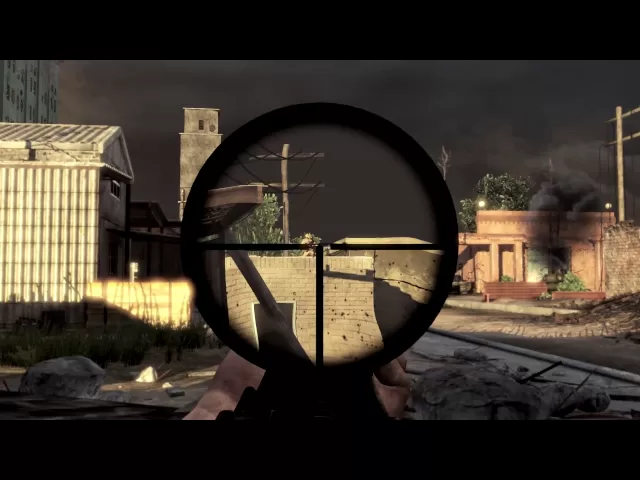
A single bullet ends you in Red Orchestra 2: Heroes of Stalingrad (2011), the hardcore alternative in this section — a Stalingrad shooter where one reckless dash across open ground gets you killed in seconds. Tripwire built separate single-player campaigns for the Red Army and the Wehrmacht, letting you fight both sides of the 1942 street battle across landmarks like the Grain Elevator and the Red October factory, but the multiplayer is the real draw: sprawling infantry fights with bolt-action rifles, a first-person cover system, suppression that blurs and drains the color from your vision under fire, and slow cover-to-cover crawls through shelled apartment blocks. There is no crosshair to lean on and no health bar to babysit, and free-aim means the rifle sways with your breathing.
It asks for patience and a tolerance for sudden death, but few games make the Eastern Front feel this tense.Later editions fold in Rising Storm, extending the same punishing design to the Pacific with banzai charges and flame weapons.
Partisans 1941
Trading frontline chaos for patient stealth, Partisans 1941 — from Moscow's Alter Games — sends you behind German lines. You lead a small Soviet partisan detachment operating out of a hidden forest base, ambushing patrols, sabotaging rail lines and slipping into the trees before reinforcements arrive. Each fighter carries Commandos-style abilities — a sniper's precise shot, a brawler's silent takedown, a thrown rock to lure a lone sentry — and you freeze the action to line up every move, then watch the plan unfold in real time. Between missions you return to camp to ration supplies, craft gear and recruit new members, giving the raids a light survival and base-management layer. A handful of partisans rarely survives a straight shootout against a full garrison, so patience and positioning carry every mission. It suits anyone who liked Commandos or Desperados and wants that thinking laid over the occupied Soviet countryside.
Men of War: Assault Squad 2

Men of War: Assault Squad 2 is the heir to the Soldiers and Men of War lineage, and it stays true to what made that series distinct: at any moment you can drop the god's-eye view and take direct control of a single soldier or tank, steering it like a twin-stick shooter and aiming shells by hand. Armor is modeled with genuine penetration values, so shell type, impact angle, range and the exact plate you strike decide whether a round ricochets, wedges in the hull or brews up a Panzer from the inside.
Every soldier carries a discrete inventory — grenades, mines, medkits, spare shells — looted from the fallen and the enemy, and infantry physically haul ammunition, crew abandoned guns and drag themselves into cover. Battles scale from tiny squad skirmishes to sprawling combined-arms assaults across Eastern Front maps, and the enormous Steam Workshop keeps it alive with total conversions, new theaters and meticulous historical overhauls. Competitive and co-op skirmishes have never fully emptied. It rewards obsessive micromanagement and punishes autopilot ruthlessly. Newcomers should brace for a punishing, unforgiving climb, but nothing else on this list gives you this granular a grip on the mechanics of WW2 combat.
Death to Spies
Death to Spies casts you as a Soviet SMERSH counter-intelligence officer working behind the lines in the closing years of the war. The obvious shorthand is Hitman on the Eastern Front: you scout a map, steal uniforms, forge papers and thin out guards with quiet takedowns rather than open gunfire, while sharp-eyed officers see through a poorly chosen disguise at a checkpoint. It is stiff and unforgiving by modern standards, and frequent quicksaving is part of the routine, but the period setting and methodical infiltration still pull in stealth fans who have run dry on Hitman contracts.
Blitzkrieg
Russian studio Nival had a bold idea for 2003: Blitzkrieg is a real-time strategy game that throws out base-building entirely. Instead of harvesting resources and cranking out units, you command only the forces issued at the start of each mission, so every tank and rifle squad matters and losses stay lost. Campaigns span the war for all major sides, threading real historical operations across large, cratered, destructible maps. Reinforcements arrive on a fixed schedule rather than on demand, pushing you to shepherd veterans and think several moves ahead. It plainly shows its age now, yet its lean, attrition-focused design still reads as refreshingly honest beside modern economy-heavy RTS.
Steel Fury: Kharkov 1942

Steel Fury: Kharkov 1942 is an Eastern European tank simulator built around the disastrous 1942 Kharkov offensive, putting you inside a T-34 or a heavy KV as the operation collapses on the Red Army. You juggle the whole vehicle — driving, traversing the turret, loading, commanding — and the armor and ballistics modeling rewards knowing exactly where to place a shot. A devoted modding community kept it breathing for years with fresh tanks, maps and campaigns. The drawbacks are real: it is technically dated, rough around the edges and fiddly to coax onto modern hardware. For sim diehards, the depth under the hood repays the friction.
Best Single-Player WW2 Games with a Campaign
Prefer a proper single-player campaign over multiplayer grind? This block collects the best WW2 games with a story to see through solo: historically grounded FPS entries, tactical shooters, and stealth missions behind enemy lines. It also covers sniper games built around one perfect shot, so whether you want a straight WW2 shooter with a strong narrative or a slower infiltration run, there's a fit here.
Call of Duty 2
The game that vaulted Call of Duty from promising newcomer to genre benchmark splits its campaign across three fronts, casting you first as a Red Army conscript in the frozen ruins of Stalingrad, then a British tank commander sweeping across North Africa, and finally an American GI wading ashore in Normandy. Infinity Ward built each thread with its own weather, palette, and rhythm, yet the core shooting stays consistent throughout. Its biggest legacy is mechanical: regenerating health retired the old scramble for medkits, a change nearly every shooter since has borrowed, and a smoke-grenade system let you cross open ground under a rolling gray screen.
Squadmates bark real warnings — a grenade at your boots, a flanker on the left — so firefights read as controlled chaos rather than scripted set pieces. The El Alamein push trades Stalingrad's sniper alleys for open desert armor duels, while the finale scales the cliffs at Pointe du Hoc under raking machine-gun fire. Missions funnel you forward without ever fully choreographing the battle, which is why encounters still surprise on repeat runs two decades later. It swept awards on release and shipped as an Xbox 360 launch showcase — the WW2 campaign most players still measure the rest against.
Return to Castle Wolfenstein
Few shooters mix jackboots and the occult as gleefully as this one. Return to Castle Wolfenstein drops OSA operative B.J. Blazkowicz into a war the textbooks omit, where the SS funnels resources into paranormal research and reanimated soldiers. The opening hours play as grounded infiltration — silenced pistols, patrolling guards, a prison break — before the campaign tilts toward undead knights, mutated super-soldiers, and Heinrich Himmler's occult division. That swing from realistic gunfights to pulp horror is the whole draw, and id Software's Quake III engine gave the weapons genuine heft for 2001. It rebooted the series that helped birth the first-person shooter and set the template every later Wolfenstein would riff on.
Medal of Honor: Airborne

Almost every mission here begins in the air. Playing paratrooper Boyd Travers of the 82nd Airborne, you steer your chute during the drop and pick where to land, turning rooftops, courtyards, and open fields into your own opening gambit. Touch down under a machine-gun nest and you're scrambling; find a quiet corner and you flank the objective on your own terms. Levels bloom outward from the landing zone rather than herding you down a corridor, so the same map rarely plays the same way twice. Weapons improve the more you fire them, nudging you to favor a rifle across the Italian and northern European campaign — one fresh idea a mid-2000s shooter built a whole war around.
Brothers in Arms: Road to Hill 30

Sergeant Matt Baker and the 101st Airborne carry Brothers in Arms through the chaotic days after the Normandy drop, and the game asks you to think like a squad leader rather than a lone gunman. Its core loop is fire and maneuver: pin an enemy position with one fireteam to lock them in place, then swing a second element wide for the kill. Charge in alone and your men fall fast, which trains you to read cover and sightlines the way real infantry did. Gearbox modeled the missions on actual engagements around Carentan, closing each with notes tying the fight to history. That tactical patience is what separates it from the run-and-gun crowd — a rare shooter that rewards a cool head over quick reflexes.
Wolfenstein: The New Order

A quick honesty note up front: Wolfenstein: The New Order only opens in World War 2. Its prologue throws you into a doomed 1946 assault on General Deathshead's fortress, then leaps forward — the Reich won the war, and the bulk of the game unfolds in an alt-history 1960s under Nazi rule. So it reads less as a WW2 game than a what-if sequel to one. The gunplay, though, is superb: dual-wielding, a stealth-or-loud choice on nearly every encounter, and armored enemies that soak up punishment with satisfying weight. The real surprise was the writing. MachineGames reinvented B.J. Blazkowicz as a weary, aching human lead and surrounded him with a resistance cell worth caring about, wringing genuine drama from a series once built on cartoon Nazis and secret bunkers. Go in aware the setting shifts early, and what follows stands among the strongest first-person shooters of its console generation.
The Saboteur
![Saboteur [Trailer / 2009] E3](https://i.ytimg.com/vi_webp/d13Dxkymmf4/sddefault.webp)
Sean Devlin, an Irish racing mechanic loose in Nazi-occupied Paris, trades the circuit for the resistance after the SS executes a close friend. The Saboteur is the rare open-world take on the era: you scale landmarks, hijack staff cars, and plant charges on guard towers, fuel depots, and anti-aircraft guns across a living city. Its signature flourish is visual — districts still under the occupation are drained to grim black-and-white streaked with Nazi red, and as you loosen the Reich's grip, color and street life flood back block by block. That feedback loop makes liberation something you literally watch spread across the map. Combat blends cover shooting with silent takedowns, and slipping into a stolen officer's uniform lets you walk past checkpoints unchallenged. The climbing shows its age and the busywork can wear thin, but nothing else captures sabotage in occupied France with quite this swagger — an overlooked release well worth digging back out.
Sniper Elite 4
Karl Fairburne lands in 1943 Italy to sabotage German forces ahead of the Allied invasion, and this is the entry where the long-running series finally locked into its ideal shape. Each mission opens onto a sprawling sandbox — the coastal town of San Celini, a fortified mountain villa, a Nazi rocket facility — laced with multiple routes, vantage points, and objectives you can tackle in any order, so a single level can swallow an hour of patient stalking. The trademark is the X-ray kill cam: land a long-range shot and the camera rides the round into the target, peeling back muscle and bone in gruesome slow motion. But the sniping itself is a genuine system, not spectacle alone — wind speed, bullet drop, gravity, and your own heart rate all bend the shot, and firing a rifle while a cannon roars nearby masks the report so no one hears where death came from. When patrols close in, mines, tripwires, satchel charges, and silent takedowns let you thin a garrison or turn the terrain into a trap before an alarm ever sounds.
Rebellion designed maps that reward reconnaissance and improvisation in equal measure, and they hold up years later precisely because no two players clear them the same way. For the sniping niche specifically, nothing else is this refined.
Sniper Elite 5
For 1944, Karl Fairburne relocates to occupied France on the trail of Operation Kraken, a secret Nazi program that could sink the coming invasion before it reaches the beaches. The formula holds — vast open maps, the visceral X-ray cam, exacting ballistics — but the levels run larger and denser, with more ways to slip through a fortified position. Weapon customization went deep this time, letting you tune a rifle down to its barrel, stock, and optics for the range you expect to fight at. The headline addition is an invasion mode where a second player can drop into your campaign as a rival sniper hunting you across the map, though the story plays perfectly well alone — a natural next step once the fourth game is behind you.
Hidden & Dangerous 2
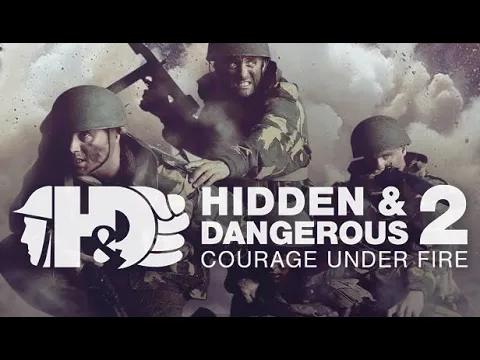
Command of a four-man British SAS team is the whole premise of Hidden & Dangerous 2, whose covert operations range from the Alps to North Africa to the jungles of Burma. Before each mission you outfit every soldier by hand, weighing silenced weapons and disguises against raw firepower, then lead all four through objectives that punish noise. You issue orders and hop between troopers on the fly, holding one man on overwatch while another cuts a wire or knifes a sentry. A single tripped alarm can unravel a careful plan, so it plays as much like a tactics puzzle as a shooter. Buggy and overambitious at launch, it aged into a cult favorite among squad-tactics devotees who prize deliberate infiltration over speed.
Best Multiplayer and Co-op WW2 Games
The WW2 multiplayer scene is still busy in 2026, and every online game below has live servers we checked for active players. Some run co-op campaigns you can clear with friends, others throw dozens of people onto one map, and a few chase full-scale logistics warfare. Official hosting keeps most of them populated, while community servers carry the older titles. If you want WW2 games multiplayer matches you can actually queue into tonight, start here.
Hell Let Loose
Hell Let Loose is the most complete large-scale WW2 shooter of its generation, pitting 50 players a side across sprawling maps where a shifting frontline advances sector by sector instead of collapsing into a deathmatch. Developed by Black Matter and later shepherded by Team17, it hands every player a role inside a squad and ties victory to a resource economy of manpower, munitions, and fuel. Garrisons and outposts dictate where your team can respawn, so captured ground only holds if someone does the unglamorous work of anchoring it with supplies. Its Warfare and Offensive modes reward coordination over reflex: a disciplined team of average shooters will grind down a silent lobby of veterans every time.
The map roster stretches from the Normandy hedgerows of Carentan and the frozen approaches to Foy to the ruined streets of Stalingrad and the open steppe at Kursk, each demanding a different tempo of assault and defense. Officers call targets, recon spots artillery, and armor arrives where the infantry actually needs it. Rounds run long and punish anyone who wanders off alone, which is precisely the point. Years after launch the servers stay busy, and it is the yardstick for methodical, communication-driven WW2 combat rather than run-and-gun.
Enlisted
Enlisted, developed by Darkflow Software and published by Gaijin Entertainment, hands you an entire squad rather than a lone soldier: you command a fireteam of AI troopers and drop into the next body the instant one falls. Free-to-play and organized into campaigns tied to real offensives, it walks you through the defense of Moscow, the rubble of Stalingrad, the Normandy landings, and the final push into Berlin, each with its own arsenal of weapons and vehicles. Tanks, aircraft, and infantry share the same maps, and the squad mechanic means a single death rarely ends your presence in a fight. Progression rewards sticking with one campaign long enough to unlock its heavier gear, and the low barrier to entry makes it the easiest place on this list to start playing WW2 online without spending a thing. It runs solo with bots or in a squad with friends, like the other titles in the best co-op games roundup.
Battlefield 5
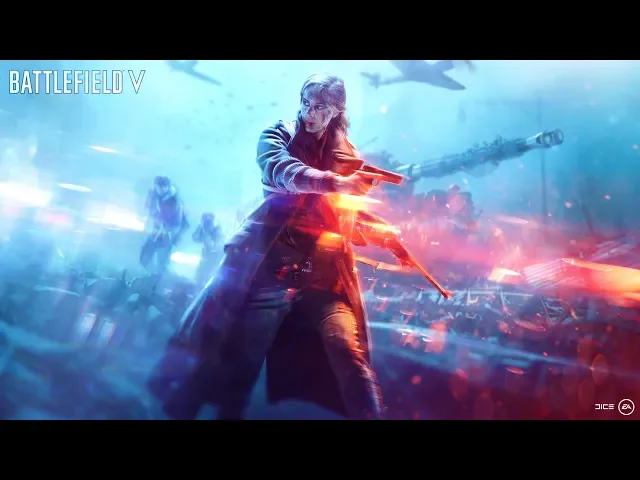
Battlefield 5 returned DICE's blockbuster series to WW2 with 64-player battles across maps where entire buildings come apart under fire, reshaping cover as a round wears on. Grand Operations chains several matches into a multi-day campaign, so losses in one phase bleed into the next and reward teams that plan past a single flag. The Frostbite engine's destruction is the signature: walls collapse, spires topple, and a fortified position can vanish in seconds, though players can also raise sandbags and barricades to shore up a point. Off the multiplayer grid, the short War Stories deliver bite-sized single-player chapters told from overlooked corners of the war, from the Norwegian resistance to a French colonial battalion, and a later Pacific update added Iwo Jima and Wake Island. Matches still pop within a minute or two, and it suits anyone chasing big, loud, cinematic WW2 spectacle without the milsim learning curve.
Squad 44
Squad 44, released in 2018 as Post Scriptum and later renamed, sits firmly at the simulation end of the genre. Built by Offworld Industries and Periscope Games, it recreates Operation Market Garden and other 1944 campaigns with an obsessive focus on logistics: someone builds supply points, someone crews the radio, and armor is slow, loud, and genuinely lethal. The realism is both the draw and the filter, since a single firefight can hinge on whether your squad set up its communications correctly. Be honest about population, though: servers are active but thin, so you often follow a community's schedule to find a full match. For players who love deliberate, radio-driven combat, the depth repays the wait.
Day of Defeat: Source

Day of Defeat: Source has quietly outlasted most of its generation. Running on Valve's Source engine since 2005, this class-based shooter keeps community servers filled with players trading control of objective-heavy maps like Avalanche and Anzio. There are no tanks or planes here, just infantry classes, each with its own weapons and pace, which keeps rounds fast and readable. Its longevity says plenty: two decades on, people still boot it up for quick, no-nonsense firefights you can learn in a single match and still enjoy on the hundredth.
Foxhole
Foxhole is the odd one out, and worth flagging up front: its setting is fictional, WW2-inspired rather than a recreation of the real war. Developed by Clapfoot, it drops thousands of players into a single persistent conflict that grinds on for weeks. The twist is that logistics is a full profession in its own right: someone mines resources, someone runs the factories, someone drives trucks of ammunition to a front they may never see, while others hold the line and trust those supplies to arrive. When a war finally ends, the map resets and the whole thing begins again. It rewards players who enjoy being a cog in an enormous machine as much as pulling a trigger, and nothing else here turns a supply run into the main event.
Best WW2 Strategy Games: RTS and Turn-Based
WW2 strategy splits cleanly into two camps. On one side sit the WW2 RTS titles, where you micro squads in real time; on the other, turn-based WW2 wargames that reward patience and planning. This section covers both, from Normandy skirmishes to grand-strategy world maps. Several WW2 games with a German campaign appear here too, listed neutrally alongside the rest, and the wider genre is covered in the best RTS games of all time.
Company of Heroes

Company of Heroes rebuilt the WW2 RTS from the ground up around the Normandy campaign, throwing out base-building drudgery in favor of cover, suppression, and flanking. Relic's Essence engine let infantry duck behind hedgerows and crumbling walls while artillery reshaped the ground in real time, so a single well-placed machine gun could pin an entire squad long enough for your riflemen to loop around the flank and break the line. A three-resource economy of manpower, munitions, and fuel is tied to the territory you hold, rewarding aggression over turtling, and doctrine trees for Infantry, Airborne, and Armor change how a company fights.
The campaign follows Able Company from the carnage of Omaha Beach through the hedgerows to Carentan, Cherbourg, and the closing of the Falaise Pocket, mixing scripted set-pieces with open tactical problems that rarely have one clean answer. Destructible cover, physics-driven explosions, and squad-based fights gave the genre a jolt it had not felt in years, and multiplayer remains a fixture nearly two decades on thanks to a fiercely devoted community and a steady competitive scene. If you play only one game from this list, begin here and work outward. Also worth noting that a remaster titled Company of Heroes — Definitive Edition is currently in development.
Company of Heroes 2

Company of Heroes 2 moved the fight to the Eastern Front, casting you as the Red Army clawing back from Stalingrad to Berlin. Its headline addition, ColdTech, made weather a weapon: soldiers freeze to death in the open, blizzards cut visibility to nothing, and frozen rivers become shortcuts until the ice cracks under a tank's weight. A new TrueSight system meant units only see what lies in their actual line of vision, making ambushes and blind corners genuinely tense. The Soviet campaign drew heavy debate for its grim, unflinching framing of the war, while co-op Theater of War missions and the standalone Ardennes Assault expansion widened the scope. The core cover-and-suppression combat carried over intact, sharpened with deeper commander abilities, a broader unit roster, and the reintroduction of the Western Front through later army packs. It suits anyone who liked the first game but wanted a colder, harsher theater to fight over.
Company of Heroes 3
Company of Heroes 3 shifts south to Italy and North Africa, wrapping the familiar RTS combat in a dynamic campaign map where you plan supply, reinforcements, and offensives Total War-style between battles. The Italian dynamic campaign lets you land troops from the sea, call in naval bombardments, and choose which towns to liberate next, while the desert and Mediterranean settings bring new factions, including the Deutsches Afrikakorps, plus verticality like rooftop positions and side-armor hits on tanks caught in narrow streets. It launched to mixed reviews, with complaints about presentation and AI; a steady run of patches has since smoothed the rough edges and added content. Come for the campaign layer, and judge the game by its patched-up current state rather than day-one impressions.
Call to Arms — Gates of Hell: Ostfront
Call to Arms — Gates of Hell: Ostfront is the hardcore evolution of the Men of War lineage, and it does not hold your hand. True ballistics mean shells penetrate, ricochet, or bounce depending on armor angle and range, and every gun needs a real crew to load, aim, and fire, so losing two men can silence an anti-tank position at the worst possible moment. You can direct a whole company from above or drop into direct control of a single soldier or tank when a shot has to count. Eastern Front operations chain missions into larger dynamic campaigns for both German and Soviet forces, presented without editorializing, and a resource-scavenging system rewards stripping the battlefield for ammo, weapons, and crews between fights. A robust editor and workshop keep the community pumping out new units, maps, and conquest scenarios. The steep curve rewards players who enjoy sweating over each engagement instead of blobbing units forward.
Steel Division 2
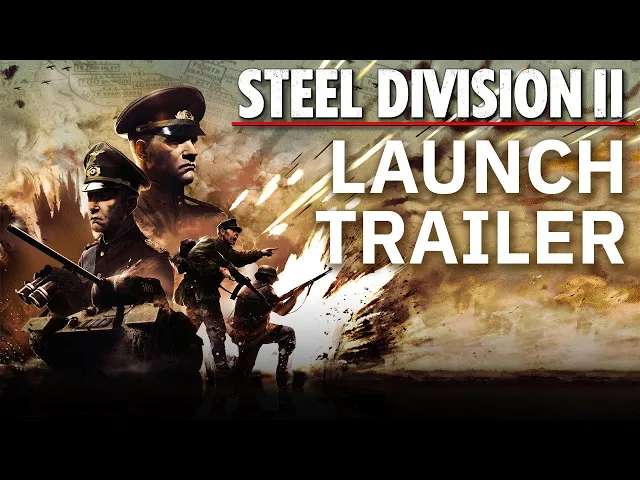
Steel Division 2 recreates Operation Bagration, the 1944 Soviet offensive that shattered Army Group Centre, across maps up to 150 square kilometers. Battles unfold in three timed phases, feeding reinforcements in as the fight escalates from recon skirmishes to armored clashes, and before deployment you assemble division decks drawn from a roster of historically accurate formations, each with its own strengths and gaps. The scale means artillery, air support, morale, and line-of-sight over open terrain matter far more than clicking speed, and a routed unit will break and flee rather than fight to the last man. A single-player Army General mode plays out on a turn-based operational map with a shifting frontline, then drops you into the real-time battles that decide it. Best for commanders who think in fronts, not squads.
Graviteam Tactics: Mius-Front
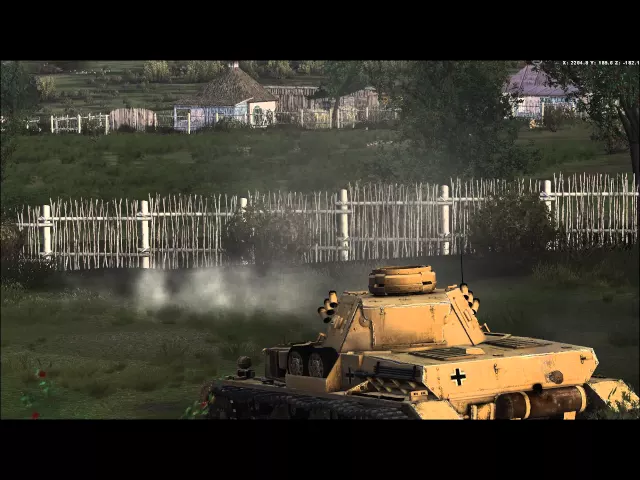
Graviteam Tactics: Mius-Front models the 1943 fighting along the Mius River with a precision few games attempt. Each shell is tracked individually, with ballistics, penetration angle, and crew morale all simulated, tank turrets rotate at realistic speeds, and spotting depends on line of sight through grass, smoke, and dust rather than a shared map. An operational layer lets you plan deployments, reserves, and supply across a two-sided campaign before battles resolve in real time, and the ground itself deforms as vehicles churn it and shells crater it. The interface is austere and the tutorials thin, so the first hours can feel like reading a manual, but underneath sits enormous tactical depth. Fog, weather, terrain, and fatigue shape every engagement on the Eastern Front. It is aimed squarely at the wargamer willing to trade polish for simulation honesty.
Hearts of Iron 4
Hearts of Iron 4 hands you any nation on the 1936 map and lets you steer it through the war however you see fit. This is Paradox grand strategy, so you juggle industry, research, trade, and diplomacy as much as frontlines, retooling factories, drawing up division templates, and negotiating your way into or out of alliances. Battle plans let you sketch offensives that your generals then execute across sprawling theaters, from the fjords of Norway to the islands of the Pacific, while naval and air layers add carriers, convoy raiding, and strategic bombing.
National focus trees give each country branching historical and what-if paths, so you can restage the real war or rewrite it entirely, keeping a democratic France standing or steering a minor power to unlikely dominance. When the shooting stops, peace conferences let victors carve up territory, install puppets, or annex outright. Years of expansions like Man the Guns and No Step Back have layered in fuel, supply hubs, and reworked navies, and a vast modding scene stretches from historical overhauls to total conversions. Newcomers should expect a demanding first playthrough, and veterans rarely stop tinkering. Other games on this scale sit in the best strategy games roundup.
Panzer Corps 2
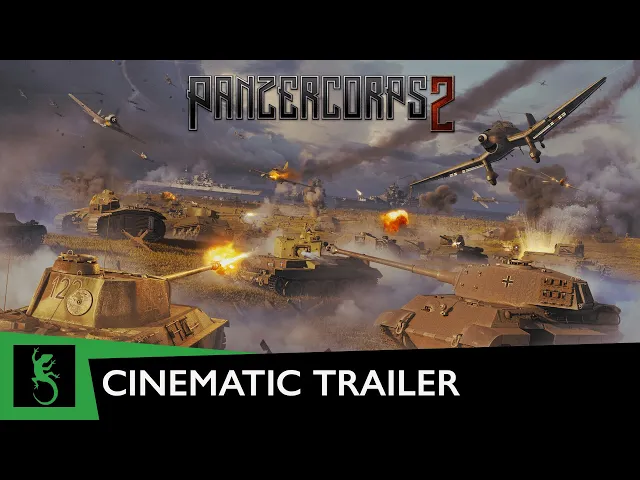
Panzer Corps 2 carries the torch of the classic Panzer General, laying its battles out on hex grids where every unit type has clear strengths and counters. The main campaign follows the Wehrmacht across the war's early years, letting you carry a veteran core of units from one scenario to the next as they gain experience and upgrades; the German focus is a design choice, not a statement. Elite units, hero bonuses, and branching mission paths reward long-term planning over any single battle. Its clean, approachable design makes it a fine entry point into turn-based WW2 wargames for anyone put off by heavier sims.
Unity of Command 2
Unity of Command 2 is a wargame about logistics above all else. Your units are only as strong as the supply lines feeding them, and a spearhead that outruns its trucks will wither faster than one thrown against a prepared defense, so cutting an enemy's supply often beats hitting it head-on. Turns move quickly and the presentation is clean, which has earned it the nickname "the chess of WW2" for how sharply each decision reads. Campaigns span theaters from the Western Desert to Western Europe, with optional objectives that push you to move faster than feels safe. One to pick if you want a wargame that teaches through elegance rather than spreadsheets.
Best WW2 Simulators: Planes, Tanks and Submarines
For players who want authenticity over spectacle, the simulator branch of World War 2 gaming splits into three arenas. In the air, flight sims recreate the drag and stall of piston-engine fighters. On the ground, armor titles model gun angles and crew survival. And beneath the waves, submarine and naval sims trade reflexes for patience, tension, and careful planning. Here are the seven that define the genre.
IL-2 Sturmovik: Great Battles
Launched by 1C Game Studios with Stalingrad as its foundation, the Great Battles series has grown into the most complete WW2 flight simulator available. Later modules cover Moscow, Kuban, Bodenplatte, and the Battle of Normandy, stitching the Eastern and Western Fronts into one continuous platform. The roster spans dozens of flyable aircraft, from the nimble I-16 and Bf 109 to heavy Fw 190s and the jet-powered Me 262, each rendered with a per-component damage model that tracks fuel lines, control cables, engine cooling, and pilot wounds independently. Realistic flight physics reward energy management and punish sloppy maneuvering, while the clickable cockpits demand genuine familiarity with each machine.
Full VR support puts you inside the canopy for dogfights that feel physical, and TrackIR head-tracking has long been part of the culture. A dynamic career mode generates historically grounded sorties across shifting front lines, and the persistent dogfight servers host coordinated multiplayer battles where squadrons fly escort, interception, and ground-attack missions. Regular content and engine updates have kept the sim technically current more than a decade after its debut, and that combination of fidelity, scope, and living community is what makes it the gold standard for serious WW2 aviation.
War Thunder
Gaijin Entertainment built War Thunder as a free-to-play vehicular combat game that folds aircraft, tanks, and warships into a single interconnected universe. World War 2 sits at its historical core, and the tech trees for nations like Germany, the USSR, the United States, Britain, and Japan let you research early-war biplanes and light tanks all the way up to late-war heavies and prototypes. The genius of the design is its range of control modes: Arcade smooths out the physics for newcomers, Realistic tightens ballistics and flight behavior, and Simulator strips away the aids entirely for manual cockpit flying and full instrument navigation.
Ground battles model armor thickness, shell type, and crew placement, so a well-aimed shot can knock out a gunner or set off an ammo rack. With a low barrier to entry and an enormous vehicle catalog, it remains the most accessible doorway into WW2 machinery, whether you want a quick sortie or a demanding simulation session.
UBOAT
Developed by Deep Water Studio, UBOAT reframes the submarine sim as a survival and management challenge aboard a German Type VII. You command the boat itself, plotting patrols across the Atlantic, hunting convoys, and diving to escape escorts, but you also run the men inside the hull. Each sailor has skills, fatigue, hunger, and morale, and prolonged tension takes a visible toll: as depth charges detonate around the pressure hull and the lights flicker, crew members can slip into panic, degrading their performance at the worst possible moment. Real-time systems management covers oxygen, battery charge, hull integrity, and flooding, forcing constant tradeoffs between aggression and safety. The game left Steam Early Access in 2024 after years of iteration, arriving with a deeper campaign, refined crew simulation, and a fuller sense of what it meant to fight a lonely war beneath the surface.
World of Tanks
Wargaming's flagship armored battler pits two teams of fifteen against each other in matches that reward map awareness as much as raw firepower. The vehicle catalog runs into the hundreds, drawn from the interwar years through the Second World War and into the early Cold War, organized by nation and class from scouts to tank destroyers and heavies. Though it leans more tactical than pure simulation, the underlying mechanics still model armor angling, penetration, module damage, and view range, giving skilled players real positional depth. Ridgelines, hull-down positions, and flanking routes decide most engagements, and knowing when to expose your weak spots is a craft in itself. The free-to-play structure and short match length have kept its audience enormous and competitive for well over a decade.
Silent Hunter 3

Ubisoft's Silent Hunter 3 is the U-boat sim that every later boat game still borrows from. Set in the Battle of the Atlantic, it puts you in command of a German submarine across a career campaign that stretches through the war's shifting fortunes, from the early "Happy Time" to the grim final years of Allied dominance. Manual targeting is the heart of the experience: you read the enemy's speed, range, and angle on the bow, then calculate a firing solution by hand before loosing torpedoes. The legendary GWX community mod expanded the campaign, improved the visuals, and sharpened the AI, extending the game's life for years. Its blend of technical rigor and long, nerve-fraying patrols set the template for the genre.
World of Warships
Wargaming adapted its team-battle formula for the open sea, and World of Warships turns naval gunnery into a game of patience and prediction. Fleets of cruisers, destroyers, battleships, and aircraft carriers, many of them WW2-era designs, clash across large maps where positioning and concealment matter enormously. Shells take long seconds to arc toward distant targets, so you lead your fire and read the enemy's course rather than trading shots instantly. Torpedo runs, smoke screens, and carrier air strikes add layered tactics on top of the deliberate shooting. Free to play and steadily expanded, it has built a devoted following among fans of capital-ship combat.
IL-2 Sturmovik: 1946
The culmination of the original IL-2 line, 1946 gathers years of expansions into one sprawling package and stands as a genre classic. Its aircraft roster numbers in the hundreds, covering theaters from the Eastern Front to the Pacific and even hypothetical late-war machines, all flyable with detailed cockpits and demanding flight models. Decades on, a tireless modding scene keeps adding planes, maps, and campaigns, while its legendary online-war communities run persistent, coordinated dogfight campaigns that have outlasted many newer titles. For a whole generation of virtual pilots, this is where the obsession began.
Indie and Unconventional WW2 Games
Not every WW2 game is fought in trenches. This wave of unconventional WW2 games hands the story to civilians, resistance members and historians instead of soldiers. Several are narrative WW2 games with no shooting at all — you survive on choices, memory and nerve. If you want WW2 games about civilians or a break from the crosshair, these indie titles show the war from the ground up.
Attentat 1942
Attentat 1942 reconstructs the Nazi occupation of Czechoslovakia and the assassination of Reinhard Heydrich through the eyes of a family caught in the reprisals that followed. Built by historians at Charles University and the Czech Academy of Sciences, it plays as a documentary adventure: you interview elderly survivors filmed as real actors delivering recorded testimony, then sift archival photographs and footage to reconstruct what became of your grandfather after Operation Anthropoid drew the occupier's revenge. Comic-panel scenes bridge the interviews, and small interactive moments — hiding a banned book, choosing your words for a Gestapo officer — drop you into decisions ordinary people genuinely faced. It became the first game accepted into a Czech national museum collection and gathered awards for its use of oral history, a blend of scholarship and grief that set the template later titles here follow. Come for the human testimony rather than any puzzle; it plays out in an evening and lingers far longer.
Through the Darkest of Times
Berlin, 1933. Through the Darkest of Times casts you as the leader of a small resistance cell trying to survive twelve years of Nazi rule, from Hitler's rise to the fall of the city. Each week you send members across a map of the capital to scrawl anti-regime slogans, distribute leaflets, win over sympathizers and sabotage where you can, all while juggling money, morale and the ever-present odds that someone is arrested, beaten or worse. Real historical events surface in the background and force hard calls that carry no clean answer. The stark black-and-white art, drawn in the angular style of period propaganda posters, keeps the mood tense and airless throughout. This is a strategy game about small acts of defiance and the price attached to each one, and it rewards players who want dread and moral weight over firepower.
My Memory of Us
My Memory of Us is a hand-drawn puzzle-platformer from Polish studio Juggler Games about a boy and a girl surviving in an occupied city. The story is framed as a fairy tale in which the invaders appear as an army of robots, but the setting is an unmistakable allegory for wartime Warsaw and its ghetto. The two children have complementary abilities: the girl can run quickly and use a slingshot, while the boy can sneak past enemies and use a mirror to blind them. You switch between the pair, solve puzzles, and join hands to move together through stealth and platforming sections. Patrick Stewart narrates the English version as an elderly bookseller recalling the events. The game approaches its subject indirectly without obscuring the historical tragedy behind the allegory.
Gerda: A Flame in Winter
Gerda: A Flame in Winter follows a nurse in the occupied Danish town of Tinglev in early 1945, pulled between German and Danish roots as the war grinds to its close. Made by Danish studio PortaPlay and published by DON'T NOD, it is a narrative RPG with no combat: your days are spent talking, deciding whom to trust, and spending limited energy on the people and problems that matter most. Compassion, insight and wit function as stats that unlock different lines and endings, and characters remember how you treated them. Several threads can close in loss depending on the risks you take. Loosely drawn from the developer's own family history, it turns the war into something quiet and personal.
Svoboda 1945: Liberation
From the team behind Attentat 1942, Svoboda 1945: Liberation carries the story just past the war's end, into a Czech borderland village scarred by what came after. Cast as a historian visiting a crumbling school marked for demolition, you interview live actors filmed on location, slowly untangling a family mystery bound up with the violent expulsion of the region's Sudeten German population. The familiar interview-and-archive format returns, weaving recorded testimony together with minigames and moral questions that stubbornly refuse an easy side. It looks head-on at a chapter Czech memory long preferred to avoid, and its handling of that history earned strong critical praise. Treat it as a companion piece to Attentat 1942 when you want the tangled, unresolved aftermath rather than the fighting itself.
Easy Red 2
Easy Red 2 is the lone straight shooter among these quiet dramas — a sprawling first-person WW2 game built largely by a single developer, ranging from Normandy and the Eastern Front to North Africa and the Pacific. It hands you big, open battlefields packed with dozens of AI soldiers, drivable tanks, planes and boats, plus a squad-command layer that lets you direct the whole assault rather than just your own rifle. It runs on modest hardware, embraces mods and community campaigns, and its rough edges never quite outweigh the sheer amount on offer. For anyone craving a traditional battlefield after all this stillness, it is the gentlest way into large-scale WW2 combat.
WW2 Games FAQ
What is the most realistic WW2 game?
Among shooters, Hell Let Loose and Squad 44 lead the field with real battle maps, supply mechanics and one-bullet lethality. For strategy, Graviteam Tactics: Mius-Front is unmatched for authenticity; IL-2 Sturmovik: Great Battles rules aviation, and UBOAT and Silent Hunter 3 model submarine warfare more closely than anything else.
Are there any free WW2 games?
Yes. Enlisted, War Thunder, World of Tanks and World of Warships are all free-to-play, with monetization that mostly affects progression speed. You can start any of them without spending a cent; more titles like these are in the best free PC games roundup.
Which WW2 games run on a low-end PC?
The classics are light on hardware: Call of Duty 2, Blitzkrieg, Return to Castle Wolfenstein, Day of Defeat: Source and IL-2 Sturmovik: 1946 run on almost any laptop. Among strategy games, Panzer Corps 2 and Unity of Command II are gentle on older machines; for more, see the best games for low-end PCs.
Which WW2 games are on PS5 and Xbox?
Battlefield 5, Hell Let Loose, Sniper Elite 4 and 5, and Enlisted are all on current consoles. Most of the strategy games and simulators in this list remain PC-exclusive.
Which WW2 games let you play the German campaign?
Red Orchestra 2 and Company of Heroes 2 include Wehrmacht campaigns, while Panzer Corps 2 is played entirely from the German side. Men of War: Assault Squad 2 and Gates of Hell: Ostfront also let you field Axis forces in skirmishes and operations.
What are the best WW2 games on mobile?
Android and iOS have plenty of solid options — from the online shooter World War Heroes to World of Tanks Blitz and the card game KARDS. They are collected in a separate top of mobile WW2 games.
Which World War 2 game left the biggest mark on you? Tell us in the comments and let's build a community top together.
Which WW2 front would you rather fight on in games?
More Games to Try
The theme of war in games runs wider than one era. If you have already finished the 44 picks above, here are a few more titles worth an evening — some looking at WW2 from an unusual angle, others set in neighboring conflicts.
Zombie Army 4: Dead War
A Sniper Elite spin-off where Hitler raises an army of the dead: four-player co-op mowing down zombie soldiers with the series' X-ray kill cam. A trashy palate cleanser between serious war games.
The Darkest Files
A detective adventure about post-war prosecution of Nazi crimes, based on the real cases of prosecutor Fritz Bauer. Not about combat, but about the search for truth and justice.
Valiant Hearts: The Great War
A hand-drawn Ubisoft adventure set in World War 1: four fates, a medic dog and letters from the front. The closest relative in tone to the indie section above.
The Best War Games
- 44 Best WW2 Games in 2026: Shooters, Strategy and Simulators on PC
- 20 Best Games Like Call of Duty (2026): Shooters Set in the Past, Present, and Future
- 92 Best Airplane Games — Flight Simulators and Aviation Games for PC and Mobile
- 67 Best FPS Games in 2026: First-Person Shooters on PC, PS5, Xbox and Switch
- Best RTS Games of All Time: Top 29 from Dune 2 to Tempest Rising
- Best RTS Games for Low-End PCs and Laptops in 2026 — TOP 25 Real-Time Strategy Games
- TOP-25 Best Shooters for Low-End PCs and Laptops
- TOP 40: Best Strategy Games of All Time for PC
- 24 Best Grand Strategy and 4X Games in 2026: Paradox, Civilization, Total War
- 15 Best Mobile WW2 Games for Android and iOS
-
 15 Best Mobile WW2 Games for Android and iOS
 -
 Zombie Shooters: The Best Games on PC, PS4, PS5, Xbox, and Switch
 -
 Best Low-End PC and Laptop Games in 2026 — TOP-107 for Weak & Potato PCs
 -
 67 Best FPS Games in 2026: First-Person Shooters on PC, PS5, Xbox and Switch
 -
 Best Games to Play in 2026: Top Picks Across PC, PS5, Xbox & Switch