
Stop Killing Games, Explained: Why You Don't Really Own the Games You Buy
 Anastasiia Sokolova
On August 5, 2026, buyers of the cloud version of Aliens: Fireteam Elite for Nintendo Switch lost access to the game: the servers were shut down, and no refunds were issued. Less than two months earlier, the European Commission had declined to introduce mandatory rules requiring publishers to preserve access to sold games after support ends. The initiative was backed by 1,294,188 EU residents, but that was enough only to secure its formal consideration. We examine what Stop Killing Games is trying to achieve, why the European Commission rejected the movement's demands, and what other routes it is pursuing to bring about change.
Key points
- The Stop Killing Games movement launched on April 2, 2024 — two days after The Crew's servers were shut down, leaving the game unplayable even from a physical disc;
- The European Citizens' Initiative “Stop Destroying Videogames” collected around 1.45 million signatures. After verification, 1,294,188 were declared valid, allowing the proposal to reach the European Commission for formal consideration;
- On April 16, 2026, representatives of the initiative spoke at a hearing in the European Parliament, but on June 16 the European Commission declined to propose mandatory regulation, citing copyright, costs for publishers, and security risks;
- On June 3, shortly before the response was published, Ubisoft CEO Yves Guillemot took part in a meeting between video game industry representatives and the European Commission. Stop Killing Games was not invited, but there is no evidence that the meeting influenced the Commission's decision;
- Instead of mandatory rules, the European Commission proposed developing a voluntary industry code of conduct that would carry no penalties for non-compliance;
- The movement is now seeking to have its demands incorporated into the Digital Fairness Act, while also supporting lawsuits and legislative initiatives in individual countries;
- Ubisoft has already added an offline mode to The Crew 2 and promised to do the same for The Crew Motorfest. In a California lawsuit brought by buyers of the original The Crew, the parties have preliminarily agreed to a $2 million settlement, which the court is scheduled to review on November 13, 2026.

June 2026: meeting with publishers and the European Commission's response
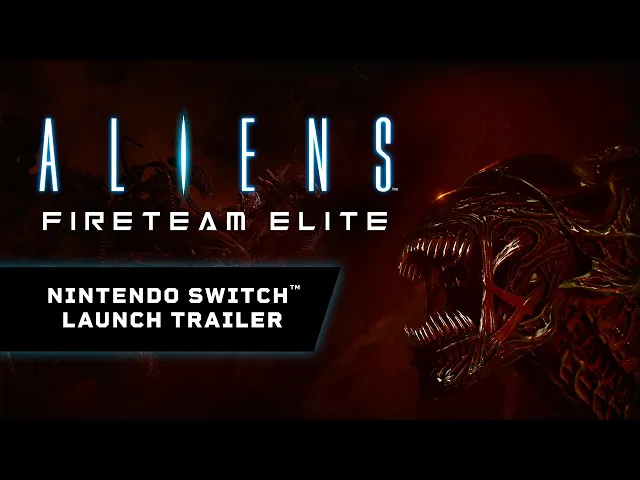
The case of Aliens: Fireteam Elite clearly illustrates the problem Stop Killing Games is trying to address. The Nintendo Switch version launched on April 26, 2023, and was available exclusively through cloud streaming: there was no locally running version for the console. After the servers were shut down on August 5, 2026, buyers lost access completely, even though the same game still works on PC and other consoles without a permanent internet connection. For cases like this, the movement argues that publishers should provide an offline mode, private-server support, or compensation in advance.
On June 3, 2026, representatives of the video game industry met with the European Commission in Brussels. The meeting was organized by Video Games Europe, an association representing major publishers. Ubisoft CEO Yves Guillemot was among the participants. Representatives of Stop Killing Games were not invited.
On June 16, the European Commission published its official response to the “Stop Destroying Videogames” initiative. The Commission declined to propose new mandatory rules that would require publishers to keep games accessible after support ends.
The timing drew the attention of the campaign's organizers. They argued that the sequence of events was significant and accused Video Games Europe of misrepresenting the initiative's demands in its discussions with officials. However, there is no direct evidence that the meeting influenced the European Commission's decision: the official response had been in preparation for several months, and its publication was part of the initiative's formal review process.
To understand how the question of preserving games reached the European Commission, it is necessary to go back to the shutdown of the original The Crew in spring 2024.
How The Crew shutdown launched Stop Killing Games
The Crew was released on December 2, 2014. The racing game's map was a scaled-down version of the United States, while single-player events were integrated into a shared online world. Even the story campaign required a permanent connection to the servers. By 2017, Ubisoft reported 12 million players, so this was not the closure of an obscure title.
In December 2023, Ubisoft removed The Crew from sale and announced that its servers would be shut down on March 31, 2024, citing infrastructure limitations and expiring licenses. Once the servers went offline, the game stopped launching altogether, including from physical disc copies.
In April, Ubisoft also began revoking digital licenses. In Ubisoft Connect, The Crew was moved to the “Inactive Games” section, while users were informed that their access had ended. Players responded by posting negative reviews of The Crew Motorfest, causing the game's Steam rating to fall noticeably.

Buyers in California filed a class-action lawsuit against Ubisoft. They argued that the company had misled them, pointing in particular to an activation code that listed an expiration date in 2099. Ubisoft countered that customers had purchased a limited license rather than a perpetual ownership right. The packaging also stated that online features could be discontinued after prior notice.
The court did not reach a ruling on the merits of the dispute. The parties preliminarily agreed to a settlement and the creation of a $2 million compensation fund. Class members will be able to receive either $7 in cash or $15 in Ubisoft Store credit. The court is scheduled to make a final decision on approval of the settlement on November 13, 2026.
As a result, the court did not rule in favor of either side. Ubisoft's position nevertheless highlighted the central contradiction of digital commerce: the license agreement describes a revocable right of access, while a “Buy” button creates the expectation that the game will remain available to the customer. That gap became the starting point for Stop Killing Games.

What Stop Killing Games demands — and what it does not
The Stop Killing Games campaign was launched on April 2, 2024, by Ross Scott, creator of the YouTube channel Accursed Farms. The movement's central demand is relatively narrow: publishers that sell or license games should not be allowed to remotely render them completely unusable once official support ends.
In practice, this means the following:
- A sold game should remain accessible after official support ends;
- Launching it should no longer require a connection to the publisher's servers;
- The method used to preserve access may vary: organizers cite offline modes and tools for running private servers as examples;
- The demands would not require publishers to restore games whose servers had already been shut down before any potential regulation took effect.
Stop Killing Games does not demand that publishers keep servers running indefinitely, continue releasing updates, or disclose source code. Nor does the campaign seek to ban the shutdown of commercially unviable projects. Its demand is simply that, once support ends, buyers should still be left with a version of the game that can be launched.
For that reason, the argument that publishers would have to maintain servers forever does not address what the movement is actually proposing. The central dispute is different: whether publishers can be required to plan for the end of support in advance so that a sold game does not disappear along with the infrastructure needed to run it.

How a dispute between two YouTubers helped drive 1.3 million signatures
The movement used the European Citizens' Initiative (ECI) mechanism. For the European Commission to formally consider a proposal, organizers must collect at least 1 million verified signatures from EU citizens within one year. They must also reach the national threshold in at least 7 countries.
Meeting those requirements guarantees formal consideration of the initiative and an official response from the European Commission, but it does not mean a law will be adopted. By January 2026, only 14 initiatives had reached this stage.
At first, the signature drive progressed slowly. By early June 2025, with less than 2 months remaining before the campaign ended, organizers had collected around 45% of the required signatures.
The initiative received additional attention after a public dispute between Ross Scott and streamer Jason Hall, better known as Pirate Software. Hall argued that the campaign's demands were not specific enough and could impose disproportionate costs on smaller studios. On June 23, 2025, Scott released a response video accusing him of misrepresenting the goals of Stop Killing Games.

The debate spread beyond the campaign's existing audience and brought in new supporters. By July 3, the number of signatures had surpassed 1 million, and by the end of the collection period on July 31, it had reached roughly 1.45 million. The sharp increase coincided with the public dispute.
After verification, national authorities declared 1,294,188 signatures valid — around 89% of the total. The required national thresholds were reached in 24 countries. On January 26, 2026, the initiative was formally submitted to the European Commission for consideration.

European Parliament hearing: what arguments the movement presented
On February 23, 2026, organizers met with European Commission Executive Vice-President Henna Virkkunen and Commissioner Michael McGrath. A public hearing was held in the European Parliament on April 16. It was jointly organized by the committees on the Internal Market and Consumer Protection (IMCO), Legal Affairs (JURI), and Petitions (PETI). Ross Scott and Moritz Katzner spoke on behalf of the initiative.
Many MEPs expressed support for the campaign's goals. Nils Ušakovs, vice-chair of the Petitions Committee, described the issue as legitimate and relevant to millions of consumers. Other participants drew attention to technical difficulties and potential costs for developers. We covered the lawmakers' arguments in more detail in a separate article.
One of the campaign's clearest arguments was a comparison of how long different games remain usable. Half-Life, released in 1998, is still sold and runs on modern computers. Anthem launched in 2019, but after its servers were shut down on January 12, 2026, it became completely inaccessible because it has no offline mode.

The hearing did not oblige the European Commission to support the initiative. Katzner had warned in advance that it was only one stage in a lengthy process. Two months later, the Commission declined to propose mandatory regulation.
Why publishers opposed the initiative
The main objections from publishers were presented by Video Games Europe and the US-based Entertainment Software Association (ESA). Video Games Europe argued that universal requirements would restrict developers and could significantly increase the cost of creating certain games.
Private servers are one particular source of concern. According to the association, once server-side software is handed over to users, the publisher may lose control over personal data protection, content security, and legal compliance, even though the rights holder could still retain some responsibility for the game. The ESA also warned that preparing older projects to function independently would require time and resources that studios could otherwise spend on new games.
These concerns have a technical basis. A modern online game consists of more than the client installed on a user's device. Its server side may depend on third-party cloud services, authentication systems, anti-cheat technology, and components owned by other companies. There is therefore no single universal method for preserving every game.
Some studios, however, plan for the end of support in advance. After shutting down the original The Crew, Ubisoft promised offline modes for its sequels. On October 16, 2025, The Crew 2 received a hybrid mode that allows players to switch between online and offline play. A similar update has been announced for The Crew Motorfest, although no release date has been given.

Other developers have used different solutions. After Knockout City shut down in 2023, players were given a separate version that supports private servers. Before MultiVersus went offline on May 30, 2025, its developers preserved local play and access to previously obtained content.
These examples do not prove that such solutions are equally simple or inexpensive for every game. They do show, however, that end-of-support planning can be incorporated into server architecture from the design stage. The debate is therefore not about whether preservation is technically possible at all, but whether such planning should become mandatory across the industry. Opposition to the initiative is not limited to industry associations — we examined the arguments against Stop Killing Games in detail in a separate article.
Why the European Commission rejected mandatory rules
On June 16, 2026, the European Commission published its official response, whose main points can be summarized in three parts.
There will be no universal mandatory requirement. The Commission decided not to propose a rule requiring all publishers to keep games accessible after commercial support ends. Its reasoning cited copyright and licenses for third-party content, additional costs for companies, and cybersecurity risks associated with handing server components over to users.

The Commission is relying on existing legislation. Its position is that EU consumer law already requires companies to disclose in advance the terms and expected duration of a digital service. If a product does not meet the stated conditions or access ends earlier than specified, buyers may in certain cases be entitled to compensation or a partial refund. The Commission's further measures will therefore focus primarily on enforcing existing rules and making information clearer for consumers.
A voluntary code was proposed instead of legislation. By the end of 2026, the European Commission intends to begin talks with the video game industry and consumer organizations on rules for ending support for games.
A voluntary code does not create the same obligations as a law and, by itself, does not guarantee that a publisher will leave a game accessible. The document's specific provisions, oversight mechanisms, and consequences for non-compliance have yet to be determined.
Ross Scott said he had expected a response of this kind. In his view, the European Commission still failed to answer the central question: what obligations does a publisher retain toward someone who paid for a game? At the same time, the formal requirements of the procedure were fulfilled. A European Citizens' Initiative guarantees consideration of a proposal and a public response, but it does not require the Commission to draft legislation.
How quickly online games shut down
The period between the release of an online game and the shutdown of its servers can range from several years to just a few weeks.
The best-known example is Concord. Sony's team-based shooter launched on August 23, 2024, and its servers were shut down on September 6. The game lasted just 14 days, although Sony refunded buyers. Firewalk Studios was closed on October 29. The Day Before lasted 46 days between release and server shutdown, while developer Fntastic announced that it was closing only 4 days after launch.
Several other projects failed to survive even 2 years. Crucible's servers were shut down 173 days after release, Rumbleverse after 201 days, Babylon's Fall after 362 days, XDefiant after 378 days, LawBreakers after 402 days, and Hyper Scape after 625 days. The Nintendo Switch cloud version of Aliens: Fireteam Elite remained available for 1,197 days.
Some games lasted considerably longer, but ultimately met the same fate. Anthem was shut down almost 7 years after release, while The Crew survived for 9 years and 4 months. At the same time, the duration of support does not always reflect the scale of the loss for buyers: Concord customers received refunds, while MultiVersus retained a local mode after its servers were shut down.
The Stop Killing Games database contains information on more than 700 projects that required a server connection for full or partial functionality. After excluding games that are still active but considered at risk, 425 titles remained in the sample. Of these, activists classified 299, or around 70%, as inaccessible after support ended.
This category initially also included games that had lost only their online features while retaining a single-player mode. After those were excluded, the share of completely unusable projects stood at 68.77%. These figures are based on a database assembled by members of the movement rather than a complete sample of every online game ever released, so they should not be treated as precise statistics for the entire industry. They do, however, illustrate how often server shutdowns can result in a complete loss of access.

Why game preservation is about more than server shutdowns
Dependence on servers is only one reason games become unavailable. In 2023, the Video Game History Foundation, together with the Software Preservation Network, studied more than 4,000 games released in the United States before 2010. The research included a random sample of 1,500 titles as well as separate data for several platforms.
The authors concluded that 87% of classic games can no longer be legally purchased in a current release. Availability is even lower on some platforms: around 5.9% of the Game Boy family library remains commercially available, along with 4.5% of Commodore 64 games and roughly 12% of the PlayStation 2 catalog.
This research is not directly about server shutdowns: it measures the commercial availability of older games. The two issues are nevertheless connected by their dependence on rights holders. A delisted single-player game can sometimes still be played from a surviving physical copy or through emulation. For a server-dependent game, possessing a copy of the client may not be enough if the required infrastructure no longer exists.

As a result, the only practical options for many older games are second-hand physical copies, outdated hardware, visits to specialized archives, or pirated versions. The Video Game History Foundation views this situation as a consequence of restrictions that prevent libraries and archives from providing remote access to preserved games.
The shift toward fully digital distribution increases this dependence. Sony announced that starting in January 2028, it will stop producing discs for all new games released on PlayStation consoles. The decision does not affect titles released on disc before that date, but future games will be distributed only digitally — including through codes sold in physical retail stores.
A disc does not guarantee that a game will remain playable either, especially if it requires a server connection to launch. Nevertheless, a working physical copy allows an offline game to be installed regardless of the state of a digital storefront. Once discs are phased out, new PlayStation releases will no longer offer that option. We examined the consequences of this decision in a separate article.
A related question: can gaming accounts be inherited?
This issue is not directly related to Stop Killing Games or server shutdowns. However, it is built around a similar dispute: what exactly does a user receive after investing money and time in a digital account for years, and can a platform's terms deprive them of ordinary property rights?
In the summer of 2026, a ruling by the Shijingshan District People's Court in Beijing became public. The mother of a deceased player secured access to 87 of his gaming accounts, which he had used for around 15 years. The operating company initially refused to transfer the registration details, but the court ordered it to give the heir access.

The court did not recognize the accounts themselves as the player's property. The companies retained ownership of the platforms and accounts, but the right to use those accounts and the associated property interests were recognized as part of the inheritance. The reasoning took into account that users invest money and time in an account, while purchased items and other digital assets may have consumer and exchange value.
China has no separate law specifically governing the inheritance of gaming accounts. The court applied provisions of the Civil Code of the People's Republic of China concerning virtual property and inheritance. The ruling applies to a specific case and does not mean that every gaming account in the country can now automatically be transferred to heirs.
For game preservation, this approach changes nothing. If the servers are shut down, an inherited right of access will not make the game playable again. The Chinese case does, however, show that a user agreement cannot always override rights established by law. That connects it to Stop Killing Games through the same broader issue — where the line lies between a revocable license and a user's property interests.
What happens next: lawsuits and new legislation
The European Commission's rejection did not end the campaign. Stop Killing Games is now pursuing change through other legislative procedures and court cases.
Digital Fairness Act. The European Commission is preparing an initiative aimed at strengthening consumer protection in the digital environment. The Digital Fairness Act is intended to restrict practices that push users toward unfavorable decisions, including confusing interfaces, hidden terms, intrusive notifications, and personalized offers that exploit behavioral data.
The proposal is expected to be presented in Q4 2026. It does not currently include game-preservation requirements, but Stop Killing Games hopes to secure relevant amendments during consideration by the European Parliament and the Council of the EU. On June 9, 2026, 45 Members of the European Parliament sent the European Commission a letter calling for legislative measures on the issue. Even with support from lawmakers, any potential amendment would still have to pass through the ordinary legislative process and face objections from industry associations.

Lawsuits. In March 2026, French consumer rights organization UFC-Que Choisir, with support from Stop Killing Games, filed a lawsuit against Ubisoft. The company is accused of misleading buyers of The Crew about how long access to the game would remain available. The case is proceeding separately from the California lawsuit, in which the parties have reached a preliminary settlement.
United Kingdom and United States. A British petition collected almost 190,000 signatures and reached a parliamentary debate on November 3, 2025. The government said it did not currently plan to change the law governing the end of support for digital products.
In California, AB 2426 has been in effect since January 1, 2025. It does not ban the use of words such as “buy” or “purchase,” but it requires companies to clearly disclose that the user is receiving a license, list its limitations, and warn that access may eventually be terminated.
A stricter bill, AB-1921, would require buyers to be notified at least 60 days before a game is shut down. Publishers would also have to preserve access to core functionality, provide an alternative way to run the game, or issue refunds.
On May 27, 2026, the bill passed the California Assembly by 43 votes to 16. However, on June 29, it failed to receive the required majority in the relevant Senate committee: 4 senators voted to advance it, 3 voted against, and another 4 did not vote. The committee allowed the bill to be brought back for another vote, so it formally remains under consideration. If it is not passed before the end of the legislative session, it will have to be introduced again.

Brazil. In July 2026, Bill 3612/26 was introduced in the Chamber of Deputies. It would establish a minimum game-support period of 2 years and require publishers to warn users about server shutdowns at least 180 days in advance. After closure, the publisher would have to provide at least one option: an offline version, tools for community-run servers, or a partial refund. For now, it remains only a bill and must be approved by both houses of Congress.
None of these initiatives has yet created a general obligation to keep sold games accessible. The proposals in California and Brazil have come closest to that goal, but both may still be amended or fail to advance further.
What this means for players
Until universal mandatory rules exist, buyers have to judge for themselves how heavily a game depends on the publisher's infrastructure.
Before buying, check whether the game requires a permanent internet connection. This information can usually be found in the description and system requirements, on the publisher's support page, or in independent databases such as DoesItPlay. If a server connection is required even for the single-player campaign, the game may become inaccessible once support ends — unless the developers provide an offline mode or support for user-run servers in advance.
The legal side is worth considering as well: buying a digital game usually means obtaining a license to use it under the store's terms rather than acquiring ownership of the software itself. Since 2025, California has required stores either to clearly inform buyers that they are purchasing a license and disclose its restrictions, or to obtain separate confirmation that the customer accepts those terms. In most other jurisdictions, the button can still simply say “Buy” without such a prominent explanation.

A physical edition does not guarantee permanent access either. The disc version of The Crew stopped working alongside the digital release because launching it still required a connection to Ubisoft's servers. Physical media only helps if the disc contains a functional version of the game that does not depend on mandatory online authentication or an additional download.
Finally, keep an eye on publisher announcements. There are usually several weeks or months between an end-of-service announcement and the actual server shutdown. That time can be used to finish the game, preserve any available data, or find out whether the developers plan to release an offline patch.
What Stop Killing Games has changed
In two years, Stop Killing Games went from a YouTube video to a hearing in the European Parliament and collected 1,294,188 verified signatures. However, the movement has not yet achieved its main goal: the European Commission declined to propose mandatory rules, the voluntary industry code has not yet been developed, and no relevant amendments to the Digital Fairness Act have even been introduced.
At the same time, the issue has moved beyond forums and become the subject of court cases and parliamentary debate. Amid player criticism, Ubisoft added an offline mode to The Crew 2 and promised to do the same for Motorfest. California required stores to explain more clearly that buyers of digital products receive a license. Legal proceedings over the shutdown of The Crew are continuing in France, while Brazil is considering its own bill on ending support for games.

The Chinese court ruling is not directly connected to Stop Killing Games: it does not require companies to preserve servers or support discontinued projects. However, it raises a similar question — whether the terms of a user agreement can fully determine the fate of digital assets. The court recognized the right to use gaming accounts and the associated property interest as inheritable, even though the accounts themselves remained the property of the operator.
The next major stage will be the debate over the Digital Fairness Act, which the European Commission plans to present before the end of 2026. The movement hopes to add game-preservation requirements to it, but there are no guarantees. For now, the most tangible result of Stop Killing Games is not a new law, but the fact that publishers and lawmakers are increasingly being forced to answer a public question: what exactly does someone receive when they click the “Buy” button?
What does buying a digital game mean to you?
FAQ about Stop Killing Games
What is Stop Killing Games?
It is a consumer campaign launched by Ross Scott on April 2, 2024, after The Crew's servers were shut down. The movement argues that sold or licensed games should remain functional after official support ends and that publishers should not be able to disable them remotely. Possible solutions include an offline mode or tools for running private servers.
Did the European Commission reject the initiative?
The European Commission considered the initiative but declined on June 16, 2026, to propose mandatory legislation requiring games to be preserved. Instead, it pointed to existing consumer protections and promised to begin talks on a voluntary industry code of conduct. Such a code would not be equivalent to binding regulation.
How many signatures did the initiative collect?
Over one year, organizers collected around 1.45 million signatures. After verification, national authorities declared 1,294,188 of them valid. A European Citizens' Initiative requires at least 1 million signatures and the national threshold to be reached in at least 7 countries. Stop Killing Games met the second requirement in 24 countries.
Does the movement demand that games be supported forever?
No. The campaign does not demand that official servers remain online indefinitely, that publishers continue releasing updates, or that they keep paying for ongoing support. Its goal is simply to ensure that once a game is shut down, buyers still have a way to launch it, for example through an offline mode or a private server.
Can a publisher take away a game you bought?
Technically, access to a game can end after its servers are shut down or a license is revoked. Whether that is lawful depends on the country, the terms of purchase, and the promises made by the seller. In the case involving The Crew, Ubisoft relied on its license agreement, but the court never ruled on that argument on the merits: the parties reached a settlement that still requires final court approval.
Did the Chinese court rule that gaming accounts are players' property?
No. The court recognized the right to use the accounts and the associated property interest as inheritable, but the accounts themselves remained the property of the operating company. The ruling does not concern preservation of discontinued games, but it does show that a user agreement cannot always override rights established by law.
What happens next?
The European Commission plans to present the Digital Fairness Act before the end of 2026, after which the proposal will be considered by the European Parliament and the Council of the EU. Stop Killing Games hopes to have game-preservation requirements added to it. At the same time, legal proceedings against Ubisoft are continuing in France, Brazil is considering its own bill, and California's AB-1921 remains eligible for another vote.
Money, Scandals, Phenomena
- The CS2 Skin Economy: Billions of Dollars, Million-Dollar Knives, and a $2 Billion Crash in 30 Hours
- The Biggest Thefts and Hacks in Gaming History: The $620 Million Axie Infinity Hack, Stolen CS2 Skins, and the GTA 6 Leak
- Star Citizen Has Raised a Billion Dollars — and Still Hasn't Come Out
- GTA Controversies: Lawsuits, Bans, and Hot Coffee
- Why Graphics Cards Are So Expensive in 2026: How AI Ate the Memory Supply
- Why have videogames become so expensive, and will they get even more expensive?
- Why Millions of People Click on Bananas, Cookies, and Cows: How Idle Games Have Hacked Our Brains
- What Are the Backrooms? Levels, Entities, Games, and Movie Explained
- Rusty Lake Series Phenomenon. Twin Peaks in the Form of a Point‑and‑Click
- Rideshare "Stimulator": What Kind of Game Is It and Why Did It Spark an AI Controversy?
- AI Is Already Taking Jobs in Game Development — Just Not Where We Expected
- DLSS 5 — Graphics Revolution or Marketing Gimmick? Let's Cut Through the Hype
- Why the Ocarina of Time Remake Announcement Divided Fans — Uncanny Valley, Politics, and Nostalgia
- Why AI Researchers Are Leaving OpenAI, Anthropic, and Google — and What They’re Warning About
- How GTA 5 Made More Money Than Any Movie Ever
- AI in Games: Why Players Boycott Studios Over AI Art and Voices
- How Much Money Has Genshin Impact Made and Why Gacha Is Cooling Off
- Sued for Being Too Addictive: How the Makers of Fortnite, Roblox and Minecraft Ended Up in Court
- The $250 Million AI Chat: How Krafton Asked ChatGPT to Escape Subnautica 2's Founders — and Lost
- What Was Found in the 12TB Steam Leak: Early Builds of GTA 3, Mafia 2, and Valve Games
- How Graphics Card Prices Spiraled: Mining, Scalpers, and Prices No One Could Believe
- The Live-Service Graveyard: How the Industry Burns Billions on Games That Die in Weeks
- Minecraft in Elden Ring and TNT in RDR2: The Wild AI Mashups That Broke the Internet — What's Real and What You Can Download
- Is Deadlock Out? Valve's Invite-Only Game Sets a New Player Count Record
- PS5 Jailbreak: What Relapse Offers and What You Risk
- EU Kids Act Explained: How It Could Change the Internet and Gaming
- Bloodborne PC Port and AI: Can Fans Port Games Without Permission?
- WARDOGS vs. Call of Duty: Can a $40 Shooter Hurt Modern Warfare 4?
- When and How Will AI Destroy Humanity? 5 Scenarios, Rated by AI
- Is Xbox Dying in 2026, or Just Being Told to Pay Its Own Way?
- How Valve Makes Billions from Steam — and Why It’s Facing Lawsuits
- Witcher 3 Remastered Player Count: Are Old Games Beating New Ones?
- Why EA Is Closing BioWare and What Comes Next for Mass Effect
-
 The End of Game Ownership? Why PlayStation Is Abandoning Discs
 -
 Stop Killing Games Petition Reaches 1.29 Million Signatures — Set to Be Submitted to the European Commission
 -
 Stop Killing Games Joins Lawsuit Over PlayStation's Digital Monopoly
 -
 Stop Killing Games Condemns GTA 6 Leak Organizers
 -
 27 Best Games Like Call of Duty: Shooters Set in the Past, Present and Future
 -
 «Stop Killing Games» — what is this movement and how it could forever change the gaming industry