
Is Deadlock Out? Valve's Invite-Only Game Sets a New Player Count Record
 Anastasiia Sokolova
Valve's Deadlock isn't officially out. The team shooter has no price, no release date and no full system requirements, and the only way in is an invite from a friend who already plays. Yet on October 6, it peaked at 236,730 concurrent players, according to Steam. At that moment, the only games on Steam with more people playing were Counter-Strike 2, Dota 2 and AION 2, a new MMO that had launched globally on Steam the day before.
Getting in takes three steps:
- A player who already has Deadlock sends you an invite from inside the game. You need to be friends on Steam for this to work.
- The invite arrives as a Steam notification, usually within one to two days, according to guides, and you have to accept it.
- The game shows up in your library, and you can download it for free.
If none of your friends play, people hand out invites in the game's Steam discussions and in fan communities on Discord and Reddit. You can't request access from Valve, and there's no reason to pay anyone for an invite. There's one catch: in 2024, Valve stopped players from inviting limited Steam accounts, those that have spent less than $5 in the Steam store. It's unclear whether the rule still applies; Valve hasn't announced any change.
We explain what Deadlock is, how to get an invite, and what the City Never Sleeps update changed. We also trace the decline and recovery of its player count, separate Valve’s announced plans from rumors, and examine whether there’s evidence that Deadlock is drawing players away from Dota 2.
Key Takeaways
- Deadlock is a 6v6 third-person shooter that plays like a MOBA. Valve officially revealed it in August 2024 but still calls it an early development build and lets players in only by invite.
- Its player count has already boomed and busted once: the average fell from about 93,000 in September 2024 to around 9,000 in April 2025, a drop of about 90% (SteamDB). After the City Never Sleeps update, Deadlock set a new record of 236,730 concurrent players on October 6 (Steam). That's a peak on a new hero's release day; on a typical day, far fewer people are playing.
- Valve hasn't explained in any official post why access is invite-only. It does say that building a multiplayer game is "very hard and risky," so it wants the game in players' hands early.
- Dota 2's player count hasn't dropped: it averaged about 580,000 concurrent players in the week after the update, the same as the week before (SteamCharts). Its Twitch audience is shrinking, but the decline began before Deadlock was announced and has sped up since. The data can't show whether Deadlock is the reason, and both sides of the debate have arguments.
- Valve hasn't confirmed the rumors about skins from a Fortnite studio, a PvE mode or a link to a new Half-Life.
What Is Deadlock, and Where Did It Come From?
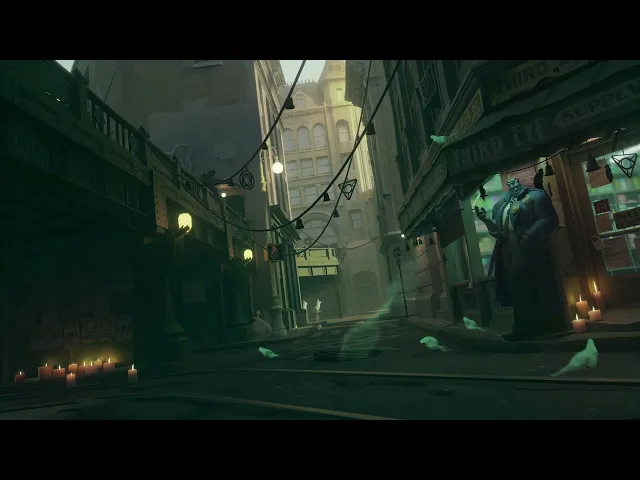
The easiest way to picture Deadlock is Dota 2 with an over-the-shoulder camera and manual aiming. Two teams of six fight across a map with three lanes, and waves of computer-controlled troopers march down each one. Players kill troopers and monsters, collect souls (the game's currency), buy items from an in-match shop and push toward the boss guarding the enemy base. It's set in an occult version of New York. There are 40 heroes in the game right now, with four more on the way.

Valve doesn't publish a team list, though a few developers have talked publicly about their work. The best known is Duncan Drummond, co-founder of Hopoo Games and co-creator of Risk of Rain, who confirmed on the game's Discord that he led the design of the heroes Vyper and Sinclair. Some of Deadlock's patch notes on Steam are also posted under the name IceFrog, the pseudonym of the longtime developer of DotA Allstars who went on to become Dota 2's lead designer. The first such post was spotted in August 2025, though its byline was later changed. Since late May 2026, every minor update has gone out under IceFrog's name. Valve hasn't explained why some of Deadlock's patch notes carry it.
Signs of the project surfaced long before the reveal. In 2019, the codename Citadel turned up in Dota 2's files, and Deadlock's internal code still uses that name. By April 2024 at the latest, Valve was testing the game behind closed doors with invited players. The rules for testers on the official forum, posted by a Valve developer who goes by Yoshi, opened with a warning: "It is critical that everyone not share any information about the game with anyone else."
The secret didn't last. Screenshots leaked in May 2024. By mid-August, The Verge had published a hands-on preview of the unannounced game, Wired was covering it too, and more than 18,000 people were playing it at once, according to SteamDB data cited by PC Gamer. On August 23, 2024, Valve officially announced Deadlock: it put up a Steam page and allowed streams and public discussion. But an update to the same forum post said, "We are remaining invite-only." Two years later, it still is.
Why Isn't Deadlock Out Yet?
Technically, Deadlock is already on Steam: it has a store page, and since May 2026, it has been back at the top of Steam's list of the most-wishlisted upcoming games, a spot it first reached in February 2025. But you can't get it there. The page says the game is "not yet available on Steam," with a release date "to be announced." The "Early Access" and "Free to Play" labels on the page are user tags, not a status set by Valve. Valve itself calls Deadlock an "early development build" with "lots of temporary art and experimental gameplay."
Valve laid out its thinking most clearly in the City Never Sleeps announcement, which also served as a development update: "We think building a multiplayer game is very hard and risky, and the best way to minimize that risk [is] to make sure that we are able to have it in players' hands from an early state to help us shape it and tell us what is fun and what isn't." In the same post, the team thanked the community for its support "despite the game being unfinished" and said it wanted to use feedback to adjust progression and customization for heroes and the hideout (the lobby where players wait between matches) "before the game is fully released."

Players can see that the game is unfinished, too. After the update, people on the Steam forums complained about crashes, frame-rate drops on the redesigned map and the balance of the new heroes. And the game's test status itself puts some players off: it looks finished, but it's still officially in testing.
Long betas aren't new for Valve, and they haven't always ended well. Dota 2's beta started with invites in August 2011, and the game launched in July 2013, nearly two years later. Artifact 2.0 went into closed beta in 2020, and in 2021 Valve stopped working on it, citing too few players. Deadlock has been in closed testing since at least April 2024, so it has already been in testing longer than Dota 2 was in beta. In May 2025, PC Gamer reported another twist: a streamer accidentally showed a separate build with heroes regular testers had never seen, revealing a second, more secret playtest inside the first one.
None of Valve's official posts explains why the game is an invite-only test instead of an open beta, and theories about server load or marketing come from journalists and players, not Valve. Yoshi's 2024 forum posts only explain why testers can't see each other's feedback: the developers want to know what each person thinks "on their own," without being swayed by others.
In practice, getting in isn't hard. Valve has never announced a limit on invites, and back in 2024, The Verge reported that testers could invite as many Steam friends as they wanted. At the same time, there was no big marketing push: the 2024 announcement came without a trailer, and the Steam page carried a 22-second video built from concept art. New players arrive only through people who already play. PC Gamer's Harvey Randall put it bluntly in 2025: "Even now, it's still invite-only. Why? Beats me, since getting a pass to go play isn't really hard."
How to Get a Deadlock Invite
There's no "request access" button on Steam, and the City Never Sleeps update didn't change that. Here's the process:
- Find someone who already has Deadlock and add them as a friend on Steam.
- They send you an invite from inside the game.
- The invite arrives as a Steam notification, usually within one to two days. Make sure to accept it.
- Deadlock then shows up in your library, and you can download it for free.
If a friend has sent you an invite but the game isn't in your library, check your Steam notifications: the invite may be sitting there unaccepted. This happened often enough that Valve reworked the interface in 2024. The one-to-two-day estimate comes from the in-game message quoted in guides. Players hand out invites in the game's Steam discussions and in fan communities on Discord and Reddit.

There are two invite rules to know about. In 2024, Valve stopped players from inviting limited Steam accounts. An account stops being limited once it has spent at least $5 in the Steam store: purchases and Steam Wallet funds count, while keys activated from other stores and gifts you receive don't. Under another 2024 rule, if the person who invited you was banned for cheating, everyone they had invited was banned too. Valve hasn't said either rule was lifted, but there's no confirmation that they still apply.
Valve has also found unusual ways to punish cheaters. A September 2024 update let the opponents of a detected cheater either ban them on the spot, ending the match, or turn them into a frog for the rest of the match and ban them afterward.
Some guides say your Steam account has to be at least 30 days old, but Valve has never announced such a rule for Deadlock. In June 2024, Valve briefly required players to have been Steam friends for a certain number of days, but it dropped the rule two weeks later.
Invites are sold on gray-market sites, usually for very little, but there's no reason to pay, since a real invite is free. If someone asks for your Steam password or wants you to click an external link to get access, it's almost certainly a scam.
How did you get (or plan to get) into Deadlock?
Deadlock Player Count: How It Fell 90% and Came Back
The first boom came right after the reveal. On September 2, 2024, Deadlock hit 171,490 concurrent players, according to SteamDB. That's a peak, the busiest minute of the month. At a typical moment, about half as many people were online: that month, the game averaged about 93,000 concurrent players.
Then interest faded. By April 2025, the average had dropped to about 9,000, a tenth of its September 2024 level, according to SteamDB. In July, even the busiest minute of the month saw just 15,763 players, one of the lowest points since the reveal.

Updates also got further apart. In January 2025, Valve dropped its two-week patch schedule. "These patches will be larger than before, albeit a little bit more spaced out," Yoshi wrote on the game's Discord. In late July 2025, as GamesRadar+ reported, fans waiting for the next big patch got a familiar answer from Valve: the update "won't be coming for some time still" because "it isn't ready yet."
In 2025, Valve rebuilt the map around three lanes instead of four and overhauled the shop, but the big jumps in player numbers came with the hero updates. In August, Valve added six heroes and let players vote on the order of their release, and the monthly peak nearly quadrupled from July's level to about 60,000. In January 2026, the "Old Gods, New Blood" update added a faster 4v4 mode and six more heroes, and the monthly peak crossed 100,000 for the first time since October 2024.
According to Forbes, the monthly peak hasn't dipped below 70,000 since then, a level the game never reached in 2025. In March 2026, players spotted signs that the game might soon leave closed testing, but it still hasn't opened up to everyone. Over the summer of 2026, the game averaged roughly 45,000 to 48,000 concurrent players, based on calculations from SteamDB figures.
Then, at the end of August, Yoshi said Valve's best estimate for the next big update was late September and promised to give players a heads-up "or order a ton of pizza." The joke had a backstory: back in January, fans had noticed a rush at pizza places near Valve's offices shortly before the Old Gods, New Blood update came out.
Deadlock's City Never Sleeps Update: What Changed and How It Set a Record
City Never Sleeps went live on the afternoon of September 29, Pacific time. Valve redesigned the map, replaced its monsters, updated the interface, added a long list of smaller improvements and introduced six new heroes.
The setting hasn't changed: the lanes are still called Broadway, Greenwich and York, and four new districts, including Chinatown, now sit between them. The old neutral monster camps have been replaced by "Haunts," ranging from monsters disguised as barrels to ghouls that crawl out of the gutters. The city also got a merchant called the Broker, who traded an expensive item for a "Corrupted" version of it: stronger, but with a random drawback. Valve said the Broker would be around for only a few days, until the first new hero arrived. Every map change and new mechanic is covered in the guide to the City Never Sleeps update.

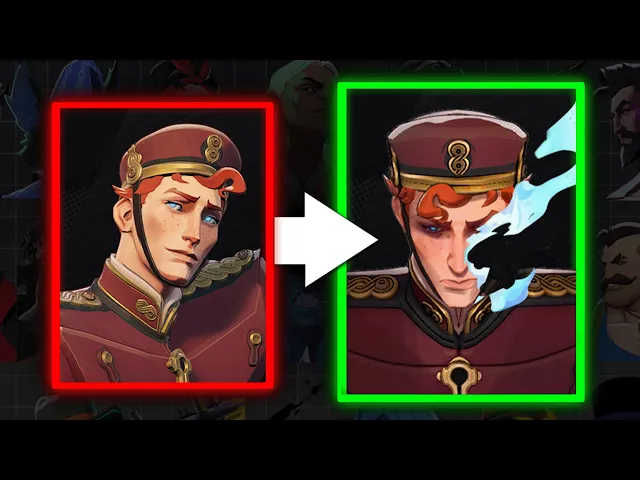
The biggest change is the six new heroes: Nurse Harrow, Rat King, Solomon, Deadman Danny, Baba and Violet. They don't all arrive at once. Valve releases two a week, on Tuesdays and Fridays at 2 p.m. Pacific time, and players vote on the order in the lobby before each match. Rat King, the ruler of Manhattan's sewer rats, arrived first on October 2. On October 5, Valve weakened his ultimate ability and strengthened two of his other abilities. The patch notes gave no reason, but players on the Steam forums had spent several days complaining that he was too strong. Baba followed on October 6. Valve calls her "New York's notorious pigeon lady."
The game broke its 2024 record within the first hour. At 2 p.m. Pacific time on September 29, about half an hour after the update went live, 228,086 people were playing at once, a third more than the old record, according to SteamDB data cited by tbreak. Rat King's release on October 2 raised the record slightly, to 228,208, according to SteamDB. Baba's release on October 6 pushed it higher: within 20 minutes, the count climbed from 225,000 (2:09 p.m. Pacific) to 236,730 (2:29 p.m.), more than ever before, according to Steam's own charts.
Those were short peaks, not typical numbers: 17 hours after the first record, about 104,000 people were playing, according to SteamDB. Even so, that was more than any monthly peak over the summer, when the game topped out at about 94,000. On Steam's chart of daily active players, Deadlock climbed from 20th to seventh in the week ending October 5.
Viewers came back, too. In the first seven days after the update, Deadlock averaged 20,800 concurrent viewers on Twitch, almost three times as many as in the week before, and more than 15,000 channels streamed it, according to TwitchTracker and SullyGnome. During the minutes of the October 6 record, 58,000 people were watching Deadlock on Twitch, compared with 49,900 watching Dota 2, according to TwitchTracker. On YouTube, Brazilian streamer alanzoka's video of the update topped 730,000 views, and YouTuber Gart's "Every New Secret in Deadlock" passed 450,000 by October 6.
What's Next for Deadlock
Valve’s announced schedule lists October 9, 13, 16 and 20 as the release dates for four additional heroes, with their release order determined by player votes. The first ranked season was extended to November 5, with the next scheduled to begin immediately afterward.
Valve has outlined its next steps: progression and customization for heroes and the hideout, reworks of the midboss and of the Guardians and Walkers that defend the lanes, and, most likely, gradual remodels of older heroes. The developers are also testing new and reworked items and alternate game modes but haven't promised that either will be added to the game. For now, Deadlock doesn't charge for anything: there's no real-money store or battle pass, and Valve hasn't announced a business model.
It's still unclear whether Deadlock can hold on to its new players. Its player count has collapsed before. Big Steam peaks don't always last: Supervive drew nearly 48,000 concurrent players during its open beta in November 2024. Its average fell 72% the following month, according to SteamCharts, and in December 2025 the developers announced that the game would shut down. But in the quiet months of 2026, Deadlock's player count stayed far above its 2025 level. The answer should become clearer in the weeks after October 20, once the last hero is out and voting is over.
Deadlock Rumors: What Valve Hasn't Confirmed
Valve hasn't confirmed any of the big rumors around Deadlock:
- Half-Life. In February 2026, a leaker known as "Gabe Follower" wrote that Deadlock's files reference HLX, the rumored codename for a new Half-Life game. HLX references do appear, but in Source 2 engine files: some have been there since August 2024, and one more was added in a February 2026 build. They appear to be engine code rather than part of the game's own content, and they were there long before City Never Sleeps.
- Skins. In early October, several Russian-language gaming sites reported that Roarty Digital, a studio that has worked on Fortnite skins, had helped make heroes for City Never Sleeps, and some saw that as a sign that skins are coming. The reports trace back to a social media post attributed to one of the studio's artists, but the original can't be found. Valve hasn't commented and has only mentioned future hero customization, without details.
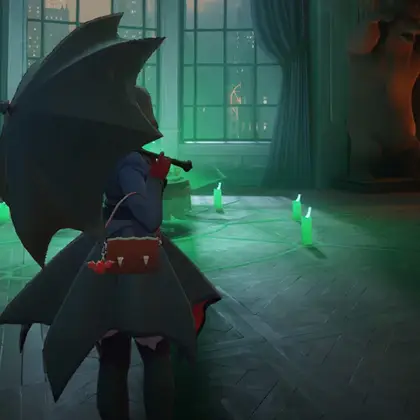
- A Risk of Rain-style PvE mode. This rumor comes from a March 2026 post by a leaker who goes by "minesweeper," who described waves of enemies, loot chests and a boss.
- A 2025 release, an old misreading. In January 2025, 80.lv cited a Discord message as evidence that Valve had promised a 2025 release, but the message only said the team looked forward to "fleshing out the game in the new year."
Deadlock vs. Dota 2: Is Deadlock Stealing Players?
A June 2026 Hotspawn column argued that Dota 2 "isn't dying" but has stopped growing while Valve focuses on Deadlock, a new Half-Life and its hardware. Steam's numbers don't settle it: Deadlock is growing, and Dota 2's concurrent player count isn't dropping, though these totals can't show whether individual players are leaving. Still, the other side has arguments: Dota 2's Twitch audience keeps shrinking, and some Deadlock patch notes carry IceFrog's name.
Steam Player Counts
The two games play on very different scales. At the moment Deadlock set its record, Dota 2 had about 595,000 players, according to the same Steam chart, so Deadlock had roughly 40% as many. In a Steam snapshot taken about an hour and a half later, at 4 p.m. Pacific, Steam listed Dota 2's peak at 836,870; Deadlock's record is less than a third of that.

Dota 2's player count didn't drop after the update, either. According to hourly SteamCharts data, Dota 2 averaged around 580,000 concurrent players in the first week after City Never Sleeps, the same as the week before, and its weekly peak barely moved. Concurrent numbers can't show whether individual players are leaving: the count can hold steady even if new players replace the ones who quit.
2026 has been a good year for Dota 2. Its average player count from January through September is 16% higher than in the same months of 2025. August, when The International was held in Shanghai, was its best month since October 2016, with an average of 617,000 concurrent players. September's 7% dip mirrors last year's post-tournament drop: after The International 2025, Dota 2's player count fell by the same 7% in October. And the update arrived on September 29, so it barely affected September's numbers.
The timing doesn't fit either theory neatly. In April 2025, both games hit their lowest point at the same time: Deadlock had its worst month since the reveal, averaging about 9,000 concurrent players (SteamDB), and Dota 2 had its weakest month between 2024 and 2026, averaging 393,000 (SteamCharts). In August 2025, when Deadlock added six heroes, its monthly peak nearly quadrupled, while Dota 2's monthly peak rose by about a quarter, according to SteamCharts. In spring 2026, both averages slipped: in March, Dota 2's fell 20% and Deadlock's only 5%; in April, Dota 2's fell 11% and Deadlock's 15% (SteamCharts for Dota 2, SteamDB for Deadlock). The numbers don't show a direct link either way.
Twitch Viewership
Dota 2's Twitch audience is shrinking, but viewership swings with the tournament calendar, and watching streams isn't the same as playing. So these numbers can't say whether Deadlock is to blame. In the week after the update, Dota 2 averaged 50,400 viewers, compared with 20,800 for Deadlock. Dota 2's average audience that week was down 21% from the week before, according to SullyGnome. Measured by peak viewers in individual hours, Deadlock had more viewers than Dota 2 in roughly one hour out of four, mostly in the evening in the Americas and overnight in Europe, and right after the update and Rat King's release.
The audiences have overlapped from the start. According to Stream Hatchet, Dota 2's average viewership fell 12% in the six days after Valve allowed Deadlock streams in August 2024. The analytics firm said that tying the drop to Deadlock would take a closer look, then pointed to the audience overlap as corroborating evidence that viewers were moving: 42% of people watching Dota 2 streams also watched Deadlock. That data covers stream viewers over a few days, not players.
Over a longer stretch, Dota 2's January-through-July average on Twitch fell from 65,400 viewers in 2023 to 47,100 in 2026, according to TwitchTracker. The decline started before Deadlock was even announced, with a 4% drop from 2023 to 2024, and sped up afterward, to 9% and then 17% a year.

Who Plays Deadlock, and Who Makes It
Deadlock has pulled ahead in search interest. Since the update, people worldwide have searched for it more often than for Dota 2 every day, according to Google Trends. In the U.S., the U.K. and France, Deadlock was already ahead in the week before the update, and the gap is now several times wider. In Germany, it overtook Dota 2 after the update. Interest in Dota 2 didn't drop; Deadlock simply grew. And search interest isn't the same as player count.
In May 2026, fans surveyed more than 7,000 players about which gaming communities they came from; respondents could pick several. Half named Overwatch, and about a third each named Team Fortress 2 and League of Legends. Only 16.5% named Dota 2, which put it in seventh place. The survey isn't representative of all players: it was shared mainly on Discord and Reddit, and 60% of respondents were in North America.

The same IceFrog account behind Deadlock's patch notes is another point in the debate, since big Dota 2 patches come out only rarely. According to Liquipedia, almost seven months passed between patches 7.39 and 7.40, and since 7.41 in March 2026, balance changes have come only in smaller patches. The one major content update since then was The Dark Carnival event in June. That said, Dota 2 has had gaps like this before. In February 2025, Gabe Follower claimed that many Dota 2 developers were interested in working on Deadlock, though the same post noted that the Deadlock team wasn't short-staffed. Valve hasn't commented on any of this.
Some people in the Dota 2 community reject these gloomy predictions. Avo+, a caster and product manager at ESL, calls Deadlock a "gateway" into Dota 2 rather than a threat. "I've seen a lot of people come into our community purely from Deadlock that either stopped playing or are just interested in our game, and that's pretty wonderful to see," Avo+ said in an interview with PCGamesN in March 2026.
Deadlock's esports scene is still small. All the tournaments tracked by Liquipedia from 2024 through 2026 paid out about $521,000 combined, and Valve ran none of them. By comparison, Dota 2's The International 2026 alone had a prize pool of $3.9 million.
Will Deadlock take players away from Dota 2?
Conclusion
So, is Deadlock out? Officially, no, but it already functions like a released game, with a ranked mode, tournaments, guides, streamers and peaks of more than 200,000 concurrent players on the update's launch day and the first two hero release days. Valve still calls the game unfinished and hasn't said when everyone will be able to play.
So far, Dota 2's concurrent player count hasn't dropped, though these totals can't show whether individual players are leaving. Its Twitch decline began before Deadlock was announced, though it has sped up since. The open question is whether Deadlock is drawing developers away from Dota 2, and Valve hasn't commented on that.
Of the 20 games with the highest peaks in that Steam snapshot, Deadlock was the only one you couldn't simply buy or download: it has no release date, and you can get it only through a friend's invite.
Frequently Asked Questions
Quick answers about how to get access to Deadlock and where the game stands as of early October 2026.
Is Deadlock Out?
Not officially. Deadlock has a Steam page, but it's marked "not yet available on Steam," with a release date "to be announced." Valve calls it an early development build, and you can play it only with an invite from a friend.
How Do You Get a Deadlock Invite?
Only through a Steam friend who already has the game. They send the invite from inside Deadlock. According to the in-game message quoted in guides, the invite usually arrives in your Steam notifications within one to two days, though it can take longer, and you have to accept it there. If none of your friends play, people hand out invites in the game's Steam discussions and on Discord and Reddit. In 2024, Valve stopped players from inviting limited Steam accounts, those that have spent less than $5 in the Steam store (keys from other stores and gifts you receive don't count). Valve hasn't announced any change, but there's no confirmation that the rule still applies. You can't sign up on the Steam page, and there's no need to pay for an invite, since invites are free.
Why Is Deadlock Invite-Only?
Valve hasn't said. Its official posts only say that building a multiplayer game is "very hard and risky" and that it wants players testing the game early. Theories about server load or marketing come from journalists and players.
Is Deadlock Free?
Right now, yes: you don't pay for access or for anything in the game, and there's no real-money store. Valve has only said it's working on hero and hideout customization and hasn't announced how the game will make money after launch.
When Will Deadlock Be Released?
There's no release date yet. The Steam page lists the release date as "to be announced," and Valve's September 29 post only says the team wants player feedback on progression and hero and hideout customization so it can adjust them "before the game is fully released."
How Many People Play Deadlock?
Valve doesn't publish how many people have played Deadlock. The best public measure is concurrent players: the record is 236,730, set on October 6, 2026, according to Steam. Before City Never Sleeps, the record was 171,490, set on September 2, 2024, according to SteamDB. Outside hero release days, the numbers are lower: Steam's daily chart for October 5, a day without a new hero, shows a peak of about 156,000. Before the update, over the summer of 2026, the game averaged roughly 45,000 to 48,000 concurrent players, based on calculations from SteamDB figures.
Can You Play Deadlock on PS5, Xbox or Mac?
No. The Steam page lists only Windows, and the game requires a 64-bit processor and operating system. Valve hasn't announced console or Mac versions, and it hasn't published full system requirements either.
Money, Scandals, Phenomena
- The CS2 Skin Economy: Billions of Dollars, Million-Dollar Knives, and a $2 Billion Crash in 30 Hours
- The Biggest Thefts and Hacks in Gaming History: The $620 Million Axie Infinity Hack, Stolen CS2 Skins, and the GTA 6 Leak
- Star Citizen Has Raised a Billion Dollars — and Still Hasn't Come Out
- GTA Controversies: Lawsuits, Bans, and Hot Coffee
- Why Graphics Cards Are So Expensive in 2026: How AI Ate the Memory Supply
- Why have videogames become so expensive, and will they get even more expensive?
- Why Millions of People Click on Bananas, Cookies, and Cows: How Idle Games Have Hacked Our Brains
- What Are the Backrooms? Levels, Entities, Games, and Movie Explained
- Rusty Lake Series Phenomenon. Twin Peaks in the Form of a Point‑and‑Click
- Rideshare "Stimulator": What Kind of Game Is It and Why Did It Spark an AI Controversy?
- AI Is Already Taking Jobs in Game Development — Just Not Where We Expected
- DLSS 5 — Graphics Revolution or Marketing Gimmick? Let's Cut Through the Hype
- Why the Ocarina of Time Remake Announcement Divided Fans — Uncanny Valley, Politics, and Nostalgia
- Why AI Researchers Are Leaving OpenAI, Anthropic, and Google — and What They’re Warning About
- How GTA 5 Made More Money Than Any Movie Ever
- AI in Games: Why Players Boycott Studios Over AI Art and Voices
- How Much Money Has Genshin Impact Made and Why Gacha Is Cooling Off
- Sued for Being Too Addictive: How the Makers of Fortnite, Roblox and Minecraft Ended Up in Court
- The $250 Million AI Chat: How Krafton Asked ChatGPT to Escape Subnautica 2's Founders — and Lost
- What Was Found in the 12TB Steam Leak: Early Builds of GTA 3, Mafia 2, and Valve Games
- How Graphics Card Prices Spiraled: Mining, Scalpers, and Prices No One Could Believe
- The Live-Service Graveyard: How the Industry Burns Billions on Games That Die in Weeks
- Minecraft in Elden Ring and TNT in RDR2: The Wild AI Mashups That Broke the Internet — What's Real and What You Can Download
- Is Deadlock Out? Valve's Invite-Only Game Sets a New Player Count Record
-
 Valve's Deadlock gets its biggest update yet — six new heroes, a reworked New York, and a new player record
 -
 'Deadlock' May Soon Leave Closed Testing — Players Spot Clues in the Game’s API
 -
 Valve overhauls Deadlock matchmaking and launches a full ranked mode
 -
 14 Best MOBA Games of All Time: from Dota 2 to Deadlock
 -
 Insider: Deadlock may get a Risk of Rain–style PvE mode with waves, loot chests, and a boss