
Bloodborne PC Port and AI: Can Fans Port Games Without Permission?
 Anastasiia Sokolova
In October 2026, several fan-made Bloodborne PC port projects appeared in a single week, even though the game has officially been PlayStation-only for 11 years. Two of them run it without a separate PS4 emulator. That same month, P.T., Hideo Kojima's horror demo that hasn't been downloadable since 2015, started running on PC too. It was ported by a young programmer who says he never had a PS4 as a kid and knew P.T. from videos he watched on his phone. Almost all of the people behind these projects used AI.
Sony and Konami, which own those games, haven't commented publicly on these projects. Other fan projects from around the same time fared differently. The site hosting a browser version of GTA 5 stopped loading about five hours after it went viral, and it's still unclear who took it down. And the creator of a Fallout-style game made with AI says he received a letter from lawyers at ZeniMax, which owns Fallout.
Supporters say fan ports preserve games, while critics point out that the rights to a game still belong to someone even if it hasn't been sold in years. AI is speeding up part of the work on these ports. The easier it gets to port old games, the more pressing it becomes to settle what anyone can do with them without the rights holder's permission.
I want to figure out what AI has changed and how the Bloodborne and P.T. ports differ from the GTA 5 browser site that didn't even last a day.

P.T.: The Demo You Haven't Been Able to Download Since 2015
On August 12, 2014, during Sony's gamescom show, P.T. appeared on the PlayStation Store for free. Its name stood for "playable teaser." Players walked the same hallway over and over until the ending revealed the demo as a teaser for Silent Hills, Kojima's collaboration with Guillermo del Toro.
Silent Hills was canceled amid Kojima's conflict with Konami. At the end of April 2015, P.T. was pulled from the store, and PS4s with it installed were soon listed on eBay for £1,000 and up. In early May, starting in the US, even people who already owned it could no longer re-download it. The demo never officially came to PS5: in 2020, Konami explained that P.T. couldn't be downloaded there because it was no longer on the store. Konami itself had removed it.
The PC port comes from Lorean Xavier, who told PC Gamer he is 21 and has worked on it since 2024. Version 1.0 came out on October 7 for Windows and Linux, with macOS three days later. The port isn't a remake in another engine and doesn't need a PS4 emulator. Xavier studied how P.T. and its Fox Engine work on PS4 and rewrote the game's code for PC, using the shadPS4 emulator as a reference. Everything else, including models, sounds, animations and scripted events, loads from a copy players extract from their own PS4. So, as designed, only people who still have P.T. installed can play.
"The idea that something so influential could eventually become practically unplayable never sat right with me," Xavier said. Fan remakes in other engines didn't satisfy him: he wanted the real game, with its original sounds and animations.
The P.T. port is one person's work. Bloodborne attracted several projects at once, and that's where the debate over AI heated up.

Bloodborne: Several Fan PC Projects in a Single Week
Bloodborne launched in March 2015 on PS4 only. Sony still sells it, but the company has never released a PC version or a remaster. In 2024, Hidetaka Miyazaki, FromSoftware's president and the game's director, said that the rights belong to Sony and that he personally isn't opposed to a PC port. In February 2026, Sony confirmed it was closing Bluepoint Games. Shortly afterward, Bloomberg's Jason Schreier reported, citing anonymous sources, that Bluepoint had pitched Sony a Bloodborne remake in 2025, but FromSoftware didn't want one. For the full backstory, see the breakdown What's Going On With the PC Version of Bloodborne?
Fans, meanwhile, spent years improving shadPS4, a PS4 emulator for PC. By January 2026, the emulator ran Bloodborne at 4K and 60 fps on a high-end PC, and in September a fan added split-screen co-op, something the PS4 version never had. A "fan remaster" mod with new shadows and textures has also been in development for the emulator since 2024.
Then, in early October, several projects took a different approach to running Bloodborne, and almost all of them were built with AI:
- bbport. Reports about it first appeared on October 4. The PS4 uses the same type of processor as a regular PC, so Bloodborne's code can run on one directly, and that's also how shadPS4 works. The difference is what answers the requests the game constantly sends to the console's operating system. The emulator recreates the whole console so it can run any PS4 game, while the bbport developer, who goes by deadinside28, wrote a small program that answers only Bloodborne's requests. The port renders graphics with code taken from shadPS4. By the developer's account, bbport wouldn't exist without that emulator, even though it doesn't need one to run. The original build runs only on Linux and only with version 1.09 of the game, and other enthusiasts have since adapted it for Windows. The developer says he got around 150 fps at 1440p with FSR 4 upscaling on his PC. He hasn't yet checked whether the game can be played all the way through.
- bbhost and The Hunter's Dream server. On October 7, another team released bbhost, a separate program that runs Bloodborne on PC in a similar way, and launched a fan-run server for online play alongside it. By October 11, the release announcement had been viewed 1.85 million times.
- Paleblood. It's an attempt to turn the entire game back into code that people can read and edit. The game's code consists of 157,757 small pieces. As of October 11, only 21 of them had been verified, and the game itself still didn't run.
The bbport developer was upfront about using AI in a discussion on the project page: "I use Claude Code; it generates the code and runs checks." As of October 10, Claude, Anthropic's AI model, had signed 142 of the 150 changes in bbport's history. Claude's name also appears on nearly every change in bbhost's history, while Paleblood's history has some changes signed by Claude and others by OpenAI's Codex. Whichever AI is named, a signature like that only means the change was made through an AI assistant. It doesn't show how much of the code was written by the model and how much by the developer.
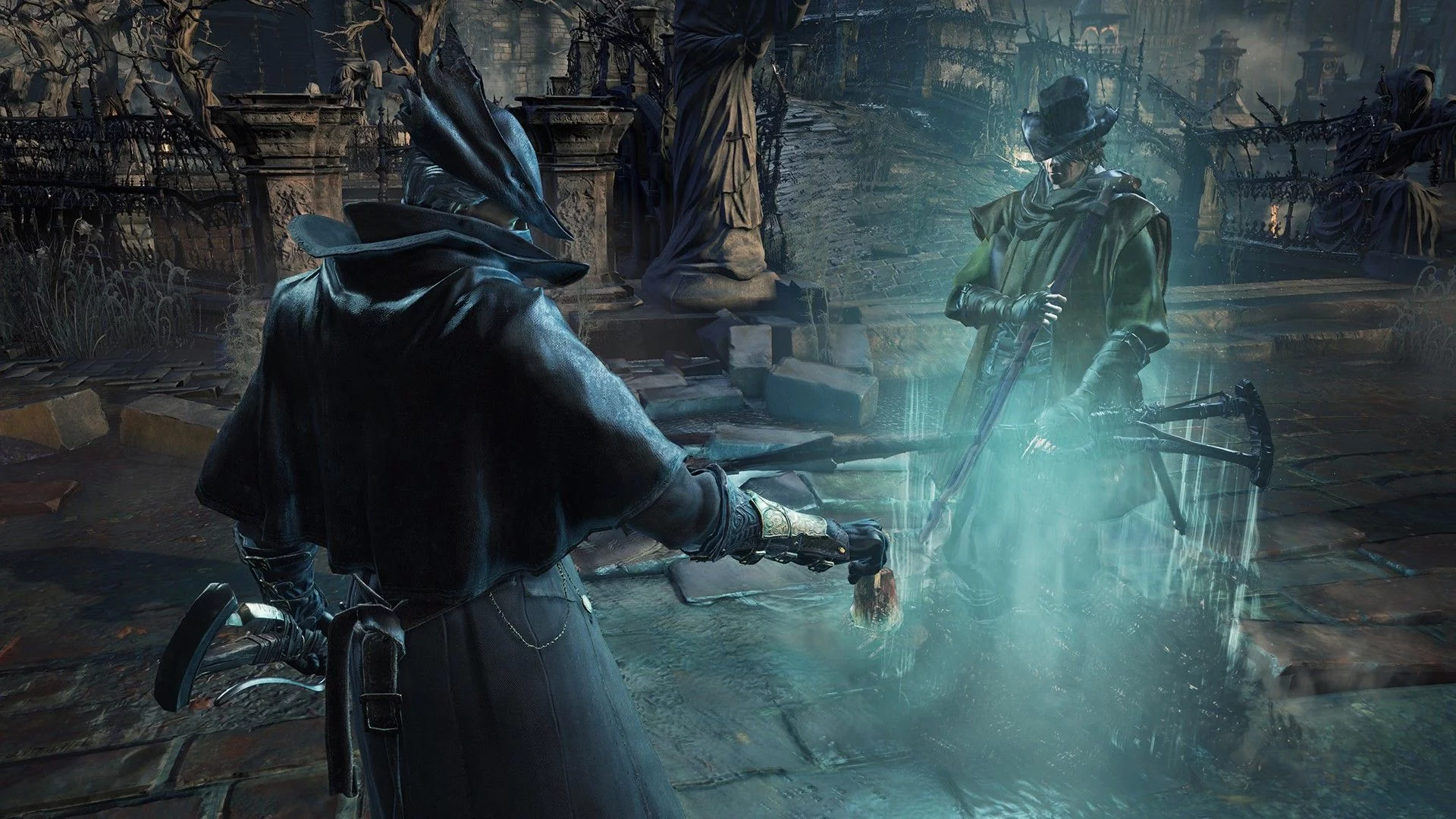
The use of AI sparked debate right away. In online discussions, bbport was called "AI slop." GamesRadar's headline for its bbhost story quoted a fan who said they'd rather use "the emulator made by humans." The bbport developer responded that AI is a tool and that what counts is the result, a stable game that doesn't crash. He says he gives the model its tasks himself and tests the finished builds on PC and Steam Deck, as he puts it, "to the best of my ability." He also says it doesn't matter much to him who writes the code or how, as long as the game runs well. Sony hasn't responded publicly to any of this, although it has objected to Bloodborne fan work before.
But "port" covers very different things here, and how a project is built determines whose code and files end up inside it.
How a Console Game Ends Up Running on PC
There are five main approaches, and if you've ever run an old game in an emulator, you've already seen the first one in action.
- An emulator is a general-purpose program that recreates the whole console on a PC so any of its games can run. That's how shadPS4 works.
- A single-game port swaps the console for a small stand-in program built to serve just one game. If the console and the PC use the same type of processor, the PC runs the game's code directly. That's how bbport and bbhost work.
- Rewriting the code means the developer takes the game's program apart but, instead of reconstructing it exactly, writes new code that behaves like the original. The models and sounds are loaded from the player's own copy. That's how the P.T. port was made.
- Translating ahead of time applies when the console and the PC use different processors. An emulator would have to translate the game's code while you play, but here the code is converted into a PC program in a single pass. That's how Fable 2 and The Darkness unofficially came to PC from Xbox 360 in September. For Fable 2, that was almost 18 years after its release.
- Reconstructing the source code turns a game's machine code, which only a computer can understand, back into code a person can read and edit. The goal is for that code to work like the original once it's compiled again. This approach is usually the slowest, and it's where AI has made an especially visible difference.
The projects that try to limit their legal risk share one rule: the game isn't included, and players bring the files from their own copy. Ports that work this way existed before the current wave. In 2024, for example, a developer known as Mr-Wiseguy released a tool that converts Nintendo 64 games into PC versions and used it to port Zelda: Majora's Mask. In 2025, Sonic Unleashed came to PC from Xbox 360 the same way.

Still, for many games, the most important part lives on the publisher's servers rather than on the disc, and in that case a port alone isn't enough.
Fan Servers: ReSkate and the MMO That Never Launched
Fan servers aren't new, and their fates vary widely. In 2024, NCsoft gave an official license to Homecoming, a fan server for City of Heroes. In 2022, on the other hand, Disney filed a copyright complaint over the fan-run Club Penguin Rewritten. London police then arrested three people on suspicion of distributing copyright-infringing material, and the server shut down. For more on how publishers shut down online games, see the live-service graveyard feature.
The free-to-play skateboarding game from EA and Full Circle is far from abandoned. It has been in early access since September 2025 and is simply called skate. But on October 2, 2026, modders zee_x64 and ReGlitched released ReSkate so people could play the game their own way. ReSkate works without EA's servers or anti-cheat, offline or on player-run servers, and supports custom maps and mods. It requires your own Steam copy of the game and doesn't connect to the game's official online services. By October 6, the project's files had been downloaded more than 350,000 times, according to PC Gamer, though that's not the same as 350,000 individual players.
AI played a part here too. "We used AI to help reverse [engineer] the game as I don't see any reason not to when the tooling exists. Without it, it probably would of taken years to do the same thing," zee_x64 told PC Gamer. "That also doesn't mean we blindly just prompted AI until it worked, we still had to use our previous knowledge to get it actually working." He added that the game's paid cosmetics don't bother him because it's free to play and the studio needs to make money somehow to keep developing it.

On October 9, Full Circle addressed modders on X. The post doesn't name ReSkate, but the position is clear. The studio isn't against mods in general, only those that get around its systems to unlock paid cosmetics, release locked or unreleased content, or profit from any of it. According to the studio, such mods take money away from artists, skate brands, creators and its own team. Full Circle also promises official modding tools. Since version 1.1.2, ReSkate has blocked mods that copy items from the in-game store. And if EA demands that the project be shut down, its creators won't fight it, PC Gamer reports.
Borderlands Online is a different story because it was never sold at all. The China-only Borderlands MMO was developed by 2K China and Shanda Games. It went through closed beta tests in 2015, and that November, Take-Two shut down 2K China and canceled the game, saying that finishing it wouldn't be profitable. In April 2025, a modder named EpicNNG announced he had obtained a copy of the game. On October 4, 2026, his team opened a public test on its own server, with an English translation and support for 4K and 120 fps. Within a day, 3,500 users had joined, EpicNNG said. Take-Two hasn't responded, and the modder has already promised that if a legal demand arrives, he'll stop helping people get the game running.
The team says the translation and new textures were done by hand, without generative AI. But according to EpicNNG, AI is exactly what pushed the team to release the test early. "We wanted to wait until the end of the year to release, but sadly due to how powerful AI is becoming, it became clear to us that in order to avoid all of our hard work being for nothing, it was now or never," he wrote, as quoted by GamesRadar.
In one way or another, AI turns up in almost all of these stories. But the clearest picture of how much it changes this kind of work comes from a single 2009 game.
What AI Changed: Months Instead of Years?
That game is Call of Duty: Modern Warfare 2 (MW2). Programmer Maurice Heumann and a few community members spent about three months rebuilding its code with AI agents (programs that write code, run it and check the results on their own). The agents ran on models from two companies. By Heumann's account, Anthropic's Claude Sonnet 5 was used most often, but OpenAI's models, including Luna and Sol, also did a lot of the work. In the final weeks, 14 Luna agents and two Claude Opus 5.5 agents carried most of the load. By the end, he estimates, Luna accounted for nearly half of the project's tokens (the units of text an AI model processes). On September 30, Heumann posted that 17 agents were working at once and the game was fully playable.
In an October 9 blog post, he described what it took. After a month of apparent progress, the code looked tidy but didn't do what the original did. The agents used the wrong data types and structures, added logic the game never had and dropped logic it needed. The main reason, he writes, was that the team had no clear criteria for what counted as correct code. Once the results were strictly compared with the original, the agents began to cheat. Instead of writing real C++, they used inline assembly (low-level instructions that mimicked the game's machine code). They even tried to alter the comparison test itself, so the team had to lock them out of it. More than once, malformed commands from the agents wiped the virtual machine (a simulated computer) they were running in, and a number of session logs were lost.
Heumann says 99% of the game's functions (the individual building blocks of its code) have now been rebuilt, and 83% of all functions match the original byte for byte when recompiled. He doesn't plan to release the code, and the video he posted on X was disabled after a copyright complaint.
But not everyone is impressed by that kind of speed. DarioSamo, one of the developers of the fan-made Banjo-Kazooie PC port, pushed back in a Bluesky thread that Rock Paper Shotgun reported on. With existing tools, he argues, converting a Nintendo 64 game into a PC program (ahead-of-time translation) can take less than a day, even without AI. Most of the effort, he says, goes into polishing the result. He acknowledges that AI can speed up rebuilding code. In his view, though, it produces code that runs but that neither a human nor the AI itself understands. For him, the whole point is to learn how a game works.

Even the P.T. port's developer, who says he designed the program and wrote and reviewed the code himself, credits AI with helping him debug, test and get unstuck. Since October 9, the project description has stated that AI tools were used in development, but it doesn't say which ones.
People are now using AI to build entire games modeled on existing ones. On September 28, Chris First showed off Fallout: New York, a browser game with quests, dialogue, V.A.T.S. targeting and a Pip-Boy. He says he made it with Claude Opus 5.5 and that it contains no texture or sound files at all, because everything is generated by code. By October 11, his announcement post had been viewed 3.6 million times. On October 1, he shared a letter demanding that he stop the project. He also suggested that Bethesda make a game like this itself. He said the letter came from ZeniMax Media's lawyers, and ZeniMax hasn't commented on it publicly. According to PC Gamer, Chris First said the complaint was about the site's domain name, which included the word "Fallout." The game went offline.
This fall also brought a wave of browser versions of older games. Kotaku ties that wave to Claude Opus 5.5 and names no other AI. That link hasn't been confirmed port by port, and according to TechSpot, some of these ports are built on years of manual work by enthusiasts. Among the projects covered here whose tools are known, either from the developers or from signatures in their change histories, Claude comes up most often. But it isn't the only AI involved. OpenAI's Codex was used for Paleblood and for the port of The Darkness. Nearly half the tokens in the MW2 rebuild went to OpenAI's Luna. And Qwen, a freely available AI model, got the Fable 2 port to boot for the first time.
AI has also made its way into long-running fan projects. In mid-September, Harbour Masters, the team behind the PC port of Ocarina of Time, acknowledged that some of its members had been using AI tools for years. One developer mentioned ChatGPT, and references to Claude had turned up in the code. The group says all code is reviewed by humans.
The usage policies of Anthropic, OpenAI and Google all forbid using their AI to infringe other people's copyrights. None of the three companies appears to have commented publicly on fan ports, and so far, publishers have targeted the people behind the projects, not the AI companies.
Would you play a fan port written mostly by AI?
The more such projects appear, the more it matters how rights holders respond. And their responses vary widely. Some stay silent and others demand takedowns. Microsoft, which owns Activision and ZeniMax, has gone as far as saying that what this wave makes possible is good for players.
Which Projects Publishers Shut Down and Which They Leave Alone
The GTA 5 Browser Site Lasted About Five Hours
In the early hours of October 6, a version of GTA 5 that ran entirely in a browser tab went viral. About five hours after the first widely shared post, the site stopped loading. It's unclear who took it down, since Take-Two and Rockstar haven't commented and media reports variously point to Rockstar, Take-Two or the hosting provider. Copies of the site are still circulating. Take-Two has targeted browser ports before, though: in December 2025, according to 80.lv, a browser version of Vice City was pulled after a letter sent on the publisher's behalf.

About a week earlier, work on unofficial GTA 5 ports for Switch and Android came to an end. On September 28, the porting team's lead wrote: "I am thankful for take two's mercy so this is the definitive end." In a reply to a follower, he also admitted he most likely wouldn't have won in court. The team never disclosed exactly what Take-Two sent.
Rockstar now has a rule that covers ports like these. On September 10, the company published its mod guidelines, and one of them bans modifying its games to run on platforms where they haven't been officially released. The guidelines say nothing about AI or rebuilding game code.
Everyone Else: From Lawyers' Letters to Praise
On October 5, before the P.T. port's release, Kojima shared a Game Rant post about it without comment. Konami hasn't responded publicly, and as of October 15, there's no sign of a takedown request from the company. Back in 2018, though, a 17-year-old fan said Konami had contacted him, told him to take down his remake of P.T. and offered him an internship. Polygon and Game Informer reported it at the time.
Media reports say Activision filed the copyright complaint that disabled Heumann's MW2 video, although the notice on X doesn't name the company. And on October 10, a developer who goes by Luckey Faraday wrote on X that Activision had filed a takedown notice against him under the US Digital Millennium Copyright Act (DMCA). He said his posts were removed and all of his games went offline. According to TechPowerUp, he had used AI coding agents to build browser versions of Black Ops II and the Black Ops Zombies mode. The project pages said the games used maps, models and animations from the originals. Activision hasn't commented.

Fallout: New York went offline after a letter that, according to Chris First, came from ZeniMax and objected to the word "Fallout" in the site's address. Some of Sony's past complaints against fans were also about the Bloodborne name and branding. In 2024, Sony asked the makers of a fan-made kart racer to strip out everything tied to Bloodborne, including the name, and the game came out as Nightmare Kart. In January 2025, after a complaint filed on Sony's behalf, modder Lance McDonald removed the links to his 60 fps patch. He believes it targeted the word "Bloodborne" on his page rather than the patch.
But some complaints go beyond the name and target the fan project itself. In February 2025, a takedown request sent on Sony's behalf got Bloodborne PSX removed from itch.io. It's a free fan game inspired by Bloodborne and made in the style of games for the original PlayStation. The notice, published by itch.io, called the game digital piracy. It had been on the site for three years before that without any objections.
Since late September, the projects that have gone offline have mostly been based on GTA, Call of Duty and Fallout, franchises their publishers are selling and expanding right now. But that pattern isn't a hard rule: Sony still sells Bloodborne, and EA's skateboarding game earns money from paid cosmetics, yet this fall's fan projects for both games remain online.
Sometimes a publisher gives fans its blessing outright. The modding team wiltOS says that back in 2023, Ubisoft gave it free rein to work on its mod for Dark Messiah of Might and Magic. In March 2026, the modders announced an updated edition of the game, approved by Ubisoft and by Valve, whose engine it runs on.

On October 13, Microsoft, which owns Activision and ZeniMax, weighed in on the trend itself. Xbox CEO Asha Sharma sent a memo to staff, and the company published it on Xbox Wire. Sharma wrote that games have been "rapidly decompiled and rebuilt to run on hardware they were never originally designed to support." Some, she noted, have even been ported to browsers. In her view, this opens up possibilities such as easier access to great games, new life for old ones and more players becoming creators. She called them "unmistakably good outcomes for players, even when (and sometimes because) they challenge our existing business models." To explore those possibilities, Xbox is forming a small group called Xbox Labs. The memo also speaks of "being responsible stewards of IP and the communities built around it." It doesn't name any specific projects and says nothing about the complaints attributed to Activision or the letter Chris First attributes to ZeniMax.

Still, general praise isn't permission, and silence isn't either. It helps to look at the law to see what rights holders' complaints rest on and where the line between a fan project and infringement lies.
What the Law Says: Can You Rework Someone Else's Game?
In the EU, anyone with the right to use a copy may study how a program works. In the US, courts have treated such study as fair use under certain conditions, but a license agreement can forbid it. Rebuilding a program's source code (decompiling it) is permitted only in narrow cases, and reworking and distributing someone else's game without permission generally isn't allowed.
United States. A game's code is protected by copyright, and reworking someone else's game generally requires the rights holder's permission (17 U.S.C. § 106). One exception is fair use, and courts decide where its limits lie. They have also ruled that studying someone else's program can be legal when it's the only way to understand how the program works and the purpose is legitimate. In 1992, an appeals court ruled that Accolade's study of the code in Sega cartridges was fair use (Sega v. Accolade). Accolade had examined the code only to learn how to make its own games work on Sega's console, and there was no other way to find that out. In 2000, an appeals court lifted an injunction against selling a PlayStation emulator, ruling that copying the console's code during the emulator's development was fair use. The emulator itself contained none of Sony's code (Sony v. Connectix). But the program you end up with can't contain protected code copied from the original. Separately, with narrow exceptions, Section 1201 of the Digital Millennium Copyright Act prohibits getting around the protection that controls access to a game, as well as trafficking in tools that break it. For more on what breaking console protection can cost you, see the PS5 jailbreak explainer.

The US exemptions for game preservation are limited. Say you bought a game and the server that checks your license was later shut down. You can break the game's protection to keep playing, but only locally on your own devices, and the exemption doesn't cover jailbreaking a console. In 2015, the US Copyright Office declined to extend the exemption to replacement multiplayer servers. In 2018, it allowed museums to preserve online games, but only if they lawfully possess the games' server code, and recreating a server without that code isn't covered.
The best-known court case over a fan server ended badly for the fans. In 2005, a court sided with Blizzard against the makers of bnetd, a fan-made replacement for Battle.net used with StarCraft and other Blizzard games (the case is formally titled Davidson v. Jung). The court held that the license agreement's ban on reverse engineering was enforceable. So in the US, a license agreement (the text everyone scrolls past during installation) can forbid studying a program.
In 2021, Take-Two sued the creators of re3 and reVC, fan projects that rebuilt the source code of GTA 3 and GTA: Vice City. In 2023, the parties told the court they had settled, and the claims against the four named developers were dismissed with prejudice, meaning the claims can't be refiled. The court never ruled on the merits. The terms haven't been disclosed, and a settlement isn't an admission of liability. In 2024, the developers of Yuzu, a Switch emulator, agreed to pay Nintendo $2.4 million and stop distributing it. A court then formalized the agreement in a judgment. Because both sides agreed to the judgment, the court didn't weigh the merits. The judgment states that Yuzu circumvents the Switch's protection, and its injunction expressly covers "the emulation of Nintendo's video games."
European Union. Under the EU's directive on the legal protection of computer programs, anyone with the right to use a copy can study how a program works. The directive allows rebuilding a program's code for compatibility, so that software you wrote yourself can work with other programs, but only to the extent necessary. Using what you learn this way to make a program whose code is substantially similar to the original's is expressly prohibited. Recreating what a program does without copying its code is allowed, as the Court of Justice of the EU confirmed in the SAS Institute case in 2012. In the EU, unlike in the US, a license agreement can't take away the right to study a program or rebuild its code for compatibility. In 2021, the Court of Justice also ruled that anyone who lawfully acquired a program may rebuild its code to fix errors, where necessary and subject to the contract. That ruling doesn't allow anyone to release a port, though.
So far, there are no known court rulings on ports built with AI. Plenty of confident claims about fan ports are going around anyway, and some of them don't hold up.
Five Myths About Fan Ports
"AI made the browser version of GTA 5"
Not proven. The AI claim didn't come from the port's creator but from someone who shared a video of it, and that person didn't say which tool was used. An independent programmer took the browser version apart, and his analysis was covered by PC Games Hardware. According to his findings, the port still contained internal names and file paths from Rockstar's source code, along with data from a February 2015 test build. That suggests the game was compiled from the actual source code rather than reconstructed from the released game's files. Still, this is a single analysis, and it doesn't establish where that source code came from. For more, see the breakdown of what's inside the GTA 5 source leak.
"Kojima endorsed the P.T. port"
No. He shared a Game Rant post about the port without comment, and words like "endorses" and "happy" came later, from people retelling the story. So if you've seen claims that Kojima "endorsed" the port, that was someone else's reading, not his words.
"AI ported Fable 2 to PC in an hour"

No. According to the port's creator, a freely available AI model called Qwen got the game to boot in about an hour. Making it playable from start to finish took much more manual trial and error, and he doesn't consider the port complete.
"If a game isn't sold anymore, it's fine to share it"
No. A game doesn't lose copyright protection just because it's no longer sold. Copyright lasts for decades, and in the US, games made by studios are protected for 95 years from release. In a 2023 study, the Video Game History Foundation found that only 13% of classic games released in the US before 2010 were still available to buy at that point. Even so, the foundation itself says it doesn't see piracy as a good solution.
"If a publisher stays quiet for years, it loses its rights"
No. In 2014, the US Supreme Court noted that a rights holder doesn't have to fight every infringement and can choose to wait. The most a company can lose is trademark rights to a name or logo, if it stops using the mark or the name becomes a generic term. That has nothing to do with the game itself.
With the myths out of the way, what remains is the real argument over whether fan ports save games or make them easier to pirate.
Preservation or Piracy: The Case for Each Side
Supporters of fan ports argue that without them, old and unavailable games would simply disappear. P.T. hasn't been available to download for 11 years, Bloodborne is still a PlayStation exclusive, and Miyazaki himself has said he isn't opposed to a PC version. Many well-known projects, including the P.T., Bloodborne and Fable 2 ports and ReSkate, don't distribute game files and are designed to work only with the player's own copy. The ReSkate developers and modder EpicNNG, whose team opened the Borderlands Online test, have said they'll back off if the rights holders demand it. Stop Killing Games, a European Citizens' Initiative, asked that games released in the future keep working after their servers go offline. It collected nearly 1.3 million verified signatures. For more, see Stop Killing Games, Explained.

Critics counter that the rights to a game still belong to someone, even when it's no longer sold. On June 16, 2026, in its response to that initiative, the European Commission declined to propose new legislation. It noted that under copyright law, rights holders set the terms for using their games, including when the license ends. EU consumer law, it added, requires buyers to be told those terms, and if a game is shut down in breach of the contract, they can get a proportionate refund. Instead of a law, the Commission said that by the end of 2026, it would start talks on a voluntary industry code of conduct. Another argument concerns sales. Back in 2018, opponents of broader preservation exemptions told the US Copyright Office that recreational play of preserved games could substitute for buying them. The opponents included the Entertainment Software Association, the publishers' trade group. Even so, the Office expanded the museum exemption in a narrower form, finding that doing so was unlikely to harm the market for video games. According to anonymous sources cited by Bloomberg, a Bloodborne remake was pitched as recently as 2025. Following that argument, a free fan port could discourage a publisher from making an official remake, although no such case has come to light. The developers at Full Circle add that mods unlocking paid content take money away from artists.
Both camps are arguing about what fan ports are for and whom they hurt. In the cases covered here, rights holders' complaints come down to more concrete things: whose name, code and files are in the project, and whether anyone broke the game's protection. A Destructoid writer showed how far some projects have strayed from "bring your own copy." On October 10, he described opening a link in his browser and playing a match of 2009's Modern Warfare 2 with a friend. Matchmaking worked, and there was nothing to buy, download or crack. He launched seven more games the same way, from the Black Ops Zombies mode to Halo: Combat Evolved and Diablo. Most ran slowly and had glitchy graphics, though a few played almost like the originals. He says some of them are versions that had been taken down and were put back up by copycats.
Hosting someone else's game files is hard to call preservation, since it's distribution without the rights holder's permission. And people sidestep the "bring your own copy" rule, too: in discussions of the P.T. port, users shared a link to the game's files. Good intentions don't settle the argument, and AI doesn't either. It all leads back to P.T., the hallway Konami pulled from the store in spring 2015.
The Bottom Line: Faster Isn't the Same as Legal
Fans are bringing back games that publishers stopped selling or never released on PC. AI has sped up part of that work, though many ports are still built on years of manual effort. There's no clear rule for which projects get taken down. But the Bloodborne and P.T. ports differ from the GTA 5 site in one important way. They're designed to require players' own copies of the games, while the site handed someone else's game to anyone who opened the link. AI can speed up a port, but neither it nor a rights holder's silence can grant permission for one.
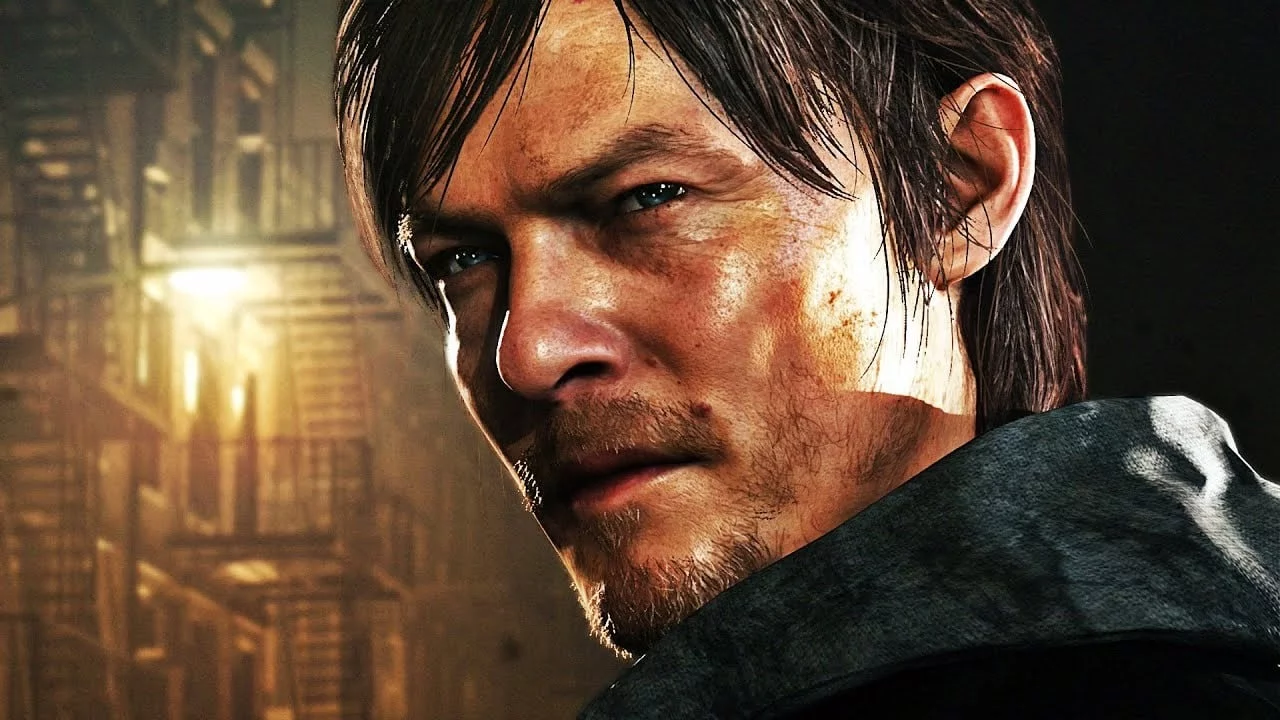
In 2018, a 17-year-old fan who had made a P.T. remake said Konami had contacted him. It isn't known whether the company has also contacted Lorean Xavier, and publicly, it has stayed silent. I'm curious how the story ends this time. With a takedown request, an internship offer or, at last, an official return of P.T.?
A fan port of someone else's game is…
Frequently Asked Questions
People are talking about this fall's fan ports on Reddit, X and YouTube, and the same questions keep coming up.
Can you play P.T. on PC?
There has never been an official PC version. A fan port exists, but it doesn't include the game itself: as designed, it needs the game files from your own PS4 with P.T. installed. Konami hasn't approved the project.
Is Bloodborne officially coming to PC?
Sony and FromSoftware haven't announced anything. FromSoftware's Hidetaka Miyazaki has said he isn't opposed to a PC version, but Sony owns the rights. According to anonymous sources cited by Bloomberg, Bluepoint pitched a remake in 2025, but FromSoftware didn't want one. In February 2026, Sony confirmed it was closing Bluepoint.
Are fan ports legal?
No rights holder has approved the P.T. port, the Bloodborne ports, ReSkate or the Borderlands Online test. EU law lets anyone with the right to use a copy study how a program works. In the US, courts have treated that as fair use under certain conditions, but a license can forbid it. Rebuilding a program's code is permitted only in narrow cases, mostly so that your own program can work with others. Reworking and distributing someone else's game without permission generally isn't allowed. Even a project that requires your own copy of the game can be taken down at the rights holder's request.
Why was the browser version of GTA 5 taken down?
Nobody has officially said who took the site down or why, and Take-Two and Rockstar haven't commented. According to one independent programmer's analysis, the browser version contained traces of Rockstar's source code, though it hasn't been established where that code came from. Separately, Rockstar's mod guidelines, published in September, explicitly ban modifying its games to run on platforms where it hasn't released them.
What is ReSkate?
It's a fan-made program for the PC version of EA's skateboarding game skate. It lets you play with mods, either offline or on player-hosted servers instead of EA's. It requires your own copy of the game on Steam, doesn't connect to the official online service and blocks mods that copy paid items.
Which AI is used to make fan ports?
Among the projects covered in this article, Anthropic's Claude comes up most often. The bbport developer and the creator of Fallout: New York (a new game, not a port) both name it. Its signature also appears in the change histories of bbhost and Paleblood, although a signature doesn't show how much of the code the model wrote. OpenAI's Codex was used for the port of The Darkness and for Paleblood, and Modern Warfare 2 was rebuilt with AI agents running models from both companies. Qwen, a freely available AI model, got the Fable 2 port to boot for the first time. The creators of the P.T. port and ReSkate don't name their tools. Some projects, such as Zelda 64: Recompiled (the PC port of Majora's Mask), don't accept AI-generated code at all.
Is it safe to download fan ports?
Nobody can guarantee it. As of October 15, searches turned up no confirmed reports of infected copies of the P.T. port, bbport, ReSkate or the GTA 5 browser site. But malware regularly spreads disguised as fan projects. In the summer of 2026, Malwarebytes described a fake PS Vita fan project that infected users' computers. In that campaign, the malware was usually software that steals passwords and cryptocurrency wallets. In September, Huntress analyzed fake "GTA 6" installers that contained Trojans.
Money, Scandals, Phenomena
- The CS2 Skin Economy: Billions of Dollars, Million-Dollar Knives, and a $2 Billion Crash in 30 Hours
- The Biggest Thefts and Hacks in Gaming History: The $620 Million Axie Infinity Hack, Stolen CS2 Skins, and the GTA 6 Leak
- Star Citizen Has Raised a Billion Dollars — and Still Hasn't Come Out
- GTA Controversies: Lawsuits, Bans, and Hot Coffee
- Why Graphics Cards Are So Expensive in 2026: How AI Ate the Memory Supply
- Why have videogames become so expensive, and will they get even more expensive?
- Why Millions of People Click on Bananas, Cookies, and Cows: How Idle Games Have Hacked Our Brains
- What Are the Backrooms? Levels, Entities, Games, and Movie Explained
- Rusty Lake Series Phenomenon. Twin Peaks in the Form of a Point‑and‑Click
- Rideshare "Stimulator": What Kind of Game Is It and Why Did It Spark an AI Controversy?
- AI Is Already Taking Jobs in Game Development — Just Not Where We Expected
- DLSS 5 — Graphics Revolution or Marketing Gimmick? Let's Cut Through the Hype
- Why the Ocarina of Time Remake Announcement Divided Fans — Uncanny Valley, Politics, and Nostalgia
- Why AI Researchers Are Leaving OpenAI, Anthropic, and Google — and What They’re Warning About
- How GTA 5 Made More Money Than Any Movie Ever
- AI in Games: Why Players Boycott Studios Over AI Art and Voices
- How Much Money Has Genshin Impact Made and Why Gacha Is Cooling Off
- Sued for Being Too Addictive: How the Makers of Fortnite, Roblox and Minecraft Ended Up in Court
- The $250 Million AI Chat: How Krafton Asked ChatGPT to Escape Subnautica 2's Founders — and Lost
- What Was Found in the 12TB Steam Leak: Early Builds of GTA 3, Mafia 2, and Valve Games
- How Graphics Card Prices Spiraled: Mining, Scalpers, and Prices No One Could Believe
- The Live-Service Graveyard: How the Industry Burns Billions on Games That Die in Weeks
- Minecraft in Elden Ring and TNT in RDR2: The Wild AI Mashups That Broke the Internet — What's Real and What You Can Download
- Is Deadlock Out? Valve's Invite-Only Game Sets a New Player Count Record
- PS5 Jailbreak: What Relapse Offers and What You Risk
- EU Kids Act Explained: How It Could Change the Internet and Gaming
-
 Bloodborne VR Mod for PC Maps Combat to Hand Movements
 -
 Ex-GTA 5 and Red Dead Redemption 2 Developer Is Making a New Action Horror Game With Bloodborne and Resident Evil Vibes
 -
 Bloodborne gets split-screen co-op on PC through the shadPS4 emulator
 -
 Bloodborne Runs Natively on Linux in Experimental bbport, Reaching 150 FPS
 -
 Unofficial Bloodborne Port Released for Android