
52 Best Post-Apocalyptic Games to Play on PC, PS5 & Xbox
 Anastasiia Sokolova
The best post-apocalyptic games are not limited to Fallout and Metro: the genre has long since expanded to include RPGs, shooters, survival games, and even indie projects. Our ranking features 51 post-apocalyptic games for PC and consoles, including time-tested classics such as The Last of Us, Metro, and Left 4 Dead 2, as well as notable releases from 2024–2026, ranging from ARC Raiders to Dying Light: The Beast. Nuclear wastelands, ruined cities, and a desperate struggle to survive in a hostile environment... Nobody would want to experience any of this firsthand, but video games turn the end of the world into stories about the cost of survival and moral choice. How far would you go to stay alive? The old world has collapsed, leaving you free to decide whether to become a hero or a villain in the new one.
2024–2026 Releases
Let us begin with the latest additions to the genre — post-apocalyptic games released since 2024. The past couple of years have breathed new life into the setting, bringing us big-budget action games, multiplayer projects that became unexpected hits, and modest indies that perfectly capture the decay and loneliness of a ruined world. If you are looking for something recent to play, start with these games.
Resident Evil Requiem
The Resident Evil series is usually associated with a zombie apocalypse — a catastrophe unfolding in the moment — but Requiem also explores the aftermath of a disaster that has already occurred. The campaign is split between two protagonists, with the second half of the story taking place in the ruins of Raccoon City. Destroyed after the viral outbreak and a powerful missile strike, the city has become a grim monument to the crimes of the Umbrella Corporation, filled with the remains of familiar districts, hordes of zombies, and traces of the events that began the entire series. Read more in our Resident Evil Requiem review.
Atomfall
Atomfall has its own version of the Zone: an area beyond the Wall that people are trying to escape following a nuclear disaster. Survival follows the familiar conventions of the genre, with players gathering ammunition and medical supplies while keeping an eye on their stamina during combat. The story is nonlinear, and escaping the quarantine zone requires deciding which faction to support.
Atomfall is an exceptionally distinctive project. Unlike Fallout or Metro, it is neither a sprawling RPG nor a life simulator: there are no character levels and no open world. The game is steeped in British culture. Instead of the familiar American or Soviet wastelands, players explore picturesque English villages, pubs, telephone boxes, and tea parties, all accompanied by absurd black comedy reminiscent of Monty Python. Our Atomfall review examines both the game's strengths and its more controversial elements.
S.T.A.L.K.E.R. 2: Heart of Chornobyl
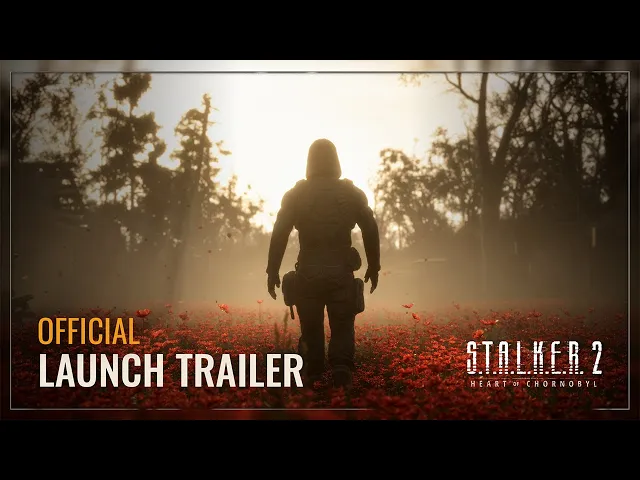
Fans of S.T.A.L.K.E.R. and survival games set in radioactive disaster zones had been waiting for a sequel since 2009. At one point, the chances of seeing it released seemed about as slim as seeing Half-Life 3 or Bloodborne arrive on PC. Yet in 2024, S.T.A.L.K.E.R. 2: Heart of Chornobyl finally made it to store shelves and brought players back to the Zone — the Chornobyl Exclusion Zone, albeit in an alternate reality where the laws of physics have been distorted and the forests and swamps are filled with mutants and warring human factions.
Set against the backdrop of an Eastern European post-apocalypse, the game challenges players to survive by managing hunger and radiation levels, fighting mutated creatures and hostile NPCs, throwing metal bolts ahead to detect anomalies, and navigating the complex relationships between competing factions. According to longtime S.T.A.L.K.E.R. fans, however, the game's greatest strength is its uniquely melancholic atmosphere, created by gloomy landscapes, campfire guitar sessions, the comfort of safe shelters, and the constant fear of the unknown.
ARC Raiders
The success of ARC Raiders caught many people by surprise. It seemed that audiences had grown tired of cooperative extraction shooters and that the project was doomed to fail. That skepticism quickly gave way to admiration, however: the game earned a Metacritic score of 86, a rare achievement for a multiplayer release.
Its visual style combines retrofuturism, advanced technology, and the aesthetics of a ruined, rust-covered world. In this distant sci-fi post-apocalypse, Earth has been invaded and almost entirely destroyed by sophisticated ARC machines. The players' main objective is to deploy onto a map, gather valuable loot and robot components, and reach the extraction point alive. Rather than zombies, mutants, or bandits, they face intelligent machines whose behavior forces squads to adapt their tactics constantly. For more on why the game is worth trying even if you are tired of extraction shooters, read our ARC Raiders review.
Dying Light: The Beast
Dying Light: The Beast brings Kyle Crane, the protagonist of the original game, back into action after a ten-year absence. Crane spent all those years imprisoned by the Baron, a local tyrant who subjected him to brutal experiments. After escaping, he sets out for revenge while learning to turn the consequences of those experiments to his advantage: zombie DNA has given him inhuman strength, animal-like claws, and savage finishing moves. The story takes place in Castor Woods, a resort town in the Alpine forests that has been overrun by the infected.
The familiar formula of the series is immediately recognizable: rooftop parkour, close-quarters combat with improvised weapons, and a day-night cycle that brings the most dangerous creatures onto the streets after dark. The entire campaign can be completed in four-player co-op. Critics also welcomed Crane's return: its Metacritic score of 78 is the highest in the franchise's history. Not every design decision was equally successful, however, as explained in our Dying Light: The Beast review.
Road to Vostok
Road to Vostok is still in early access and is being developed by a single creator from Finland. Nevertheless, it is already being compared to some of the finest examples of the post-apocalyptic genre: the game sold 140,000 copies during its first five days. The player enters a region devastated by an unknown catastrophe. Reaching the safe zone means searching abandoned buildings, gathering loot, establishing a base, and upgrading weapons. There are no mutants, zombies, laser guns, or anomalies, however. The main threats are the unforgiving wilderness, scarce resources, wild animals, and patrols of hostile survivors.
The atmosphere alone makes the game worth experiencing: tension, isolation, and a damp Scandinavian climate. Many of its mechanics are inspired by Escape from Tarkov, but without the toxic community often associated with multiplayer projects of this kind.
Cronos: The New Dawn
Cronos: The New Dawn is a science-fiction survival horror game from Bloober Team, the studio behind the Silent Hill 2 remake. Earth has suffered a catastrophe that transformed people into grotesque masses of fused flesh. The protagonist, an agent of the mysterious Collective, travels between a ruined future Poland and the 1980s to extract people's souls moments before their deaths.
In terms of gameplay, this is a traditional survival horror experience in the vein of Dead Space, with narrow corridors, limited ammunition, and tense confrontations. Its defining feature is the absorption mechanic: if the player fails to burn a defeated enemy's body, the next monster can merge with it and become stronger. It is grim, disturbing, and genuinely unusual — and it earned a Metacritic score of 79.
Hell is Us
Hell is Us is an action game with soulslike elements, set in a country torn apart by civil war while a supernatural menace emerges from beneath the earth. The end of the world is not some distant event from the past — it is happening before the player's eyes. This is a rare perspective for the genre: a post-apocalypse still in progress.
The protagonist, Rémi, returns to his isolated homeland in search of his parents, only to find himself caught between war criminals and mysterious hollow creatures. The game deliberately refuses to guide the player: there is no map covered in markers and no quest log, only careful observation, conversations with survivors, and a Metacritic score of 78 for its bold ideas.
Post-Apocalyptic RPGs
Few people remember today that post-apocalyptic video games began with RPGs — specifically 1988's Wasteland, which later inspired the Fallout series. Modern post-apocalyptic RPGs feature open worlds, nonlinear quests, and moral dilemmas in which the player's decisions can determine the fate of entire settlements. Fans of the genre should also take a look at our ranking of the best RPGs of all time.
Fallout: New Vegas
The Fallout franchise is iconic in its own right, but Fallout: New Vegas holds a special place both within the series and in the hearts of its fans. Why? It was developed by creators of the original games who had joined Obsidian Entertainment, which is why its characters and factions cannot simply be divided into “good” and “evil,” while the story follows a nonlinear structure. Almost every quest can be completed in several ways: through force, cunning, diplomacy, or scientific expertise.
The player enters the Las Vegas wasteland, where global nuclear war has left desert landscapes standing alongside neon casino signs and robotic security guards. Unlike many post-apocalyptic games, New Vegas depicts a world that has already survived. Its inhabitants are no longer fighting merely for resources, but for political power. At the same time, the game expertly balances serious political issues with black comedy and outright absurdity. We revisited it in our Fallout: New Vegas 15th-anniversary retrospective.
Fallout 4
By the time Fallout 4 was released, the franchise had already passed into the hands of Bethesda Softworks, which shifted the series' focus away from traditional RPG systems and toward action. The setting is a ruined Boston and its surrounding areas. Against this atomic-age backdrop, the player must resolve the conflict between the Institute and several survivor factions: the Brotherhood of Steel, the Railroad, and the Minutemen.
In keeping with series tradition, the game offers a vast world to explore, dynamic targeting of vulnerable body parts through V.A.T.S., mountains of loot needed to modify equipment, build bases, and manage settlements, and the franchise's signature retrofuturist aesthetic — upbeat jazz playing on the radio, Nuka-Cola vending machines, two-headed mutant cows, and robotic assistants. Compared with the bleak worlds of Metro or The Last of Us, Fallout 4 feels vibrant and full of life. The player is not so much struggling to survive as rebuilding civilization from the ruins.
Fallout 3
Fallout 3 is the game that reinvented the series in 3D in 2008 and introduced millions of players to the Fallout universe. The protagonist grows up in Vault 101 before venturing into the Capital Wasteland — the ruins of Washington, D.C. — in search of their missing father. Along the way, the player decides the fate of settlements, bargains with ghouls, fights the Enclave, and listens to the legendary Galaxy News Radio.
This was where the signature V.A.T.S. targeting system and the “leave the vault and go anywhere” formula first appeared, both of which Fallout 4 would later refine. The game holds a Metacritic score of 91, still the record for the main series. There is only one caveat: on modern Windows PCs, it may require community patches.
Fallout 76
Fallout 76 is a multiplayer take on Fallout that lets players explore the West Virginia wasteland alongside other people. The project received a hostile reception when it launched in 2018, but years of updates — most importantly, the Wastelanders expansion with human NPCs and fully fledged quests — transformed the situation. The game now has a “Mostly Positive” rating on Steam based on more than 130,000 reviews.
Players can establish a C.A.M.P. almost anywhere on the map, team up with friends for raids, launch nuclear missiles, or simply make a life in the wasteland by trading, gathering resources, and role-playing. For anyone who has ever wanted “Fallout with friends,” it is now a perfectly respectable option.
Wasteland 3
Wasteland 3 trades the familiar desert for the frozen state of Colorado, ruled with an iron fist by the charismatic Patriarch. Unlike Fallout, it does not put the player in control of a lone Chosen One, but an entire paramilitary organization. Wasteland 3 is an isometric, party-based tactical RPG in which players rebuild their headquarters, recruit personnel, and balance the competing interests of the local authorities, raider gangs, religious fanatics, and feral mountain clans.
The game stands out for its squad progression, with skills that directly affect the story, as well as its vicious black comedy, satire of American culture, and morally gray choices. The player is constantly forced to choose the lesser of two evils: betrayal or death, survival or a bargain with a tyrant.
Wasteland 2
Wasteland 2 revived the game that established the genre, delivering a sequel fans had waited 26 years to see. Nuclear war has scorched Arizona, and the Desert Rangers remain the last semblance of law among its radioactive ruins. The player commands one of their squads, distributes skills ranging from lockpicking to field surgery, and makes decisions that allow some settlements to flourish while condemning others to destruction.
The Director's Cut added voice acting, a perk system, and significantly improved visuals, earning a Metacritic score of 87. It is a drier, more demanding game than Wasteland 3, but it was also the project that brought classic party-based wasteland RPGs back to life.
ATOM RPG
ATOM RPG was created as a spiritual successor to the original Fallout games, offering a classic role-playing experience in the Soviet Wasteland, which has been devastated by nuclear war. Combat is turn-based and governed by action points. Players must monitor their hunger and radiation levels while using scavenged supplies to craft ammunition and medicine.
Fans of the original Fallout games, Wasteland, or Arcanum will feel right at home, especially if they enjoy nonlinear quests and a distinctly Soviet setting. Here, that means collecting waste paper, discussing communism, using vodka to treat radiation sickness, and getting caught up in criminal disputes amid a nuclear wasteland. The world of ATOM RPG is gray, brutal, and cynical: everyone survives however they can, and the most dangerous monsters are people who have lost their humanity. More games with a similar setting can be found in our ranking of the best Soviet post-apocalyptic games.
ATOM RPG Trudograd
ATOM RPG Trudograd is a direct sequel to ATOM RPG in which the developers took criticism to heart and improved everything from the combat system and balancing to quest design. The protagonist travels to Trudograd, a surviving Soviet metropolis where the party bureaucracy, organized crime, and religious cults are fighting for power as another catastrophe approaches.
With its apartment blocks, trams, and communal housing, the city feels entirely different from the wasteland of the first game. The number of possible solutions has also increased: almost any problem can be handled through force, science, theft, or the gift of the gab.
UnderRail
UnderRail is often described as “Fallout underground,” and that is a fairly accurate summary. Earth's surface became uninhabitable long ago, forcing humanity into the tunnels of a vast subterranean network where the sun survives only in legends. The player is a newcomer to South Gate Station who gradually becomes entangled in the intrigues of underground states, factional wars, and the technological secrets of a dead world.
This may be the most unforgiving isometric RPG in the genre: there is no level scaling, the skill and psionic ability trees are enormous, and any fight can end in death within a couple of turns. In return, the game provides a rare sense of genuine discovery, with dark tunnels concealing secrets that no quest marker will reveal. Critics gave it a relatively lukewarm reception, but players have long since recognized UnderRail as a modern classic of the genre.
NieR: Automata
By the year 11945, humanity has survived in NieR: Automata, but it has surrendered Earth to hostile machines and fled to the Moon. To reclaim the planet, humans created an android army tasked with exploring the ruins of cities reclaimed by lush vegetation, deserts, and abandoned amusement parks. In gameplay terms, NieR: Automata is a fast-paced hack-and-slash game with RPG elements. Its stylish combat system revolves around rapid combos, perfectly timed dodges, and counterattacks, while the role-playing mechanics require careful allocation of resources to modify the characters' abilities.
Unlike a traditional post-apocalypse in which survivors divide resources and wage war against one another, there are no humans here. Instead, the story follows androids and machines trying to understand what it means to “be human.” The game uses its post-apocalyptic setting to explore love, hatred, the cyclical nature of war, and the meaning of humanity. Its masterful soundtrack — and, of course, protagonist 2B — helped turn it into a global phenomenon.
NieR Replicant ver.1.22474487139...
NieR Replicant ver.1.22474487139... is an updated version of the original NieR and a prequel to Automata, set thousands of years earlier. The world has already endured its apocalypse: humanity is dying from the Black Scrawl, while mysterious Shades roam the ruins. The protagonist is a young man willing to do anything to save his terminally ill sister.
The 2021 remaster reworked the combat system in the style of Automata, introducing fast combos, magic, and the series' famous sequences in which the game suddenly transforms into a shooter or even a text adventure. Its greatest strength, however, is the story — one of the genre's most affecting, with an ending that requires several playthroughs to experience in full.
Horizon Zero Dawn
Horizon Zero Dawn begins Aloy's story and presents one of the most visually striking versions of a “green post-apocalypse.” A thousand years after civilization's collapse, Earth is flourishing again, human tribes live by hunting, and animal-like machines roam the forests and mountains. A red-haired outcast sets out to discover who she is, uncovering the truth behind the destruction of the old world along the way — one of the finest science-fiction mysteries in gaming.
Hunting tactics are everything: every machine has its own weak points, which must be targeted with bows and slings, while the most dangerous beasts are best lured into traps. The Remastered version brought the visuals up to the level of Forbidden West. The original earned a Metacritic score of 89.
Horizon Forbidden West
In Horizon Forbidden West, Aloy explores flourishing jungles, the flooded neon ruins of San Francisco, and scorched deserts while trying to prevent another apocalypse. Its world is colorful and vibrant: nature recovered long ago, while humanity has begun its journey anew with tribes, spears, and hunting. The threat comes not from zombies or radiation, but from sophisticated machines originally created by humans themselves.
The Horizon series began as a Sony exclusive and became known for its colorful open worlds, tactical hunts built around targeting vulnerable components, battles against mechanical giants, and extensive science-fiction lore explaining how machines inherited the Earth.
Which type of post-apocalypse appeals to you most in video games?
Post-Apocalyptic Action Games and Shooters
Classic post-apocalyptic games such as Fallout have taught us that a shotgun is practically essential for surviving among the ruins of the old world. How else can anyone obtain food and resources or defend themselves from mutants, zombies, and other survivors who want their loot? This section covers the best action games and shooters with post-apocalyptic settings, ranging from underground railway stations and neon wastelands to cooperative zombie shooters. Fans of the wider genre should also visit our ranking of the best action-adventure games.
Metro 2033 Redux / Metro: Last Light Redux
Metro 2033 and Metro: Last Light open the trilogy based on Dmitry Glukhovsky's novels, and the updated Redux editions are the best place to begin exploring the series. Following a nuclear war, Moscow's remaining inhabitants survive in the underground stations. Each station has become a small state with its own ideology, prewar ammunition serves as currency, and nobody ventures to the surface without a gas mask.
The first game tells the story of Artyom, who must save his home station, VDNKh, from the mysterious Dark Ones. The second is a direct sequel with more elaborate set pieces and moral choices. Both remain among the genre's finest claustrophobic horror shooters: the Redux editions have 92% and 91% positive user reviews on Steam. Read more about the strengths of Metro 2033 in our Metro 2033 anniversary retrospective.
Metro Exodus
Metro Exodus takes the player on a journey across post-apocalyptic Russia. Leaving the grim tunnels of the Moscow Metro behind, Exodus moves the action to a series of expansive and diverse locations: the frozen winter landscape of the Volga, the dried-up Caspian Sea, a flourishing summer taiga, and autumnal Novosibirsk. The game combines shooter, survival horror, and sandbox elements. Supplies must be crafted from scavenged loot, weapons require cleaning, and damaged gas masks have to be patched.
There is no conventional open world, only a sequence of semi-open locations. Nor is there a visible reputation meter: the game silently tracks the player's decisions through a hidden morality system and selects the appropriate ending. This is accompanied by a distinctly post-Soviet atmosphere, complete with rusting heavy machinery, the interiors of abandoned Khrushchyovka apartment blocks, the harsh Siberian wilderness, and songs performed around the campfire.
The Last of Us Part 1 and The Last of Us Part 2 (Remastered)
The Last of Us moves away from the familiar idea of nuclear war or a zombie outbreak as the cause of the apocalypse. The greatest threat in its world is a parasitic fungus that transforms people into deranged and aggressive creatures. Unlike many other post-apocalyptic games, however, its protagonists, Joel and Ellie, are not trying to save the world. Instead, the ruined civilization serves as a backdrop for their deeply personal story.
Both games became famous for their cinematic presentation and writing that many television series would envy: the original's prologue is still considered one of the most powerful in the industry. This is a “green post-apocalypse” where the ruins of skyscrapers have been consumed by moss and trees, streets have flooded, and wild animals and aggressive mutants roam abandoned neighborhoods. Players must shoot them, hide from them, or run for their lives.
Days Gone
Days Gone is clearly aimed not only at fans of post-apocalyptic settings, but also at admirers of biker culture. The story takes place in the Pacific Northwest following a global pandemic that transformed most of humanity into Freakers — fast and vicious creatures resembling zombies. Against a backdrop of snow-covered peaks, dense coniferous forests, and abandoned farms, the story of biker Deacon and his friends begins.
The motorcycle is effectively a full-fledged companion: it needs fuel, repairs, and upgrades. Add dynamic weather, checkpoints to clear, and the enormous horde battles that made the game famous. Days Gone also stands out for its melancholic soundtrack, responsive motorcycle handling, outlaw biker aesthetic, and monsters that behave like part of the ecosystem. The Freakers — the game's name for its zombies — eat, sleep, and even migrate like wild animals. If the living dead are your thing, do not miss our selection of the best zombie games.
Dying Light
In 2015, Dying Light demonstrated that a zombie apocalypse is most exciting when experienced on the move. Harran has been consumed by an epidemic, and protagonist Kyle Crane crosses the city using parkour: rooftops, walls, and ziplines are all faster and safer than the streets. During the day, players search buildings and help survivors. At night, the rules change: Volatiles emerge to hunt, and the player becomes their prey.
A decade later, the game remains a firm favorite within the community. Its 95% positive Steam rating, based on almost half a million reviews, is something very few titles have achieved. Four-player co-op, the wealth of content included in the Enhanced Edition, and satisfyingly brutal melee combat are all still intact. Those who enjoy it can continue Crane's story in Dying Light: The Beast, featured near the beginning of this ranking.
Mad Max
The Mad Max film franchise laid the foundations for the dieselpunk post-apocalypse: a setting defined by endless deserts, marauder gangs, rusting vehicles, and the worship of the internal combustion engine. It is therefore all the more disappointing that the world of Mad Max has been represented by only one major video game to date — Mad Max. Fortunately, it is quite a game.
Civilization has collapsed, society has descended into savagery, and Max becomes embroiled in brutal road wars alongside a hunchbacked mechanic. Fuel, loot, vehicles, and Max's own life are all at stake. Unlike most games about the end of the world, Mad Max treats the car as a second protagonist in its own right — one without which survival in the desert would be impossible.
Rage 2
Rage 2 combines a lurid punk post-apocalypse reminiscent of the Mad Max films with advanced technology and garish colors. That combination is no coincidence: the game was jointly developed by id Software, the studio behind the DOOM series, and Avalanche Studios, the creators of Mad Max. Humanity survived a meteor collision, but the protagonist must now confront General Cross's cybernetic army alongside gangs of punks and marauders.
The game completely rejects the depressing gray tones typically associated with stories about the end of the world. Rage 2 builds its visual identity around hot pinks, purples, neon colors, explosions, and outrageous enemy designs. There is no need to conserve ammunition, hide in the bushes, or fear radiation. The protagonist is a veritable killing machine, mowing down hordes of enemies against a post-apocalyptic backdrop.
Far Cry New Dawn
Ubisoft has its own vision of the post-apocalypse: colorful, pink, neon-lit, and anything but depressing. In Far Cry New Dawn, 17 years after the nuclear explosions, Montana's Hope County has become a flourishing wasteland rather than a gray desert. It is now terrorized by raiders led by twin sisters Mickey and Lou. The player rebuilds the survivor settlement of Prosperity, liberates outposts, and gathers ethanol, the primary currency of the new world.
This is a direct sequel to Far Cry 5, complete with the series' signature mechanics: specialist companions, including a dog and a sniper grandmother, vehicle hijacking, and shooting anything remotely combustible. It is not the most profound game in this ranking, but it makes for an excellent “light” post-apocalyptic adventure over a couple of evenings.
Death Stranding
Death Stranding is Hideo Kojima's famous game about a courier reconnecting America. After the catastrophe known as the Death Stranding, the worlds of the living and the dead have become intertwined. Invisible BTs roam the land, timefall ages everything it touches, and the survivors hide in underground shelters. Sam Porter Bridges is one of the few people capable of carrying supplies through this nightmare.
On paper, a “delivery simulator” sounds tedious. In practice, it becomes almost meditative: the player plans routes across mountains and rivers, then builds roads and bridges that can be used by other players. The Director's Cut added new missions and mechanics, and the original is essential preparation for the sequel.
Death Stranding 2: On the Beach
The post-apocalypse of Death Stranding 2: On the Beach is exactly what one would expect from a Kojima production: surreal, mystical, and occasionally absurd. The sequel takes Sam beyond America to Mexico and Australia, gives him an entire ship that serves as a mobile base, and places considerably more emphasis on action. Gunplay, in particular, feels noticeably better.
The Death Stranding franchise transformed the “walking simulator” into a “delivery simulator,” combining a post-apocalyptic setting with cargo-balancing physics, firefights against marauders and monsters, and vehicular travel across melancholic landscapes. Satisfaction comes not from destroying an enemy outpost, but from delivering a shipment safely, rebuilding a bridge, and making a small contribution to humanity's collective recovery. Critics were impressed as well, awarding the game a Metacritic score of 89. For our full perspective, read the Death Stranding 2: On the Beach review.
Stellar Blade
Stellar Blade takes place in a science-fiction post-apocalypse where Earth has been overrun by a race of grotesque biomechanical creatures. Protagonist Eve must eliminate the leaders of the invasion and reclaim the planet for humanity. The game's visual identity combines Korean futurism and cyberpunk: sand-buried cities from the old world, underground laboratories, and the last surviving refuge on the planet.
Its defining features are a stylish combat system built around precise parries and dodges reminiscent of soulslikes, as well as an excellent soundtrack. Rather than a rusty, filthy wasteland, Stellar Blade embraces polished cyber-futurism, with pristine androids and neon lights standing in sharp contrast to the ruins of Earth.
Terminator: Resistance
Terminator: Resistance is an exception to the rule that games based on movies rarely turn out well. In fact, it is arguably the best game the Terminator franchise has ever received. The story takes players to the future war depicted in the first two films: Skynet has already burned the world in nuclear fire, and the remnants of humanity are fighting the machines among the ruins of Los Angeles. Private Jacob Rivers soon discovers that Skynet is hunting him personally.
The red eyes of a T-800 glowing in the darkness, the recognizable soundtrack, and the constant sense that the player is prey rather than a hero capture the atmosphere of the future war perfectly. Critics gave the game middling scores, but players embraced it: its Steam rating remains above 90%. For fans of the universe, it is an unconditional must-play.
Left 4 Dead 2
Left 4 Dead 2 remains the definitive cooperative zombie shooter more than 15 years after its release. Its 97% positive Steam rating, based on a million reviews, speaks for itself. The apocalypse unfolded within a matter of weeks: cities across the southern United States fell to the infection, the military evacuated, and four survivors must fight their way from epidemic-stricken Savannah to New Orleans through hordes of infected and special mutants such as the Tank and the Witch.
The real magic comes from the AI Director, a system that dynamically changes the placement of enemies and supplies, ensuring that no 2 playthroughs are identical. Add thousands of community-made campaigns from the Steam Workshop, and the result is a co-op game players can return to indefinitely. Read more about similar titles in our extensive selection of the best co-op games.
World War Z: Aftermath
The Aftermath edition of World War Z continues the legacy of Left 4 Dead. Based on the World War Z universe, this shooter is famous for its enemy hordes: hundreds of zombies fill the screen, forming living pyramids and scaling walls just as they did in the film. Most of the world has lost its war against the undead, and squads of survivors must fight through the fallen cities of New York, Moscow, Jerusalem, Rome, and Kamchatka. Character classes and weapon progression add a measure of RPG depth to the shooting.
The Aftermath edition introduced a first-person perspective, new campaigns, and an expanded melee combat system. It is an excellent alternative for anyone who has played Left 4 Dead 2 to death and wants something larger in scale and more modern.
Post-Apocalyptic Survival Games
Survival and the post-apocalypse are a natural pairing: find food, fight off mutants, and shelter from the cold and radiation. This section collects the best survival games with post-apocalyptic settings, including both solo experiences and cooperative titles to play with friends. More survival games, ranging from uncompromising hardcore experiences to cozy sandboxes, can be found in our ranking of the best survival games.
Dying Light 2 Stay Human
Dying Light 2 Stay Human expands upon the formula of the original: dynamic first-person parkour, close-quarters combat against zombies, weapon crafting, and a day-night cycle are all present. Protagonist Aiden is infected and finds himself in humanity's last surviving stronghold after the zombie epidemic, where society has regressed and people wage war over resources.
Its brilliantly implemented parkour turns exploration into a high-speed race across rooftops and balconies — and even through the air with the help of a paraglider. Players can cross an entire district without touching the ground once. The distinctive visual design gives the game even more personality. Instead of familiar scenes of devastation, it presents a “new Middle Ages,” complete with a return to melee weapons, markets built inside abandoned metro stations, and seedlings growing in boxes on rooftops.
7 Days to Die
7 Days to Die is notable for combining a first-person shooter, survival horror, RPG, and fully fledged voxel construction sandbox reminiscent of Minecraft. For 6 days, players gather resources, improve their skills, craft weapons and ammunition, build a fortress equipped with traps, turrets, and barbed wire, and monitor their hunger, thirst, and body temperature. On the seventh day, a massive wave of zombies descends upon the base. Survive the assault, and another 6 days are granted for repairs and preparation.
A huge community formed around the game during its years in early access. The final version has a “Very Positive” rating on Steam based on 400,000 reviews. Players can defend their fortress alone or alongside friends on a private server.
Project Zomboid
Project Zomboid presents a realistic zombie apocalypse in rural 1990s America. Unlike Fallout or Days Gone, there is no saving humanity here. The player's character will die; the only question is how long they can hold out. Zombies overwhelm through sheer numbers, while the available survival options are extremely limited. There are no autosaves, and a single zombie bite means infection followed by the character's inevitable death several days later. Players decide for themselves what kind of life to pursue: a quiet farmer on the edge of the forest, a roaming looter traveling by car, or the leader of a survivor group clearing an entire city.
Frostpunk
Frostpunk is one of the most unusual strategy games of the past decade, created by 11 bit studios. It is the Victorian era, the world is rapidly freezing, and humanity's last city huddles around a colossal coal-powered generator. The player is not a hero but the ruling authority: should child labor be legalized, should the terminally ill be fed, and should dissidents be executed? Every decision pushes society toward either survival or tyranny.
The climax is the legendary storm, with temperatures falling below -150°C and making every previous hardship feel like a warm-up. The original is shorter and more intimate than its sequel, but it delivers a stronger emotional blow. Its final question — “The city survived, but was it worth it?” — lingers long after the end.
Frostpunk 2
In Fallout or Metro, players fight monsters, radiation, and marauders. In Frostpunk 2, humanity's greatest enemy is humanity itself: its greed and inability to compromise. Instead of sun-scorched nuclear wastelands, the game offers the rare aesthetics of an ice apocalypse and industrial steampunk.
Players construct a city, push laws through the council, weave political intrigues, and organize scouting expeditions. The game accurately conveys what it means to govern a divided society: satisfying everyone is impossible, and every decision will turn at least one faction into a bitter enemy. Frostpunk 2 also appears in our ranking of the best city-building games.
State of Decay 2
The original State of Decay was an interesting and unconventional game, while its sequel, State of Decay 2, expands the formula with a larger world and new mechanics. The basic idea remains the same: after a zombie outbreak, the player must not only survive personally but also organize the life of an entire community. Its defining feature is permanent death. If a member of the group is killed in battle, the game continues with another character who possesses a different set of skills. Alongside gathering resources and developing the base, players must conduct raids against Plague Hearts — zombie nests that need to be destroyed to make an area safe.
DayZ
DayZ is deservedly considered one of the most uncompromising games in the post-apocalyptic survival genre. It takes place in a fictional post-Soviet country devastated by a zombie epidemic. The zombies themselves are little more than an inconvenience, however. The most dangerous opponent is another player. There is no way to know whether a stranger will offer help or put a bullet in someone's back for a can of food.
Players must monitor their character's condition, maintain weapons, construct bases, and repair vehicles. There is no mini-map, compass, resource highlighting, or safe zone, while death means starting over without any of the accumulated loot.
The Long Dark
The Long Dark offers the quietest survival experience in this ranking. There are no zombies or mutants: a geomagnetic catastrophe has disabled all electronics, leaving pilot Will Mackenzie alone in the frozen Canadian wilderness. The enemies are cold, hunger, wolves, and the player's own mistakes. Death is permanent, while every cup of hot tea beside the fire feels like a small victory.
The game has been evolving for more than a decade and now includes the Wintermute story mode, complete with voiced characters and moral choices. The heart of The Long Dark, however, remains its survival mode, where players can endure for hundreds of in-game days while learning the habits of predators and the unpredictable nature of the weather.
Kenshi
Kenshi is unlike anything else on this list. It is a sandbox without a story or a chosen hero: the player's character is a nobody in an enormous post-apocalyptic world where slavers, cannibals, and ancient combat robots roam the wasteland. The game makes no allowances for newcomers — within the first hour, the protagonist will most likely be beaten, robbed, and sold into slavery.
In return, the freedom is almost absolute. Players can become merchants, build a city, assemble an army, turn a cripple into a legendary swordsman, or establish a farm in the middle of an acid desert. The world does not revolve around the player, and that is precisely why Kenshi is so beloved: it has remained near the top of Steam's user rankings for years.
Chernobylite
Chernobylite is a science-fiction survival game set in the Chornobyl Exclusion Zone, created by The Farm 51. The studio used photogrammetry to scan real locations in Pripyat. Physicist Igor returns to the Zone 30 years after the disaster to find his missing fiancée. Days are spent venturing out in search of resources and recruiting companions, while evenings are devoted to improving the base and preparing for the final assault on the Chornobyl Nuclear Power Plant.
The defining feature is a nonlinear structure built around time loops: dead companions and failed decisions are not necessarily lost forever, as the past can literally be replayed. The radioactive forest and Soviet ruins have been recreated with documentary precision.
Once Human
Once Human is a free-to-play multiplayer survival game set in a surreal post-apocalypse. The world has been contaminated by a cosmic substance called Stardust, ordinary objects have fused with flesh to form grotesque monsters, and the player is one of the Meta-Humans capable of surviving this madness. Base construction, crafting, enormous bosses, and seasonal scenarios provide enough content for hundreds of hours.
The project's greatest assets are its scale and bizarre creature designs. A tower fused with a deer, an octopus-like bus, and other creatures reminiscent of SCP stories are difficult to forget. Like any free-to-play game, it features microtransactions and grinding, but players have responded to it with surprising warmth.
Indie and Unconventional Post-Apocalyptic Games
The post-apocalyptic genre has accumulated plenty of familiar clichés: nuclear wastelands, ruined cities, zombie epidemics, and survivors tearing one another apart over scarce resources... There are also more unconventional projects, however. Some combine mechanics rarely associated with the genre, while others present the end of the world from an unexpected perspective.
Mutant Year Zero: Road to Eden
The world of Mutant Year Zero: Road to Eden has endured everything at once: global nuclear war, a deadly viral pandemic, and a climate crisis. Humanity has died out completely, leaving Earth to mutants — anthropomorphic animals and humanoids who do not understand how the old world functioned. Exploring the ruins is combined with turn-based battles in the vein of XCOM. The central mechanic, however, is stealth. A direct assault is suicidal, so players must first use every tool of guerrilla warfare at their disposal: set up ambushes, study enemy patrol routes, and silently eliminate isolated targets.
There are no survival systems, political disputes, or major factions competing for power. The world is presented through the eyes of mutants who inherited the planet and regard the remnants of human culture with genuine confusion. Its combat also earned Mutant Year Zero: Road to Eden a place in our ranking of the best tactical games.
Pacific Drive
Pacific Drive is a rare example of a “survival game on wheels.” The player's main companion is neither a dog nor a motorcycle, but an aging station wagon that needs to be repaired, refueled, and fitted with upgrades. The protagonist repeatedly takes it on expeditions into the Olympic Exclusion Zone, an isolated section of the Pacific Northwest where secret government experiments caused reality itself to fracture. Anomalies roam the forests, while energy storms can tear the car apart.
Each expedition follows the structure of an extraction game or battle royale: gather resources, search abandoned laboratories, and reach the extraction point before the zone collapses. The recovered materials are used to upgrade the garage and vehicle, while radio broadcasts gradually reveal the story of the exclusion zone. This atmospheric combination of anxiety, 1990s nostalgia, and the comforting routine of garage life earned the game a Metacritic score of 79 and “Very Positive” reviews on Steam.
Darkwood
In Darkwood, the end of the world looks like this: a forest that began spreading after an unknown catastrophe has swallowed part of Poland, cut the survivors off from the outside world, and slowly driven them insane. During the day, the player explores the wilderness from a top-down perspective, gathers resources, and trades with disturbing characters such as the Chicken Lady. At night, the protagonist barricades the shelter, boards up the windows, and hopes that whatever is scratching outside will not find a gap in the defenses.
The game deliberately avoids jump scares, relying instead on its oppressive atmosphere, sound design, and the character's limited field of view. Fans of Eastern European horror should not miss it: few indie games are more frightening.
Rain World
Rain World depicts a post-apocalypse in which humanity is simply gone. The player controls a slugcat, a small creature living in an enormous ruined ecosystem where every predator hunts, migrates, and survives according to its own rules. Before the deadly rain begins, the player must find food and reach shelter. What happens along the way is largely down to chance.
It is one of gaming's most uncompromising simulations of wildlife: the world is not scripted, and the player is nowhere near the top of the food chain. Critics did not understand the game when it was released in 2017, but it has since achieved cult status among players, with 94% positive Steam reviews and one of the most devoted communities in the indie scene.
FAR: Lone Sails
FAR: Lone Sails presents its apocalypse without words. The ocean has dried up, civilization has disappeared, and a colossal wheeled machine crosses the exposed seabed between the skeletons of ships and abandoned settlements, with a solitary girl at the controls. The player stokes the furnace, repairs machinery, raises the sails, and occasionally ventures outside to solve a puzzle or obtain more fuel.
It is a short journey, lasting only 2 or 3 hours, but also a remarkably cohesive and meditative story about loneliness and continuing forward. An ideal choice for a single evening when the genre's quiet melancholy sounds more appealing than another struggle for survival.
1000xRESIST
1000xRESIST became one of the most important narrative discoveries of recent years. Unlike most post-apocalyptic games, it features no resource gathering, survival systems, mutant shooting, or ammunition crafting. 1000xRESIST is a “walking simulator” with visual novel elements, built around analyzing information and speaking with NPCs, with those conversations leading to different endings.
The story takes place 1000 years after humanity was destroyed by alien occupiers. Playing as the sole survivor, the player enters the memories of others to understand how lies and the trauma of the past shaped a totalitarian society. The narrative combines classic science fiction in the vein of Evangelion with contemporary themes of immigration and government control. Critics rewarded its boldness with a Metacritic score of 86 and a Peabody Award — an exceptionally rare achievement for a video game.
Bunker Games to Play While Waiting for More Silo
Stories about life inside bunkers and shelters hold a special appeal for fans of the post-apocalypse. Apple TV+'s Silo, based on Hugh Howey's novels, has renewed interest in the subject. Once the credits begin rolling on another episode, it is the perfect time to head underground yourself with these three bunker games.
Fallout Shelter
Fallout Shelter is a free-to-play vault management game set in the Fallout universe. The player becomes the Overseer of a Vault-Tec facility, assigns residents to different rooms, produces energy, water, and food, defends against raiders and Radroaches, and sends the bravest dwellers into the wasteland. It is an excellent way to pass an evening: the game can remain open in the background on either a PC or a phone.
60 Seconds! Reatomized
60 Seconds! Reatomized turns the nuclear panic of 1950s America into satire. The first stage gives the player 60 seconds to race around the house and grab essential supplies without forgetting any family members. The survivors must then ration those supplies inside a cramped bunker while facing absurd dilemmas: who should venture outside in search of water, and what should be done about a gigantic mutant cockroach? Each playthrough is short, and the outcomes are almost invariably tragicomic.
Mr. Prepper
In Mr. Prepper, the player is a paranoid survivalist living in a totalitarian state that bears a disturbing resemblance to retro America. While government agents conduct inspections, the protagonist secretly excavates a doomsday bunker beneath his home, crafting furniture and tools, growing food under lamps, and trading with neighbors for scarce components. The game maintains a constant tension between the character's lawful life above ground and the secret construction project below.
Frequently Asked Questions About Post-Apocalyptic Games
What Post-Apocalyptic Games Can Run on Low-End PCs?
The genre does not require cutting-edge graphics, and many of its classics will run comfortably on older hardware. Fans of role-playing survival games should start with Fallout and Fallout 2, the isometric RPGs that launched the series and can run on practically anything. Fallout: New Vegas is also exceptionally well optimized for older processors and graphics cards, as is Wasteland 2. Notable post-apocalyptic survival games include This War of Mine, Project Zomboid, and Cataclysm: Dark Days Ahead. Action fans should consider the cult classic Metro 2033 and the 2.5D platformer Deadlight. More options can be found in our ranking of the best games for low-end PCs and laptops.
What Post-Apocalyptic Games Are Available on Xbox Game Pass and PlayStation Plus?
Xbox Game Pass subscribers can play the Fallout series, including Fallout 4, Fallout 76, Fallout 3, and New Vegas, as well as Metro Exodus, Wasteland 3, State of Decay 2, Atomfall, and Rain World, a survival simulator about a slugcat living in a ruined metropolis.
The PlayStation Plus catalog includes The Last of Us Part 1, Metro Exodus, Horizon Zero Dawn Remastered, Horizon Forbidden West, Days Gone, Death Stranding, and Pacific Drive.
What Cooperative Post-Apocalyptic Games Are There?
Cooperative post-apocalyptic games provide a wide range of experiences, from building bases together to shooting zombies and undertaking hardcore raids. Notable co-op survival games with post-apocalyptic settings include 7 Days to Die, Project Zomboid, ARC Raiders, State of Decay 2, and Once Human, alongside co-op zombie classics Left 4 Dead 2 and World War Z: Aftermath. The campaigns in Dying Light and Dying Light: The Beast support cooperative play for up to 4 players. There are also cooperative RPGs: the entire Wasteland 3 campaign can be completed by 2 players, while Fallout 76 offers multiplayer survival in the Fallout universe.
What Open-World Post-Apocalyptic Games Are There?
Open worlds are a natural fit for the genre, since exploring ruins and searching for resources benefit from large environments. Post-apocalyptic open-world classics include Fallout 4, Fallout: New Vegas, both Horizon games, Days Gone, Mad Max, Rage 2, and Dying Light 2. Among games released in 2024–2025, Dying Light: The Beast and Stellar Blade stand out for their semi-open areas.
What New Post-Apocalyptic Games Were Released in 2025–2026?
Several major post-apocalyptic games were released in 2025–2026. The most notable include Dying Light: The Beast, the next installment in the Dying Light franchise; Hideo Kojima's sequel Death Stranding 2: On the Beach; and Atomfall, a Fallout-inspired survival game set in the British countryside during the Cold War. Other releases include the horror game Cronos: The New Dawn, the unconventional action game Hell is Us, the anime-inspired action RPG AI Limit, and, of course, Resident Evil Requiem. Among multiplayer projects, the extraction shooter ARC Raiders became the biggest event.
What would you add to this list? Share your favorites in the comments!
What's most important to you in games like Palworld?
What Else Should You Play?
More than 50 entries may sound like a lot. The genre is so varied, however, that several post-apocalyptic games still had to be left outside the main ranking despite deserving a mention. They did not quite earn a place among the very best: some were held back by review scores, while others suffered from a sluggish second half. Nevertheless, these projects are still capable of entertaining fans of the setting. If the wastelands and ruins eventually leave you craving vibrant worlds and more traditional adventures, visit our ranking of the best RPGs.
Miasma Chronicles
Miasma Chronicles is a turn-based tactical game from the creators of Mutant Year Zero: Road to Eden. Humanity is being destroyed by a mysterious force known as the Miasma, while the setting combines techno-fantasy with the neon ruins of major cities and rusting factories in rural America. It also tells a touching story about the friendship between a human and a robot.
ELEX 2
ELEX 2 is an open-world action RPG from the creators of Gothic. The game combines science fiction, the post-apocalypse, and medieval fantasy: sword-wielding knights, berserkers, and factions armed with laser rifles all inhabit the same planet. It is a classic “Eurojank” RPG — awkward and rough around the edges, but made with heart and offering enormous freedom.
Encased
Encased is an isometric RPG in the tradition of the classic Fallout games, following an expedition beneath an enormous Dome covering an anomalous zone filled with artifacts. The game begins strongly with a choice between profession-based Wings, although its second half loses momentum as the finale approaches. Even so, fans of the genre should give it a look.
And remember: good post-apocalyptic games should be completed before the apocalypse arrives. That way, you will already be prepared for anything.
Games with a dark atmosphere: Survival, Post-Apocalypse, Cyberpunk, Horror
- TOP-15 Psychological Horror Games Guaranteed to Break Your Mind
- 70 Best Horror Games of All Time (2026)
- Zombie Shooters: The Best Games on PC, PS4, PS5, Xbox, and Switch
- Best Survival Games on PS4 and PS5: 40+ Picks from The Last of Us to Subnautica
- Best Survival Games on PC: 65+ Picks from Valheim to Subnautica
- 33 Best Soviet Post-Apocalyptic Games Like S.T.A.L.K.E.R. and Metro
- Best Cyberpunk Games in 2026: Top Picks for PC and Console
- 52 Best Post-Apocalyptic Games to Play on PC, PS5 & Xbox
- 11 Best Chernobyl Games: S.T.A.L.K.E.R. 2, Chernobylite, and More
- 26 Best Dinosaur Games to Play on PC, Console, and Mobile — From Survival to Horror
-
 Best RPGs of All Time: Top 77 on PC and Consoles
-
 Best Open World Games: TOP-100 from Skyrim to GTA 6 (2026)
-
 Best RTS Games of All Time: Top 29 from Dune 2 to Tempest Rising
-
 Best Free To Play Games for PS4 and PS5 in 2026: What to Play for Free
-
 24 Best Tactical Games in 2026: Turn-Based Tactics and TRPGs